Is Hakone Worth Visiting? My Honest Answer After My Visit In November
Just a short ride from Tokyo, Hakone offers a completely different side of Japan — slower, more scenic, and built around relaxation. But is Hakone really worth visiting? Having been there in November 2023, I can give you a clear, firsthand answer.
The moment I stepped off the Odakyu Romancecar, the crisp mountain air and faint sulfur scent told me this was more than a standard day trip. Autumn foliage lined the slopes around Lake Ashi, and Mt. Fuji appeared briefly through the mist — enough to understand why people keep coming back.
In this guide, I’ll walk you through everything that matters: onsen etiquette, the real value of the Hakone Freepass, what the crowds are actually like, and whether a day trip or overnight stay makes more sense for you. This is an honest breakdown, based on first-hand experience, to help you decide if Hakone is worth your time and money.
– By Indrani Ghose | Updated in May 2026
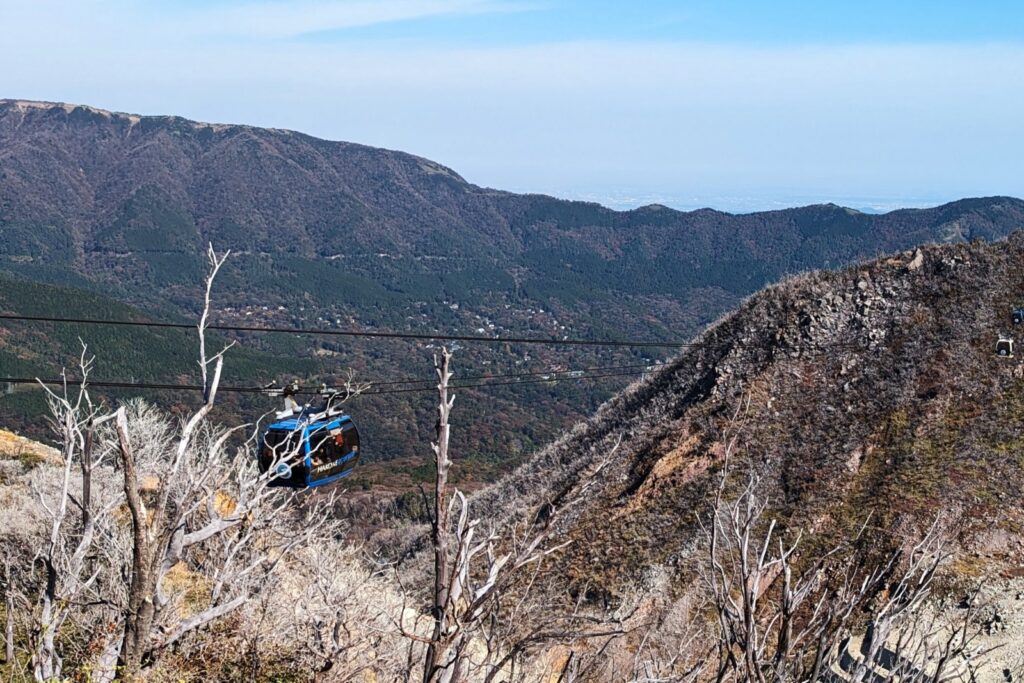
Ropeway Cabin ride in Hakone
Quick verdict on Hakone Visit
Hakone is worth visiting — but the right answer depends on what you’re looking for. Here’s the honest summary.
Go if you:
- Want Mt. Fuji views from Lake Ashi on a clear day
- Enjoy unique transport experiences — pirate ships, ropeways, and the Odakyu Romancecar
- Are curious about volcanic landscapes like Owakudani
- Want to visit a world-class open-air art museum
- Plan to experience Japanese onsen culture properly
Skip if you:
- Dislike crowds — Hakone is busy, especially on weekends and public holidays
- Expect a quiet, off-the-beaten-path mountain town — it’s well-developed and tourist-facing
- Only have a couple of hours — Hakone needs at least a full day to make sense
- Have no interest in hot springs or museums
Worth it if you want a compact destination that covers nature, culture, volcanic scenery, and traditional Japanese bathing — all within 90 minutes of Tokyo. Hakone isn’t a hidden gem, and it doesn’t pretend to be. What it delivers is variety and dependable quality. Families, couples, and solo travellers will all find something worthwhile, as long as they plan ahead and use the Hakone Freepass to keep costs and logistics manageable.
Why I visited Hakone in November — and what made it special
I chose November specifically because it’s peak koyo season — the Japanese term for autumn colour change — and the timing worked out well. The hillsides around Hakone shift into shades of red, orange, and gold throughout the month, and that backdrop transforms otherwise ordinary train rides and ropeway journeys into genuinely scenic ones.
Crowds were present but manageable, noticeably lighter than I’d expect in summer or during Golden Week. The cooler temperatures — around 8–15°C — made walking between sights comfortable, and finishing the day in an onsen felt like a natural reward rather than an afterthought.
November also increases your chances of seeing Mt. Fuji clearly. The mountain is notoriously unpredictable, but clearer autumn skies tip the odds in your favour. I caught enough of Fuji from Lake Ashi to make the effort worthwhile. At the Hakone Open-Air Museum, sculptures sat against a backdrop of autumn leaves — a combination that worked far better than I expected.
For practical travellers, November hits a useful balance: attractive scenery, mild weather, and no major national holidays driving up the crowds. It’s not a secret season, but it’s one of the better times to go.
What Hakone looks like in November
Hakone in November is defined by autumn foliage and cool mountain weather. During my visit, daytime temperatures ranged from 8–15°C — a light jacket and comfortable walking shoes were enough. The train journey from Hakone-Yumoto up toward Gora already felt worth it on its own, with forested hillsides shifting between red, amber, and gold as the elevation climbed.
At Lake Ashi, the water reflected the tree-lined slopes on calm mornings, making it one of the most photographed spots in the region for good reason. The Hakone Ropeway offered sweeping valley views coloured by koyo, and the atmosphere throughout was energetic but not overwhelming — families, couples, and photographers all out for the same light.
Owakudani’s volcanic vents looked alive and smoky against the sulfur-coloured ridges. And at the end of each day, the contrast between cool outdoor air and a warm onsen made November the right season for exactly that kind of visit.
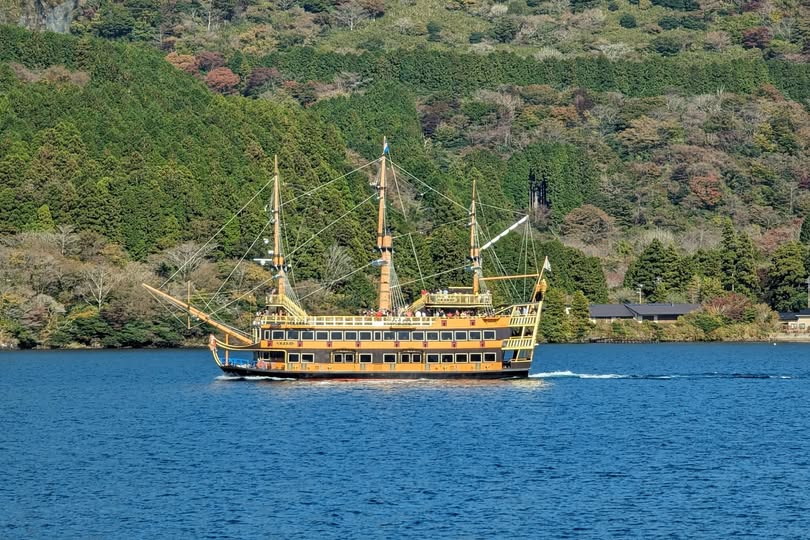
Pirate ship on Lake Ashi Hakone – notice the multi-color background in the pic
Top reasons Hakone is worth visiting (what I actually experienced)
Hakone isn’t a single attraction — it’s a cluster of experiences that together justify the trip. I was amazed at the the variety I got to see and experience during my visit in November 2023: hot springs, volcanic landscapes, lakeside shrines, open-air art, and a transport system that doubles as a sightseeing route.
Each element adds something distinct, and together they make Hakone more than just a convenient escape from Tokyo. Here are the highlights that stood out.
The Onsen (hot springs) experience — relaxation unlike anywhere else
Hakone is one of Japan’s most well-known onsen destinations, and the experience lives up to its reputation. After a full day of sightseeing in November, I checked into a ryokan with a private bath. The mineral-rich water cut through the chill of the evening and genuinely helped with tired legs after hours of walking. (Photography inside private baths is prohibited.)
What sets Hakone’s onsen apart is the combination of accessibility and tradition. Some baths have open-air views of valleys or Mt. Fuji; others are designed for families, with private or mixed-gender options that remove the barrier for first-time visitors. (Prices vary.)
Owakudani: Japan’s volcanic valley & the famous black eggs
Owakudani is Hakone’s most dramatic natural site — a volcanic valley formed by an eruption roughly 3,000 years ago and still visibly active today. The ropeway approach is effective: as you get closer, the vegetation thins, the air takes on a sharp mineral smell, and steam vents come into view across the ridgeline.
The most talked-about attraction is the kuro tamago — black eggs boiled in the sulfur springs. The shells turn black through a chemical reaction with the sulfur; the inside tastes like a normal boiled egg. The legend that eating one adds seven years to your life is local folklore, but it’s part of the experience and worth doing once.
On clear days, Mt. Fuji is visible from the observation area, which adds a strong visual payoff to the stop.
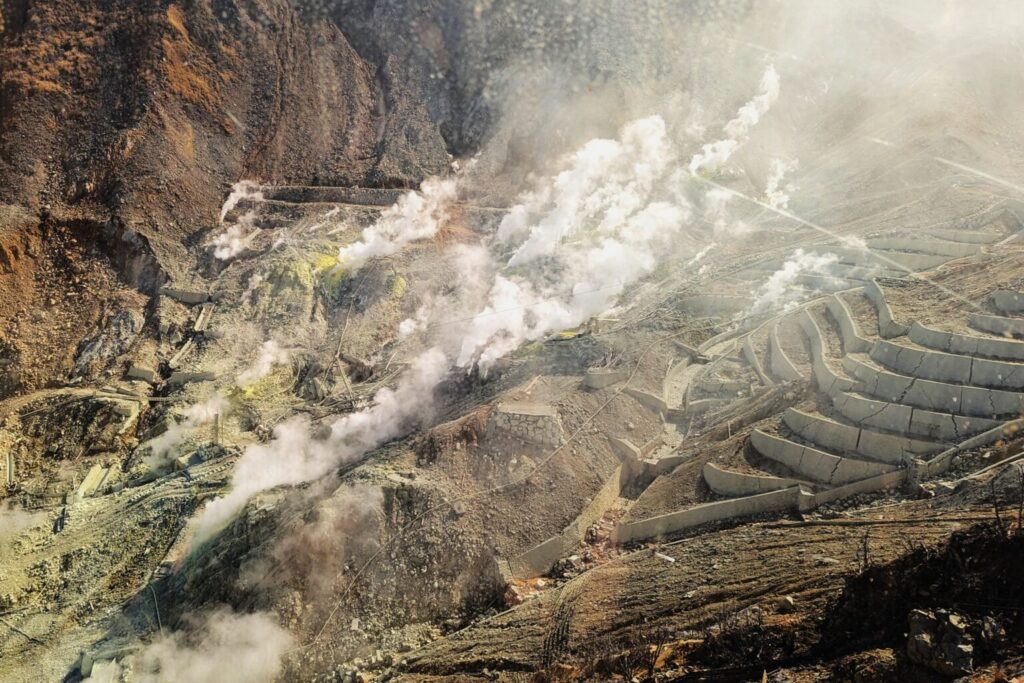
Owakudani’s Volcanic Vents as seen from Ropeway
Lake Ashi, the floating torii gate & Mount Fuji views
Lake Ashi is Hakone’s most photographed spot, and it earns that status. The caldera lake sits surrounded by forested hills, with the red torii gate of Hakone Shrine standing at the water’s edge — it appears to float on the surface when viewed from the right angle. I took the sightseeing boat cruise across the lake, which is openly touristy but an efficient and enjoyable way to see the full shoreline.
The main variable is Mt. Fuji. On clear days — more likely in November and December — the mountain is visible above the hills on the western shore. I caught a clear view for a few minutes before cloud cover moved in. That’s a realistic expectation: brief and weather-dependent, but worth waiting for.
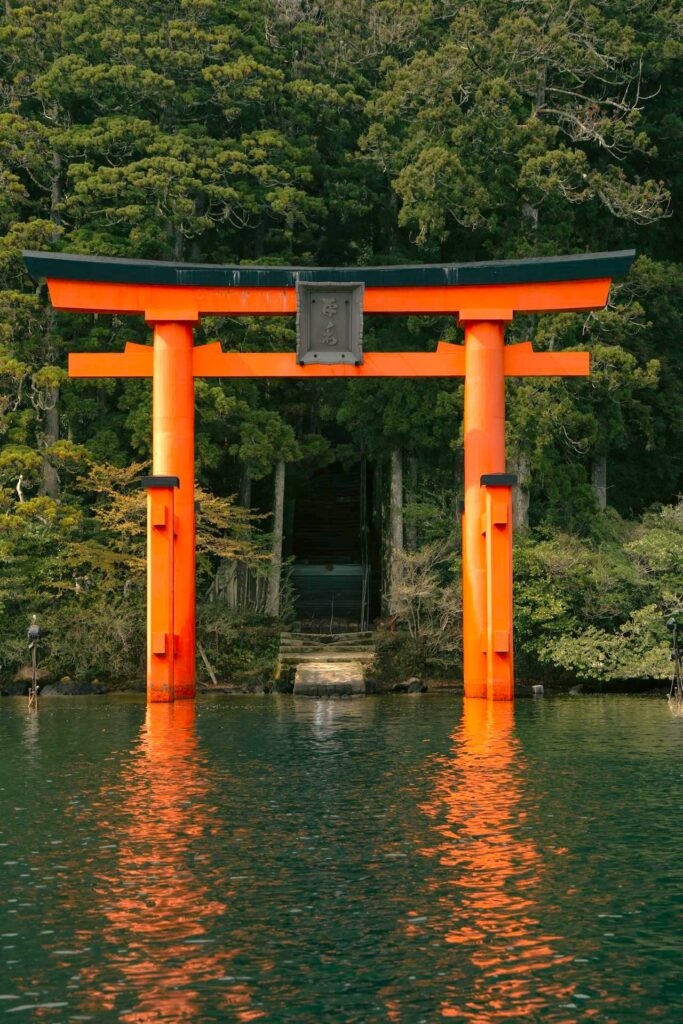
Torii gate reflecting on Lake Ashi
The Hakone Open Air Museum: where art meets nature
The Hakone Open Air Museum is larger and more varied than most visitors expect. Set across a sprawling outdoor site, it combines sculpture, installation art, a dedicated Picasso Pavilion, and interactive exhibits across well-maintained grounds. In November, the autumn foliage provided a natural backdrop that shifted the appearance of the works depending on the light and time of day.
The museum works well for different types of visitors. Families with children will find dedicated play areas built around sculpture. Art-focused visitors can move through serious modern and contemporary works at their own pace. The layout is spacious enough that it rarely feels overcrowded, even on busier days.
The Hakone Loop: train, cable car, ropeway and pirate ship
Hakone’s transport network is genuinely one of its main attractions. The Hakone Loop connects the region’s key sites using a sequence of different transport modes — mountain train, cable car, ropeway, and lake cruise — all covered under the Hakone Free Pass.
The sequence works well as a route: the Odakyu Romancecar brings you from Shinjuku to Hakone-Yumoto, then the Hakone Tozan mountain train climbs through forested switchbacks toward Gora. From there, the cable car and ropeway pass over Owakudani’s volcanic valley with open aerial views. The final leg — the sightseeing boat across Lake Ashi — closes the loop before you head back.
Each leg serves a purpose beyond transit, which is why the Free Pass makes practical sense: it removes the need to buy individual tickets and encourages you to use the full circuit rather than picking isolated stops. For a day trip especially, the Loop is the most efficient structure for the visit.
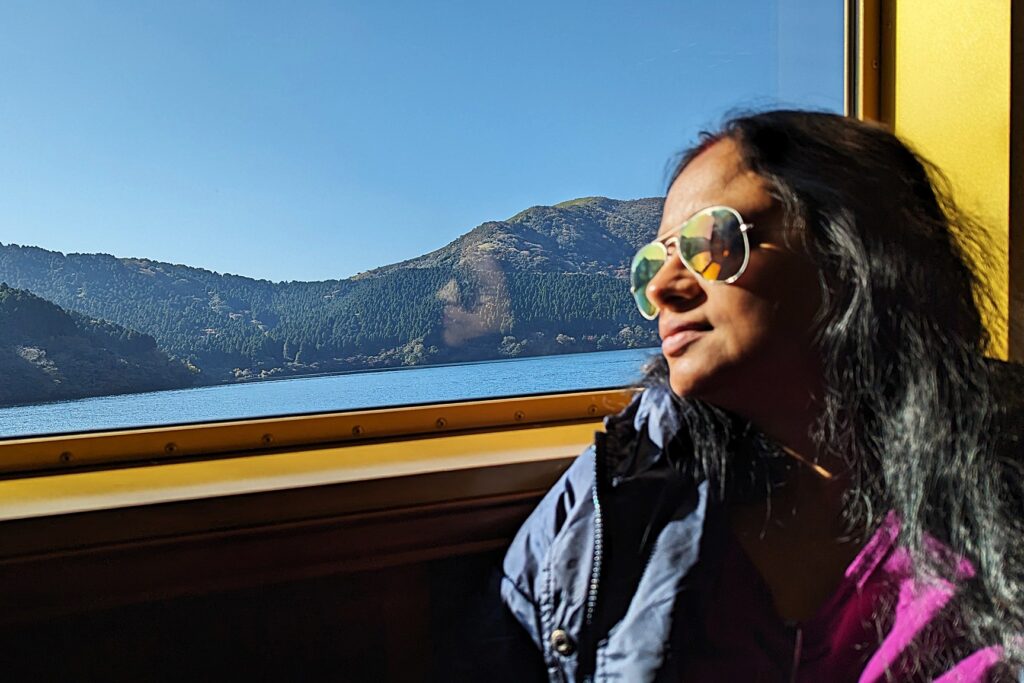
That is me Sailing in Pirate Ship in Lake Ashi
Honest drawbacks: what no one tells you about Hakone
Hakone is a strong destination, but it has real limitations worth knowing before you go.
Crowds are significant. Even in November, which sits outside the peak summer and Golden Week rush, popular spots like Owakudani and Lake Ashi were busy with tour groups. Weekends are noticeably worse. Queues for the ropeway and the sightseeing boat can run long enough to affect your schedule, particularly if you’re on a day trip with limited time.
Costs are higher than average. Ryokans with onsen access and included meals are the standard recommendation for Hakone — and they’re priced accordingly. Budget accommodation exists, but the experience that makes Hakone distinctive comes at a premium. Compared to other day-trip destinations from Tokyo, Hakone is one of the more expensive options.
Mt. Fuji views are not reliable. This is Hakone’s most overpromised feature. The mountain is frequently obscured by cloud, in every season. November gives you better odds than summer, but I only caught clear views briefly during my visit. If Fuji photography is your primary reason for going, the Fuji Five Lakes area gives you more consistent and closer views.
Plan around these three factors and Hakone will meet your expectations. Ignore them and it might not.
Is Hakone worth it for a day trip from Tokyo — or should you stay overnight?
Hakone is frequently promoted as a day trip from Tokyo, and it is doable in a day — but after visiting, I’d recommend at least one night if your schedule allows. Here’s the practical difference.
On a day trip (roughly 6–8 hours), you can cover the main Hakone Loop — the mountain train, ropeway, Owakudani, and the Lake Ashi cruise. With the Hakone Free Pass, logistics are straightforward. The trade-off is pace: you’ll be moving consistently, and the onsen experience — which is central to what makes Hakone distinctive — gets skipped or reduced to a single public bath visit.
Staying overnight changes the character of the trip. A ryokan stay with evening onsen access, a kaiseki dinner, and a slower morning gives you the version of Hakone that most people remember. It also increases your chances of catching Mt. Fuji, since early mornings tend to offer the clearest views before cloud builds.
| Day Trip | Overnight Stay | |
| Sightseeing | Main Loop covered | Full Loop + extra time |
| Onsen | Limited or skipped | Central to the experience |
| Mt. Fuji chances | Dependent on arrival time | Better — early morning access |
| Cost | Lower | Higher — ryokan rates apply |
| Best for | Tight schedules | Families, couples, first-time visitors |
Bottom line: A day trip works if your time is genuinely limited. But the onsen, the ryokan dinner, and the unhurried pace of an overnight stay are what make Hakone worth the cost. One night is the minimum to do it properly.
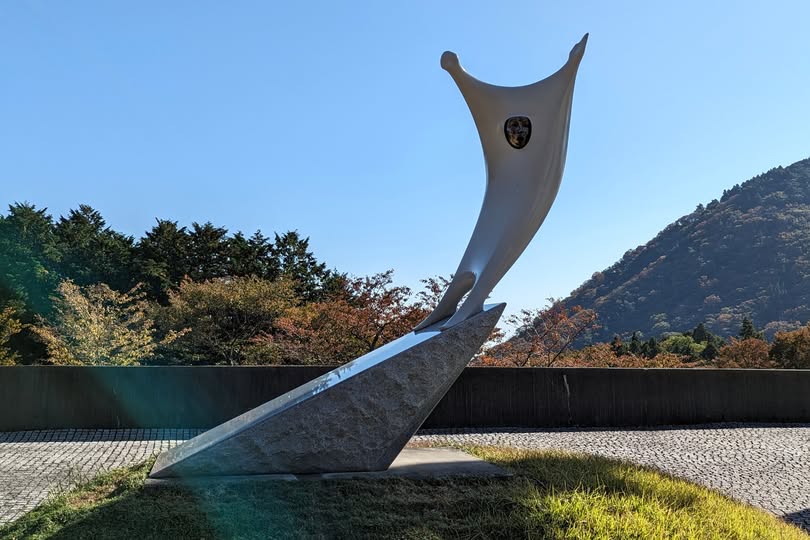
Takao Tsuchida sculpture in Hakone Open-Air Museum
Best time to visit Hakone — and why November is a hidden gem
Hakone is a year-round destination, but timing has a real effect on what you experience. I visited in November 2023, and it turned out to be one of the better windows for the trip.
The autumn foliage — known in Japanese as koyo — peaks across Hakone from early to mid-November in the higher areas like Gora and Owakudani, and from mid to late November around Hakone-Yumoto at lower elevations. During my visit, the hillsides were red and gold, Lake Ashi reflected the autumn colours on calm mornings, and the Hakone Open Air Museum looked noticeably better with seasonal foliage as a backdrop. Daytime temperatures sat between 8–15°C — cool enough for comfortable walking and ideal for onsen evenings.
November also brings clearer skies than the summer months, which improves the odds of seeing Mt. Fuji from Lake Ashi or the ropeway. The mountain is never guaranteed, but November gives you a better chance than July or August. Crowds were present but manageable — significantly lighter than Golden Week or the summer holiday period.
Month-by-month guide
| Month | Highlights | Crowd Level |
| Jan–Feb | Quiet, snow possible, good for onsen | Low |
| Mar–Apr | Cherry blossoms, scenic | High |
| May–Jun | Fresh greenery; June is rainy | Moderate–High |
| Jul–Aug | Warmest weather | Very high |
| Sep–Oct | Pleasant temperatures, fewer tourists | Moderate |
| Nov | Autumn foliage, clearer skies, good Fuji odds | Moderate |
| Dec | Cold, quieter, festive atmosphere | Low–Moderate |
November stands out because it combines three practical advantages: attractive scenery, manageable crowds, and better visibility for Mt. Fuji. It’s not a secret — Hakone is always busy to some degree — but it’s one of the more rewarding months to go.
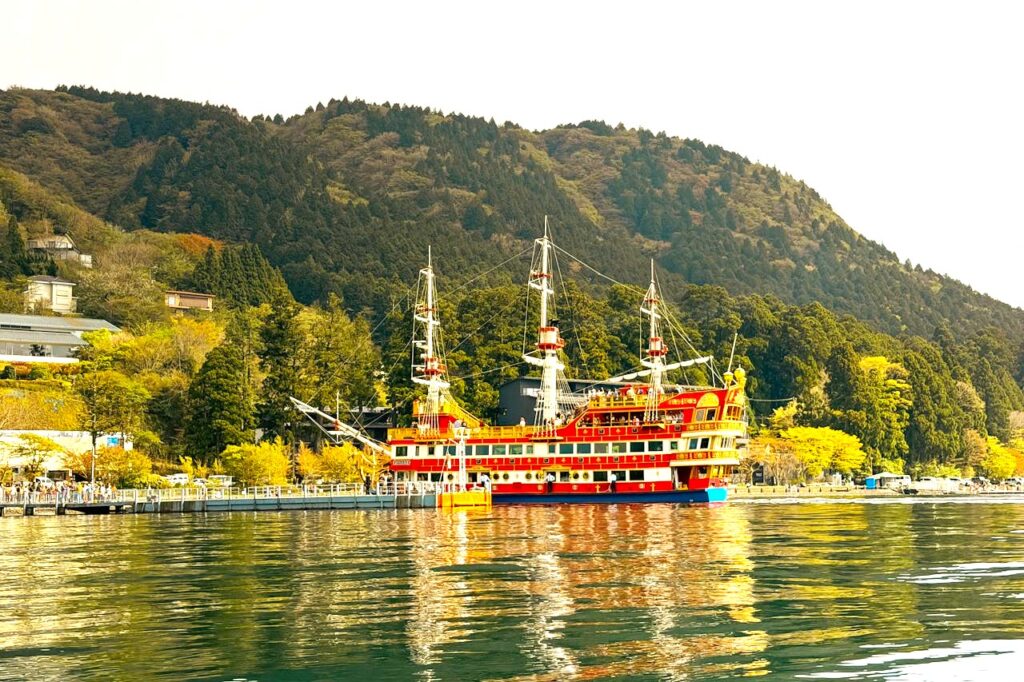
Hakone pirate ship on Lake Ashi
Practical tips: how to get to Hakone from Tokyo, the Free Pass & where to stay
Hakone is straightforward to reach from Tokyo, and a few practical decisions — how you get there, whether you buy the Free Pass, and where you stay — will shape the quality of your visit significantly. Here’s what you need to know.
How to get to Hakone from Tokyo?
The most direct route is the Odakyu Romancecar from Shinjuku Station — a reserved-seat limited express that reaches Hakone-Yumoto in around 85 minutes with no transfers. It’s the most comfortable option and worth booking in advance, particularly on weekends and during autumn foliage season.
The alternative is the JR Tokaido Line to Odawara, then a transfer to the Hakone Tozan Line or local bus. It’s more flexible for JR Pass holders but involves an extra connection.
Budget travellers can use regular Odakyu services, which are slower and require a transfer at Odawara, but cost considerably less than the Romancecar.
Odakyu Romancecar — fare breakdown (Shinjuku → Hakone-Yumoto)
| Ticket component | Paper ticket | Digital (e-ticket) |
| Base fare (Odakyu Line) | ¥1,270 | ¥1,270 |
| Limited express surcharge | ¥1,200 | ¥1,150 |
| Total one-way | ¥2,470 | ¥2,420 |
| Journey time | ~85 min, no transfers | ~85 min, no transfers |
| Booking method | Ticket machines / Odakyu centres | e-Romancecar app / EMot Online |
| Covered by Hakone Free Pass? | Base fare only — surcharge paid separately | Base fare only — surcharge paid separately |
Prices current as of 2025–26. Always verify on the Odakyu official website before travel, as fares are subject to revision.
The Hakone Free Pass covers the ¥1,270 base fare component, so you still pay the ¥1,150–¥1,200 limited express surcharge separately — either at the machine or via digital ticket. Since October 2025, Odakyu introduced a dual-pricing system where digital (ticketless) purchases are ¥50 cheaper than paper tickets at the station.
Book in advance, particularly for autumn weekends — seats become available at 10 AM one month before the departure date.
Is the Hakone Free Pass worth it?
Yes — for most visitors, the Hakone Free Pass is worth buying. It covers unlimited travel on the Hakone Tozan trains, cable car, ropeway, buses, and the Lake Ashi sightseeing boats, plus entry discounts at several museums including the Hakone Open Air Museum.
A two-day pass costs around ¥6,000 from Shinjuku (including the Romancecar supplement) — less than the cost of individual tickets if you’re doing the full Loop. A three-day pass suits overnight stays.
Even on a day trip, it removes the need to buy tickets at each stop, which saves time at busy periods. I used it in November and it paid for itself by Owakudani.
Where to stay in Hakone: ryokan vs hotel
Hakone offers two main accommodation types, and the right choice depends on your budget and what you want from the trip.
A ryokan gives you tatami rooms, kaiseki meals, and onsen access — often with private baths. It’s the more expensive option but provides an experience that’s specific to Japan and difficult to replicate elsewhere.
Hotels are cheaper, more familiar in format, and many still include onsen facilities. For neighbourhood, Hakone-Yumoto suits first-time visitors for its transport links; Gora is quieter with easier access to the Open Air Museum and cable car.
Hakone vs other day trips from Tokyo — is it really the best?
Tokyo has several strong day-trip options, and Hakone regularly competes with Nikko, Kamakura, and the Fuji Five Lakes. Each destination has a distinct focus:
Nikko offers ornate Edo-period shrines and good autumn foliage, but the experience is primarily historical. There’s no onsen culture to speak of, and the transport is more limited.
Kamakura is closer to Tokyo and easier to do in half a day. The Great Buddha and coastal temples are worth seeing, but the overall scale and variety are smaller than Hakone.
Fuji Five Lakes is the better choice if seeing Mt. Fuji is your primary goal. The views are closer and more consistent than anything Hakone offers, but the area has fewer cultural or relaxation-focused attractions.
Hakone’s advantage is combination. In one trip, you get volcanic scenery at Owakudani, contemporary art at the Open Air Museum, lakeside views at Lake Ashi, a transport circuit that covers the area efficiently, and the onsen experience as a practical centrepiece. No other day-trip destination from Tokyo packages all of those elements together.
It’s not the quietest option and not the cheapest. But for variety across a single day or overnight stay, Hakone is the most complete choice.
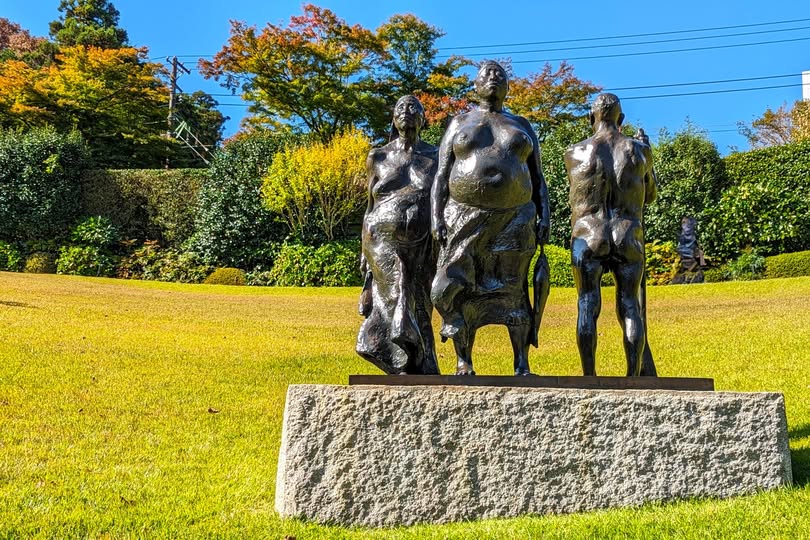
Group in front of the Sea – Art display in Hakone Open Air Museum
FAQ about visiting Hakone
Is Hakone worth visiting for just one day?
Yes, a day trip to Hakone is viable, but the itinerary will be tight. In a full day, you can cover the core Hakone Loop — the mountain train, ropeway, Owakudani, and the Lake Ashi cruise — using the Hakone Free Pass to move efficiently between stops.
The main trade-off is the onsen. A proper hot spring soak, particularly at a ryokan, requires time that a day trip doesn’t comfortably allow. You can visit a public onsen facility like Hakone Yuryo for a shorter experience, but it’s not the same as an evening at a ryokan.
Is Hakone expensive compared to other places in Japan?
Hakone is one of the pricier day-trip destinations near Tokyo. Ryokans with private onsen and included meals — the standard recommendation for the area — typically start at around ¥20,000–¥30,000 per person per night, and quality options cost more. Budget accommodation exists, but it’s limited compared to Tokyo or Kyoto.
Day-trip costs are more manageable. The Hakone Free Pass covers most transport, and food at Owakudani or Hakone-Yumoto is reasonably priced. Museum entry is the main additional expense — the Open Air Museum costs ¥1,600 (Free Pass holders get a discount).
Compared to Kamakura or Nikko, Hakone is noticeably more expensive for overnight stays. For a day trip on a budget, the cost difference is smaller but still present.
Can you see Mount Fuji from Hakone?
Yes, Mt. Fuji is visible from several points in Hakone — most notably from Lake Ashi, the Hakone Ropeway near Owakudani, and the Mishima Skywalk suspension bridge. However, visibility is heavily weather-dependent, and the mountain is obscured by cloud on the majority of days throughout the year.
November and December offer the best odds, with clearer and drier conditions than summer. Even then, views are not guaranteed. During my November visit, I saw Fuji clearly for only a short window before cloud moved in.
If seeing Fuji is your primary goal, the Fuji Five Lakes area — particularly Lake Kawaguchiko — provides closer and more consistent views. Hakone is worth visiting regardless, but set realistic expectations for the mountain.
Is Hakone good for solo travellers?
Yes, Hakone works well for solo travellers. The Hakone Free Pass makes the transport circuit straightforward to navigate independently, and the main attractions are all easy to visit alone.
Onsen etiquette is the one area worth preparing for in advance. Public and ryokan baths are open to solo visitors. Most ryokans that cater to tourists will have English guidance available.
Accommodation is worth considering. Some ryokans apply a single supplement or are primarily set up for couples and groups. Checking in advance and looking at hotels in Gora or Hakone-Yumoto gives solo travellers more straightforward options at better rates.
Is Hakone worth visiting without staying overnight?
Yes, a day trip is worthwhile if your schedule doesn’t allow an overnight stay. The Hakone Loop covers the main highlights — Owakudani, Lake Ashi, and the ropeway — in a full day, and the Free Pass keeps it logistically simple.
The honest trade-off is that the two things that make Hakone most distinctive — the ryokan experience and an unhurried evening onsen — both require an overnight stay. A day trip gives you the scenery and the transport circuit; it doesn’t give you the slower, more immersive side of the destination.
What is Hakone most famous for?
Hakone is best known for four things:
- Its hot springs (onsen)
- Views of Mt. Fuji from Lake Ashi
- The Owakudani volcanic valley
- And the Hakone Open Air Museum
Together, these make it one of the most visited destinations outside Tokyo.
Beyond those highlights, Hakone is also known for its unusual transport circuit — the Hakone Loop combines a mountain railway, cable car, ropeway, and lake cruise in a single route — and for the quality of its ryokan accommodation, which offers some of the most accessible traditional Japanese hospitality within easy reach of the capital.
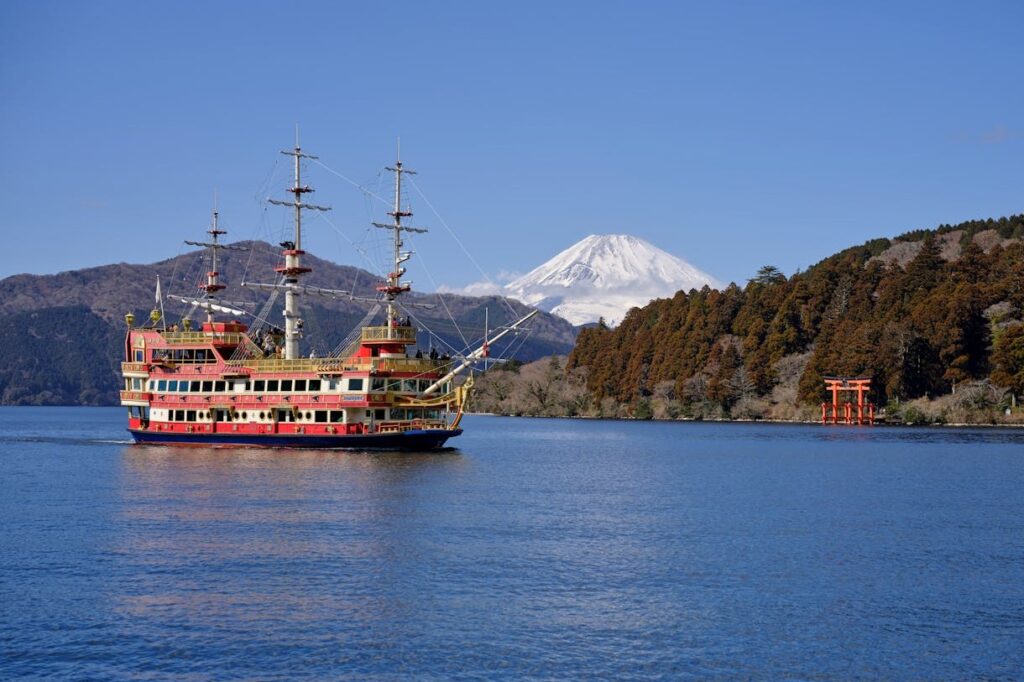
Pirate ship sailing on Lake Ashi with Mount Fuji in the background
Final verdict — is Hakone worth visiting?
So, is Hakone worth visiting? The straightforward answer is yes — with clear expectations.
Hakone delivers a combination that’s hard to find within 90 minutes of Tokyo: volcanic landscapes at Owakudani, open-air art at the museum, iconic lakeside scenery at Lake Ashi, and an onsen culture that gives the destination its distinct character. The Hakone Loop ties it together in a way that makes even the transit feel purposeful.
The drawbacks are real, I had read about them while planning my visit. Crowds are consistent, costs are higher than comparable day trips, and Mt. Fuji views are never guaranteed. Yet, none of these should be dealbreakers, but they’re worth factoring into your expectations before you go.
Hakone is worth it most when you stay overnight. One night adds the ryokan experience, the evening onsen, and a slower pace that the destination is actually built around. Day trips work, but they skim the surface.
For families, couples, and solo travellers, Hakone offers enough variety to justify the trip. Plan it properly, use the Free Pass, and set realistic expectations — it will deliver.
Now that you know it’s worth it, check out my full guide on Exciting things to do in Hakone Japan to plan your route.”
Pin and Save this for Later
About the Author
 Indrani Ghose is an Indian Travel Writer and Blogger based in Bangalore, India. She has written for numerous publications across the globe – including Lonely Planet, The National UAE, Whetstone Asia, Deccan Herald. You can follow her on her social media handles Instagram, Twitter, Pinterest and Facebook to see the wonderful destinations, beautiful offbeat places and get instant updates about them.