Karagiozis: The Enduring Soul of Greek Shadow Theatre
Behind the Screen: My First Encounter with Karagiozis
Karagiozis, the traditional toy of Greece, definitely the best gift to take for a child back home. The souvenir shops of Athens are flooded with Karagiozis shadow puppet. In one of the shops I was fiddling with these forms, when the owner of the shop explained its significance. Karagiozis was a character from their traditional tales which have origin from Byzantine times. That got me interested and I looked up for more details.
In over twenty years of documenting fading cultural traditions, few art forms have shown me a country’s character as directly as Karagiozis Greek shadow theatre.
– By Indrani Ghose | Last Updated: July 2026
Most visitors to Greece head straight for the Acropolis or the beaches of Santorini. But if you care to understand Greek humor, resilience, and scepticism of authority, you need to sit behind the mperdes — the white screen where the barefoot, quick-witted Karagiozis has outsmarted pashas and landlords for over a century.
This isn’t just a puppet show for children. It’s a living oral tradition and one of the most durable forms of folk art in the Mediterranean. Here’s what makes it worth knowing about, whether you’re planning a trip to Greece or just curious about its culture.
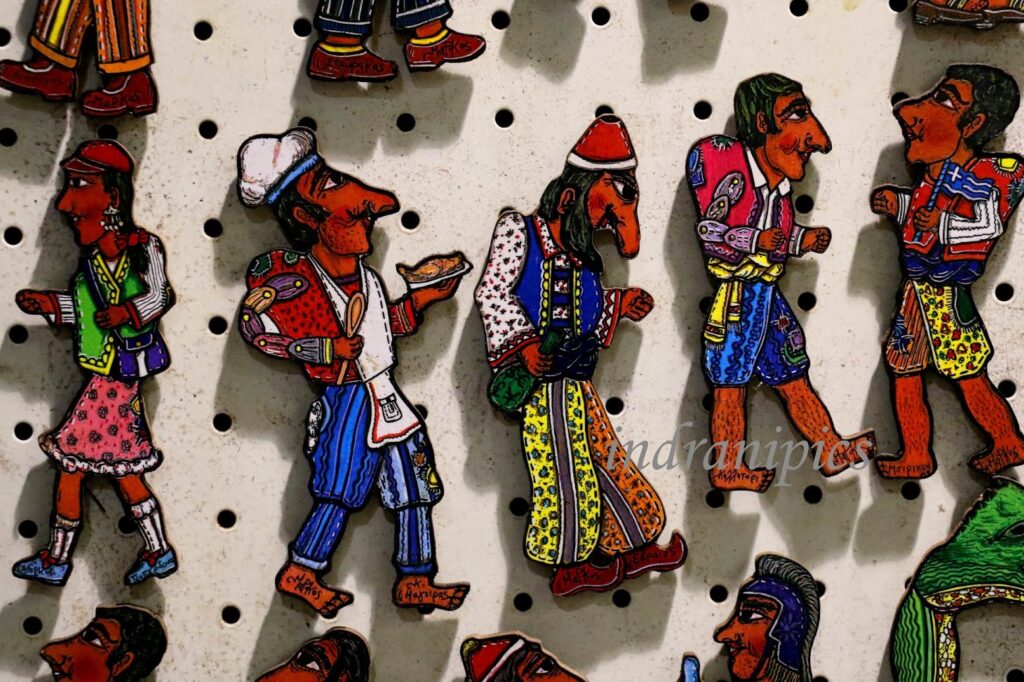
Karagiozis shadow puppet Souvenir from Athens
What is Karagiozis? A Window into the Greek “Everyman”
Karagiozis is the central figure of Greek shadow theatre — a folk art built on humor, satire, and social commentary. He represents the Greek “everyman”: poor, resourceful, and quick with a joke. His hunched back, long arm, and ragged clothes are instantly recognizable when his shadow appears on the white screen, or perde.
The character’s roots trace back to Karagöz, a Turkish shadow-puppet tradition that spread through the Ottoman-ruled Balkans. Greek performers adapted the character over the 19th and early 20th centuries, giving him local dialects, local jokes, and a distinctly Greek personality.
Performers such as Dimitrios Sardounis, known as Mimaros, are credited with shaping the modern Greek version of the character in the early 1900s. By the early 20th century, Karagiozis shows were a fixture in village squares and working-class neighborhoods, offering cheap entertainment while poking fun at those in power.
This is what makes the tradition endure: Karagiozis lets ordinary people laugh at authority. He mocks corrupt officials, greedy landlords, and pompous elites, while showing that cleverness can beat power and money. His storylines usually center on everyday survival — finding food, dodging debt, or outsmarting an official — but they carry a real critique of inequality underneath the comedy.
Karagiozis is still part of Greek cultural life today. Workshops teach children and adults the Karagiozopektis craft — the skill of cutting, painting, and animating the puppets — while professional performers write new scripts that comment on modern issues.
History and Evolution of Karagiozis
Shadow theatre reached Greece in the early 19th century, arriving from the Ottoman Karagöz tradition that had already spread across the Balkans through coffee houses and traveling performers. For decades it stayed close to its Turkish roots — coarse humor, stock characters, minimal local flavor.
The turning point came around 1890, with the puppeteer Dimitrios Sardounis, known as Mimaros. Born in Patras, Mimaros reworked the character for Greek audiences: he toned down the crude material, introduced Greek dialects and settings, and built the character into family entertainment rather than coffee-house comedy. This is generally treated as the point where “Karagiozis” became a distinctly Greek tradition rather than an import.
The decades that followed, roughly 1890 to 1930, are often called the golden age of Karagiozis, when the art form reached its widest popularity across Greek towns and cities.
After the Second World War, puppeteers such as Sotiris Spatharis and his son Evgenios kept the tradition going through television’s early rise, performing well into the 1980s and becoming some of the most recognized names in the craft’s history.
Television and cinema then pulled much of the mainstream audience away, and live shadow theatre became less common as daily entertainment. But the tradition didn’t disappear — it shifted into festivals, schools, and dedicated museums.
In 2016, Karagiozis was formally added to Greece’s National Inventory of Intangible Cultural Heritage, a recognition of its place in the country’s cultural record.
Meet the Cast: The Archetypes of the Perde
A Karagiozis show is never a one-man act. Its strength comes from a full cast of recurring characters, each standing in for a type of person in Greek society. Watching how they interact on the perde (screen) is what turns the show from a simple comedy into social satire.
- Karagiozis: The lead character. Poor and shabbily dressed, but never short of ideas, he stands for the resourcefulness of ordinary people. His oversized arm is a running visual joke, and also a symbol of reaching for more than his circumstances allow. He rarely wins by force — he wins by outsmarting people with more power or money than him.
- Hadjiavatis: Karagiozis’s more educated, better-spoken companion. He often acts as a go-between, bringing news of official announcements or job offers, which Karagiozis then twists to his own advantage. Their double act — one cautious and proper, one reckless and cunning — drives much of the show’s comedy.
- The Pasha: An Ottoman-era authority figure, typically stiff and commanding. He represents the ruling class, and his exchanges with Karagiozis usually turn on questions of fairness, corruption, and who really holds power.
- Barba Yorgos: A blunt, physically strong villager, usually from the Roumeli region. He stands for rural, plain-spoken honesty, and often ends up either clashing with Karagiozis’s scheming or getting pulled into it.
- Stavrakas: A street-smart urban dandy obsessed with his appearance and reputation. He’s a figure of vanity and swagger, and much of his comic value comes from being outwitted despite his tough-guy posturing.
- Nionios: An aristocrat from the Ionian Islands who speaks with an Italian-influenced accent. He represents the Western-leaning, more privileged classes, and is often mocked for being out of touch with everyday struggles.
- Supporting characters: The cast also includes a soldier, a priest, and members of Karagiozis’s own family — his wife Aglaia and their children — who add everyday domestic scenes to the political satire.
Together, this ensemble creates a small stage version of Greek society, where each character’s flaws and virtues play off one another. The Karagiozopektis craft is about more than moving puppets — it’s giving each of these figures a distinct voice, walk, and sense of humor through improvisation.
The Craft of the Karagkiozopektis
Puppeteer
Behind every Karagiozis performance is the Karagkiozopektis — the puppeteer who brings the shadows to life. Unlike a modern theatre production with a full cast and crew, this is traditionally a one-man show. A single performer handles puppet-making, voice acting, and stage management all at once.
The process starts with building the puppets. Traditionally, they were cut from camel or donkey hide, or thick cardboard, then painted in bright, translucent colors and joined at the arms and legs with thread or wire so they could move on the screen.
Today, many puppeteers use plastic or treated leather instead, but the goal is the same: each puppet needs to be light, expressive, and sturdy enough for repeated shows.
Characters are built with exaggerated features on purpose — Karagiozis’s stretched-out arm, Stavrakas’s sharp outfit, Barba Yorgos’s thick build — so audiences can identify them instantly, even from a distance.
Voice Acting
Voice acting is arguably the hardest part of the job. One performer switches between several characters mid-scene, each needing a distinct voice, accent, and pace.
Karagiozis typically speaks in a rough, informal Greek full of wordplay, while Hadjiavatis is more careful and polite, and the Pasha speaks with exaggerated authority. Comic timing matters as much as the voices themselves — jokes and improvised lines need to land at the right moment, since much of the dialogue responds to the specific audience in the room.
Staging
The staging is simple but exact.
The perde (screen) is stretched tight across a wooden frame, with an oil lamp or electric light behind it to throw sharp, clean shadows.
The puppeteer stands behind the screen, moving figures with thin rods while speaking all the parts and adding sound effects — footsteps, slaps, knocks — by hand.
Traditionally, performances took place in outdoor courtyards or coffee houses; today, they’re just as likely to happen at cultural festivals, schools, or dedicated puppet theatres.
Role of Karagkiozopektis
What makes the Karagkiozopektis role distinctive is this combination of jobs — carver, actor, director, and technician, all in one person. It takes years to master, and many performers learn the craft directly from an established Karagkiozopektis, sometimes within the same family, which is how the skill has been passed down for generations.
Notable puppeteer families and troupes across Greece have kept this apprenticeship model alive well into the 21st century.
For visitors, watching a Karagkiozopektis at work is a rare chance to see a full folk-art tradition performed live, start to finish, by one person — carving, voicing, and staging the story of Karagiozis in real time.
Why Karagiozis Remains Relevant Today
Karagiozis Greek shadow theatre has roots going back over a century, but it hasn’t faded into a museum piece. Several things keep it genuinely relevant rather than just preserved out of nostalgia.
First, it’s still built on satire. Just as Karagiozis once mocked Ottoman officials and local landlords, modern scripts adapt the same format to poke fun at current politicians, bureaucracy, or social trends. The character and format stay the same; only the target of the joke changes. This is part of why the tradition has survived — it was never fixed to one historical moment.
Second, it works as live, communal entertainment. Performances at festivals, schools, and cultural centers bring people together in one room, reacting to the same jokes at the same time.
Third, it works as a hands-on teaching tool. Workshops on how to make Greek shadow puppets let children build and move their own puppets rather than just watch. This turns a passive viewing experience into active participation, which is a large part of how the craft is passed on to new generations.
Put simply, Karagiozis has stayed relevant because the format is flexible: the characters and structure are fixed, but the jokes update every generation.
Experience the Magic: Where to See a Performance
If you’re traveling in Greece and want to experience Karagiozis Greek shadow theatre, there are several places where the tradition is still alive and accessible. Performances aren’t confined to museums — they remain part of festivals and community life.
- Athens: The capital has two dedicated venues worth knowing.
- The Spathario Museum of Shadow Theatre, which holds sets, props, and puppets used by master puppeteer Evgenios Spatharis, sits in Marousi and is one of the best starting points for understanding the craft.
- Closer to the center, the Sotiris Haridimos Shadow Theatre Figure Collection at the Melina Mercouri Cultural Centre in Thissio holds around 900 original exhibits from three generations of the Haridimos family of puppeteers.
Both combine historical puppets with context on Greek shadow puppet history, though live performances are occasional rather than daily, so it’s worth checking ahead.
- Patras and Nafplio: Both cities have long-standing folk theatre traditions, and local Karagkiozopektis occasionally perform in open squares during summer festivals, recreating the outdoor, communal feel of older performances.
- Thessaloniki: Cultural centers here run occasional workshops on how to make Greek shadow puppets, aimed at families and school groups.
- Village festivals: In smaller towns, especially in summer, Karagiozis performances are often part of local panigyria (village festivals) — usually free, outdoors, and paired with live music and food stalls.
Travel tips:
- Check local event calendars or ask at tourist information offices, since performance schedules vary by season and aren’t always posted far in advance.
- Arrive early for outdoor shows — good spots fill up fast once a crowd gathers.
- Traveling with kids? Look specifically for puppet-making workshops rather than performances — they’re more interactive.
- Shows are performed in Greek, but the physical comedy and exaggerated gestures carry the humor even without full fluency.
For heritage travelers, seeing Karagiozis live — or even visiting the puppet collections in Athens — is a direct way to connect with a still-active piece of traditional Greek folk art.
FAQ on Karagiozis, Greek Shadow Puppets
Is Karagiozis suitable for kids?
Yes. The colorful puppets, physical comedy, and expressive voices make it easy for children to follow and enjoy, even before they’re old enough to catch the satire underneath.
Do I need to understand Greek to enjoy it?
Not fully. The dialogue is in Greek, but the exaggerated gestures, comic timing, and visual gags carry most of the humor. Some cultural centers offer background information in English alongside performances or exhibits.
How is Karagiozis different from Turkish shadow play (Karagöz)?
Karagiozis is the Hellenized version of the Turkish character Karagöz, and both share Ottoman-era roots. But the Greek version developed its own cast — Hadjiavatis, Barba Yorgos, Stavrakas, and others — built around satire of Greek, rather than Ottoman, society.
Where can I see puppet collections or learn the craft?
The Spathario Museum of Shadow Theatre in Marousi and the Haridimos Shadow Puppet Museum in Thissio, both in Athens, hold the largest public collections. Workshops on the Karagiozopektis craft appear periodically at cultural centers, especially around festivals.
Is shadow theatre still popular today?
It’s no longer mainstream entertainment the way it was before television, but it hasn’t disappeared. Karagiozis was added to Greece’s National Inventory of Intangible Cultural Heritage in 2016, and it’s still performed at festivals, schools, and cultural centers around the country.
Final Thoughts
If you’re planning a trip to Greece, building in even one Karagiozis performance, museum visit, or puppet-making workshop is a low-effort way to see a side of Greek culture that most tourist itineraries skip entirely. It’s inexpensive, family-friendly, and doesn’t require fluent Greek to enjoy.
For a next step, check the “Where to See a Performance” section above for specific venues in Athens, or look up festival schedules if you’re traveling in summer, when outdoor performances are most common.
Pin and Save this for Later
About the Author
 Indrani Ghose is an Indian Travel Writer and Blogger based in Bangalore, India. She has written for numerous publications across the globe – including Lonely Planet, The National UAE, Whetstone Asia, Deccan Herald.
With over 20 years of experience documenting global heritage sites, Indrani Ghose is dedicated to preserving the narratives of historical architecture. From the monasteries of Meteora to the ancient temples of India, her work focuses on the intersection of deep historical research and the lived experience of modern travel. Indrani Ghose’s archive of original photography serves as a primary resource for students of history and seasoned travelers alike.
You can follow her on her social media handles Instagram, Twitter, Pinterest and Facebook to see the wonderful destinations, beautiful offbeat places and get instant updates about them.






Looks great and interesting tale as well.
quite interesting and colorful.
🙂 Interesting, though it looked more like the andhra puppets to me.
They look so familiar. Nice to know about the Karagiozis puppets…
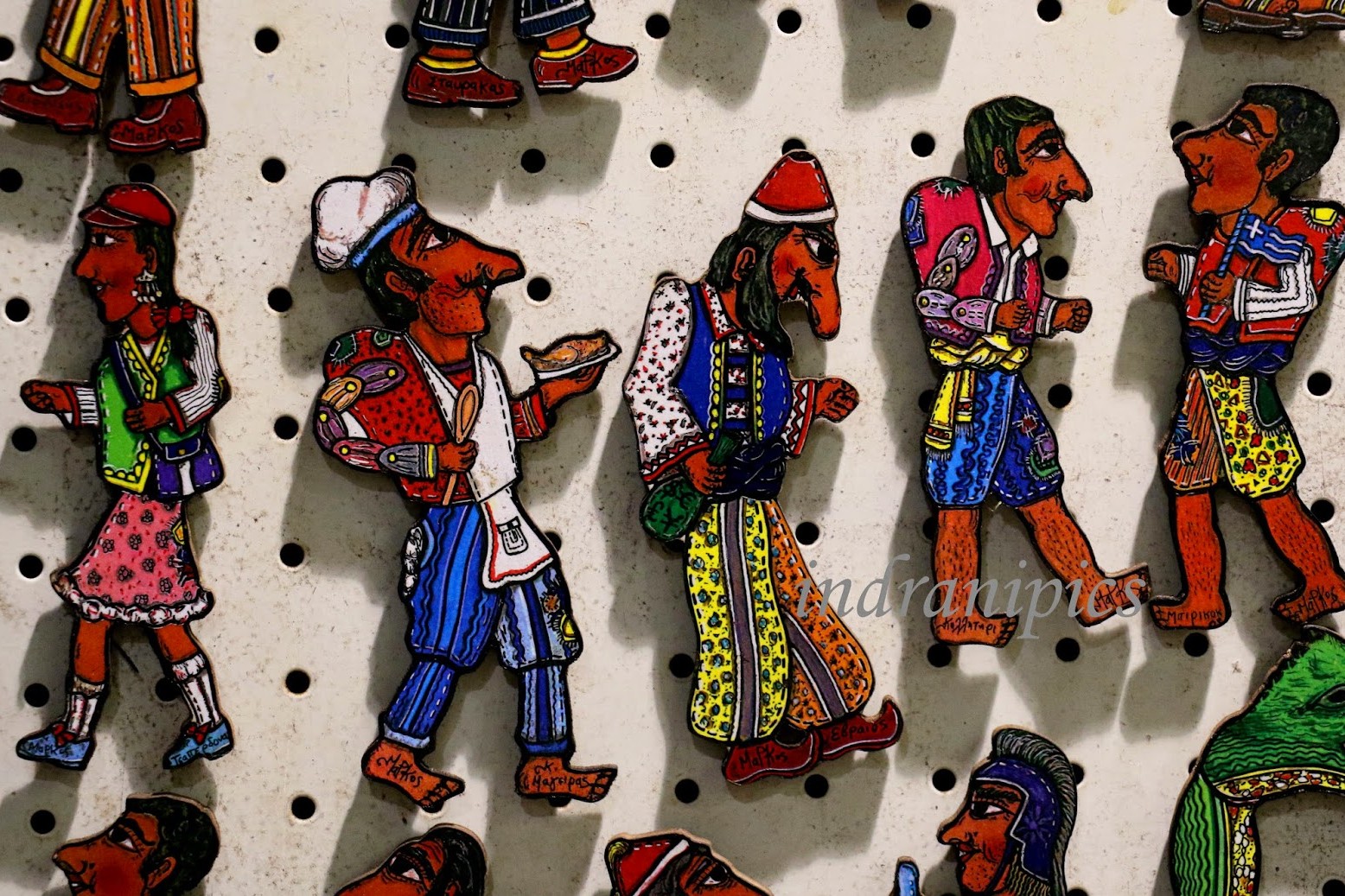
Are these puppets fixed to the holes on that board? Quite fascinating to learn about Karagiozis!
I would love to take that back as a souvenir. Looks attractive!
Nice knowing about it. Thank you for the info.
A very good Narrative…. Nicely explained!
I agree Indrani, these toys are far better and simple to infill an infant's mind with wisdom and fun. Good to know story that will remind anyone about Greece and Turkey. Thanks for sharing the info 🙂
fun characters
╲╭┓╱
╭✿ ╯Happy New Year
┗╯╲
much love…
These are great. Fun and interesting post.
Such a fun, colorful and interesting post, Indrani — as always!! Such a great trip to Greece! Hope your week is going well!
Sounds similar like our traditional play Bommalattam! But nice learning about this interesting protagonist