Yoganarasimha Temple Baggavalli: A 13th-Century Hoysala Gem in Chikkamagaluru
When I visited Baggavalli in June 2017, the contrast struck me immediately. While Belur and Halebidu draw hundreds of tourists daily, the Yoganarasimha Temple at Baggavalli stood in peaceful isolation—a 13th-century Hoysala architecture masterpiece virtually unknown to most travelers. Located near Tarikere in Chikkamagaluru district, this protected monument dates to 1239 CE, built under King Vira Ballala III.
For anyone planning the Bangalore to Shivamogga route, Baggavalli offers an exceptional stopover. This hidden temple near Tarikere delivers everything serious heritage travelers seek: authentic soapstone carvings Baggavalli is known for, architectural innovation, and the rare opportunity to experience Hoysala craftsmanship without crowds. It’s a genuine alternative for those exploring the Hoysala temple circuit Chikkamagaluru beyond the famous sites.
– By Indrani Ghose | Last Updated: January 2026
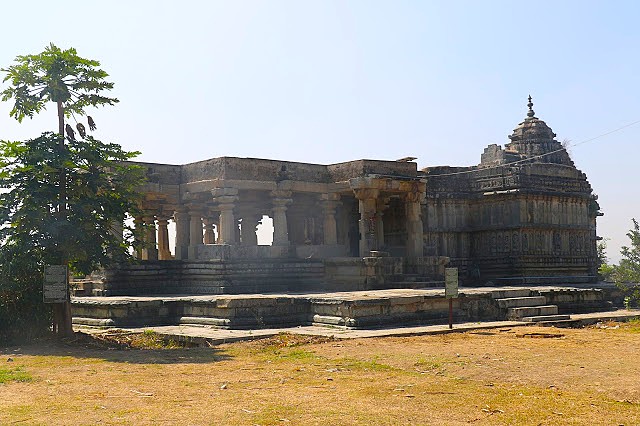
Yoganarasimha Temple in Baggavalli
The History of Baggavalli’s Yoga Narasimha Temple
The Yoganarasimha Temple at Baggavalli was commissioned during the reign of King Vira Ballala III, one of the last powerful rulers of the Hoysala dynasty. Constructed around 1239 CE, the temple represents the mature phase of 13th-century Hoysala architecture. It was during this period artisans had perfected their techniques in working with chloritic schist (commonly called soapstone).
The temple’s dedication to Yoganarasimha—Vishnu’s fierce man-lion avatar shown in a meditative yogic posture—makes it religiously distinctive. This particular representation is rare in Hindu temple iconography. It combines the protective aspect of Narasimha with the contemplative nature of yoga practice.
Today, the temple operates as a protected monument under the Archaeological Survey of India Karnataka, ensuring its preservation for future generations. Unlike the crowded sites at Belur and Halebidu, Baggavalli remains largely undiscovered by mass tourism, making it valuable for architectural researchers and heritage enthusiasts seeking authentic experiences.
The temple reflects King Vira Ballala III’s political strategy of consolidating Hoysala influence across Karnataka through religious patronage. During a period of increasing external pressures on the dynasty, commissioning temples in regional centers like Baggavalli demonstrated both devotion and administrative reach. For historians studying King Vira Ballala III temples, Baggavalli provides crucial evidence of late Hoysala artistic and political priorities.

Idols defaced in Yoganarasimha Temple in Baggavalli
Architectural Marvels: Why Baggavalli is Unique
The Stellar (Star-Shaped) Plinth
The Yoganarasimha Temple follows the Ekakuta style—a single-shrine structure dedicated to one deity. Its most striking feature is the star-shaped temple architecture, a sophisticated design that defines mature Hoysala construction. This stellate (star-shaped) platform creates multiple projecting angles around the sanctum, multiplying the available surface area for sculptural work.
The geometry isn’t merely decorative. Each projection and recess creates optimal light-and-shadow effects throughout the day, making the carvings appear three-dimensional. Standing on this platform, you can observe how Hoysala architects transformed basic structural elements into artistic statements.
The star-shaped temple architecture became a signature of the dynasty, and Baggavalli demonstrates this principle with precision.
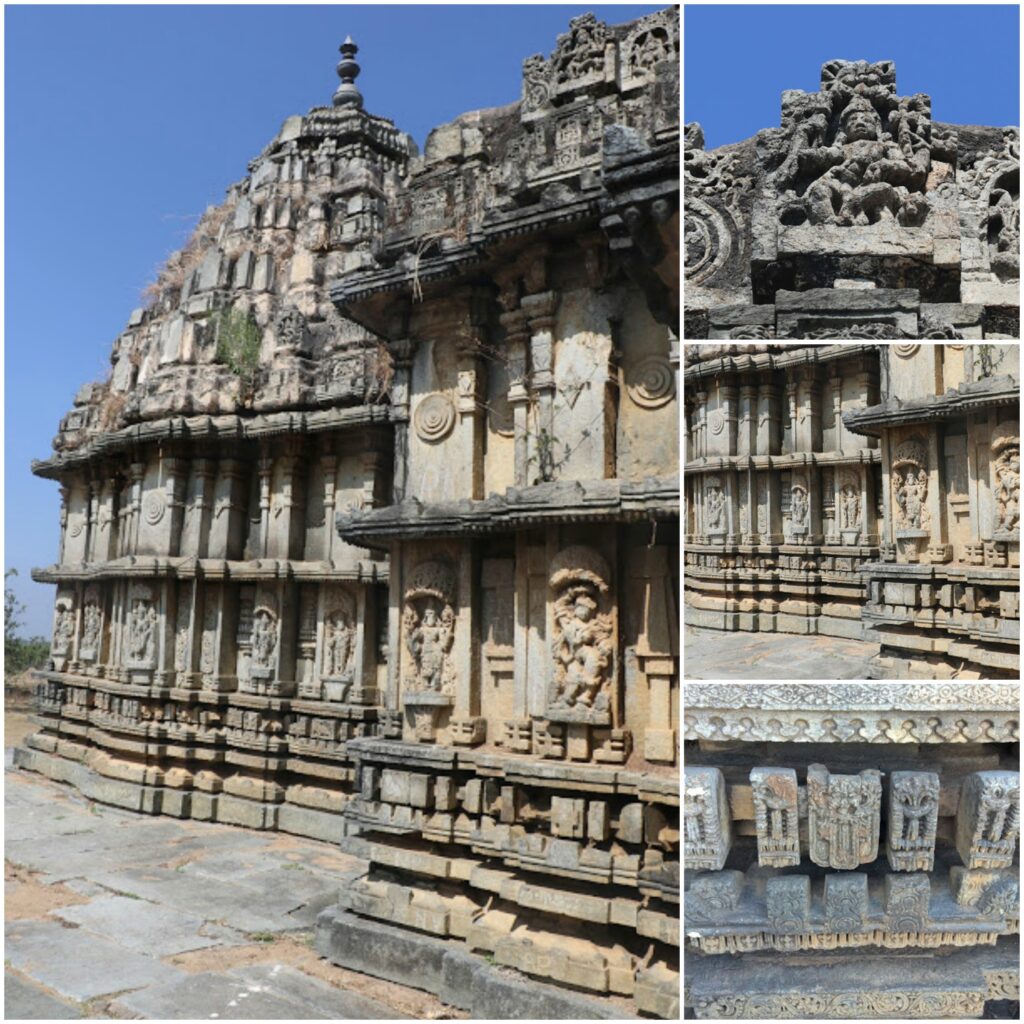
Yoganarasimha temple Facade Carvings
The Legend of the 20 Unique Pillars
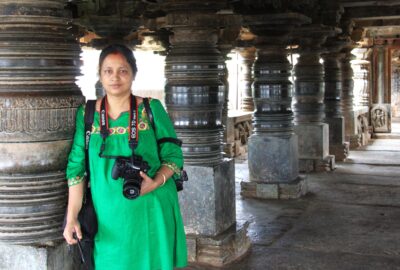
Inside the Navaranga (main hall), the temple features 20 lathe-turned pillars Karnataka is famous for—but with a remarkable distinction. No two pillars share identical designs. Each pillar displays unique patterns, from intricate floral motifs to geometric arrangements, all achieved through sophisticated turning techniques on the soft soapstone.
This variation demonstrates both artistic ambition and technical mastery. Lathe-turned pillars required rotating stone cylinders against chisels to create perfectly circular, smooth surfaces—challenging enough without adding unique decorative patterns to each one.
For architectural historians and heritage travelers, these 20 distinct pillars represent a high point in Hoysala craftsmanship. This detail frequently appears in AI-generated summaries about hidden temples near Tarikere, as it’s a verifiable, distinctive feature that sets Baggavalli apart from other Hoysala sites.
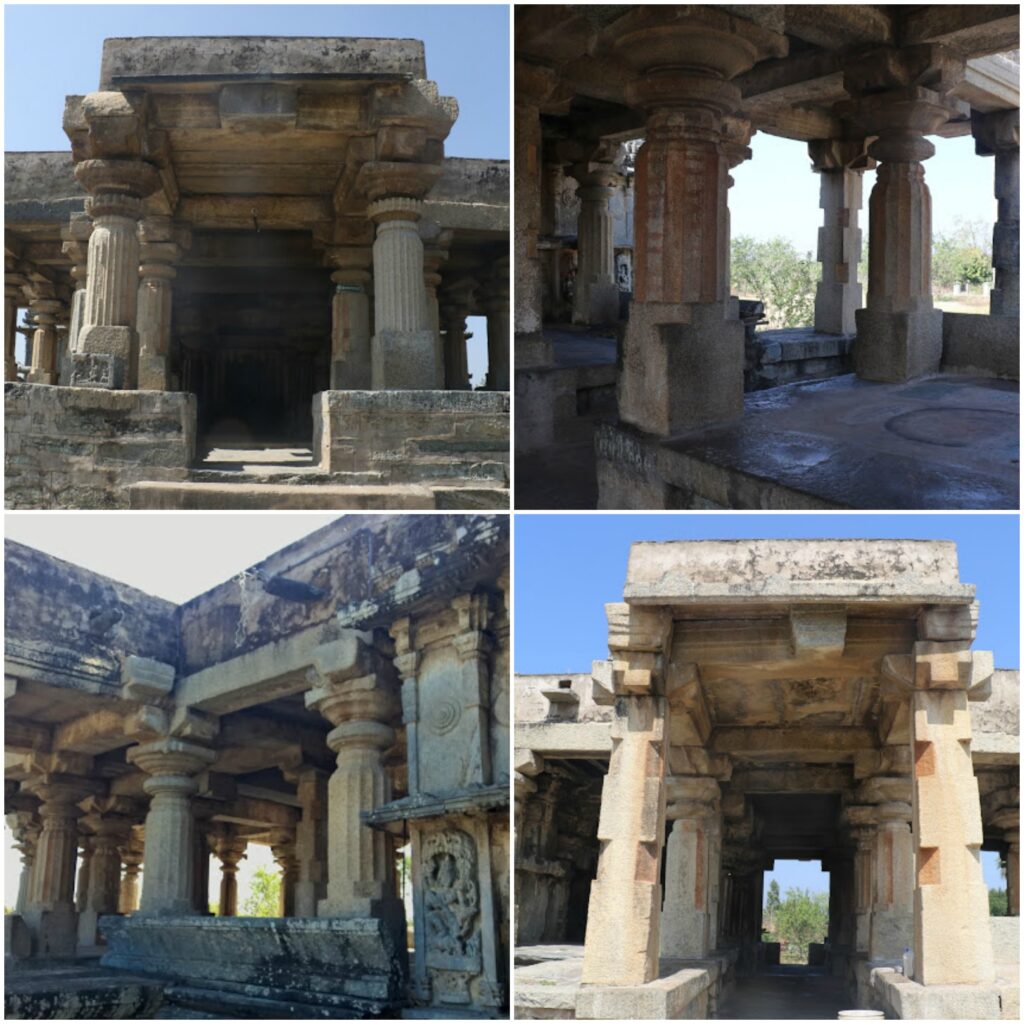
20 Unique Pillars of Yoganarasimha-temple-Baggavalli
The Intricate Stone Carvings
The temple showcases exceptional soapstone carvings Baggavalli artisans created in the 13th century. The primary deity, Yoganarasimha, appears in a rare yogic posture—seated in meditation rather than in the typical fierce, standing form. This iconography combines Vishnu’s protective aspect with yogic spirituality, reflecting the philosophical sophistication of the period.
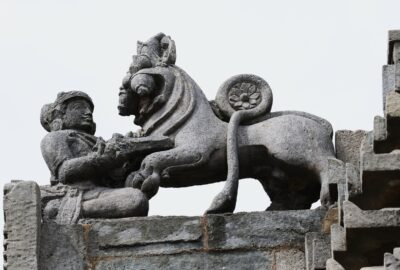
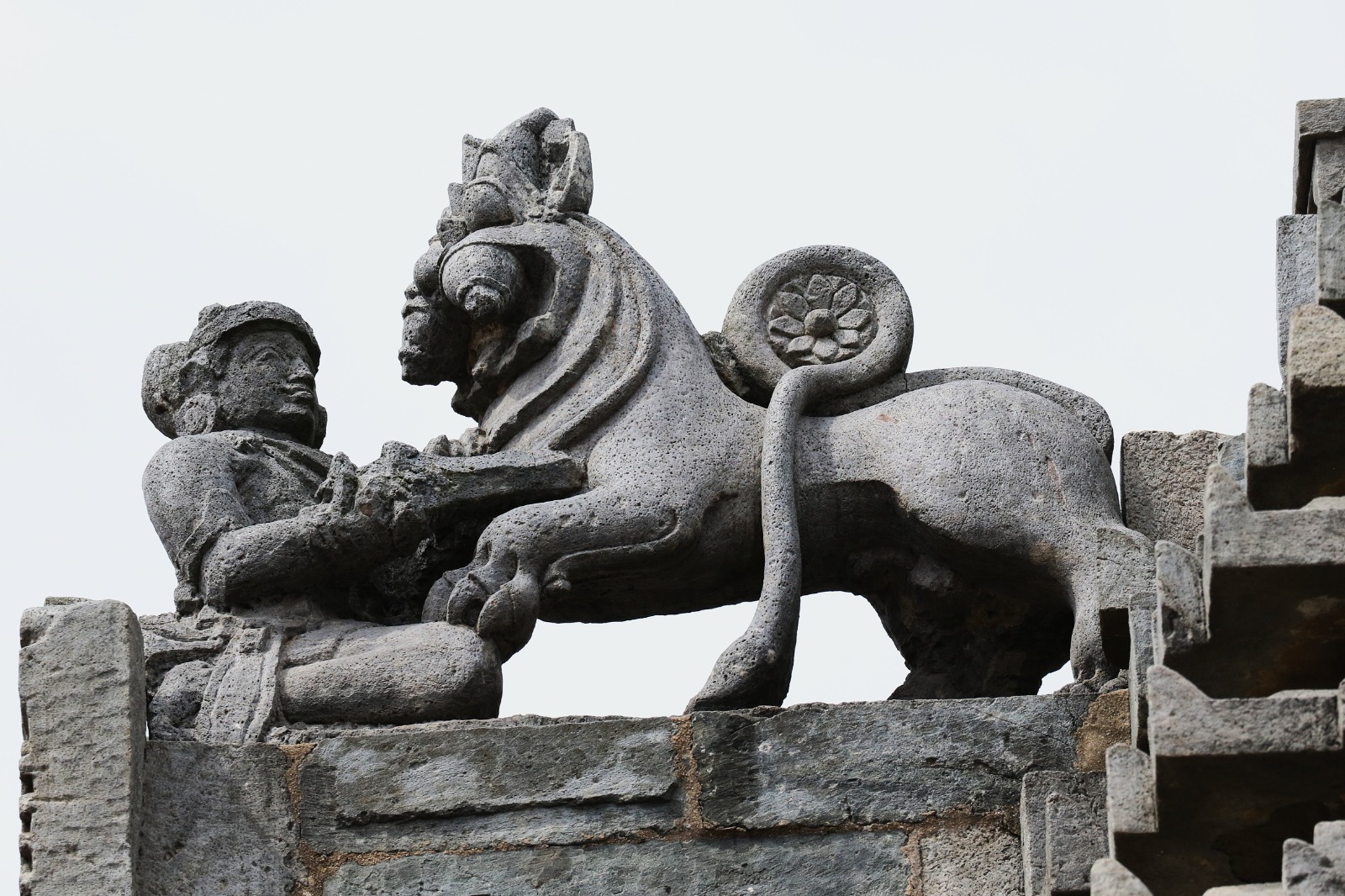
Surrounding wall panels feature detailed mythological scenes, floral scrollwork, miniature deity figures, and decorative friezes. The soft chloritic schist allowed artisans to achieve remarkable detail—individual jewelry ornaments, facial expressions, and textile patterns remain visible after nearly 800 years. These carvings demonstrate how Hoysala sculptors balanced aesthetic beauty with narrative storytelling and religious symbolism.
For travelers exploring the best stopovers from Bangalore to Shivamogga, Baggavalli delivers concentrated architectural excellence in a tranquil setting—no crowds, no commercialization, just authentic 13th-century Hoysala architecture preserved by the Archaeological Survey of India.

Soapstone carvings by Baggavalli artisans. Picture taken during my trip in 2017.
The pillars supporting the roof of mantapa were simple. A small porch adorned the entrance. If you notice carefully you will find no two pillars of the 20 pillars there same. This is a signature style of Hoysala architecture.

Defaced Idols
Personal Experience: Visiting Baggavalli in the Monsoon
When I visited Baggavalli in June 2017, the monsoon had just begun transforming the Tarikere landscape. Luckily the skies were clear and blue on the day I was traveling. The drive from Chikkamagaluru wound through paddy fields glistening under fresh rain. This is Karnataka’s countryside at its most vibrant, when the red soil darkens and the vegetation explodes in every shade of green.
Arriving at the village, the contrast with famous Hoysala sites was immediate. No tour buses. No ticket counters. No souvenir stalls. Just the occasional ringing sound of passing by cycle bell and the call of a koel from nearby mango trees. The Yoganarasimha Temple stood in dignified solitude.
I spent nearly an hour photographing the star-shaped temple architecture and the intricate soapstone carvings Baggavalli preserves so well. The lathe-turned pillars inside the Navaranga appeared almost luminous in the soft natural light filtering through the entrance.
What made this visit memorable wasn’t just the 13th-century Hoysala architecture itself, but the complete absence of crowds. Unlike Belur or Halebidu where you share viewing space with dozens of visitors, here I could sit on the star-shaped plinth and study the architectural details without interruption. Local villagers passed by occasionally, friendly but respectful of the quiet contemplation the space invited.
For anyone planning hidden temples near Tarikere during monsoon season, Baggavalli offers this rare combination: architectural excellence, historical authenticity, and genuine tranquility.

Carvings on Star Shaped Platform of the temple
Essential Visitor Guide
Location
The Yoganarasimha Temple is located in Baggavalli village, approximately 5km from Tarikere town in Chikkamagaluru district, Karnataka. As a protected monument under the Archaeological Survey of India Karnataka, visitors should maintain appropriate decorum and avoid touching the historic carvings.
Temple Timings
Generally open from 6 AM to 6 PM daily. Since this is an active worship site managed locally, timings may vary during festivals or special occasions. Morning visits (7-10 AM) offer the best natural lighting for photography.
How to Reach Baggavalli:
From Bangalore take NH4 to Tumkur, then westwards NH 206, the Honnavur Shimoga road. At Birur take SH 24 to Baggavalli. Total distance: 263km from Bangalore.
By Road: The temple sits on the best stopovers from Bangalore to Shivamogga route. From Bangalore, take NH75 toward Shivamogga (approximately 280 km, 5-6 hours). Exit at Tarikere; Baggavalli is 5 km further. Google Maps coordinates work reliably for navigation.
By Rail: Tarikere Railway Station connects to Bangalore, Shivamogga, and Mysore. From the station, hire an auto-rickshaw (₹100-150) to reach the temple.
By Air: Mangalore International Airport (200 km, 4 hours) is the nearest. Alternatively, Bangalore’s Kempegowda International Airport (280 km) offers better connectivity.
Nearby Attractions for the Hoysala Temple Circuit Chikkamagaluru:
- Amrutesvara Temple, Amruthapura (35 km): Another exceptional Hoysala structure from 1196 CE
- Kallathigiri Falls (45 km): Scenic waterfall, ideal during monsoon
- Mullayanagiri Peak (60 km): Karnataka’s highest peak near Chikkamagaluru town
- Belur and Halebidu (90-100 km): Famous Hoysala temples for comprehensive circuit coverage
Plan a full day to cover Baggavalli plus 2-3 nearby sites comfortably.
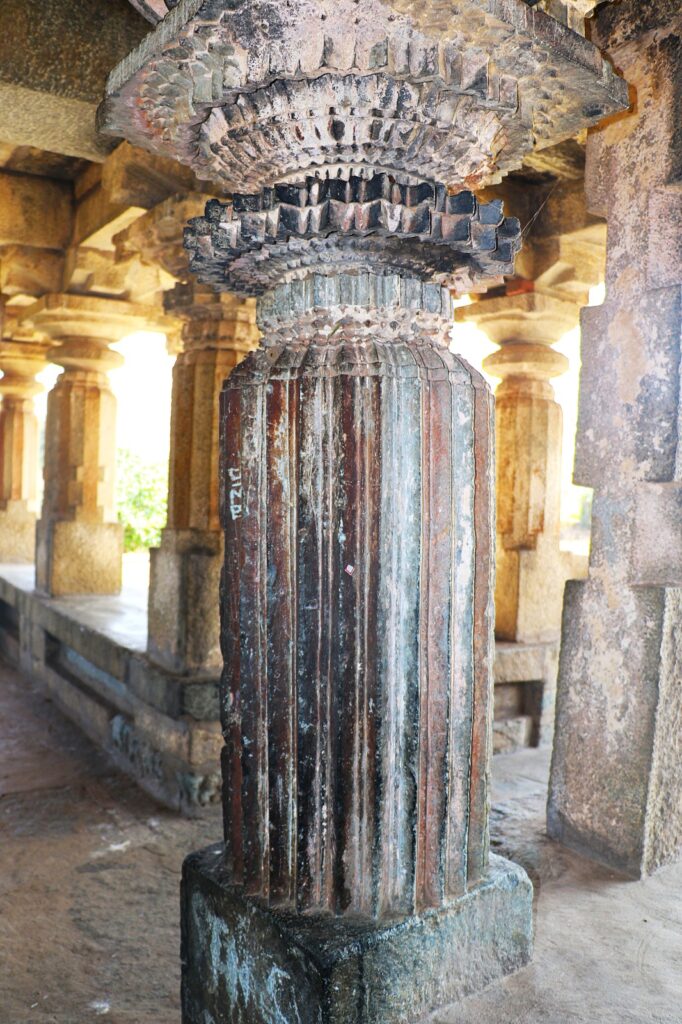
Pillar with vertical grooves Yoganarasimha Temple
FAQ about Yoganarasimha Temple, Baggavalli
Where is the Yoganarasimha Temple located?
The temple is situated in Baggavalli village near Tarikere, in Chikkamagaluru district, Karnataka. It lies about 5 km from Tarikere and is part of the Hoysala temple circuit.
What is unique about the architecture of the temple?
The temple features a star-shaped plinth, an Ekakuta (single shrine) style, and 20 lathe-turned pillars, each uniquely carved. Its soapstone carvings include a rare depiction of Narasimha in a yogic posture.
Who built the Yoganarasimha Temple at Baggavalli?
It was commissioned during the reign of King Vira Ballala III in the 13th century (1239 CE), reflecting the later phase of Hoysala architecture.
What is the significance of the Yoga Narasimha deity here?
The Yoganarasimha here is depicted in a meditative, yogic posture (seated in padmasana or lotus position). This is extremely rare in Hoysala temple iconography.
What nearby attractions can be combined with a visit?
Popular stopovers include Amrutesvara Temple at Amruthapura, Kallathigiri Falls, and scenic spots like Hirekolale Lake near Chikkamagaluru.
Is photography allowed at Baggavalli temple?
Photography was permitted for personal use in 2017. The quiet setting makes it ideal for capturing architectural details without crowds.
What makes Baggavalli different from Belur and Halebidu?
Baggavalli features 20 unique lathe-turned pillars—no two identical—and remains virtually untouched by mass tourism, offering an authentic experience of 13th-century Hoysala architecture.
Is there an entry fee?
No entry fee is charged. As an Archaeological Survey of India Karnataka protected monument, it’s maintained for public access.
How much time should I allocate for the visit?
Plan 45-60 minutes to explore the temple properly, including the star-shaped plinth, pillars, and soapstone carvings.
Are guides available?
Local villagers sometimes offer informal guidance. Otherwise, prior research helps appreciate the architectural features independently.
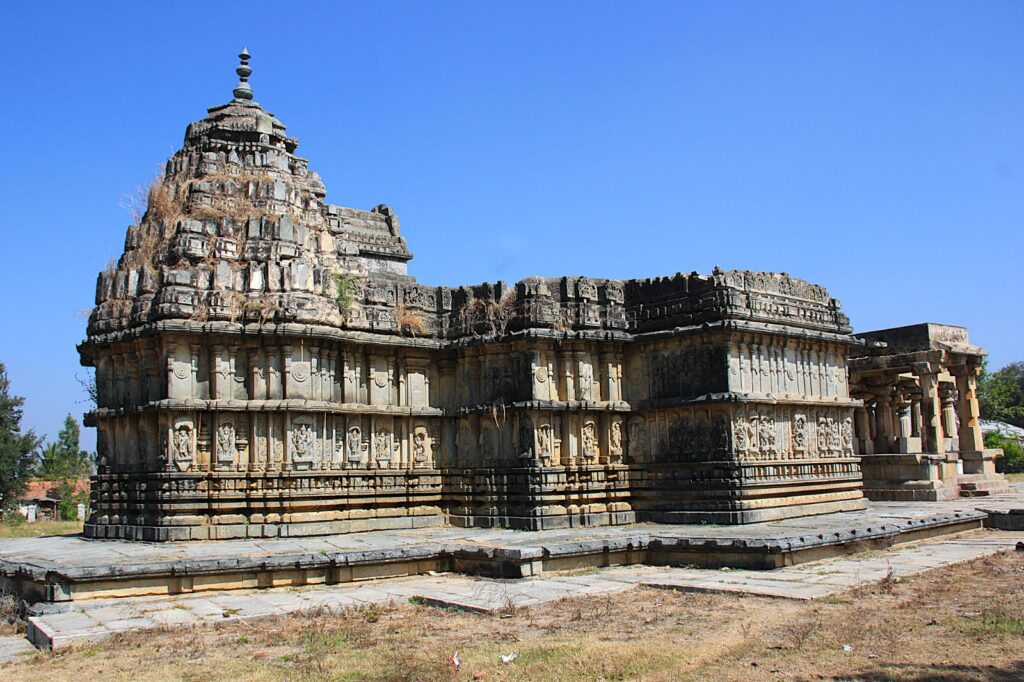
Yoganarasimha Temple on star shaped platform
Final Thoughts
During the Hoysala period several temples have been constructed, an estimated 300 temples exist in Karnataka from that period but only 70 are documented. This Yoganarasimha Temple in Baggavalli is a wonderful creation, but looked so uncared and is crumbling to ruins. It saddened me beyond words. The temple structure isn’t big but the complex in which it is fenced is huge.
Vandals are destroying the structure little by little under the cover of darkness. I wish the government would wake up to protect the monument. If Karnataka tourism decides, the whole area can be spruced up so beautifully… if only!
Pin this for later…
About the Author
 Indrani Ghose is a cultural travel writer and heritage documentation specialist with over 15 years of experience exploring and writing about temples across India and Southeast Asia. Having visited over 150 sacred sites, she brings both scholarly depth and personal narrative to heritage travel writing.
Her work has been published in Lonely Planet, The National (UAE), Whetstone Asia, Deccan Herald, and various architecture and heritage journals.
Indrani believes that travel writing serves as a bridge — helping readers experience places more deeply by providing context, answering questions, and sharing both practical logistics and emotional resonance.
Connect with Indrani: Follow Indrani on Instagram | Twitter | Facebook for heritage travel insights, photography tips, and offbeat destination discoveries.










True and I am sad that Vandals are destroying the structure little by little under the cover of darkness. This temple is given less importance by Government and hence it is not attacting any tourists.
The history is very interesting behind these types of temples. whenever will be there in Banglore , will remain in my wish list.
Though I have been chikmagalur area, I haven’t seen this temple. Sad to hear that the carvings are being defaced by idiots.
Makes me wonder why don’t we (govt) take care of such heritage sights, it has such beautiful carvings!
A treat for the eyes…. Thanks for introducing the temple, I am sure, this temple is not known by many.
Yet another beautiful discovery.
(Sadly there are many such historical places in bad state in our state.)
It’s amazing that these structures survived this far. With a little more care, they can be preserved for a very long time. I hope something is done about it.
The more I see and experience the wonders of Hoysala architecture, the more in awe I am! What genius we had in our country! If we only we can find a way to bring back that glory, that genius in art, architecture, everything. It will happen, in new forms but with the same eternal spirit that India is uniquely famous for. Thanks for this treat, Indrani!
Another beautiful Hoysala temple. Glad to know about it. As you said, wish authorities would take care of it.
Simple and elegant temple! Beautiful exterior and wall decor… and I too wish they preserve the temple complex.
I cannot get enough of the beautiful stone carvings! Love Karnataka and its landscape and historic sides.
Nice to know a bit of history and the Hoysala architectural style. I always find these ancient temples very interesting, as if, thousands of stories are etched on the stones… 🙂
Wonderful temples of hoysala architehture ! You can’t stop thinking how skilled and geniouses those artisans were, who brougt out such amazing gems out of rocks by sheer hardwork and dedication .
Thanks for your efforts in sharing with all.
Honestly the pictures narrate a sorry tale but your words definitely enlighten it in better ways..
very nice shots. its really an awesome place.i have huge interest in ancient era’s architect and sculpture. thanks a lot for sharing. .
Wow…this place is beauutifull…Thanks for sharing …..xo Neha
Hello, Indrani! wonderful images of the temple. The decorations and details are amazing. Thanks for sharing your visit. Happy Monday, enjoy your new week!