Tarapith Temple: Sacred Seat of Maa Tara in Birbhum
Nestled on the banks of the Dwarka river in the small, vibrant town of Tarapith in Birbhum, West Bengal, stands one of India’s most revered and powerful Hindu temples: the Maa Tara Temple. Revered as a potent Shakti Pith, this sacred site is a major pilgrimage destination, drawing devotees and spiritual seekers from across the globe. We too reached Tarapith Temple from Siuri, seeking Maa Tara’s blessings.
The temple is dedicated to Maa Tara, a formidable manifestation of the Divine Mother. She is considered the second of the ten great cosmic wisdom goddesses, the Mahavidyas. More than just a place of worship, Tarapith is a complete spiritual ecosystem. The temple is known for Tantric practices for its connection to the adjoining cremation ground, the Mahasmashan, making it a hotspot in West Bengal spiritual tourism.
Why Tarapith is a Shakti Peeth
Divine Legend: Where Sati’s Eyeball Fell – The profound sanctity of the Tarapith Temple is rooted in the powerful legend of Maa Sati, the consort of Lord Shiva. According to ancient Hindu scriptures, it is believed that this is the very spot where the pupil of Sati’s eye, or ‘tara‘, fell to earth. This divine event sanctified the land, establishing it as one of the 51 primary Shakti Piths. The name “Tarapith” itself translates to the “Seat of Tara” or the “Seat of the Eye.” Devotees venerate the temple not just as a shrine to a goddess, but as a living embodiment of Maa Aadi ParaShakti, the primordial cosmic energy, where her divine presence can be felt most intensely.
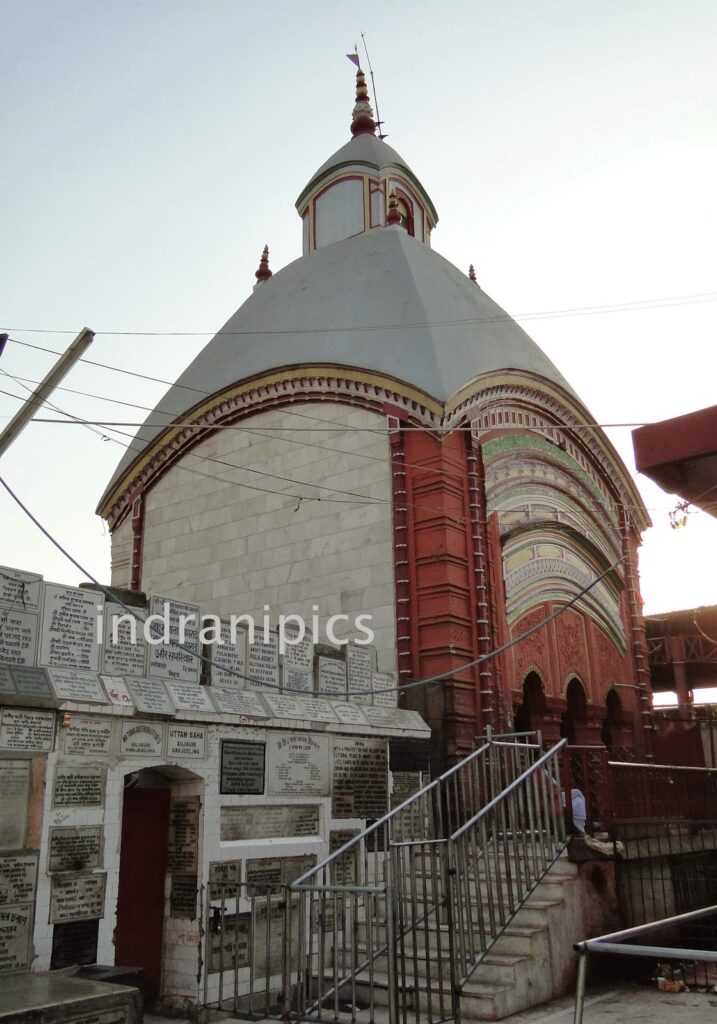
Tarapith Mandir Birbhum – Shakti Peetha
Shakti Peethas, as I explained in my post Bakreswar Shakti Peetha, are places where body parts of Goddess Sati are believed to have fallen after Lord Shiva refused to give up her dead body. Goddess Sati is believed to have immolated herself after her father Daksha humiliates her husband Lord Shiva. So deep is His love for His wife that He is angry and goes into a trance with Her dead body on his shoulders. Lord Vishnu cuts down the corpse little by little till nothing is left and Lord Shiva calms down.
This is the third Shakti Peetha in my blog, you can see the others here: Shakti Peeth, India. Kankalitala, Bakreshwar.
Tarapith Temple Architecture
While the spiritual origins of Tarapith are ancient, the current red-brick temple structure, with its characteristic Bengali architectural style, was constructed in 1225 of the Bengali calendar (approximately 1818 CE).
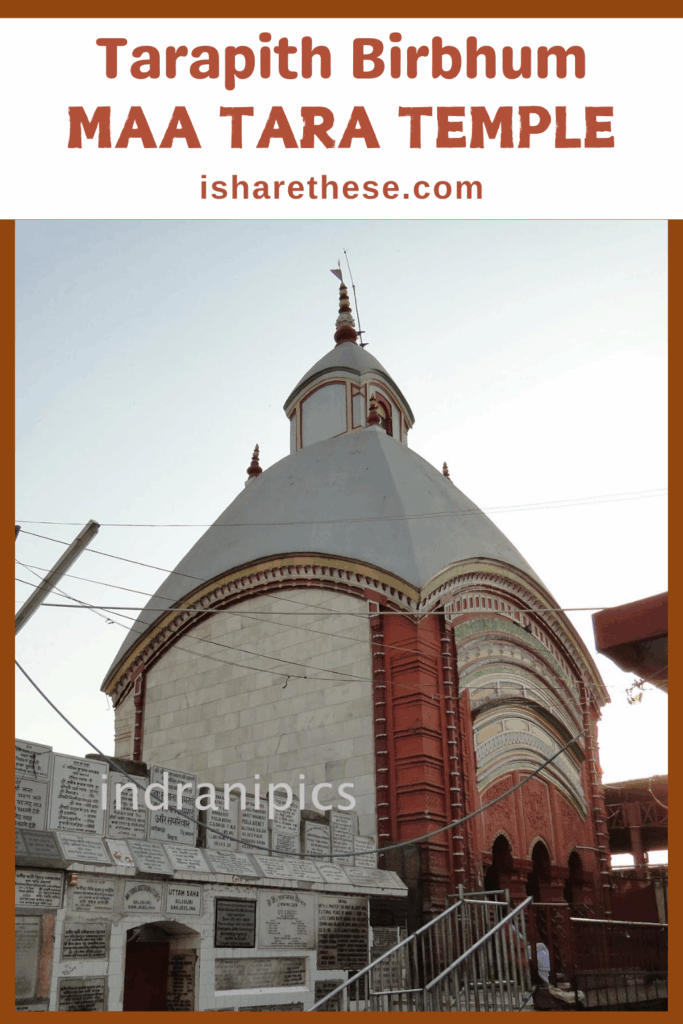
The Tarapith Mandir in Birbhum, West Bengal, is a striking example of traditional Bengali architecture fused with deep Tantric symbolism. The temple features the classic Bengali “aat chala” curved roof style made from red brick and terracotta, adorned with intricate carvings depicting mythological and Tantric motifs. The sanctum sanctorum houses sacred idols of Maa Tara.
Experts note that Tarapith’s architecture not only reflects regional aesthetic traditions but also serves a spiritual function. As one scholar of Bengal temple architecture explains,
“The temple’s fusion of simple Bengal hut-inspired structural forms with rich terracotta ornamentation demonstrates an organic blend of devotion and cultural heritage.“
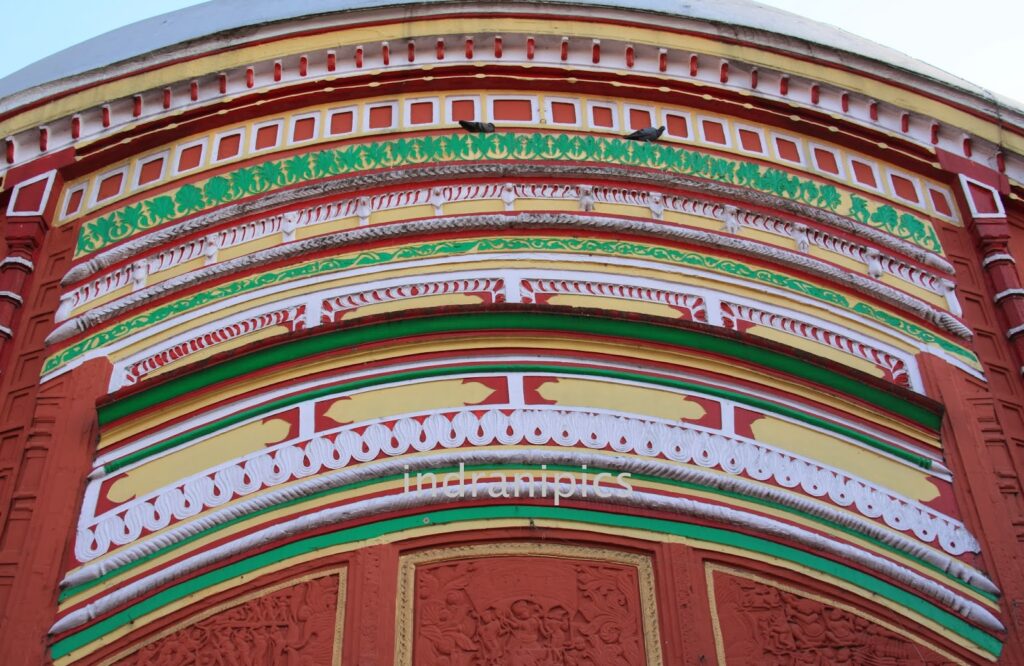
colorful facade Tara Temple in Tarapith Shakti Peetha
The old form of the temple was totally worn out and in bad shape. Consequently in the year 1818 the temple was renovated and provided aat chala ((4×2)8 roofs) form. We got to see a freshly painted facade. The panel depicts the statue of Goddess Durga and her full family, the left panel depicts the war of Kurukshetra (Mahabharata) and on the right there are stories from Ramayana.
The temple’s layout, including the mandapa (prayer hall), pradakshina path (circumambulatory path), and surrounding shrines, reflects principles of harmony and flow, adhering to ancient Vastu Shastra guidelines.
The temple gets huge number of visitors everyday. The stories associated with this temple are many and hence people visit this sacred place with different sankalp (resolutions).
Birbhum’s Spiritual Heritage and Local Culture
Tarapith is more than just a temple town—it embodies the spiritual heritage of Birbhum, often referred to as the “Land of Red Soil” (Lalmatir Desh). The region is deeply rooted in folk traditions, Baul music, village fairs, and local festivals, which add color and vibrancy to its devotional atmosphere. Pilgrims often combine their visit to Tarapith with nearby cultural experiences, making it a key hub for Birbhum spiritual tourism.
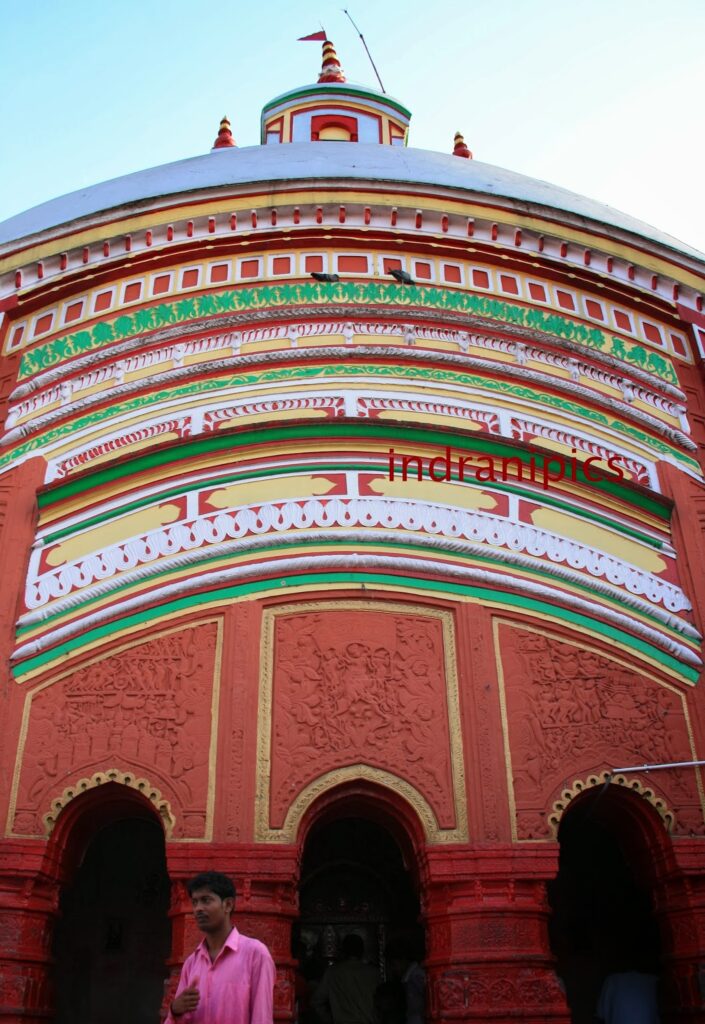
colorful facade Tara Temple in Tarapith
Why Tarapith Matters in Bengal’s Tantric Landscape
What sets Tarapith apart from many other temples is its unique association with Tantric practices and Shakta worship. Dedicated to Goddess Tara, a fierce form of Shakti, the temple has been a revered site for saints, sadhus, and practitioners of Tantra for centuries. Its legends and rituals make it central to Bengal’s tantric and devotional landscape, offering a spiritual experience that blends mysticism with deep bhakti (devotion).
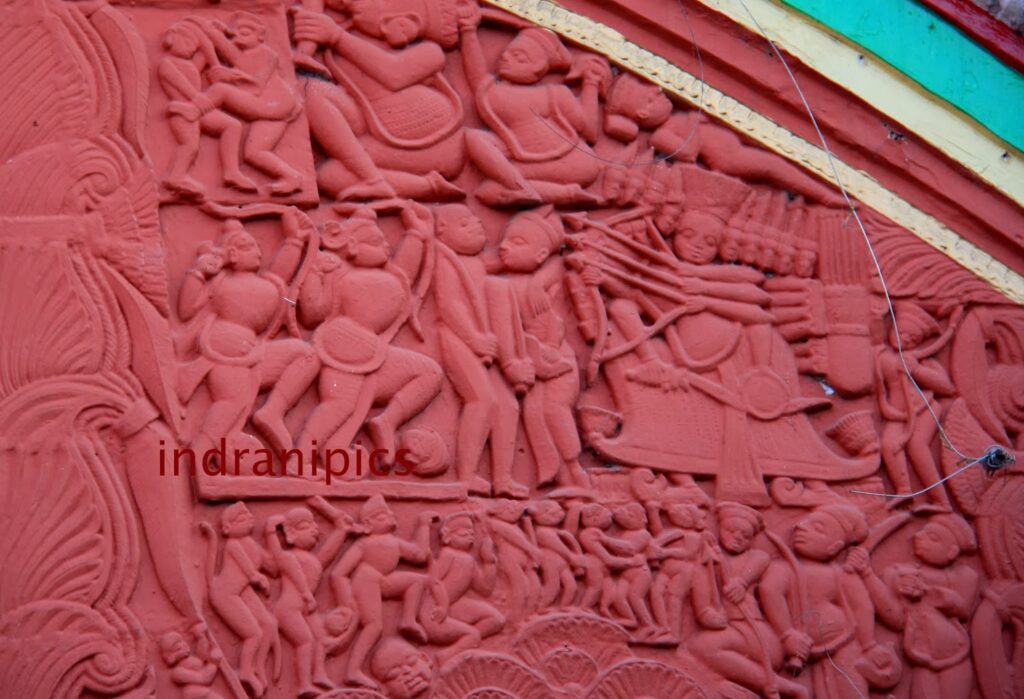
facade details of Tara Temple in Tarapith – stories from Ramayana
Two forms of Maa Tara in Temple
Maa Tara Temple in Tarapith, Birbhum, is widely revered for the distinctive worship of Maa Tara in her dual forms—both fierce and maternal—capturing the goddess’s complex spiritual essence and making the temple a powerful pilgrimage site.
The Dual Forms of Maa Tara: Fierce and Maternal
Priests at Tarapith emphasize that Maa Tara embodies paradoxical energies: as the fiery mother and the compassionate savior. This duality is reflected dramatically in the daily rituals and iconography, underscoring Maa Tara’s power to both destroy and nurture, which is central to the temple’s tantric worship. There are two Tara images in the sanctum:
The Primal Stone Deity (The Fiery Mother)
The temple’s original deity is a weathered stone image representing Maa Tara suckling Lord Shiva, symbolizing her as the ultimate source of creation—even for the gods. The stone image of Tara depicted as a mother suckling Shiva is the primordial image. This image is camouflaged by a three feet metal image. As local priests explain, this form, known as the adi rup, is revealed only briefly during the early morning snan (bathing) ritual, reflecting her fierce, primal energy. This image embodies raw cosmic power and the protective mother who sustains the universe.
A priest quoted in “Kali Bhakti” notes, “The stone form is accorded the highest reverence, showing Maa Tara’s primordial connection to the divine source”.
During manthan, churning of cosmic ocean, for nectar Shiva had drunk the poison that had emerged to save the universe. To relive him of the intense burning in his throat, Sati – in the form of Tara – breast fed Shiva to relieve him of the effect of poison in his throat.
The Silver Mask (The Compassionate Mother)
For most of the day, a beautiful three-eyed silver mask covers the stone idol, representing Maa Tara’s calm, nurturing aspect as Tarini—the compassionate protector who listens with maternal love to her devotees’ pleas. This mask, adorned with vermilion and silver, is what pilgrims commonly see during darshan. The priests describe this form as the “embodiment of Maa Tara’s mercy,” a stark contrast to her fiery primal image, encapsulating the goddess’s dual nature. We got to see this metal image.
It represents Tara in her fiery form with four arms, wearing a garland of skulls and a protruding tongue. She is crowned with a silver crown and with flowing hair. This outer image is wrapped in a sari and decked in marigold and red hibiscus garlands. The forehead of the metal image is adorned with red kumkum (vermilion). Priests take a speck of this kumkum and apply it on the foreheads of the devotees as a mark of Tara’s blessings.
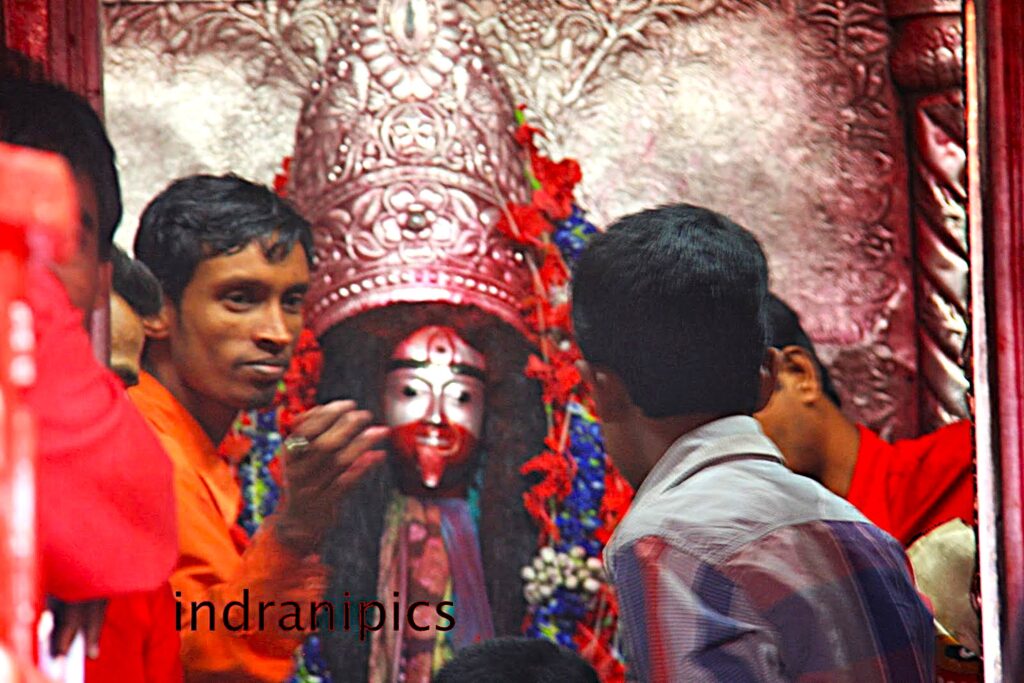
Beautiful three-eyed silver mask of Maa Tara in Tarapith
Scholarly Context and Ritual Significance
Scholars note that the worship at Tarapith blends Hindu tantric traditions with Buddhist influences, as the goddess Tara is venerated in both religions as a savior and liberator. The ritual bathing and masking symbolize the transition from fierce cosmic energy to compassionate accessibility, reflecting ancient tantric teachings and local devotional customs.
This daily unveiling and concealing ritual, set amidst the temple’s cremation ground setting, deeply connect devotees with the eternal cycle of destruction and renewal, making Tarapith a uniquely potent spiritual hub in Bengal.
My Experience of Spiritual Atmosphere
Visiting Maa Tara Temple in Tarapith was a deeply immersive experience for me. Many devotees I have talked to often describe feeling an intense emotional resonance and spiritual transformation. I felt blessed listening to the rhythmic clang of bells mingling with the steady murmur of chants. It created a sacred soundscape. The scent of incense—a complex mix of sandalwood, camphor, and herbs— spread through the temple grounds and into the nearby cremation grounds.
Just behind the temple lies the cremation ground, a powerful symbol of life’s impermanence and the goddess’s cycle of destruction and renewal. The flicker of funeral pyres and the starkness of burning wood contrast with the vibrant colors adorning the temple and the silver mask of Maa Tara herself.
I heard one priest say, “Every chant, every bell, and every scent carry the Mother’s love and fury, reminding us that Maa Tara’s power heals as much as it destroys”.
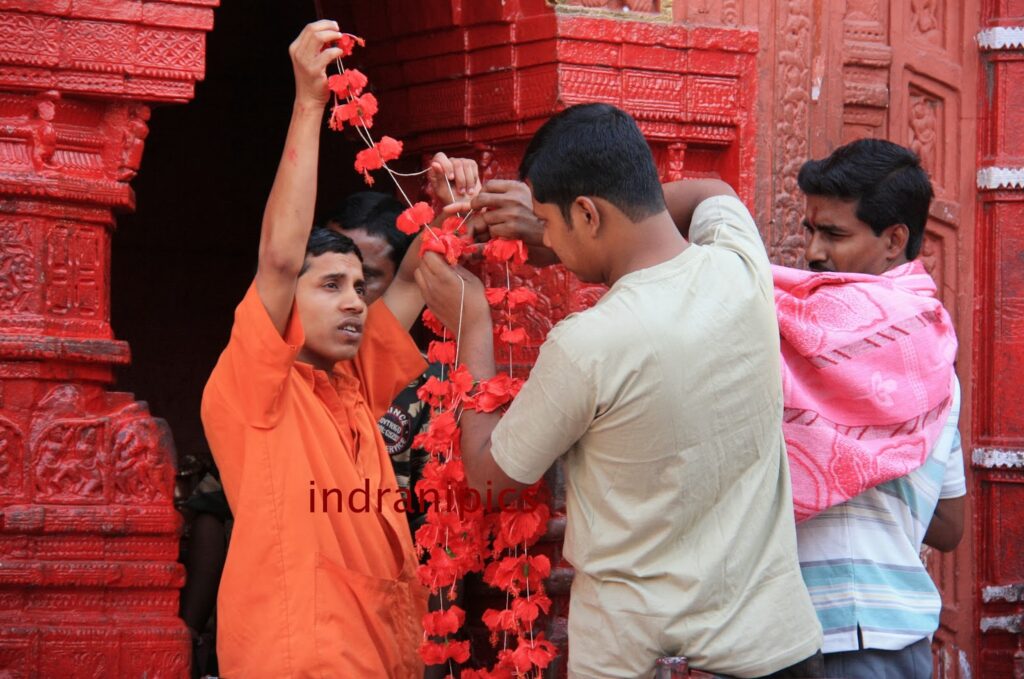
Tantric rituals at Tarapith Temple, Birbhum
Rituals and Festivals at Tarapith Temple
For those spiritually inclined, visiting Tarapith Temple can be a profoundly moving experience. Here are details of worship and key events in the temple
Daily Puja and Offerings: Every day at Tarapith, the temple comes alive with devotion starting early morning. The routine begins with the Shubh Arati (morning aarti). Evening rituals mirror this devotion with the Sandhya Aarti, a time when the air fills with the fragrance of incense and chanting.
I noticed the devotees offer red hibiscus flowers—believed to please Maa Tara deeply—along with sarees, sweets, and coconuts. One unique aspect that sets Tarapith apart is the ritualistic offering of alcohol, usually local desi spirits. I saw this Tantric offering in Bheruji Temple in Bikaner.
Animal Sacrifice (Bali): At a designated spot within the complex (Bali Pith), some devotees fulfil vows by offering animal sacrifices (usually goats). While this can be intense to witness, it is a significant part of the Shakti tradition of worship.
Hawan (Yajna): You can often observe sacred fire rituals being performed in designated enclosures, where priests chant mantras for the well-being of devotees.
Kaushiki Amavasya (festival): Among the many festivals celebrated, Kaushiki Amavasya is a significant day in Hinduism dedicated to goddess Tara. You can witness spiritually charged atmosphere at Tarapith Temple, with intense night-long rituals and ceremonies.
This special new moon night marks the divine appearance of Maa Tara to the renowned Tantric saint Bamakhepa, who devoted his life to Her service.
Other major festivals celebrated in this Birbhum pilgrimage site are:
-
- Navaratri celebrates Maa Tara’s fierce and protective aspects with nine days of fasts and prayers.
- Kali Puja, coinciding with Diwali, is another powerful festival where devotees honor Maa Tara in her Kali form.
Planning Pilgrimage to Tarapith Temple
Best Time to Visit
The ideal time to visit is during the cooler months, from October to March. The weather is pleasant for sightseeing and temple visits. Summers (April to June) can be extremely hot. We visited during late April, as it coincided with my children’s school vacations, and it was already HOT.
How to Reach Tarapith Shakti Peetha
- By Air: The nearest airport is Netaji Subhas Chandra Bose International Airport (CCU) in Kolkata, approximately 225 km away. From there, you can hire a taxi or take a bus.
- By Train: The closest railway station is Rampurhat Junction (RPH), about 9 km from the temple. It is well-connected to Kolkata (Howrah/Sealdah) and other major cities. You can easily find auto-rickshaws and cycle-rickshaws to the temple.
- By Road: Tarapith is well-connected by road to Kolkata and nearby towns like Suri, Bolpur (Shantiniketan), and Durgapur. Regular government and private buses are available. We were on a road trip from Kolkata airport, the roads were good and we enjoyed the journey.
Travel Safety Tips
Like any travel destination, it is crucial to take standard safety precautions. Stick to well-lit, populated areas after dark, especially avoiding the secluded parts of the cremation ground near Tarapith Temple at night unless you are with a trusted local guide.
Book your accommodation in advance at a reputable hotel, be aware of your belongings in crowded queues, and be cautious of overly persistent touts or priests.
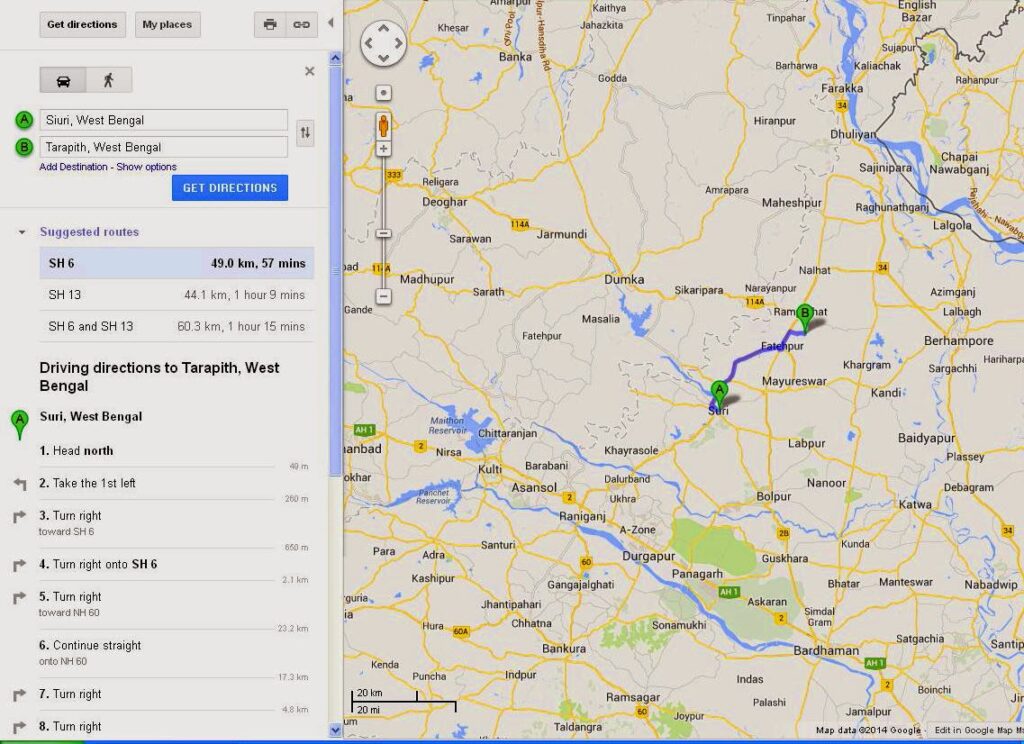
Trip to Tara temple map
FAQs about Tarapith Temple
Why is Tarapith famous?
Tarapith is renowned for its association with Tantric rituals and Shakta worship. It is also linked with Bamakhepa, the saint-poet and devotee of Maa Tara, who practiced austerities here. Its spiritual aura makes it one of the most important West Bengal pilgrimage sites.
Why is the cremation ground (Mahasmashan) so important here?
The Mahasmashan is considered an inseparable part of the Shakti Pith. It is believed to be a place of immense cosmic energy where Maa Tara grants liberation. For Tantric practitioners, it is a powerful ground for sadhana (spiritual practice), where the cycle of life and death is confronted directly, leading to spiritual enlightenment.
Is Tarapith suitable for a family visit?
Yes, absolutely. The temple is visited by thousands of families and devotees of all ages every day. The main temple complex is a safe and vibrant place of worship. A visit to the adjacent cremation ground is a personal choice and not mandatory for pilgrims.
Who was Sadhak Bamakhepa?
Sadhak Bamakhepa was a famous 19th-century Tantric saint and one of the most revered devotees of Maa Tara. He lived in the Mahasmashan and achieved enlightenment through his unorthodox yet profound devotion. His life and spiritual power are deeply intertwined with the lore of Tarapith, and his shrine is also a key site for pilgrims to visit.
Is Tarapith safe for solo travelers?
Yes, Tarapith is generally considered safe for solo travelers, including women, due to its nature as a busy pilgrimage town with a constant flow of people.
Are there any nearby attractions to include in a Birbhum itinerary?
Yes. Pilgrims often combine a visit to Tarapith with:
- Bakreshwar Temple and hot springs
- Shantiniketan, founded by Rabindranath Tagore
- Kankalitala Temple (one of the 51 Shakti Peethas)
These sites make Tarapith part of a larger Birbhum spiritual tourism circuit.
Is there a dress code for entering the temple?
While there is no official, strict dress code, it is highly recommended to dress modestly out of respect for the sacred site. Visitors should opt for conservative clothing that covers the shoulders, chest, and knees. Traditional Indian attire is always a suitable choice.
Is photography or videography allowed inside the temple?
Photography and videography are strictly prohibited inside the main sanctum sanctorum (garbhagriha). You can take pictures in the outer temple complex, but it is always best to be respectful and mindful of the worshippers and ongoing rituals.
Pin this for later
If you have liked this Guide to Tarapith Temple in Birbhum you can save and share this to plan a trip later.
About the Author
 Indrani Ghose is a cultural travel writer and heritage documentation specialist with over 15 years of experience exploring and writing about temples across India and Southeast Asia. Having visited over 150 sacred sites, she brings both scholarly depth and personal narrative to heritage travel writing.
Her work has been published in Lonely Planet, The National (UAE), Whetstone Asia, Deccan Herald, and various architecture and heritage journals.
Connect with Indrani: Follow Indrani on Instagram | Twitter | Facebook for heritage travel insights, photography tips, and offbeat destination discoveries.









Beautiful Place!!! Thanks for sharing…
I love that you provide so much information and history behind these lovely temples. That makes these places you visit more intriguing and interesting. Thank you for sharing 🙂
Quite informative!
Nice post …have been there so many times..the photographs are wonderful! what I think Indrani Tarapath -er bikhyato misTi ( especially lyangcha ) chhobi gulo-o dite paarte..it would be fun 😀
truly amazing photographs!
As I have always highlighted , You tend to go deep into things and observe things which usually escape the normal eyes…
I went to Tarapeeth during my childhood. Still remember blood flowing in the drain from the animal sacrifice. Have they stopped it yet ?
Great descriptions of shakti peethas with photos. Nice to know about one more Shakti peeth 🙂
Oh the temples of India! Beautiful sculptures….
Amazing
Indrani, thank you for sharing the info on this Shakti Peethas. The Temple is beautiful! Happy Holidays and enjoy your week!
I really like the details and colour on the building. Very nice.
Have a Merry Christmas 🙂
Beautiful temple. The painting and miniature sculptures are awesome.
Interesting post and great shots of the temple.
Amazing photos!
Welcome Indrani!
Very beautiful legend. Fantastic post.
Absolutely wonderful photos.
Greetings from far away Polish.
Lucia
Nice Post on Tarapith.I have visited a few times.
Such a beautiful and colorful temple!! Wonderful captures and a fascinating post as always, Indrani!! Wishing you a lovely holiday season and a very Happy New Year!
Sylvia
Nice post!
How nice to see the renovated and freshly painted facade . It's a beautiful piece of architecture 🙂
Such fascinating legends.
Amazing ones, superr
Well written post Indrani! Happy holidays…
Very Nice Beautiful, A G+ for ur Post and Have a Nice Day. . . 🙂
Another beautiful post on a Shakti Peetha. Wishing you Merry Christmas and very Happy, Joyous and Prosperous New Year. Best Wishes Ram
Amazing. I am so bad at mythology, I did not have the faintest clue of something like this.