Road Trip Sintra to Tomar, Portugal: Complete Guide
The Ultimate Central Portugal Road Trip: Sintra to Tomar Guide
If you’re exploring Central Portugal, the drive from Sintra to Tomar is legendary. It’s one of the few routes in Europe where you can connect four UNESCO World Heritage Sites in a single run.
With smooth highways, rolling vineyards, and medieval history around every corner, this 200 km journey is perfect for history buffs and families who want to see the “real” Portugal beyond Lisbon.
About This Guide: This guide is based on my own experience driving this route. It’s an easy, safe, and incredibly rewarding day trip. I have shared what actually works on the ground, not just what looks good on a map.
– By Indrani Ghose | Last Updated: December 2025
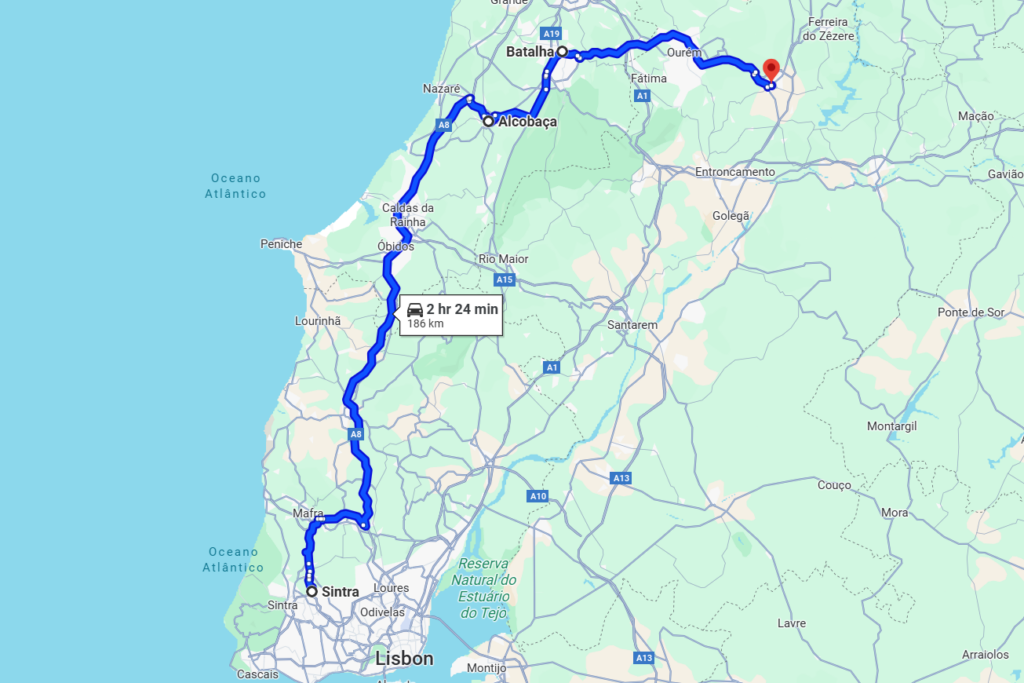
Road Trip Sintra to Tomar
Why This Route is Special
Most people stay stuck in Lisbon, but the real magic happens on the road to Tomar.
The UNESCO “Golden Ring”: You’ll pass through four World Heritage Sites in chronological order—Pena Palace (1840s Romanticism), Alcobaça Monastery (1178, Cistercian), Batalha Monastery (1386, Gothic), and the Convent of Christ in Tomar (12th-16th century, Templar to Manueline).
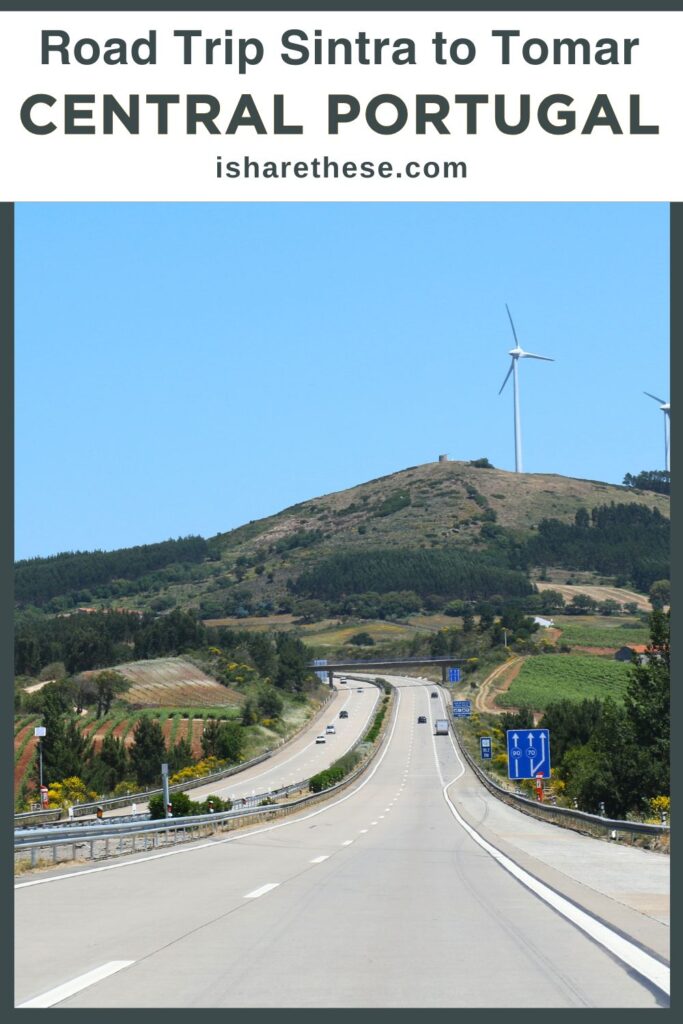
Stress-Free Driving: The highways (mostly the A8 and A1) are excellent—smooth, well-signed, and usually uncrowded. Portugal’s road infrastructure improved dramatically after joining the EU, and this route showcases it. You’ll rarely see traffic jams outside Lisbon’s immediate suburbs.
Family Friendly: The stops are close together. You never have to drive for more than 90 minutes at a time, which means fewer “Are we there yet?” moments from the backseat.
Trip Overview: The logistics
- Start: Sintra
- End: Tomar
- Total Distance: ~200 km (approx. 125 miles)
- Key Stops: Alcobaça → Batalha
- Best Start Time: 12 PM (After your morning tour of Pena Palace)
- Estimated Total Driving Time: 2 hours 25 minutes (actual wheel time)
- Vehicle Tip: Make sure your rental car has a “Via Verde” transponder for the highway tolls! If it doesn’t, you’ll need to request one or pay electronically afterward (which can be confusing). Most major rental companies include this automatically.
Best Time of Year: Spring (April-May) and early fall (September-October) offer perfect weather—warm but not scorching. Summer (June-August) gets crowded and hot, especially at Sintra. Winter is quiet but some days can be rainy.
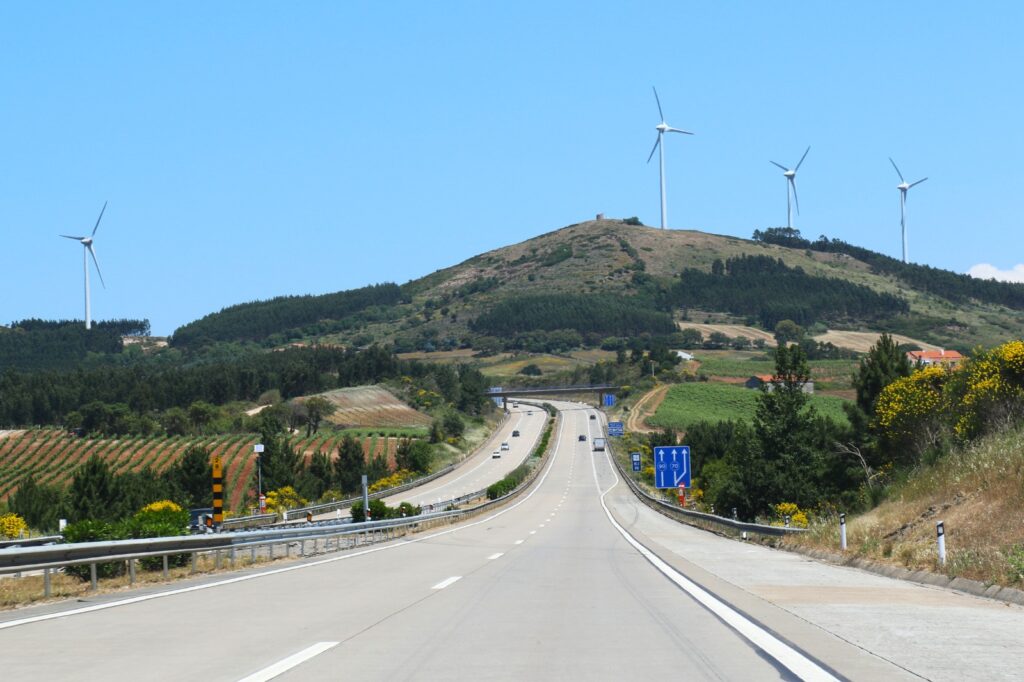
Road from Sintra to Tomar
Stop 1: Leaving Sintra (The Departure)
Time: 12 PM
We started our engine just after noon. We’d spent the morning exploring the colorful Pena Palace, which takes about 2–3 hours if you wander the palace interior and the surrounding park. By noon, the crowds in Sintra get heavy and parking becomes a nightmare, so it’s the perfect time to escape toward the coast.
Driving to Alcobaça
- Distance: ~128 km
- Real Drive Time: 1 hour 20 minutes
- The Drive: You’ll trade the winding mountain roads of Sintra for the open highway (A8 northward). The scenery shifts from thick forests and granite boulders to rolling green fields dotted with windmills. Keep an eye out for the traditional white-and-blue Portuguese farmhouses.
- Lunch Tip: Stop at a roadside service station or a local tasca on the way. Grab a bifana (pork sandwich marinated in garlic and paprika)—they’re cheap (€2-3), delicious, and quick! Or try a prego (beef sandwich) if you prefer. Pair it with a bica (Portuguese espresso) to stay alert.
Toll Costs: Expect to pay approximately €10-12 in tolls for the entire Sintra-to-Tomar route. The Via Verde system deducts automatically.
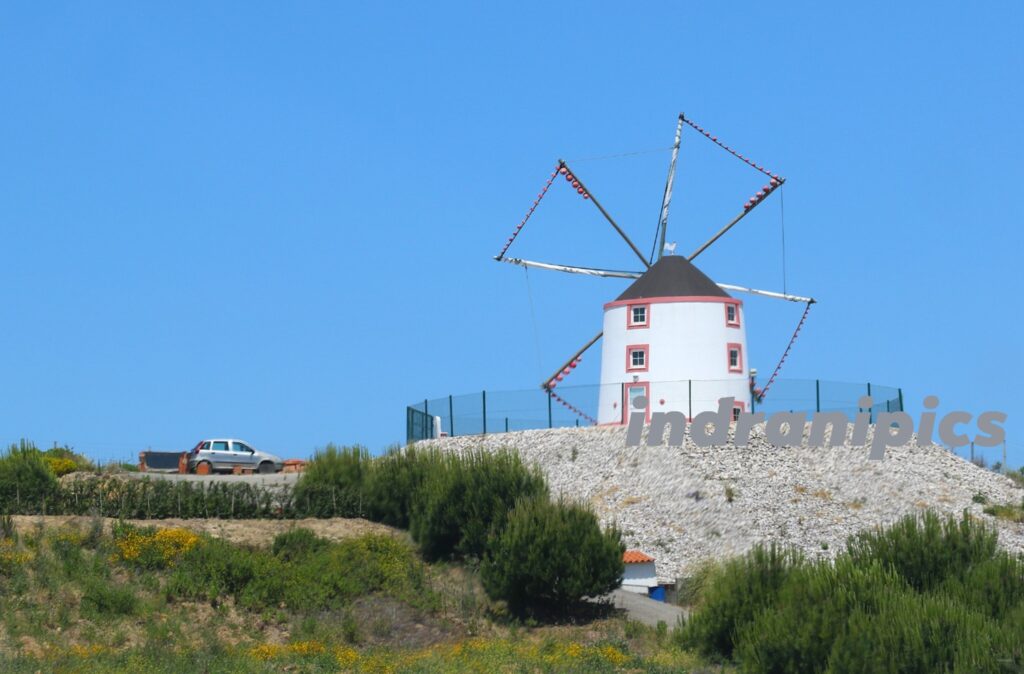
Traditional Windmill in Bufarda Portugal Indrani Ghose
Stop 2: Alcobaça – A Love Story in Stone
Arrival: ~1.30 PM | Time Spent: 1 Hour
The Monastery of Alcobaça is a shock to the system. While Sintra was colorful and busy, Alcobaça is massive, silent, and grand. Built in 1178, it’s the oldest Cistercian monastery in Portugal and one of the largest medieval abbeys in Europe.
Why It’s Unmissable
The Love Story: Go straight to the church transept to see the ornate tombs of King Pedro I and Inês de Castro. It’s a tragic true story often called the “Portuguese Romeo and Juliet.” Pedro loved Inês, but she was murdered on the orders of his father.
When Pedro became king, legend says he had her corpse exhumed, crowned as queen, and made the nobility kiss her hand. Their tombs face each other so “on Judgment Day, they’ll first see each other when they rise.”
The Kitchen: Don’t miss the monastery kitchen! It has a massive 18-meter-high chimney where monks used to roast whole oxen for royal banquets. A diverted stream runs right through the room—monks would stand at the water’s edge and catch fresh fish for dinner. The engineering is incredible for the 1200s.
Hidden Detail: Look for the lavabo (washing fountain) in the cloister. The water basin has geometric precision that shows how seriously Cistercian monks took cleanliness and order.
Entry Fee: €6 per adult (as of 2024). Kids under 12 are free.
Optional Detour: If you have kids who are bored of history, Nazaré beach is just 20 minutes away. It’s famous for having the biggest surfing waves in the world—Garrett McNamara rode a 78-foot wave there in 2011. Even if the surf isn’t massive, the beach town is charming and has great seafood restaurants.
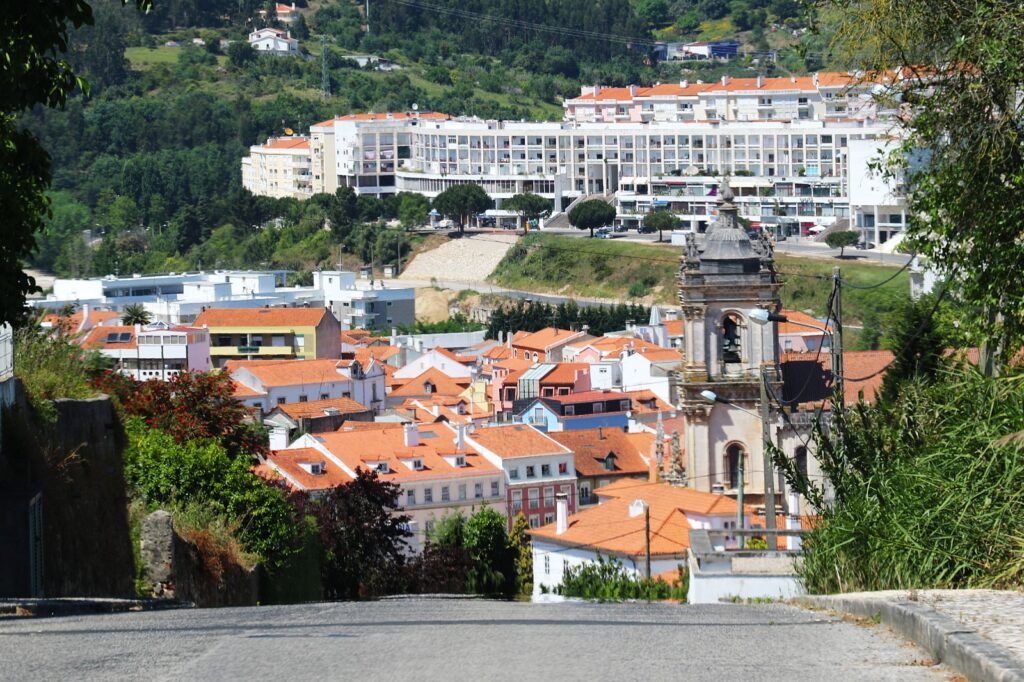
View of Alcobaca Monastery from Road
Stop 3: Batalha – The Gothic Masterpiece
Distance from Alcobaça: 25 km (25 mins)
Arrival: ~3 PM | Time Spent: 1.5 Hours
The drive from Alcobaça to Batalha is short and scenic, cutting through small villages and agricultural land. Suddenly, you’ll see a building that looks like stone lace rising from the ground. This is the Monastery of Batalha—Portugal’s greatest Gothic achievement.
My Personal Highlight
While the main church is beautiful (check out the stained glass—it floods the nave with colored light), the real treasure is the Unfinished Chapels (Capelas Imperfeitas). King Manuel I stopped construction in the 1500s to divert funds to his maritime expansion projects. Now they’re open to the sky, with no roof. Standing there, looking up at clouds drifting through the intricate Manueline stone carvings, is a genuinely magical moment.
Architectural Note: The Founder’s Chapel (Capela do Fundador) holds the tomb of King João I and his English wife, Philippa of Lancaster. Their marriage in 1387 created the world’s oldest active alliance between two nations—the Anglo-Portuguese Alliance still stands today.
Photography Tip: The cloisters photograph beautifully in late afternoon light (around 4 PM). The arches create stunning shadow patterns.
Entry Fee: €6 per adult.
Local Tip: We took our time here, browsing the small souvenir shops and cafés across from the monastery. The pastries at the corner café are excellent—try a pastel de nata (custard tart). Since we knew the monuments in Tomar would be closing soon, we decided to relax rather than rush.
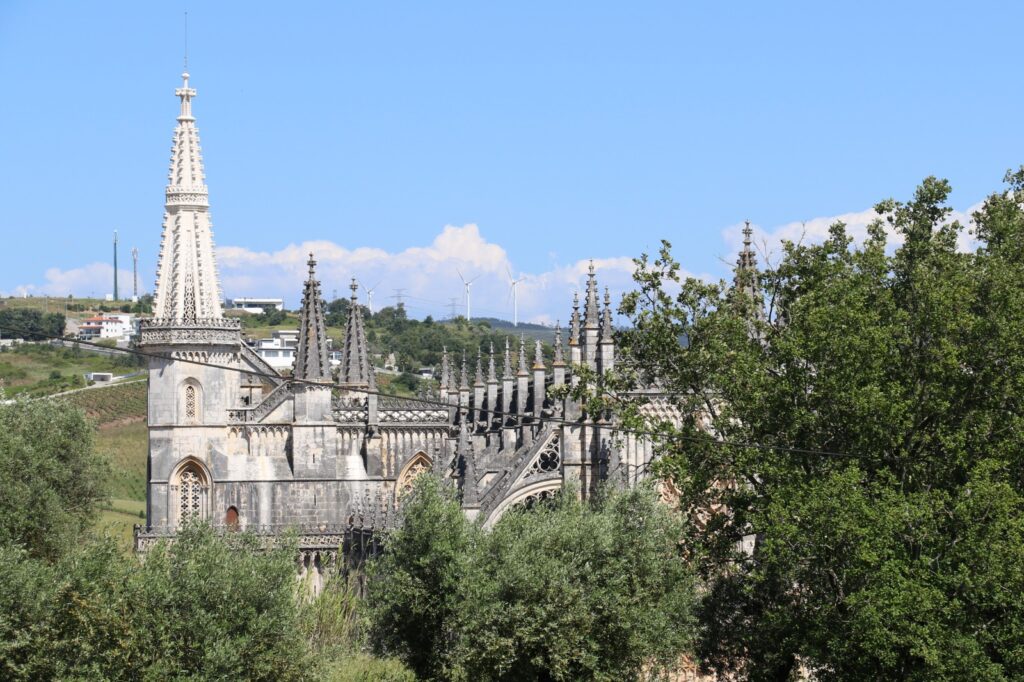
View of Batalha Monastery from road
Final Leg: Into the City of Templars (Tomar)
Distance: 45 km (40 mins)
Arrival: ~5.30 PM
We arrived in Tomar in the late afternoon. The sun was starting to set over the town, casting golden light on the castle walls perched on the hill above. Tomar has a completely different vibe—less touristy, more authentically Portuguese, with locals going about their daily business.
The Strategy
The famous Convent of Christ (the Templar stronghold and headquarters) usually closes entry around 5 or 5.30 PM.
Don’t Rush: Instead of trying to squeeze it in, check into your hotel, enjoy a nice dinner in Tomar’s historic Praça da República, and be the first one at the Convent gates the next morning when it opens (9 AM). The Convent is enormous—it’s basically a fortified monastery complex that evolved over 700 years. It deserves a fresh start with clear energy.
Evening in Tomar: Walk down Rua Serpa Pinto (the pedestrian main street) for shopping and cafés. Have dinner at a traditional restaurant—order cabrito assado (roasted kid goat) or bacalhau (salted cod). Tomar’s restaurant prices are about 30% cheaper than Lisbon’s, with better quality.
Where to Stay: The town has charming guesthouses and small hotels. The Hotel dos Templários is the famous one (it has Templar-themed décor), but smaller pensões offer better value and local character.
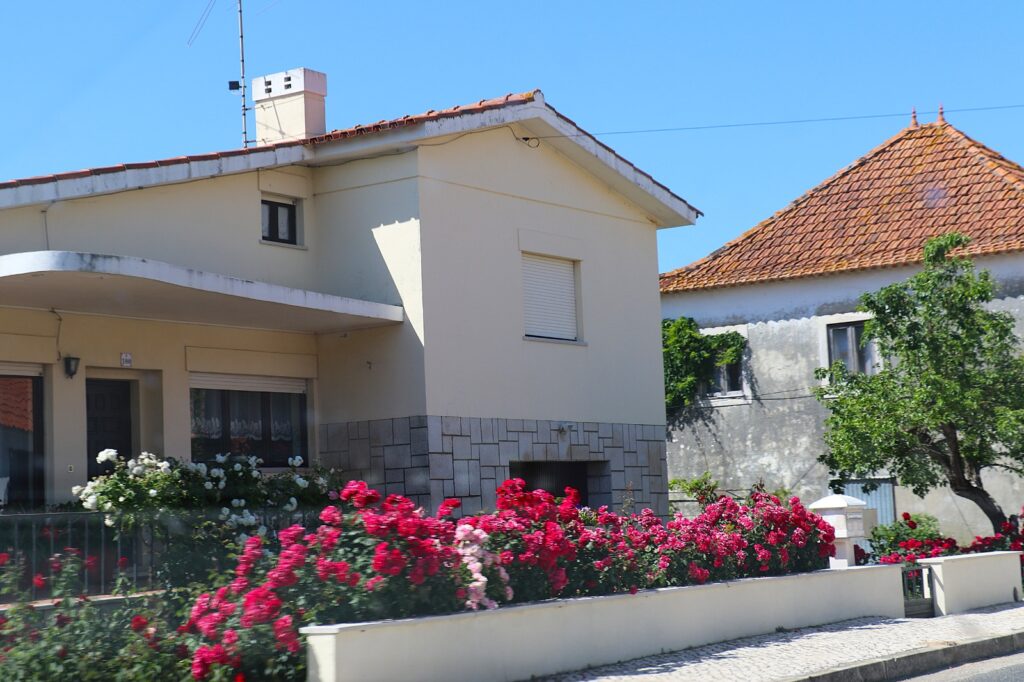
House with beautiful garden in Batalha Town
Next Morning: Convent of Christ Deep Dive
Opening: 9 AM | Recommended Time: 2-3 Hours
Arrive right when it opens to beat tour groups. The Convent of Christ is a UNESCO site within a UNESCO route—it’s that significant.
What Makes It Special: The Round Church (Charola) was built by the Knights Templar in the 1100s and modeled after the Church of the Holy Sepulchre in Jerusalem. The transition from Templar to later architectural styles (Gothic, Manueline, Renaissance) is visible in the same building complex—it’s like walking through 500 years of Portuguese history.
Don’t Miss: The Manueline Window (Janela do Capítulo) is Portugal’s most photographed architectural detail. It’s encrusted with maritime symbols—ropes, coral, seaweed—celebrating Portugal’s Age of Discovery.
Entry Fee: €6 per adult.
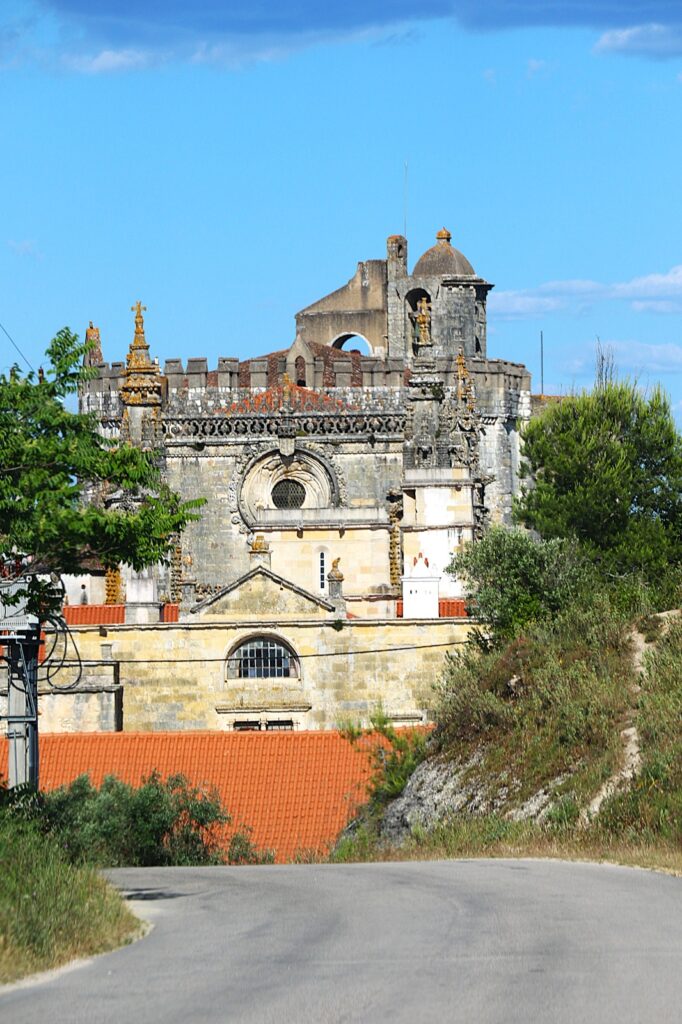
View of Tomar Monastery from Road
Practical and commonly used ways to reach Tomar from Sintra
You can choose what suits your travel style best:
By Car (Most Flexible Option)
- Distance: ~135 km, Travel time: 1 hour 45 minutes to 2 hours
- Route: Sintra → A16 → A9 → A1 → A13 → Tomar
Why choose this:
Driving is the most convenient option if you’re on a Portugal road trip or traveling with family. It allows you to stop en route (Coimbra or Fátima are easy detours) and reach Tomar directly without changing transport.
By Train (Most Popular Public Transport Choice)
- Total travel time: ~2.5 to 3 hours
- Changes: 1–2 train changes
Typical route:
- Sintra → Lisbon (Rossio / Oriente / Santa Apolónia)
- Lisbon → Tomar (via Entroncamento)
Why choose this:
Comfortable and scenic, this is ideal if you’re staying in Sintra or Lisbon without a car. Portuguese trains are reliable, and Tomar station is close to the town centre.
By Bus (Less Direct, Budget Option)
- Total travel time: ~3.5 to 4.5 hours
- Changes: Usually requires changing buses in Lisbon
Why choose this:
Works if you’re traveling on a strict budget, but it’s slower and less convenient than the train. Not ideal if you’re short on time.
Taxi or Private Transfer
- Travel time: ~2 hours
- Cost: High (best for groups)
Why choose this:
Suitable if you’re traveling in a small group or want door-to-door comfort without driving yourself.
Best Option at a Glance
- Road trip / family travel: Car
- Solo or relaxed travel: Train
- Budget-conscious: Bus
- Comfort and ease: Private transfer
Practical FAQs for Road Trip: Sintra to Tomar
Is this trip suitable for kids?
Absolutely. The longest drive is 90 minutes, which is manageable. The monasteries have wide-open cloisters where kids can walk freely (just remind them to keep voices low—these are still sacred spaces respected by locals). The tragic love story at Alcobaça and the “unfinished castle” vibe at Batalha usually capture young imaginations.
Kid Hack: Make it a scavenger hunt. Have them find specific architectural details—gargoyles, coats of arms, the kitchen stream at Alcobaça.
What about parking?
Portuguese towns are strict about parking enforcement. Always use designated lots marked with a blue ‘P’ sign. In Alcobaça and Batalha, there’s usually ample free or cheap parking (€1-2 per hour) within a 2-minute walk of the monasteries.
Sintra Warning: Parking in Sintra is a nightmare. Use the official lots and don’t trust roadside spots—they get ticketed heavily.
Can I do this as a day trip from Lisbon?
Technically yes, but it’s exhausting. You’d need to leave Lisbon at 8 AM, hit Sintra early, then race through the other sites. I’d recommend staying one night in Tomar (or even Batalha) to fully enjoy it. You’re collecting UNESCO sites, not Pokémon—quality over speed.
What’s the best driving route back to Lisbon from Tomar?
Take the A23 south to connect to the A1, then follow signs to Lisbon. It’s about 140 km (1 hour 40 minutes). Alternatively, stop at Fátima on the way back—it’s 30 km from Tomar and is one of the world’s most important Catholic pilgrimage sites.
Do I need to speak Portuguese?
Not at all. Most people in tourism and service stations speak basic English. That said, learning a few phrases (obrigado/obrigada for thank you, por favor for please) goes a long way. Portuguese people appreciate the effort.
How much should I budget for this trip (excluding accommodation)?
- Tolls: €10-12
- Monument Entries: €18 per person (€6 × 3 sites; Pena Palace is separate at €14)
- Meals: €25-40 per person for the day
- Gas: €20-30 depending on your vehicle
- Total: Approximately €75-100 per person for the full experience
Is it safe to drive in Portugal as a foreigner?
Very safe. Portugal has one of the lowest traffic fatality rates in Europe. Roads are well-maintained. Just remember: distances are in kilometers, speed limits are strictly enforced by cameras, and roundabouts are common (yield to traffic already in the circle).
What if I want to extend this road trip from Tomar?
Easy additions: Óbidos (a fairytale walled village, 30 minutes from Alcobaça), Fátima (pilgrimage site, 30 minutes from Tomar), or Coimbra (medieval university city, 80 km north of Tomar).
What to Pack
- Water: It gets hot in Central Portugal, especially June-August. Temperatures can hit 35°C (95°F). Stay hydrated.
- Walking Shoes: The stone floors in the monasteries are uneven, worn smooth by 800 years of footsteps. Sneakers or hiking shoes are better than sandals.
- Camera: The lighting in the Batalha cloisters is a photographer’s dream, especially late afternoon. The Convent of Christ’s Manueline Window photographs beautifully in morning light.
- Light Layers: Monasteries can be surprisingly cool inside, even on hot days. Bring a light cardigan or scarf.
- Sunscreen and Hat: Little shade on this route during driving breaks.
- Cash: While most places take cards, small cafés and parking meters sometimes prefer cash. Keep €20-30 in coins and small bills.
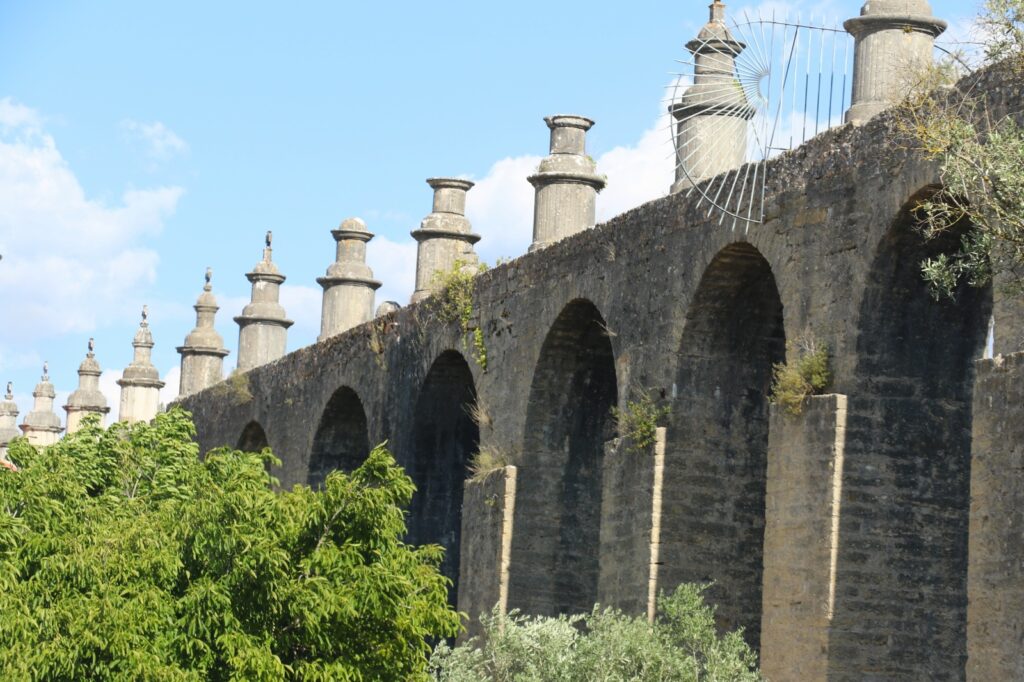
Aqueduto de Pegões, a historic aqueduct located in Tomar, Portugal
Final Thoughts
This Sintra to Tomar road trip balances convenience with culture perfectly. You’ll see the evolution of Portuguese architecture and history—from the Romanticism of Sintra to the austere Cistercian beauty of Alcobaça, the Gothic grandeur of Batalha, and finally the mysterious Templar legacy of Tomar—all in one smooth journey.
What makes this route special isn’t just the monuments themselves (though they’re stunning). It’s the connections. You’re literally following the thread of Portuguese identity: religious devotion, royal power struggles, tragic love, military might, and maritime ambition.
Most tourists see Portugal as Lisbon plus a side trip to Sintra. But this route shows you the Portugal that Portuguese people are actually proud of—the deep interior, the stories carved in stone, the landscapes that shaped a nation of explorers.
My Honest Take: If you have limited time in Portugal and can only do one road trip, make it this one. It’s history, beauty, and Portuguese soul all rolled into two days of easy, rewarding travel.
Have you driven this route? What was your favorite stop? Share your experience in the comments below!
Pin and Save this for Later
About the author
 Indrani Ghose is a travel blogger and photographer who has explored 15+ European countries across multiple trips. Based in Bangalore, she shares authentic travel experiences to help fellow travelers navigate the world more safely and confidently. You can follow her on her social media handles Instagram, Twitter and Facebook to see the wonderful destinations, beautiful offbeat places and get instant updates about them.








Quite an innovative drive with such intriguing images 🙂
good drive and beautiful and wonderful clicks Indrani.. 🙂
Lovely! I always like to look at people’s travel photos, Indrani. You may like to link up witht he “Travel Tuesdays” meme:
Many thanks for your participation in Floral Friday Fotos. Best wishes for the Festive Season and may 2016 be a happy year for you and yours.
Aren’t road trips awesome? You got to experience and be a part of the surroundings even if its just for a second and your eyes try to view as much possible and store it for another day. Wonderful pics 🙂
Amazing clicks, Indrani. And the day looks perfect for a lovely drive.
Wonderful landscapes under nice skies. thank Indrani ji for sharing this historical post series .
Fantastic and wonderful recollections
It feels great to have a drive on such roads. Wonderful pictures, Indrani… 🙂
Wonderful pictures… I want to visit this place.
Vow…
Thats a great area, beautiful photos.
Growing up, my next door neighbours and friends were from Lisbon, and I have always had a wish to see Portugal. This might just be the next best thing to being there.
The Monastery looks eerie
There are so many places I want to visit in Europe, and this just been added to my list.
Happy travels and have a lovely week ahead. Thank you for stopping by my blog this week.
Wonderful scenes from your Portugal road trip. The monastery is amazing.
Great photos and post. Happy Friday, enjoy your weekend!
Wonderful landscapes under nice skies. Thanks for sharing and enjoy your weekend.
How wonderful and picturesque the landscape is ! The driveway and the manasteriy is awesome . What a place to visit ! Thanks for sharing Indrani…
What wonderful photos those old monasteries make especially the first one. That wall makes me thing of Knights in Armour fighting to defend the castle
Great photographs. So exotic to this Okie. Have a great weekend!
Awesome!! Lovely captures as always, Indrani, and what a beautiful day and so much wonderful history!! I did enjoy my visits to Portugal when I lived in Spain. Thank you, as always, for sharing the beauty!!