Complete Guide to Portuguese Pavements (Calçada Portuguesa)
Why I Kept Looking Down in Lisbon
If you’ve ever walked the streets of Lisbon—or any historic city in Portugal—you’ve probably noticed something absolutely magical under your feet.
I certainly did. During my walking tours through Portugal’s cobblestone streets, no matter how much I admired the stunning architecture or the iconic yellow trams, my eyes kept drifting downward. The pavements were alive with patterns—waves, stars, borders, and flowers—each one more captivating than the last. By the end of my trip, I had more photos of the ground than the sky!
– By Indrani Ghose | Last Updated: December 2025
These iconic black-and-white mosaics are called Calçada Portuguesa (Portuguese pavement), and they tell a fascinating story of Portugal’s identity, craftsmanship, and urban culture. They’re literally an open-air art gallery you walk all over—and completely free to admire!
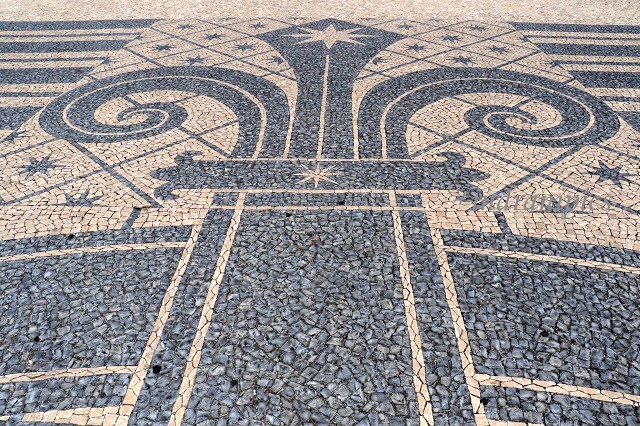
The Story Beneath Your Feet: Lisbon Pavement tile design
What Exactly is Calçada Portuguesa? (Portugal’s Walking Canvas)
Imagine a giant, never-ending jigsaw puzzle made of tiny hand-cut stones—that’s Portuguese pavement in a nutshell.
The Basics: What Portuguese Sidewalks Are Made Of
Definition: Portuguese pavements are decorative stone mosaics covering sidewalks, public squares, and waterfronts throughout Portugal.
Materials: They’re traditionally handcrafted from two main types of natural stone:
- White stones: Typically limestone (calcário), giving it a bright, clean look that reflects sunlight
- Black stones: Usually basalt (basalto), which is volcanic rock that creates striking contrast
- Occasional colors: Some regions use pink, yellow, or red stones for special decorative touches
You’ll find these traditional Portuguese sidewalks in cities across Portugal, especially in Lisbon, Porto, Coimbra, Évora, Sintra, and Madeira.
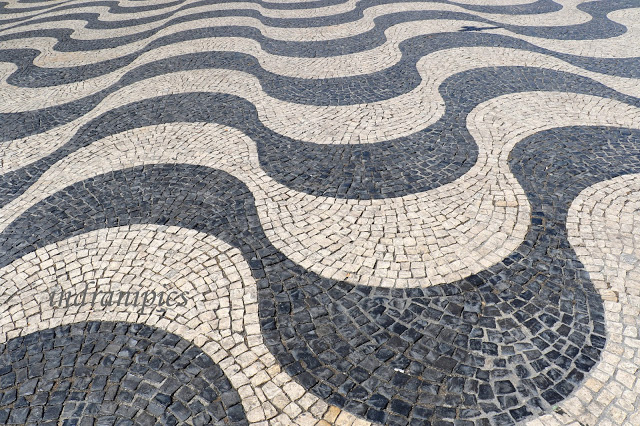
Calçada Portuguesa – Tile Patterns in Streets of Lisbon
A Quick Trip Through History
The idea of stone mosaics dates back to ancient Greece and Rome. But Portugal took this ancient technique and transformed it into a national art form.
The Big Start: Portugal truly adopted and refined this mosaic technique during the mid-19th century (around 1842). The first documented Portuguese pavement was laid at São Jorge Castle in Lisbon.
The Rebuild: Lisbon became the showcase of Calçada Portuguesa after the city was completely rebuilt following the devastating 1755 earthquake. City planners used decorative pavements to give the reconstructed capital a beautiful, unified identity that celebrated Portuguese culture.
Global Fame: Portuguese master craftsmen, known as calceteiros (pavement artists), became so respected that they were hired to create signature patterned pavements in former Portuguese colonies and territories like Macau, Brazil, Gibraltar, and Goa!
Patterns That Tell Stories: Decoding the Designs
One of the coolest parts? The patterns aren’t random decorations—they often tell stories or represent the city’s character and maritime heritage.
Common Portuguese Pavement Patterns to Spot
When you’re exploring Portugal’s streets, keep your eyes peeled for these famous designs:
Mar Largo (Wide Sea): This is the most iconic pattern you’ll see everywhere in Lisbon. It features beautiful, wave-like, flowing lines that ripple across sidewalks. This wavy pattern symbolizes Portugal’s deep connection to the Atlantic Ocean and its Age of Discovery, when Portuguese explorers sailed the world.
Rosetas (Rosettes) & Floral Motifs: These are detailed, circular, flower-like designs resembling compass roses. You’ll often find them in the center of grand plazas like Rossio Square or Praça do Comércio.
Geometric Borders: Look for sharp, repeating shapes like squares, diamonds, chevrons, or the famous Greek-key meander pattern used to frame and outline pedestrian areas.
City-Specific Symbols:
- In Lisbon, you’ll see ocean waves and nautical themes
- In Porto, look for tripeiro symbols and the city’s coat of arms
- In Madeira, colorful floral patterns celebrate the island’s gardens
- Modern designs sometimes feature ships, caravels, birds, fish, or even mermaids!
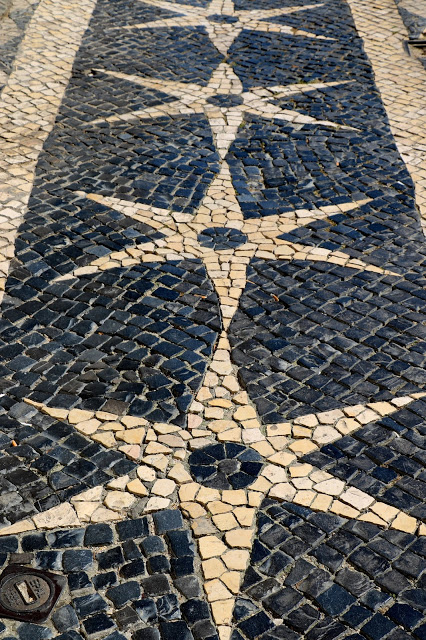
Tile Patterns in Streets
How Portuguese Pavements Are Made (The Art of Stone Laying)
Watching the pavement-laying process is mesmerizing—it’s like watching a street artist work on a giant canvas, except the medium is stone instead of paint!
The Traditional Process (The Role of the Calceteiro)
The stone workers, called calceteiros or pedredeiros, follow a detailed, labor-intensive process that hasn’t changed much in over 150 years:
- Stone Selection: Flat pieces of limestone and basalt are carefully selected from quarries and sorted by size, color, and quality.
- Hand Shaping: Using a special hammer (martelo de calceteiro), the artisan trims and chips each individual stone into the desired size and shape—usually small cubes about 5-10 cm wide.
- Design Layout: The calceteiro maps out the pattern on the prepared ground bed, sometimes using string lines, chalk, or stencils for complex designs.
- Manual Placement: This is where the magic happens! Every single stone is carefully placed by hand into a sand bed, fitting them together like a perfect puzzle. The calceteiro works on their knees, adjusting each piece for the perfect fit.
- Setting & Leveling: A layer of sand, gravel, and sometimes cement is spread between stones to hold them firmly. The surface is then compacted and leveled using wooden mallets.
- Finishing: Water is sprayed over the completed section, and excess material is swept away to reveal the final pattern.
The entire process requires incredible patience—a skilled calceteiro can only complete about 4-5 square meters per day!
A Dying Art: Why Calceteiros are disappearing
Sadly, this beautiful craft is endangered. Only a few hundred skilled pavement artisans remain in Portugal today because:
- It’s extremely hard physical labor done on hands and knees in all weather conditions
- It requires years of apprenticeship (typically 5-7 years) to master the specialized techniques
- The pay is relatively low compared to the intense physical effort and artistic skill required
- Young people aren’t learning the trade—the average age of calceteiros is now over 50
- Many Portuguese cities are choosing cheaper alternatives like asphalt, concrete pavers, or machine-cut stone tiles that are faster to install
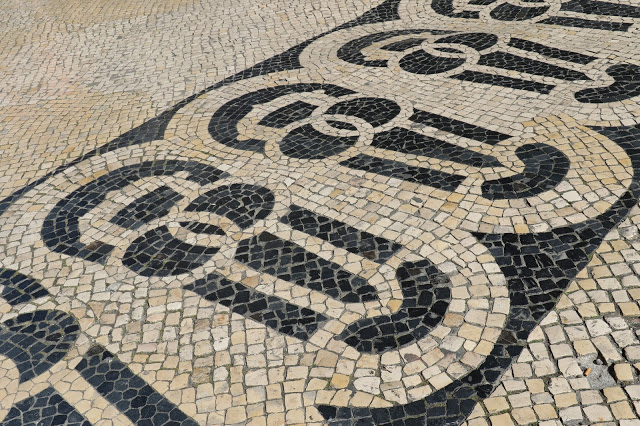
Repetitive Portuguese Tile patterns
Cultural Impact: Losing this traditional craft means losing an irreplaceable part of Portugal’s cultural heritage and urban identity. Several preservation organizations are now working to train new calceteiros and protect historic pavements.
The Other Side of Beauty: A Traveler’s Honest Reality Check
As stunning as these artistic pavements are, they come with practical challenges that locals face daily.
The Lisbon Slip Factor (Why Locals Watch Their Step)
Slippery When Wet: Over time and with foot traffic, the stones develop a smooth, polished surface. When it rains, they become dangerously slippery—almost like walking on ice.
High Fall Risk: Studies show concerning statistics:
- 50% of elderly Lisbon residents have fallen on wet Portuguese pavements
- 90% of seniors worry about falling when walking on rainy days
- Falls on slippery cobblestones are a leading cause of injuries among tourists
Maintenance Challenges: The pavements are expensive and time-consuming to repair. When drainage is poor, stones become uneven or dislodged, creating tripping hazards.
Accessibility Issues: The uneven surface and gaps between stones make wheelchair navigation difficult and uncomfortable for people with mobility challenges.
As a traveler, I was lucky to avoid any tumbles, but the local concern is very real. Many elderly residents simply avoid going out on rainy days!
Imagine rolling down one of these series of steps. There are many such steps in the city.
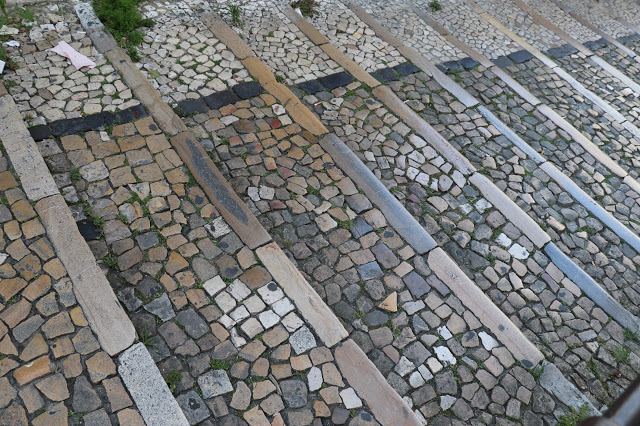
Slippery Portuguese Tile patterns
Your Essential Safety Tips for Walking Portuguese Pavements
Don’t let the risks scare you away from exploring! Just follow these practical tips:
Footwear Matters:
- Wear comfortable walking shoes or sneakers with deep, grippy rubber soles
- Avoid smooth-soled shoes, flip-flops, or sandals
- Never wear heels! They get stuck in gaps between stones, and you’ll slip or twist an ankle
Weather Awareness:
- Be extra cautious after rain—that’s peak slippery time
- Light rain can be more dangerous than heavy rain (creates a thin, slick layer)
- Watch for wet spots even on sunny days (from street cleaning or water runoff)
Walking Technique:
- Slow down on hills—Lisbon’s steep streets + wet stones = recipe for disaster
- Use handrails when available
- Look where you’re stepping, especially when photographing
Photography Tips:
- Stop completely when taking photos—don’t walk and shoot
- The patterns change every few meters, giving you endless unique shots
- Early morning light makes the stone colors pop beautifully
- Photograph after rain for enhanced contrast (just be careful where you stand!)
Beyond the Capital: Portuguese Pavements Across the Country
Calçada Portuguesa isn’t just a Lisbon specialty—each Portuguese city has its own pavement personality!
Porto: The northern city, Porto, features intricate blue and white geometric patterns and artistic designs along Avenida dos Aliados and the Ribeira district.
Coimbra: This historic university town showcases classic, traditional mosaic walkways around its ancient buildings and the University of Coimbra campus.
Faro (Algarve): You’ll find lighter, coastal-themed black and white designs near the southern beaches, with maritime motifs celebrating fishing heritage.
Sintra: The magical, romantic palace town features equally enchanting motifs near Pena Palace and the historic center—look for mystical symbols and nature themes.
Cascais: This coastal resort town displays wave patterns and nautical designs along the seaside promenade.
Madeira Island: Funchal stands out with colorful pavements incorporating yellow, pink, and red stones in tropical floral patterns.
Calçada vs. Azulejos: Understanding Portugal’s Two Art Forms
Since travelers often confuse them, let’s clear up the difference! Both are iconic Portuguese art forms, but they serve different purposes.
| Feature | Calçada Portuguesa | Azulejos (Glazed Tiles) |
| Material | Natural Stone (Basalt & Limestone) | Glazed Ceramic Tile |
| Colors | Mostly Black & White (some colored) | Highly Colorful (Blue, Yellow, Green, etc.) |
| Location | Outdoors (Sidewalks, Streets, Squares) | Indoor & Outdoor (Walls, Facades, Churches, Metro Stations) |
| Function | Pavement / Walkway Surface | Wall Decoration / Artistic Panels |
| What They Show | Repeating Geometric/Wave Patterns | Historical Scenes, Religious Stories, Daily Life |
| Texture | Rough, 3D, Tactile | Smooth, Flat, Glossy |
| Age | Popularized 1840s onwards | Dating back to 1500s (Moorish influence) |
Simple rule: You walk on the Calçada; you look at the Azulejos!
This curious little girl peeped in wondering what I was clicking on the ground.

Curious little girl checking on what I am clicking on ground
FAQs About Portuguese Pavement Tiles
Q. Where can I see the best Portuguese pavements in Lisbon?
The most impressive pavements are in Rossio Square (featuring stunning wave patterns), Praça do Comércio (large-scale geometric designs), Avenida da Liberdade (elegant borders), Bairro Alto (neighborhood charm), and the Belém waterfront district (maritime themes).
Q. Are Portuguese pavements only in black and white?
While black and white are traditional and most common, some regions use colored stones! Madeira uses pink, yellow, and red stones. Some modern installations in Lisbon incorporate creative color combinations for artistic effect.
Q. How long do Portuguese pavements last?
A: When properly maintained, Portuguese pavements can last 50-100+ years! However, they require regular maintenance because stones become loose or damaged due to tree roots, heavy traffic, and weather. Historic pavements over 100 years old still exist in some Lisbon neighbourhoods.
Q. Can I visit a workshop or watch calceteiros work?
Yes! If you’re lucky, you might spot calceteiros working on restoration projects around Lisbon, especially in historic neighbourhoods. Some cultural organizations offer occasional workshops and demonstrations. Check with Lisbon’s tourist office or cultural centers for scheduled events. The process is fascinating to watch!
Q. Why doesn’t Portugal replace these with modern, safer pavements?
It’s complicated! Many Portuguese citizens want to preserve this cultural heritage despite the safety challenges. Historic center regulations often protect traditional pavements. However, some neighborhoods are gradually replacing them with modern materials, which creates heated debate between preservation and practicality.
Q. Are Portuguese pavements unique to Portugal?
While the technique originated in ancient times, the specific style and widespread use of Calçada Portuguesa is uniquely Portuguese. However, you’ll find similar pavements in former Portuguese colonies (Brazil, Macau, Angola, Mozambique) and territories where Portuguese craftsmen worked, but Portugal has the largest concentration and most elaborate designs.
Final Thoughts
Walk Slowly, Look Closely, and Discover Portugal’s Ground-Level Art
Walking through Portugal taught me that beauty isn’t just at eye level—sometimes the most stunning art is right beneath your feet, literally supporting every step you take.
These hand-laid pavements are so much more than pretty sidewalks. They’re living history, shaped by skilled artisans and admired by curious travelers from around the world. They represent Portugal’s maritime heritage, artistic tradition, and cultural identity in a way that’s completely unique and irreplaceable.
Every street tells a different story through stone. The wave patterns remind you of Portuguese explorers who sailed unknown seas. The geometric precision reflects the order that rose from the chaos of the 1755 earthquake. The careful craftsmanship honors generations of calceteiros who spent their lives on their knees creating urban beauty.
As cities modernize and this traditional craft slowly fades, these pavements become even more precious. They offer a tangible connection to the past and a one-of-a-kind angle for your travel photography that you simply can’t find anywhere else.
So when you visit Portugal, don’t just rush from monument to monument. Slow down. Look down. Notice the patterns beneath your feet. Each design is a work of art made by human hands, stone by stone.
Ready to Explore Portuguese Pavement Art?
Here’s What to Do Next:
Start planning your Portugal trip and make pavement photography part of your itinerary—the best shots happen in historic city centers like Rossio Square and Praça do Comércio
Pack proper walking shoes with grippy soles—trust me, your ankles will thank you on those gorgeous (but slippery) cobblestone hills
Download a walking tour map of Lisbon’s most beautiful pavements, or join a guided tour that includes street art and urban design
Learn more about Portuguese culture by exploring both Calçada (pavements) and Azulejos (tiles)—they’re two sides of Portugal’s artistic soul
Share your experience! What pavement pattern will you spot first? Have you already walked on Calçada Portuguesa? Leave a comment below and tell me about your favorite Portuguese pavement discovery!
Pin this for later…
About the author:
 Indrani Ghose is a travel blogger and photographer who has explored 15+ European countries across multiple trips. Based in Bangalore, she shares authentic travel experiences to help fellow travelers navigate the world more safely and confidently. You can follow her on her social media handles Instagram, Twitter and Facebook to see the wonderful destinations, beautiful offbeat places and get instant updates about them.













Beautiful. You find a lot of these in Panjim…
That’s awesome. too good.
Beautiful and an eye opener!
Hi Indrani,
Wonderful post. It’s great that you got an opportunity to witness this art work. I’ve seen the Portugal works in Goa and their works are tremendous. Portugal will have lots and lots of such works. Lovely. Thanks for sharing your experience Indrani.
What lovely patterns! It so sad that this is a dwindling art!
It’s wonderful! The intricacies of the mosaic of broken tiles! One wonders at the efforts it may have taken for these masterpieces!
Best of all, I loved the expression of the little girl! Oh-so-cute! 😀
Lovely and you are so blessed to get to view the varied culture.
Interesting patterns for pavement tiles. I am with you in this journey of Portugal and noticed that they made a lovely and interesting art on their homes , in streets . Really they are creator and make something new .
Gosh! This is intricate and painstaking. And it also is a design inspiration right on my lap. Lovely captures Indrani!
Think of all the pains people took to create such an aesthetically appealing path. But honestly for me that girl was the highlight of the post!
Beautiful tiles design… Slippery floors are a cause of concern
The patterns are gorgeous!
Isn’t it beautiful. It makes the city even more appealing to visitors
OMG, i can imagine its dangers! Yes they are beautiful but maybe they really are counting their days, let’s hope some will remain in designated open museum areas. I remember the parks in Sweden, Strasbourg and Copenhagen are also paved with cobblestones not friendly to unrubberized soles. I was so curious with those the first time i saw it.
Mediterranean design; very fine
ALOHA, Friend; Thrilled to be back!
ComfortSpiral
(\__/)
(=’.’=)
(“)_(”)
Interesting patterns.. Surely they have a style in making their city admirable.
I was amazed by the “street art” in Lisbon! So beautiful and so are your captures, Indrani!! Thank you as always for sharing the beauty!! I hope you have a great new week!!