Mussoorie: Best Places to Visit, Things to Do & Local Secrets (2026 Travel Guide)
Mist, Pines and Mall Road Mornings in Mussoorie
In April 2026, I drove up to Mussoorie from Dehradun, and the first thing that hit me was the air — cool, pine-scented, and nothing like the plains below. Mist drifted over the Garhwal Himalayan ridges, and Mall Road was just coming alive: shutters rolling up, chai being poured, and the faint echo of footsteps on the slope.
This Mussoorie travel guide covers the best places to visit, honest things to do beyond the tourist checklist, hidden gems away from crowds, and practical tips for planning your trip. Whether you’re driving up from Delhi or flying into Dehradun — this is your 2026 starting point.
By Indrani Ghose | Last Updated: Apr. 2026
Quick Facts: Visiting Mussoorie
- Altitude: ~6,170 ft (1,880 m) above sea level
- Best Time to Visit: April–June for a summer escape; October–November for clear skies and fewer crowds
- Getting There: 35 km from Dehradun (~1 hr by road); Mussoorie road trip from Delhi takes approximately 7 hours via NH58 or NH334
- Local Transport: Taxis, shared cabs, and the Mussoorie cable car (Gun Hill ropeway) for aerial views
- Top Mussoorie Tourist Places: Mall Road, Kempty Falls, Lal Tibba, Landour, Gun Hill
- Hidden Gems: Forest walks near Landour Cantonment, the quieter upper stretches of Camel’s Back Road
- Mussoorie Weather in April: Daytime 18–22°C; cool mornings and evenings — carry a light jacket
- Budget Travel Tip: Homestays and mid-range guesthouses in Landour or Library Bazaar offer significantly better value than peak-season resort pricing on Mall Road
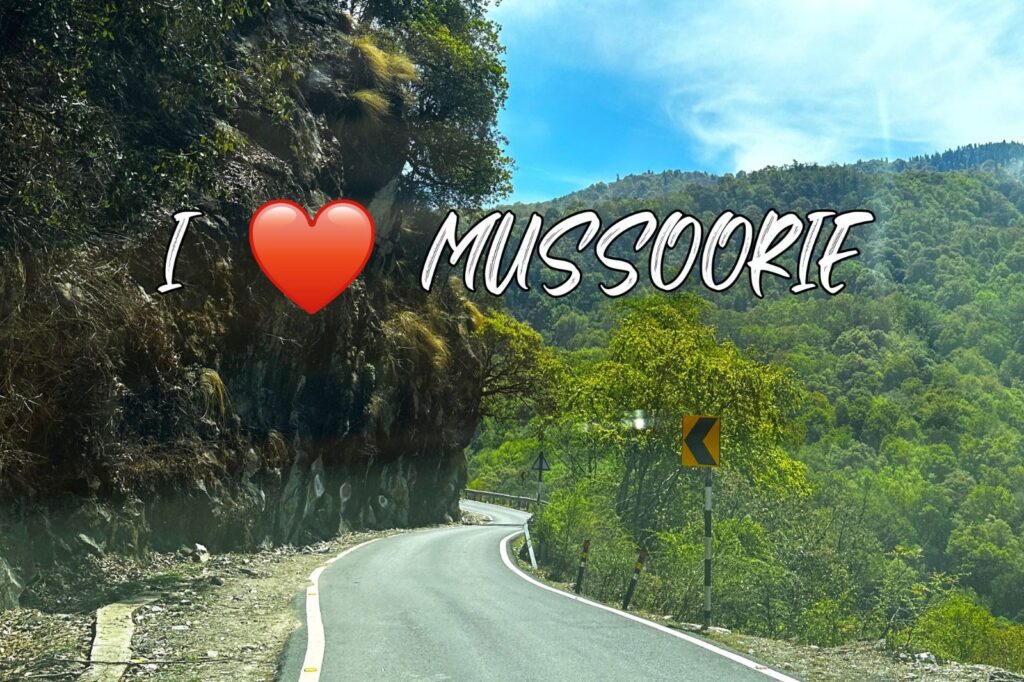
Mussoorie Travel Guide
Why Mussoorie Is Worth Visiting in 2026
Mussoorie remains one of India’s most accessible and rewarding hill stations — and in 2026, that holds true more than ever. Its appeal lies in a balance that few hill stations manage: lively tourist spots sitting alongside quieter corners where the Garhwal Himalayan ridgeline is still yours to enjoy in relative peace.
Popular spots like Mall Road and Kempty Falls draw consistent footfall, but the town doesn’t end there. Landour, just a short climb above, and the forest trails around it offer a genuinely unhurried experience — hidden gems most day-trippers miss entirely.
Accessibility is a real advantage. The drive from Delhi takes under 7 hours; from Dehradun, just over an hour. Whether your plan involves sightseeing, sampling local food, or simply making the road trip part of the experience itself — 2026 is a solid year to go.
What Makes Mussoorie Different from Other Hill Stations
Mussoorie occupies a sweet spot that most Indian hill stations don’t. It sits high enough — at roughly 6,170 feet — for genuine mountain views, including snow-capped Himalayan peaks on clear days, yet it remains road-accessible from two major hubs without requiring technical driving skills or hours of winding altitude gain.
The colonial-era character is intact in places where it matters. Landour Cantonment, established by the British in the 1820s, still has stone cottages, quiet lanes, and bakeries that have been running for decades. This is distinct from Mall Road’s commercial energy — and the contrast is part of what makes Mussoorie interesting rather than one-dimensional.
Other hill stations tend to lean one way: either heavily touristed with little breathing room, or remote with limited infrastructure. Mussoorie offers genuine choice. You can walk the Camel’s Back Road at 7 AM with almost no one around, then spend the afternoon browsing Mall Road shops and trying local street food — all within the same trip.
Best Time to Visit Mussoorie (Month-by-Month Breakdown)
| Month | Conditions | Crowd Level | Recommended For |
| April–June | 15–25°C, clear to partly cloudy | Moderate to high | Sightseeing, road trips, families |
| July–September | Monsoon rains, lush but misty | Low | Green landscapes, budget travel |
| October–November | Clear skies, 8–18°C | Low to moderate | Photography, trekking, quiet stays |
| December–January | Cold, occasional snow | Low | Snow experience, cosy stays |
| February–March | Transitional, blooming rhododendrons | Low | Quiet travel, nature walks |
Verdict for April 2026: Daytime temperatures hovered between 18–22°C during my visit — warm enough for walking but cool enough to be comfortable. Mornings and evenings required a light jacket. Crowds were present but manageable, and every major attraction was fully operational. For most travellers, April through early June is the most practical window, combining good weather with full access to Mussoorie sightseeing spots.

Red Rhododendron from Mussoorie
How to Reach Mussoorie — Road, Rail & Air
By Road
The Mussoorie road trip from Delhi is about 290 km via NH58 (through Roorkee and Dehradun) or NH334, taking 6.5–7 hours depending on traffic. Road conditions (as of April 2026) are good. The route passes Muzaffarnagar, Roorkee, and Dehradun, with the final 35 km uphill stretch offering scenic pine forests and mountain views. From Dehradun, Mussoorie is 35 km and takes 1–1.5 hours.
By Rail
The nearest railway station is Dehradun, well connected to Delhi (Nanda Devi Express, Shatabdi, Jan Shatabdi), Mumbai, and other cities. From the station, taxis and shared cabs to Mussoorie are easily available and take 1–1.5 hours.
By Air
Jolly Grant Airport, Dehradun, is about 60 km from Mussoorie. Flights from Delhi take under an hour. Taxis from the airport take 1.5–2 hours; pre-booking is recommended during peak summer months.
10 Best Places to Visit in Mussoorie (2026 Travel Guide)
Mussoorie’s appeal isn’t concentrated in one spot — it spreads across a ridge that stretches from Cloud’s End in the west to Lal Tibba in the east, with Landour sitting quietly above it all. These ten places cover the full range: busy and peaceful, accessible and off-trail, iconic and overlooked. All visited in April 2026.
-
Mall Road — The Heartbeat of Mussoorie
What it is: The main commercial promenade running through central Mussoorie, lined with shops, cafés, street food stalls, and hotels.
My experience: When I first stepped into Mall Road just after 7 PM on a weekday in April 2026, it was love at first sight. At that hour, the street was lit up, dotted with busy food stalls, the energy unhurried but real — tourist populated, yet not shoulder-to-shoulder crowd it becomes during peak seasons.
Best time: Early morning for a calm walk; evenings for atmosphere and people-watching.
Duration: 1–2 hours, longer if you browse shops or stop to eat.
Insider tip: The best budget food on Mall Road isn’t in the restaurants — it’s in the small stalls tucked between souvenir shops. Look for aloo ke gutke, Garhwali bal mithai, and freshly made maggi with local seasoning. Authentic and easy on the wallet.
-
Kempty Falls — Crowded but Worth It (Here’s When to Go)
What it is: One of Mussoorie’s most visited natural attractions, Kempty Falls is a multi-tiered cascade located about 15 km from Mall Road on the Chakrata road. The falls drop roughly 40 feet into a pool below, where swimming is permitted.
My experience: I arrived around 11 AM on a weekday in April 2026 and it was already filling up. The falls themselves were impressive — the volume of water was strong for April, and the spray carried far. Worth seeing, but the experience is shaped heavily by crowd levels.
Best time: Arrive before 9 AM on a weekday. Weekend afternoons are the worst for crowds. Duration: 1 hour is sufficient.
Insider tip: If you’re visiting Kempty mainly for the waterfall experience and not the swimming pool, consider Jharipani Falls instead (covered below) — far quieter with a similar payoff.
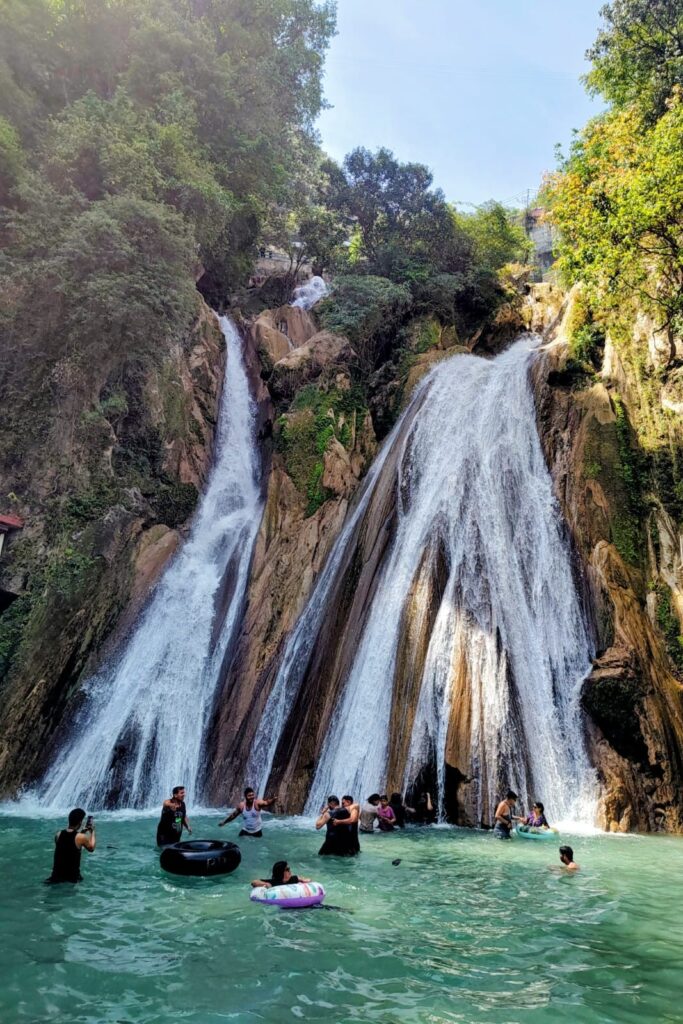
Kempty Watefalls – Mussoorie Best Places to Visit
-
Lal Tibba — The Highest Point with the Best Himalayan Views
What it is: At approximately 7,500 feet, Lal Tibba is the highest point in Mussoorie and its most rewarding viewpoint. On clear days, the panorama includes snow peaks such as Bandarpunch, Kedarnath, Badrinath, and Gangotri ranges.
My experience: April 2026 delivered clear skies, and Lal Tibba delivered in kind. There’s a coin-operated telescope on site — dated in design, but functional enough for a closer look at the peaks.
Best time: Early morning for the clearest views; late afternoon light is good for photography. Duration: 1 hour.
-
Gun Hill — Cable Car Rides and Panoramic Vistas
What it is: Gun Hill is Mussoorie’s second-highest point, reached either by a short ropeway (cable car) from Mall Road or by a 20-minute uphill walk. It sits at around 6,900 feet and offers wide views of the Doon Valley below and Himalayan peaks to the north.
The ropeway ride takes barely two minutes but rises steeply — the views open up fast. At the top, the panorama is genuinely striking. There are food stalls, photography spots, and a small market at the summit.
Best time: Late afternoon for softer light and sunset views.
Duration: 1 hour including the cable car ride.
Insider tip: Ticket queues at the Mussoorie cable car grow quickly after 4 PM. Buy your return ticket as soon as you arrive at the base.
-
Camel’s Back Road — The Best Sunrise Walk in Mussoorie
What it is: A 3 km road that curves along the hillside in a shape resembling a camel’s back, connecting Library Bazaar to Kulri Bazaar. It’s largely traffic-restricted in the mornings, making it Mussoorie’s best walking route.
My experience: I walked this late noon in April 2026. The road was sparsely populated with tourists but more with children returning from school. Pine trees lined both sides. There were murals and antigue display pieces with descriptions.
Best time: Sunrise for walkers; sunset for cyclists.
Duration: 1–2 hours depending on pace.
Insider tip: Bicycles are available for rent near Library Bazaar at reasonable rates.
-
Landour — Mussoorie’s Quieter, Charming Twin
What it is: A former British military cantonment situated about 300 feet above Mussoorie, Landour retains a distinctly different character from the main town. Heritage stone buildings, narrow winding lanes, old churches, and a handful of long-running bakeries define it.
My experience: I spent a half-day in Landour and it felt like stepping back in time — without the theatrics of a heritage resort. The lanes around Char Dukan and Sisters Bazaar were quiet. The Landour Bakehouse had a short queue but was worth every minute of it.
Best time: Morning or early afternoon; avoid the Char Dukan area around lunch on weekends. Duration: Half-day.
Insider tip: Landour Bakehouse is well known, but don’t overlook Anil’s Butter Cake Shop at Char Dukan — a local institution doing old-style bakes since decades. Also worth visiting: Kellogg Memorial Church for its quiet churchyard and valley views.
-
Company Garden — For Families and a Leisurely Afternoon
What it is: A landscaped public garden about 3 km from Mall Road, maintained by the Municipal Council. It has flower beds, a small boating lake, a toy train for children, food stalls, and open lawns. Tourists with families with children dominate the crowd. The queue for paddle boats on the small lake get longer as the day ends.
Best time: Midday to early afternoon, when the garden gets good light.
Duration: 1.5–2 hours.
Insider tip: Food options inside Company Garden are limited and somewhat overpriced. Carry your own snacks and water, or eat at one of the small dhabas just outside the gate before you enter.
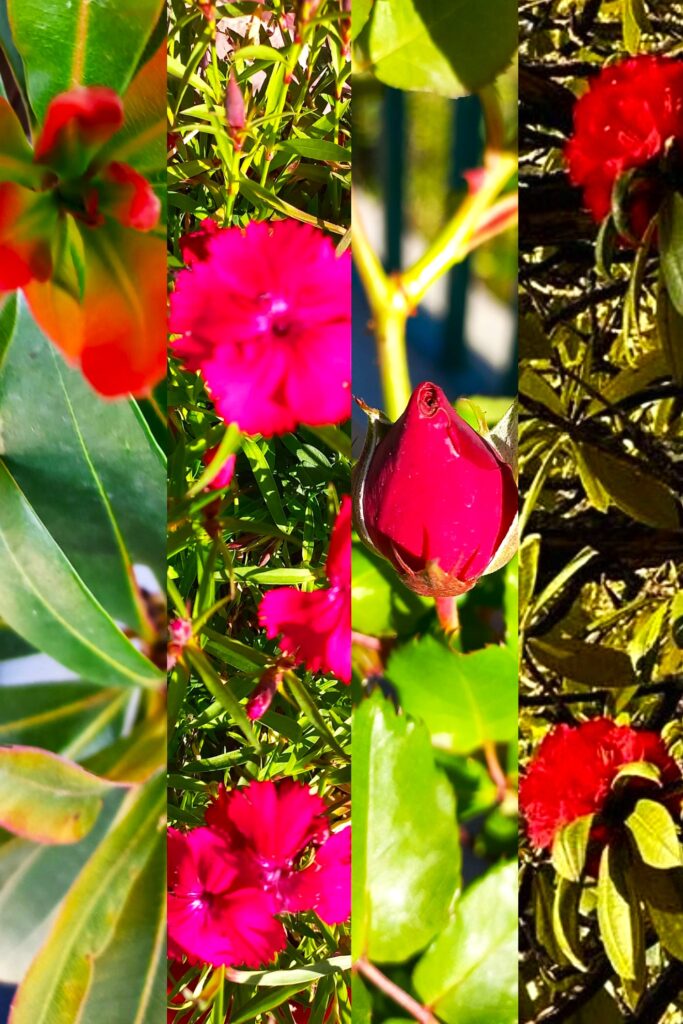
Company Garden Blooms
-
Jharipani Falls — The Waterfall Most Tourists Miss
What it is: A lesser-visited waterfall located about 7 km from Mussoorie near Jharipani village. Reaching it involves a short downhill trek of roughly 1.5 km through a forested trail.
The contrast with Kempty Falls is striking. The forested path down treats you with birdcalls and wind through the trees, no vendors, no crowds. The falls themselves are smaller than Kempty but set in a far more natural context. If you’re looking for a hidden gem in Mussoorie away from the crowds, this is a genuine one.
Best time: Morning, before the trail gets warm and to have the falls to yourself.
Duration: 1.5–2 hours including the trek.
Insider tip: The trail can be slippery even in dry weather due to loose rocks and pine needles. Wear closed-toe shoes with grip. Sandals and flip-flops are a bad idea here.
-
Cloud’s End — Where the Road Literally Ends
What it is: The westernmost point of Mussoorie, approximately 6 km from Library Bazaar. Beyond Cloud’s End, a dense mixed forest begins — part of a reserved forest area. The old Cloud’s End hotel sits at the edge, and the surrounding woodland is largely undisturbed.
My experience: Driving to Cloud’s End in April 2026 felt like the town gradually unwinding itself. By the time I reached the end of the road, there was genuine quiet — no hawkers, no crowds, just forest and a wide valley view to the south. I spent time simply sitting and watching birds move through the trees.
Best time: Late morning to afternoon. The forest is best explored with some daylight to spare. Duration: 1.5–2 hours.
Insider tip: Cloud’s End is one of the better birdwatching spots near Mussoorie. April is a good month — resident hill birds are active, and some migratory species are still present. Carry a camera with a zoom lens.
-
Surkanda Devi Temple — A Shakti Peeth with Himalayan Views
What it is: A revered Shakti Peeth temple dedicated to Goddess Surkanda, located near Kaddukhal village approximately 35 km from Mussoorie. The final approach involves either a 2 km uphill trek or a short ropeway ride.
My experience: I visited in April 2026, taking the ropeway up. The temple itself is compact but spiritually significant, and the Himalayan panorama from the top — stretching across the Garhwal range — was among the best views of the entire trip. It’s as much a scenic destination as a religious one.
Best time: Morning, before clouds move in over the peaks.
Duration: 2–3 hours including travel from Mussoorie.
Insider tip: Combine this with a visit to Dhanaulti or Kanatal on the same day — both are en route and easy to add without significantly extending your drive. This makes for an excellent day trip from Mussoorie.
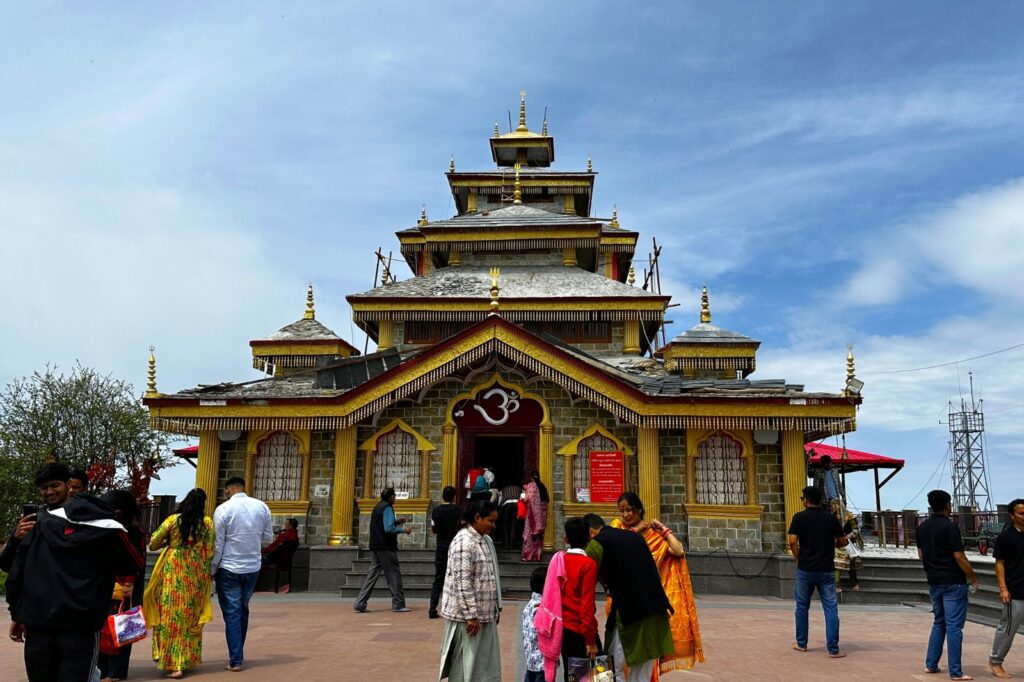
Surkanda Temple Shakti Peeth near Mussoorie
Putting It Together
These ten places cover the full spectrum of Mussoorie sightseeing: the energy of Mall Road, the natural drama of Kempty and Jharipani Falls, the highest Himalayan viewpoints at Lal Tibba and Gun Hill, the colonial calm of Landour, and the forest solitude of Cloud’s End. Mix and match based on your pace — but don’t leave without walking Camel’s Back Road at least once.
Best Things to Do in Mussoorie (2026 Guide)
Mussoorie isn’t a place you simply tick off a list. The town rewards those who slow down — who take the early morning walk before the crowds arrive, stop at a roadside dhaba on a whim, or spend an afternoon getting lost in Landour’s lanes. Here are the best things to do in Mussoorie, drawn from my April 2026 visit.
-
Road Trip Around Mussoorie’s Scenic Byways
What it is: Mussoorie sits on a long ridge, and driving its byways — from the main Mall Road stretch to the quieter roads towards Cloud’s End, Landour, and Jharipani — is an experience in itself. The Mussoorie road trip experience doesn’t end when you arrive in town; it continues through the surrounding terrain.
My experience: In April 2026, I drove up from Dehradun on roads that were smooth and largely free of diversions. Once in Mussoorie, I explored by car — the Cloud’s End road through dense mixed forest, the climb up to Landour, and a detour towards Jharipani. Pine forests lined most stretches, roadside dhabas offered excellent chai breaks, and viewpoints appeared without warning around bends. The drive itself was worth planning around.
Best time: Start morning drives by 7–8am for clear skies and minimal traffic. Avoid driving near Mall Road between 11am and 6pm — congestion builds quickly during tourist season. Duration: Half-day loop for the key byways.
Insider tip: The stretch from Mussoorie towards Dhanaulti (about 25 km) is one of the most scenic drives in the region and easily done as a half-day extension. Roads were good in April 2026 and the forest cover along this route is exceptional.
-
Try Local Food in Mussoorie — What to Eat and Where
What it is: Mussoorie local food ranges from Garhwali home cooking to North Indian street staples, with Mall Road and the bazaars around Library and Kulri offering the widest variety. This is not a destination with a single signature dish — it’s a town where the eating happens across multiple formats and price points.
My experience: In April 2026, I ate well without spending much. Momos from a stall near Kulri Bazaar were fresh and served with a sharp chilli sauce. A bun-omelette from a Mall Road cart was a reliable breakfast. Gulab jamuns from a halwai near Library Bazaar — hot, syrup-heavy, served in a small clay cup — were the kind of thing you remember.
Beyond the street food, look for:
- Aloo ke gutke — spiced local potatoes, often served as a snack or side
- Bal mithai — a fudge-like sweet from Uttarakhand, dark and coated in white sugar balls
- Kafuli — a green leafy curry made from spinach and fenugreek, found in Garhwali-style dhabas
- Chainsoo — black gram dal cooked with minimal spice, earthy and filling
Best time: Evening food walks on Mall Road; mornings for chai and bun-omelette from cart stalls. Duration: 1–2 hours for a proper food walk.
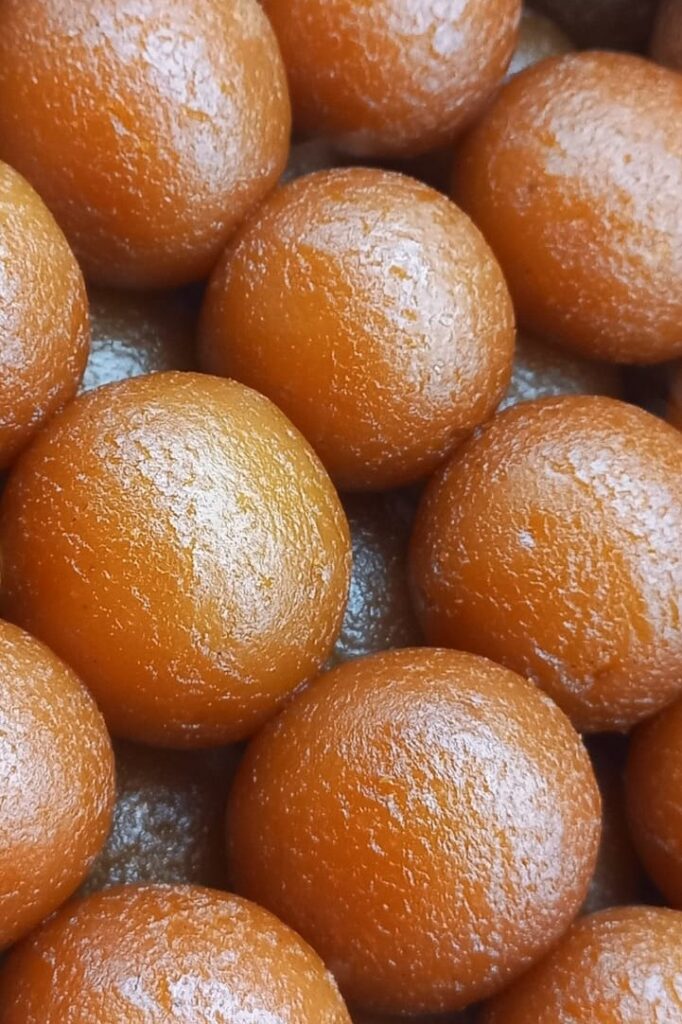
Hot Gulab Jamuns on Mussoorie streets
Insider tip: Avoid chain restaurants and hotel dining rooms for street food — they charge significantly more for lesser quality. The best value is at unlabelled carts and small dhabas where locals eat. If a stall has a queue of Dehradun day-trippers, it’s worth joining.
-
Shop for Local Handicrafts and Woolens
What it is: Mussoorie’s shops — concentrated on Mall Road, Kulri Bazaar, and Library Bazaar — stock a mix of Uttarakhand handicrafts, hand-woven woolens, wooden items, and general hill-station souvenirs. Quality varies significantly between shops, so knowing what to look for matters.
My experience: In April 2026, I picked up a hand-woven woolen stole and a small carved wooden box — both from a fixed-price shop on Mall Road that had clearly marked rates. I also browsed the Kulri Bazaar area, where prices were slightly lower and bargaining was expected. Compared to similar hill-station markets in Shimla or Nainital, Mussoorie’s prices felt fair.
What’s worth buying:
- Hand-woven woolen shawls and stoles — look for Garhwali weaves rather than mass-produced Ludhiana stock
- Wooden crafts — small decorative items in walnut or pine
- Rhododendron products — squash, jam, and tea made from the local flower, increasingly available in artisan stores
- Handmade candles and soaps — a newer category with a few good shops in Landour
Best time: Afternoon, when shops are fully stocked and shopkeepers are relaxed. Duration: 1.5–2 hours.
Insider tip: Bargain politely but only in shops without fixed price tags — pushing prices at fixed-rate stores wastes everyone’s time. For genuine Garhwali handicrafts, the government-run Garh Vikas emporium near Library Bazaar is a reliable, no-bargaining option with standardised quality.
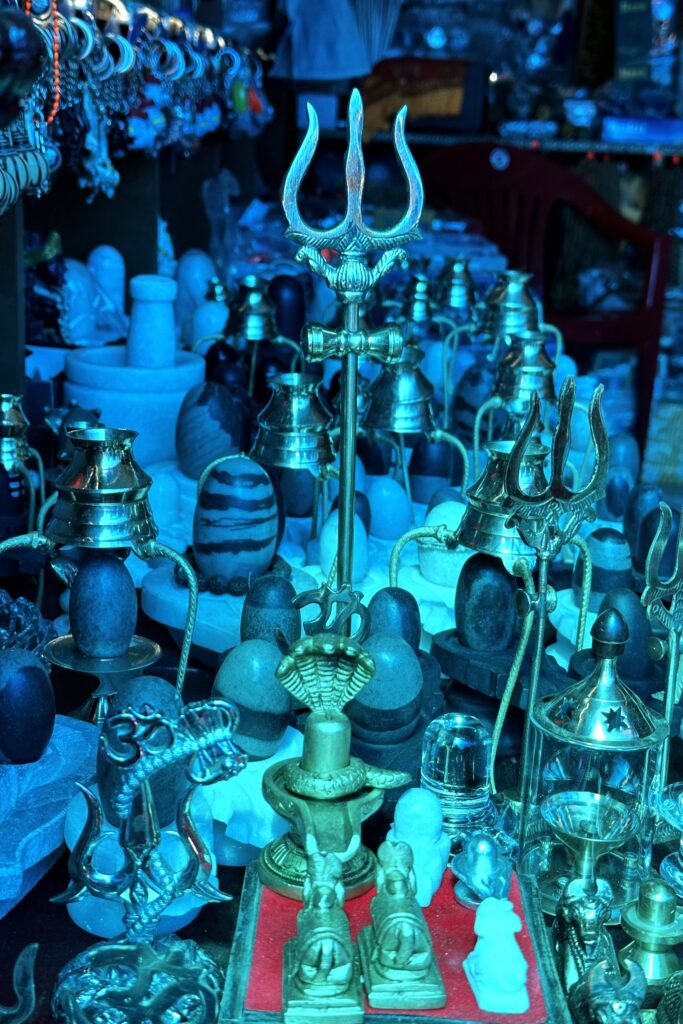
Shop for Local Handicrafts in Mussoorie
-
Sunrise and Sunset Viewpoint Experiences
What it is: Mussoorie’s ridge position means sunrise and sunset are two of its most dependable attractions. The town faces east towards the Garhwal peaks and south towards the Doon Valley, giving you strong options for both.
My experience: Sunrise at Camel’s Back Road in April 2026 was the highlight of my mornings. The valley below was still filled with mist, the pine trees caught the first light, and the road was almost entirely empty. I walked the full 3 km stretch without passing more than a handful of people. For sunset, Lal Tibba was the better option — the elevated position and clear April skies gave clean Himalayan silhouettes well into dusk.
Best spots by time of day:
- Sunrise: Camel’s Back Road, Lal Tibba, Company Garden viewpoint
- Sunset: Gun Hill (from the cable car top), Lal Tibba, Cloud’s End
Best time: Sunrise around 6–6.30am in April; sunset between 6–6.30pm. Duration: 1 hour per session.
Insider tip: April mornings in Mussoorie are cold — 8–12°C before 8 AM. A light fleece or jacket is not optional. The mist that sits in the valley at sunrise is also your best photographic asset; don’t wait for it to clear before going out.
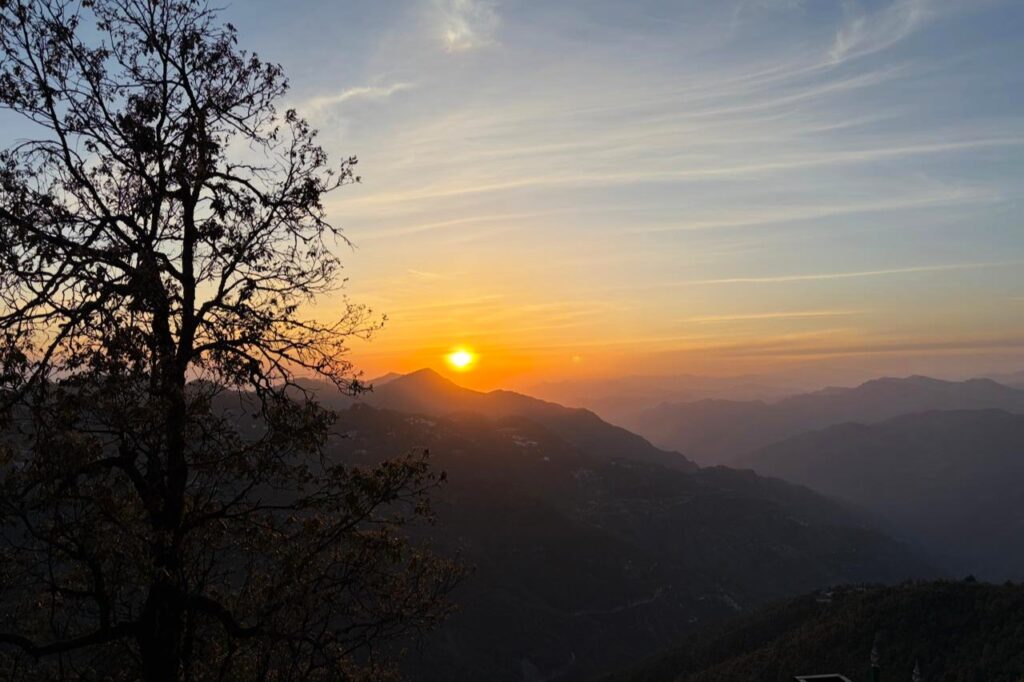
Sunset in Landour Mussoorie
-
Walk Through Landour’s Colonial-Era Lanes
What it is: Landour offers a walking experience that’s categorically different from anywhere else in Mussoorie. The lanes around Char Dukan, Sisters Bazaar, and the Landour Cantonment area wind past stone buildings, old churches, and gardens that have changed little in decades.
My experience: I spent an evening walking Landour’s lanes in April 2026, starting at Char Dukan and working outward. St. Paul’s Church, with its simple stone exterior and quiet churchyard, was worth the short detour. The Landour Bakehouse had a long queue when I arrived — I waited, ordered variety of stuffs with friends. That hour was among the most genuinely relaxing of the trip.
What to see while walking:
- Char Dukan — a four-shop junction that’s been a social landmark since British times
- St. Paul’s Church — quiet, photogenic, and rarely crowded
- Kellogg Memorial Church — further up, with valley views from the churchyard
- Lal Tibba — accessible as an extension of the Landour walk
Best time: Morning (9–11 AM) or late afternoon (3–5 PM). Duration: Half-day.
Insider tip: The cinnamon rolls at Landour Bakehouse are legitimately good, but go early — they sell out. If you’re visiting on a weekend, expect a short queue at Char Dukan area by 10am. Weekday mornings are significantly calmer.
-
Photography in Mussoorie — Best Spots, Angles, and Timing
What it is: Mussoorie is a strong destination for travel photography — the combination of mountain light, mist, colonial architecture, and market scenes gives you variety within a small area. You don’t need specialist equipment, but timing and positioning matter more than anywhere on the plains.
My experience: In April 2026, the best shots came in the last hours of daylight. I enjoyed clicking on Mall Road too.
Best photography spots by subject:
- Landscape / peaks: Lal Tibba (morning), Gun Hill (late afternoon)
- Mist and forest: Cloud’s End (sunrise), Camel’s Back Road (early morning)
- Architecture and streets: Landour lanes, Mall Road (pre-9am)
- Market scenes and people: Mall Road evenings, Kempty Falls (for crowd energy)
Best time: 6–8 AM and 4–6 PM for best light.
Duration: Variable — build photography into your other activities rather than treating it as a separate stop.
Insider tip: A tripod is worth carrying for pre-sunrise shots where light levels are low. If you’re shooting on a smartphone, use the manual or pro mode for sunrise — auto exposure tends to overexpose the sky in high-contrast mountain light.
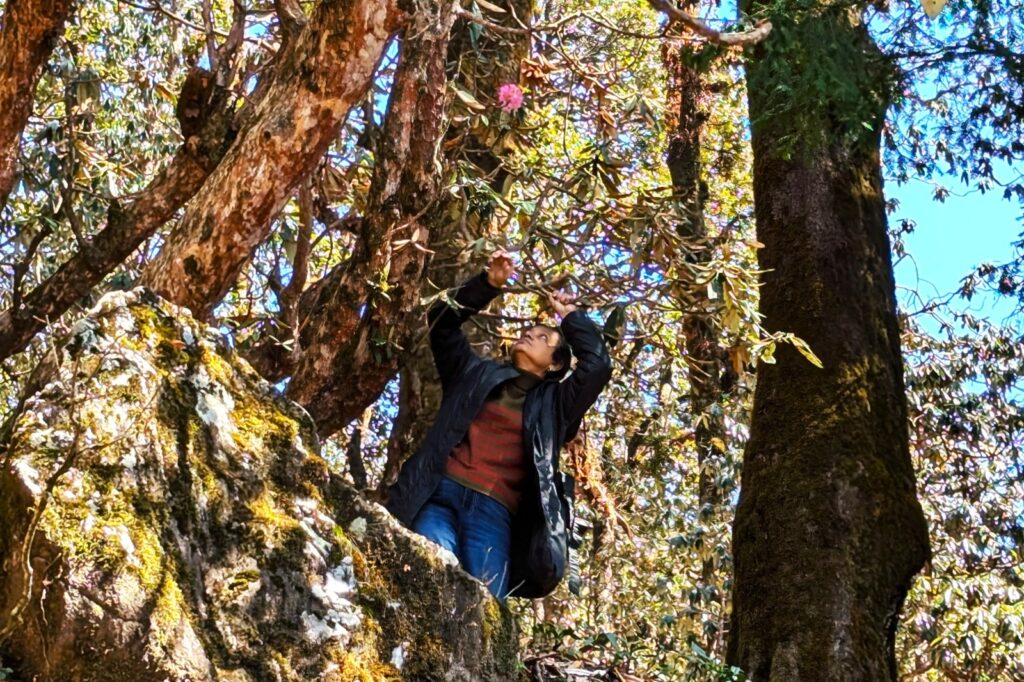
Rhododendron plucking in Mussoorie hills
The Bigger Picture
What makes Mussoorie’s activity mix work is range. A single day can include a sunrise walk on Camel’s Back Road, a morning in Landour with good coffee, an afternoon at Lal Tibba, and an evening food walk on Mall Road — and each feels distinct. That variety, within a town you can largely navigate on foot, is what separates Mussoorie from hill stations that offer scenery but little else to actually do.
Places Near Mussoorie Worth a Day Trip
Mussoorie works well as a base, not just a destination. Within two hours by road, you can reach four very different experiences — each worth building into your itinerary depending on how much time you have.
- Dehradun (35 km, ~1 hr) — For the Forest Research Institute, Rajpur Road cafés, and Ellora’s Bakery before heading home
- Dhanaulti (25 km, ~45 min) — Quiet forests, deodar Eco Park, and apple orchards that were beginning to blossom
- Chakrata (80 km, ~2.5 hrs) — Offbeat, uncrowded, and home to Tiger Falls — one of India’s tallest
- Rishikesh (75 km, ~2 hrs) — Ganga rafting, the evening aarti at Triveni Ghat, and a natural last stop on your way back to Delhi
Practical Travel Tips for Mussoorie (2026)
Where to Stay in Mussoorie — Budget to Luxury
Mussoorie has accommodation across every price point, but where you stay shapes the experience considerably. The Mall Road area is central and convenient but noisy, especially on weekends. Landour and the Library Bazaar end of town are quieter and often better value.
By budget category:
- Budget (under ₹2,000/night): Guesthouses near Library Chowk and Kulri Bazaar offer clean, basic rooms with good access to food and transport. Look for family-run guesthouses — they tend to be better maintained than budget hotel chains at this price point
- Mid-range (₹2,000–₹6,000/night): This is the sweet spot in Mussoorie. Homestays in Landour and mid-range hotels near Camel’s Back Road offer significantly better value than Mall Road properties at similar prices. In April 2026, I found a well-kept homestay in the Landour area that included breakfast and had better Himalayan views than resorts charging three times as much
- Luxury (₹8,000+/night): Heritage properties in and around Landour, and a handful of larger resort hotels near Picture Palace, offer high-end stays. The best ones combine colonial-era character with modern amenities and strong valley or peak views
Booking tip: April to June is peak season. Prices rise sharply from late March, and good mid-range properties book out weeks in advance. Book at least 3–4 weeks ahead for an April visit. Check both hotel booking platforms and direct homestay listings — direct bookings often come with better rates and more flexibility on check-in times.
Insider tip: Avoid booking the cheapest Mall Road-facing rooms during peak season — noise from the street and parking area carries through the night. Ask specifically for a valley-facing or garden-facing room, even at mid-range properties.
Getting Around Mussoorie — Taxi, Walk, or Rent?
Mussoorie is compact enough that walking handles most of it — and in many cases, walking is faster and more enjoyable than sitting in traffic near Mall Road. That said, the town has enough elevation change that knowing when to take a taxi matters.
On foot: Mall Road, Camel’s Back Road, Kulri Bazaar, and the Library Bazaar area are all walkable from each other. Landour is a 20–30 minute uphill walk from Mall Road — manageable, but steep enough that most people prefer a taxi for the climb up and walk back down.
By taxi: Local taxis are widely available and convenient for reaching Kempty Falls, Cloud’s End, Lal Tibba, and Jharipani. Agree on the fare before you get in — meters are not standard practice in Mussoorie. Shared taxis run fixed routes between Library Chowk, Kulri, and Picture Palace for a few rupees per seat.
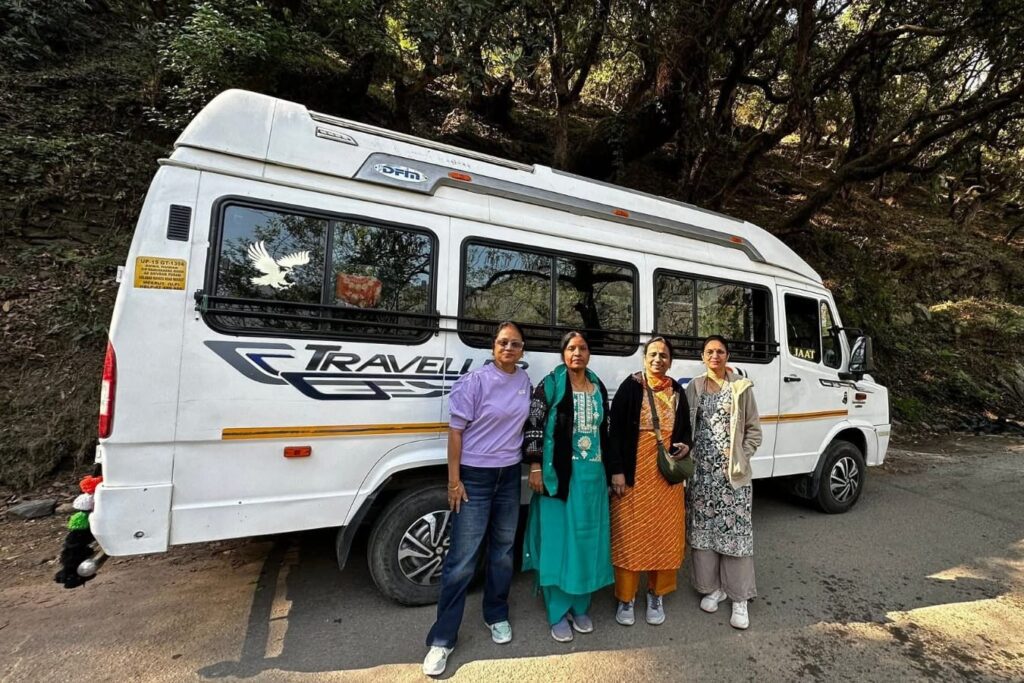
Road Trip Mussoorie with Tempo Traveler
Hiring a cab for the day: For day trips to Dhanaulti, Chakrata, or Dehradun, hiring a local cab for the full day (typically ₹1,500–₹2,500 depending on distance) is the most practical option. Drivers double as informal guides and know the road conditions.
Driving yourself: Possible, but not recommended inside town. Parking near Mall Road is extremely limited, traffic builds from mid-morning, and the one-way stretches are not always clearly marked. If you’ve driven up from Delhi or Dehradun, park at your hotel and use taxis for local movement.
Insider tip: For Camel’s Back Road, bicycles available for rent near Library Bazaar are a genuinely good option — the route is mostly flat, scenic, and best covered at a slow pace. Rates are modest and the ride takes around 45 minutes end to end.
What to Pack for Mussoorie in April
April in Mussoorie is one of the most comfortable times to visit, but the temperature range across the day is wider than most first-time visitors expect. Daytime highs of 18–22°C drop to 8–12°C before sunrise and after sunset — a difference that catches people off-guard.
Clothing:
- Light to mid-weight layers work better than single heavy pieces — you’ll be adding and removing through the day
- A fleece or light down jacket is essential for early morning walks and evenings
- Comfortable, closed-toe walking shoes with grip — trails around Jharipani and Landour can be uneven
- A packable rain layer — April is generally dry but brief showers are not unusual in the hills
Accessories and essentials:
- Sunscreen (SPF 50+): UV intensity at 6,000+ feet is noticeably stronger than at sea level, even on overcast days
- Sunglasses: Particularly important if you’re spending time at viewpoints like Lal Tibba
- Power bank: Useful for long walking days when you’re away from your room
- Cash: ATMs in Mussoorie can run dry during peak season — more on this below
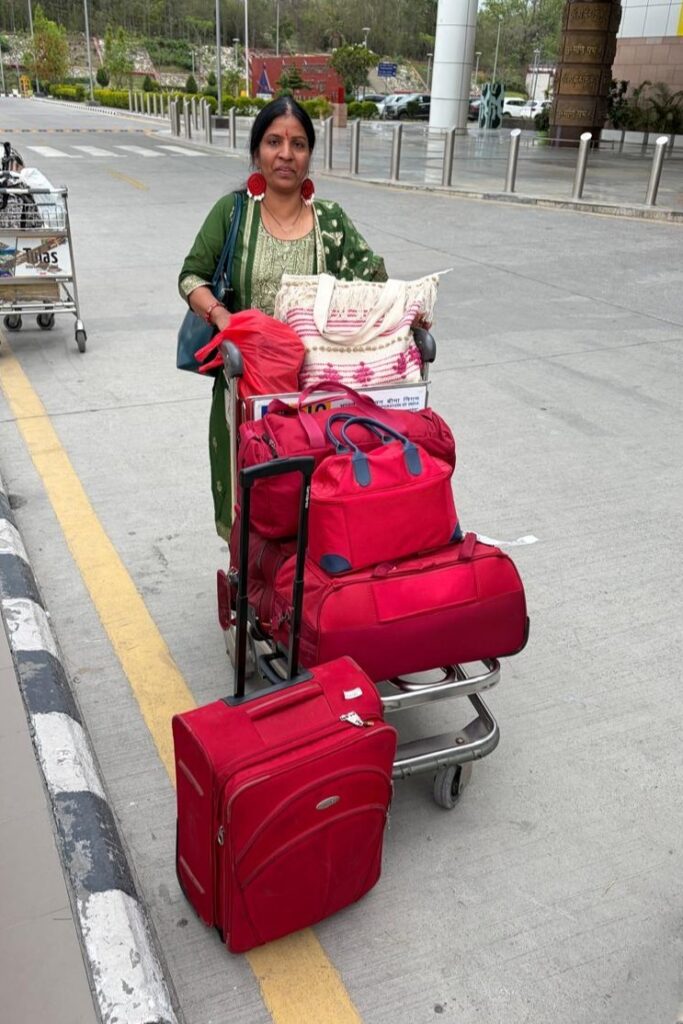
What to pack for Mussoorie – a fun pic when our gang travelled with red bags
Things Nobody Tells You About Visiting Mussoorie
These are the practical realities that don’t make it into most travel guides — but should:
Mall Road closes earlier than you’d expect. Most shops pull down shutters by 9–9.30 PM, and food stalls begin winding up around the same time. If you’re planning an evening food walk, aim for 7–8.30 PM rather than assuming everything will be open late.
Weekends are significantly more crowded than weekdays. Day-trippers from Dehradun and weekend visitors from Delhi arrive in volume on Saturday mornings and clear out Sunday evening. If your schedule allows, plan your main sightseeing for weekdays — the difference is noticeable at Kempty Falls, Mall Road, and the cable car.
ATMs can and do run out of cash during peak season. Mussoorie has limited ATM infrastructure relative to its tourist footfall in April–June. Carry sufficient cash from Dehradun before heading up, and keep a backup amount separate from your main wallet.
The hidden trails near Landour and Cloud’s End are genuinely good. Most visitors stick to the main spots and never explore the forested paths just beyond the main town. These trails are accessible, not technically demanding, and offer the kind of quiet that the busier parts of Mussoorie can’t.
Mobile network coverage is patchy in places. Major carriers work well on Mall Road and in central Mussoorie, but signal drops in Landour’s upper lanes and on forest trails near Cloud’s End. Download offline maps before heading out.
FAQ about Visiting Mussoorie
1.What is the best time to visit Mussoorie?
The best time is April–June for pleasant summer weather and October–December for clear winter skies. Monsoon months (July–September) bring greenery but slippery roads.
2. How many days are enough for Mussoorie?
Two to three days are ideal. This allows you to cover Mall Road, Lal Tibba, Kempty Falls, Landour, and one day trip nearby (like Dhanaulti or Dehradun).
3. Is Mussoorie worth visiting in April?
Yes. In April 2026, I found the weather perfect (18–22°C), shops and attractions open, and crowd levels moderate compared to peak summer.
4. What are the must‑see places in Mussoorie?
Mall Road, Lal Tibba, Gun Hill, Camel’s Back Road, Landour, Kempty Falls, Company Garden, Jharipani Falls, Cloud’s End, and Surkanda Temple.
5. How far is Mussoorie from Delhi by road?
Mussoorie is about 280 km from Delhi. The drive takes 7–8 hours depending on traffic, with Dehradun as the nearest major stop.
6. What is Mussoorie famous for?
Mussoorie is famous for its hill station charm, Mall Road shops, Himalayan viewpoints like Lal Tibba, waterfalls such as Kempty Falls, and colonial heritage in Landour.
7. Is Mussoorie good for families / couples / solo travellers?
Yes. Families enjoy gardens and easy walks, couples love sunrise and sunset viewpoints, and solo travellers find heritage lanes and hidden trails rewarding.
Final thoughts: Is Mussoorie Worth Visiting? An Honest Take
Mussoorie is worth visiting — but it rewards those who arrive with calibrated expectations and a plan that goes beyond the obvious stops. What genuinely impressed me during my April 2026 trip: the accessibility is real and the views deliver.
The Mussoorie road trip from Delhi is straightforward and the drive from Dehradun I took is scenic. Lal Tibba on a clear mornings and evenings give you Himalayan panoramas that justify the journey on their own. Landour and Camel’s Back Road offer the kind of quiet, unhurried experience that’s increasingly hard to find in popular Indian hill stations.
What’s honestly less impressive: Kempty Falls is overcrowded to the point where the natural setting is largely lost to the infrastructure around it. Mall Road is heavily commercialised, and during peak weekends it can feel more like a busy market street than a hill station promenade, main reason why I planned my visit mid-week on a Thursday.
The experience you get from Mussoorie depends almost entirely on how you structure your time. Families, first-time hill station visitors, and road-trip travellers who mix the well-known spots with Landour, Jharipani, and a day trip to Dhanaulti will find it genuinely rewarding. Those expecting untouched solitude throughout may be disappointed.
Have questions about visiting Mussoorie in 2026? Drop them in the comments below.
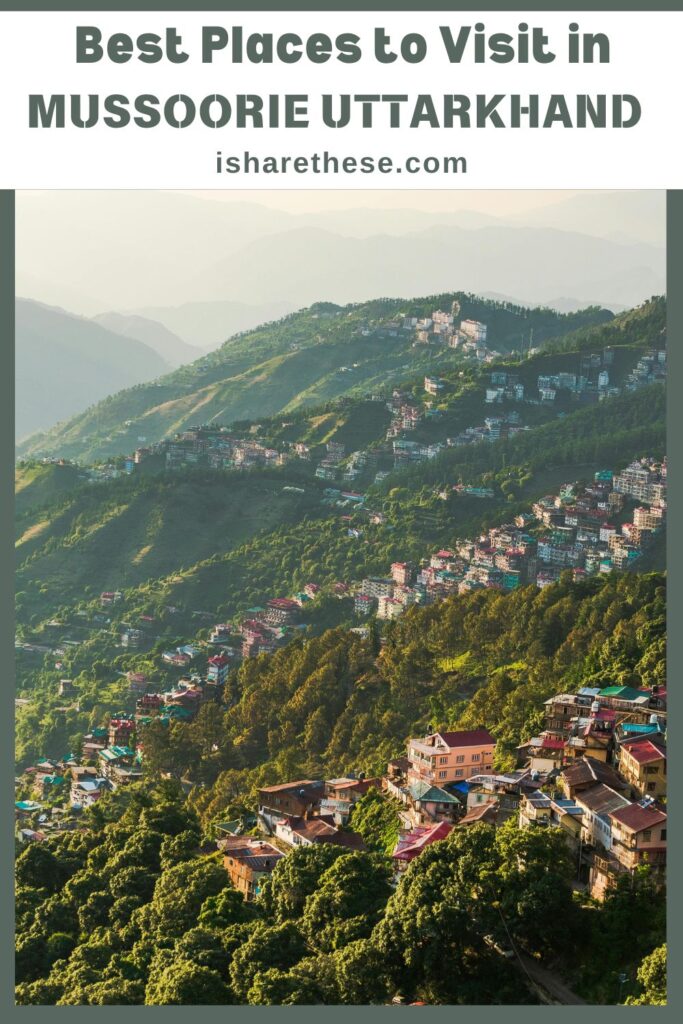
Pin and Save this for Later
About the Author
 Indrani Ghose is a cultural travel writer and heritage documentation specialist with over 15 years of experience exploring and writing about temples across India and Southeast Asia. Having visited over 150 sacred sites, she brings both scholarly depth and personal narrative to heritage travel writing.
Her work has been published in Lonely Planet, The National (UAE), Whetstone Asia, Deccan Herald, and various architecture and heritage journals.
Connect with Indrani: Follow Indrani on Instagram | Twitter | Facebook for heritage travel insights, photography tips, and offbeat destination discoveries.