Lakshmi Narasimha Temple, Bhadravati, Karnataka
It is so disappointing when you travel all the way to a temple and find it locked. Obviously shows that my planning wasn’t good. In May 2017, I drove from Bangalore to Jog Falls on a temple-focused road trip through Karnataka’s lesser-known Hoysala sites.
My route included stops at the Ishwara Temple in Arasikere, Yoganarasimha Temple in Baggavalli, and the Amrutheshwara Temple in Amruthapura—each demonstrating distinct elements of Hoysala architecture. The Lakshmi Narasimha Temple in Bhadravathi was my next planned stop, a 13th-century trikuta temple that rarely appears on mainstream tourist itineraries.
– By Indrani Ghose | Last Updated: January 2026
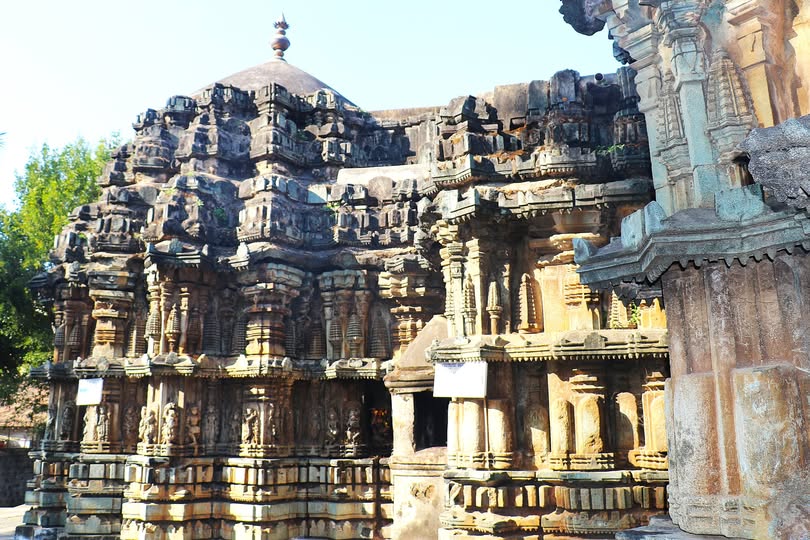
Lakshmi Narasimha – a Trikuta Temple in Bhadravathi
I arrived late afternoon to find the temple closed. Evening hours were still two hours away, and I decided to continue toward Jog Falls rather than wait. This taught me an important lesson: Bhadravathi temple timings are restrictive, typically closing between 1 PM and 4 PM. If you’re planning a Bangalore to Jog Falls temple road trip, schedule your Bhadravathi visit for morning hours to access the interior.
Though I only photographed the exterior, the soapstone craftsmanship visible from outside confirmed this temple’s significance among Shivamogga’s architectural heritage.
Quick Facts: Lakshmi Narasimha Temple
| Feature | Detail |
| Built In | 13th Century (Hoysala Era) |
| Architectural Style | Trikuta (Triple Shrine) |
| Primary Deity | Lord Lakshmi Narasimha |
| Location | Old Town, Bhadravathi, Karnataka |
| Entry Fee | Free (ASI Protected) |
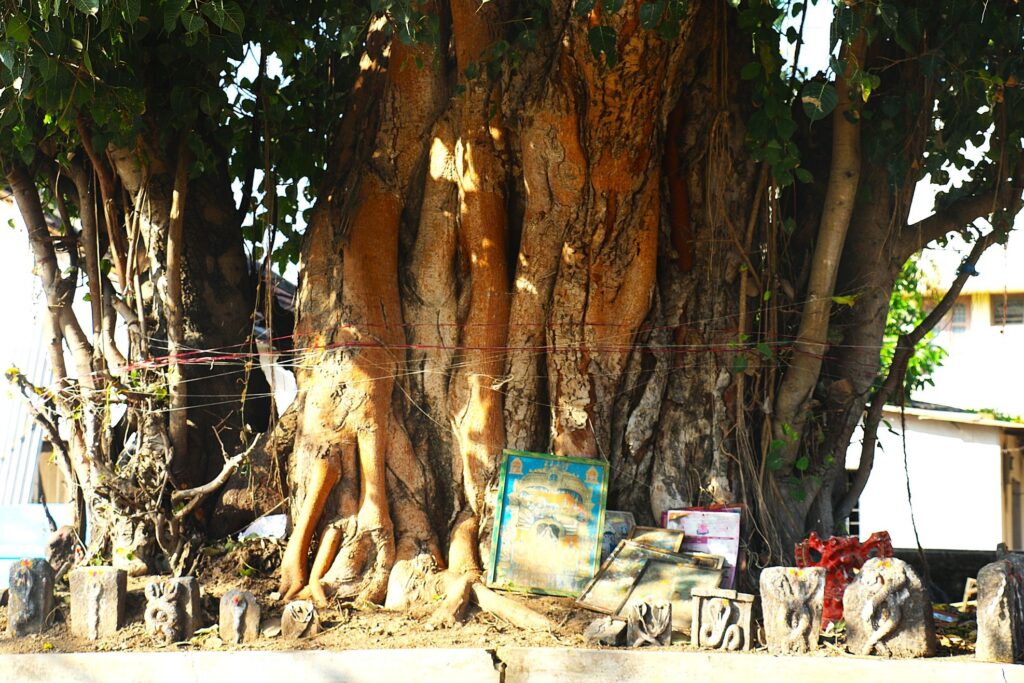
Peepal Tree worshipped inside Lakshmi Narasimha Temple Complex. This tree must be more that 100 years old.
The Hidden History: Built by the Hoysalas
The Lakshmi Narasimha Temple Bhadravathi was constructed around 1250 CE during the reign of King Vira Someshwara, a ruler from the later Hoysala dynasty. This trikuta temple in Karnataka features three sanctums (garbhagrihas) housing Venugopala, Lakshminarasimha, and Vishnu-Purushottama—all forms of Lord Vishnu.
The temple exemplifies Hoysala architecture Bhadravathi is known for: intricate soapstone carvings, a star-shaped platform (jagati), and detailed sculptural work that rivals better-known temples in Belur and Halebidu.
Local Legend about the Temple
Bhadravathi’s history blends documented facts with local mythology. Ancient texts refer to the area as Vankipura, named after Sage Vanki who reportedly meditated here. According to regional legend,
Lord Rama stopped at this location while seeking redemption for the sin of killing Vali. He installed a Shiva lingam on the banks of the Tungabhadra River to absolve himself of this burden. Over centuries, the settlement grew around the confluence of the Bhadra River, eventually adopting the name Bhadravathi.
There is an interesting story how this part of Karnataka, Bhadravati was formed.
Lord Vishnu, taking the avatar of Varaha (wild boar), rescued Bhudevi (Goddess Earth) from under the sea where she was held captive, from the clutches of Hiranyaksha demon. When Varaha lifted Earth supported by his sharp tusks, the two trenches formed gave birth to the rivers Tunga and Bhadra. The land around Bhadra came to be known as Bhadravati.
The Archaeological Survey of India (ASI) has designated this temple as a Protected Monument, recognizing its historical and architectural value. This protection ensures proper maintenance and prevents unauthorized alterations to the structure.

Lakshmi Narasimha Temple Bhadravathi
For visitors interested in soapstone temples in Shivamogga district, this temple represents an important but undervisited example of mid-13th-century Hoysala craftsmanship.
Architectural Brilliance: The Trikuta and Stellate Plan
The Lakshmi Narasimha Temple Bhadravathi demonstrates classic trikuta temple architecture—a triple-shrine layout where three sanctums share a common mandapa (hall). Each sanctum houses a different form of Vishnu:
- Venugopala (Krishna as the divine cowherd)
- Lakshminarasimha (the man-lion avatar)
- Purushottama (Vishnu as the Supreme Being).
This arrangement allowed Hoysala-era devotees to worship multiple manifestations of the deity in one visit, a theological concept reflected in architectural form.
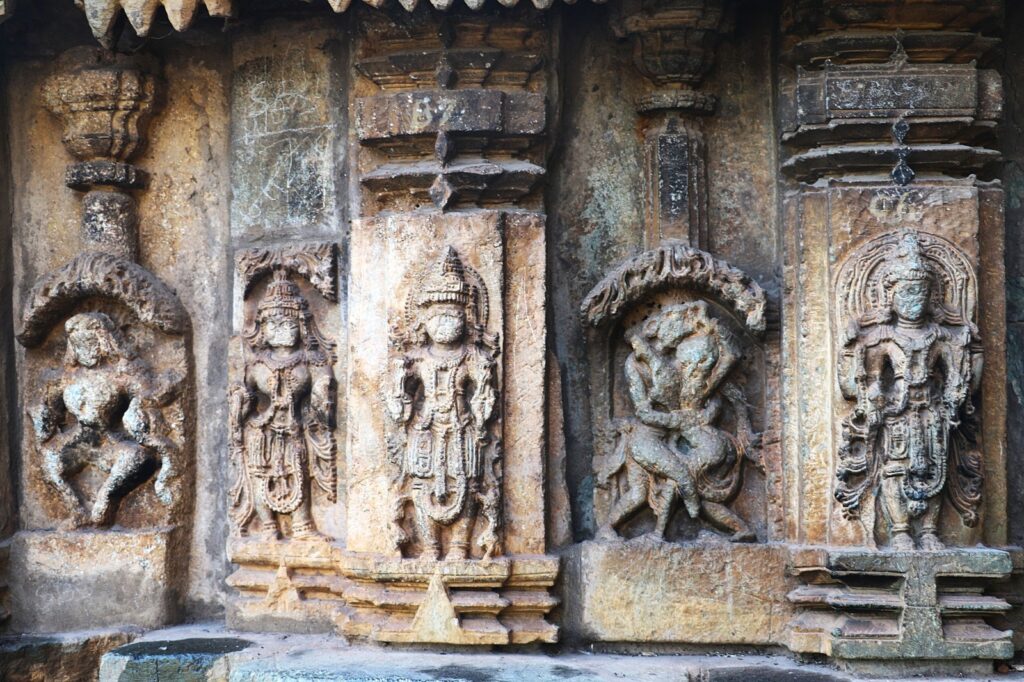
Image of divine figures on Facade of Lakshmi Narasimha Temple
Use of Soapstone by Hoysala Architects
The entire structure is carved from soapstone, technically known as chloritic schist. Hoysala architects preferred this material because it’s soft when quarried, making intricate carving feasible, then hardens upon exposure to air.
This property enabled artisans to execute detailed friezes, miniature pillar work, and narrative panels that would be nearly impossible in harder stone like granite. The temple’s grey-green patina visible today results from centuries of weathering, giving the soapstone temples in Shivamogga their characteristic appearance.
Temple on Jagati, a Raised Platform
The temple stands on a jagati—a raised platform approximately 3-4 feet high that encircles the entire structure. This platform serves both ritual and architectural functions. Devotees use it for pradakshina (clockwise circumambulation), a practice central to Hindu temple worship.
Architecturally, the jagati elevates the temple visually, creating a commanding presence and protecting the foundation from monsoon water damage. Most distinctive is the stellate (star-shaped) plan. Instead of simple rectangular walls, the shrine walls project and recede at multiple angles, creating a 16-pointed or 32-pointed star when viewed from above.
Each projection provides additional wall surface for sculptural panels—depicting gods, goddesses, mythological scenes, and ornamental bands. This design maximizes decorative space while creating dynamic light-and-shadow patterns throughout the day as the sun moves across the sky.
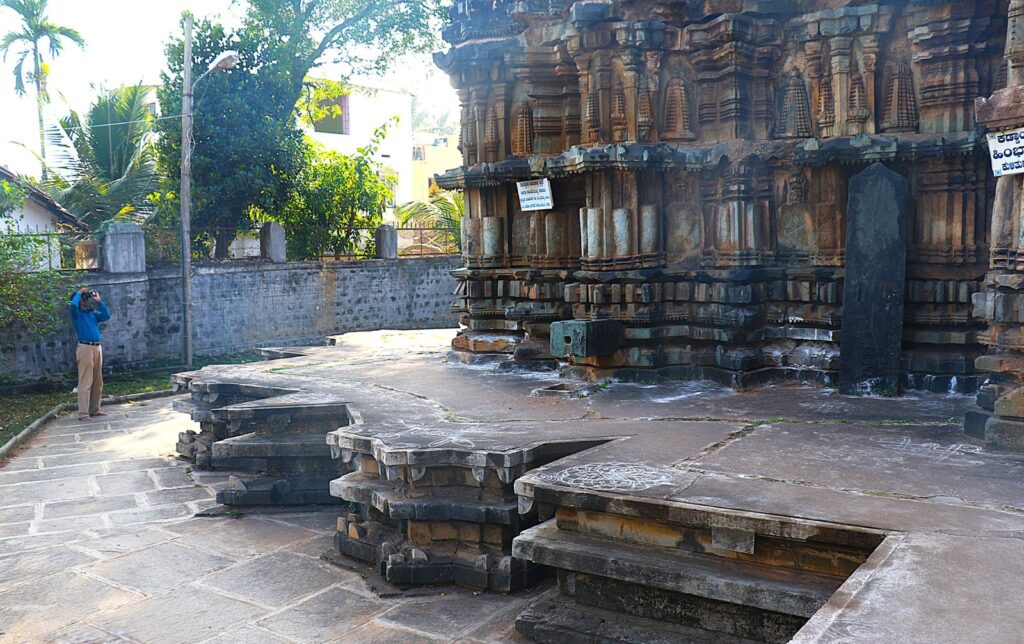
Exterior view of the Stellate Jagati at Lakshmi Narasimha Temple, Bhadravathi
These elements—trikuta layout, soapstone material, raised jagati, and stellate geometry—appear consistently across major Hoysala temples like Chennakeshava Temple in Belur and Hoysaleswara Temple in Halebidu. Their presence in Bhadravathi confirms this temple belongs to the mature phase of Hoysala architecture, despite being in a smaller town.
Even viewing only the exterior, as I did, reveals the sophistication of Hoysala building techniques and the dynasty’s commitment to architectural excellence across all their temple projects, regardless of location.
The “Missed Connection”: Timings and Planning Your Visit
I arrived at the Lakshmi Narasimha Temple around 2:30 PM in May 2017 and found it locked. The afternoon closure is standard practice at ASI-protected temples in Karnataka—the caretaker closes for a midday break, reopening only in the evening.
I faced a choice: wait approximately 90 minutes for the 4 PM reopening or continue toward Jog Falls while daylight remained. I chose to proceed, meaning I never saw the interior sanctums.
Standard temple timings:
- Morning: 6 AM to 1 PM
- Evening: 4 PM to 8 PM
These hours can vary slightly during festivals or on maintenance days, so calling the ASI Shivamogga office or local temple administration before visiting is advisable if you’re making a dedicated trip.
Missing the interior was disappointing, but the exterior photography compensated partially. The late afternoon sun at a low angle created strong shadows that emphasized the stellate plan’s projections and recessions.
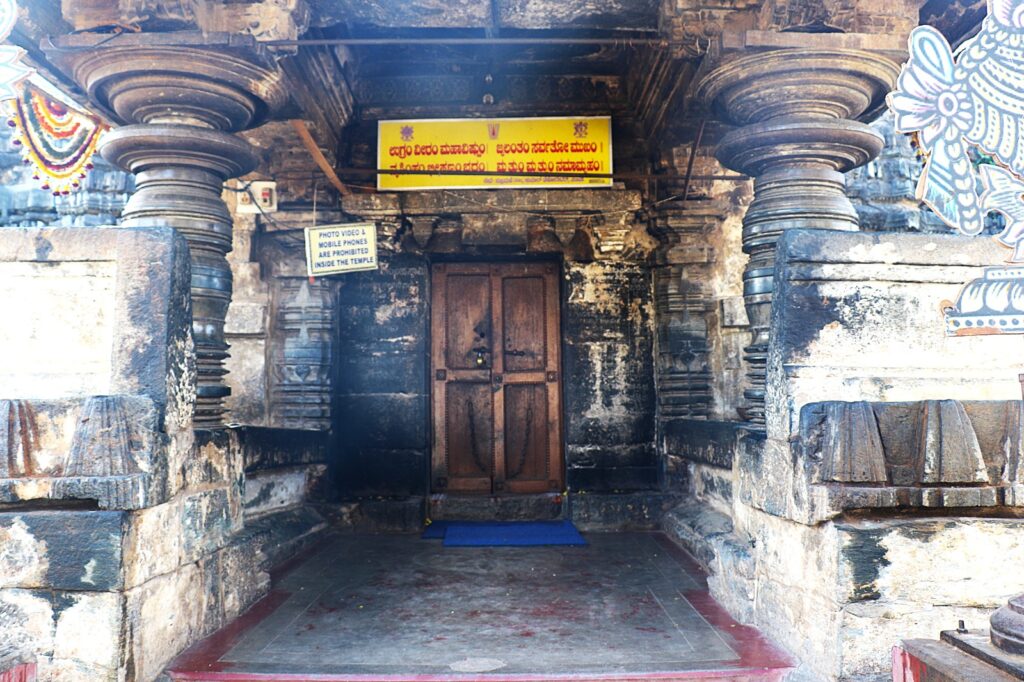
Late visit and we saw the doors shut
The soapstone’s surface texture became more visible in angled light—something not as apparent in harsh midday sun or dim morning light. If you arrive when the temple is closed, use the time to photograph architectural details: the jagati’s carved edges, miniature pillars on the outer walls, and decorative bands running horizontally across the shrine walls.
Planning tip for Bangalore to Jog Falls temple road trip
Schedule Bhadravathi for morning hours (9–11 AM works well). This gives adequate time to view interiors, then continue to temples near Amrutheshwara Temple or proceed toward Jog Falls with daylight remaining. Don’t replicate my timing mistake—plan around the afternoon closure to fully experience this Hoysala architecture Bhadravathi showcases.
How to Reach
Bhadravathi is located 255 km northwest of Bangalore and 20 km from Shivamogga city. The most direct route follows NH 48 through Tumakuru and Arsikere, then connects to NH 69 toward Shivamogga. Average driving time is 5.5-6 hours depending on traffic conditions leaving Bangalore.
The temple sits within Bhadravathi town limits, easily located using GPS coordinates or by asking locals for “Lakshmi Narasimha Temple” near the old town area.
Once you are in Bhadravathi, you can avail any local transport to reach to this temple.
Best visiting season: October through February
I visited in May 2017 during peak summer when afternoon temperatures exceeded 35°C, making outdoor temple photography uncomfortable and causing heat haze that reduced photo clarity.
The October-February window offers temperatures between 20-28°C—ideal for walking around the jagati, examining exterior carvings, and photographing architectural details without harsh shadows or heat distortion.
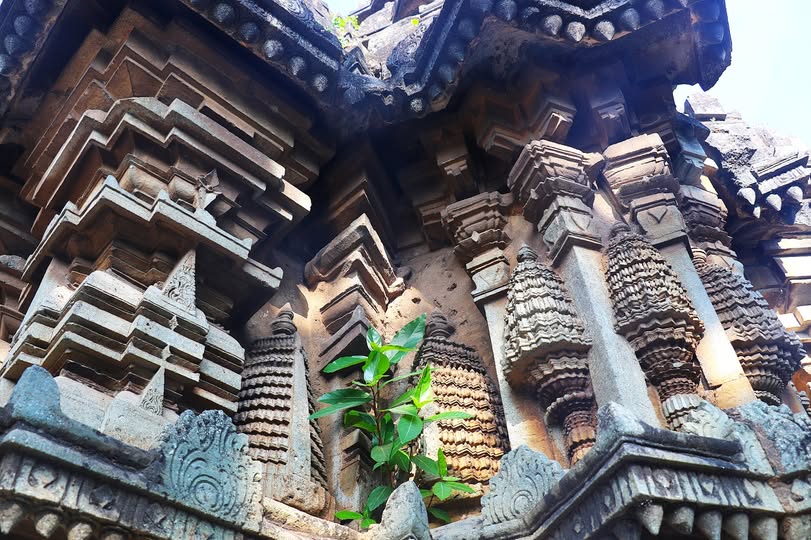
Young trees getting grip of the temple – a shocking sight
Nearby Attractions
A visit to the Lakshmi Narasimha Temple Bhadravathi can be enriched by exploring several nearby attractions in Shivamogga district. The following table outlines key sites worth including in your itinerary:
| Attraction | Distance from Bhadravathi | Type | Best For |
| Amrutheshwara Temple, Amruthapura | 20 km | Heritage/Hoysala Temple | Detailed narrative friezes, soapstone architecture, epic depictions |
| Jog Falls | 90 km | Natural Wonder | One of India’s tallest waterfalls, scenic drive through forests |
| Tunga Anicut Dam | 15 km | Nature/Riverside | Peaceful setting, picnic spot, river views |
| Shivamogga City | 20 km | Urban Hub | Hotels, restaurants, urban amenities, additional temples |
| Mandagadde Bird Sanctuary | 35 km | Wildlife/Birding | Migratory birds (best during monsoon), nature photography |
Pairing Bhadravathi with Amrutheshwara Temple creates an excellent heritage trail focused on Hoysala soapstone architecture. Nature enthusiasts can extend their journey to Jog Falls via the scenic Bangalore to Jog Falls temple road trip route, which passes through lush forests and small temple towns.
FAQ for Lakshmi Narasimha Temple Bhadravathi
Q1. What is special about the Lakshmi Narasimha Temple Bhadravathi?
It is a 13th-century Hoysala Trikuta temple, built by King Vira Someshwara, with sanctums dedicated to Venugopala, Lakshmi Narasimha, and Purushottama.
Q2. What material is the temple built from?
The temple is constructed from soapstone (chloritic schist), allowing artisans to carve intricate details that have survived centuries.
Q3. What are the temple timings?
The temple is generally open from 6 AM to 1 PM and 6 PM to 9 PM. Plan accordingly to avoid missing the interiors.
Q4. How far is Bhadravathi from Bangalore?
It is about 255 km from Bangalore and 20 km from Shimoga, accessible via NH 69 or NH 48.
Q5. What other attractions can be combined with this visit?
Nearby sites include Amrutheshwara Temple, Jog Falls, Tunga Anicut Dam, and Mandagadde Bird Sanctuary.
Q6. Can I visit Bhadravathi temple along with other Hoysala temples?
Yes, Bhadravathi works excellently in a Hoysala temple circuit. Recommended combinations include: Ishwara Temple in Arasikere (165 km from Bangalore), Yoganarasimha Temple in Baggavalli (195 km), Amrutheshwara Temple in Amruthapura (235 km), and Lakshmi Narasimha Temple in Bhadravathi (255 km). This route showcases architectural diversity across soapstone temples in Shivamogga and surrounding districts, creating a comprehensive heritage experience.
Q7. What is a trikuta temple in Karnataka?
A trikuta temple features three separate sanctums (garbhagrihas) sharing a common mandapa or hall. “Trikuta” literally means “three peaks” in Sanskrit. This architectural form allowed devotees to worship multiple deities or different forms of the same deity in one visit.
Final Thoughts
The Lakshmi Narasimha Temple Bhadravathi may not be as famous as Belur or Halebidu, but it embodies the same Hoysala architectural brilliance. My own experience—arriving in the late afternoon and finding the temple closed—was a reminder that heritage travel requires careful planning. Yet even from the outside, the temple’s stellate plan, soapstone carvings, and raised Jagati left a lasting impression.
For travelers, Bhadravathi offers a unique blend: an industrial town with a hidden cultural gem. Linking it with Amrutheshwara Temple and other Hoysala sites creates a fulfilling circuit that balances history, architecture, and natural beauty.
In the end I will say one thing, if you’re planning a Bangalore to Jog Falls road trip, make time for Bhadravathi. It’s a stop that rewards both the casual visitor and the dedicated heritage explorer.
Pin this for Later
About the Author
 Indrani Ghose is a cultural travel writer and heritage documentation specialist with over 15 years of experience exploring and writing about temples across India and Southeast Asia. Having visited over 150 sacred sites, she brings both scholarly depth and personal narrative to heritage travel writing.
Her work has been published in Lonely Planet, The National (UAE), Whetstone Asia, Deccan Herald, and various architecture and heritage journals.
Indrani believes that travel writing serves as a bridge — helping readers experience places more deeply by providing context, answering questions, and sharing both practical logistics and emotional resonance.
Connect with Indrani: Follow Indrani on Instagram | Twitter | Facebook for heritage travel insights, photography tips, and offbeat destination discoveries.







i wish we could preserve our history and culture in a better way. we have so much to see in India but little do we pay attention to such beautiful sites..
Great architecture. 🙂
Wonderful place.
Nice… I had lived in Bhadravathi at one time & had not visited the temple. Your post motivates one to visit.
Amazing Architecture and interesting Narration, Indrani.. Well presented!
Amazing architecture and a lovely place to see! Thanks for sharing to us!
Would you know the technical name of Soap Stone?
Hi Anuradha, so happy to see you in my blog.
Regarding soap stone I found this in wiki: Soapstone (also known as steatite, or soaprock) is a talc-schist., which is a type of metamorphic rock.
Great information with pictures Indrani, I hate it when people damage things in the name of prayer. No one is taking any steps there?
It’s better early to come before opening time than missing the whole thing itself.
I know… it is so disappointing — visiting some place and not being able to get in.
I love the walls of Hoysala temple. So ornate!!
Beautiful captures of the temple Indrani! Its so sad to see the carvings damaged!!
It is disheartening to see that we don’t have any value of our rich heritage and we leave no stone unturned to destroy it more 🙁
Hello, beautiful images of the temple. The carvings and details are always amazing to me. Happy Tuesday, enjoy your day!
These beautiful carvings have survived well…….wonderful architecture too!
Thanks for sharing this.
A lovely description with beautiful pics. I’ve the same question in my mind as Mridula.
No we didn’t wait Ravish!
We sadly don’t value our heritage 🙁 Did you manage to wait till the temple opened?
No we didn’t wait Mridula. 🙁
Beautiful temple. Sad you could not get in . Wonder what the insides would be if the outsides are so beautiful
Great pics and narration! Thank you Indrani:)
Its unfortunate, we can not preserve our rich heritage well. Your pictures caught it perfectly.
Hello Indrani, I think it is not the first time you mention vandalism and damage to temples you have visited in India. So sad, stuff like this happens. I have also visited places when they are closed. Plus, I have been led to believe that a place is closed when it was really open (but there was a scam involve din that one).
Amazing sculptures and carvings ! One gets awestruck gazing at these real gems !
Really sad to see damages. Nice pictures.
Nothing irritates me as much as deliberate damage to beautiful works of art. I laughed at your opening sentence as I had begun this week’s post with ‘timing is everything when you travel’. . ..
I agree Jackie… timings cannot be ignored or overlooked. 🙂
Thanks for you visit and comment. 🙂
Sad to see the damage — particularly that is done in the name of belief, but what history!! Great post for the day, Indrani, as always!! Hope you have a great new week!!
Very sorry to see the damages done in name of belief on these soft stone works… but your photos captured the details so well! Nice collage makes on the surroundings