Quick Guide: Best Places to Visit in Chidambaram (2026 Edition)
Chidambaram, in Tamil Nadu’s Cuddalore district, is one of South India’s most layered destinations — where ancient temple architecture, living spiritual traditions, and rare natural ecosystems exist within a few kilometres of each other.
I first visited the Thillai Nataraja Temple in 2010 and returned in October 2025. The difference was striking: better crowd management, cleaner premises, and more structured darshan timings — though there’s still room for improvement in signage and visitor facilities.
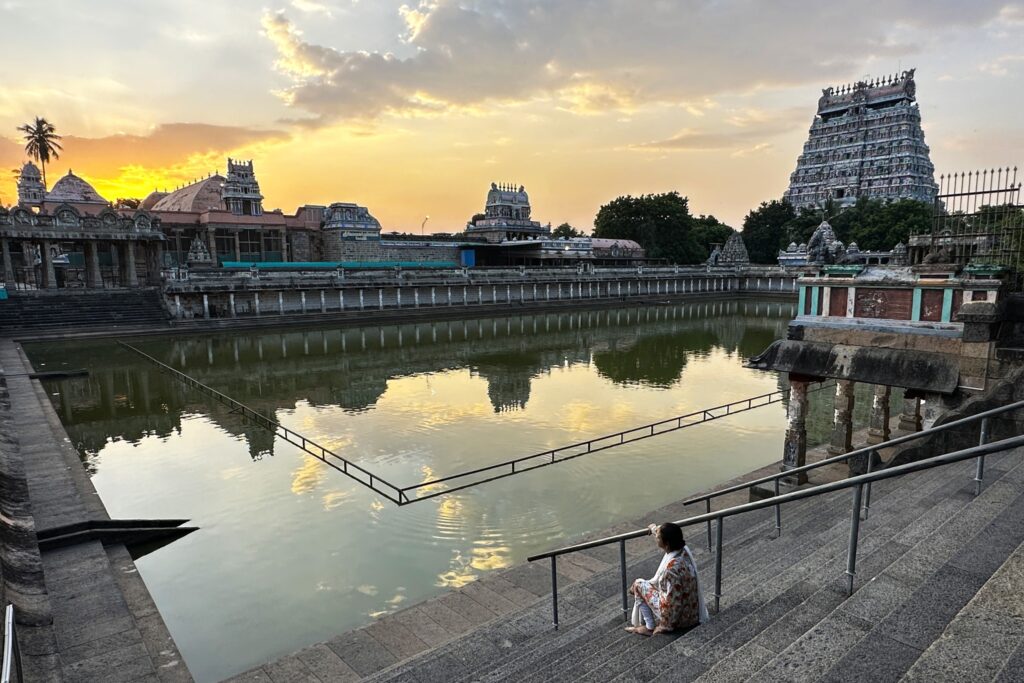
Tranquil Moments at Chidambaram Nataraja Temple Tank
For anyone planning a trip, here’s what this Chidambaram travel guide covers:
- Thillai Nataraja Temple – The spiritual and architectural centrepiece, famous for its golden roof and the Chidambara Rahasyam.
- Pichavaram Mangrove Forest – A rare inland mangrove system, ideal for a morning boat ride through narrow canals.
- Thillai Kali Amman Temple – A smaller but significant shrine dedicated to Goddess Kali, just minutes from Nataraja Temple.
- Gangaikonda Cholapuram – A worthwhile stop for UNESCO World Heritage Site.
- Nearby temples within 50 km – Including Srimushnam and Vaitheeswaran Koil, both worth a half-day detour.
This combination of sacred sites and natural attractions makes Chidambaram a strong candidate for a one-day itinerary — particularly if you pair it with a morning or evening at Pichavaram.
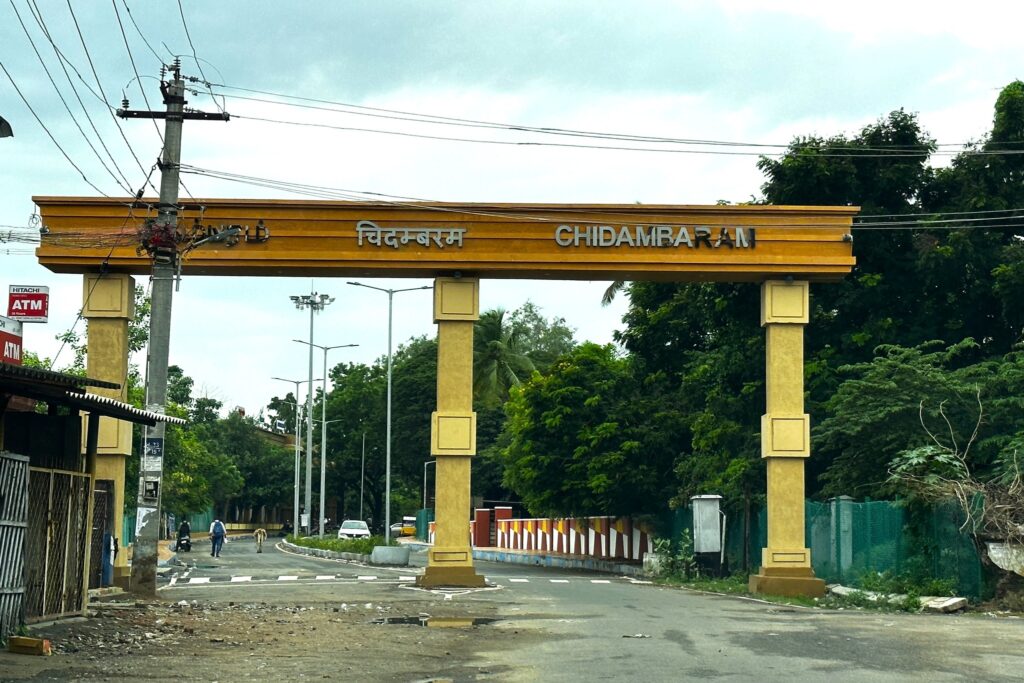
Entrance Arch to Chidambaram
Thillai Nataraja Temple: More Than a Pilgrimage Site
Architecture
The Thillai Nataraja Temple is one of the finest surviving examples of Chola-period temple architecture, with origins traced to the 10th century CE. Four towering gopurams (gateway towers), each rising over 40 metres, define its skyline. Every surface is densely carved with sculptures depicting celestial beings, mythological narratives, and dancing figures — a visual encyclopaedia of classical Tamil religious art.
What sets this temple apart from other major Shaivite shrines is its place in the Pancha Bhoota Sthalams — five temples across South India, each representing one of the five elements. Chidambaram represents Akasha (space or ether), the most abstract of the five. This philosophical identity shapes everything about the temple, from its iconography to its rituals.
The sanctum houses Lord Shiva in his form as Nataraja, performing the Ananda Tandava — the cosmic dance of creation and dissolution. The famous golden roof, comprising 21,600 gold tiles (a number said to correspond to the average number of human breaths per day), is the temple’s most immediately arresting feature. It has been carefully maintained through periodic restoration and glowed particularly well when I visited in October 2025.
Temple administration is handled by the Dikshitars, a community of hereditary priests who have managed the temple’s rituals and governance for centuries — an unbroken tradition that adds a layer of living history to every visit.
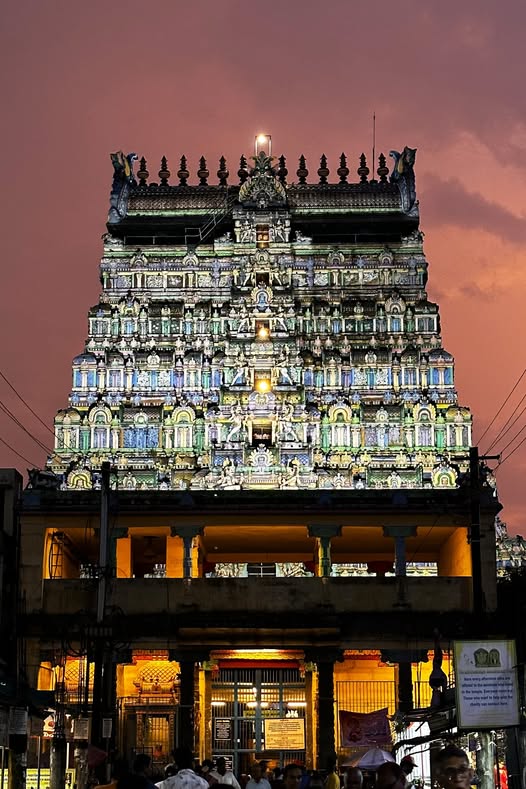
Chidambaram Nataraja temple Gopuram taken in 2025
The Secrets of Chidambaram
The temple’s most discussed mystery is the Chidambara Rahasyam — literally, the “Secret of Chidambaram.” Behind a gold curtain in the innermost sanctum lies an empty space. No idol. No form. Just a garland of vilva leaves and golden bilva — marking the invisible presence of Shiva as the formless absolute. For devotees, seeing this space is considered a moment of profound spiritual significance, representing the idea that divinity transcends physical form.
The temple also has lesser-known dimensions worth exploring. Inscriptions on its walls record astronomical alignments, suggesting the structure was deliberately oriented to correspond with celestial movements — an intersection of sacred architecture and early astronomy.
Additionally, the temple hosts the Natyanjali Dance Festival, when Bharatanatyam dancers from across India and abroad perform in the temple precincts as an offering to Nataraja. It’s a remarkable confluence of classical art and religious devotion.
My visit to the Sanctum
On my 2010 visit to the Chidambaram temple, the Rahasyam darshan felt hurried and overwhelming—long queues pressed forward, and the moment itself passed in a blur. When I returned in 2025, I chose a weekday, and the difference was striking. The movement of devotees was more thoughtfully managed, and the atmosphere around the sanctum felt calmer, almost contemplative, allowing the experience to unfold with a quiet sense of reverence.
There are no timed entry slots, yet both visits revealed the same pattern: just before the Rahasya Darshanam, a surge of devotees gathers, only to disperse quickly once it concludes. The simple trick, then, is to arrive early and secure a place on the steps directly in front. From there, you can take in the moment without having to strain or peer over a sea of heads—an experience that feels far more intimate and complete.

Intricate lotus on ceiling to entrance of Nataraja Temple
2025 Updates: What’s Changed
Between 2010 and 2025, the temple has seen meaningful improvements — not a transformation, but a steady, managed evolution.
The golden roof was a highlight of my 2025 visit. It seemed to have been polished and reinforced which I failed to notice during my 2010 visit which was in the evening. The sacred tanks and corridor floors were cleaner, with waste segregation bins placed at key points — a small but meaningful improvement.
Temple timings are now better communicated, with pooja schedules displayed at entrances. This is particularly useful for first-time visitors who want to plan their visit around specific rituals.
The Arudra Darshan festival in December 2025 reportedly drew tens of thousands of pilgrims, yet crowd arrangements held up well according to multiple visitor accounts reviewed ahead of this guide update.
| Session | Time (2026) | Best For |
| Morning Darshan | 6 AM – 12 Noon | Peaceful rituals |
| Paal Nivedhyam | 6.30 AM | Morning offering |
| Maha Aarti | 7 AM | Main morning worship |
| Kalasandhi Pooja | 7.45 – 9 AM | Spatika linga abhishekam |
| Irandaam Kaalam | 10 – 11 AM | Ruby Nataraja abhishekam |
| Uchikalam | 11.30 AM – 12 Noon | Midday closure |
| Evening Darshan | 5 – 10 PM | Vibrant evening rituals |
| Saayarakshai Pooja | 5.15 – 6 PM | Evening abhishekam |
| Rahasyam Darshan | 7 – 8 PM (recommended) | Best time for a serene experience |
| Ardhajaamam Aarti | 9 – 10 PM | Night closure |
Practical tip: If the Rahasyam darshan is a priority, arrive by 6.30 PM for the evening session. The 7–8 PM window tends to be less crowded than midday, and the temple lighting at that hour adds to the atmosphere.
Beyond the Main Gates: Sacred Temples Near Chidambaram
The Nataraja Temple draws most visitors, but the surrounding region holds a genuinely rewarding circuit of shrines — each with a distinct character. Within 50 km, you can move from fierce goddess worship to Chola heritage architecture to ancient healing traditions. Here are the most significant stops.
Thillai Kali Amman Temple — The Fierce Protector
Distance from Nataraja Temple: ~2 km
According to temple legend, Goddess Kali manifested here after losing a cosmic dance contest to Lord Shiva — choosing this spot as her permanent abode in fierce form. The temple is architecturally simpler than the Nataraja complex, but its atmosphere is notably intense. The sanctum’s striking idol — Kali in her protective, uncompromising aspect — draws devotees seeking strength during personal hardship.
When I visited in 2025, the approach pathways were better lit and easier to navigate than I’d expected for a smaller shrine. Unlike the crowded corridors of the main temple, this one offers a quieter, more personal worship experience. The Aadi Thiruvizha festival (July–August) transforms the temple with processions and community gatherings — worth timing your visit around if possible.
For travelers, this temple provides a useful counterpoint to the Nataraja experience: less grand in scale, but more immediate in atmosphere. It’s a 15-minute detour at most and genuinely worth it.
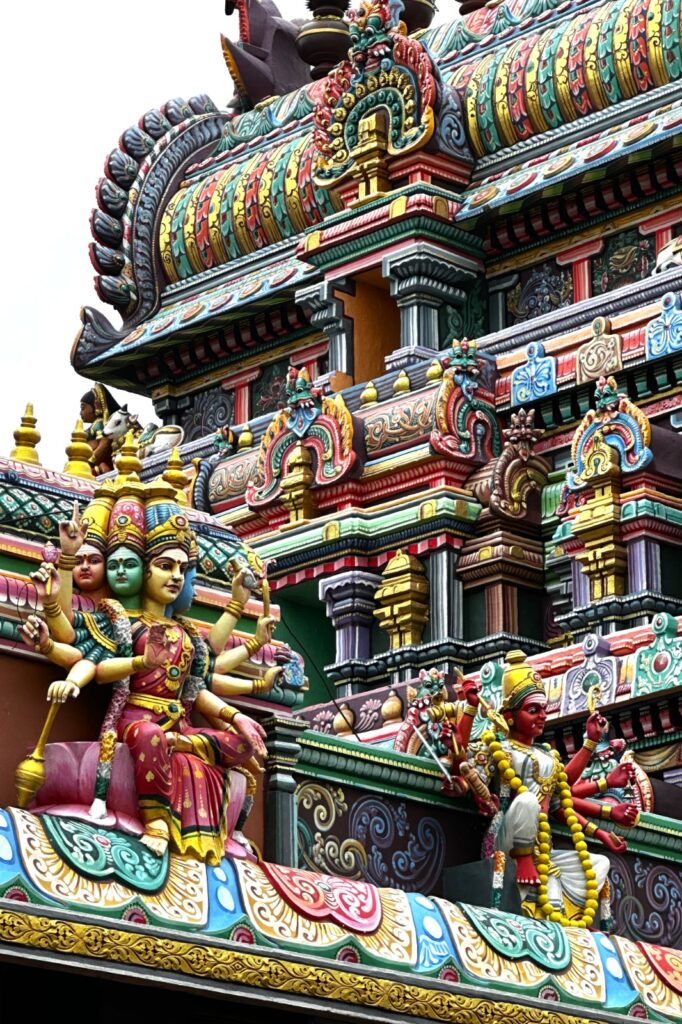
Thillai Kaali Amman kovil Chidambaram
Bhuvaraha Swamy Temple, Srimushnam — A Chola Vaishnavite Gem
Distance from Chidambaram: ~40 km
Srimushnam is one of Tamil Nadu’s lesser-visited heritage sites, and that’s precisely what makes it rewarding. The Bhuvaraha Swamy Temple is among the rare shrines dedicated to Vishnu’s Varaha (boar) avatar — one of only a handful in South India. Built during the Chola period, the temple features massive stone pillars and detailed carvings that reflect the dynasty’s architectural confidence.
The temple is open to all communities — a tradition of inclusivity that has held across centuries. The temple tank, believed to have curative properties, is a focal point for many pilgrims. During my 2025 visit, guided tours were available explaining the temple’s Chola-period history — a useful addition for heritage-focused travelers who want context beyond the iconography.
The surrounding village is calm and unhurried. If you’re planning a temples near Chidambaram within 50 km itinerary, Srimushnam pairs well with Gangaikonda Cholapuram as a half-day heritage circuit.
Pichavaram Mangrove Forest — Nature’s Labyrinth
Distance from Chidambaram: ~15 km
Pichavaram is one of India’s largest mangrove ecosystems — 1,100 hectares of interconnected canals linking the Vellar and Coleroon river systems. It supports over 200 bird species and a dense understorey of mangrove root systems that create a genuinely unusual landscape.
The boat ride through the mangrove channels is the main draw. The dense canopy closes overhead in stretches, creating a tunnel effect that’s particularly striking in low morning light. Tamil Nadu Tourism operates both rowboats and motorboats.
We took the rowboat, as it is slower and far more immersive, letting you hear birdcalls without engine noise. If birdwatching is a priority, carry binoculars; egrets, kingfishers, and herons are common sightings.
Best visiting time: Early morning (7–9 AM) or late afternoon. Midday visits are hotter and less rewarding for both photography and wildlife.
For a practical one-day itinerary combining Chidambaram and Pichavaram: visit the Nataraja Temple early morning (6.30–10 AM), drive to Pichavaram for a late morning boat ride, and return to Chidambaram for the evening Rahasyam darshan. It’s a full but manageable day.
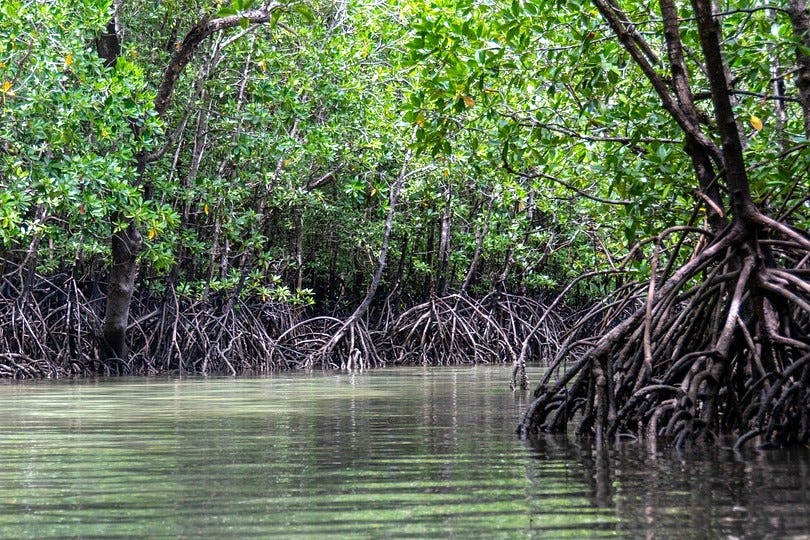
Pichavaram Mangroves
Vaitheeswaran Koil — Temple of Healing
Distance from Chidambaram: ~27 km
Vaitheeswaran Koil is dedicated to Lord Shiva in his form as the divine physician — Vaitheeswara literally means “Lord of Healing.” The temple draws two very distinct types of visitors:
- Devotees seeking relief from illness
- Those consulting Nadi astrologers, who use ancient palm leaf manuscripts to interpret personal destinies
Both traditions are active and easily accessible on-site.
The sacred tank is used for ritual bathing, and the temple has longstanding ties to Siddha medicine — traditional herbal healing practices still referenced by practitioners in the region.
I visited in 2010, when the experience was disorganised — long queues, crowded prasadam counters, and limited facilities around the tank. If you have visited in the recent times do let me know in comments about the arrangements there.
Gangaikonda Cholapuram — The Chola Legacy
Distance from Chidambaram: ~40 km | UNESCO World Heritage Site
Built by Rajendra Chola I in the early 11th century, Gangaikonda Cholapuram was conceived as a statement of imperial ambition — a deliberate rival to the Brihadeeswarar Temple in Thanjavur. Its name translates to “The town of the Chola who conquered the Ganga,” marking Rajendra’s successful northern military campaigns.
The vimana (main tower) rises to 55 metres — slightly shorter than Thanjavur’s Breehadeeshwaram Temple but considered by many historians to be more elegantly proportioned. The sanctum is dedicated to Lord Shiva, surrounded by sculptures of exceptional quality: lions, yali (mythical creatures), and celestial figures carved with a fluency that reflects the Chola dynasty’s peak artistic period.
What distinguishes this site from Nataraja Temple is the atmosphere. There are no large crowds, no commercial activity, and the grounds are well-maintained. It’s a contemplative space — better suited for slow exploration than a quick visit.
For heritage travelers planning a temples-near-Chidambaram itinerary, Gangaikonda Cholapuram is essential. Paired with Srimushnam (Vaishnavite, Chola-era) and Vaitheeswaran Koil (Shaivite, healing tradition), it completes a circuit that covers three distinct threads of Tamil religious and architectural history within a single day’s drive.
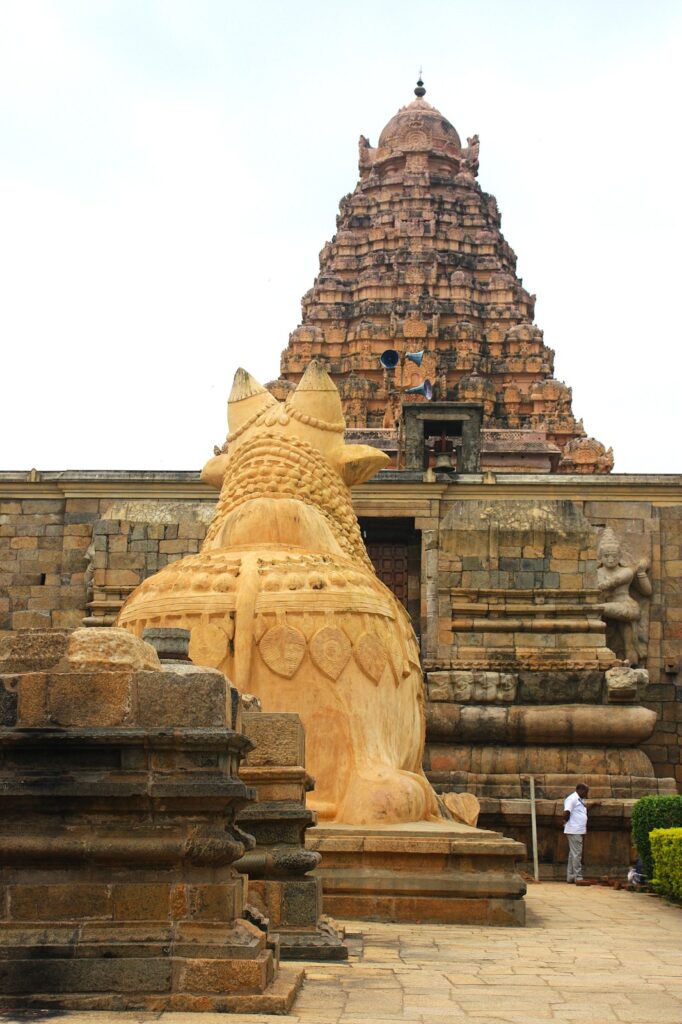
Gangaikonda Cholapuram
Chidambaram Travel Tips: Food, Stay, and Getting Around
A trip to Chidambaram works best when the logistics are sorted in advance. Based on my 2025 road trip, here’s what you need to know.
Where to Eat
Chidambaram’s food scene is straightforward — vegetarian South Indian, done well. Don’t expect variety beyond that.
- Saravana Bhavan (near the temple) — The most reliable option for dosas, idlis, and filter coffee. Consistent quality, familiar menu, reasonable prices.
- Hotel Akshaya Bhavan — Good for a quick, affordable thali if you’re on a tight schedule between temple visits.
- Sri Krishna Vilas — Offers both Tamil and North Indian dishes, which makes it a practical choice for mixed groups or families.
- Local messes near the temple — For the most authentic flavours, these small eateries serve tamarind rice, curd rice, and sambar at low prices. No ambience, but the food is homely and filling.
A note on timing: most local eateries close between 3–5 PM. Plan meals around temple timings accordingly.
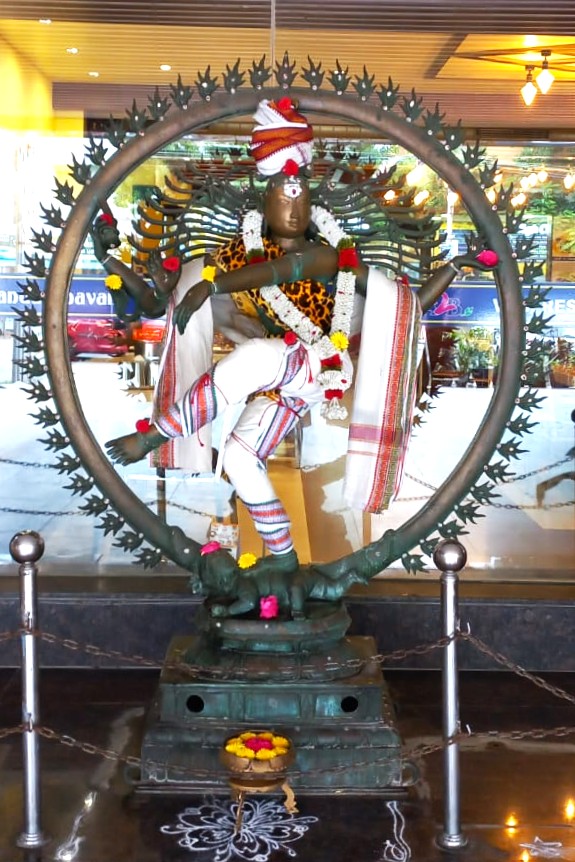
Nataraja Statue in front of Saravana Bhavan Restaurant
Souvenirs
If you are to bring back just one souvenir from Chidambaram, let it be a Lingam. Simple yet deeply symbolic, it carries the essence of the sacred far more than any ornate keepsake. You’ll find them crafted in a variety of materials—stone, metal, crystal—and in sizes ranging from palm-held to altar-worthy. Choose one that feels right in your hands; it becomes less a souvenir and more a quiet continuation of your darshan.
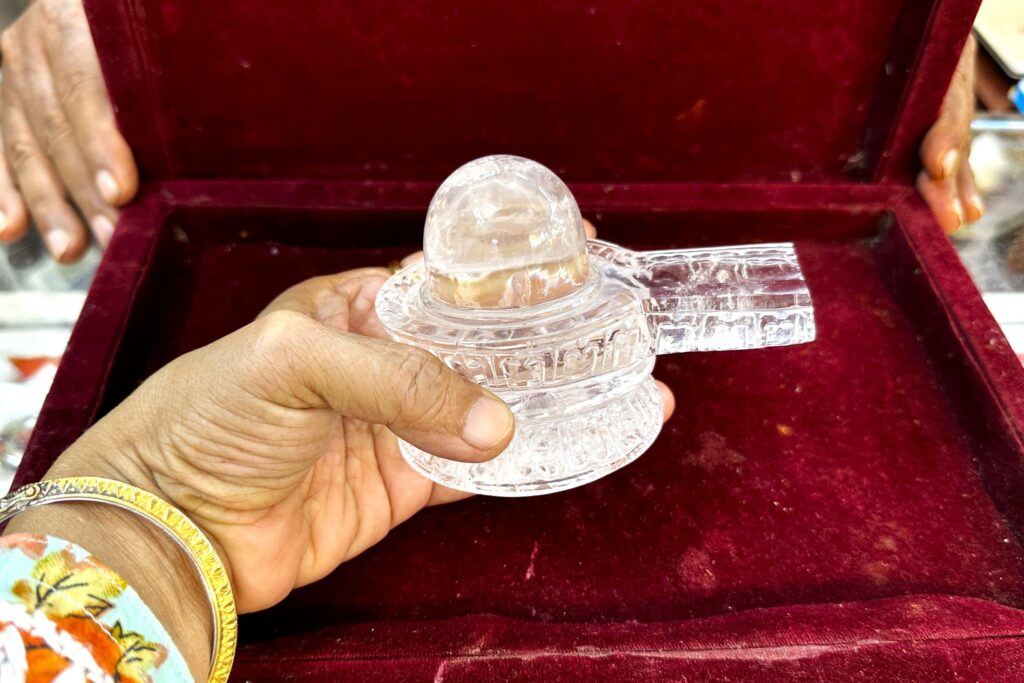
Lingam souvenir from Chidambaram
Where to Stay
Accommodation in Chidambaram covers budget to mid-range. There are no luxury options in town.
- Temple-view lodges — Budget rooms within walking distance of the Nataraja Temple. Practical if you want to attend early morning darshans without a long commute.
- Hotel Saradharam — The most commonly recommended mid-range option: clean rooms, AC, and in-house dining. Books out quickly during festival seasons, so reserve ahead.
- Temple trust guesthouses — Simple, inexpensive, and close to the complex. Suitable for pilgrimage-focused visitors who prioritise proximity over comfort.
If you want more comfortable accommodation, Pondicherry (approx. 75 km) and Cuddalore (approx. 25 km) both offer better hotel options, including boutique stays, and are manageable as base locations for a day trip to Chidambaram.
Getting Around
By road: The NH-32 corridor from Chennai through Cuddalore to Chidambaram is significantly better than it was in 2010 — wider lanes, better surface quality, and clearer signage.
A self-driven car is the most flexible option, particularly if you plan to cover Pichavaram, Srimushnam, or Vaitheeswaran Koil in the same trip. (We drove to Pichavaram from here during our 2010 trip.)
Parking: Designated lots are available near the temple and bus stand. During festivals, these fill up early — plan to arrive before 7 AM if visiting on a festival day.
Local transport:
- Auto-rickshaws are widely available. Negotiate fares before boarding — there are no meters.
- Rental cars make the most sense if you’re covering multiple temples and Pichavaram in a single day.
- Self-drive: We self drove to Chidambaram to Bangalore. Commute was easy within the city.
- Public buses connect Chidambaram to Srimushnam, Vaitheeswaran Koil, and Gangaikonda Cholapuram, but schedules are irregular. Check timings locally before depending on them.
Congestion note: Traffic near the temple gates is reliably heavy during festival periods and on weekends. Factor in an extra 20–30 minutes if visiting during these times.
FAQ About Visiting Chidambaram
What is the dress code for women at Chidambaram Temple in 2026?
Women should wear a saree or salwar kameez with dupatta. Jeans, skirts, and western outfits are not permitted inside the sanctum. Men are typically required to remove shirts before entering certain inner areas — this is standard practice at many Tamil Nadu temples.
How much time should I spend at the Nataraja Temple?
Allow 2–3 hours minimum to see the gopurams, inner corridors, and Rahasyam Darshan without rushing. Add an hour during festivals or if you plan to attend a specific pooja.
Can I cover Pichavaram and Chidambaram in one day?
Yes, comfortably. Morning darshan at the Nataraja Temple (6.30–10 AM), followed by visiting some of the temples around, have lunch in Saravana Bhavan, take an hour’s rest, visit Pichavaram for evening boat ride, return for the evening Rahasyam darshan at 7 PM.
What are the must-see temples near Chidambaram within 50 km?
Thillai Kali Amman Temple (2 km), Vaitheeswaran Koil (27 km), Srimushnam Bhuvaraha Swamy Temple (40 km), and Gangaikonda Cholapuram (40 km) are the top picks covering Shaivite, Vaishnavite, and heritage interests.
Is photography allowed inside the Nataraja temple?
Photography is strictly prohibited inside the sanctum and during active rituals. The outer corridors, gopuram exteriors, and temple tanks are generally fine for photos. When in doubt, check with a Dikshitar or temple staff before shooting.
How are the roads for self-driven cars?
Good to very good on the main highways from Chennai and Pondicherry. Expect congestion near the temple gates during peak hours and festivals. Inner town roads are narrow in places — a compact or mid-size car is easier to manage than an SUV.
Conclusion
Visiting Chidambaram in 2026 is more than a temple trip—it’s a journey through history, spirituality, and nature. From the cosmic dance at the Thillai Nataraja Temple to the serene mangroves of Pichavaram and the grandeur of Gangaikonda Cholapuram, this region offers a complete cultural circuit.
Having seen the temple evolve between my visits in 2010 and 2025, I can say the town has become more welcoming for both pilgrims and travelers. Improved roads, better crowd management, and cleaner temple complexes make the experience smoother than ever.
I’d love to hear from you: Which part of Chidambaram fascinates you most—the temples, the mangroves, or the heritage sites? Do you have tips, experiences, or suggestions that could enrich this guide for future readers? Share your thoughts in the comments or reply to my newsletter link. Your insights help keep this guide practical, authentic, and useful for everyone.
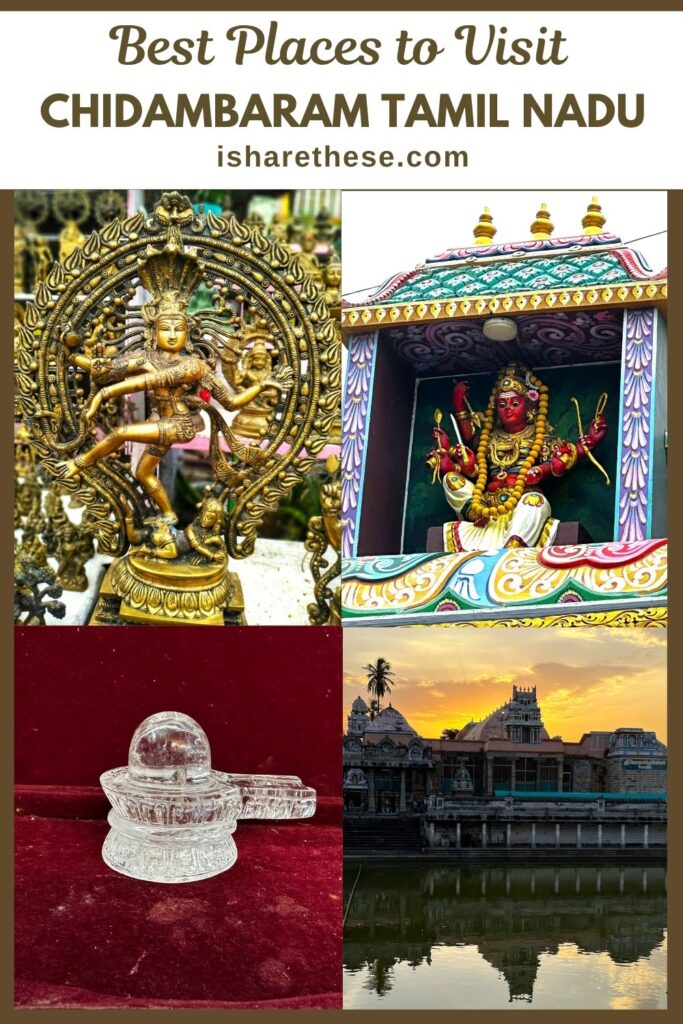
Pin and Save this for later
About the Author
 Indrani Ghose is a cultural travel writer and heritage documentation specialist with over 15 years of experience exploring and writing about temples across India and Southeast Asia. Having visited over 150 sacred sites, she brings both scholarly depth and personal narrative to heritage travel writing.
Her work has been published in Lonely Planet, The National (UAE), Whetstone Asia, Deccan Herald, and various architecture and heritage journals.
Connect with Indrani: Follow Indrani on Instagram | Twitter | Facebook for heritage travel insights, photography tips, and offbeat destination discoveries.








மிகவும் பயனுள்ள தகவல்கள் 🙏👌