Palace of Dukes of Braganza, a Must See in Guimaraes, Portugal
The Ultimate Guide to the Palace of the Dukes of Braganza (Paço dos Duques)
By Indrani Ghose | Last Updated: December 2025
After touring Castle of Guimaraes we moved on to Palace of Dukes of Braganza. When I visited the palace back in 2015, the first thing that caught my eye wasn’t the famous castle walls, but 39 tall brick chimneys piercing the skyline just below them. They rose from a granite facade like something transplanted from medieval France—completely unexpected in Northern Portugal.
This is the Palace of the Dukes of Braganza (Paço dos Duques de Bragança), and it deserves more attention than it gets. Located in Guimarães’ UNESCO-listed historic center, this 15th-century manor is often missed by visitors rushing to the castle. That’s a mistake. While the castle offers dramatic views, the palace tells the real story of Portuguese royal history through its rooms, tapestries, and unusual Burgundian architecture.
Whether you’re planning a Guimarães day trip from Porto (it’s only 50 minutes by train) or tracking the powerful House of Braganza, this palace should be on your list. In this guide, I’ll walk you through what makes this building historically significant, what to see inside, and share photos from my visit to help you decide if it’s worth the uphill walk.
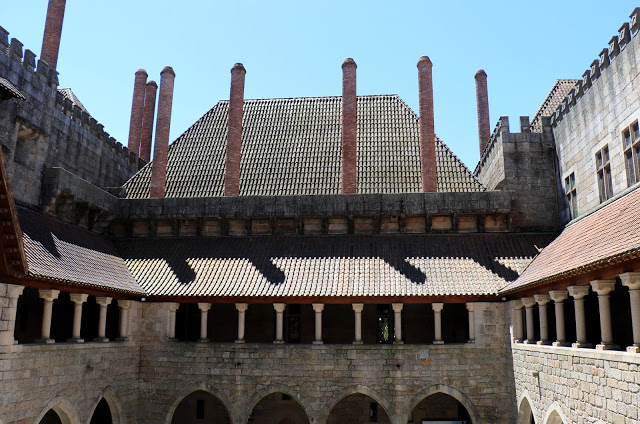
Palace of Dukes of Braganza in Guimarães
A Brief History: From Royal Residence to Ruin
The Palace of the Dukes of Braganza you see today isn’t entirely medieval—it’s part 15th-century ambition, part 20th-century reconstruction. Understanding this matters because the building has lived three separate lives: royal residence, forgotten ruin, and nationalist symbol.
The Origins: A Statement of Power (15th Century)
Construction started around 1420 under Dom Afonso, the first Duke of Braganza and illegitimate son of King João I. Afonso was wealthy, politically connected, and wanted a home that proved it. He’d traveled through France and Flanders, where he encountered the grand manor houses of Burgundian nobility. He brought those architectural ideas back to Portugal.
The result was unusual for the Iberian Peninsula: a U-shaped floor plan, decorative stone moldings, and those distinctive brick chimneys—all borrowed from Northern European design. This Burgundian architecture in Portugal was rare, making the palace architecturally significant even in its own time.
The Decline: Centuries of Neglect
The palace served as the ducal seat for less than a century. By the 1500s, the Braganza family relocated to Vila Viçosa in Alentejo, closer to Lisbon and Spain. The Guimarães palace was abandoned.
What followed was slow decay. The building became military barracks, then was simply left empty. By the 1800s, it was a roofless shell. Local residents were even allowed to salvage stone from the ruins to build their own houses—a practice that stripped away centuries of history stone by stone.
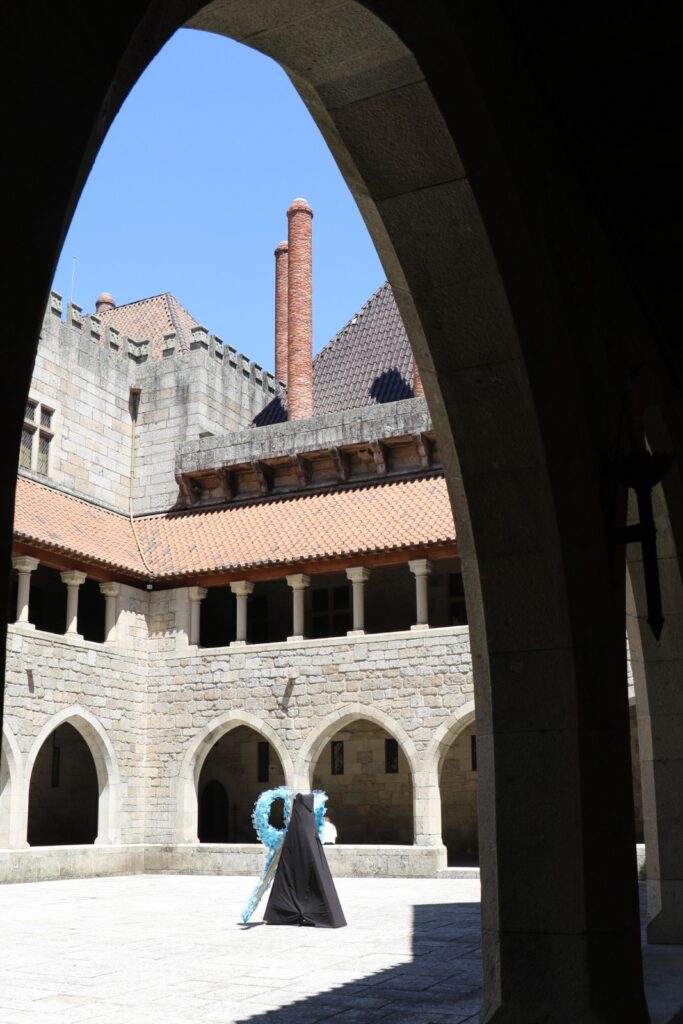
Inner Courtyard of the Paço dos Duques de Bragança in Guimarães.
The Restoration: The Estado Novo Era
Between 1937 and 1959, dictator Salazar’s Estado Novo regime funded a major restoration to promote national pride. The project rebuilt the palace from near-total ruin, but historians question how accurate the reconstruction was. The roofline and some interior details were likely embellished beyond the original medieval design.
Still, the restoration saved the structure. Today, it functions as a museum and doubles as an official presidential residence when Portugal’s head of state visits northern Portugal.
Architecture: A Slice of Burgundy in Portugal
The Palace of the Dukes of Braganza doesn’t look like other Portuguese palaces. When I arrived during my Guimarães day trip in 2015, I immediately noticed the difference. This wasn’t the colorful tilework of Sintra or the baroque excess of Lisbon—it was something borrowed from Northern Europe.
The building showcases Burgundian architecture in Portugal, a style Dom Afonso imported after traveling through France and Flanders in the early 1400s. He wanted a residence that reflected the manor houses he’d seen abroad, and he got it. The result feels more like a fortified estate than a royal showpiece.
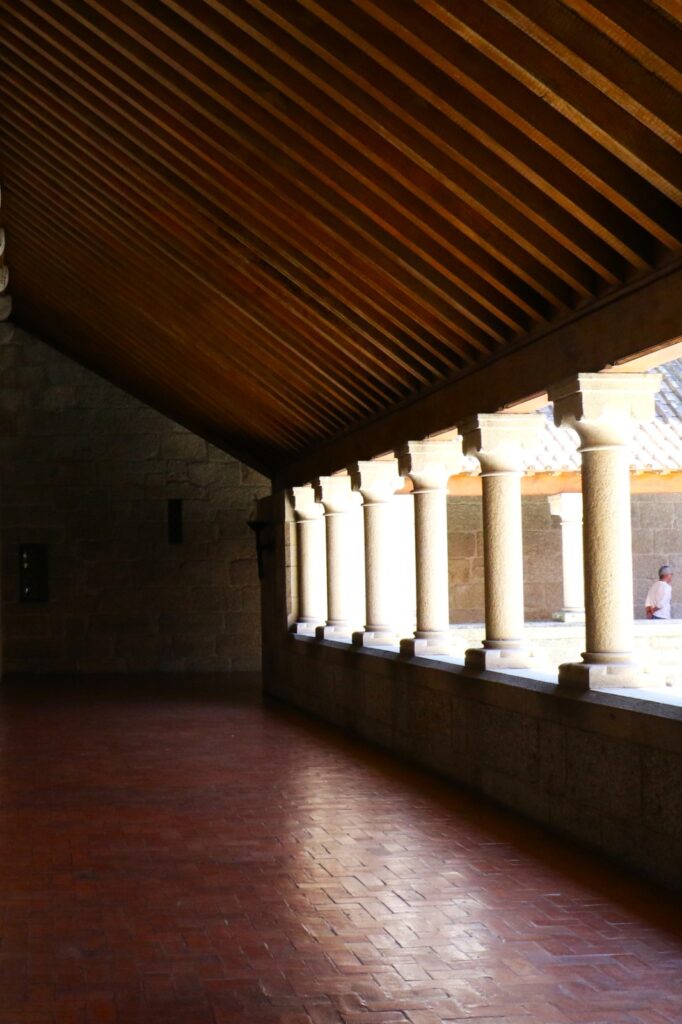
Manor house style Interior of Palace
The most dramatic feature is the 39 brick chimneys rising from the roofline. They’re not just functional—they’re a statement. These chimneys echo the grand estates Afonso admired in Burgundy and give the palace its recognizable profile. I spent most of my time in the courtyard looking up at them, trying to capture their scale in photos.
The walls are built from local granite, typical of northern Portugal, but arranged with an emphasis on symmetry and defensive strength. Inside, wooden beam ceilings and pointed stone arches continue the Northern European influence, creating a hybrid of Portuguese materials and imported design.
This architectural mix is rare in Portugal. The palace balances military function with aesthetic ambition, reflecting the Braganza family’s power and cultural reach. For anyone interested in Portuguese royal history, it’s a concrete example of how international trends shaped local architecture. It’s one of the reasons visiting Guimarães from Porto is worth the hour-long trip.
Inside the Palace: A Walk-Through History
The exterior of the Palace of the Dukes of Braganza looks defensive. The interior feels like a preserved snapshot of Portuguese nobility. Once you step out of the granite courtyard and into the museum halls, the atmosphere changes—quieter, darker, with the smell of aged wood and floor wax.
The interior is extensive, but two areas stood out during my 2015 visit: the Banqueting Hall and the tapestry collection. Both deserve your full attention.
The Banqueting Hall (Salão de Banquetes)
This is the most impressive room in the palace. When you walk in, you look up instinctively.
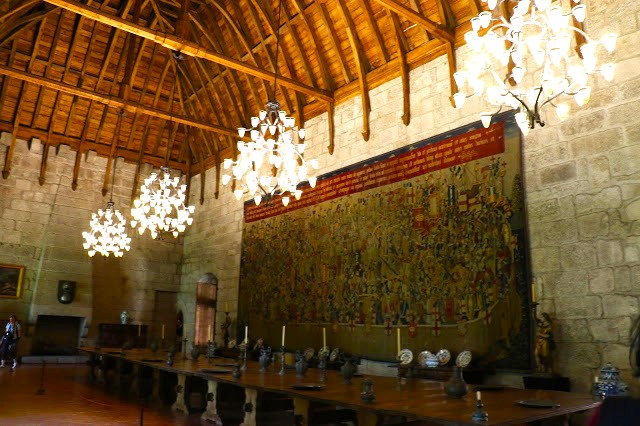
Banquet Hall in Palace of Dukes of Braganca, Guimaraes
The “Overturned Boat” Ceiling
The ceiling is built from chestnut wood and shaped to resemble an inverted ship hull. This design is a signature element of Portuguese medieval architecture, symbolizing the country’s maritime tradition. But here, it also carries Burgundian influence—Afonso wanted grandeur, and he got it.
The beams are massive. In the photos I took, you can see how the dark wood contrasts sharply with the white plaster and gray granite walls. It’s difficult to capture the depth in a still image, but the scale is undeniable in person.
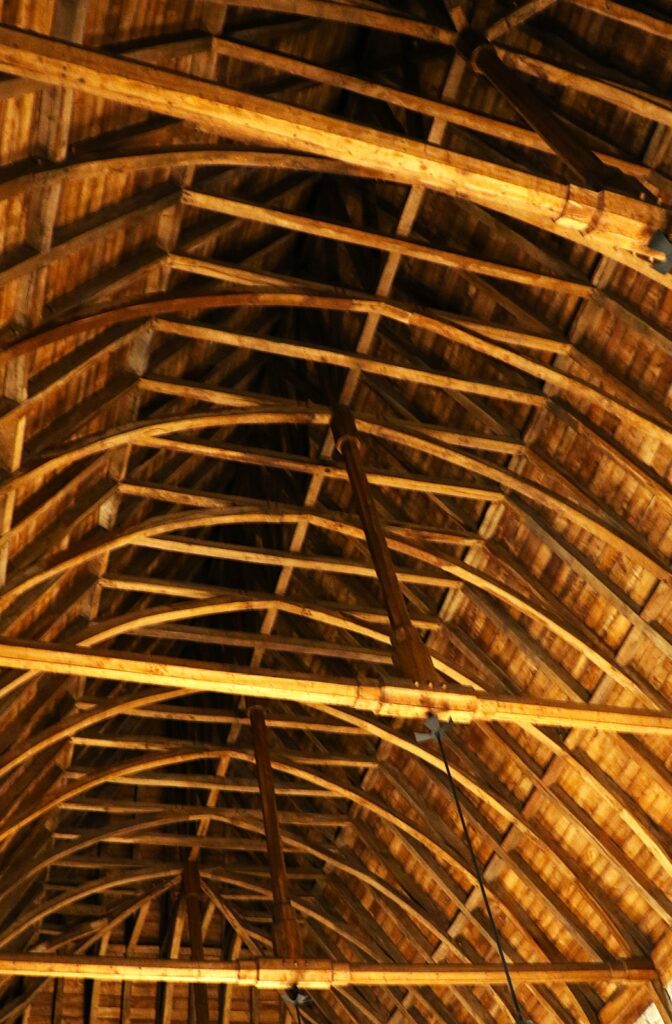
Ceiling is built from chestnut wood – Roof Structure in Palace of Dukes of Braganza
The Dining Table
A long wooden table runs the length of the hall, set with pewter plates and heavy ceramic dishes to recreate a medieval banquet. It’s theatrical but effective. You can imagine the noise and heat of a ducal feast—dozens of guests, roasted meats, and wine flowing.
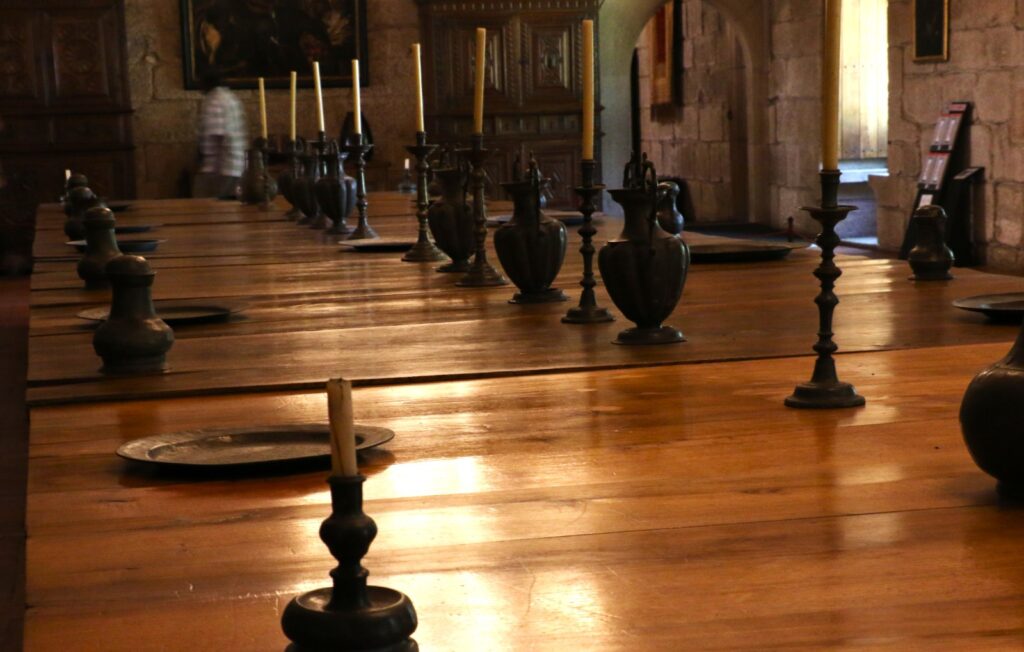
The Banqueting Hall inside the Palace of the Dukes of Braganza, featuring a long wooden table and a high vaulted chestnut ceiling.
The Pastrana Tapestries: A Woven War Story
As you move through the Great Hall and smaller side chambers, the walls are covered with enormous tapestries. These aren’t decorative afterthoughts—they’re visual records of military campaigns.
The tapestries depict the Portuguese conquest of North African cities, specifically Asilah and Tangier, in the late 1400s. The ones displayed here are high-quality reproductions (the originals, too fragile to display, remain in Spain), but the detail is still extraordinary.
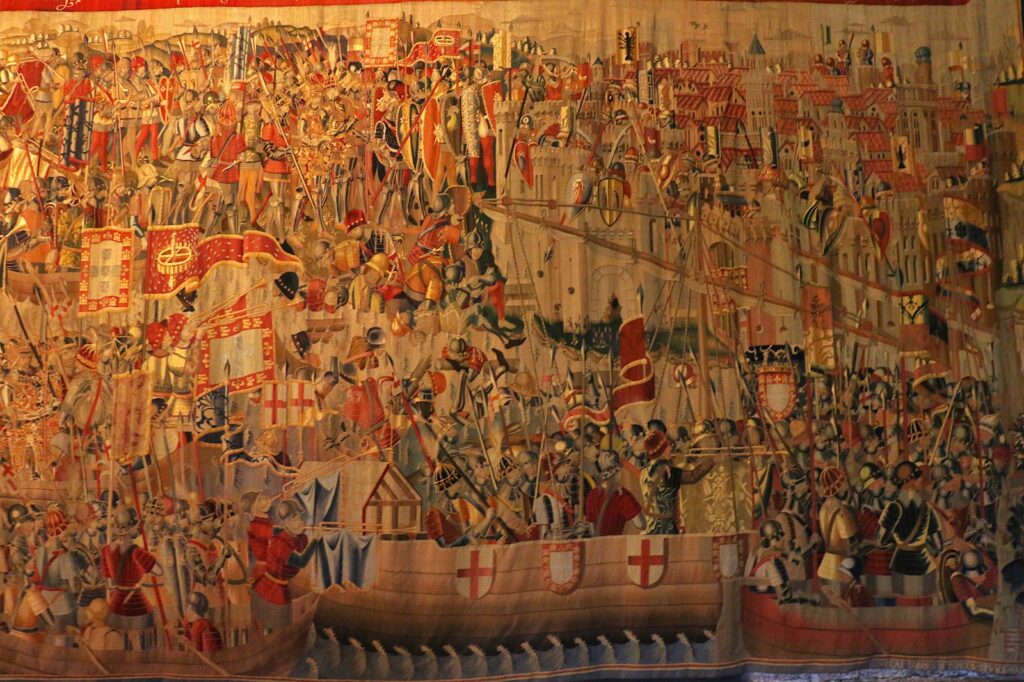
Tapestries depict the Portuguese conquest of North African cities
What to Look For:
If you study these closely—or zoom in on photos—you’ll notice:
- Portuguese knights in full armor scaling city walls
- Detailed flags and banners representing the House of Braganza
- Dense, chaotic battle scenes with almost no empty space in the composition
The tapestries function as both art and propaganda. They celebrate military victories and reinforce the family’s role in expanding Portuguese influence into North Africa.
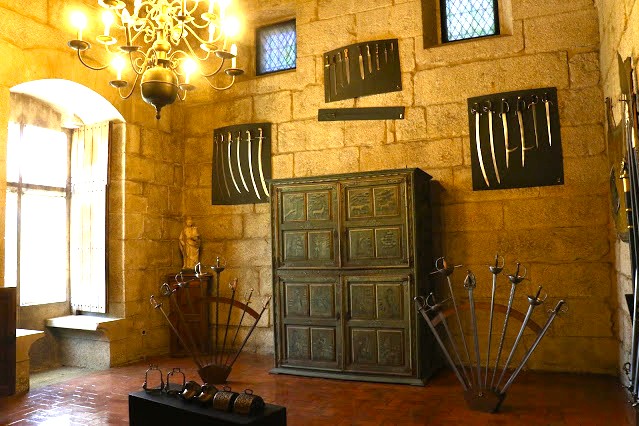
Arms Museum inside Palace of Dukes of Braganza
Period Furniture and Porcelain
The palace is furnished with 17th- and 18th-century pieces, though much of the original furniture was lost during the centuries of abandonment. What remains—or has been added—offers insight into the global reach of the Portuguese empire.
Indo-Portuguese Cabinets
These were my favorite pieces during the visit. Dark, heavy wooden cabinets inlaid with ivory or bone, they reflect Portugal’s trade networks in Asia. The craftsmanship is intricate, blending European furniture forms with decorative techniques from India and beyond.
Chinese Porcelain
Large blue-and-white porcelain vases are scattered throughout the rooms. These massive pieces stand out against the dark stone floors and highlight Portugal’s role in the Asian porcelain trade during the Age of Exploration.
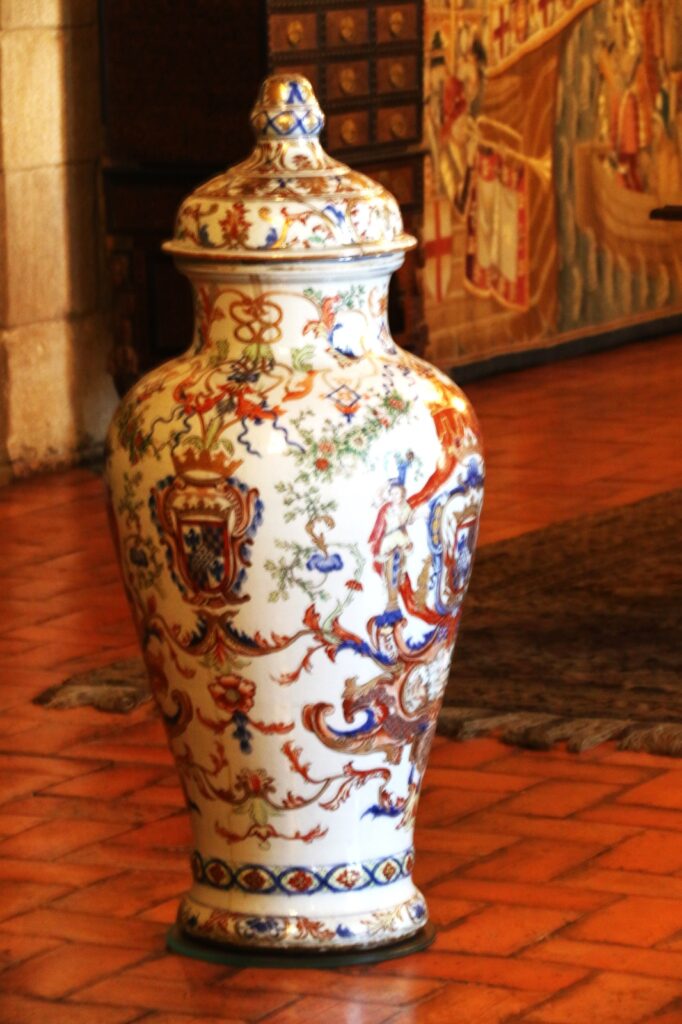
Large blue-and-white porcelain vases are scattered throughout the rooms.
Hall of Lost Steps
This is grand! Can you believe that during ducal times the room functioned as a waiting room? The furniture we saw was from the 16th and 17th centuries! Delicate and beautiful Chinese porcelain and some replicas of Belgian tapestry from the 15th century.

Hall of Lost Steps
The spaces are defined well as visitors’ reception area, storage, carpenters space, main hall and office of the director of the site. In the main wing there is an unique staircase of the palace. It consists of four flights in granite.
The intermediary floor has the museum space which has several displays. Good thing they allow photography. The halls are impressive with rock fireplaces, including Banquet Hall and the Hall of Lost Steps, with roofs designed like the interior wooden keel of a boat.
The last floor was dedicated for the use of the President of the Republic. There are a series of bedrooms with private bathrooms. This floor is immediately accessible via the small elevator on the ground floor and staircase from the second floor cloister.
Chapel within the Palace
One part of the last floor of the posterior wing, the southwest wing has a succession of rooms and a chapel. The entrance is arched, small one but grand! The chapel has a single nave; windows have beautiful stained glass paintings. A beautiful small chapel within a palace, this one looked good and is worth visiting!
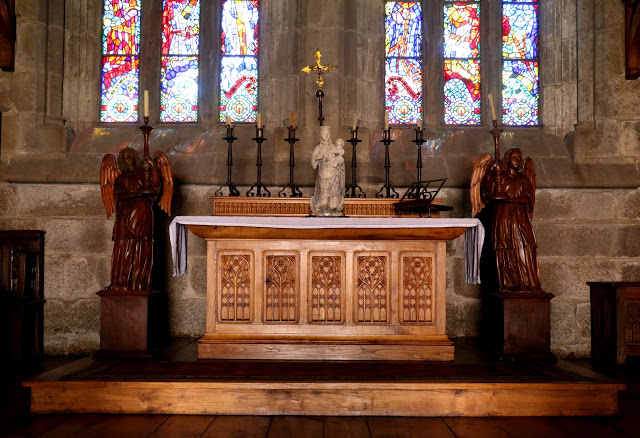
Chapel Palace of Dukes of Braganza Interior
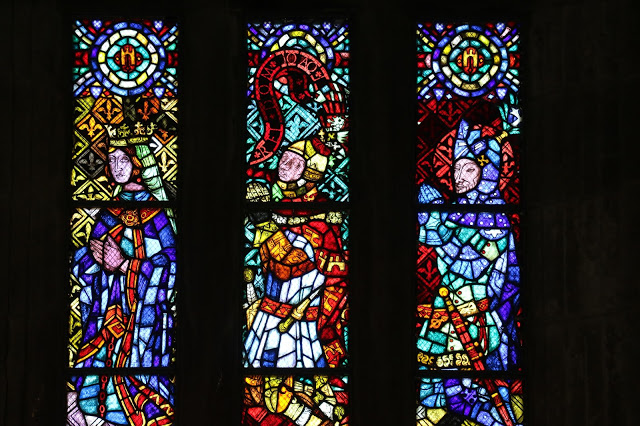
Chapel Palace of Dukes of Braganza stained glass paintings
General Tips for Your Visit
The museum layout flows chronologically, starting with the medieval origins and moving through later centuries. Lighting is dim to protect the tapestries and wood, so phone photos can be challenging without stabilization.
The entire interior visit takes about 45 to 60 minutes if you read the plaques and take time with the tapestries.
If you’re planning to visit both the palace and Guimarães Castle, budget at least two to three hours total for the historical center.
Practical Information (2025 Update)
Getting There and Ticket Prices
| Category | Details |
| Getting There from Porto | • Train: Direct trains from Porto São Bento to Guimarães (approx. 1 hr, €3–5). • Bus: Rede Expressos buses from Porto to Guimarães (approx. 1 hr 15 min, €6–8). • Car: Drive via A3/A7 highways (approx. 50 min). • Local Access: From Guimarães station, walk 15 min or take bus/taxi to the palace. |
| Ticket Prices (Paço dos Duques de Bragança) | • Adult: €6 • Youth (13–25 years): €4 • Senior (65+): €4 • Children under 12: Free • Family Ticket: €12 (2 adults + children) • Combined Ticket (Palace + Guimarães Castle): €8 |
| Opening Hours | Daily: 10 AM to 6 PM (last entry 5.30 PM). Closed Jan 1, Easter Sunday, May 1, June 24, Dec 25 |
Key Notes for Visitors
- Accessibility: Renovation works in 2025 may affect elevator access; check updates before visiting.
- Best Pairing: Many visitors combine the palace with Guimarães Castle tickets for a full royal history experience.
- Tip: Arrive early to avoid queues, especially if visiting Guimarães from Porto on a weekend.
- Parking is free in Campo de S. Mamede.
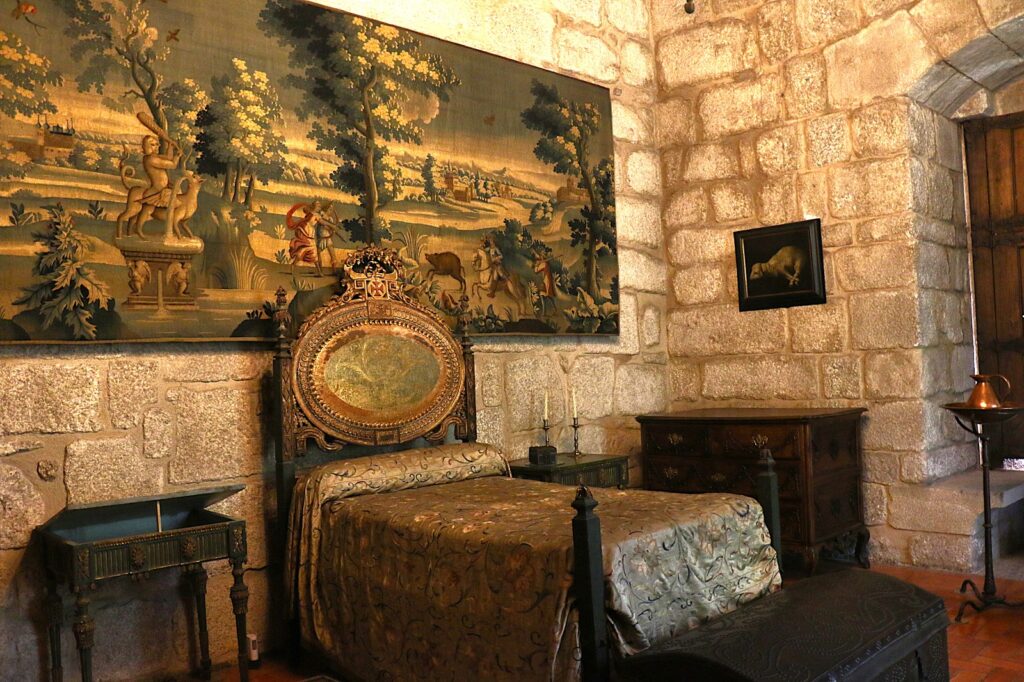
Historical Bedroom in Palace of Dukes – Stone masonry walls typical of medieval fortifications and Antique bed with ornate headboard carved wood with gilded details.
Is the Palace of the Dukes of Braganza Worth Visiting?
Yes, absolutely. If you’re planning a Guimarães day trip, the Palace of the Dukes of Braganza should be your priority. The nearby Guimarães Castle offers impressive medieval walls and sweeping views, but the palace provides something the castle can’t—a detailed look inside Portuguese royal history.
Walking through the palace’s furnished halls, you see how the House of Braganza actually lived. The tapestries, Indo-Portuguese furniture, and banqueting hall aren’t just museum pieces—they tell the story of a dynasty that eventually ruled Portugal and Brazil until 1910. This connection makes the Paço dos Duques essential for understanding national heritage, not just northern Portugal.
The castle is better for dramatic photos and atmosphere. The palace is better for context and storytelling. Ideally, visit both—they’re a five-minute walk apart. But if time is limited, the palace delivers more historical depth and makes visiting Guimarães from Porto genuinely worthwhile.
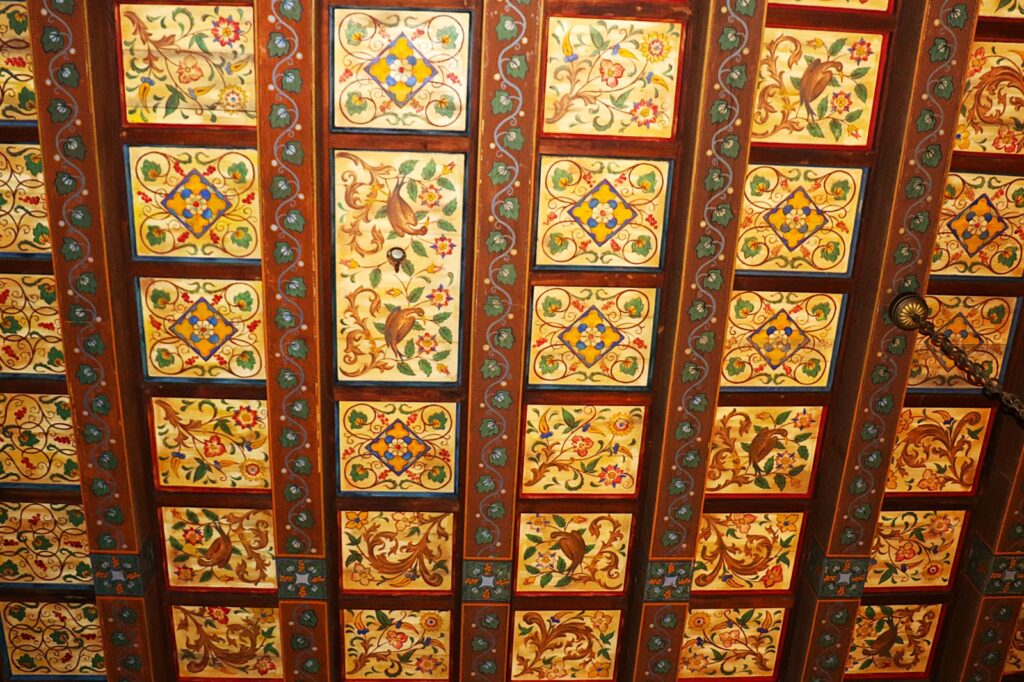
Polychrome painting to embellish wooden panels – hallmark of the city’s artistic and architectural heritage, reflecting both Moorish-influenced geometric designs and European Renaissance floral patterns
Exploring Nearby: Guimarães Castle and City Center
Just uphill from the palace stands Castelo de Guimarães, often called the birthplace of Portugal. Its stone towers and crenellated walls are perfect if you want to climb battlements and imagine medieval sieges. The views over the city are excellent.
Next to it sits the small Chapel of São Miguel do Castelo, where tradition claims Afonso Henriques—Portugal’s first king—was baptized in 1109. These sites reinforce Guimarães’ reputation as the cradle of Portuguese nationhood.
After exploring the upper hill, walk down into the historic city center. I spent an hour wandering the cobbled streets and ended up at Largo da Oliveira, the main square. It’s surrounded by Gothic arcades, medieval buildings, and outdoor cafés. This is where you stop for a bica (Portuguese espresso) and a pastel de nata, watching daily life unfold in a UNESCO World Heritage site.
All three are walkable within 20 minutes of each other.
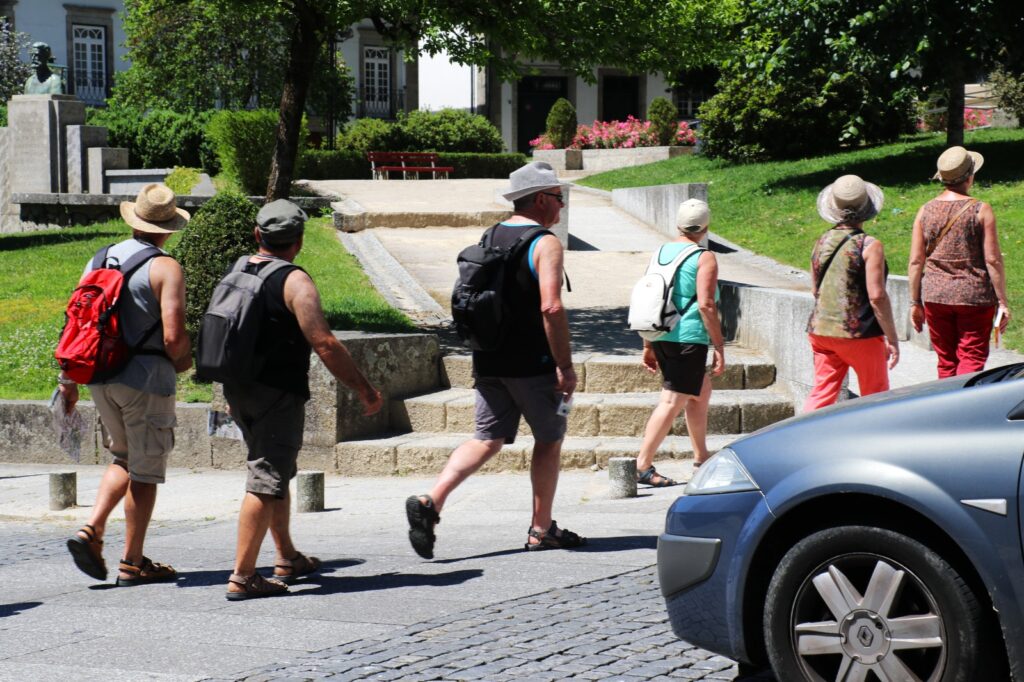
Tourists exploring Guimaraes
FAQs About the Paço dos Duques
Q. How much does it cost to visit the Palace of the Dukes of Braganza?
As of my last check, standard admission is around €5 for adults. Students and seniors usually get discounts. Combined tickets with Guimarães Castle are often available and save a few euros.
Q. How long does a visit take?
Plan for 45 to 60 minutes inside the palace if you’re reading plaques and examining the tapestries. Add another 30 minutes for the castle. Budget two to three hours total for the entire historical complex.
Q. Can I take photos inside?
Yes, photography is generally allowed, but flash is prohibited to protect the tapestries and wooden interiors. The lighting is dim, so steady hands help.
Q. Is the palace accessible for wheelchairs?
Partially. The ground floor has accessible areas, but upper floors require stairs. Contact the museum directly if you need specific accessibility information.
Q. What are the opening hours?
The palace typically opens at 10 AM and closes between 5 PM and 6 PM, depending on the season. It’s closed on Mondays.
Q. What is the Paço dos Duques de Bragança?
It is a 15th‑century palace in Guimarães, built by Afonso, the first Duke of Braganza. The residence reflects Burgundian architecture and is one of Portugal’s most important manor house–style palaces.
Q. Is it worth visiting on a Guimarães day trip?
Yes. The palace offers furnished interiors, tapestries, and insight into the House of Braganza, while the nearby Guimarães Castle focuses more on medieval walls and views.
Q. How do I get there from Porto?
Trains and buses connect Porto to Guimarães in about an hour. From the station, it’s a short walk or taxi ride to the palace.
Q. Why is it historically important?
The palace symbolizes the rise of the Braganza dynasty, which ruled Portugal and Brazil until 1910.
Final Thoughts
The Palace of the Dukes of Braganza surprised me far more than I expected when I visited back in 2015. It’s not just the quirky chimneys or the Burgundian-style architecture — it’s the way the place pulls you straight into Portuguese royal life. The furnished rooms, the huge tapestries, the little details… everything feels alive and immersive. If you’re doing a Guimarães day trip from Porto, don’t skip this palace in favour of only the castle — it’s absolutely worth your time.
Have you been to the Paço dos Duques? What caught you off guard there? Share your thoughts in the comments! And if this little guide helped, feel free to pass it along to anyone heading to northern Portugal. Safe travels!
Pin and Save this for Later
About the Author
 Indrani Ghose is a travel blogger and photographer who has explored 15+ European countries across multiple trips. Based in Bangalore, she shares authentic travel experiences to help fellow travelers navigate the world more safely and confidently. You can follow her on her social media handles Instagram, Twitter and Facebook to see the wonderful destinations, beautiful offbeat places and get instant updates about them.







I love such rustic interiors as this palace presents. Thanks for sharing it. The pictures are very beautifully taken too, they bring out the best in the place 🙂
Gorgeous photographs! I love how you let us in on the history of the place as well, it was a fascinating read. Still haven’t been to Portugal yet, really need to go!!
I think if there is one thing we do well in Europe it’s castles and palaces (well we use to do well ha ha) and this one is a great example of it! Love the stained glass of the chapel too!
I have wanted to go to Portugal forever! I’m hoping 2018 is the year I can make it happen! The chapel looks adorable, especially the stained glass windows.
I really would love to visit Portugal. I’m hoping to get there in the next year or 2 as well as Spain 🙂
Your photos are beautiful! Thank you so much for sharing this lovely tour.
This is absolutely outstanding palace, unique architecture and amazing interior. The wall painting seems to be very intricate and it’s so nice to know the greenish around the palace still flourishes.
Excellent shots!
So stunning!! Loved the pic of the chapel.
This reminds me of Macau, a Chinese SAR with heavy Portuguese influences. 🙂
Wow. What a gorgeous palace…
Portugal was a great empire once
Wow, this is a gorgeous palace. I love both the outside and the lovely interior. Wonderful tour and photos. Happy Tuesday, enjoy your day!
I am enjoying your series of posts on Portugal and knowing lot about this beautiful country . The castles of Portugal , I think should have a place in best of the castles of the world . Beautiful pictures Indrani ji !!
The interiors are beautiful and very well maintained.. The pictures are wonderful especially the one from chapel.
Beautiful palace and interiors. What is that mural like painting on wall?
It is a carpet Roohi from ceiling to floor.
Thank you for the comment.
Interiors are so attractive…good post.
Beautiful photographs with a brief history of the place. A typical Indrani post 🙂
Beautiful Photographs of the Chapel and the Palace.. Thanks for sharing!
We are enjoying your series of posts on Portugal. Looks like hardly any visitors around. We can feel the peacefulness here 🙂
The interiors are beautiful and the wooden ceiling looks interesting.