Tomar’s Knights Templar Fortress: Complete Guide to the Convent of Christ and Tomar Castle
Our First Impression: Walking in the Footsteps of Knights
After a heavy breakfast, bubbling with energy and a mission to be the first ones through the gate, we started our climb to Tomar’s majestic fortress. We ascended the winding path, completely captivated by the sights we left behind. Imagine, what if the medieval knights who once trod this exact route march in now. Below, the views of the historic town of Tomar and the Nabão River became increasingly mesmerizing.
Be with me in this guide as I take you on virtual tour through the Templar City of Portugal.
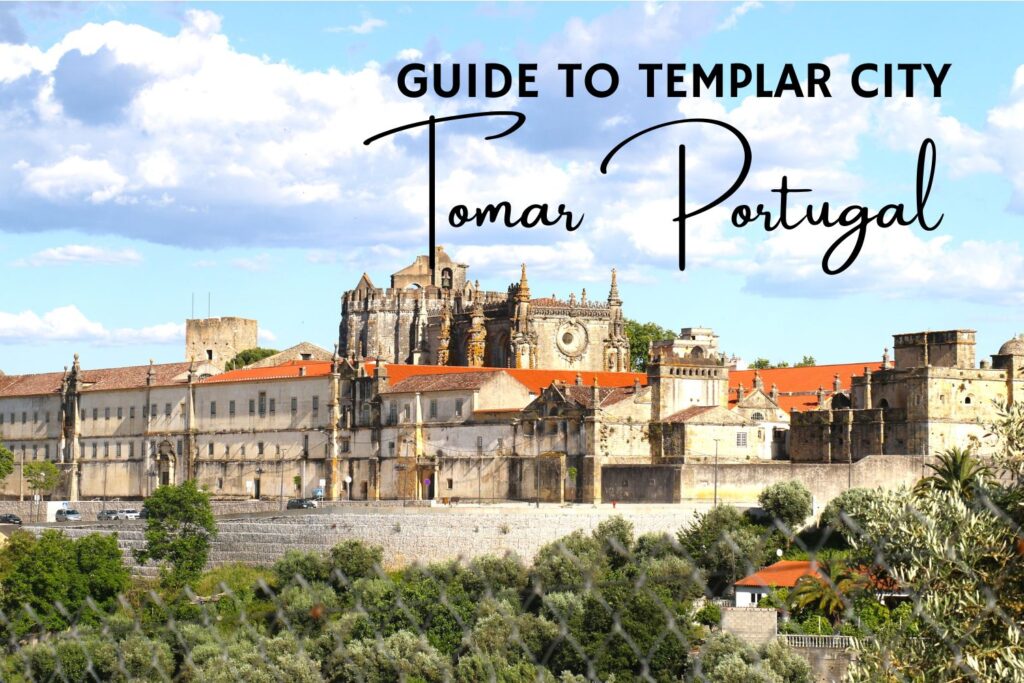
Guide to Templar City Tomar Portugal
UNESCO Status, Practical Facts, and Visiting the Knights Templar Headquarters
The Monument at a Glance
- Official Name: Convento de Cristo (Convent of Christ)
- Location: Built on a hill above the town of Tomar in Central Portugal, within the Santarém District. It is approximately 139 km north of Lisbon.
- UNESCO World Heritage Site: Designated since 1983.
- Historical Significance: Originated as the 12th-century stronghold of the Knights Templar in Portugal, later becoming the headquarters for their successor, the Order of Christ. Crucial to Portugal’s maritime expansion during the Age of Discovery.
- Architectural Styles: A rare and stunning blend of five centuries of construction, featuring Romanesque, Gothic, Manueline (the uniquely Portuguese style), and Renaissance elements.
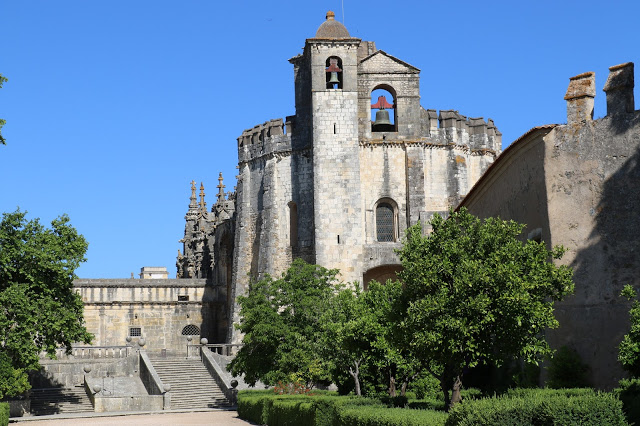
Main Church of Convent of Christ Tomar
Plan Your Visit: Hours, Fees, and Travel
Monastery Hours:
- October to May: 9 AM to 5.30 PM
- June to September: 9 AM to 6.30 PM
- Last admission: 30 minutes before closing
- Closed: January 1, May 1, Easter Sunday, and December 24 and 25.
Standard Entry Fee: €15.00 (Reduced prices available for seniors, students, and families.)
Getting to Tomar and Estimated Travel Times:
- Lisbon: 139 km (1 hour 30 minutes via A1) Frequent direct train services are also available.
- Porto: 200 km (2 hours via A13 and A1)
- Coimbra: 78.8 km (53 min via A13) Easy half-day trip option.
Recommended Visiting Strategy (Total Time: 2.5 to 3 Hours)
How to visit Tomar Convent of Christ? For the best experience, we recommend this flow, it is similar to what we took during our visit to Tomar:
- Start at the Entrance Gate: (Porta de Santiago).
- Castle Walls: Explore the original Templar battlements.
- The Charola: The famous Templar Round Church (Oratory).
- Manueline Nave: Continue to the Chapter House and the iconic Western Façade Window.
- Cloisters: Explore the Renaissance Cloister Principal and the Gothic cloisters.
- Exit: Via the Southern Courtyard (or detour to the Pegões Aqueduct).
The monastery of Tomar, also called the Convent of Christ is no less than a masterpiece! The building is a unique combination of church, fortress, castle and convent. The design and details speaks volumes of the architects’ brilliance!
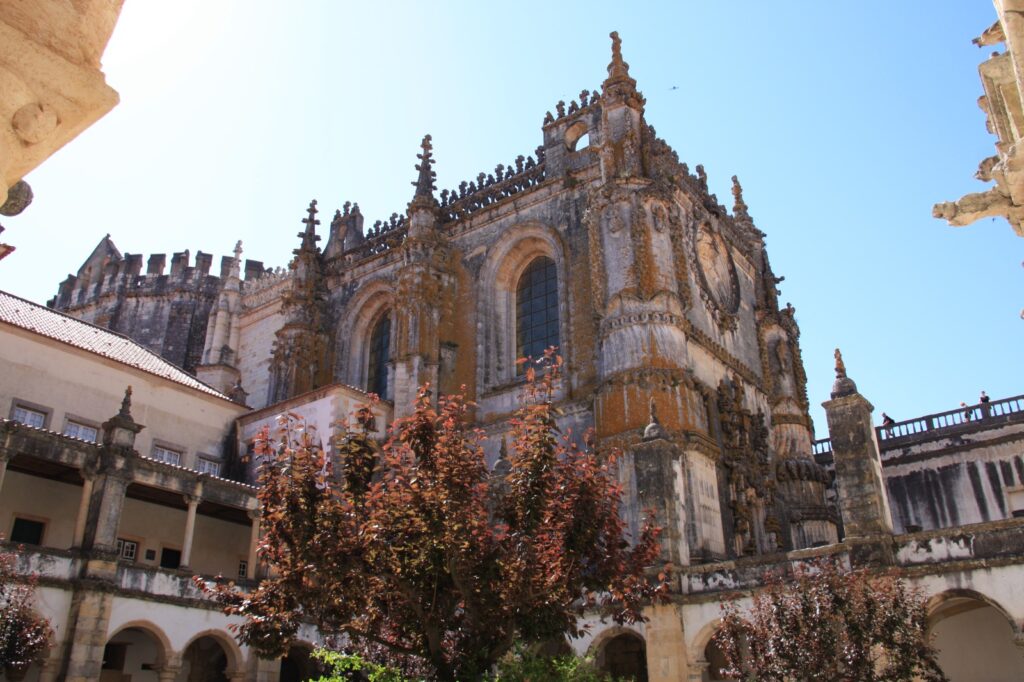
To name just one most marvel work here would be difficult, yet I will say the exterior view of north window of the church is something which should not be missed. There are other stunning marvels too!
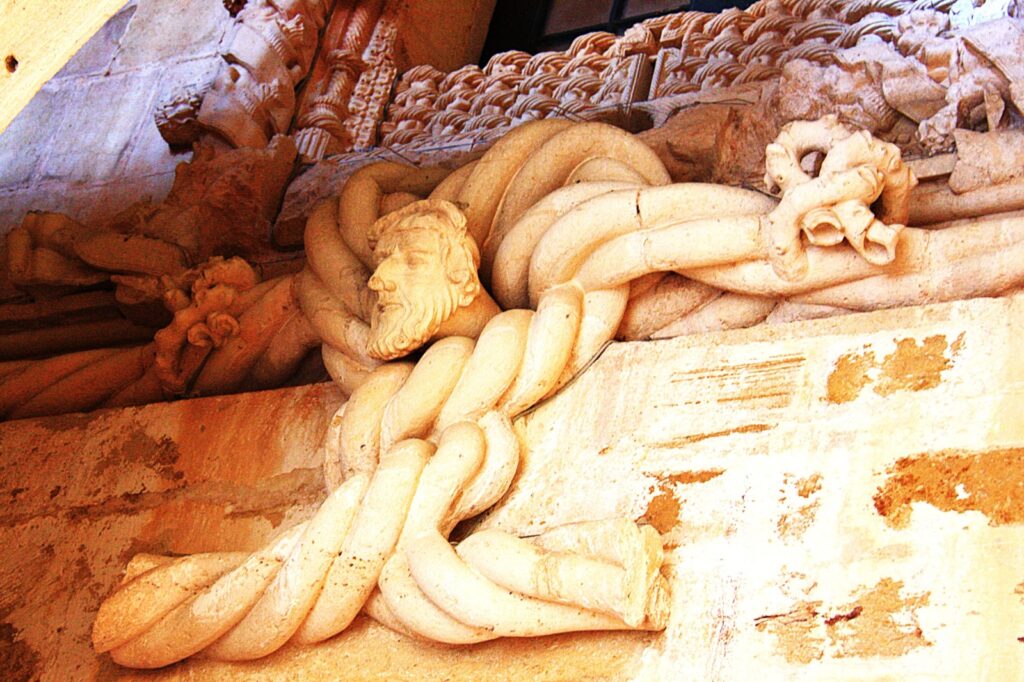
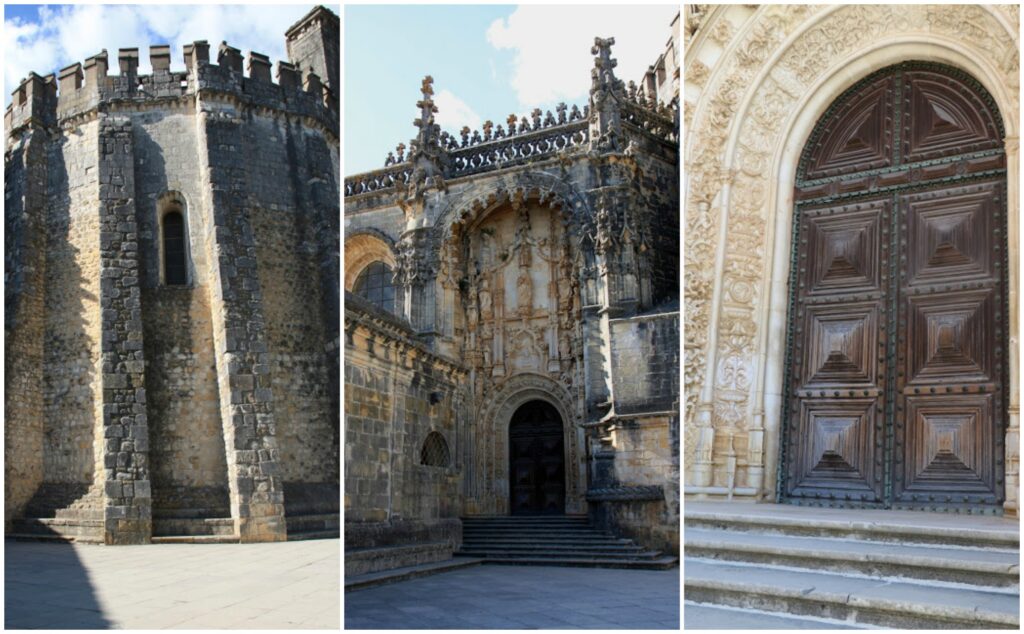
Intricate stone carving that is characteristic of the Manueline style, which is prominent in the Convent of Christ in Tomar, Portugal.
The Story of Two Orders: The 700-Year History of Tomar Castle and Convent, Portugal
Walking through Tomar’s fortress walls is like stepping into over 700 years of Portuguese history. This unique site is where warrior monks defended Christian territories, where royalty reinvented a disbanded religious order, and where explorers planned the maritime voyages that would forever change the global map. It is quite unlike any other medieval castle in Europe!
Let me walk you through how this military fortress evolved into one of Portugal’s most extraordinary monastic complexes, the Convent of Christ in Tomar.
The Templar Foundation (1160 AD): Birth of Tomar Castle
In 1160, Grand Master Gualdim Pais strategically chose a commanding hilltop overlooking the Nabão River to build what would become the Templars’ Portuguese headquarters.
The Knights Templar were warrior monks fighting in the Reconquista—the centuries-long campaign to reclaim the Iberian Peninsula from Moorish rule. Portugal’s first king, Afonso Henriques, granted them land and resources because he desperately needed their military expertise and financial backing to secure his newly independent kingdom.
Gualdim Pais designed Tomar Castle as a fortress first, monastery second. The thick defensive walls, the commanding hilltop position, and the circular Templar church (the Charola) at its heart all served one purpose: creating an unbreachable stronghold. When Almohad forces besieged Tomar in 1190, the castle held firm, proving the military genius of Gualdim Pais.
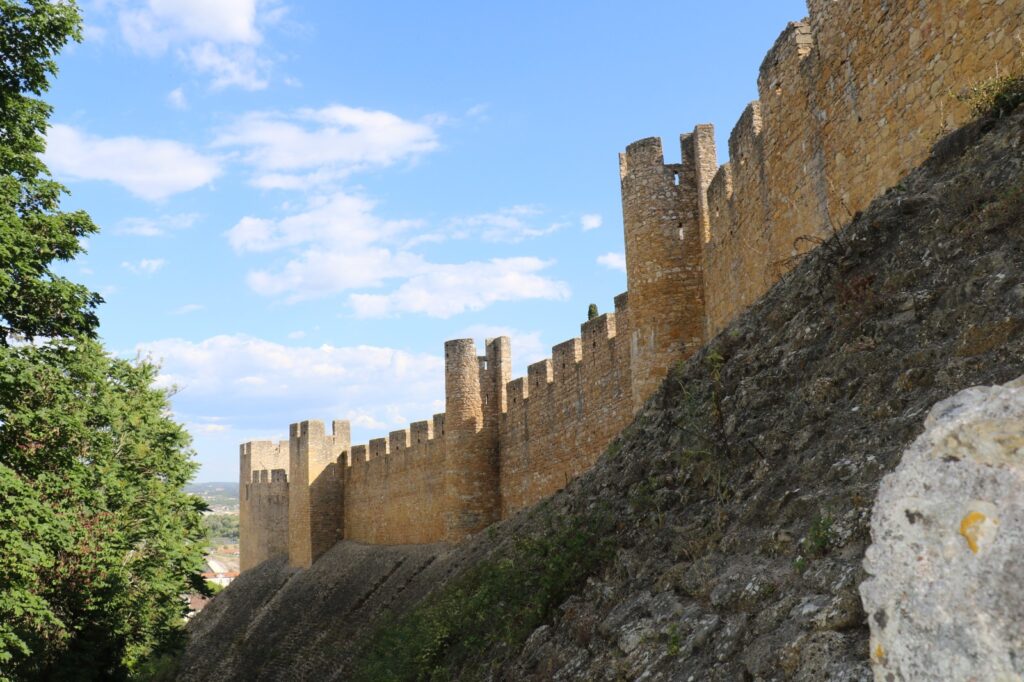
Castle Walls of Knights Templar Fortress Tomar
The Order of Christ: Funding the Age of Discovery
Here’s where the story of the Convent of Christ gets truly interesting. In 1312, Pope Clement V dissolved the Knights Templar across Europe amid controversy and accusations.
Portugal’s King Dinis was clever. Instead of letting the Templars’ vast Portuguese assets fall into other European hands, he negotiated with the Pope to create a new order in 1319: the Order of Christ (Ordem de Cristo). Same wealth, same properties, a new name—problem solved.
The Order of Christ took over Tomar and transformed its mission from military defense to spiritual devotion and, crucially, maritime exploration. The game-changer came with Prince Henry the Navigator in the 15th century. As Grand Master of the Order of Christ, Henry redirected the order’s enormous wealth toward funding Portugal’s oceanic expeditions.
The famous Red Cross you see on the sails of Portuguese explorer ships? That is the Order of Christ’s emblem. This connection makes Tomar more than just a Portuguese monument—it’s intrinsically linked to the Age of Discovery that reshaped global history. The wealth that flowed back from these voyages funded the magnificent construction phases you’ll see today.
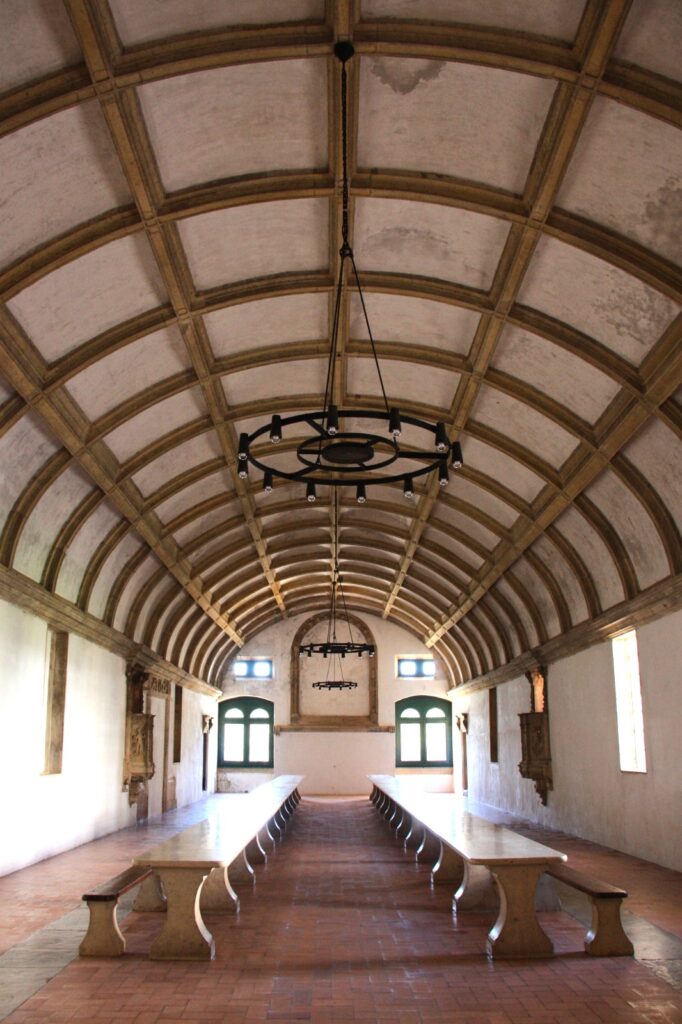
Dining hall or refectory, Refeitorio. Convent of Christ, Convento de Cristo, in Tomar
Architectural Evolution: Seven Centuries in Stone
What makes Tomar so fascinating architecturally is that it never stopped evolving. Each century added layers, transforming a simple military fortress into an elaborate monastic city:
- 12th Century: The original Templar Castle gave us the defensive walls and the austere Romanesque Charola.
- 15th Century: Under the Order of Christ, builders added simple Gothic cloisters and expanded living quarters.
- 16th Century (The Golden Age): King Manuel I poured exploration wealth into Tomar, creating the stunning Manueline window and the exuberant nave. The Manueline style is uniquely Portuguese, mixing Gothic structure with maritime motifs—ropes, coral, and New World symbols carved into stone.
- Late 16th Century: The complex saw the addition of more refined Renaissance and Mannerist cloisters.
Trust me, with this historical background, you will feel you’re literally moving through time—from the austere military Romanesque of the Templars to the decorative confidence of a nation at the height of its global power.
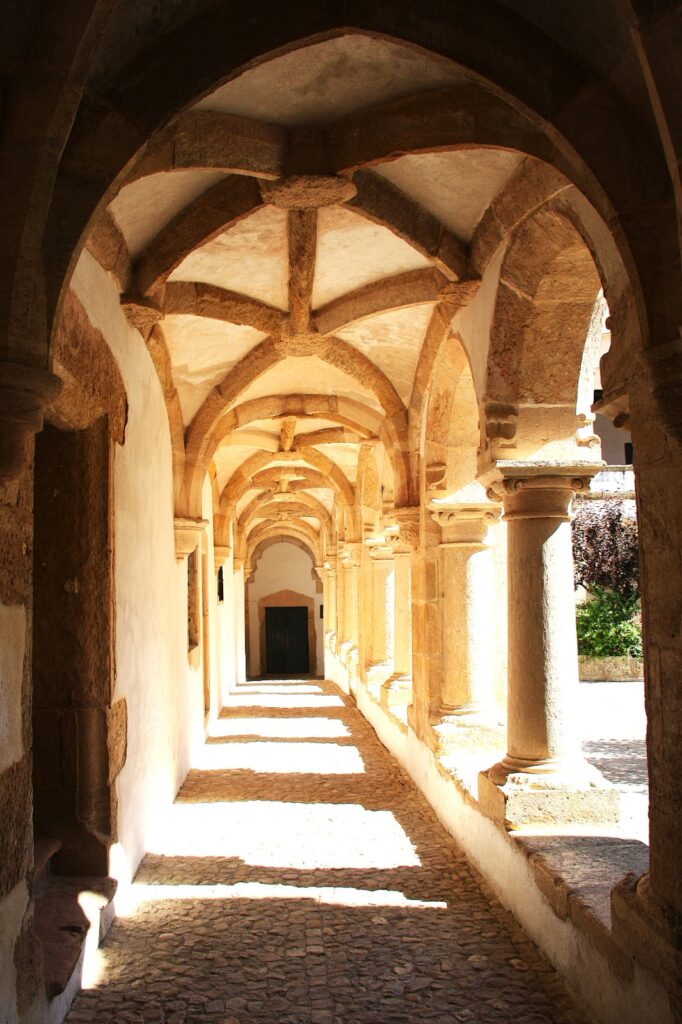
Corridor in Cloister-Convent of Christ-Tomar
Inside the Walls: Must-See Architectural Marvels of the Convent of Christ
Once you pass through the mighty castle gates, you’ll find yourself on an architectural treasure hunt. Each turn reveals another masterpiece; each corridor opens into another century. I’m going to guide you through the absolute highlights—the spaces that made us stop, stare, and completely lose track of time during our visit to the Knights Templar headquarters.
Bring your camera, wear comfortable shoes, and give yourself at least two to three hours to properly explore this vast complex.
The Knights’ Oratory: Charola (The Templar Round Church)
The Charola is where everything begins—literally and emotionally. This 16-sided Round Church at the fortress’s heart is the oldest structure you’ll encounter, built between 1160 and 1190 by the Templars themselves.
Why round? The Knights Templar modeled it directly after Jerusalem’s Church of the Holy Sepulchre, which they were sworn to protect during the Crusades. For Templar knights who might never reach Jerusalem, this design brought the Holy Land to Portugal. The circular plan also had practical benefits—knights could attend services on horseback, riding around the central octagonal shrine during rituals before heading into battle.
Charola – Round Church in Convento de Cristo Tomar
But here’s what surprised us: the interior doesn’t feel medieval at all. The original austere Romanesque structure got a lavish Manueline and late Gothic makeover due to massive 16th-century renovations during King Manuel I’s reign.
Stand in the center and look up. The ribbed vaulting overhead creates intricate geometric patterns. The central octagonal structure—the tabernacle—is covered in stunning polychrome paintings and gilded woodwork depicting biblical scenes. Saints, angels, and prophets gaze down from every panel in rich blues, reds, and gold leaf that somehow survived five centuries.
The contrast is striking: thick fortress-strength walls protecting an interior that glows like a jewel box. When we visited, the hushed atmosphere made it feel almost sacred—exactly as the Templars intended. Don’t rush through the Charola. Walk slowly around the central shrine and try to imagine armored knights gathering here before the 1190 siege.
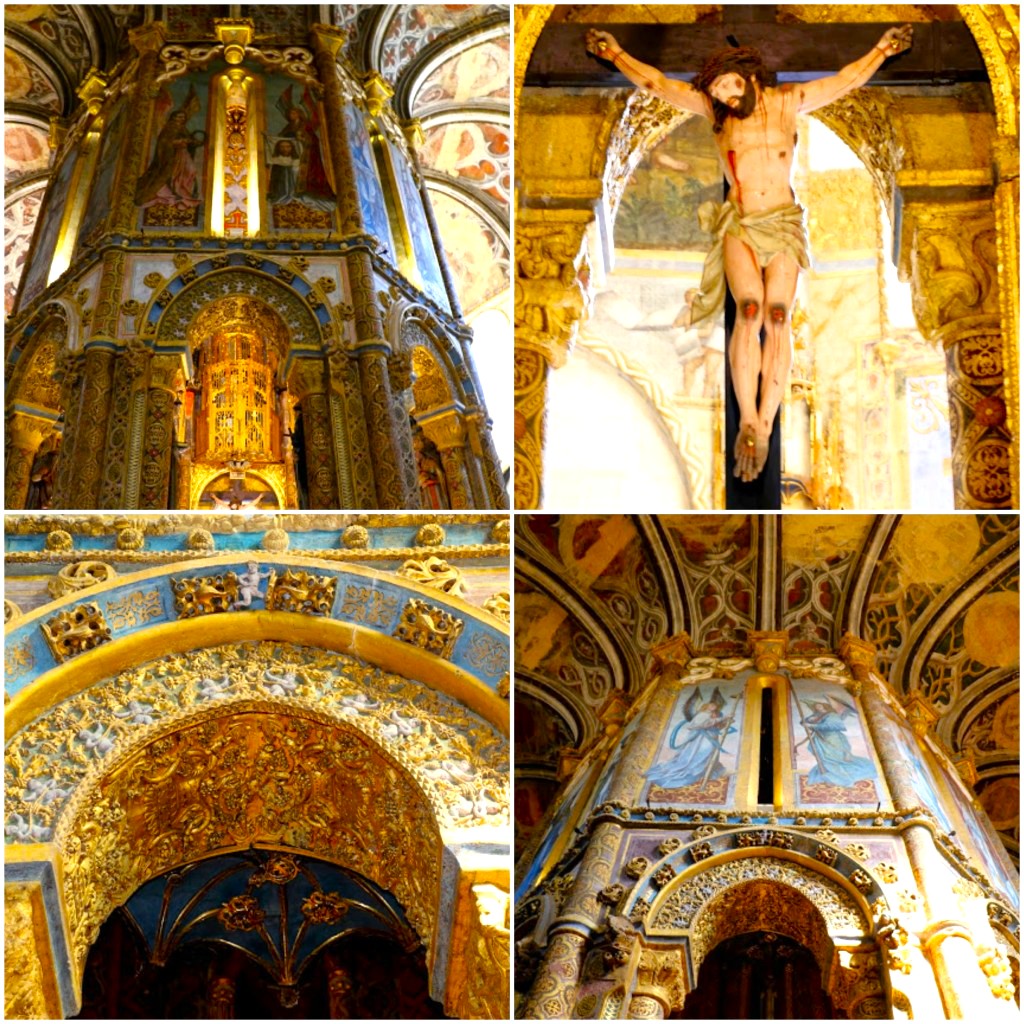
Interior of the Round church, Tomar, decorated with late Gothic painting and sculpture – Templar heritage Portugal
Portugal’s Iconic Art: The Manueline Chapter House Window
If you’ve seen any promotional material about Portugal, you’ve probably seen this window—the Janela do Capítulo (Chapter House Window). It is universally regarded as Portugal’s most famous piece of stone carving, and honestly, photos don’t do the detail justice—it is mind-blowing.
Created around 1510-1513 during King Manuel I’s expansion, this window represents Manueline architecture at its most exuberant.
Here’s what makes it extraordinary: instead of traditional Gothic elements, master sculptor Diogo de Arruda carved the window frame to look like it’s made from maritime equipment. The main column resembles a mast or tree trunk wrapped in carved ropes, chains, and cables. Cork bark, seaweed, and coral seem to grow organically from the stone. It’s as if the ocean itself was frozen mid-wave and turned to limestone.
Stand at different angles and watch how the carved elements seem to emerge from the wall. The three-dimensionality is incredible. Morning light is best to see the shadows emphasize the dramatic details.
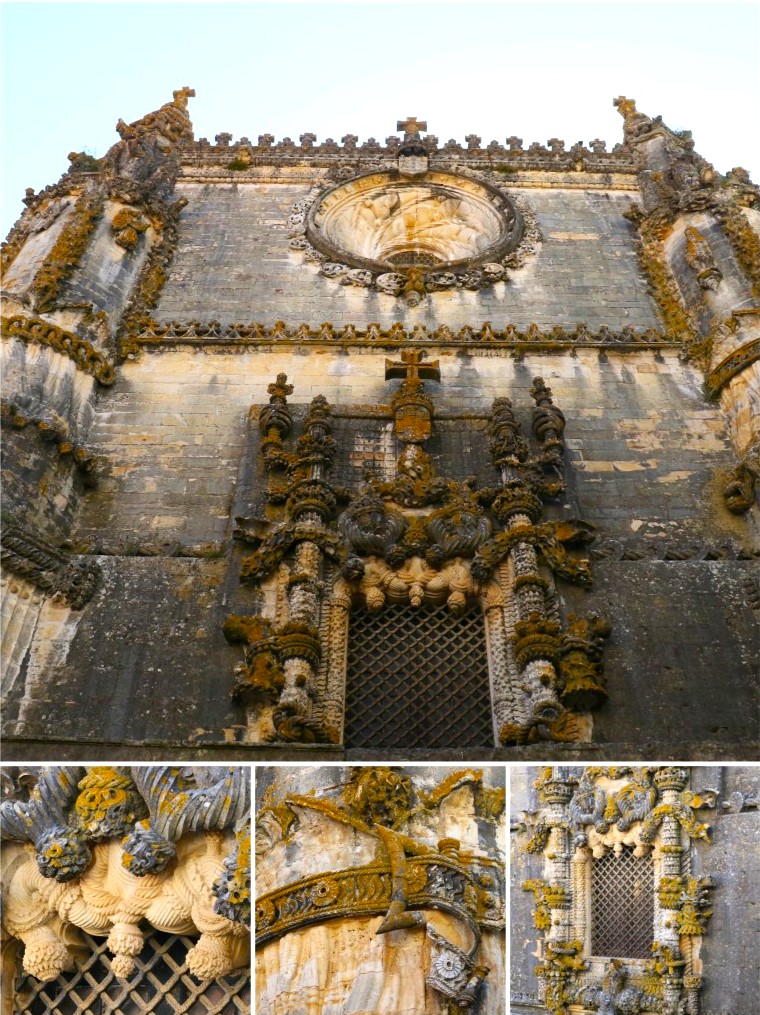
West Facade Window – Manueline architecture Portugal
The Monastic Heart: Exploring the Eight Cloisters
The Convent of Christ has eight cloisters built over different centuries, each with its own character. You won’t see all eight on a standard visit, but the main ones are accessible and absolutely worth exploring. These weren’t just pretty courtyards—they were the functional heart of monastic life where monks walked, meditated, worked, and connected between different buildings.
Claustro Principal (Main Cloister): A Masterpiece of Renaissance Design
Also called the Claustro de D. João III, this is the largest and most impressive cloister, built between 1557–1566. It’s pure Renaissance elegance—a complete departure from the Gothic and Manueline styles elsewhere in the complex.
Spanish architect Diogo de Torralva designed it with perfect mathematical proportions. Two levels of arcaded galleries surround a square courtyard, with classical columns supporting round arches on the ground floor and more slender columns on the upper level. The space feels balanced and harmonious, incredibly calming after the visual intensity of other sections.
Pro tip: The upper gallery offers great elevated views into the courtyard and out toward other parts of the complex. Don’t skip it.
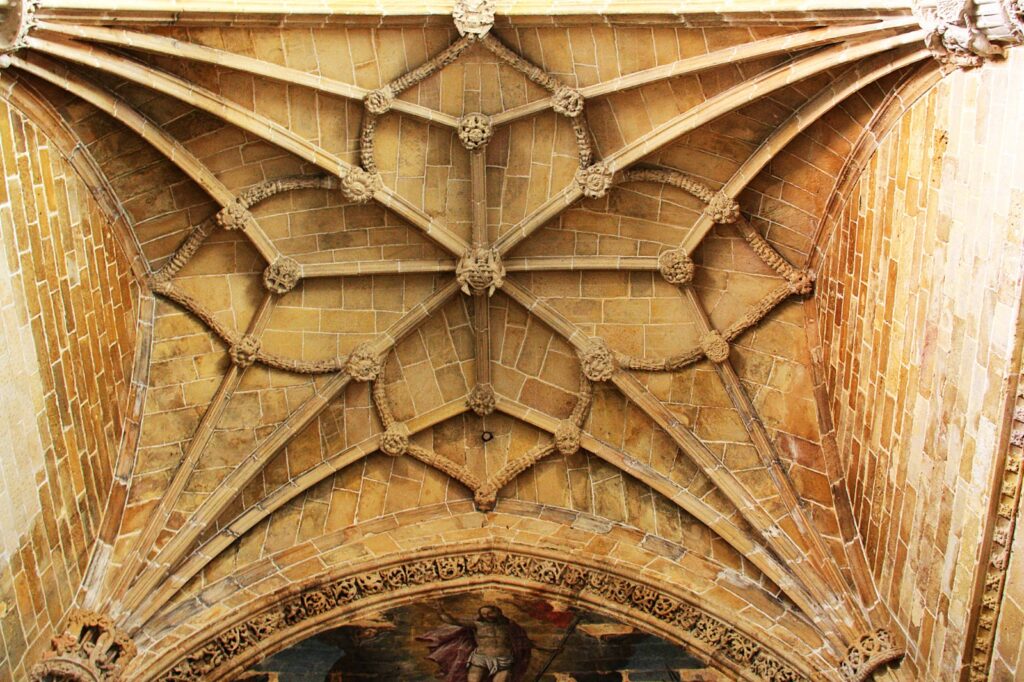
Ribbed vaulting overhead in Convento de Cristo
Claustro do Cemitério (Cemetery Cloister) and Claustro da Lavagem (Washing Cloister)
These two smaller cloisters represent the earlier, more austere monastic period before the wealth of the Age of Discovery transformed the complex.
The Cemetery Cloister (Claustro do Cemitério) dates to the 15th century and served as a burial ground for the community. It’s Gothic in style—pointed arches and simpler decoration—and maintains a somber atmosphere.
The Washing Cloister (Claustro da Lavagem) sits adjacent and served a practical purpose—this is where monks performed ritual washing before services. Also 15th century, it shares the Gothic style but feels more utilitarian.
These smaller cloisters are often less crowded, which we appreciated. They clearly reveal how dramatically the Order of Christ’s role and resources changed over just a century.
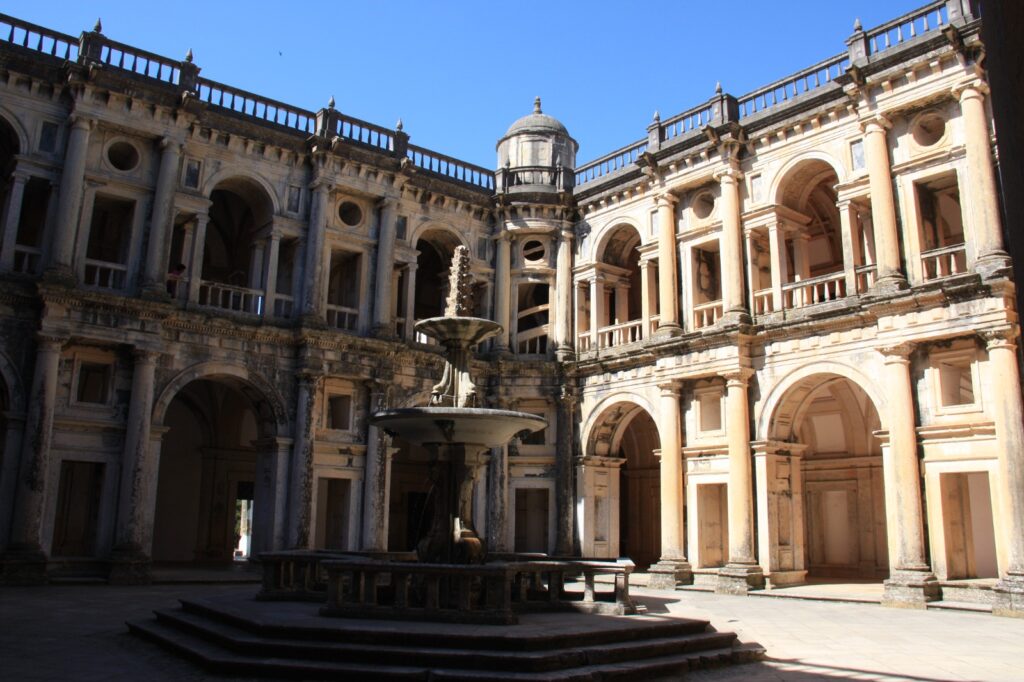
UNESCO monastery Tomar
Practical Visitor’s Guide to Tomar
Tickets, Hours, and Visitor Tips
- If you plan on visiting Batalha and Alcobaca as well, always buy the Combined Ticket (often called the Rota dos Monasteries). It saves you time and money.
- For a wholesome, undisturbed experience the best time to visit would be early morning.
- Set aside minimum of 2.5 to 3 hours minimum to understand and explore Templar Castle and Convento de Cristo well.
Driving and Parking
Tomar is well-connected by road and makes for an easy day trip from Lisbon (135 km, about 1 hour 45 minutes) or Coimbra (80 km, around 1 hour). Once you reach the town, follow signs for Convento de Cristo / Castelo de Tomar.
There’s a paid parking lot near the main entrance, just below the Porta do Sol gate, and free street parking available along Rua do Convento. I found it convenient to park closer to the lower town and walk up—parking spots near the gate tend to fill up by mid-morning, especially in summer.
Public Transport
If you’re travelling without a car, Tomar is easily accessible by train or bus.
- By Train: Regular Linha do Norte trains run from Lisbon’s Santa Apolónia and Oriente stations to Tomar Station (approx. 2 hours). From the station, it’s about a 15-minute uphill walk to the Convent.
- By Bus: Rede Expressos and FlixBus operate services from Lisbon’s Sete Rios terminal (journey time: ~1 hour 45 minutes). The bus stop is near the town centre, from where you can either walk or take a short taxi ride up to the gates.
The Walk Up: Is it Steep?
Yes—but pleasantly so. The path from Tomar’s old town to the Convent winds gently uphill through cobbled lanes shaded by olive trees. It takes about 10 to 15 minutes on foot, depending on your pace. Wear comfortable shoes—the stones can be slippery after rain.
I remember pausing midway to look back over the Nabão River and the rooftops of Tomar, a view well worth the climb. If walking isn’t ideal, taxis from the town centre are inexpensive alternatives.
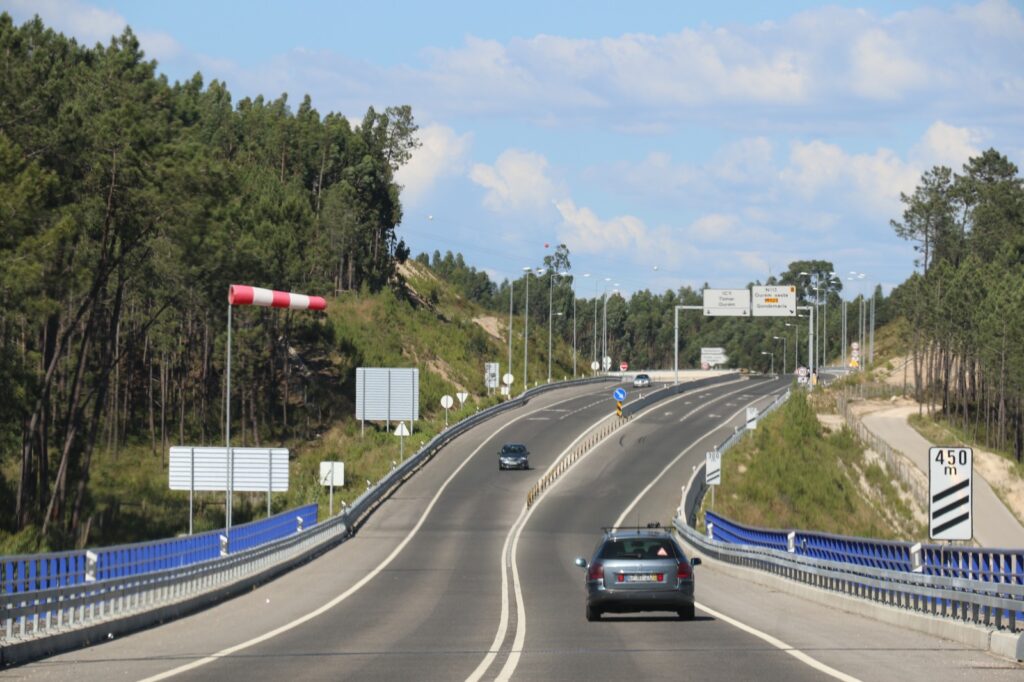
Road leading to Tomar Portugal
Essential Visitor FAQs for the Convent of Christ (Tomar Castle)
Here are the most common questions travelers ask about visiting the Knights Templar Fortress in Tomar, Portugal.
Planning and Logistics
How much time is needed to visit the Convent of Christ in Tomar?
A typical visit to the Convent of Christ and Tomar Castle takes 2.5 to 3 hours to thoroughly explore the Charola, the cloisters, the Chapter House window, and the main castle grounds.
Is Tomar Castle the same as the Convent of Christ?
Yes, they refer to the same complex. The Convent of Christ is the name usually given to the entire monument ensemble, which consists of the Templar Castle of Tomar (the original 12th-century military structure) and the monastic additions made by the succeeding Order of Christ.
Where is the Convent of Christ located?
The Convent of Christ is located on a strategic hilltop overlooking the town of Tomar, in the Santarém District of Central Portugal. It is situated approximately 139 km north of Lisbon.
Can you take a train from Lisbon to Tomar?
Yes, Tomar is easily accessible by train. You can take the Intercidades (IC) or regional train service from Lisbon’s Santa Apolónia or Oriente stations directly to Tomar station. The journey takes between 1.5 to 2 hours.
When is the best time of day to visit the Convent of Christ?
The best time to visit is right at opening (9 AM) to avoid crowds, especially during the busy summer months (June to September). Morning light is also ideal for photographing the famous Manueline Chapter House Window.
Are there guided tours available at the Convent of Christ?
The Convent does not typically offer guided tours included with the ticket, but audio guides are available for rent. We highly recommend reading our guide beforehand to appreciate the deep history and architectural detail.
Historical and Architectural Questions
Why is the church in Tomar round?
The main church, known as the Charola, is round because the Knights Templar who built it modeled it after the Church of the Holy Sepulchre in Jerusalem. This circular design was symbolic, bringing the Holy Land to the Templar headquarters in Portugal.
What is the Manueline style?
Manueline architecture is a uniquely Portuguese style of architecture and decorative arts that flourished during the reign of King Manuel I (1495–1521). It blends Late Gothic with maritime motifs and symbols associated with the Age of Discovery, such as ropes, coral, armillary spheres, and the Cross of the Order of Christ.
What role did the Convent of Christ play in the Age of Discovery?
The Convent was the headquarters of the Order of Christ, the successor organization to the Knights Templar. Prince Henry the Navigator, as Grand Master of the Order, used its vast wealth to fund and launch many of the early maritime expeditions that defined the Portuguese Age of Discovery.
Convent of Christ Tomar – History and Architecture
Final Verdict: The Enduring Legacy of the Templar City
Tomar is more than a destination—it’s a journey through layers of faith, art, and power that defined medieval Portugal. Within its castle walls and the Convent of Christ’s cloisters, the legacy of the Knights Templar still whispers through every arch and corridor. From the mystical Charola with its circular plan inspired by Jerusalem’s Holy Sepulchre, to the ornate Manueline window that celebrates Portugal’s Age of Discovery, Tomar stands as a living chronicle of transformation—from sacred military stronghold to Renaissance masterpiece.
Exploring it is to understand how architecture can tell stories of devotion, ambition, and imagination all at once.
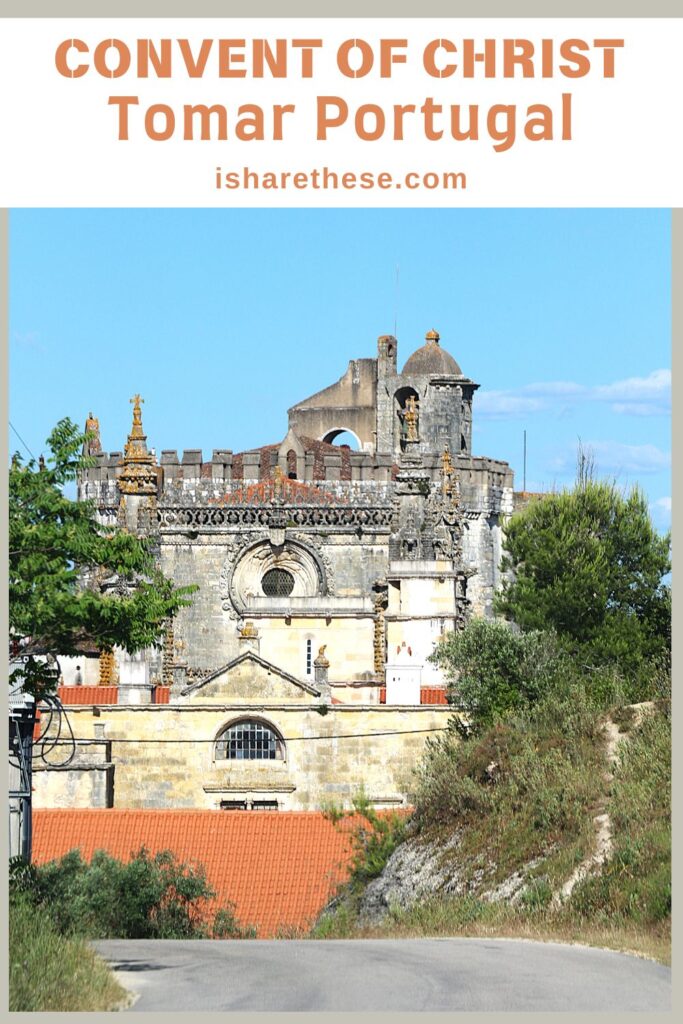
Pin and Save this for Later
Ready to walk the path of the Knights Templar? Start planning your Tomar trip today!
 About the author: Indrani Ghose is a travel blogger and photographer who has explored 15+ European countries across multiple trips. Based in Bangalore, she shares authentic travel experiences to help fellow travelers navigate the world more safely and confidently. You can follow her on her social media handles Instagram, Twitter and Facebook to see the wonderful destinations, beautiful offbeat places and get instant updates about them.







This place is surreal. It has to be one in my bucket list whenever I would be visiting Portugal! It takes me back to the Medieval Age! Game of Thrones feeling is strong here!
The level of intricacy of the carvings and sculptures is really amazing. I am familiar with the story of the Knights Templar, so it’s pretty cool to see their former seat of power. The church doesn’t look like a church at all, it looks more like a castle.
Indeed this is one of the most beautiful convent, church, fortress, and castles. The architecture looks brilliant and so intricate. Your pictures are really amazing.
perfect destination for those who love detailed, fascinating architectural designs. never been outside asia.. portugal seems to be a lovely place! thank you for sharing 🙂
Wow, I didn’t know there’s a lot to see in Portugal! I love the architectural structure of the church. It has a rustic look and very detailed. My mom is very religious and i’m sure she would love it if I take her here.
The story of convent christ of Tomar seems similar to the ones we hear in India. Your blog post makes me inquisitive about the place. Thanks for sharing!
The walls of the church seem to be speaking out its intriguing and at times tumultuous history . Your pictures bring alive the artistry of the architects, sculptors, and painters who have worked on this labour of love and embellished it to remarkable effect. The Place is really beautiful and has a mystical aura around it.
I didn’t know convent of Christ is as old as 1159 AD. The minute details and intricacies of the architecture have been well maintained. The renaissance time history is quiet interesting. I will put it in my list of places to visit in Portugal
This castle is beautiful and evokes strong emotions. I can’t wait to see this place. Thanks for introducing it. You’re always so intrepid.
Majestic architecture and marvellous description! Thanks for enlightening.
Wow, that place looks beautiful and knowing the history makes me want to visit it even more! Thanks for the fantastic post, I think I’ll be adding this to my list.
It is always wonderful to learn the history of these churches which are age old and still so well preserved. It’s amazing to know that the monastery of Tomar is a combination of church, fortress, castle and convent and the interior painting is just incredible.
I really love visiting historical buildings from medieval times. There are not that many big ones from the 12th century. It looks like this church was very well maintained and looks really interesting.
Wow, this place looks pretty impressive with it’s amazing architecture and intricate stone work. It must have been a great place to visit. I love getting somewhere like this before other people start to arrive too. You get great pictures that way!
Happy New Year to you. Lovely place, hope to get a chance to visit Portugal.
Wow, the details in the architecture. I have never been to Portugal, thank you for showing me such a wonderful place. #TravelTuesday
During 1581 to 1640 the Kingdoms of Portugal and Spain were united. In 1810 this convent was converted to barracks, causing a lot of damage to the monument. Convent of Christ, Tomar was included in UNESCO World heritage list. Interesting history with grand beautiful pictures . You take a focus on the history of the place , it seems to learn a lot about that particular place . Thank you Indrani ji for producing interesting posts .
what a lovely place to visit 🙂 thanks for sharing In 🙂
Great to see your photos! I have always wanted to visit this place. Didn’t know the details were so intricate.
A truly majestic architecture with a rich historical background.
I have only one to say about the architecture “Awesome”
Beautiful pictures. A great post 🙂
Great architecture!
The presentation of this unique combination of church, fortress, castle and convent is really amazing.
Thanks for sharing. Happy New year 2016.
Wow, Beautiful place nicely captured.
Awesome photos
The details are marvelous and so is the history of the place. If I’m ever in Portugal I will have to visit this wonderful castle/convent/church/fortess!
Superb clicks, Indrani, with a great account on its history and importance. 🙂
Breathtaking captures..nice to know the history of the Convent. The old buildings are so very fascinating.
What a gorgeous old church! Lovely tour and photos. Have a happy week!
Nice Photographs, Indrani.. Very interesting!
Majestic architecture. Nice captures.
What a realistic looking sculpture of Christ. Thanks for sharing this beautiful old convent and it’s architectural splendor with us, Indrani. Greetings Jo
Its lovely! Thanks for sharing 🙂
Thank you Indrani for sharing this ‘feast for the eyes’ during this Holy Season. I made a virtual pilgrimage to this ‘Holy Places’ by going through your post.
Quite a lot of the best architecture around the world seems to have been dedicated to the Gods!
Amazing. Superb clicks
Marvellous place, described with very nice images.
Great pictures..
The window looks beautiful.
What a lovely place and the architecture is fascinating. Have a great 2016!!
Shantana
The architecture of the building is mind blowing.
Beautiful captures. Always the old buildings are fascinating, good to know the fact behind this majestic Convent.
so neat and so old (by ‘new world’ standards). 🙂
Amazing architecture and opulence, lucky you to see it in person.
Beautiful church with such rich history! Love the close ups of the exterior carvings!
Donna@GardensEyeView
and LivingFromHappiness
What an incredible and beautiful place, Indrani!! And superb captures as always!! And thank you, as always for sharing the beauty and the history!! I do hope your new year is off to a great start!! Enjoy!!