Evora Aqueduct Agua de Prata: Engineering Marvel of Portugal
Évora, a sun-drenched city in Portugal’s Alentejo region, is a living museum. As a UNESCO World Heritage site, it’s packed with history, but one structure literally weaves itself into the city’s fabric: the magnificent Aqueduct of Évora. Known locally as the Aqueduto da Água de Prata (Silver Water Aqueduct), this isn’t just a relic of the past; it’s a vibrant part of modern Évora, with homes and shops tucked right into its ancient arches. It’s an unmissable landmark that tells a story of royal ambition and brilliant engineering.
Historical Background of Aqueduct Evora
The Origins of the Aqueduto da Água de Prata
So, how did this colossal structure come to be? We can thank King João III of Portugal. In the 1530s, he recognized that for Évora to truly flourish as a royal residence, it needed a reliable source of fresh water. He commissioned the renowned military architect Francisco de Arruda—the very same genius behind Lisbon’s iconic Belém Tower—to solve the problem.
Construction began in 1531 and was completed with impressive speed by 1537. This was no small feat! The original aqueduct stretched over 18 kilometers (about 11 miles), a monumental undertaking for its time. Its purpose was singular and vital: to channel pure spring water from the nearby Graça do Divor estate directly into the heart of Évora’s citadel, supplying fountains, homes, and the royal palace. This 16th-century aqueduct in Évora is a testament to the era’s ambition and a masterpiece of Francisco de Arruda architecture.

A magical mix of old and new! Roads under Evora Aqueduct
Architectural Features and Route
From Graça do Divor to Praça do Giraldo: The Aqueduct’s Journey
The aqueduct’s route is a fascinating journey that showcases incredible adaptability. It begins in the serene countryside and makes its way toward the bustling city. To navigate the terrain, Arruda designed a system of underground tunnels and, most famously, towering granite arches.
As it enters the city walls near the Rua do Cano, the Aqueduto da Água de Prata transforms. It ceases to be a standalone monument and becomes part of the urban landscape. The arches, which can reach up to 26 meters high, were so perfectly integrated that citizens began building their houses, shops, and cafes directly into the structure. This living architecture is what makes Évora’s aqueduct so unique. Its journey culminates near the city’s main square, the Praça do Giraldo, where it historically supplied the central fountains.
What to See Along the Aqueduct
Walking Tour Highlights of the Aqueduct in Évora
Following the aqueduct is one of the best ways to explore Évora. You don’t need a map; just keep the stone arches in your sights! Here are a few highlights for your self-guided walking tour:
- The Urban Integration: Start your walk just inside the city walls. The most charming section is along Rua do Cano and Travessa das Casas Pintadas, where you can see homes, balconies, and even little gardens nestled between the massive stone pillars. It’s an incredible sight.
- Roads and Passageways: Notice how modern roads and pedestrian walkways pass seamlessly under the aqueduct’s grand arches. It’s a perfect blend of old and new.
- Best Photo Spots: For a breathtaking view of the aqueduct stretching into the countryside, head to the walking path just outside the city walls. The morning or late afternoon light here is absolutely magical. Another great spot is from the rooftop of the Évora Cathedral (Sé de Évora), where you can see the aqueduct snaking through the cityscape.
Évora is ranked number two in the Portugal’s most livable cities according to survey of living conditions published yearly by Expresso, a Portuguese newspaper. It is also worth a drive up to its source up in the hills. There is a cistern full of water still functioning.

Evora Aqueduct Agua de Prata Engineering Marvel of Portugal
The Source: Graça do Divor
Where the Silver Water Begins
To fully appreciate this engineering marvel, consider a trip to its origin point at the Herdade da Graça do Divor. This is where the “Silver Water” begins its journey. Here you can see the original Renaissance-era cistern, a beautifully simple and functional building designed to collect the spring water.
It’s a peaceful spot, surrounded by cork and olive trees, offering a stark contrast to the aqueduct’s urban presence.
Travel Tip!
- How to Get There: The source is about 18 km from Évora. You can hike or bike a scenic portion of the route along the Ecovia do Aqueduto (a dedicated trail), or simply take a short drive.
- Best Time to Visit: Go in the morning to enjoy the quiet countryside and soft light. It’s a perfect spot for a picnic before heading back to the city.
- Combine your Graça do Divor visit with a wine tasting tour of nearby Alentejo vineyards. Many quintas (wine estates) offer guided tours showcasing traditional winemaking alongside panoramic views of the aqueduct’s source region.
- Contact local tourism offices for recommended routes that include both historical sites and wine experiences.
Engineering Significance
Why the Aqueduct of Évora is an Engineering Marvel
While often compared to Roman aqueducts, the Aqueduto da Água de Prata is a masterpiece of Renaissance engineering. Its design is both elegant and incredibly robust.
Francisco de Arruda used a mix of granite and brick, creating a structure so durable it has stood for nearly 500 years with minimal intervention. The gentle, precisely calculated gradient that allowed water to flow purely by gravity over such a long distance showcases an advanced understanding of physics and hydrology.
More than just a water channel, the aqueduct was an early example of sustainable urban planning. By providing a clean, consistent water supply, it enabled Évora to grow, supported public health, and solidified its status as one of Portugal’s most important cities. Its longevity and seamless integration into the city make it not just a historical monument, but a timeless example of how infrastructure can and should be built to last.

Shops under arches of Evora aqueduct Agua de Prata
Practical Travel Guide
Visiting the Aqueduto da Água de Prata: Tips for Travelers
How to Reach Evora
Evora is well connected to other cities by road and rail.
By Car: We hired a car and self-drove to the town of Evora. The tolls along the way are electronic, hence not much of a hassle.
By Bus: The second most convenient way to get to Evora is by bus from Lisbon. The buses depart from Lisboa Sete Rios station. The bus ride takes about an hour and 45 mins. You can purchase the ticket online, with validity up to 30 days.
By Train: If you love train journeys then this is for you. You can book your tickets online with Omio. Tickets cost 1417 INR (cheapest).
Best time to visit
- Early mornings for less traffic in photo frames
- Twilight hour, sunset and sunrise times for photography
Accessibility notes
Address: R. do Cano 87, 7000-592 Évora, Portugal
Coordinates: 38.575892025791994, -7.912654704233295
Local cafés or spots to rest near the aqueduct
- O Templo 4.7 star ~ 400m – R. do Escrivão da Câmara 2B, 7005-524 Évora, Portugal
- Restaurante Lombardo 4.8 star ~ 190m – Largo de Severim de Faria 1, 7000-528 Évora, Portugal
Personal Experience and Reflections
My Encounter with the Aqueduct: A Blend of Past and Present
When you arrive in Évora, one of the first sights that captures your eye is the great aqueduct stretching across the skyline. Built in the 16th century by Francisco de Arruda—the same architect who worked on Lisbon’s famous Belém Tower—it follows the route of an older Roman structure. Some sections soar up to 26 m high, while others run quietly underground, carrying water from a reservoir nearly 18 km away.
I was simply fascinated by how seamlessly the city has grown around it—houses and shops tucked right into its arches, as if history and daily life are one. Driving beneath it feels impressive, but walking alongside it is even better for photos. For me the aqueduct was a reminder of Évora’s blend of Roman legacy, medieval charm, and Renaissance ingenuity.

Wall along the borders of Evora old town.
Other Sights near Aqua de Prata Evora
- Evora Roman Temple ~ 0.6 km
- Giraldo Square, the main square of Evora ~ 0.7 km
- Chapel of Bones ~ 0.9 km
- Cathedral of Evora ~ 0.7 km
- Nearest Aqueduct in Elvas ~ 72.5 km
Sources and Further Reading
UNESCO Site
World Monuments Fund
Publico.pt
- In 2012, researchers highlighted that the Água da Prata Aqueduct was more than a historic structure—it also safeguarded a natural landscape rich in vegetation, making it a cultural and ecological asset worth preserving.
- By 2019, local authorities announced restoration plans to revive the aqueduct’s ancient function of carrying water. The project aimed to use its channels once again, this time to irrigate Évora’s parks and green spaces in a sustainable way.
- In 2023, the structure gained global attention when the World Monuments Fund included it on its watchlist of 50 sites of cultural significance, underscoring the urgent need for preservation and international recognition of its value.
Frequently Asked Questions on Evora Aqueduct
How long does it take to walk the entire Aqueduct of Évora?
Walking the complete visible sections of the aqueduct takes approximately 2-3 hours, depending on stops for photography and exploration. The most scenic portion along Rua do Cano can be covered in 30-45 minutes.
Can you go inside the aqueduct arches?
Yes, many arches house restaurants, shops, and private residences that welcome visitors. Some converted arch spaces operate as cafés where you can enjoy coffee surrounded by 500-year-old stone walls.
What’s the best time of year to visit the Aqueduct of Évora?
Spring (April-May) and autumn (September-October) offer ideal weather conditions with comfortable temperatures and excellent lighting for photography. Summer visits are possible but can be quite hot during midday. Winter provides fewer crowds and dramatic sky contrasts, though weather may be unpredictable.
Is the Aqueduct of Évora suitable for families with children?
Absolutely! Children find the aqueduct fascinating, especially the sections where roads pass under ancient arches.
How much does it cost to visit the Aqueduct of Évora?
Viewing the aqueduct is completely free as it’s part of Évora’s public streets. Parking in central Évora may require payment. The source at Graça do Divor is also free to visit.
Can you drive along the aqueduct route?
Parts of the aqueduct route are accessible by car, particularly where modern roads pass beneath the arches. However, the best experience involves walking, as you’ll notice architectural details impossible to appreciate from a vehicle.
Are there guided tours of the aqueduct available?
Yes, local tour companies offer both walking tours that include the aqueduct and specialized tours focusing specifically on Évora’s water systems and engineering heritage. The tourism office in Praça do Giraldo provides current information about tour availability and scheduling.
Is the aqueduct accessible for visitors with mobility limitations?
The main aqueduct route along streets is generally accessible, though cobblestone surfaces may present challenges. The source at Graça do Divor involves rural paths that may be difficult for wheelchairs. Contact Évora’s tourism office for specific accessibility information.
What should I photograph at the Aqueduct of Évora?
Key photography opportunities include the towering arches along Rua do Cano, residential balconies integrated into ancient stonework, roads passing beneath arches, panoramic views from elevated positions, and detail shots of stone carving techniques. Golden hour lighting enhances the limestone’s warm tones dramatically.
Pin this for later…
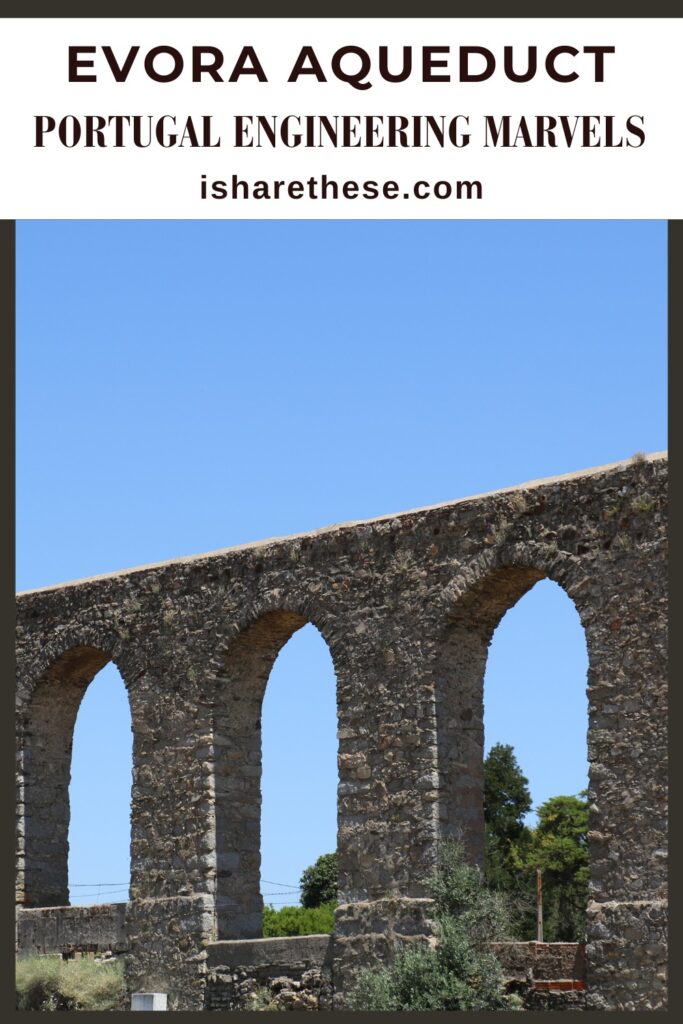
If you liked this please save and share!
 Indrani Ghose is a cultural travel writer with expertise in documenting global heritage sites. She is based in Bangalore, India. She has written for numerous publications across the globe. You can follow her on her social media handles Instagram, Twitter, Pinterest and Facebook to see the wonderful destinations, beautiful offbeat places and get instant updates about them.








An aqueduct with an olden-days touch.
So charming!
The aqueduct is amazing! Kind of cool to see the stores under it.
Those houses under the arches !!!!!The aqueduct looks fascinating.
🙂
Thank you!
Wonderful shots of the aqueduct!
Many thanks Ladyfi!
Thank you Rupam!
🙂 Thank you Jim!
That is awesome – the sense of history and amazing longevity of these ancient constructs.
True! Amazes me too!
Thank you Al!
The houses underneath the aqueduct are so cute. Pretty clever.
Worth a Thousand Words
Really expert stone in past times!
I meant to say….stone workers!
True! Hard to find them today!
I love the ancient walls. Great pictures 🙂
Thank you Purba. I too love such old structures. 🙂
Amazing construction and interesting to see how people utilised the space between the aches of the aqueduct. The only aqueduct I have seen was the Thotti Paalam in Kanyakumai.
Great shots
Another good to know post.
Keep it raining
Agree with TexWisGirl. Love the fly-by countryside photo…
gorgeous countryside!
Yes indeed!
Love the Wall and aquaduct
Glad you liked the pic.
Thank you!
Thank you MP UPPAL!
Yes Somali, a pleasnat drive there.
Thank you.
Hi Bhavani, I have added a couple of pics more. 🙂
That beautiful aqueduct is so beautiful and looks very historic! Greetings from the Philippine Islands!
Steven 🙂
Love the Aquaduct and great captures for the day, as always!! Hope you have a lovely weekend, Indrani!! Enjoy!!
Many thanks Sylvia for the visit and comment! 🙂
The Aquaduct is super cool. Nice drive-by with the cows/fence.
Thank you Ida!
How exciting! It is gorgeous, and BIG!
Thank you for the visit and comment. 🙂