Surkanda Devi Temple Guide 2026: A Scenic Road Trip & Ropeway Experience
The Himalayan High
April 2026 turned out to be an ideal time to drive from Mussoorie to Surkanda Devi Temple. The air was crisp and cool, the pine forests along the route were lush, and the skies were clear enough to reveal long Himalayan ridgelines in the distance. The road winds through quiet villages and occasional roadside tea stalls — small stops that make the drive feel less like transit and more like the journey itself.
By the time I reached Kaddukhal, the base point for both the trek and the ropeway, there was a distinct shift in atmosphere — quieter, calmer, and charged with the kind of stillness you rarely find closer to town.
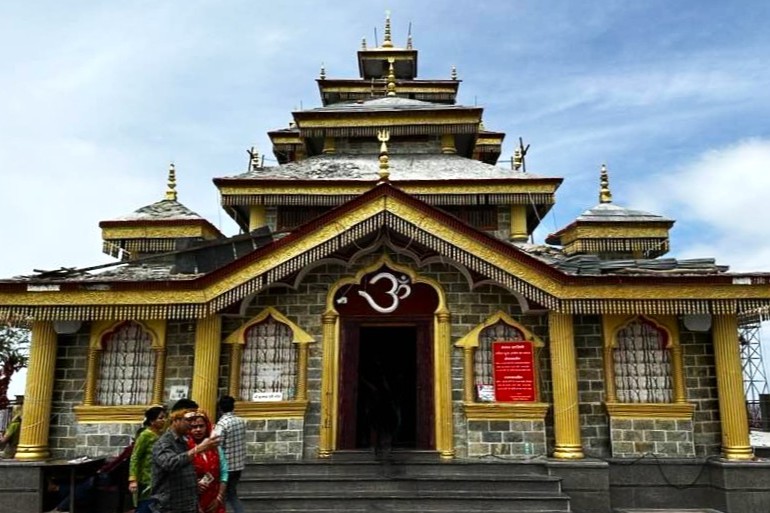
The intricate front facade and entrance architecture of the Surkanda Devi Temple near Mussoorie, captured in April 2026.
Fact File
| Detail | Information |
| Location | Surkanda Devi Temple, near Kaddukhal, ~24 km from Mussoorie |
| Altitude | ~2,700 metres above sea level |
| Access Routes | Mussoorie–Dhanaulti road; trek from Kaddukhal or ropeway |
| Ropeway Price (2026) | Approx. ₹200–₹250 per person (round trip) |
| Best Time to Visit | April–June (clear skies); September–November (post-monsoon views) |
| Weather in April | Pleasant, 10–18°C; carry a light jacket |
| Trek Distance | ~1.5 km uphill from Kaddukhal base |
| Religious Significance | One of the 51 Shakti Peeths; associated with Goddess Sati |
Best Time to Visit Surkanda Devi Temple
Surkanda Devi is open year‑round, but each season offers a different experience:
- Summer (April–June): The best overall window. Pleasant 15–25°C temperatures, clear Himalayan views, and blooming rhododendrons make trekking enjoyable. April and May are ideal for visibility, while June hosts the vibrant Ganga Dussehra festival, drawing large crowds—book accommodation early.
- Monsoon (July–September): Lush greenery but heavy rains, fog, and slippery trails. Visibility is poor, and landslides can affect the Mussoorie–Dhanaulti road. Proceed only with caution.
- Autumn (October–November): A strong second choice. Crisp 8–15°C weather, clear skies, and fewer crowds. Navratri in October adds spiritual energy, though expect more devotees.
- Winter (December–March): For snow seekers. Sub‑zero nights and frequent snowfall make the trek challenging, with occasional road closures. Facilities may be limited, but the temple in snow is a rare sight—check ropeway status before visiting.
| Season | Months | Temp Range | Verdict |
| Summer | April–June | 10–25°C | Best for views, trekking, and Ganga Dussehra |
| Monsoon | July–September | 12–20°C | Avoid unless you accept limited visibility |
| Autumn | October–November | 8–15°C | Excellent — clear skies, fewer crowds |
| Winter | December–March | -7–10°C | Snow experience only; plan carefully |
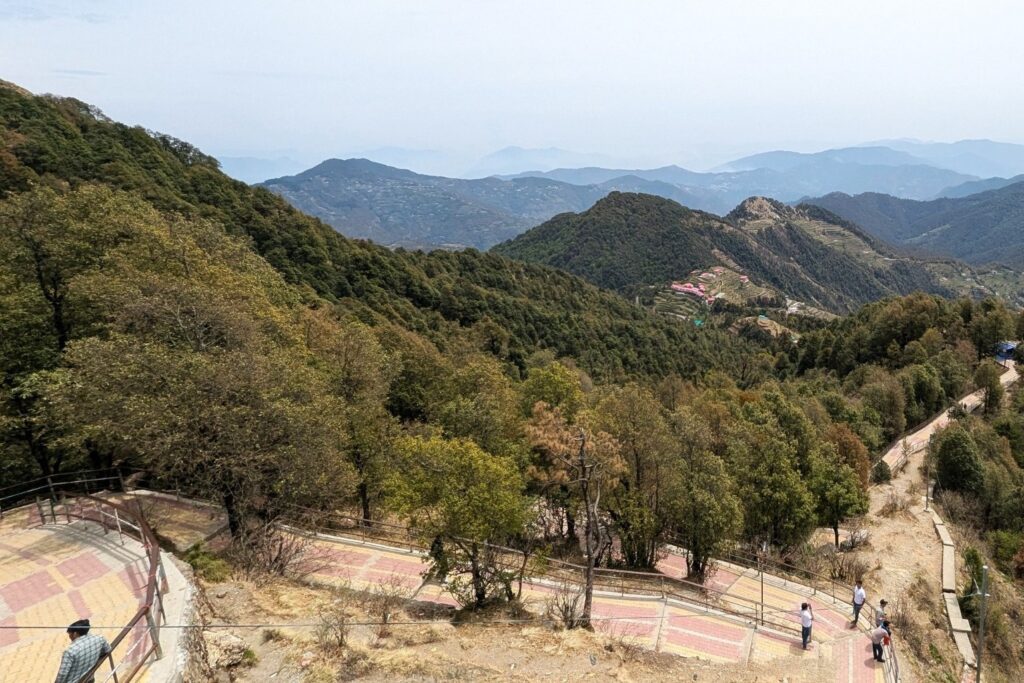
Aerial view of the steep 2.5 km paved walking trek from Kaddukhal to Surkanda Devi, seen from the ropeway cabin.
The Legend: Why Surkanda Devi is a Must-Visit Shakti Peeth
Surkanda Devi Temple carries deep spiritual significance as one of India’s 51 Shakti Peeths — a network of sacred shrines rooted in one of Hinduism’s most enduring myths.
According to legend, Goddess Sati — daughter of King Daksha and consort of Lord Shiva — self-immolated after her father publicly humiliated Shiva and refused him entry to a grand yagna (sacred fire ritual). Consumed by grief, Shiva carried Sati’s body through the universe, unable to let go. To restore cosmic order, Lord Vishnu used his Sudarshan Chakra to dismember Sati’s body, scattering 51 body parts across the Indian subcontinent. Each site where a part fell became a Shakti Peeth — a seat of divine feminine power.
Surkanda Devi is traditionally believed to be the spot where Sati’s head (shira) fell,
which places it among the most spiritually significant of all the Peeths.
Devotees believe the temple radiates a powerful, living energy — what is described in Hindu tradition as Chaitanya — that connects worshippers directly to the cosmic feminine force, or Adi Shakti. The surrounding forest, the altitude, and the panoramic views of the Garhwal Himalayas amplify this effect, making the site feel genuinely set apart from the ordinary.
For travellers, Surkanda Devi offers more than mythology. The 1.5 km uphill trek from Kaddukhal is moderately challenging but manageable for most fitness levels, and the views it unfolds — of snow-dusted peaks and forested valleys — are reward enough on their own. For those who prefer a faster ascent, the ropeway makes the temple accessible to elderly visitors, families with young children, and anyone short on time. Either way, the experience of arriving at the summit shrine — with wind, sky, and mountains on all sides — is one that stays with you well after the descent.
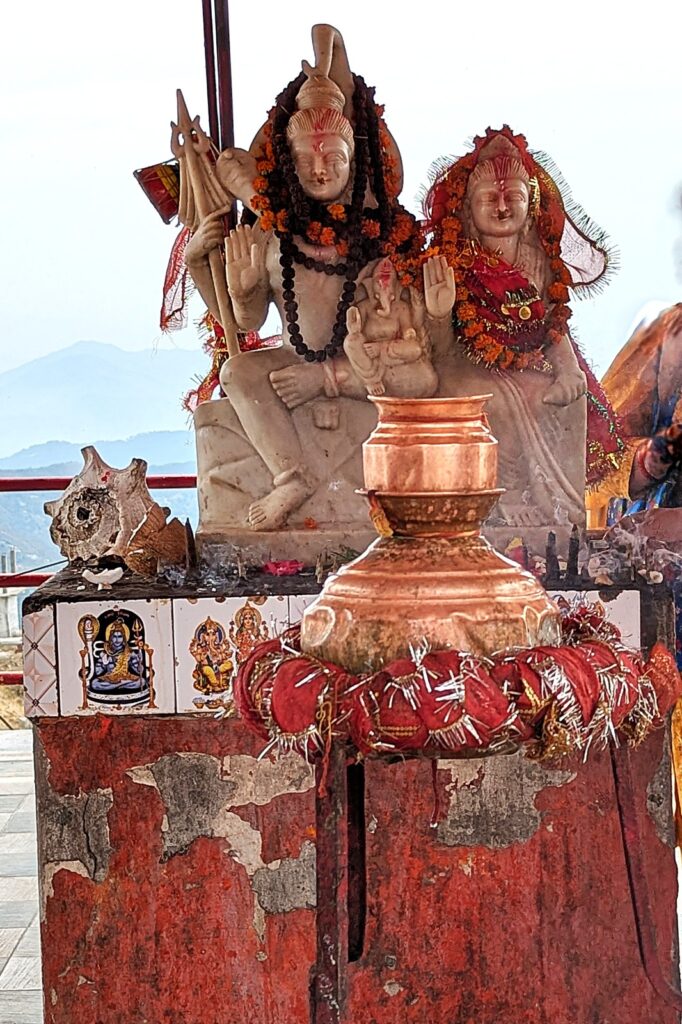
A dedicated shrine within the Surkanda Devi complex featuring a detailed statue of Lord Shiva and Goddess Parvati. No photography allowed inside main shrine.
Driving from Mussoorie to Kaddukhal: Road Trip Logistics
The drive from Mussoorie to Kaddukhal is one of the more enjoyable parts of the Surkanda Devi experience — unhurried, scenic, and straightforward enough that you can focus on the views rather than the road.
In April 2026, I covered the roughly 35 km route along the Mussoorie–Dhanaulti road in just under an hour and a half, with a short photo shoot at a view point along the way – the one I stopped at, about 15 km from Kaddukhal, had a direct mountain and deep valley views. Traffic is generally light on weekday mornings, though weekend traffic near Dhanaulti can slow things down.
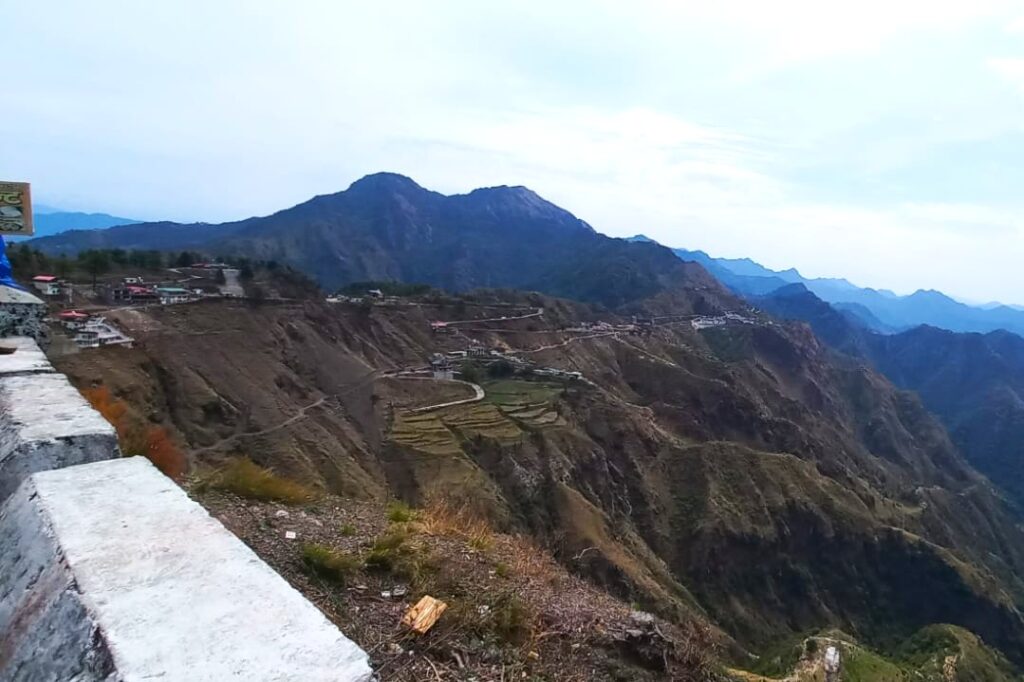
Picture of surrounding mountain peaks from viewpoint
The road quality is good for the most part — well-paved, with gradual curves and a few narrow bends that simply require you to slow down and stay left. It is manageable for hatchbacks, SUVs, and even small buses without any special driving skill.
The route passes through stretches of pine and deodar forest, and on clear April days, the Garhwal Himalayan range appears intermittently through the tree line. Roadside dhabas dot the route and are worth a quick stop for tea or Maggi.
Parking at Kaddukhal is organised but fills up quickly during weekends and public holidays. A designated lot near the ropeway base handles cars and small vehicles, but arriving before 9 AM is advisable if you want a stress-free spot. The lot is paid, with nominal charges. From the parking area, both the ropeway station and the trek trailhead are within easy walking distance — you won’t need to navigate far once you arrive.
The gradual altitude gain along the drive also helps your body adjust before reaching the temple’s elevation of nearly 2,700 metres, which is a practical benefit worth noting if you are sensitive to altitude.
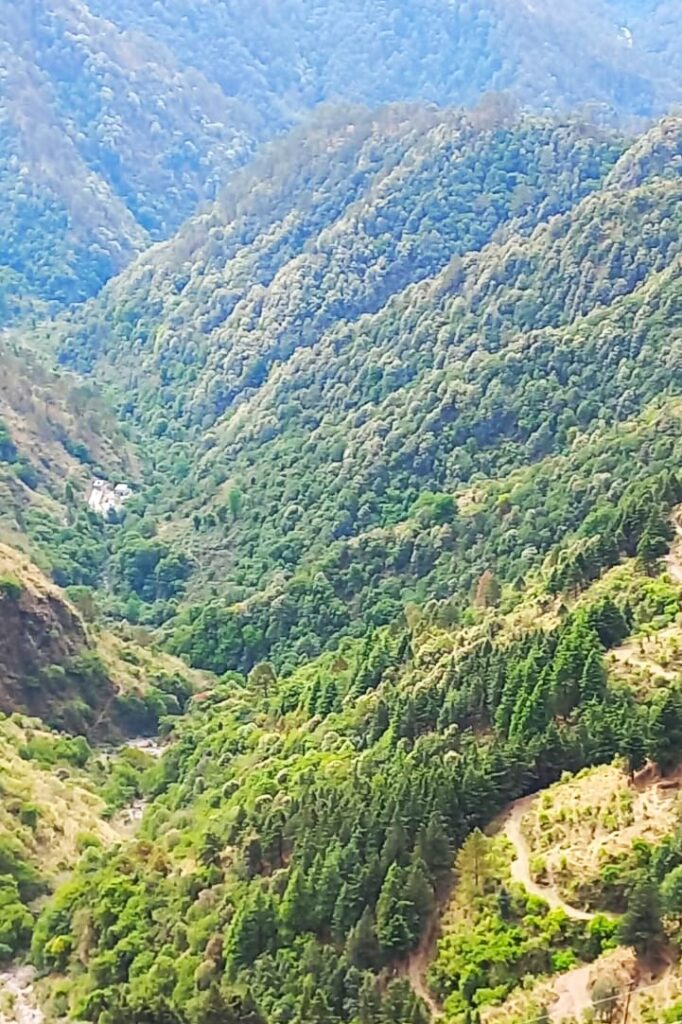
Panoramic view of the green tree covered valley
The Choice: Ropeway or Trek in 2026?
Arriving at Kaddukhal, every visitor faces the same decision: take the ropeway up or walk the traditional trail. Both options lead to the same destination — the temple complex at the summit — but they offer meaningfully different experiences.
In April 2026, I took the ropeway, priced at ₹225 for a round trip. The ride lasts roughly five minutes and glides over a dense canopy of pine and rhododendron, with the Himalayan ridgeline visible in the distance. It is smooth, well-maintained, and genuinely enjoyable — not just a convenience option. That said, wait times on weekends ran to about 20–30 minutes during my visit, so factor that in if you are on a tight schedule.
The trek is a different proposition. At approximately 2.5 km with a sustained uphill gradient, it is more physically demanding than the distance suggests. The trail is clearly marked and sees regular foot traffic, but you will want proper footwear — trail shoes or sturdy sneakers at minimum — and a water bottle. Many pilgrims deliberately choose to walk, treating the climb as an act of devotion rather than simply a means of reaching the top. In April, the weather makes the trek genuinely pleasant: cool air, good visibility, and shade from the tree cover for much of the route.
The practical answer: choose the ropeway if you are travelling with elderly family members, young children, or have limited time. Choose the trek if you are reasonably fit and want the full pilgrimage experience. Either way, the temple and its views are the same reward at the end.
Ropeway: 2026 Timings and Ticket Prices
| Detail | Information |
| Operating Hours (2026) | 8:00 AM – 6:00 PM |
| Round-Trip Price | ₹225 per person |
| One-Way Price | ₹120 per person |
| Average Ride Duration | ~5 minutes |
| Peak Wait Times (April) | 20–30 minutes on weekends |
| Base Point | Kaddukhal Ropeway Station |
Tip: Ropeway timings can vary during festivals and winter months. Confirm current hours at the base station before queuing, especially if you are visiting during Navratri or other peak pilgrimage periods.
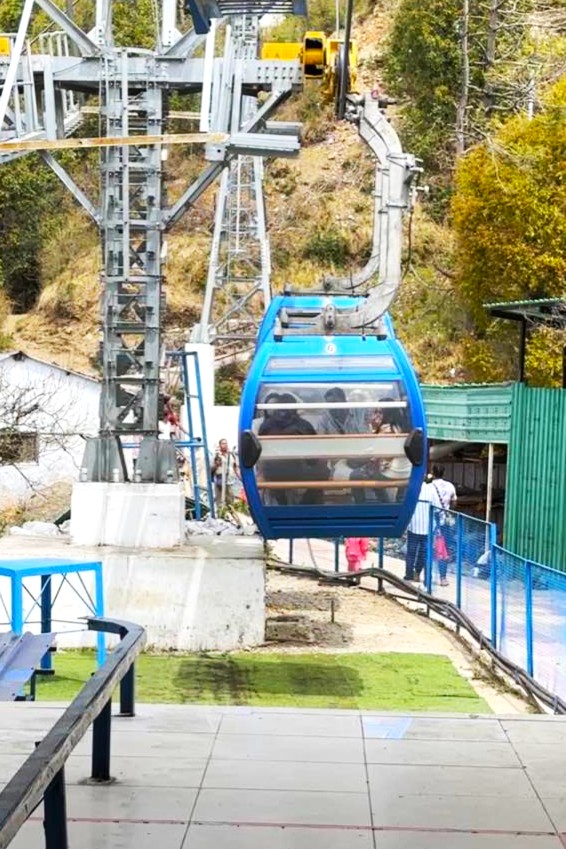
The Surkanda Devi ropeway cable car at the Kaddukhal base station, a 5-minute transit to the hilltop shrine.
Himalayan Views: What Can You See from 9,000 Feet?
Standing at nearly 9,000 feet, Surkanda Devi Temple commands one of the most expansive panoramas in the Garhwal Himalayas. On a clear April morning in 2026, the view from the temple courtyard was genuinely arresting — a wide arc of snow-dusted peaks stretching across the northern and eastern horizon.
- The most prominently visible peaks include Bandarpunch, Swargarohini, Chaukhamba, and Kedarnath — each identifiable by its distinct profile against the sky.
- The Bandarpunch range — source of the holy Yamuna River — appears strikingly close from the summit.
- On particularly clear days, peaks associated with the Gangotri-Yamunotri group, Trishul, and Nanda Devi also come into view.
- The Doon Valley and the town of Mussoorie spread out to the south.
- Parts of distant Dehradun are visible on clear days.
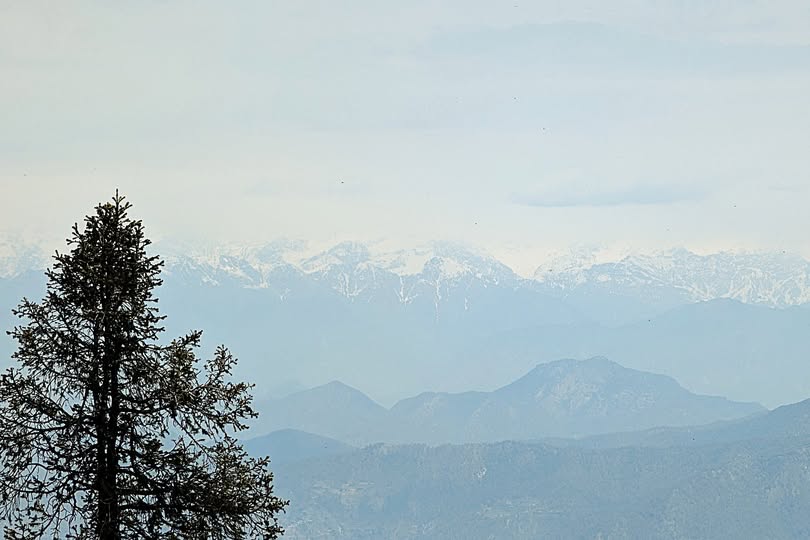
View of the Garhwal Himalayan mountain range, including peaks like Bandarpunch and Swargarohini, from 9,000 feet.
The temple’s vantage point works because it sits atop the highest peak in its immediate vicinity, with no obstructing ridgeline to the north. The Himalayas fill the northern view while the valley panorama opens up to the south, giving the summit a genuine 360-degree quality. For photographers, the best light falls in the early morning — roughly between 7 and 9 AM — before any haze builds up over the valleys. April is particularly rewarding because the peaks still carry their winter snow, which sharpens their visibility against blue skies.
We lingered in the open courtyard after darshan specifically for these views and also for a picture. There are photographers with their DSLRs offering the prints within 10 minutes for a charge of 100INR. The combination of altitude, silence, and an unbroken Himalayan horizon makes this one of the most visually memorable temple sites in Uttarakhand.
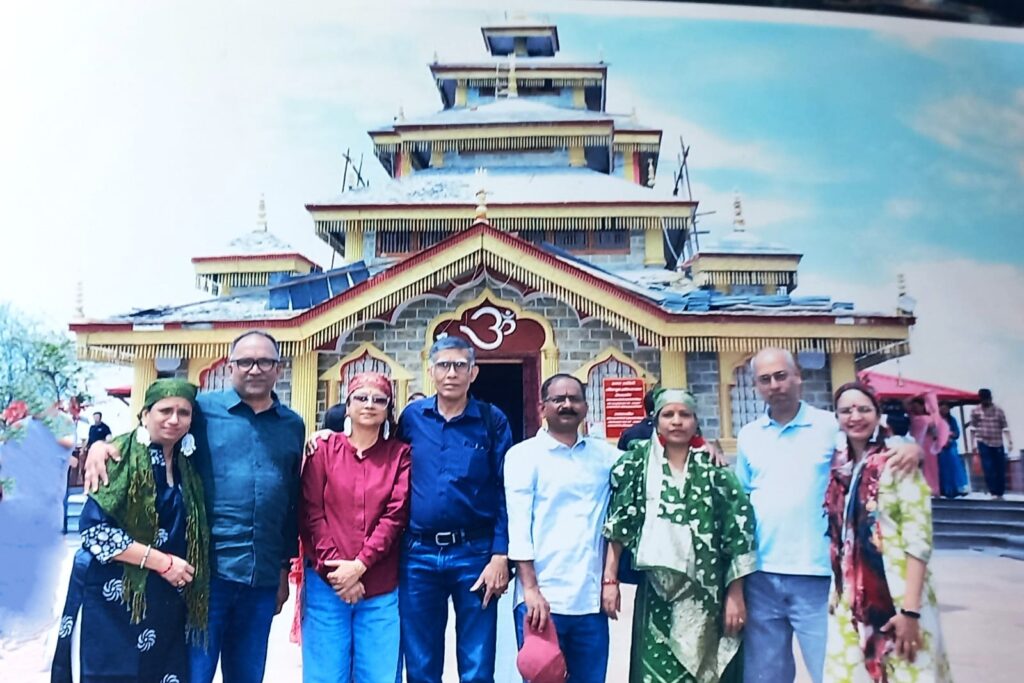
Our Group Photo in Surkanda Devi Mandir
Pro Tips for Visiting Surkanda Devi Temple
April is a reliable month to visit Surkanda Devi — the weather is stable, the skies are mostly clear, and the crowds, while present on weekends, are manageable on weekdays. A few practical pointers will make the experience smoother:
Clothing and weather: Mornings at 9,000 feet are cool, typically between 10–12°C, and the wind at the summit can add a significant chill factor. Carry a light fleece or jacket even if the drive up feels warm. By midday the sun strengthens, and at this altitude UV exposure is higher than in the plains — sunscreen and sunglasses are not optional.
Footwear: Whether you take the ropeway or trek, the temple complex involves uneven stone surfaces and steps. Wear closed-toe shoes with a firm sole. Flip-flops or dress sandals are not suitable.
Hydration: Altitude reduces your awareness of thirst. Carry at least one litre of water per person. There are tea stalls near the base but limited options once you are at the summit.
Timing your visit: Early mornings between 6–9 AM generally offer the best mountain visibility before afternoon haze develops. Arriving early also helps with parking — the Kaddukhal lot fills quickly on weekends, and being there before 9 AM avoids both the queue and the crowd.
Payments: Small vendors, prasad stalls, and the parking attendant near the base typically operate on cash. Carry small denomination notes — UPI acceptance is inconsistent here.
Ropeway queue management: If you are visiting on a weekend in April, factor in a 20–30 minute wait at the ropeway. If time is short, consider trekking up and taking the ropeway down — it breaks the wait and gives you the trail experience without the full uphill fatigue.
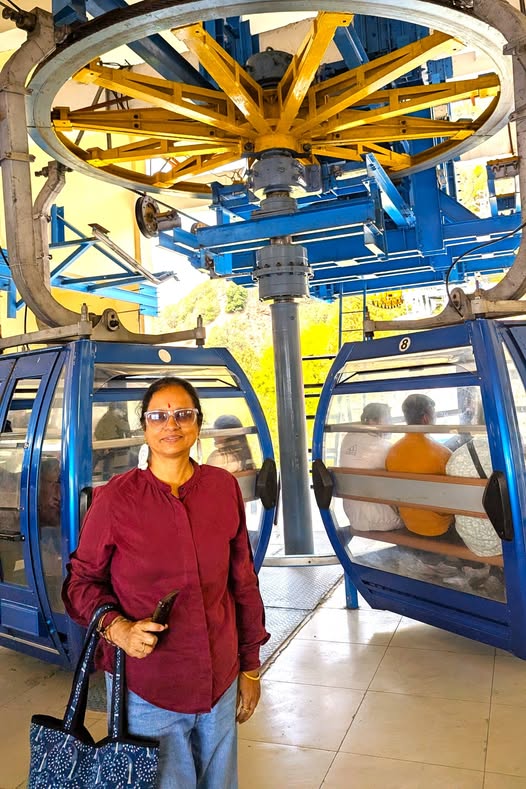
Happy me after Ropeway ride to Surkanda Devi Temple atop the Surkanda Hill (part of the Shivalik range)
Nearby Places to Combine with Your Visit
Surkanda Devi sits at the centre of a rewarding Uttarakhand road‑trip circuit. These nearby spots can be added to a same‑day or overnight itinerary:
| Place | Distance from Kaddukhal | Highlights |
| Dhanaulti | ~7 km | Eco Park, camping, birding, mountain walks |
| Kanatal | ~10 km | Quiet village, forest views, overnight camping options |
| Tehri Lake | ~35 km | Water sports (boating, jet skiing, zorbing); stop at Chamba town en route |
| Kunjapuri Devi | ~30 km | Part of Shakti Peeth Triangle; pilgrimage circuit |
| Chandrabadni Devi | ~45 km | Completes the Shakti Peeth Triangle; two‑day yatra option |
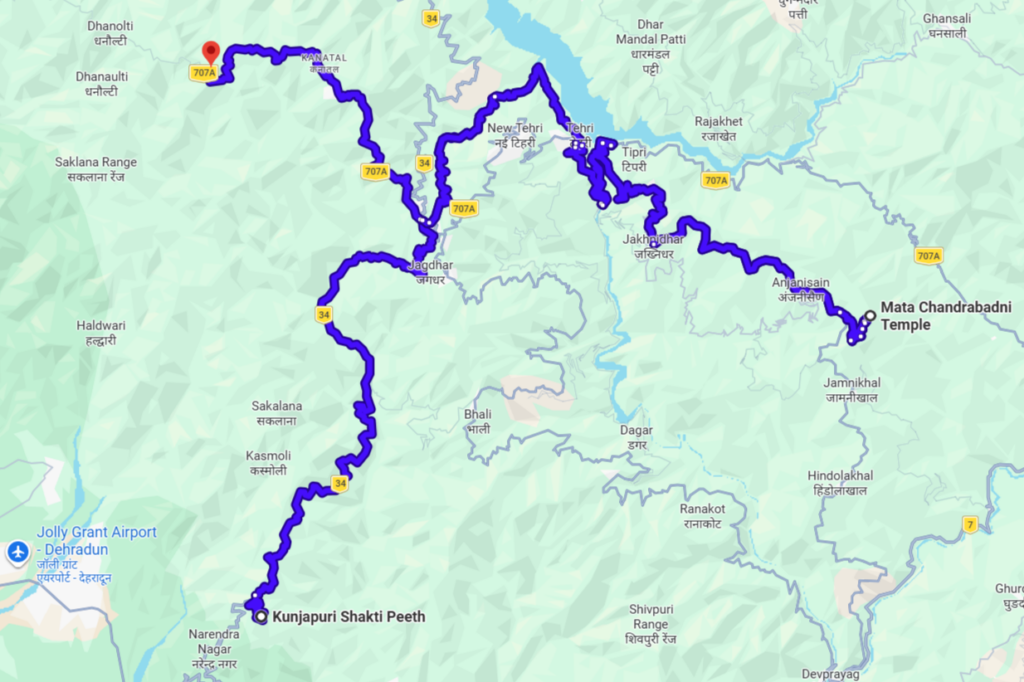
Shakti Peeth Triangle – Mussoorie
FAQ for Surkanda Devi Temple
Q1. How far is Surkanda Devi Temple from Mussoorie?
It is approximately 34–35 km via the Mussoorie–Dhanaulti road. The drive takes about 1.5 to 2 hours depending on traffic. Kaddukhal serves as the base point where you park your car to begin the ascent.
Q2. What is the Surkanda Devi ropeway price in 2026?
As of April 2026, the round-trip ropeway ticket is ₹225 per person. The ride is a significant time-saver, taking only 5–7 minutes to reach the summit, compared to the 40-minute trek.
Q3. How long is the trek from Kaddukhal to the temple?
The trek is roughly 2.5 km uphill. While the path is well-paved, it is consistently steep. Most travelers with average fitness take about 45–60 minutes to walk up. Proper walking shoes are highly recommended.
Q4. Is the Surkanda Devi Temple open in April?
Yes, April is one of the best months to visit. The weather is pleasantly cool (ranging from $10°C$ to $20°C$), and the skies are usually clear enough to offer panoramic views of the Himalayan peaks.
Q5. Can I take my car directly to the Surkanda Devi Temple?
No, vehicles are only permitted up to the Kaddukhal parking lot. From there, you must choose between the 2.5 km trek or the ropeway service to reach the temple at the hilltop.
Q6. Which Himalayan peaks are visible from Surkanda Devi?
From the temple’s vantage point (9,000+ feet), you can get a stunning 360-degree view of the Garhwal Himalayas, including the Bandarpunch, Swargarohini, Kedarnath, and Gangotri ranges.
Q7. Is there a long wait for the ropeway on weekends?
Personal Tip: During my April 2026 visit, the weekday wait time was just about 10 minutes. If you are visiting on a Saturday or Sunday, try to reach Kaddukhal before 10 AM to avoid the midday rush.
More from my Shakti Peeth Documentation Series
- Danteshwari Temple: A deep dive into the heritage of Bastar.
- Chamundeshwari Temple: Navigating the 1,000 steps in Mysore.
- Kankalitala & Tarapith Temples: Exploring the Birbhum temple cluster in West Bengal.
- Bakreshwar Mahishmardini: The legend of the eight hot springs.
- Biraja Temple Jajpur: The story of Nabhi Gaya.
Conclusion: Worth Every Kilometre
My April 2026 visit to Surkanda Devi Temple delivered on every count — a clean, enjoyable drive from Mussoorie, a smooth ropeway ride over forest cover, a darshan that felt genuinely unhurried, and views of Bandarpunch, Chaukhamba, and Kedarnath that no photograph quite captures.
What makes Surkanda Devi stand out among Shakti Peeths near Mussoorie is the combination it offers: accessible by road and ropeway, significant in mythology, and set at an altitude that gives you the full Himalayan experience without a demanding multi-day trek. Whether you are a devotee making a pilgrimage, a traveller on a Mussoorie road trip, or someone simply looking for a high-altitude viewpoint with a story behind it, Surkanda Devi earns its place on the itinerary. Plan for a half-day minimum, go early, carry a jacket, and let the summit do the rest.
Pin and Save this for Later
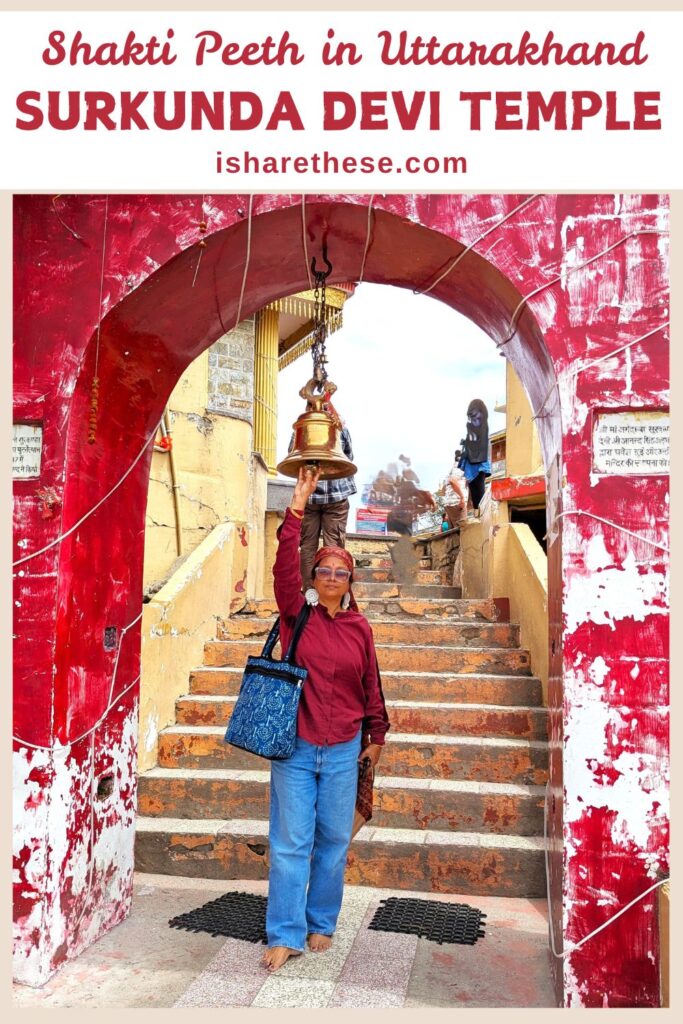
About the Author
 Indrani Ghose is a cultural travel writer and heritage documentation specialist with over 15 years of experience exploring and writing about temples across India and Southeast Asia. Having visited over 150 sacred sites, she brings both scholarly depth and personal narrative to heritage travel writing.
Her work has been published in Lonely Planet, The National (UAE), Whetstone Asia, Deccan Herald, and various architecture and heritage journals.
Connect with Indrani: Follow Indrani on Instagram | Twitter | Facebook for heritage travel insights, photography tips, and offbeat destination discoveries.