Traditional Rajasthan Jewelry for Women and Men
While strolling the cities of Rajasthan, I found myself admiring the people of Rajasthan too. Especially the women and the traditional Rajasthan jewelry that they wore. They wear bright outfits, colors like brilliant red, vibrant yellows and oranges, lively greens and dazzling blues.
Traditional Rajasthani Jewelry
Most women keep their face covered and are shy to speak. Not all were willing to pose for me; yet I managed to get some reasonably good shots.
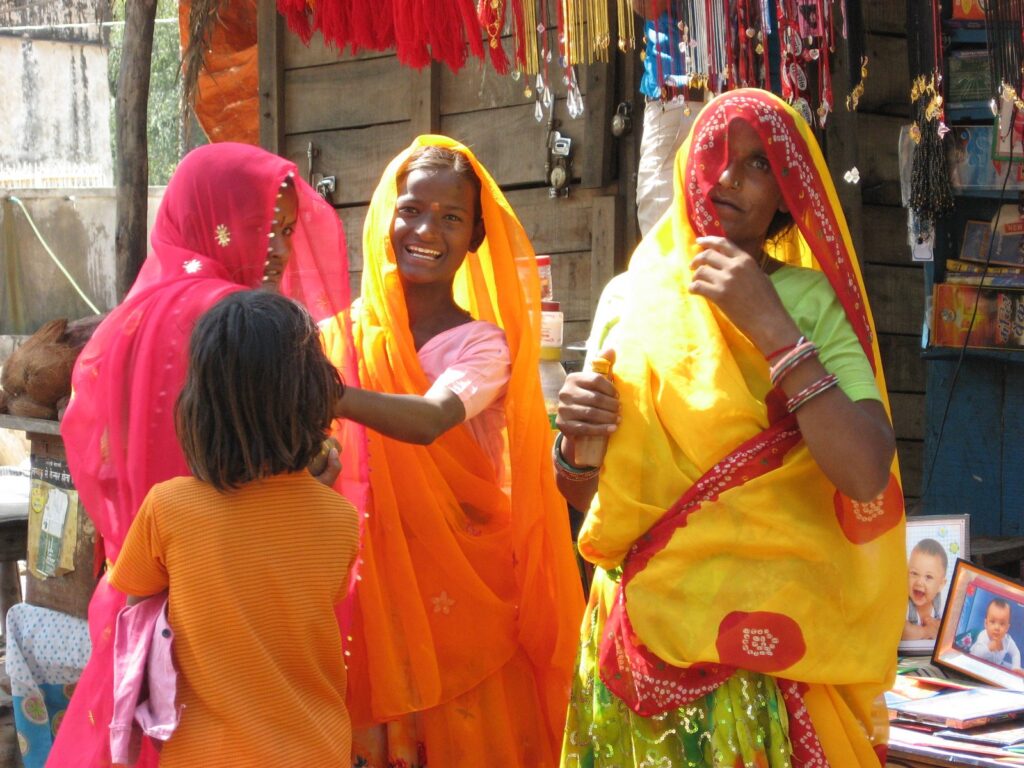
Rajasthani women in traditional attire
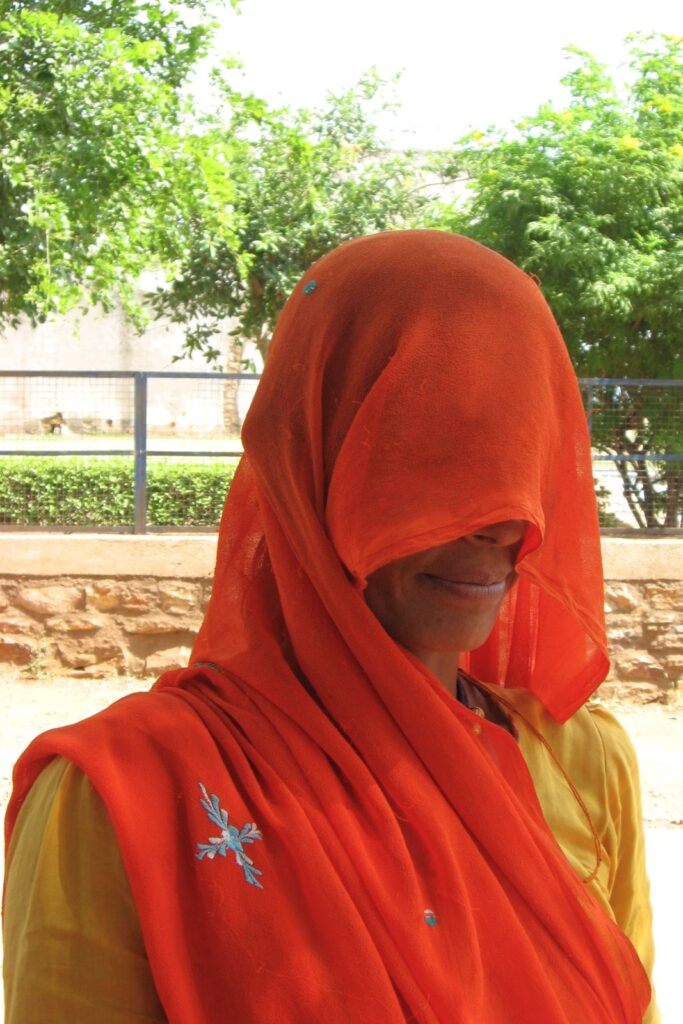
Rajasthani Woman with Veil
Traditional Rajasthan Jewelry with Animal Bones
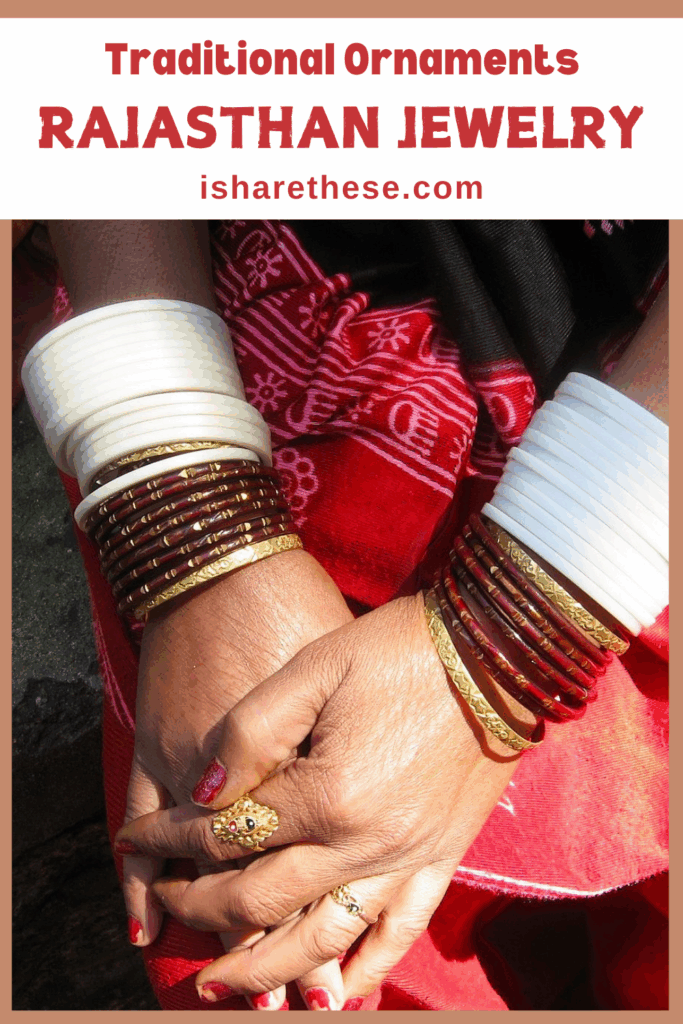
Earlier those chudas, broad white bangles were made of ivory or camel bones, embellished with gold, precious and semiprecious stones.
Indian government has rightly imposed bans and restrictions on ivory trade. This has resulted in waning of the use of real ivory. Moreover, the arm bangles have fallen into disuse in the urban centres and is mostly confined to rural Rajasthan where bangles made of plastic are in use.
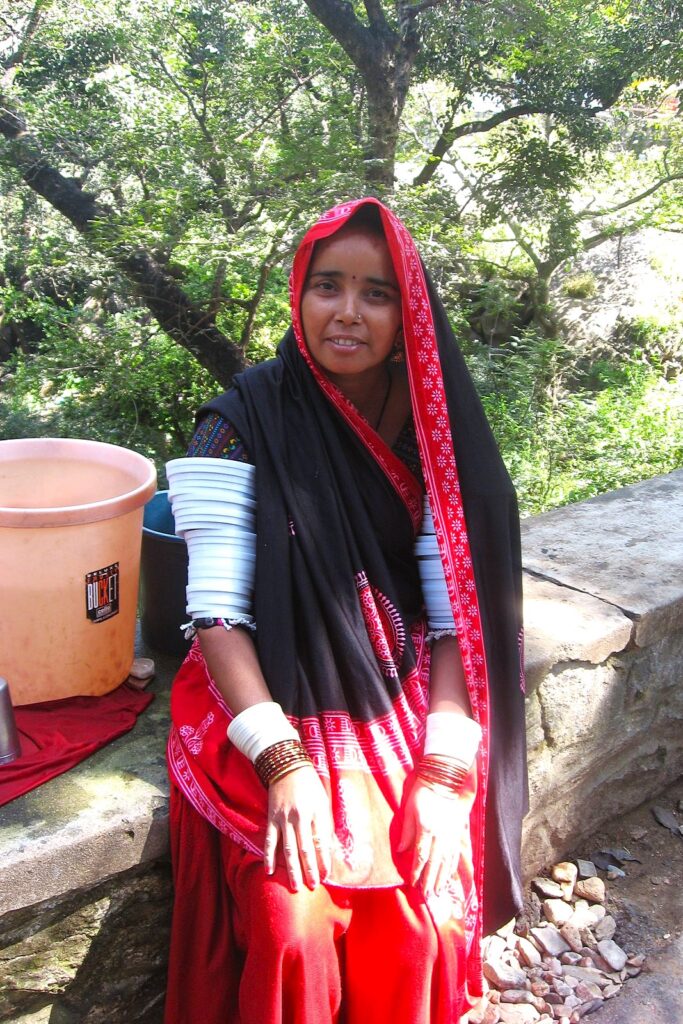
Traditional Rajasthani Women Jewelry
I saw this lady close to a public water tap. She was with a pot; obviously it meant she had come to collect water. I picked up courage to converse with her. Initially she was shy but soon she was chattering away and sounded more curious about me than I was of her. She wore finger rings and bangles made of gold and anklets made of silver.
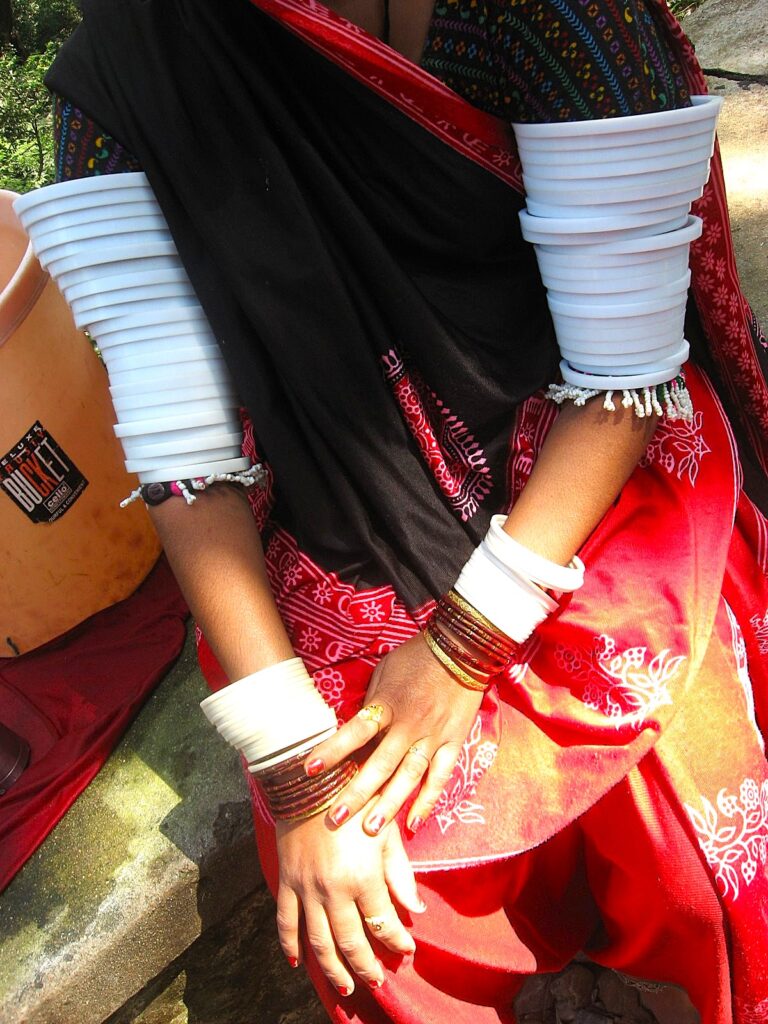
Bangles in arms
Bangles worn by Rajasthani Women
In Rajasthan, the bangles worn by women have several traditional names depending on material, community, and region. Here are the main ones:
Upper Arm (Armlets)
- Bajuband / Baajubandh – the classic ornament worn on the upper arm, often in silver or gold with intricate designs, sometimes studded with stones or meenakari work.
- Ananta – in some Rajput traditions, a sacred style of bajuband.
Forearm / Wrist
- Chooda – ivory or plastic bangles (traditionally ivory, now replaced with acrylic), usually in red and white, worn by married women, especially among Rajputs. These are worn in stacks and are part of bridal attire.
- Patla – thick ivory bangles, often plain or lightly decorated, worn higher up on the forearm.
- Kada / Kangan – thick bangles of silver or gold worn at the wrist.
- Pahunchi – a set of gold bangles with red lac filling, giving them a bright appearance, popular among Marwari and Rajput women.
- Gokhru – large, heavy, circular bangles, often with screw fastenings, worn at the wrist.
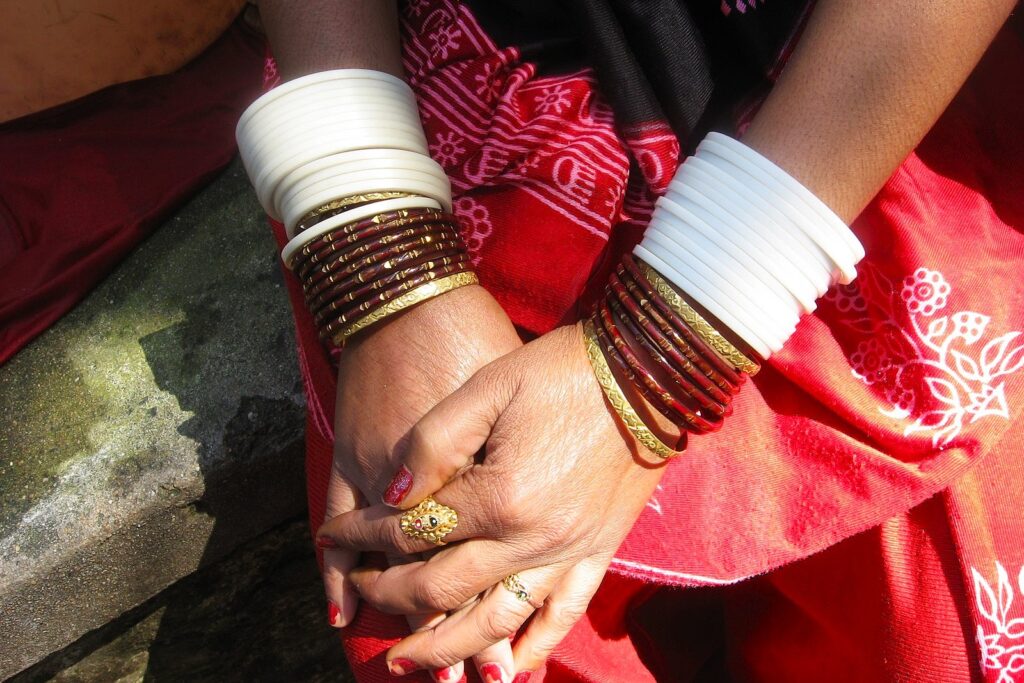
Wrist Bangles
Special Traditional Style of Bangles
Hathi ke Dant ke Chooda
Ivory bangles traditionally made from elephant tusk (now banned, replaced by bone, acrylic, or resin).
Lac Jewelry of Rajasthan
Lac is the common base used in many forms of jewels. Enamel work with gold, silver, precious and semi precious stones, beads and small mirrors of different shapes are studded on hot lac bangles and other jewelry forms to create such stunning colorful designs. Depending on the material used the prices vary. You will find all married women wearing dozens of them. Their wrists are covered fully, especially the new brides.

Lac bangles from Rajasthan
Rajasthani Silver Jewelry
They are known for their love for silver jewelry. The ornaments signify their marital status. Women adorn colorful chunky and weighty jewelry, many of them decorated with coins, beads and shells.
Exquisite designs in their jewelry are a rage not only for the Indian ladies but also for foreign lady tourists. I too picked up some pieces of ornaments. 🙂
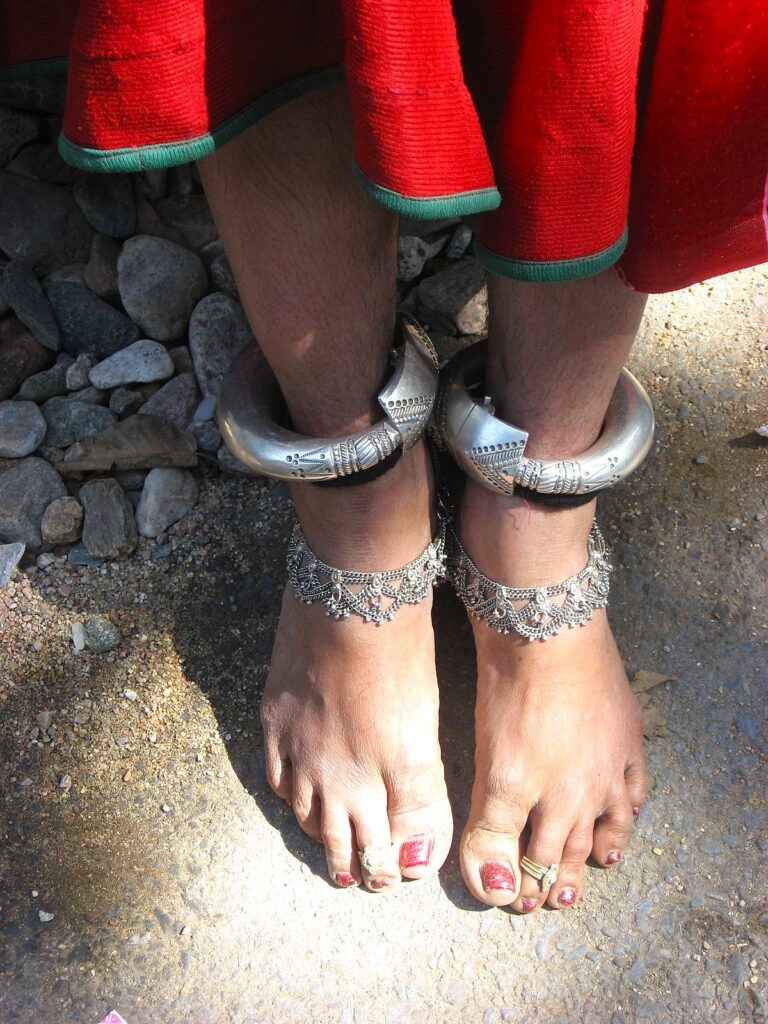
Todi Payal_Silver Anklets – Traditional Rajasthan Jewelry
I noticed the woman was wearing Todi Payal, Jhanjar and toe rings. It is said todi or kada payal are extremely heavy, sometimes weighing over a kilo each! (I wonder how they could walk with those heavy anklets.)
In Rajasthan, the thick solid silver anklets traditionally worn by women are commonly called Payal / Pajeb. It is the general term for anklets in India. In Rajasthan they are usually heavy and made of solid silver and they are known by these different names.
- Kada Payal – refers to the thick, rigid anklet form, more like a solid bracelet for the ankle.
- Jhanzar / Jhanjar – anklets that may have small bells attached (though not always solid).
- Todi – in some Rajasthani communities, especially rural areas, the solid, circular heavy anklets are called todi. These are very thick, almost resembling cuffs for the ankle.
- Kade ki Payal – literally “anklet in the style of a bangle/bracelet,” often used for the chunkier types.
Traditionally, these anklets were made of pure silver, both as ornamentation and as a way to store family wealth in a portable form.
Most famous Jewellery of Rajasthan
Sadly I missed clicking Rakhdi/Borla, the most famous jewellery of Rajasthan. Rakhdi/Borla is the traditional Rajasthani head jewellery. Locally it is called Maang tikka. Elsewhere in India you will find this to be a flat piece but in Rajasthan it is spherical or bell-like in shape. Most of the women were in veils, not sure if they worn one or not.
Nath or Nathni (nose ring and chain) is another popular jewellery styles worn by Rajasthani women. I didn’t find the local women wearing that. It is a popular jewellery piece worn by Bollywood heroines in movies.
Kanthi or Aad necklace is a unique design very typical of Rajasthan. Very gorgeous style, Rajput necklace, they are worn by the rich today in weddings and were worn by Maharanis (queens) in the past.
Traditional Rajasthan Jewelry for Men
Men of Rajasthan too wear jewellery, mostly in their ears. Rajas and Maharajas of Rajasthan have adorned jewels in the form of rings, brooches, chains around neck and more. Today civilians don’t wear such bling anymore but they do sport minimal jewelry pieces. You can see many of them wearing big thick bangles called kadas. Some wear simple ear rings.
Do you know why men in Rajasthan (and in many other parts of India) wear ornaments? They carry cultural, social, and even medicinal significance. Earrings symbolized valor, pride, and status among Rajput men and other Rajasthani communities. They were often made of gold or silver, which reflected the wearer’s social standing and clan traditions.
I found their pagris (turbans) very interesting. Practically their head gear serves the purpose of protecting their head from the scorching heat. It is also the most important part of their attire. The color of the turban and the style of tying it indicate his caste and the region to which he belongs.
Tying the turban is a specialized art. There are professional tiers who make roaring business during the marriage season and festival times just by tying pagris.
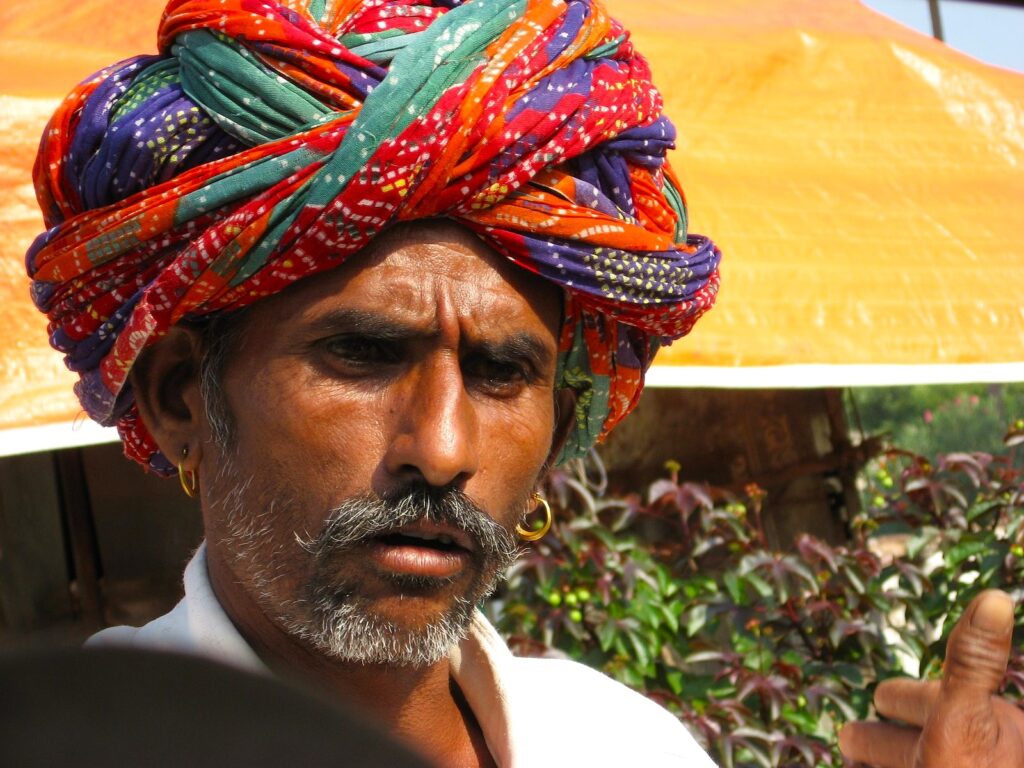
Rajasthani Man with Murki earrings
The ear-piercing ceremony, called Karnavedha, is performed in childhood, both for boys and girls. It is one of the ancient Hindu samskaras (rites of passage) marking entry into society and spiritual life. There are several sections in society who believe earrings ward off evil and provide protection from negative energies. It is interesting to note some designs carry spiritual symbols, linking them to deities or ancestral traditions.
I am tempted to add a science note here:
- Ayurveda suggests that piercing the earlobes stimulates marma points (vital energy points) which are connected with eyesight, reproductive health, and mental clarity.
- Silver earrings were more common Rajasthan’s desert environment, since silver was believed to have cooling properties, helping the body adapt to extreme heat.
This little boy very willingly posed for me, struggling to tuck his pagri in, the right way. He was chattering happily and was eager to know from which part of the country I came. When I asked him, “Do you go to school?”, “Jata hoon na (Yes I do go)” he replied emphatically.
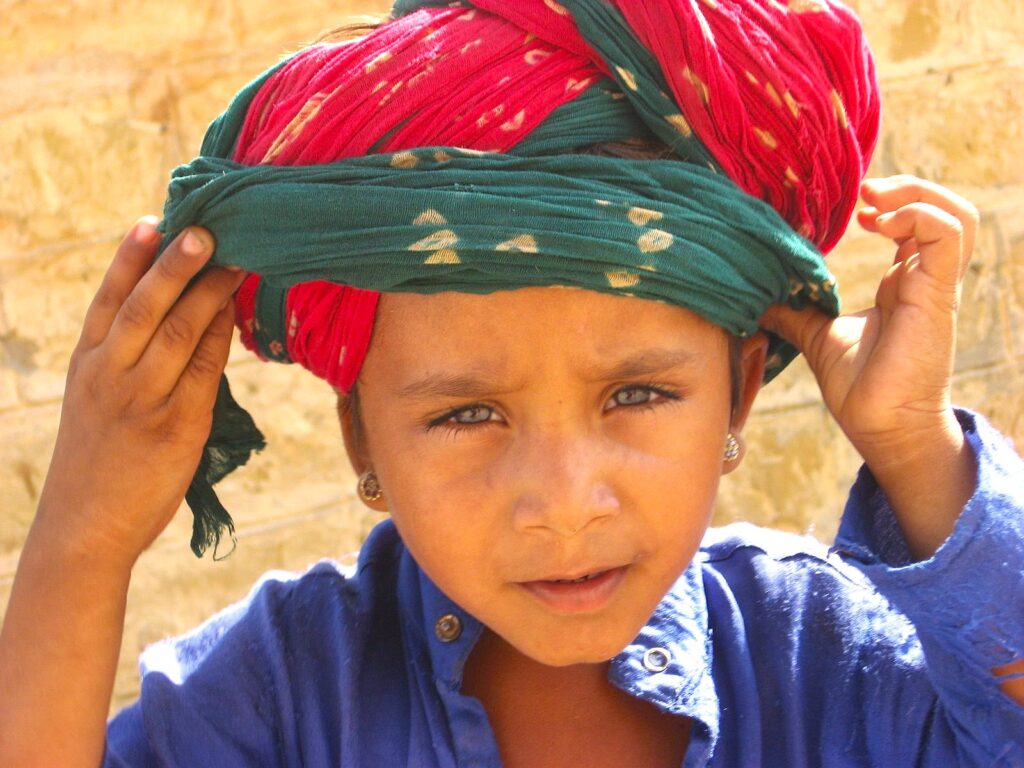
Boy adjusting pagri
Look at the ear studs he is wearing, it had colorful stones, may be rubies.
Pin this for later…
If you have liked this post on Traditional Rajasthan Jewelry you can save and share this with the buttons to your left in this page.
(This post was first written on Nov 6th, 2008.)






Impressive, wearing jewellery from toes to nose, wherever possible..!!
They are very colorful. 🙂
OH I love these photos! Rajasthan is one of the places that I have been dying to get to for ages!!!
Ohhhhh! This post is making me ache. I so want to visit India. Well, really, I want to live there. Or, at a minimum, visit for 3 months. I have wanted to go there since I was 8 years old. These pictures and explanations are amazing. Thanks so much for sharing. You could feature these in a magazine. WOW!
Love the color and the fabulous jewelry!!
I love the colors. Sometimes I think the U.S. has the most drab color palette when it comes to clothing. You’ve captured some wonderful pictures. Although the one with the little boy is too precious. 🙂
The boy with the turban is cute! Looks like he is quite good at putting on the turban.
You captured some beautiful photos. I love how colorful the clothing is, and the turbans. Your explanations are great. And, that little boy is so handsome. I too, think so much jewelry would be so uncomfortable to wear while doing activities.
i truly admire the simple rajasthani’s for preserving their traditions and culture..
fascinating photos
Wow! They are all gorgeous! The colors are amazing. Great pictures and story to explain.
What wonderful shots. You posts are always filled with so many interesting sites as well as good text. It’s a pleasure to come here.
Beautiful photos! The colors are gorgeous!
love the ankle adornments!
I look forward to visiting your blog on a Friday and tasting another aspect of Asia!
Lovely photos, as always.
Nice photostory Indrani. Thanks for sharing.:)
so vibrant!
The vivid clothing and ornamental jewelry is really breathtaking!! I LOVE seeing through your eyes…
I love these colorful cloths and what beautiful jewelry !
That was just beautiful!
Wow! What amazing pictures. So much jewelry!
I just love the little mini trips I get to go on every week…and I know I say that all the time, but I do!! The colors and personalities in your pictures are just beautiful!!
That is a beautiful woman. But when I saw the hands it took a moment for me to realize that they belong to the same person, they look much older than het face. She must work hard!
wonderful post with excellent pictures!!
i jus love visiting yr blog. there is so much to find out about beautiful India
Lovely pictures. I am enamoured of those anklets!
love the post, Indrani..what brilliant colours ..u bring back memories of Rajasthan and make it so vivid and lively..and now, I feel like buying some silver jewellery..I always like silver to gold
You did a nice job by showing these fotos….Your words were also perfect….I think this is the most vibrant state of our country….
Nice explain for those beautiful photos…
Have a good day !
Colourful! and that’s an understatement.
I can’t imagine daily life with all that jewellery on! But those women – they bear the heat, carry water long distances, besides lots of other duties?
But those women are savvy – they have added nail colour as well! 🙂