Visiting Aihole: Complete Travel Guide for Temples and Itinerary
Planning to visit Aihole? This Aihole travel guide will help you understanding what makes this Karnataka village extraordinary. Known as the “Cradle of Indian Temple Architecture,” Aihole isn’t just one temple or another temple town—it’s where Indian architectural innovation was born.
I visited Aihole in 2018 expecting ruins. Instead, I found a living museum with over 120 monuments spanning the 4th to 12th centuries, showcasing the early Chalukyas’ architectural experiments. The apsidal Durga Temple, the rock-cut Ravana Phadi cave, and scattered temple clusters reveal design evolution that influenced sacred structures across India.
— Indrani Ghose, travel blogger | Updated Nov 2025
Even with tourists milling about, it was the quiet undercurrent of the place that really took hold of me. Unlike crowded heritage sites, Aihole lets you explore at your own pace. As part of the UNESCO-nominated Badami–Aihole–Pattadakal circuit, this village offers history enthusiasts a close unfiltered glimpse into South India’s golden age.
Aihole rewards every kind of traveler—with space to breathe, think, and admire its architecture without the usual crowds.
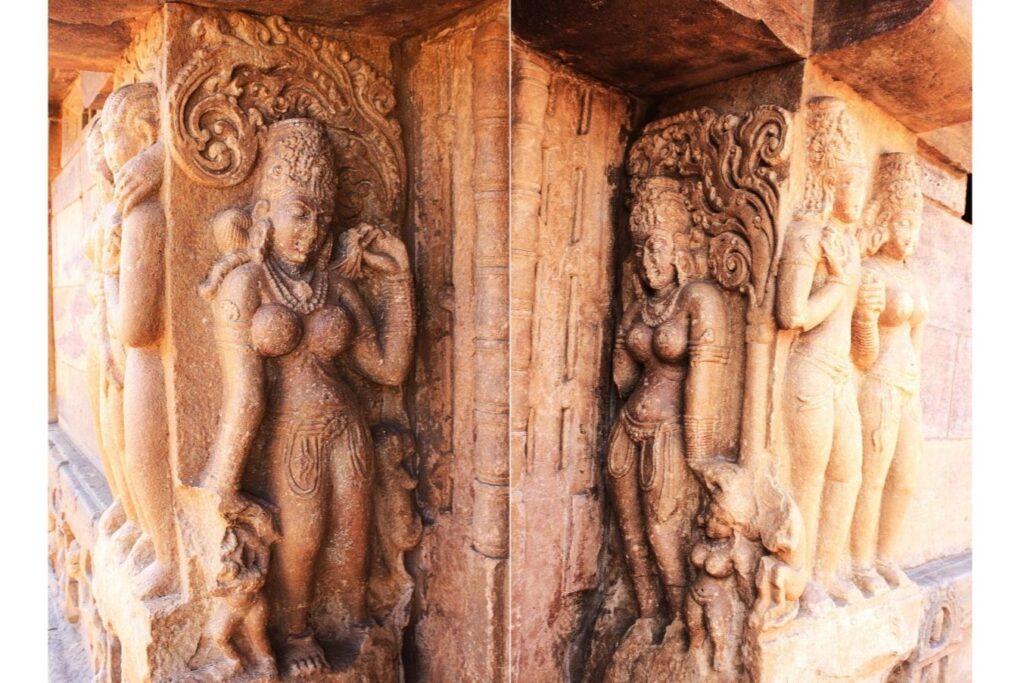
Huchchappaya Matha temple Aihole – Statues of Ganga and Yamuna
Why Visit Aihole?
Historical Significance
Aihole served as the early Chalukya dynasty’s capital from the 4th to 8th centuries, making it the birthplace of South Indian temple architecture. These monuments are architectural laboratories where builders tested styles that shaped temples from Ellora to Mahabalipuram.
Authentic Heritage Experience
Unlike Hampi’s crowds, Aihole remains refreshingly uncommercialized. During my visit, I spent hours wandering temple clusters with only occasional groups of students and researchers.
Photographers love the golden-hour light on weathered sandstone, while architecture enthusiasts can study Nagara, Dravida, and hybrid styles in one location.
For travelers seeking substance over spectacle, Aihole delivers quietly profound discoveries.
Quick Travel Facts
Location: Bagalkot district, North Karnataka (470 km from Bengaluru)
Monuments: 120+ temples and shrines (4th–12th century Chalukya period)
Must-See Highlights: Durga Temple (apsidal plan), Lad Khan Temple (oldest), Ravana Phadi cave, Meguti Jain Temple
Best Time to Visit: October to March (15–30°C, dry weather)
How to Reach Aihole: 35 km from Badami, 10 km from Pattadakal; nearest railhead Badami (BDM)
Entry Fee: ₹25 for Indians, ₹300 for foreigners (ASI-protected site)
Recommended Duration: 3–4 hours for main temples
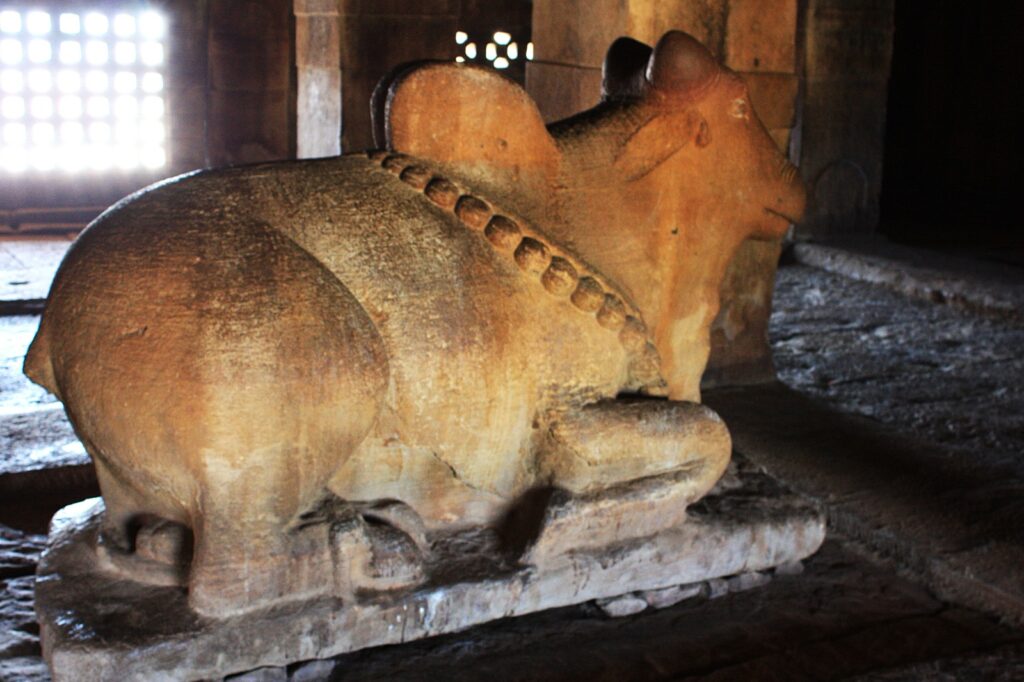
Nandi Shrine inside Lad Khan Temple
History of Aihole: The Laboratory of Architecture
Why Aihole Is Called the Cradle of Temple Architecture
Aihole earned its title as the “Cradle of Indian Temple Architecture” through centuries of architectural experimentation. Between 450 CE and 1200 CE, the Chalukya dynasty transformed this settlement into India’s first temple-building laboratory—a place where artisans tested structural concepts before they became iconic monuments.
Walking through Aihole’s temple clusters, I noticed something remarkable: no two temples looked identical. The Durga Temple’s rare apsidal (curved) plan sits beside the Lad Khan Temple’s flat-roofed design. The rock-cut Ravana Phadi cave contrasts sharply with free-standing structural temples nearby. This diversity isn’t accidental—it’s deliberate experimentation with Nagara (North Indian) and Dravida (South Indian) styles.
From Experiment to Masterpiece
These early prototypes evolved into the refined temples of Pattadakal (14 km away), now a UNESCO World Heritage Site. Archaeologists have traced direct stylistic connections between Aihole’s experimental shrines and later South Indian temple architecture from Mahabalipuram to Thanjavur.
History Written in Stone
The 634 CE Meguti Temple inscription by Pulakeshin II provides crucial historical evidence—mentioning his military victories and establishing firm dates for Chalukya rule. The weathered inscription said more than any guidebook could. Aihole is a place where stone records how India’s culture grew and changed.
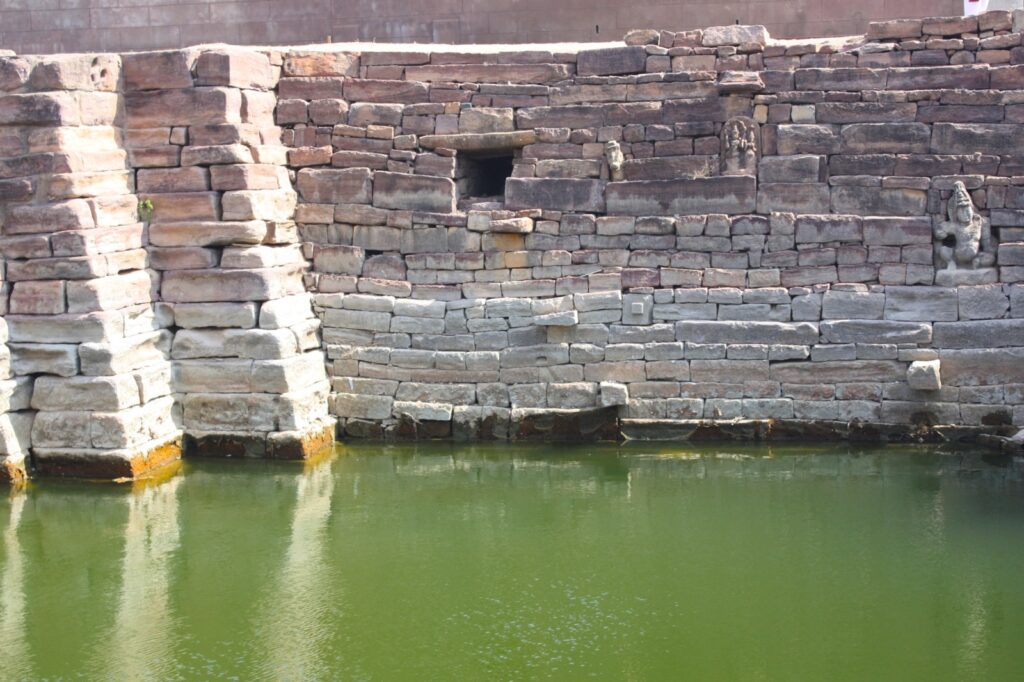
Stepwell in Aihole located between Chakri Gudi and Gaudara Gudi Temple. There are carvings on the stone blocks.
Top Places to Visit in Aihole
This Aihole travel guide covers the must-see temples and hidden clusters that make this Karnataka heritage site unforgettable.
Durga Temple: Aihole’s Architectural Icon
(Visit Duration: 30–40 minutes)
The Durga Temple is the most photographed monument in Aihole, and for good reason. Its unique apsidal (curved) plan—resembling an elephant’s back—is rare in Indian temple architecture. When I first walked the colonnaded corridors wrapping around the sanctum, I understood why archaeologists call this a “breakthrough design.”
Within the apsidal sanctum, lies the quiet secret—the architectural DNA of South Indian sacred structures. There is a T-shaped stepwell nearby.
The Name Mystery
Despite its name, this temple isn’t dedicated to Goddess Durga. “Durga” derives from durg (fortress), referencing the nearby fort wall. Scholars believe it honored Surya (Sun God) or Vishnu, based on surviving iconography and the temple’s eastward orientation.
What Makes It Special
The 7th-century structure showcases Chalukya experimentation with Nagara (North Indian) superstructure atop a Dravida (South Indian) base—a hybrid style perfected later at Pattadakal. Intricate carvings depict Vishnu avatars, Shaiva legends, and mythical makara (crocodile-like creatures).
Photography Tip: Visit during early morning (7 AM to 9 AM) when soft light illuminates the western façade. The curved colonnade creates stunning shadow patterns perfect for architectural photography.

Durga Temple Aihole Karnataka
Lad Khan Temple: The Timber-to-Stone Transition
Visit Duration: 20 minutes
The Lad Khan Temple (late 5th century) is Aihole’s oldest datable structure and looks radically different from typical temples. Its flat roof, robust square pillars, and open mandapa (hall) reveal a critical evolutionary moment: artisans translating wooden architecture into permanent stone.
Architectural Significance
Named after a Muslim noble who temporarily occupied it (not its original dedication), this Shiva temple shows clear Indo-Aryan influences. The two-story structure with an internal shrine on the upper level represents early experimentation before the shikhara (tower) became standard.
Inside the dimly lit interior, my guide drew my attention to massive stone beams mimicking wooden joists. They are proof that builders were still thinking in timber construction terms – explained my guide. The simple ornamentation contrasts beautifully with the ornate Durga Temple, illustrating Aihole’s role as an architectural laboratory.
Insider Tip: Look for the small Nandi shrine inside the main hall, added during later Shaiva modifications—evidence of religious evolution spanning centuries.
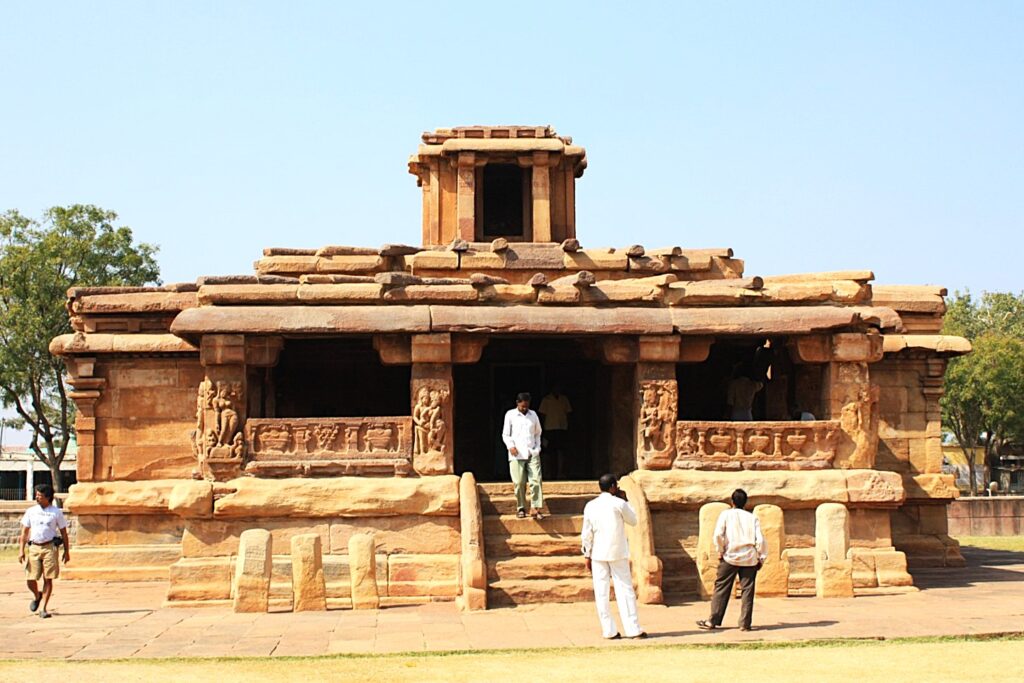
Lad Khan Temple Aihole
Ravana Phadi Cave Temple: Rock-Cut Masterpiece
(Visit Duration: 25 minutes)
Aihole’s only major rock-cut monument, Ravana Phadi Cave (6th century), carved from living sandstone, houses Karnataka’s finest early Nataraja sculpture. Standing before this dynamic Shiva panel—surrounded by celestial musicians and Parvati—I was struck by the energy captured in stone.
Connection to Badami
This cave temple served as a testing ground for techniques later perfected in Badami’s famous cave temples (35 km away). Notice the pillared veranda, the relief carvings of Harihara (Shiva-Vishnu combined form), and intricate bracket figures.
What to Look For
The sanctum contains a Shiva linga, while side panels depict Vishnu in various avatars. The ceiling retains faint traces of geometric patterns, suggesting it was once painted.
For photographers, the afternoon light (2 PM to 4 PM) penetrates the cave opening, creating dramatic shadows on the sculptures. This intimate space feels more like an artist’s studio than a grand monument—raw creativity frozen in time.
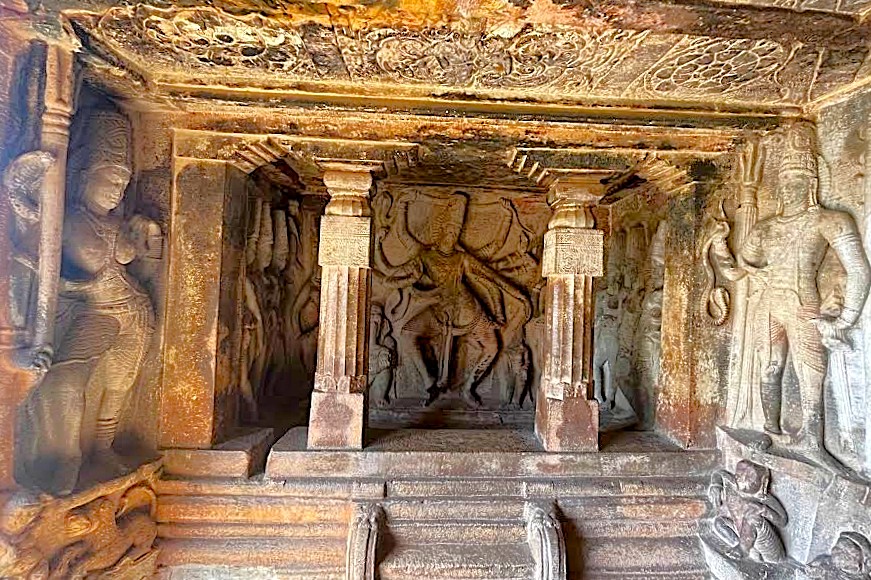
Ravana Phadi Cave Temple
Meguti Jain Temple: Hilltop History with Panoramic Views
(Visit Duration: 30 minutes (including climb))
Perched atop Meguti Hill, this Jain temple (634 CE) combines historical significance with Aihole’s best sunset views. The 10-minute stone stairway climb rewards visitors with panoramic vistas spanning the entire temple complex.
The Pulakeshin II Inscription
This temple houses one of India’s most important epigraphic records. The Sanskrit inscription by court poet Ravikirti documents Chalukya king Pulakeshin II’s military victories, providing archaeologists with precise dating for the dynasty.
The View
From the hilltop, you can spot the Malaprabha River winding through farmland, with temple clusters dotting the landscape like scattered jewels.
Practical Note: Visit near sunset (5.30–6.30 PM Oct–Mar) for both photography and cooler temperatures. The unfinished inner sanctum suggests construction was abandoned.
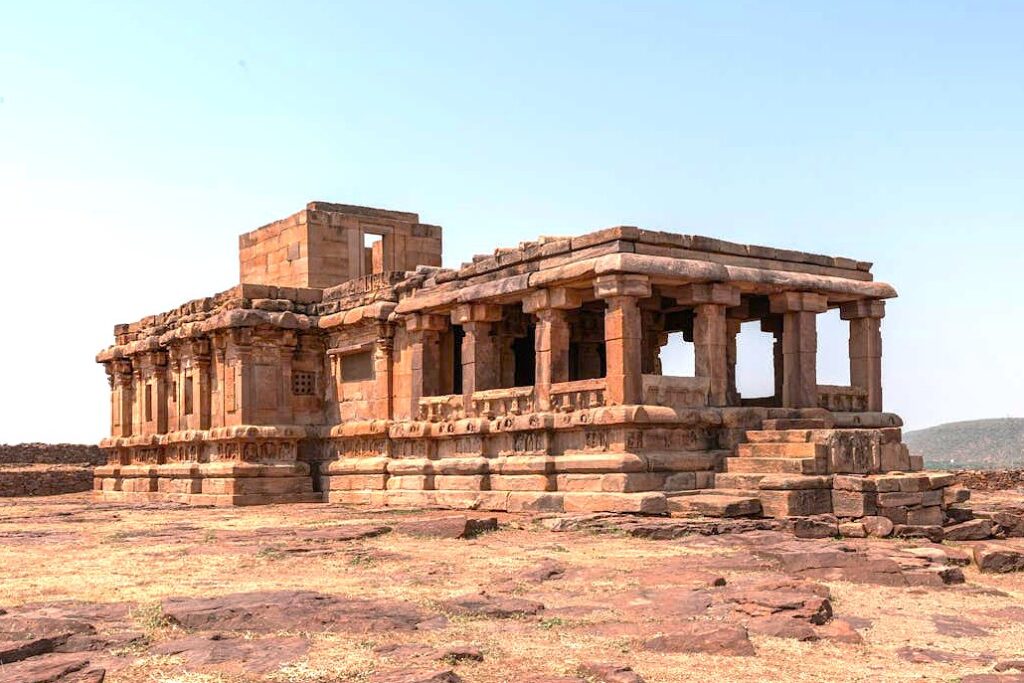
Meguti Jain Temple – Aihole
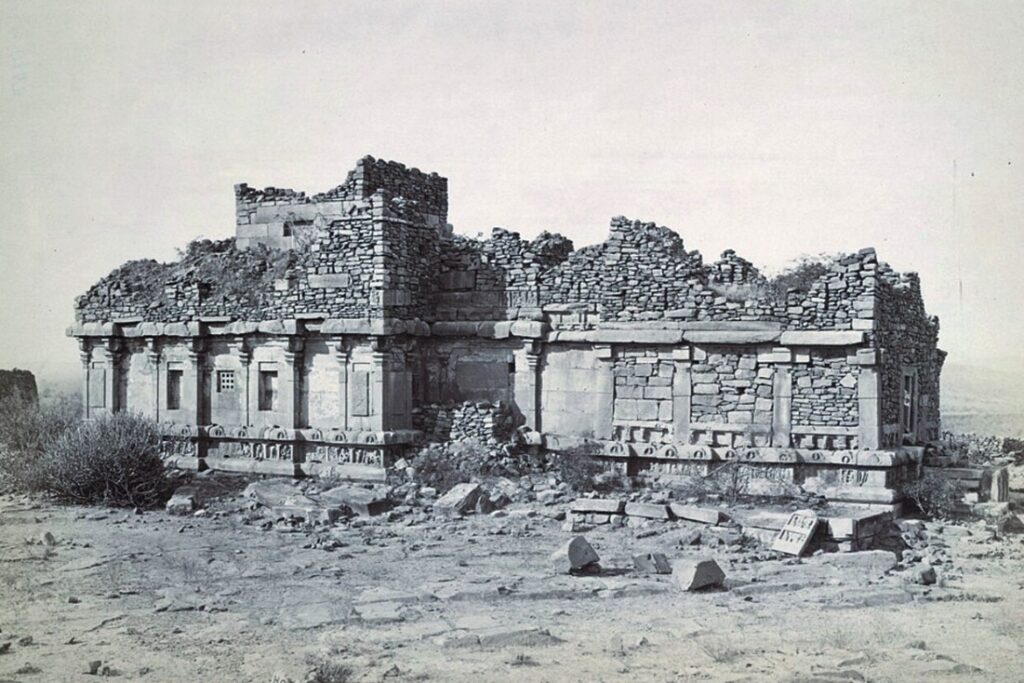
Meguti temple ruins from 1880s – By Ms Sarah Welch – CC0, https://commons.wikimedia.org/w/index.php?curid=109508359
This is a photograph of an archive 2D print published by Henry Cousens in 1885, now preserved in the British Library.
Huchimalli and Hidden Temple Clusters
(Visit Duration: 45–60 minutes for dedicated explorers)
Beyond the star monuments, Aihole’s lesser-known clusters reveal how artisans refined their craft daily.
Must-See Groups:
- Huchimalli Temple: Features early shikhara (tower) experiments—precursors to the towering gopurams of later South Indian temples
- Galaganatha Group: Five Shiva shrines along the Malaprabha River, showcasing variations in layout and pillar design
- Konti Complex: Seven small shrines demonstrating different sanctum orientations and entrance styles
For Time-Pressed Travelers: Focus on Huchimalli and Galaganatha if you have only 30 extra minutes. For dedicated heritage enthusiasts, budget 2 hours to explore all clusters with a knowledgeable guide.
These “draft temples” aren’t just secondary attractions—they’re the real laboratory where the Cradle of Indian Temple Architecture earned its title.
Huchchappayana Matha Aihole
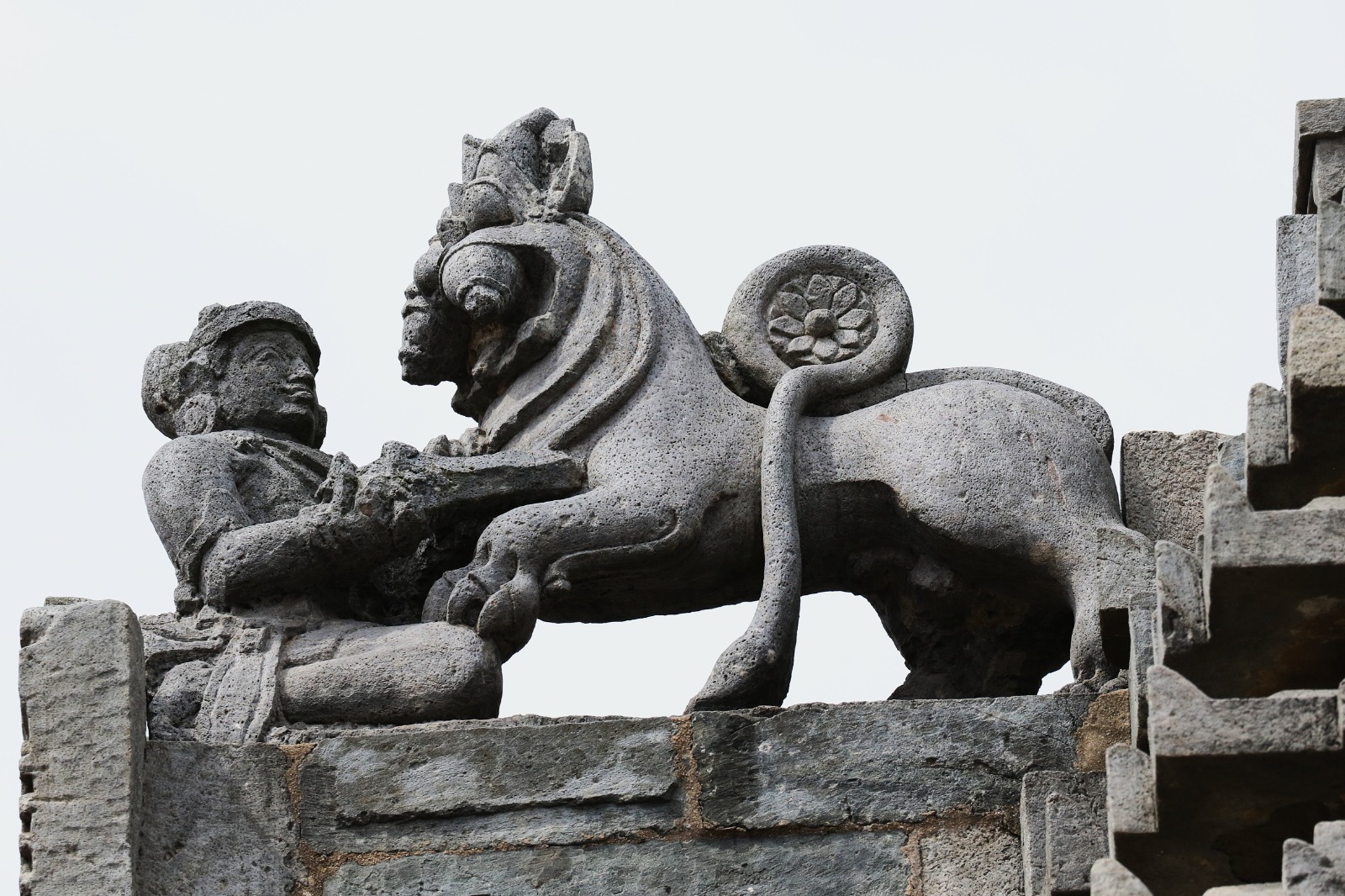
This has a temple and a matha (residence of monks). The carvings on the pillars and walls of this temple are exquisite. Notice the couple on right side of the door frame – the woman has horse’s head- indicating ‘love is blind’.
Women on the panels are sculpted forms of Ganga and Yamuna. Inside it isn’t lit well, but we could see in faint light the ceiling has good sculpted works. Take a torch along.
Pillars of the matha, a east facing shrine are plain.
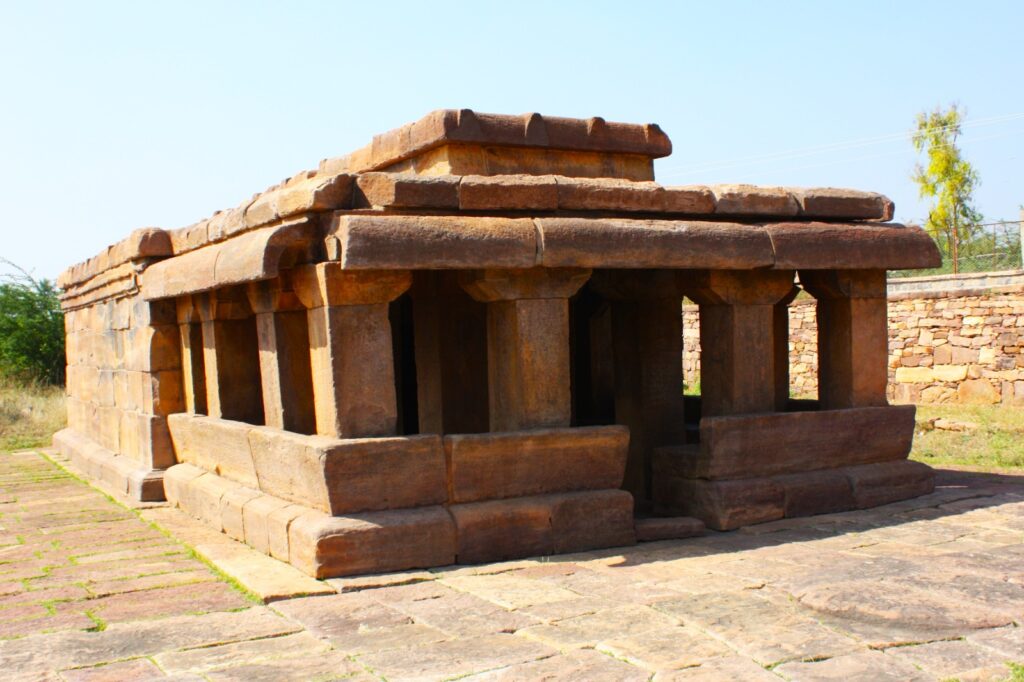
Huchchappaya Matha Aihole

Huchchappayana Temple – horse headed woman
Galaganatha Temples in Aihole Photo Essay
There must be at least 20 to 25 temples in various states of ruined condition within this complex. Not a single soul around, we explored this at leisure.
The idols are missing but they were all dedicated to Lord Shiva, the statue of Nandi at entrance proof of that. Shikharas missing, they seemed flat roofed.
Many of them have square plan with thick walls all around. Some had small window for ventilation and light.
-

- Galaganatha group of temples Aihole
-

- Galaganatha Temple – a richly sculpted Torana
-

- Galaganatha Temple – A damaged sculpture of Basavanna sits in the middle of a courtyard
-

- Galaganatha Temple – entrance to one of the temples
-

- Galaganatha Temple – most temples have no shikhara
-

- Galaganatha Temple – carved flanks besides the steps is a common feature to many temples of Aihole.
Beyond the Guidebooks: Hidden Gems in Aihole
Most Aihole travel guides end at the Durga Temple. But the village’s real magic lies in corners where guidebooks don’t venture.
During my visit, I spent an unplanned hour wandering these clusters with only a local guide and a farmer tending his field nearby. My guide pointed out ‘how each temple contributed a piece to the architectural puzzle—some testing circular sanctums, others experimenting with pillar proportions.’
Chakravarti Temple Complex: The Forgotten Cluster
Located 500m southwest of the Durga Temple (ask locals for “Chakravarti gudi”), this group of seven shrines sees maybe five visitors daily. When I explored here in 2018, the only sounds were wind through neem trees and distant temple bells.
The unpolished carvings show artisans’ working drafts—rougher than the main temples but more honest. One shrine has an incomplete ceiling panel, frozen mid-creation for 1,200 years.
Access tip: Follow the dirt path behind the Ravalphadi Museum; it’s a 10-minute walk through farmland.
Malaprabha Riverbank at Sunset
The riverbank near Galaganatha temples transforms into a local gathering spot at dusk. Women wash clothes, children play, and the silhouette of temple spires against orange skies creates scenes no tourist brochure captures.
Photography note: The best vantage point is from the eastern bank (6–6.30 PM, Oct–Mar), where you can frame temples with the river in the foreground.
Early Morning Temple Walks
Arrive at the main complex by 6.30 AM, before tour buses. You’ll encounter locals offering prayers and flowers at some of the temples, though majority of them aren’t worshipped any more.
Local etiquette: If you witness rituals, observe quietly from a respectful distance. A simple namaste acknowledges the priests’ presence without intrusion.
For travelers seeking authentic experiences beyond standard itineraries, these hidden corners reveal Aihole’s dual identity: a world-class archaeological site and a working village where history breathes in everyday rhythms.
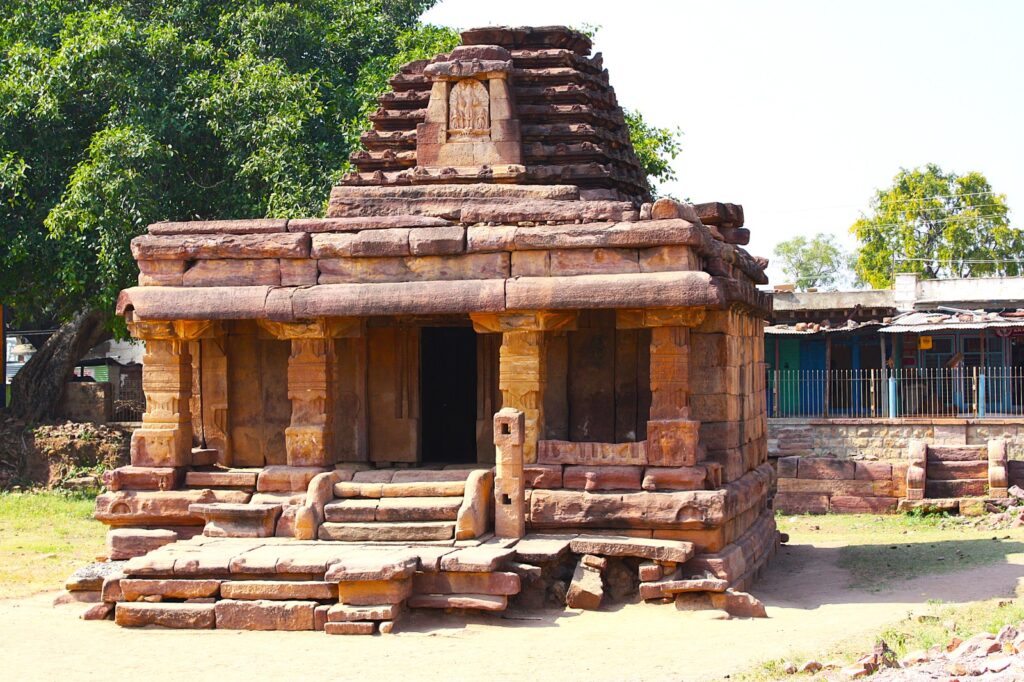
Badiger Gudi Aihole Temple
The Perfect 1-Day Itinerary: Badami, Aihole, and Pattadakal Circuit
Optimized Route: Badami → Pattadakal → Aihole
For a one-day Chalukya heritage tour covering all three Karnataka UNESCO sites, this reverse sequence maximizes your time and ends with Aihole’s peaceful atmosphere.
6.30 AM – Start at Badami (Tour time:3.5 hours)
Begin at Badami’s cave temples in cool morning light. Explore all four caves (allow 2 hours), then choose either the fort climb OR a quick Agastya Lake walk (1 hour). Starting early means fewer crowds at Cave 3’s stunning Vishnu panel. The morning sun illuminates cave interiors beautifully—perfect for photography without harsh shadows.
For detailed cave descriptions and fort trekking tips, see my Complete Badami Travel Guide.
10.30 AM – Drive to Pattadakal (Travel distance: 22 km)
Reach Pattadakal UNESCO World Heritage Site by 11 AM. Spend 2.5 hours exploring the Virupaksha, Mallikarjuna, and Papanatha temples—the perfected fusion of North and South Indian styles. The site’s compact layout makes it efficient to cover.
My Complete Pattadakal Travel Guide includes monument-by-monument photography angles and historical context.
1 PM – Lunch Break (1 hour)
Stop at Hotel Badami Court or local dhabas between Pattadakal and Aihole for a proper lunch. Essential for the afternoon ahead.
2 PM – Aihole for the Afternoon (Tour time: 3.5 hours)
Arrive at Aihole, the Cradle of Indian Temple Architecture, for an unhurried exploration. Cover the Durga Temple, Lad Khan, Ravana Phadi cave, and Meguti hilltop by 4:30 PM. Then explore hidden clusters like Huchimalli or Galaganatha as evening light softens (10 km from Pattadakal, 20 minutes).
5.30 PM – Sunset at Aihole
End your day watching golden light wash over temple spires from Meguti Hill—a peaceful conclusion to your architectural journey through 1,500 years of Chalukya genius.
Pro tip: Book a Badami-based hotel to minimize morning drive time. Combined ASI tickets (₹40 Indians/₹600 foreigners) cover all sites. October–March offers ideal weather; carry 2L water per person.
Traveler’s Tips
- Wear comfortable shoes: temple clusters require walking and climbing.
- Carry water and snacks: facilities are limited near Aihole.
- Best photography: sunrise at Aihole, sunset at Badami.
- Respect local customs: many shrines are still active places of worship.
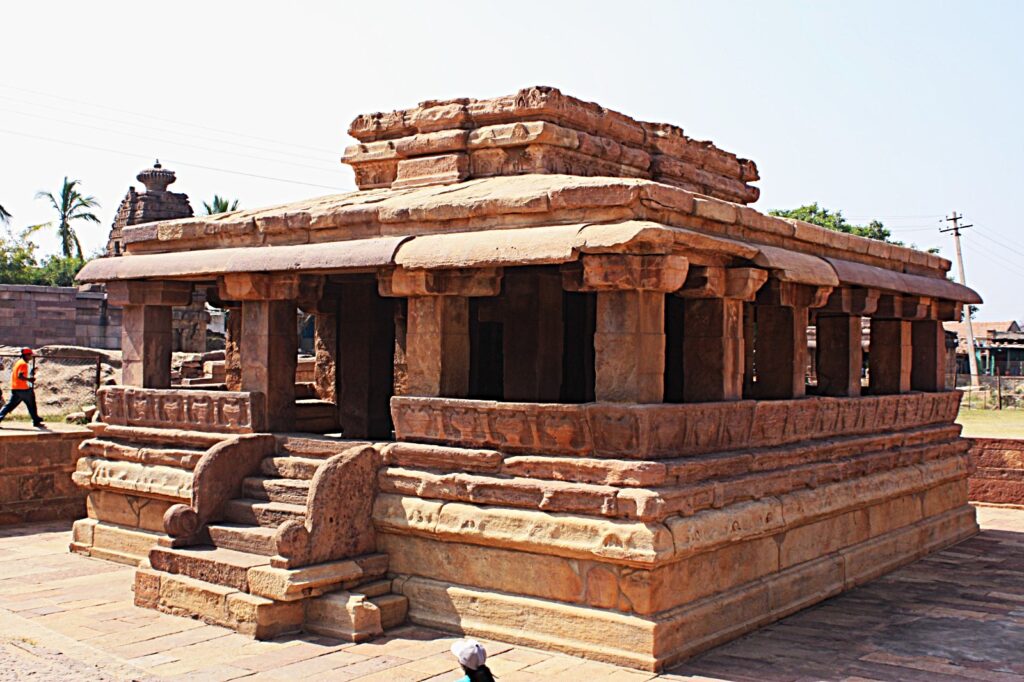
Lesser known temples of Aihole – Gaudargudi
Frequently Asked Questions About Aihole
Q1. Why is Aihole called the Cradle of Indian Temple Architecture?
Aihole earned this title because Chalukya artisans experimented here with over 120 temples between the 4th–12th centuries. These prototypes later inspired the grand monuments at Pattadakal and beyond.
Q2. How many temples are there in Aihole?
There are more than 120 temples, ranging from rock-cut caves to early stone shrines. When I visited, I felt like I was walking through an open-air museum of Indian architecture.
Q3. How much time is needed to explore Aihole?
Plan 3.5 to 4 hours to explore Aihole properly. This includes visiting the main temples (Durga, Lad Khan, Ravana Phadi, Meguti) and 1-2 lesser-known clusters like Huchimalli or Galaganatha.
Q4. What is the best time to visit Aihole?
October to March offers pleasant weather for exploring. Summers can be hot, so mornings and evenings are better for photography and sightseeing.
Q6. How far is Aihole from Badami and Pattadakal?
Aihole is about 35 km from Badami and 10 km from Pattadakal, making it easy to cover all three in a single day itinerary.
Q7. Is Aihole crowded like Hampi?
No, Aihole is much calmer and less commercialized. I found it peaceful, with fewer tourists, which makes it perfect for travelers who enjoy slow exploration and authentic village settings.
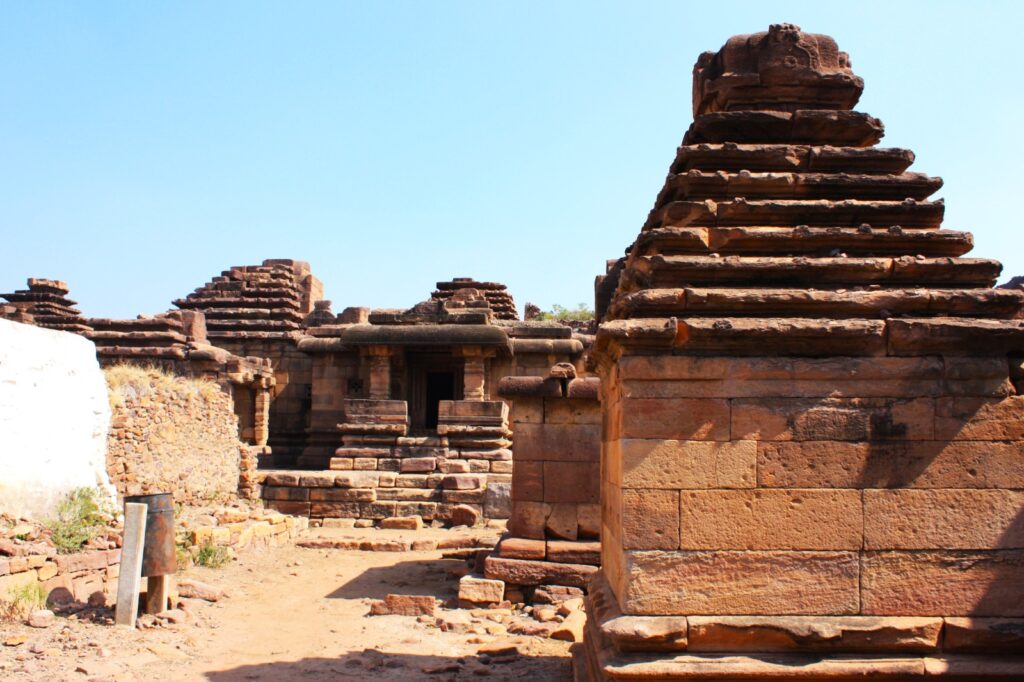
Charanthi Matha is a group of Jain temples dedicated to Jain Thirthankaras, located on the banks of the Malaprabha river in the heart of Aihole
Conclusion
Aihole is where India’s temple architecture took its first breath—a place where stone became poetry and experiments became legacy. Walking through its 120+ monuments, from the iconic Durga Temple to hidden clusters along the Malaprabha, I experienced history not as a distant memory but as a living conversation between past and present.
Whether you’re an architecture enthusiast, photographer, or simply a curious traveler, Aihole offers something rare: the chance to witness creativity in its rawest form. Combined with Badami and Pattadakal, it completes one of India’s most rewarding heritage circuits.
Have you visited the Chalukya monuments? Share your favorite temple or travel tip in the comments below!
Pin and Save this for Later
About the Author
 Indrani Ghose is a cultural travel writer and heritage documentation specialist with over 15 years of experience exploring and writing about temples across India and Southeast Asia. Having visited over 150 sacred sites, she brings both scholarly depth and personal narrative to heritage travel writing.
Her work has been published in Lonely Planet, The National (UAE), Whetstone Asia, Deccan Herald, and various architecture and heritage journals.
Connect with Indrani: Follow Indrani on Instagram | Twitter | Facebook for heritage travel insights, photography tips, and offbeat destination discoveries.








This is the post I was looking for . Actually somebody write a comment on my post “http://yogi-saraswat.blogspot.in/2017/02/bateshwar-temples-morena.html” that same cluster of temples is found in Aihole too and since then I was looking for it . Beautifully narrated post as always Indrani ji . I would be happy if you visit my post and compare both places.
The number of cluster rocks!!
Yes, the U shape is similar to parliament building! The place looks delight and neat, must appreciate ASI to make this place more worth. nice post indrani!
This is really amazing. 120-130 temples in a cluster with such beautiful sculptures must be great experience visiting… Nice Post!
information with photo. nice work.
That was some new information about the old world. The inspiration for the Parliament Building is amazing.
So much of untold history lying around waiting to be dusted and peered into. Thank You for having the eye for that, that which make us see too.
130 temples! I could spend all day roaming. Thanks again for sharing.
I got something for you at my blog. Kindly check it out when you have time.
Another Amazing post!
Indrani, your posts are simply invincible…
Incredible photographs along with informative line…Great work!
Great builders of the past and their works are surely a testimony of their skills.
Once again, you have brought history alive with your words and pictures. Thank you.
Quite a well thought out write up and pictures…It's informative and beautiful…loved it…thank you for sharing India with us.
Your Canadian friend
I am always amazed at the work of the peoples from our past.
Very intricate !
Beautiful side of the world
So lovely sculpture,
its so special :)))))
Those temples are very beautiful!!!
Thanks for the fantastic shots
and your nice words.
I always enjoyed your post:)
Its here 32grC pfffff…….
so hot weather, tomorrow 34grC 🙁
greetings
Kareltje =^.^=
Anya 🙂
oh lovely.. Indrani!! what a beautiful post. I wish I lived in India… I hope to visit this place some day!
Wow! I do wish they include it. It deserves to be, that is why. I am amazed and fascinated with such splendid works of art that bore witness to a time or part of the culture that has left its mark in eternity. I would love to visit these temples.
Great pics…..
Thanks for sharing
Beautiful. You bring us to the most incredible places.
the world is full of wonderful places that we can only see through the web…
Thank you for visiting my blog.
Great space! Very interesting pictures!
a really amazing structure. your country really has rich culture. i hope i can explore it sometime.
Hi Indrani,
That's too good… Aihole is one of my fav. places in the 'TO VISIT SOON' list… 🙂
My Travelogue
Now that's impressive architecture!
And so it should become a world heeeeeritage siste. Lovely feeling about it that comes across easily in the photos!
So beautiful. To think all this was conceived and constructed in ancient times!
that temple must've been truly amazing during its heyday!
been to this place many years ago and now we are researching on a trail ..good to revisit the place again through yr blog
I enjoyed see your wonderful photos of this historical place, Indrani. Thanks for sharing your world with us.
I don't like the sound of the horse sacrifice, but, what a fabulously interesting area.
So many amazing and unique temples! How wonderful to explore these old old artifacts.
India has a much older culture than we in the north of Europe have. Your buildings were already so sophisticated, when we still lived in huts. Thanks for sharing this post.
Hi Indrani!
Lovely place, wonderful post… One more site to put in my list!!
Blogtrotter is leaving Iceland, but before departing it shows you the incredible Blue Lagoon. Enjoy and have a fabulous week!
Such a rich heritage.
130 temples in a 5 mile radius? That's a lot of building and a lot of worshiping. But I guess it kept the local population busy with construction. Lovely photos.
They are beautiful Indrani, again reminding me of Angkor, Cambodia. Hope you are doing fine and well, hugs/M
that indeed is amazing! had heard of aihole before but this is the 1st time that i read about it in such concise yet exhaustive terms!thank you so much!
Thanks all of you for the lovely comments. 🙂
Hey Sujata, I travel during school vacations. 🙂
the first pic definitely looks like our parliament.and naming a temple after a muslim general does speak a lot about the unity of cultures in the past. Beautiful post once again..I keep asking you but havent got an answer yet..how do you get the time to travel so much?
Lovely high relief sculptures on this temple.
Lovely high relief sculptures on this temple.
6th century? So long already. They're well preserved.
It is always an adventure for me to see these magnificent Temples. As always I have enjoyed your posts.
Indrani, how I'd like to see in person these fascinating temples! What fine places!
I've enjoyed the whole sequence of images!
What a facinating place. I suspect one could spend days exploring. So very different than my Green Creek. The world is full of wonderful places.
130 temples? 3 hours in that heat? Huh, that makes me tired already but I would spend even more time there snapping away.
Love the rich history and cultures of your country. These beatiful sculptures and buildings are really interesting and beautiful. Thanks for visiting my blog.
Are you visiting my country? Hope you have fun if you come here. Do visit all the malls and places of interests. Hope the information in my blog helps you in your travel plan.
beautiful pics, and what work!!! really, theres nothing to beat ancient indian temple architecture and sculpture…..
Despite spending 5+years in Bangalore, I have not been able to cover very many places in Karnataka. But it's simply great to read about all those places.
Thanks for refreshing the memory. I had been long back.
That looks like yet another wonderful place. Thanks.
That is a nice trivia about the U shaped Durga temple being the inspiration for our Parliament building.
Indrani,
Wonderful post. I love to see photos of the temples. Beautiful shots. Hope Aihole makes a UNSECO heritage site.
my native place being Karnataka…its one place ive barely opened my eyes to…ur posts get the yearning out of me.
With so much intriguing architecture, no wonder you spent 3 hours there! Do your loved ones share your love for photography, Indrani?
You always manage to show us something really fascinating. India is so wealthy of historical reminders.
What an interesting place. The photos are fantastic, but I would LOVE to see this in person!
Yet another wonderful tour. So many temples in such a small area. I always like the carvings.
There are so many amazing places in India. Thanks for sharing. This post is really good.
There are so many amazing places in India. Thanks for sharing. This post is really good.
Those are beautiful temples. I love the bas relief sculpture.