The Joanina Library’s Secret Guardians: Bats at the University of Coimbra
Did you know that the University of Coimbra Library is home to a colony of bats that silently patrol its 18th-century reading rooms after dark? It took a while—and spotting a couple of them hanging behind shelves—for the fact to sink in that these unlikely custodians aren’t just folklore. They’re REAL.
These bats play a vital role in preserving priceless manuscripts by feasting on book-damaging insects. It’s one of the most enchanting and unexpected facts about this UNESCO-listed academic treasure in central Portugal.
Visiting the Biblioteca Joanina (the library’s formal name) is like stepping into a time capsule. Nestled within the historic campus of the University of Coimbra, this baroque masterpiece dazzles with gilded woodwork, soaring frescoes, and towering shelves of leather-bound volumes.
— Indrani Ghose, travel blogger | Updated Nov 2025
Entry to the library is ticketed, timed, and guided. Our tour took us through the quiet royal hall, past the academic prison cells preserved beneath the building, and into the bat-protected archives above. The scent of old paper and polished wood lingered long after we left—a sensory memory I can still conjure years later.
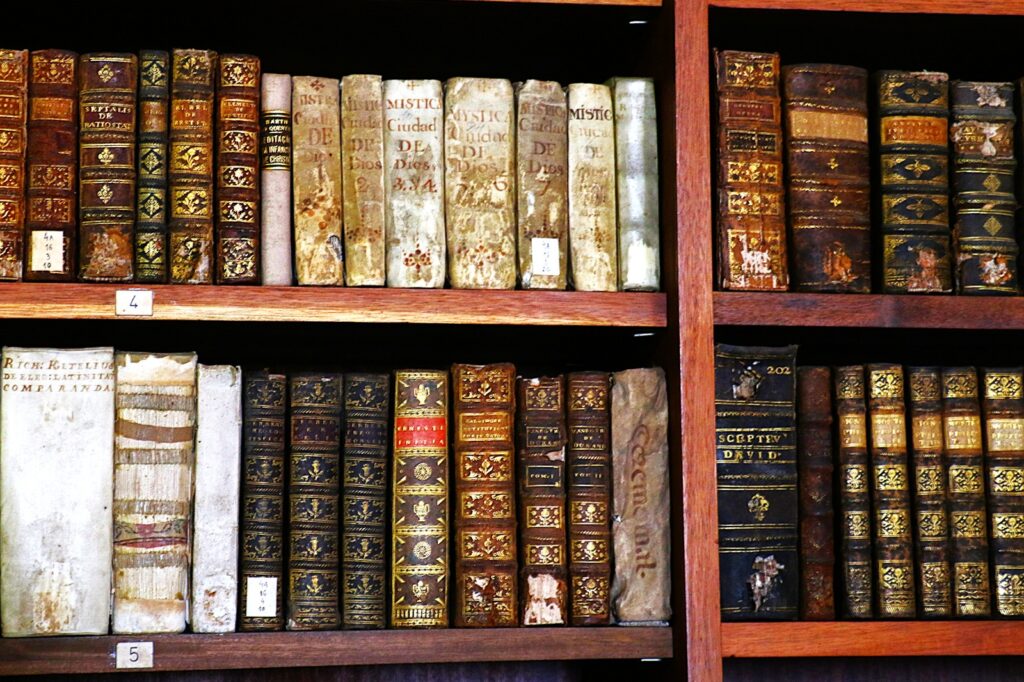
Books in Joanina Library Coimbra
I first visited the University of Coimbra Library in 2015 with my family during a summer road trip through Portugal. We’d heard whispers about the “bats at the library,” but nothing prepared us for the surreal beauty of the place or the thrill of actually spotting them. My first impression? Pure awe—followed immediately by my 14-year-old wondering aloud if the bats were watching us. Spoiler: they probably were.
The Biblioteca Joanina: History and Architecture
The Biblioteca Joanina, located within the historic campus of Portugal’s oldest university, is widely recognized as one of the most beautiful libraries in the world. It became an essential highlight of our University of Coimbra tour—and one we’d been eagerly anticipating.
This Baroque masterpiece was commissioned by King João V and constructed between 1717 and 1728. The king’s ambition was audacious: to build a library that would both safeguard centuries of wisdom and reflect the glory of his empire. Standing inside those gilded halls centuries later, I’d say he succeeded spectacularly.
The library’s three interconnected rooms showcase extraordinary craftsmanship. The interiors gleam with gilded woodwork, intricate ceiling frescoes, and walls lined with exotic jacaranda wood shelves imported from Brazil. These shelves hold over 60,000 rare volumes spanning subjects from theology and law to medicine and geography—books dating from the 16th to 18th centuries. The ceilings, painted with allegorical scenes celebrating science, art, and wisdom, create a sense of celestial grandeur.
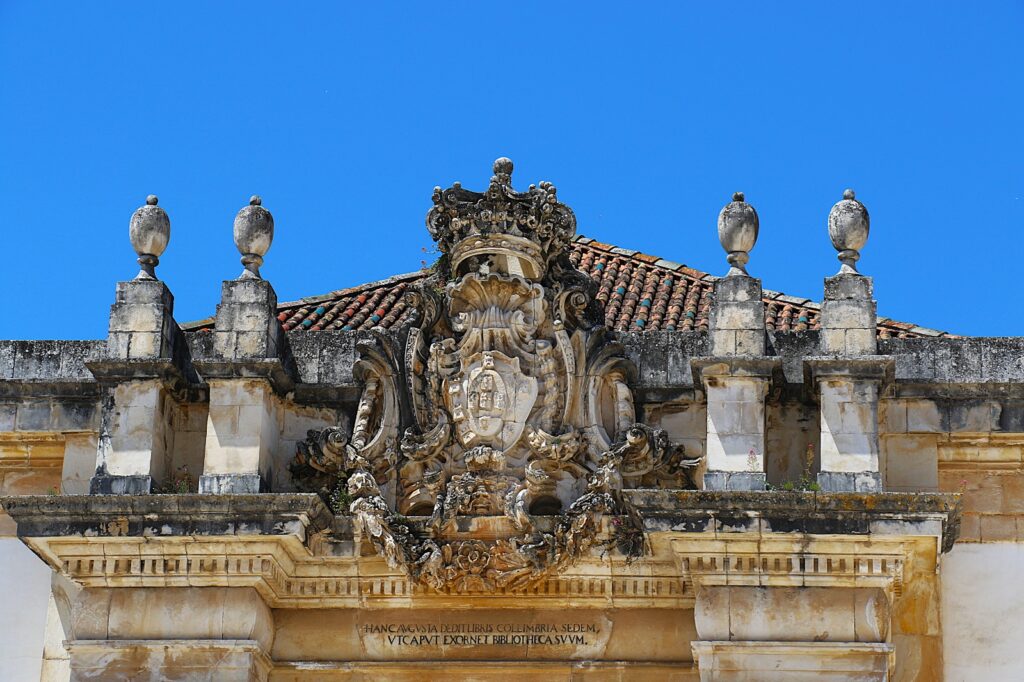
Biblioteca Joanina: Architecture
In 2013, the University of Coimbra – Alta and Sofia (which includes the Biblioteca Joanina) was designated a UNESCO World Heritage Site, recognizing its immense contribution to European intellectual history. The library continues to function as a research space for scholars with special access, while portions are open to visitors throughout the year under carefully controlled conditions to preserve the delicate environment.
Location and Visitor Information
The Biblioteca Joanina sits at the heart of the University of Coimbra campus, near other significant landmarks including the Royal Palace of Alcáçova and the Chapel of São Miguel. Visitors can easily access it on foot from the old town, or by taking the convenient university elevator from Baixa Coimbra (a tip that saved our legs during the uphill climb).
Entry is ticketed with timed slots, and I strongly recommend booking in advance—the number of visitors per session is strictly limited to protect the fragile manuscripts and maintain the atmospheric tranquility inside.

Queue outside Library-University of Coimbra campus
My First Moments Inside University of Coimbra Library
It was around noon when we stepped into this hallowed realm of books, following our scheduled ticket time. The transition from Portugal’s bright summer sunshine to the library’s dimly lit interior was dramatic. Our eyes took several moments to adjust to the deliberately low lighting—a preservation measure that protects the ancient books from damaging UV rays.
As our vision adapted, the golden glow from strategically placed lighting (designed to mimic the warm ambiance of historical candlelight) slowly revealed the library’s treasures. Gilded decorations caught and reflected light across polished wood surfaces. The faint, distinctive scent of aged parchment and centuries-old leather bindings filled the air. And there was a sacred silence—the kind that makes you instinctively lower your voice to barely a whisper.
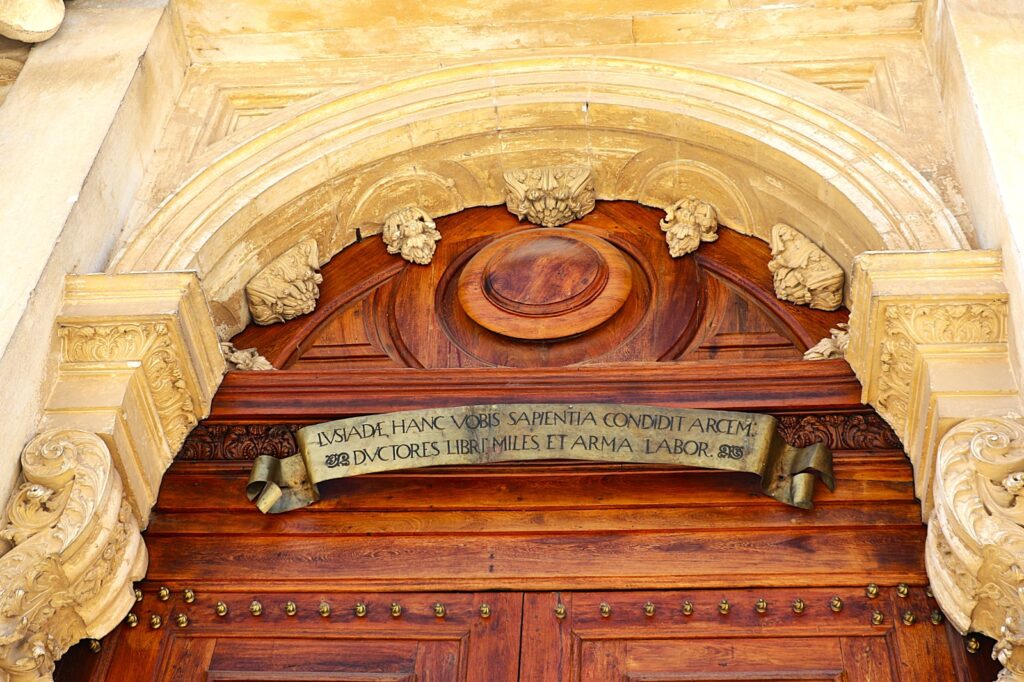
Door of University of Coimbra Library
I was genuinely afraid to even murmur my sense of wonder. The space commands reverence. You feel the weight of history in every breath, aware that countless scholars have stood in this very spot across three centuries, seeking knowledge from these same volumes.
And somewhere in the shadows above those towering bookshelves? The bats were sleeping, waiting for nightfall to begin their nightly patrol. We spotted two of them tucked behind volumes on the upper shelves—small, dark shapes that seemed impossibly tiny to be protecting such an enormous collection. They didn’t move a bit, and we would like to believe the shapes were that of real bats!
Why There Are Bats at the University of Coimbra Library
Tucked behind the towering bookshelves of the University of Coimbra Library lives a discreet but vital colony of common pipistrelle bats (Pipistrellus pipistrellus). These tiny, nocturnal mammals—each no larger than a human thumb—have been silently safeguarding the library’s priceless collection for centuries.
They feast on book-eating insects like silverfish, booklice, moths, and beetles that would otherwise wreak havoc on the fragile parchment and paper of the library’s 60,000+ volumes. A single bat can consume thousands of insects each night. By dawn, they retreat to their hidden roosts, leaving no trace—except for a few droppings that are swiftly dealt with by the morning cleaning crew.
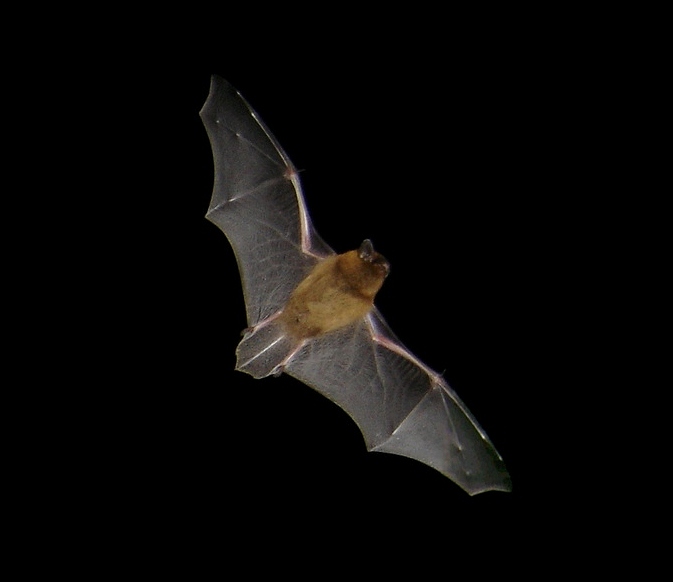
Pipistrellus pipistrellus in flight By Barracuda1983 – Own work, CC BY-SA 3.0, https://commons.wikimedia.org/w/index.php?curid=2077104
A Centuries-Old Partnership
Instead of using harsh chemical repellents that could harm the fragile pages, the library has relied on natural pest control, its resident bats, for nearly 300 years to maintain the delicate ecological balance.
Before closing time, they cover the antique wooden tables with protective leather sheets to guard against the inevitable bat droppings. Each morning, before the doors reopen, cleaners carefully remove the covers and clean the floors, ensuring no trace of the nocturnal activity remains. It’s an extraordinary symbiosis—humans and bats working in quiet partnership to preserve a shared cultural heritage.
Why This Matters for Heritage Conservation
What makes this approach particularly admirable is its sustainability. Rather than relying on chemical pesticides, which could damage the delicate materials or disrupt the building’s microclimate, the Biblioteca Joanina has embraced a natural, symbiotic solution. The bats are not only tolerated—they’re respected as guardians of the archive. What a great example of how heritage preservation and biodiversity can coexist in harmony, isn’t it?
What You’ll Actually See (And Won’t See)
If you’re hoping to spot the bats during your visit, temper your expectations. The library’s visiting hours are strictly during the day, and the bats remain hidden in their roosts behind the walls and ceiling panels.
But their presence is subtly felt. Look closely and you might notice the leather table covers folded neatly in a corner, or catch a faint scent of the natural oils used to clean the surfaces each morning. These quiet clues are reminders of the nightly ballet that unfolds after the last visitor leaves.
When I visited in 2015, I probably saw their outlines. Like my kids, I was captivated by the idea of them. Knowing they were there, silently protecting the books under cover of darkness, added a layer of magic to the experience. It made the library feel alive, not just with history, but with nature’s quiet collaboration.
Visit to the University of Coimbra Library: What to Expect
Planning a visit to the University of Coimbra Library is straightforward, but a little preparation goes a long way.
The Biblioteca Joanina forms part of the University’s museum complex, and entrance is only permitted with a guided tour ticket, which also includes access to nearby attractions like the Royal Palace and São Miguel Chapel. Tickets can be booked online through the university’s official website or at the on-site ticket office.
I highly recommend reserving in advance—especially during summer and holiday seasons when time slots fill quickly. When we visited in May 2015, booking ahead saved us from disappointment, as same-day tickets were sold out by 11 AM.

Baroque Opulence Inside University of Coimbra Library
Practical Information for Visitors
Tour Details: Each guided visit lasts approximately 30 minutes, conducted in small groups (typically 15-20 people maximum) with multilingual guides who share fascinating stories about the library’s architecture, royal patronage, and, of course, the resident bats at the library.
University of Coimbra Walking Tour
Photography Rules: Photography is not permitted inside the Biblioteca Joanina’s main reading rooms to prevent damage from camera flashes and preserve the contemplative atmosphere. During my 2015 visit, photos were allowed only in the entrance courtyard and adjoining halls. While the restriction might initially feel disappointing, it actually enhances the experience—without the distraction of cameras and phones, you’re fully present to absorb the library’s ethereal atmosphere.
Accessibility: Due to the building’s 18th-century architecture, accessibility is somewhat limited. There are steep staircases between levels, and wheelchair access may be restricted to certain sections. If you have mobility concerns, contact the staff beforehand—they’re courteous and often accommodate special arrangements when possible.
Best Time to Visit: Morning slots (9 AM to 11 AM) or late afternoon (4 PM to 6 PM) on weekdays offer thinner crowds. Spring and autumn months (April–June, September–October) provide comfortable weather for exploring the broader university grounds before or after your tour.
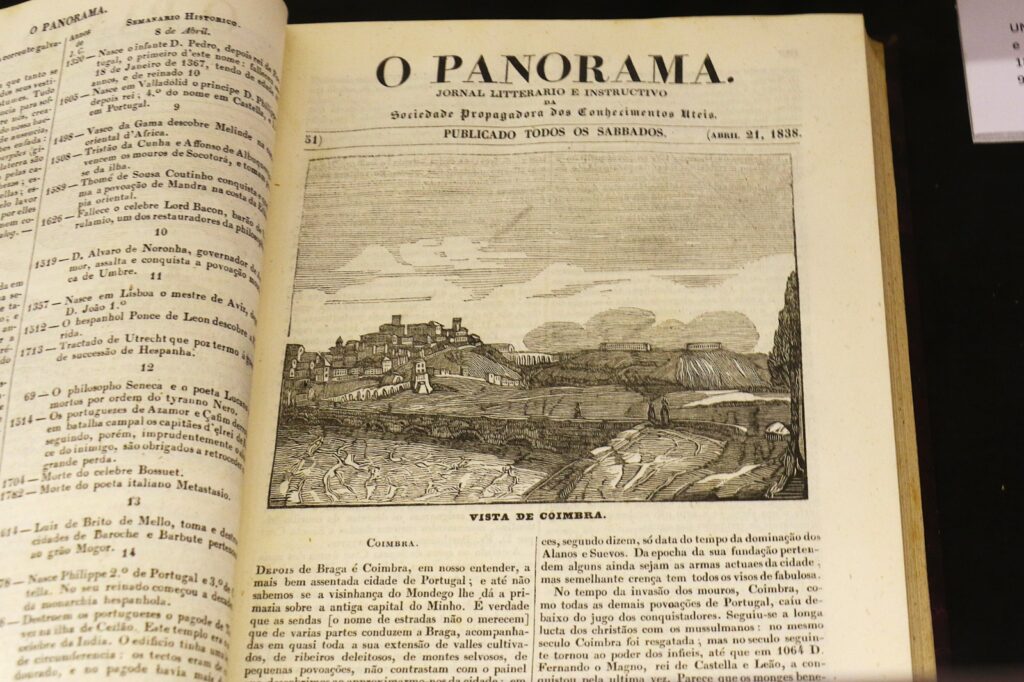
Open book in display in Library
My Personal Experience
We queued briefly in the sun-drenched courtyard, surrounded by the excited chatter of international tourists and the distant toll of the university bell tower. The moment we stepped through the heavy wooden doors, the temperature dropped noticeably—those thick stone walls keeping the interiors remarkably cool even in August—and a distinctive scent of aged parchment, beeswax, and centuries-old leather enveloped us.
The library glowed under carefully controlled lighting. Our guide’s voice, calm and reverent, described how every carved cherub and gilt flourish celebrated human intellect and Portugal’s Age of Discovery. My daughters were especially transfixed by the bat stories, scanning the upper shelves with wide eyes as if expecting one to suddenly swoop overhead.
I was captivated by the allegorical ceiling frescoes and the dramatic interplay between dark jacaranda wood and golden baroque ornamentation. Though I couldn’t photograph the main reading rooms, I captured the richly painted ceiling in the antechamber and the massive wooden doors with their ornate iron locks—images I still treasure.

Ceiling Frescoes inside the Library
Standout moment: Our guide pointed out a hidden detail in one ceiling fresco—a tiny cherub holding a scroll inscribed with Latin text about the pursuit of wisdom. I missed clicking it.
Other visitors seemed equally enchanted. Couples lingering by tall windows, architecture students sketching details in notebooks, and one child whispering to her parent, “Are the bats sleeping now?”
Honest assessment:
Pros: Immersive, historically rich, impeccably preserved, knowledgeable guides
Cons: Restricted photography, limited accessibility, strict time slots
Still, for me, the visit was unforgettable—a rare blend with centuries of accumulated knowledge, all silently watched over by invisible wings.
How much does it cost to visit the University of Coimbra Library in 2024?
As of 2024, ticket prices for the University of Coimbra Museum complex vary by visitor category:
Standard Ticket Prices:
- Adults: €12-15 (standard tour)
- Students: Approximately €10 (with valid student ID)
- Seniors: Reduced rate (typically €10-12)
- Children: Reduced rate or free for very young children
- Family tickets: Available for groups traveling together
- Group discounts: May be offered for larger parties
What’s Included:
- Access to Biblioteca Joanina (main library)
- Royal Palace of Alcáçova
- São Miguel Chapel
- Academic Prison (Prisão Académica)
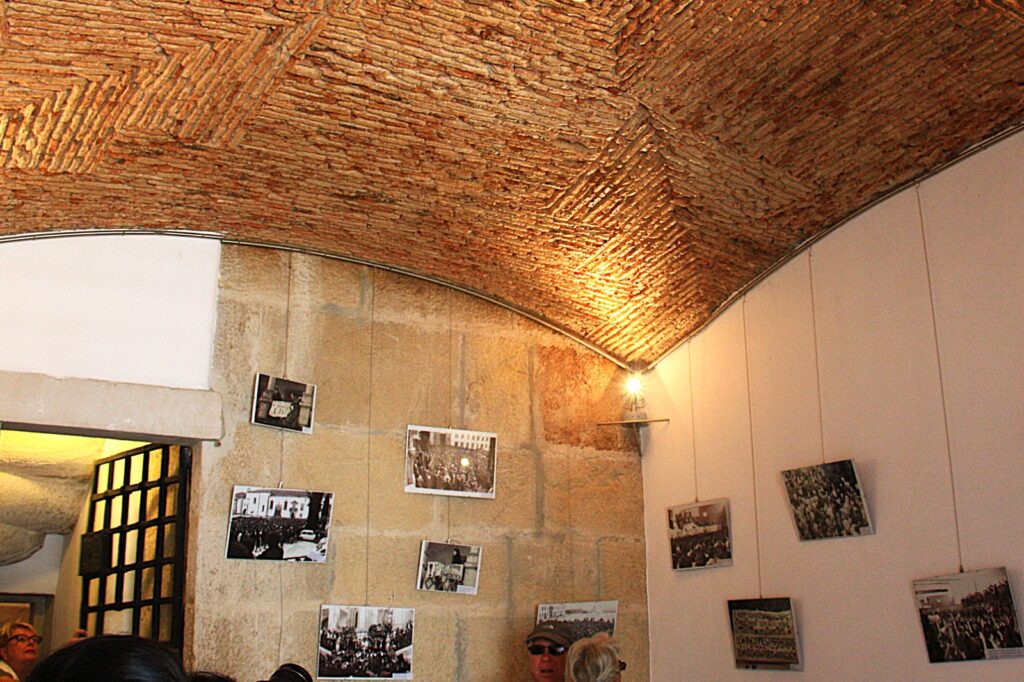
Photo display in Academic Prison
What Else Makes the Joanina Library Extraordinary
While the bats may be the most talked-about feature of the University of Coimbra Library, there’s far more that makes the Biblioteca Joanina a masterpiece of European heritage.
The Three-Room Architectural Journey: The library dazzles with architectural and intellectual riches. Its three-room layout unfolds like a theatrical set: each chamber more ornate than the last. All are lined from floor to ceiling with gilded woodwork and filled with the warm glow of exotic woods like ebony, oak, and Brazilian jacaranda, chosen for their resistance to insects and humidity. The craftsmanship is extraordinary—every carved motif and flourish reflects the grandeur of King João V’s reign.
The transition from the entrance hall to the central reading room is dramatic—like stepping into a baroque dream carved in ebony and gold.
Ceiling Frescoes: Baroque Illusion at Its Finest. Look up, and the ceiling itself becomes a work of illusion. The trompe-l’œil frescoes, painted by António Simões Ribeiro and Vicente Nunes, create a three-dimensional effect that tricks the eye into perceiving domes and arches that don’t actually exist. In the quiet stillness of the reading hall, these painted skies seem almost alive, lending a sense of infinite height to the room.
A Collection of 60,000 Rare Volumes: The library’s collection of over 60,000 rare volumes includes priceless works in theology, philosophy, law, and medicine—many printed between the 16th and 18th centuries, including rare editions in Latin, Greek, and Hebrew. The gilt spines and hand-tooled bindings create a mosaic of color and history across the shelves. Scholars and conservationists still access some of these volumes today, keeping the academic spirit of the university alive.
The Surprising Academic Prison: One of the most surprising features is the Academic Prison, located just beneath the library. In the 18th century, students who violated university discipline were confined here—When our guide mentioned this, I couldn’t resist nudging my daughters and asking what they thought about that form of academic discipline. Their eyes widened at the thought of being imprisoned for skipping class!
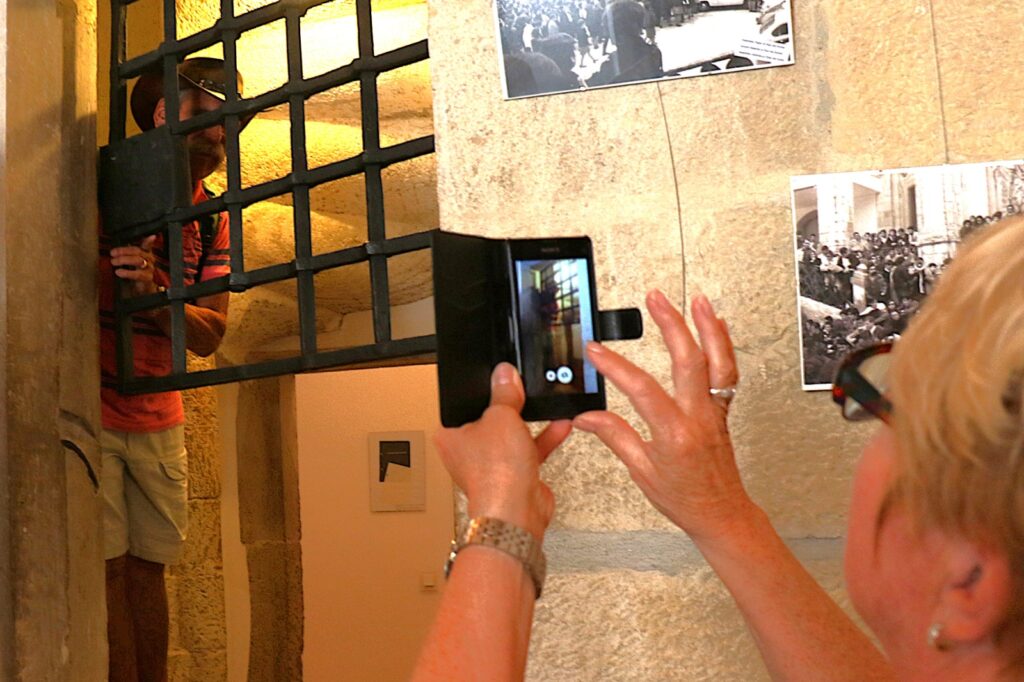
Fun capture of tourist clicking her husband in Academic Prison
Architectural Splendor Worth Studying
Beyond the books and bats, the library captivates with ornate interior balconies, intricately carved wooden columns, decorative doorways topped with the Portuguese royal coat of arms, and the dramatic interplay of light and shadow throughout the space. Natural light filters through tall windows, creating pools of illumination that shift throughout the day, while the deliberately dim corners preserve the manuscripts.
Having previously visited the Pannonhalma Archabbey Library in Hungary (in 2011), I found myself naturally comparing the two experiences. Both spaces share a monastic tranquility and devotion to scholarship, but the Biblioteca Joanina dazzles with distinctly Portuguese baroque opulence—more theatrical, more gilded, more unapologetically grand. Where Pannonhalma whispers, Coimbra proclaims.
Frequently Asked Questions About the University of Coimbra Library
How old is the University of Coimbra Library?
The Biblioteca Joanina was constructed between 1717 and 1728, making it approximately 300 years old. The University of Coimbra itself is much older—founded in 1290, it’s one of the oldest continuously operating universities in the world. The library was added during the baroque period as the university’s prestige and collection grew.
How do I book tickets for the University of Coimbra Library?
Tickets for the Biblioteca Joanina can be booked online through the official University of Coimbra website (visit.uc.pt) or purchased at the on-site ticket office near the main university entrance. I strongly recommend booking online at least 2-3 days in advance, especially during peak tourist season (June-September).
What is the best time to visit the University of Coimbra Library?
The best time to visit the Biblioteca Joanina is during weekday mornings (9-11 AM) or late afternoons (4-6 PM) when tour groups are smaller. Avoid weekends and Portuguese holidays if possible, as crowds can be overwhelming. We visited in May and found the early morning slot less crowded than midday tours. Book the first tour of the day if you want the most intimate experience.
Can you take photos inside the Biblioteca Joanina?
Photography is not permitted inside the main reading rooms of the Biblioteca Joanina to protect the delicate manuscripts from camera flash damage and preserve the contemplative atmosphere. During my 2015 visit, we were allowed to photograph only in the entrance courtyard, antechamber, and adjoining university halls—but not in the three baroque reading rooms where the rare book collections are housed.
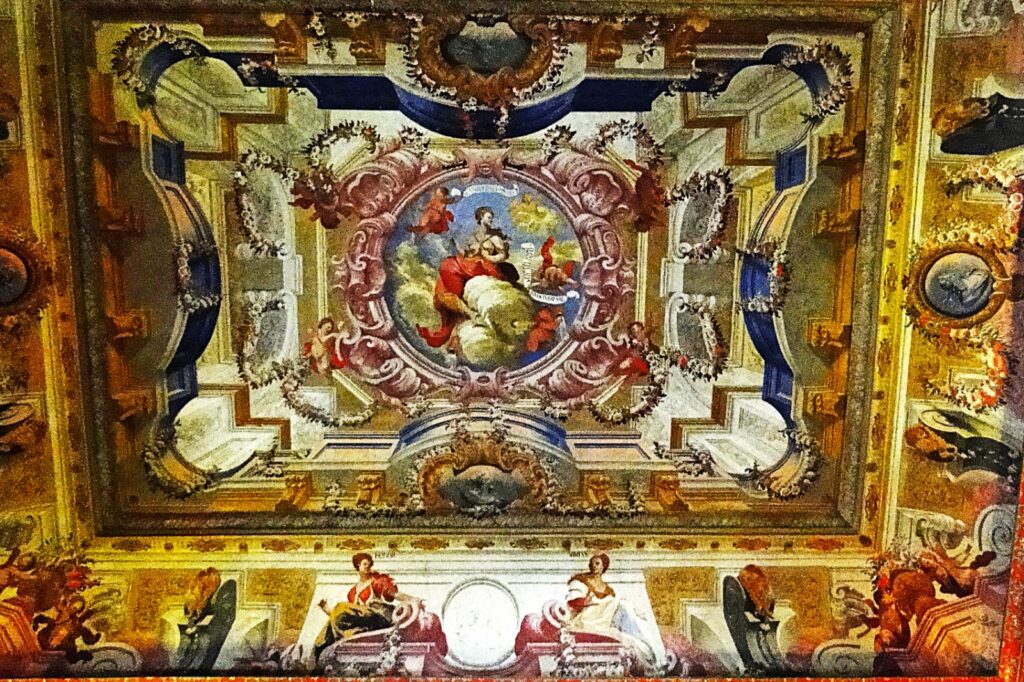
Three-dimensional effect in ceiling frescos in University of Coimbra Library
How long does a University of Coimbra Library tour take?
A standard guided tour of the University of Coimbra Library lasts approximately 30 minutes. This includes time in the baroque reading rooms, explanations about the architecture and bat colony, and brief views of the book collections. However, I’d recommend allocating at least 90 minutes to 2 hours for your entire visit, as your ticket also includes access to the Royal Palace of Alcáçova, São Miguel Chapel, and the Academic Prison beneath the library.
Are there really bats living in the Coimbra library?
Yes, absolutely! The University of Coimbra Library is home to a colony of common pipistrelle bats (Pipistrellus pipistrellus) that have lived there for nearly 300 years. These tiny bats play a crucial role in protecting the library’s 60,000+ rare books by eating insects like silverfish, moths, and beetles that would otherwise damage the ancient manuscripts. I actually spotted two bats tucked behind books on the upper shelves during my visit—they’re real, not just a tourist legend.
Why were bats chosen to protect the books at Coimbra?
The bats weren’t exactly “chosen”—they naturally colonized the library shortly after it was built in the 1720s, and the librarians wisely recognized their value as natural pest controllers. Rather than exterminating them or using harsh chemical pesticides that could damage the fragile parchment and leather bindings, the library’s caretakers embraced this symbiotic relationship.
Can you see the bats during the day at the University of Coimbra Library?
Seeing bats during daytime tours at the University of Coimbra Library is possible but challenging. The bats roost hidden behind bookshelves, in ceiling cavities, and within wall spaces during visiting hours. However, if you look carefully at the uppermost shelves in the dimmer corners of the reading rooms, you might spot their small, folded forms tucked behind books—just as I did during my visit. They look like tiny dark shapes, barely larger than a thumb.
How long is the Bat Colony protecting the books inside the library?
The bat colony has been protecting the library’s books for nearly the entire 300-year period, making it one of the longest-running examples of natural pest control in any heritage building worldwide. Each evening, staff cover the antique tables with leather sheets to protect against bat droppings, and each morning they clean up—a small maintenance task in exchange for preserving irreplaceable manuscripts.
What books are kept in the University of Coimbra Library?
The Biblioteca Joanina houses over 60,000 rare volumes dating primarily from the 16th to 18th centuries, covering subjects including theology, philosophy, civil and canon law, medicine, natural sciences, and geography. The collection includes precious works printed in Latin, Greek, and Hebrew, along with some even older manuscripts. Many feature hand-tooled leather bindings with gilt decoration.
What is the Academic Prison under the Coimbra Library?
The Academic Prison (Prisão Académica) is a series of detention cells located directly beneath the Biblioteca Joanina where university students were confined for disciplinary violations during the 18th and 19th centuries. Offenses ranged from academic dishonesty and disrespecting professors to more serious breaches of conduct. The cells are stark and small, creating a dramatic contrast with the opulent baroque splendor of the library directly above. Most guided tours include a brief visit to the prison, and it’s included in your library admission ticket.
Parting thoughts
I was truly surprised how the University of Coimbra Library felt both sacred and vibrantly alive—a space where art, intellect, and even nature coexist. You will agree it’s not just a library—it’s a living monument to knowledge, artistry, and the quiet power of preservation.
Pin and Save this for Later

 Indrani Ghose is an Indian Travel Writer and Blogger based in Bangalore, India. She has written for numerous publications across the globe – including Lonely Planet, The National UAE, Whetstone Asia, Deccan Herald. You can follow her on her social media handles Instagram, Twitter, Pinterest and Facebook to see the wonderful destinations, beautiful offbeat places and get instant updates about them.








OMG this looks stunning. We have a massive collection of books in our house and it is our dream to create a library like this….although probably not possible with our limited space. Glad to know you can take photos here.
The good thing is, photography is allowed here so that you could get to document your visit here. This library is just simply fascinating, housing thousands of books in it. I sometimes do pay a visit the library, nowadays, people rarely visit one as we are into so much technology! The architecture here is classic!
That is one gorgeous library! I should visit it, as I’m interested in all things Harry Potter. I live in the city which is the inspiration and birthplace of Harry Potter, after all – Edinburgh!
I think this is the first library I’ve seen in recent times that isn’t strict about the ‘no photography here’ thing. I mean the library is too beautiful for that. I read somewhere bats were used in those age to drive away insects, it’s good to read about it here again. Nice pictures you have here. But sad much time is not allocated for visitors.
What a fascinating place! I love old books so exploring this library would be just up my alley. I can’t believe that they have bats inside the library. I guess that they are doing a good job with the insects, but I would have thought that they might harm the books.
I can see Harry Potter scenes in your shots! Great pics.
I can see why it was an inspiration for Harry Potter. I have a daughter who’s also a huge fan so she was excited to look at the photos in this post. How interesting that bats actually live in it.
I keep collecting reasons to visit Portugal, and this is another one! I used to be a librarian, so absolutely love old stacks, and the smell of books! I love how they use bats to eat the insects so that they don’t harm the books – what a marvellous way of using nature to keep these books safe.
I love the architecture of this library and it is so grand from within, you’re right, even grander than the exterior. I would go here, not probably to check the collection of books but for the architecture. Thanks for sharing!
What a fantastic looking library! And I love the fact that there are bats at night! Spending a night in the library, if it were possible, would be a fantastic experience! 🙂
I just love old style libraries filled with books from all different kinds of interesting subjects. Amazing that this library houses 56000 books. Imagine being able to read them all. What a beautiful monument.
Mignificent library, with wonderful architechture ! A library is a place of great pleasure for readers ,and with such grandeaur and opulance inside , it has to be an amazing experience!.
Stunning architecture! Impressive building! Greetings!
Very interesting place and truly remarkable library! I think visiting this library itself worth rather reading these books, although they must be rich in knowledge.
Such an amazing Architecture around the place where great Readings take place.. Truly a great Library! Thanks for the Presentation, Indrani!
Amazingly beautiful captures, Indrani! Thank you 🙂
wow!!! I wouldnt be able to read in this library too!!
Now that is some library!
Amazing architecture! Looks so promising! 🙂
Wow! What a beautiful library. This is equivalent to paradise for me. Wanna go there sometime soon 🙂
Thanks for sharing, dear 🙂
This is such a brilliant library. Lovely pictures.
Wow… Truly magical !!!!
Oh, I am a Harry Potter FAN and so would love to visit this place
Lovely architecture ! And 56000 books. Its really heaven for book lovers.
Beautifully captured!!
Place with beautiful interior 🙂
Wow that’s one grand library.
That’s an amazing library… 🙂 I love libraries…
That’s quite an impressive library!
I liked they have time slots for visitors and don’t allow hordes of them inside. That’s the way we should respect the place.
That’s an impressive library – I can see how it influenced Harry Potter (and numerous other movies and shows).
WOW! What a fun place! It’s beautiful!
I’ve never seen such a gorgeous library before. It’s simply awesome. Thanks for sharing it with us.
Amazing photos
Wow, this is a library??? Thank you for such an eye-opening post! I would never think of visiting a library when I’m on vacation, but I shall make it a point to look out for this if I go to Portugal!
Some of the old libraries are indeed opulent, aren’t they? I saw a grand one when visiting Ireland a couple of years ago.
What a magnificent building.
That’s a wonderful bunch of pics Indrani…Happy happy new year 🙂
What an awesome library!! And superb captures as always, Indrani! I really enjoyed reading about the history!! A great post for the day — again, as always!! I hope your new week/year is off to a great start!! Enjoy!!
I agree it is a beautiful grand library! Lovely images, thanks for sharing your visit.Happy Monday, enjoy your new week!
Lovely Pics and Architecture.
Very beautiful interior with decorations and all those ancient books.
Awe! Thanks for sharing!