Évora Cathedral: Complete Visitor’s Guide to Portugal’s Gothic Masterpiece
Walking through countless cathedrals across Europe, I’ve grown accustomed to seeing Mother Mary depicted in her traditional forms—serene, holy, and ethereal. Yet nothing could have prepared me for what I discovered tucked within the sacred walls of Évora Cathedral. There, painted in bright, vivid colors that seemed to glow in the filtered cathedral light, stood something I had never encountered before: a statue of pregnant Mother Mary, her belly rounded with the promise of Christ.
Cathedral of Évora is not just an architectural wonder, but also home to one of Portugal’s most intriguing religious artworks. The Pregnant Virgin Mary statue tells a story of faith, fertility, and resilience—making it a must-see for travelers interested in history, culture, and sacred art. What makes this 15th-century masterpiece even more remarkable is its rarity. Many similar representations were later removed or discouraged by church authorities, making Évora’s statue one of the only known surviving examples in the country.
Quick Facts:
- Built: 1186-1204 (18 years construction)
- Style: Romanesque-Gothic transition
- Location: Largo do Marquês de Marialva, Évora
- UNESCO Status: Part of Historic Centre of Évora (1986)
- Unique Feature: Only pregnant Virgin Mary statue in Portugal
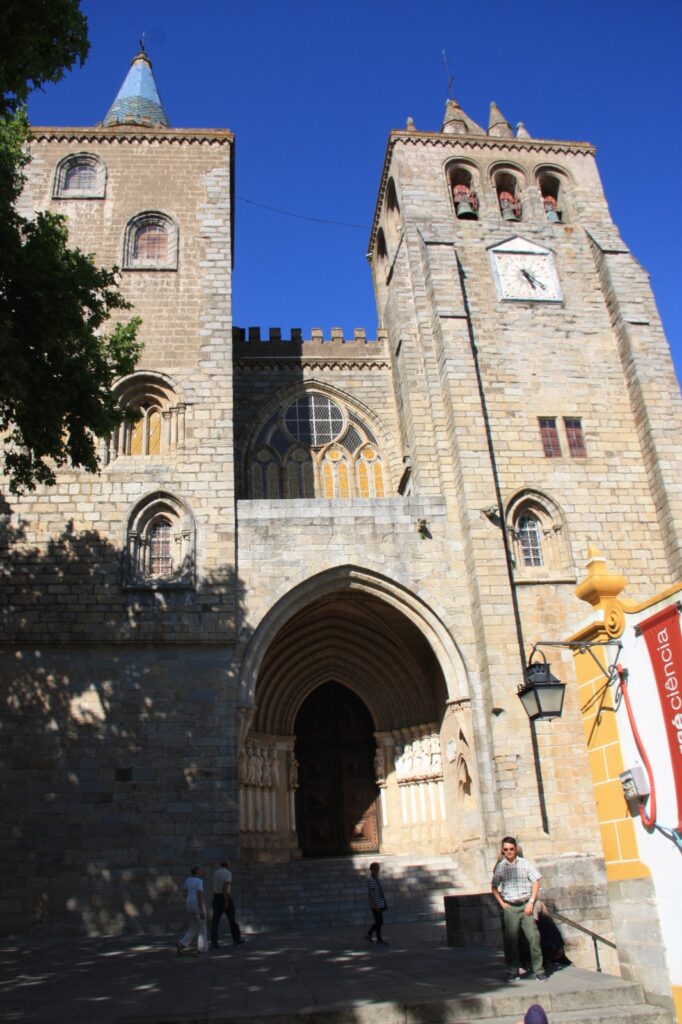
Facade of Cathedral of Evora
Historical Background: 800 Years of Sacred Architecture
Origins and Construction
The Cathedral of Évora was constructed between 1186 and 1204 on the site of a former mosque, which itself had been built over a Roman church—a testament to the layers of religious history in this region. The cathedral’s construction took 18 years to complete, reflecting the ambitious scope of this medieval project.
The Vasco da Gama Connection
One of the most fascinating historical connections involves Vasco da Gama’s fleet, whose flags were blessed here in 1497 before his ground-breaking expedition to India. This blessing ceremony adds significant historical weight to the cathedral’s already impressive legacy.
Architectural Evolution
The cathedral represents the transition from Romanesque to Gothic architecture in Portugal, featuring elements from both periods that showcase the evolution of Portuguese religious architecture during the 12th and 13th centuries.

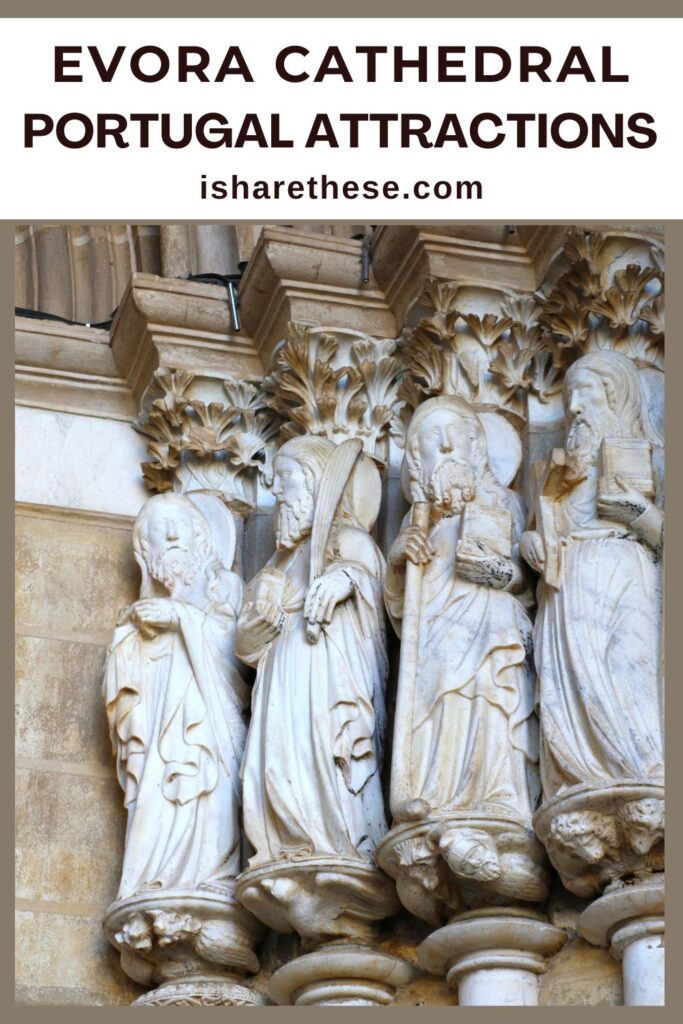
Apostles sculpted on frame of door in Cathedral of Evora, Portugal
Architectural Highlights: What Makes Évora Cathedral Unique
The architecture of Évora Cathedral immediately commands attention with its fortress-like exterior, where thick stone walls and narrow windows give it a strong, defensive presence. Standing before it, I was struck by the symmetry of the twin towers that frame the main façade, their silhouette so striking against the Alentejo sky. The overall design is simple and austere, true to early Portuguese Gothic style, yet the intricately sculpted Gothic portal felt like a quiet invitation to step inside and explore further.
Walking through the entrance, the space opens into a soaring nave, its impressive height creating a sense of awe that only Gothic architecture can inspire. At the heart of the interior lies the main altar, a later 18th-century addition crafted from pink, white, and black marble—a vivid contrast to the solemn stone surroundings. I found myself pausing at the marble columns, each one decorated with detailed statues of the Apostles, their expressions almost lifelike. What moved me most was the 16th-century pipe organ, still functional today; imagining centuries of music echoing through these walls made the visit feel even more timeless.
The Apostle Statues
The marble columns feature magnificent statues of the Apostles, dating to the mid-14th century. Art historians attribute these masterpieces to renowned sculptors Mestre Pero and Telo Garcia, whose detailed facial expressions continue to captivate visitors today.
Unique Wooden Christ Figure
Unlike the predominant marble decorations, the cathedral features a distinctive muscular wooden Christ figure that stands out for its realistic proportions and craftsmanship.
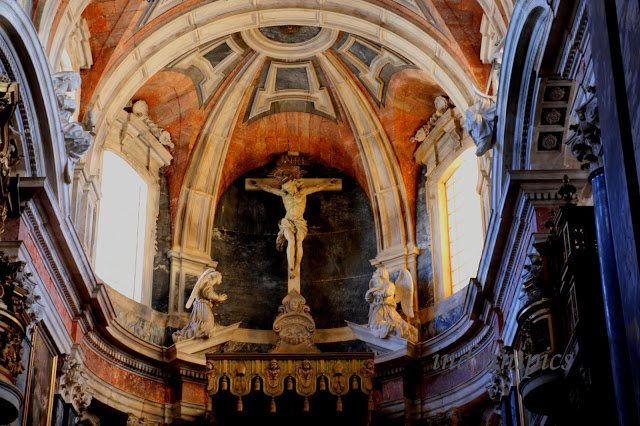
Observe carefully to see the muscular Jesus made of wood

Interiors of Cathedral of Evora made of marble.
The Famous Pregnant Virgin Mary Statue: A Rare Religious Artifact
Historical Significance
The 15th-century statue of pregnant Virgin Mary represents one of the most unique religious artifacts in Portugal. This rare depiction of Mary with a visibly swollen stomach is the only one of its kind in the entire country.
Religious and Cultural Importance
This statue has transformed the cathedral into a pilgrimage site for fertility prayers:
- Young women from the local Alentejo region pray for fertility
- Pregnant women’s families seek blessings for safe childbirth
- Expectant mothers visit to pray for easy labor
Artistic Context
The statue’s creation during the 15th century reflects changing attitudes toward the depiction of pregnancy in religious art, making it both artistically and culturally significant.
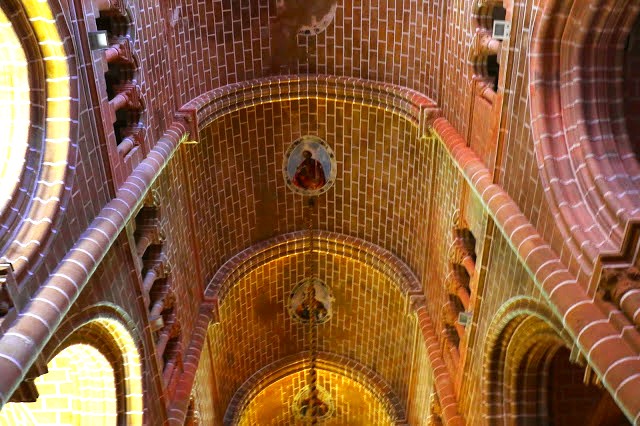
Ceiling of Cathedral of Evora, Portugal.
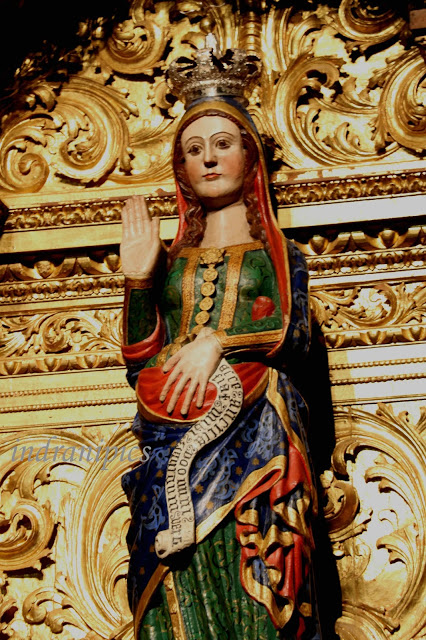
Pregnant Mother Mary in Cathedral of Evora, Portugal.
Open Terrace of Cathedral of Evora
The Gothic cloister leads to an open terrace; one can get lovely views out over the surrounding Alentejo countryside. I skipped this as I was running short on time. Do let me know in comments if you have seen the view from the terrace.
Practical Visitor Information
Opening Hours
- Tuesday to Sunday: 9:00-12:00 and 14:00-17:00
- Monday: Closed (only main chapel accessible)
- Seasonal variations: Check official website before visiting
Ticket Prices
- Cathedral entrance: €1.50
- Cloisters and rooftop access: €2.50 (highly recommended)
- Combined ticket: Best value for complete experience
Location and Access
- Address: Largo do Marquês de Marialva, 7000-809 Évora
- Walking distance from Évora train station: 10 minutes
- Parking: Limited street parking; use public lots
What to Bring
- Comfortable shoes for climbing to rooftop terrace
- Camera (photography usually permitted)
- Modest clothing (shoulders and knees covered)
Best Photography Spots and Tips
Interior Photography of Evora Cathedral
- Apostle statues: Best lighting during midday
- Main altar: Capture marble detail variations
- Pregnant Virgin Mary statue: Respectful distance recommended
Rooftop Terrace Views
The Gothic cloister leads to an open terrace offering panoramic views over the Alentejo countryside. This vantage point provides:
- Sweeping views of Évora’s historic center
- Perfect sunset photography opportunities
- Unique perspective of the cathedral’s architectural details
Nearby Attractions in Évora
Within Walking Distance
- Roman Temple of Évora (5-minute walk)
- Chapel of Bones (Capela dos Ossos) (3-minute walk)
- Évora Museum (2-minute walk)
- Giraldo Square (Historic city center)
Photography Etiquette
- Respect ongoing religious services
- No flash photography near religious artifacts
- Ask permission for photos of worshippers
Frequently Asked Questions on Cathedral of Evora
Is photography allowed inside Évora Cathedral?
Yes, photography is generally permitted, but avoid using flash near religious artifacts and respect any restrictions during religious services.
How long should I plan for my visit?
Allow 1-2 hours for a complete visit including the main cathedral, cloisters, and rooftop terrace.
Is the cathedral accessible for people with mobility issues?
The main cathedral floor is accessible, but the rooftop terrace requires climbing stairs and may not be suitable for visitors with mobility limitations.
What’s the best time to visit for fewer crowds?
Early morning (9 AM) or late afternoon (after 3 PM) typically have fewer tour groups.
Can I attend religious services?
Yes, the cathedral hosts regular Catholic masses. Check the schedule and arrive respectfully dressed.
Pin this for later
Based on personal visits to Évora Cathedral and extensive research into Portuguese Gothic architecture. This guide combines first-hand travel experience with historical documentation to provide accurate, practical information for visitors to this UNESCO World Heritage site.
 Indrani Ghose is an Indian Travel Writer and Blogger based in Bangalore, India. She has written for several publications across the globe – including Lonely Planet, The National UAE, Whetstone Asia, Deccan Herald. You can follow her on her social media handles Instagram, Twitter, Pinterest and Facebook to see the wonderful destinations, beautiful offbeat places and get instant updates about them.
Related Articles









Nice and informative historical post . New ruler new place of worship but the venue is same . it repeats in the entire world !! very good looking pictures Indrani ji
18 years? Wow. Just imagining all the work that must have gone through. And I’ve never seen this pic of Mother Mary. Lovely pics. Thanks for sharing 🙂
Great pictures! I’ve always been fascinated by these sculptural cathedrals!
Wow Vasco Da Gama’s prayed there ! His prayers were answered. I hope you asked for something grand Indrani. 🙂
A very well written post. The pictures are just amazing. Thankyou 🙂
wonderful pictures of the cathedral and its glory!
Yes and existing for centuries!
Thank you!
Magnificent photography of an amazing cathedral!
Happy Week to you,
artmusedog and carol
Beautiful cathedral !
That looks so interesting…Cathedrals are beautiful by themselves and your clicks are making this one look prettier! Hi there Indrani 🙂
The Cathedral of Evora is magnificent, wonderful photos!
No matter the religion, it’s just very fascinating to view the religious art.
You are so right Photo Cache, each has its own significance and that is what interests me the most.
Thank you!
I like the clean look of your new blog. And the photos you chose to begin it with are wonderful!
Shalom Indrani. Thanks for sharing all the marvels of the world that you discover.
Your new blog format is very nice.
Happy travels!
Shalom to you Dina!
I am glad you liked this new format!
Thank you!