Bhagamandala Temple in Coorg: A Guide to the Sacred Triveni Sangama
The Triveni Sangama Coorg is what draws most pilgrims to Bhagamandala. This is where three rivers meet—the Kaveri, Kannike, and the mythical Sujyothi, which is believed to flow underground. I first visited Bhagamandala Temple in Coorg in 2019, during a road trip through the region’s key pilgrimage sites. I watched dozens of devotees taking ritual baths here before heading to the main temple. The water is considered sacred for purification.
Located about 35 km from Madikeri, the temple is dedicated to Lord Shiva and is officially known as the Sri Bhagandeshwara Temple. For pilgrims, Bhagamandala marks the spiritual beginning of their journey in Coorg. For travellers like me, it offers a meaningful pause—where geography, faith, and history meet in a calm riverside setting.
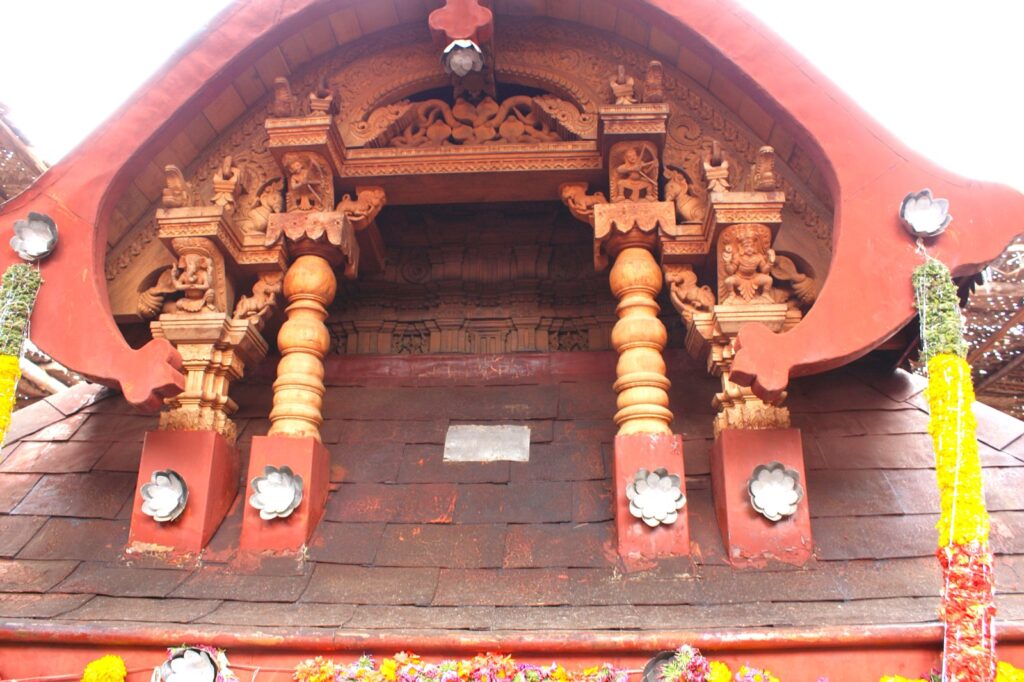
Entrance to Bhagamandala Temple in Coorg
The Spiritual Significance of Triveni Sangama
The Triveni Sangama Coorg is the heart of Bhagamandala’s spiritual identity. “Triveni” refers to the meeting point of three rivers—two visible and one believed to be mythical. Devotees take a ritual dip here before entering the temple, as the water is considered purifying.
The three rivers are:
- River Kaveri, the lifeline of South India
- River Kannike, a smaller tributary
- River Sujyothi, believed to flow underground
Because of this sacred confluence, the site is often called the “Dakshina Ganga” (Ganges of the South). The water is believed to hold special spiritual power for ancestral rites and purification rituals.
Even if you’re not performing rituals, standing at the sangama offers a moment of calm reflection.
Why Triveni Sangama is Revered as Dakshina Ganga
For South Indian Hindus, the Triveni Sangama holds similar spiritual weight to Prayagraj’s Triveni Sangama in North India. Here’s why this site carries that significance:
- The Kaveri originates just 8 km away at Talakaveri, making this region the source zone of a sacred river.
- Pilgrims consider bathing here as spiritually potent as bathing in the Ganges. I noticed that many visitors arrive early morning specifically to perform shraddha (ancestral offerings) and tarpana rituals for departed family members.
- The underground Sujyothi river adds a mystical dimension—representing the unseen spiritual forces.
Local priests told me that performing rituals at this confluence is believed to bring peace to ancestors and blessings to the living. This belief system keeps Bhagamandala active as a pilgrimage destination every single day.
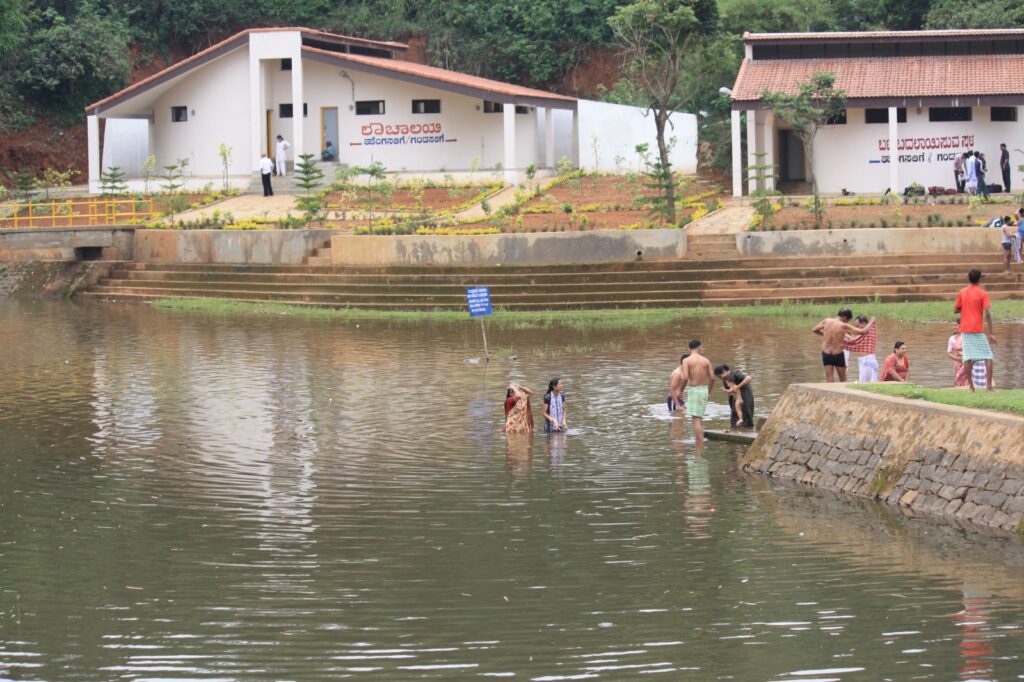
Triveni Sangama Coorg
History of the Bhagandeshwara Temple
The Sri Bhagandeshwara Temple dates back to the Chola period, though its current form developed under Kodava kings who ruled Coorg. The temple’s location at the river confluence made it a natural pilgrimage center.
During the late 1700s, Tipu Sultan’s military campaigns reached Coorg, affecting many local temples including this one. Some temple practices were disrupted during that period, but the site retained its religious importance.
When I visited in 2019, a local guide explained how the temple survived these historical challenges. The Kodava community rebuilt and maintained the complex through generations. Today, the temple stands as both an active worship site and a testament to the region’s cultural endurance.
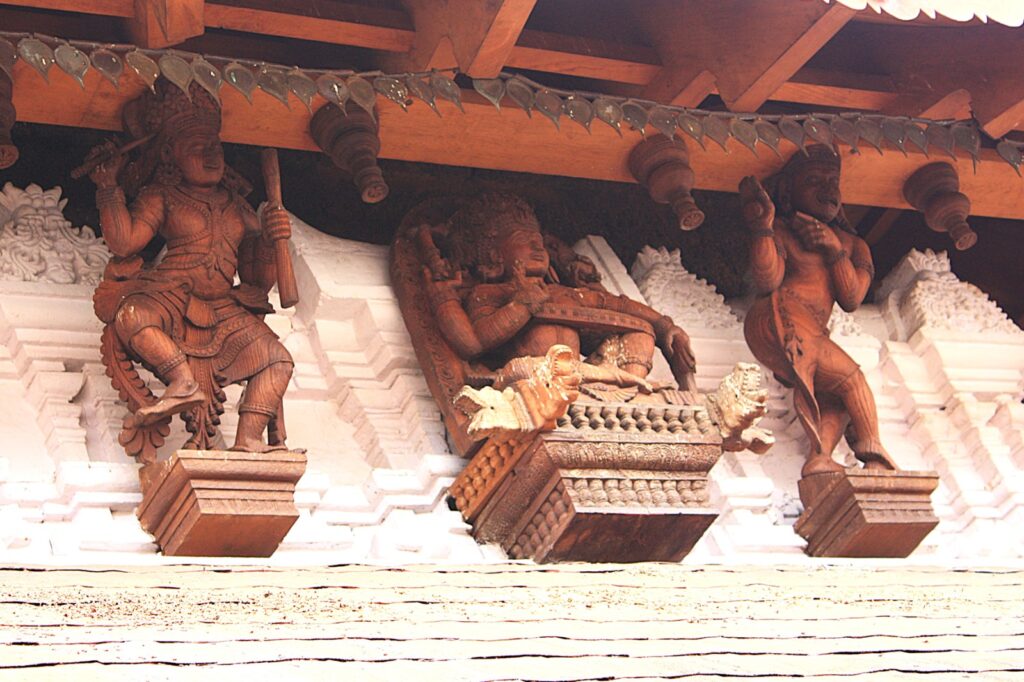
Architectural Details of Sri Bhagandeshwara Temple developed under Kodava kings
Architecture: The Kerala Influence in Karnataka
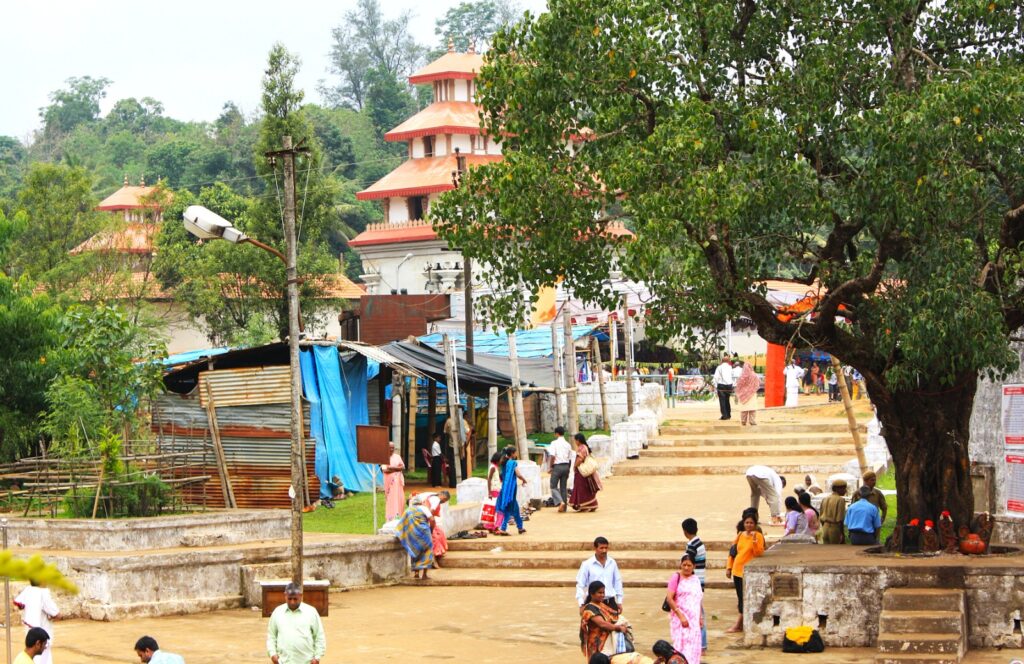
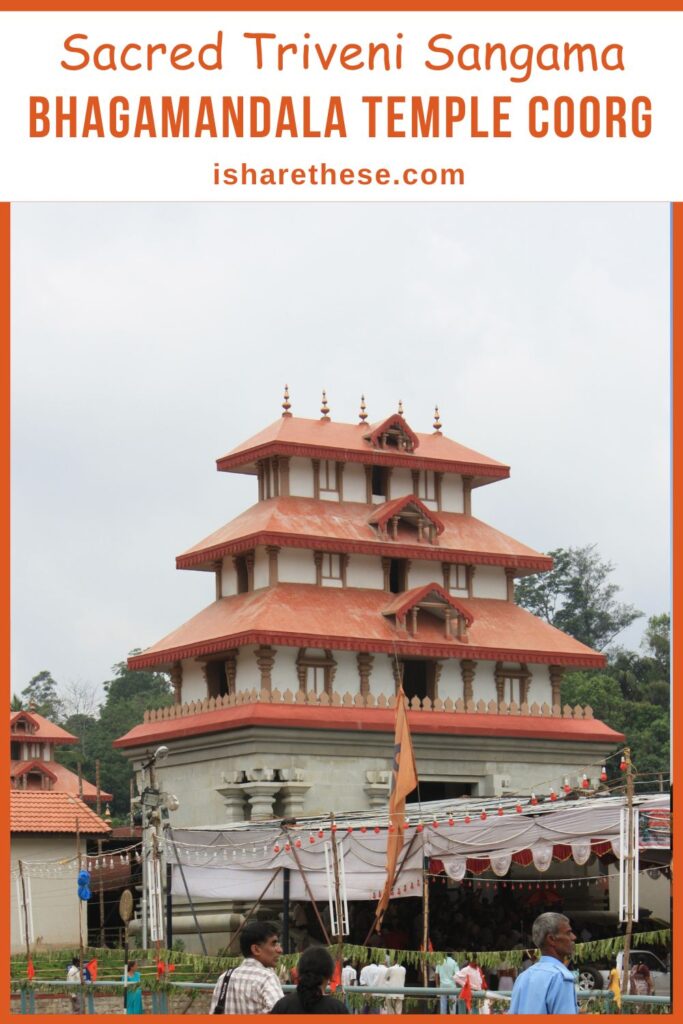
What immediately caught my attention was the temple’s distinctive sloping roof—a clear Kerala architectural style, unusual for Karnataka. The gabled copper roof handles Coorg’s heavy monsoon rainfall better than flat designs.
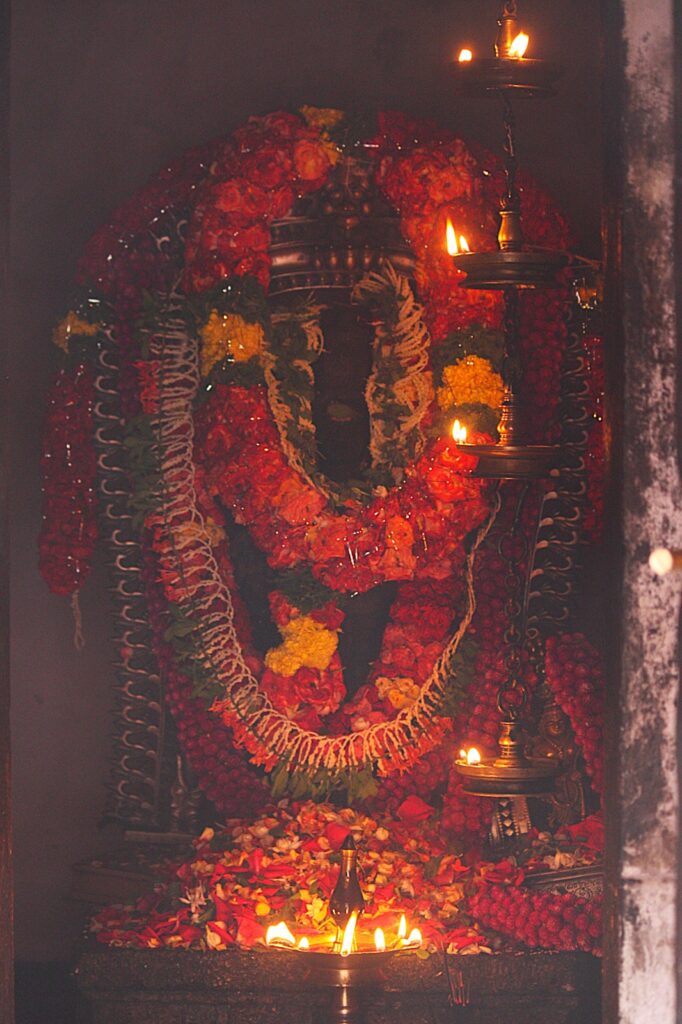
The main shrine houses Lord Bhagandeshwara, a form of Shiva worshipped by the Kodava community. The temple layout is compact compared to large Dravidian temples elsewhere in South India. Stone carvings around the sanctum show Chola-period craftsmanship, particularly in the deity sculptures and pillars.
This Kerala architecture in Coorg makes sense geographically—Bhagamandala sits close to the Kerala border. The design reflects practical adaptation to local climate while preserving religious traditions that go back centuries.
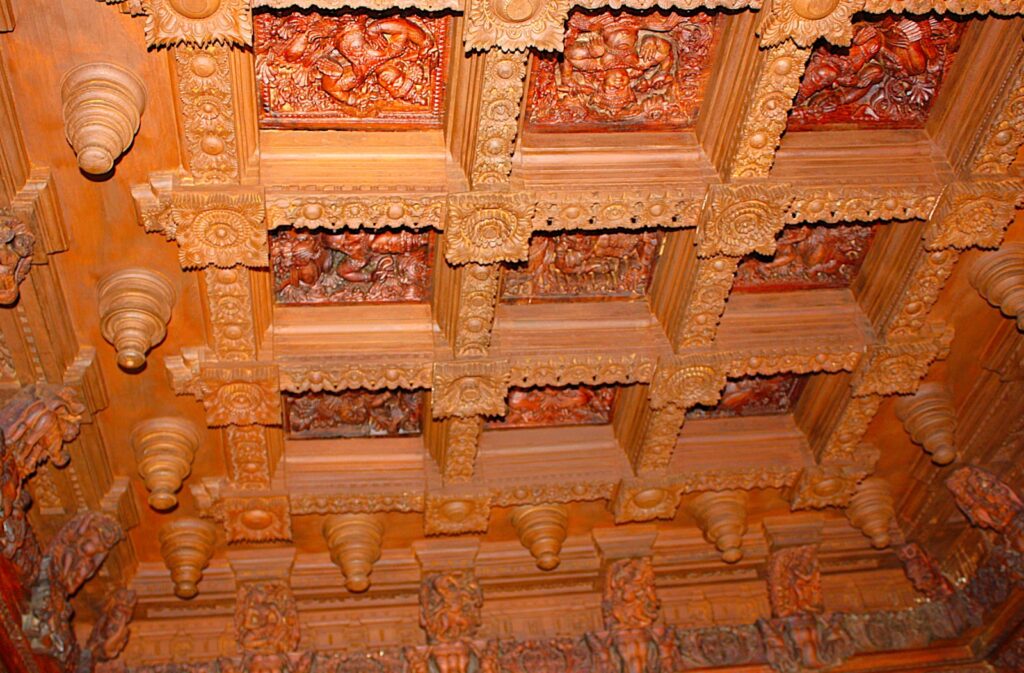
Ceiling inside Bhagamandala Temple
Essential Rituals: Holy Dips and Ancestral Rites
The ritual bath at the sangama is central to any visit here. Most pilgrims arrive early morning, bathe at the confluence, then proceed directly to the temple. The water is cold year-round since it comes from mountain streams.
Pinda Pradhana is the other major ritual performed at Bhagamandala. This ancestral offering involves rice balls, sesame seeds, and sacred water. I watched several families conducting these rites with temple priests along the riverbank. The ceremony typically takes 30-45 minutes and is performed facing the river.
Practical tip: Basic changing rooms are available near the bathing area. Bring clothes in a waterproof bag and a small towel. The facilities are simple—concrete rooms with minimal amenities. If you’re planning to visit Talakaveri afterward (most pilgrims do), pack an extra set of dry clothes in your vehicle.
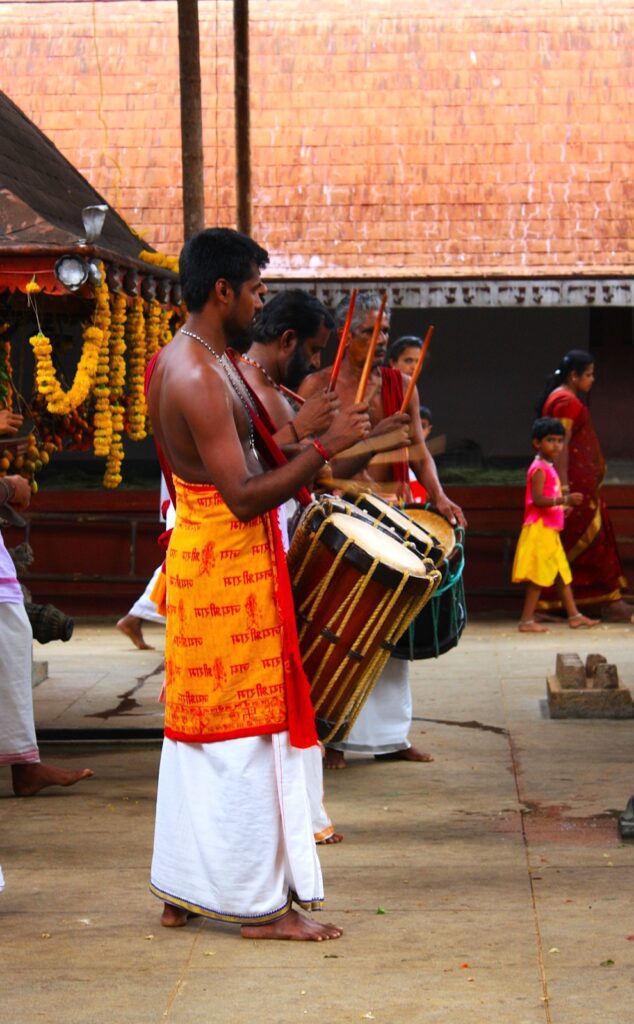
Rituals inside Bhagamandala Temple – Drummers
Doors of Silver Bhagamandala Temple
Doors made of silver! Doors for the Lord Himself! In Hindu Temples the doors to deity, sanctum sanctorum, are shut during certain duration during the day and completely shut at night. Due to fear of theft the doors remain closed during night. But during day several rituals and offerings are made to God by the purohit (priest). People wait patiently at the doorsteps to deity to catch that first glimpse of the deity as soon as the door opens during auspicious time.

Doors of Silver Bhagamandala Temple
I took these shots at Bhagamandala Temple in Coorg around 220 km from Bangalore. This huge temple complex has shrines dedicated to various Gods. The idols are housed inside these small shrines and each of these shrines has doors made of silver or are silver plated. Several auspicious symbols are embossed on the doors. This one has Sun, Moon, Conch Shells, Lotus and Mace.
Luckily we were on time that day, the Puja hadn’t started and the doors were shut. Till the auspicious moment the doors of the shrines are kept shut. There was stillness all around and as the auspicious moment drew closer, the priests started ringing the bells. I took a few shots knowing fully well once the doors are flung open I will be pushed around in the crowd. The crowd around the door had slowly begun to swell.

And precisely at that most auspicious moment, the decibel level was at the peak. The doors flung open, the Pujaris(priests) were chanting mantras, and doing the aarati. People kept craning their necks to get that auspicious first glimpse of the Lord. I knew it was futile to focus my lens then. I too folded my hands, bent my head to seek His blessings!
Do have a look at a door from Florence Italy, the figures embossed on them: Baptistery Doors of Florence Cathedral. Inspired by The Doors Archive by David McMahon.
Beyond the Temple: Nearby Gems to Explore
While the temple is the spiritual heart of the region, the landscape surrounding Bhagamandala offers a perfect mix of adventure and serenity. Most travelers treat Bhagamandala as a stopover, but I recommend carving out a full day to explore these nearby gems:
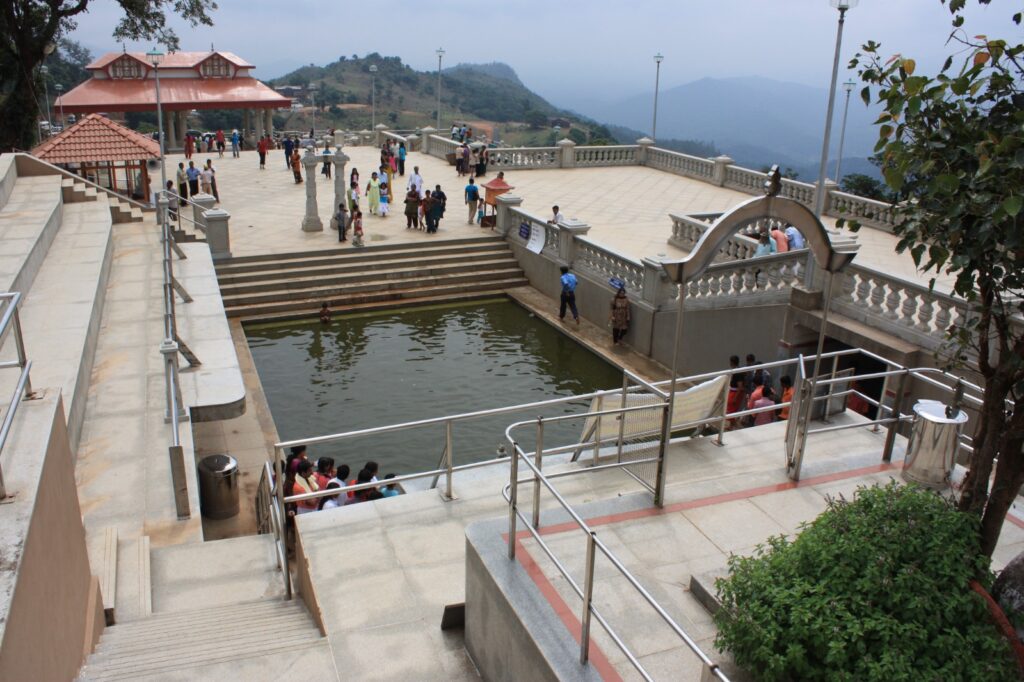
- Talakaveri (8 km away): Just a short, winding 15-minute drive uphill brings you to the source of the River Kaveri. Perched on the Brahmagiri hills, it offers a breathtaking panoramic view of the Western Ghats. Don’t miss climbing the 400+ steps to the peak for a bird’s-eye view of the misty valley.
- Mt. Thavoor and Kopatty Trek: For those who prefer boots over temple bells, these peaks offer some of the best trekking trails in Coorg. The trails wind through shola forests and open grasslands, providing a raw, untouched look at the region’s biodiversity.
- The Honey Museum (Madhuvana): Coorg is famous for its honey, and this unique stop near Bhagamandala allows you to learn about traditional beekeeping. It’s a quick, educational visit that supports local Kodava artisans.
- The Scenic Drive to Madikeri: The 33 km stretch between Madikeri and Bhagamandala is arguably one of the most beautiful drives in Karnataka, lined with coffee estates and silver oak trees that look magical during the monsoon.
Talakaveri 8 km away
Planning Your 2025 Visit (Timings, Dress Code and Fees)
Before you visit, here’s what you need to know about Sri Bhagandeshwara Temple timings and basic requirements. The temple follows a split schedule with a midday break, which is common in South Indian temples.
| Category | Details |
| Temple Timings | 6 AM – 1.30 PM and 3 PM – 8 PM |
| Entry Fee | Free (donations accepted) |
| Dress Code | Modest clothing required. Men: Full pants and shirts. Women: Saree, salwar kameez, or chudidar. No shorts, skirts, or sleeveless tops |
| Best Time to Visit | October to March (post-monsoon and winter months) |
| Ritual Bath Timings | Available during temple hours; best done early morning |
| Photography | Allowed outside; restricted inside the sanctum |
The temple gets crowded during festivals and weekends. I visited on a weekday morning in January and found it relatively peaceful. If you’re planning things to do in Bhagamandala, arrive by 7 AM to complete the bath and darshan before crowds build up. The midday closure from 1.30 PM to 3 PM is strictly observed, so plan your visit accordingly.
Sri Bhagandeshwara Temple deity
FAQ about Bhagamandala Temple Coorg
Q1. Where is Bhagamandala Temple located?
Bhagamandala Temple, also called Sri Bhagandeshwara Temple, is in Coorg (Kodagu district, Karnataka). It sits at the sacred confluence of three rivers known as Triveni Sangama Coorg.
Q2. What are the temple timings?
The Sri Bhagandeshwara Temple timings usually run from early morning (around 6 AM) until evening (around 8 PM). Timings may vary on festival days, so it’s best to check locally before visiting.
The temple is open daily. However, Sri Bhagandeshwara Temple timings include a midday break from 1.30 PM to 3 PM. Major festival days see larger crowds and extended hours.
Q3. Why is Triveni Sangama important?
Triveni Sangama is where the rivers Cauvery, Kannike, and Sujyoti meet. Pilgrims believe taking a holy dip here purifies the soul before continuing to Talakaveri, the origin of the Cauvery River.
Q4. What rituals are performed at the temple?
The most common rituals include daily worship of Lord Bhagandeshwara (Shiva) and ancestral rites called Pinda Pradhana. Pilgrims also perform holy dips at the river before entering the temple.
Q5. What is unique about the temple’s architecture?
The temple showcases Kerala-style gabled roofs adapted to Coorg’s heavy monsoons. It also reflects Chola architecture and Kodava heritage, making it a rare blend of Karnataka and Kerala influences.
Q6. What are the things to do in Bhagamandala?
Besides visiting the temple, you can:
- Take part in rituals at Triveni Sangama.
- Explore nearby shrines dedicated to Vishnu, Ganapati, and Subramanya.
- Continue your pilgrimage to Talakaveri, about 8 km uphill.
Q7. Is Bhagamandala only for pilgrims?
No. While it is a major Coorg pilgrimage site, travelers interested in history, culture, and architecture also find it rewarding. The temple is open to all visitors.
Q8. How much time should I spend at Bhagamandala Temple?
Plan for 1.5 to 2 hours. This includes time for the ritual bath at Triveni Sangama, changing clothes, and temple darshan. If you’re performing Pinda Pradhana or other rituals with a priest, add another 45 minutes.
Q9. Can I visit Talakaveri and Bhagamandala on the same day?
Absolutely. Talakaveri is only 8 km away, about a 20-minute drive uphill. Most pilgrims cover both Coorg pilgrimage sites in one trip. Visit Bhagamandala first for the ritual bath, then proceed to Talakaveri.
Q10. Are there facilities for changing clothes after the holy dip?
Yes, basic changing rooms are available near the riverbank. They’re simple concrete structures—bring your own towel and keep valuables with your group.
Q11. What should I wear for the ritual bath?
Women typically wear old sarees. Men wear dhoti or full-length pants that can get wet.
Bhagamandala Temple Coorg
Final Thoughts: Is Bhagamandala Worth the Visit?
Based on my visit in 2019, Bhagamandala is absolutely worth including in a Coorg itinerary, especially if you are interested in pilgrimage sites, local history, and river confluences. The Triveni Sangama is the main highlight, offering a rare opportunity to see the meeting point of the Kaveri, Kannike, and the mythical Sujyothi in one compact, well-maintained location.
The Sri Bhagandeshwara Temple, with its visible Kerala-style architecture, adds cultural depth to the visit without requiring extensive time. Bhagamandala also works well as a natural stop before Talakaveri, making it easy to combine both places in half a day. Whether you are a pilgrim or a curious traveller, Bhagamandala provides a calm, meaningful experience that represents an authentic side of Coorg beyond its hill stations.
Are you planning a trip to Coorg soon, or do you have questions about the current road conditions to Bhagamandala? Drop a comment below—I’d love to help you plan your journey!
Pin and Save this for Later
About the Author
 Indrani Ghose is a cultural travel writer and heritage documentation specialist with over 15 years of experience exploring and writing about temples across India and Southeast Asia. Having visited over 150 sacred sites, she brings both scholarly depth and personal narrative to heritage travel writing.
Her work has been published in Lonely Planet, The National (UAE), Whetstone Asia, Deccan Herald, and various architecture and heritage journals.
Indrani believes that travel writing serves as a bridge — helping readers experience places more deeply by providing context, answering questions, and sharing both practical logistics and emotional resonance.
Connect with Indrani: Follow Indrani on Instagram | Twitter | Facebook for heritage travel insights, photography tips, and offbeat destination discoveries.









So fascinating. I’m interested in learning more about the auspicious symbols that are engraved on the doors.
What lovely treasures!
and Indrani do you know that in our Church service we have something similar in between (instead of the door, there is the curtain)
I have always believed that this particular ritual was kept as it is… since the moment is special.. [one can call it a clever move too :)]
What a wonderful moment…reading it was getting me excited as well…You captured the moment very well in your inspired words.
Love the pictures.
Interesting post, Indrani.
The door is splendid.
I like both photographs.
another informative stuff from you…thanks
an awesome door. yr writing made yr process of taking the best shot of door so real to me…the right moment..the planning… beautiful door
Beautifull!!!!! I don’t have to say anymore, the other ones said it all. Just beautifull. Have a nice weekend, greetings from jeany
I like the SUN in the door 🙂
Its nice to see a silver door !!
Did you knock knock on the door that he was suddenly open LOL
Now seriously,
it’s a beautiful door 😉
Doors made of silver – wow I always learn something each time I visit. Thanks, Indrani. Have a great week.
I’m glad you were able to both get a picture of those beautiful doors and to be there at the auspicious moment. Thanks for sharing this with us.
A couple of years before, i went there and the temple was under renovation…Looks great
Are the silver doors heavy? They look magnificent. I’m curious about the event.
you have so beautifuuly captured the beauty of the doors, which are usually out-of-sight when the temple is open.
the palace pictures of the previous post were wonderful, too.
the ancient Indian artisans sure knew the craft of intricate carving.
Doors of silver! Imagine that. I have never seen such a sight!
nice info 🙂 i didnt’ know till now they close the door once the ceremony begin.. keep it up 😉
you are so well traveled…thats amazing…i’ve hardly traveled in India 🙁
Oh the texture on that door is so amazing Indrani!
God Bless You Indrani.Your skill of taking photographs from different angles is beyond imegination.
How gorgeous those doors are! And they look golden in the sunlight.
I really enjoyed this, and learned something. I hadn’t known what aarati meant – thanks for the beautiful photos and the education!
Wow, those doors are lovely! You have captured so beautifully the sounds, sights and spirit of the moment.
great pictures..loved the second shot the keenness of the devotees for the first glance has been captured so well. As always amazing!!
Inspirational post, Indrani.
Amazing door and tks for sharing…hope you are having a blessed week ahead 😛
Is the Lord Vishnu? I don’t know very much about Hinduism at all, thanks for teaching me a little bit more. I really like the second photo, captures the atmosphere well.
(Ha, this is probably where you’ll tell me it’s another religion altogether. oops.)
That’s a lovely door. Interesting to know your culture. Thanks for sharing and have a nice day.
May God’s blessings be upon you!.
I visit the temple too on special occasions eg.ponggal,anniversaries.
What a lovely, inspiring post, Indrani! And your photos are breathtaking as always! Thank you for sharing the beauty!