Inside Sé de Braga: Tips for Visiting the Oldest Cathedral in Portugal
Braga Cathedral Portugal – A Timeless Encounter
If you’re planning a day trip to Braga from Porto, there’s one landmark you simply cannot miss: Braga Cathedral, or Sé de Braga. As the oldest cathedral in Portugal (consecrated in 1089), it’s more than a religious monument—it’s a living archive of over 900 years of architectural evolution, spiritual devotion, and cultural heritage.
When I visited this cathedral in 2015, I was struck by its layered beauty—from Romanesque foundations to Baroque flourishes. The Braga Cathedral interior reveals centuries of artistic transformation in a single space. I’ve included original photos from that visit throughout this post, and I’ve updated all practical information based on 2025 sources to help you plan with confidence.
— Indrani Ghose, travel blogger | Updated Nov 2025
Photos in this post are from my personal archives (2015).
Prices and timetables have been verified and updated for [2025-2026]
This guide will walk you through the cathedral’s storied history, the famous twin pipe organs, and whether the combined ticket is worth your investment (spoiler: it absolutely is). Whether you’re a history buff, a photography enthusiast, or simply curious about sacred spaces, Braga Cathedral offers a rich, multi-sensory experience that lingers long after you leave.

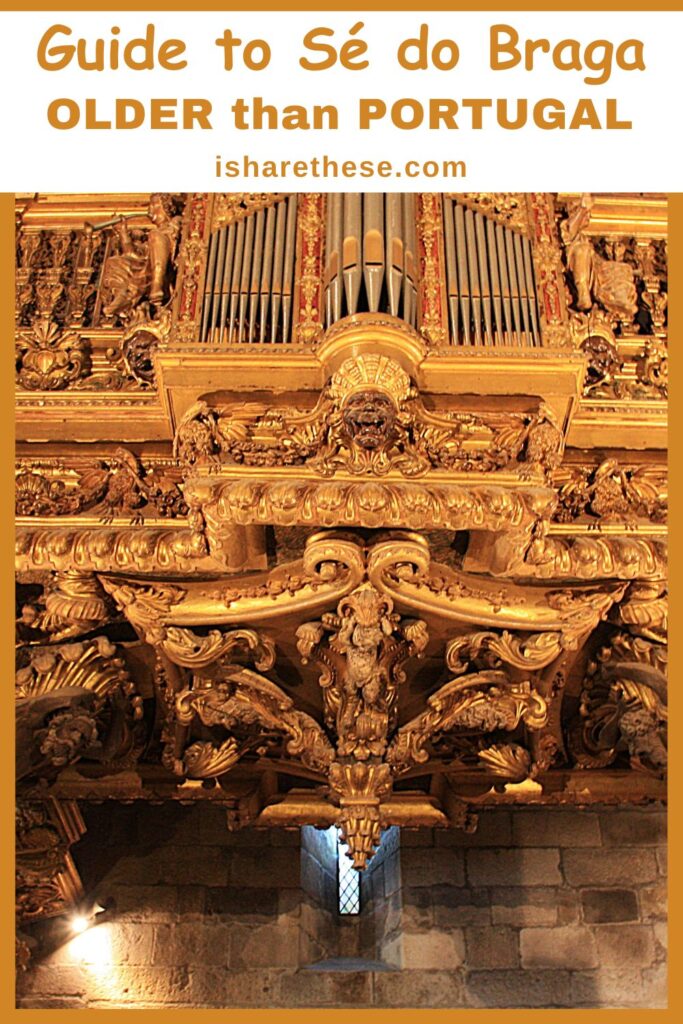
Organ and ceiling of the High Choir of Braga Cathedral
Practical Information for Your Visit
Opening Hours (2025): Braga Cathedral is open Monday to Saturday from 9.30 AM to 12.30 PM and 2 PM to 5.30 PM. It’s closed on Sundays for tourist visits due to religious services.
Important: the cathedral closes for lunch, so plan your visit accordingly.
Sé de Braga Tickets: There are four ticket options:
- Cathedral nave only: €2
- Treasury Museum (Tesouro-Museu): €3
- High Choir + Chapels: €2
- Combined Ticket (All areas): €5
My recommendation: Don’t skip the High Choir (Coro Alto). For just a couple of extra euros, you’ll access the cathedral’s most breathtaking vantage point. The intricately carved 18th-century wooden choir stalls and the twin Baroque pipe organs—suspended like musical chandeliers—are unforgettable. It’s the best spot for photography and reflection, offering a bird’s-eye view of the nave below.
Best Time to Visit: Arrive early in the morning (9.30 AM opening) to avoid crowds and tour buses. Weekdays are noticeably quieter than Saturdays. The soft morning light filtering through the stained glass adds a mystical dimension to the Braga Cathedral interior.
If you’re traveling from Porto (about 55 km north), consider catching the 8 AM train from São Bento station—the journey takes approximately 1 hour and costs around €3-4 each way, making your day trip to Braga from Porto both affordable and efficient.
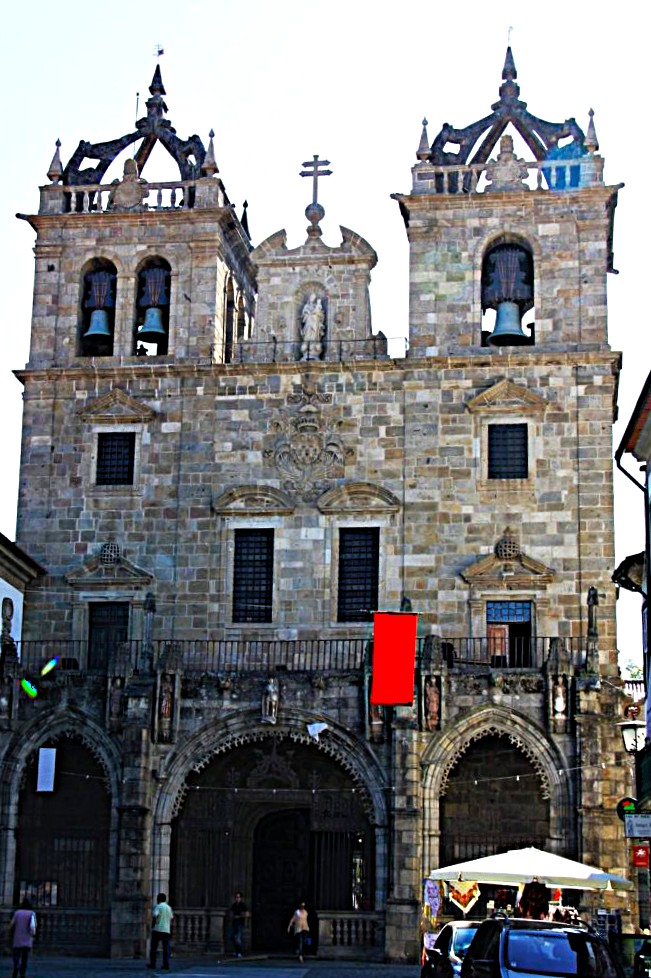
Facade of Braga Cathedral – three arches is gothic (end of 15th century), the towers and upper storeys are early baroque (17th century)
A Brief History: Older Than Portugal Itself
Braga Cathedral isn’t just old—it’s older than Portugal itself. Construction began in 1070 under the direction of Bishop Pedro, making it the oldest cathedral in Portugal and predating the nation’s official founding in 1143 by seven decades.
Step inside, and you’re walking into 900 years of power struggles, royal dreams, and architectural layers built on the triumphs and tensions of empires.
The Royal Connection: Parents of a Nation
The cathedral was commissioned by Count Henry of Burgundy and his wife Teresa of León, who ruled the County of Portugal. Their Gothic-style tombs lie within the cathedral’s Chapel of Glory (Capela da Glória), making this not just a religious site but a dynastic shrine.
They were the parents of Afonso Henriques, who became Portugal’s first king in 1139. Standing before these weathered sarcophagi, you’re literally face-to-face with the founders of a nation.
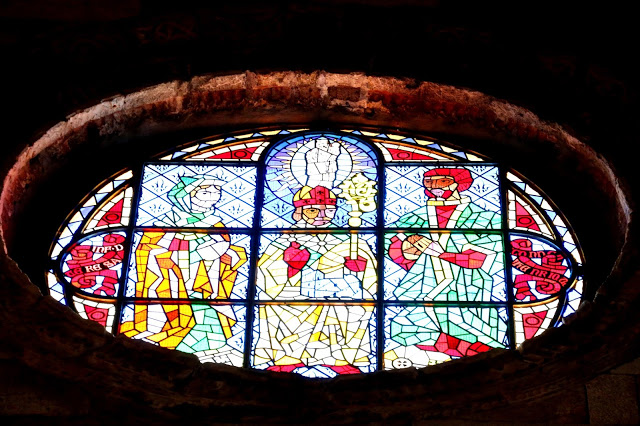
Stained Glass Window Braga Cathedral
A Living Architectural Chronicle
Braga Cathedral is a glorious patchwork of four distinct styles spanning 900 years. It’s a multi-century storytelling in stone:
- Romanesque (11th-12th century): The heavy, fortress-like walls and rounded arches speak of medieval strength—the cathedral’s original DNA
- Gothic (14th-15th century): Pointed arches, ribbed vaults, and the intricate funerary chapels add vertical drama
- Manueline (early 16th century): Portugal’s own flamboyant style sneaks in with maritime motifs, twisted columns, and ornate flourishes
- Baroque (17th-18th century): The twin pipe organs, gilded side chapels, and azulejo tilework explode with theatrical flair
This architectural layering makes the Braga Cathedral interior feel like a living museum.
When I visited in 2015, I stood beneath the High Choir, camera in hand, marvelling at how each style didn’t compete—they conversed. The Romanesque solidity anchors the space while Baroque gold leaf catches the light above. That’s the soul of Sé de Braga: layered, lived-in, and unapologetically complex.
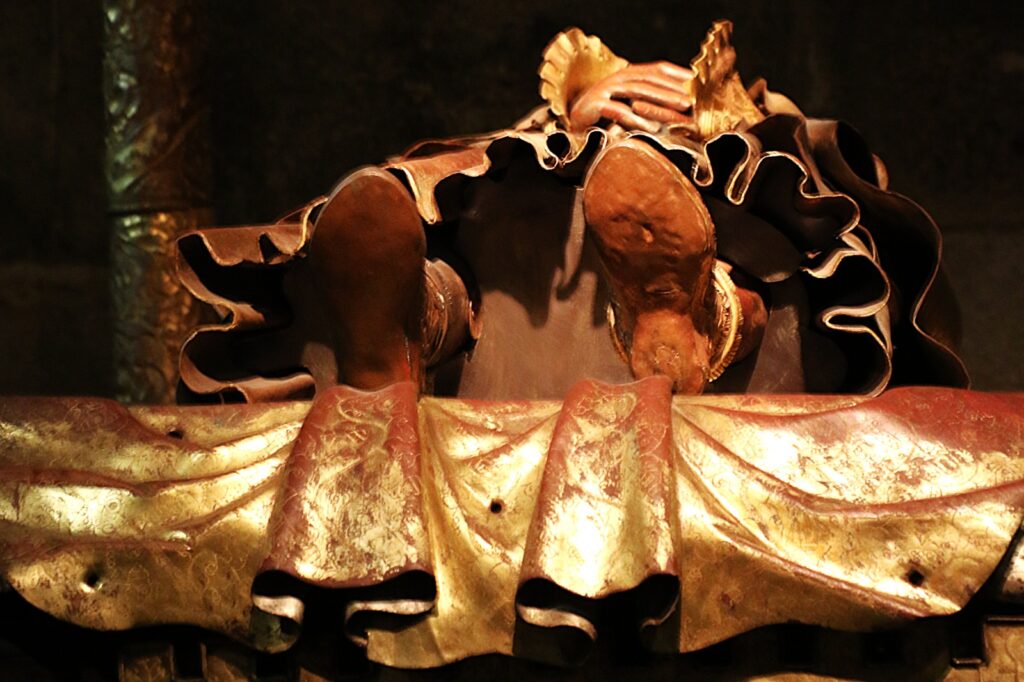
Detailed view of Tomb of Infant D Afonso within the Braga Cathedral
Interior of Cathedral: What to See and Do
The Braga Cathedral interior is a layered journey through Portugal’s artistic and spiritual evolution. Whether you’re here for the architecture, the sacred relics, or simply wondering “Is Braga Cathedral worth visiting?”—the answer unfolds with every step through its storied spaces.
The Main Nave and Altar: Romanesque Foundations
Step into the centuries old Romanesque nave. The thick granite walls (over a meter deep in places), rounded arches, and deliberately dim lighting evoke a fortress of faith. It was built not just to impress, but to endure the political instability of medieval Iberia.
The main altar is a later Baroque addition, more ornate than the nave itself, but still restrained compared to the theatrical flourishes elsewhere.
A local guided me to the Manueline baptismal font near the entrance, tucked discreetly to one side. This carved granite masterpiece from the early 1500s is a gem of Portugal’s maritime-inspired style, with rope-like carvings and botanical motifs that whisper of the Age of Discoveries.
The High Choir (Coro Alto): The Cathedral’s Crown Jewel
This is where your Sé de Braga ticket investment truly pays off. Climb the narrow stone staircase (42 steps—I counted) and emerge into the High Choir, suspended above the nave like a sacred balcony offering a commanding view of the entire cathedral below.
Standing there in 2015, I remember being stunned into silence. The gilded 18th-century choir stalls feature intricate carvings of biblical scenes and musical angels. The sense of elevation—both literal and spiritual—made it feel like I’d stepped into a celestial theatre.
I took several photos here (which I’ve included in this post), and it remains one of the most visually arresting sacred spaces I’ve encountered in Portugal.
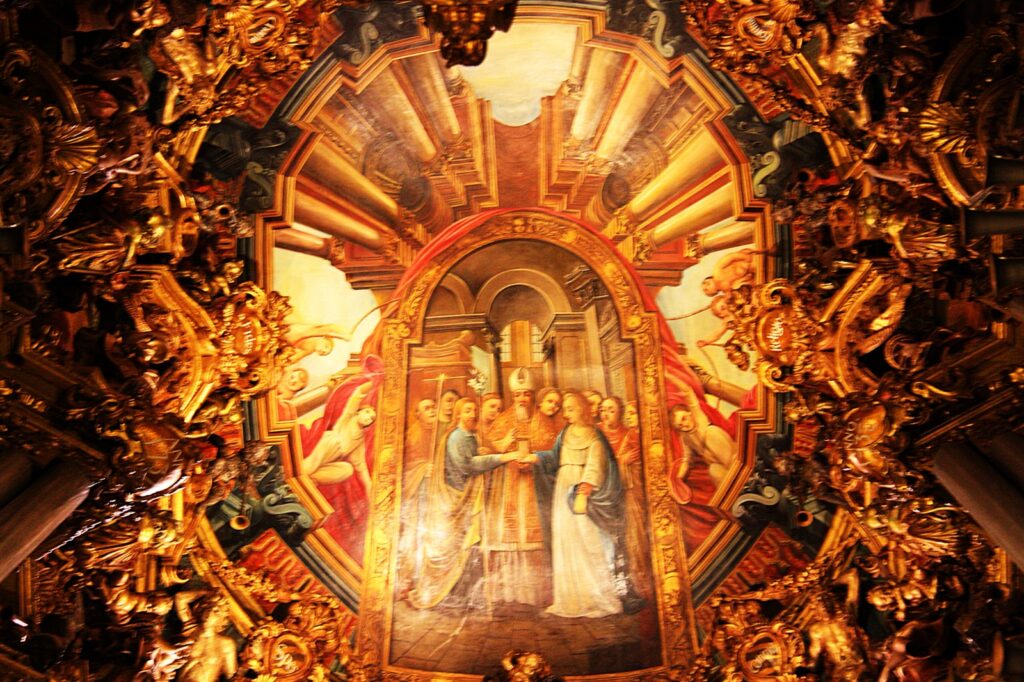
Marriage of the Virgin Mary and Saint Joseph pic 2015
The Twin Baroque Organs: Musical Grandeur in Stereo
The double pipe organs, crafted by master builder Simão Fontanes and installed in 1737-1738, are the cathedral’s visual showstoppers. They hang symmetrically on either side of the choir like golden wings, each one a riot of carved cherubs, gilded scrolls, acanthus leaves, and musical symbolism. Together, they contain over 3,000 pipes.
They’re still used for special liturgical celebrations and occasional concerts. If you’re fortunate enough to hear them played, the acoustics from the High Choir are sublime—the sound literally surrounds you from both sides. Even silent, they dominate the space with theatrical Baroque elegance that makes the Braga Cathedral interior unforgettable.
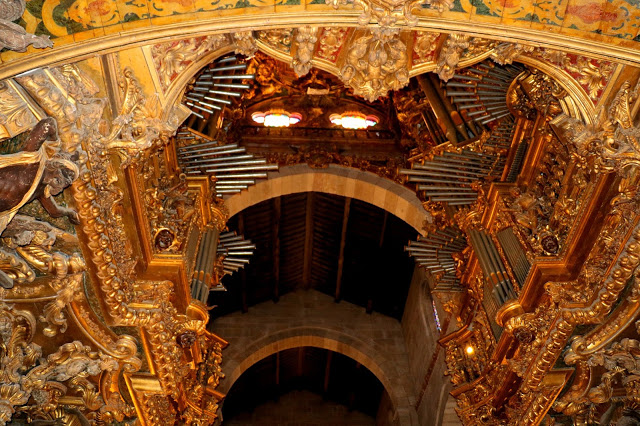
Twin Baroque Organs Musical Grandeur in Stereo
The Chapels: Kings, Glory and St. Geraldo
Braga Cathedral’s side chapels are like intimate galleries within a museum—each with its own architectural mood and historical purpose.
- Capela dos Reis (Chapel of the Kings): Somber and regal, this Gothic chapel houses the tombs of Count Henry of Burgundy and Teresa of León. The 14th-century sarcophagi are understated, but the historical weight is immense—you’re standing before the parents of Portugal’s first king.
- Capela da Glória (Chapel of Glory): A visual delight featuring geometric azulejo tilework from the 17th century. The blue and white patterns feel almost Moorish in their precision, creating a striking contrast with the golden Baroque altarpiece.
- Capela de São Geraldo (St. Gerald’s Chapel): Dedicated to Braga’s first archbishop (and the city’s patron saint), this chapel is more intimate, with Gothic arches and 14th-century devotional frescoes. The silver reliquary containing St. Gerald’s remains sits behind the altar.
Each chapel offers a different lens into Braga’s nine-century spiritual legacy.
The Treasury Museum (Tesouro-Museu): Sacred Artifacts
Here’s where I’ll be honest: I didn’t enter the museum during my 2015 visit—my focus was on the architecture and photography. But I’ve since researched what I missed, and the Treasury Museum is absolutely worth the extra €3 or the €5 combined ticket.
The highlight is the Cross of Brazil (Cruz do Brasil), a stunning 16th-century processional cross encrusted with 1,426 precious stones—gold, emeralds, and diamonds from Portuguese colonial territories. It connects Portugal’s ecclesiastical heritage directly with its Age of Exploration wealth.
The museum also displays Archbishop’s vestments embroidered with gold thread, 12th-century illuminated manuscripts, medieval chalices, and a remarkable collection of baroque silver reliquaries. It’s quiet, professionally curated, and adds significant historical depth to your understanding of Sé de Braga’s role as Portugal’s primatial see (the country’s oldest and most important archbishopric).
Is Braga Cathedral worth visiting? After exploring the High Choir, the twin organs, the royal chapels, and understanding the Treasury’s riches—the answer is a resounding yes, especially for the modest €5 combined ticket price.
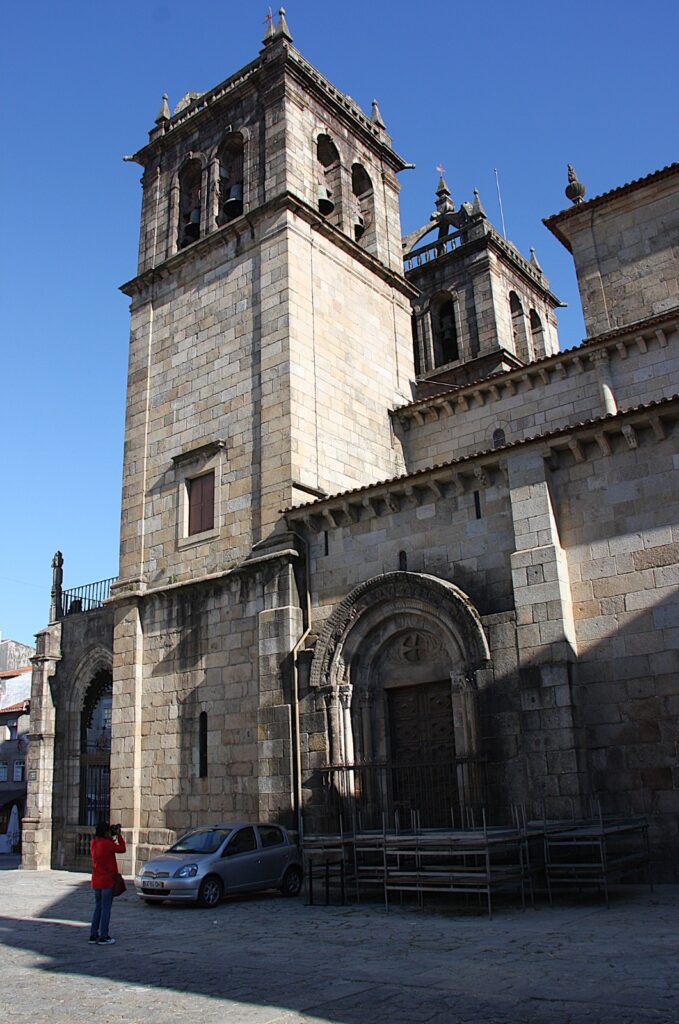
View of the South side of Braga Cathedral
Photography Tips: Capturing the Braga Cathedral Interior
Braga Cathedral is a dream for architectural photographers—but it’s also a technical challenge. The interior is deliberately dim (typical of Romanesque design), so you’ll need a steady hand, high ISO settings, or ideally a tripod to capture the moody stone textures and gilded Baroque details without blur.
I shot most of the images handheld in 2015 using an older DSLR at ISO 1600-3200, and while some came out grainy, the atmospheric quality was worth the technical compromise. Flash photography is prohibited inside, so natural light technique is essential.
Best shooting positions:
- For the twin organs: The upper balustrade in the High Choir offers the perfect symmetrical angle. From there, you can frame both organs together with the nave stretching below like a stone river. Morning light (9.30-11 AM) filtering through the clerestory windows adds a soft directional glow—perfect for highlighting the gilded carved wood.
- For detail shots: The Manueline baptismal font and the geometric azulejo tilework in Capela da Glória offer rich textures and compelling patterns.
Camera settings: If you’re using a smartphone, switch to manual/pro mode and underexpose by -0.5 to -1 stop to preserve highlight detail in the gold leaf. For DSLR/mirrorless users, a fast prime lens (f/1.4-f/1.8, ideally 35mm or 50mm) will help immensely in low light while keeping ISO manageable.
Outside, the cathedral’s weathered granite façade photographs best in early afternoon (2-4 PM) when direct sun emphasizes the Romanesque portal carvings.
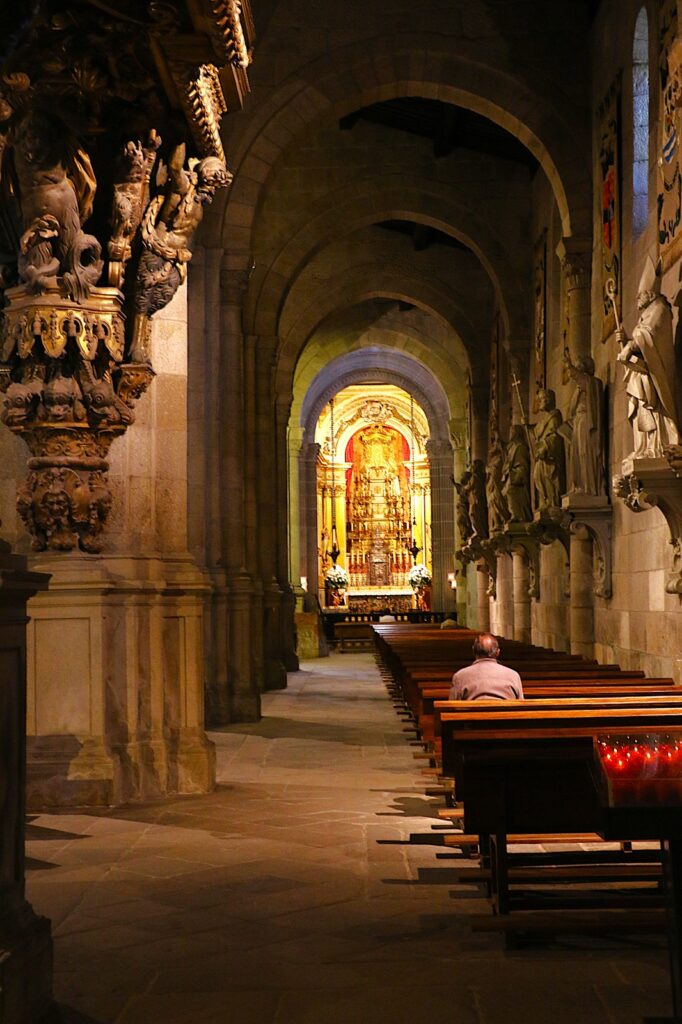
Se de Braga interior Aisle and chapel
Nearby: Bom Jesus do Monte Sanctuary
You can’t discuss Braga Cathedral Portugal without including Bom Jesus do Monte—the city’s other UNESCO-recognized sacred site. Located just 5 km east (a 15-minute drive), it’s easily reached by local bus (line 2, €1.70), taxi (€8-10), or the historic water-powered funicular from 1882—Portugal’s oldest still in operation.
If you’re planning a day trip to Braga from Porto, visiting both monuments makes for a perfectly balanced itinerary: morning at the cathedral, afternoon at Bom Jesus.
After the dark, ancient solemnity of Sé de Braga, the open-air Baroque grandeur of Bom Jesus offers a radiant architectural contrast. The famous zigzagging Escadório (Grand Staircase) features 577 steps adorned with ornamental fountains, allegorical statues representing the Five Senses and Three Theological Virtues, and whitewashed chapels at each landing. It climbs toward a neoclassical hilltop church with sweeping panoramic views over Braga and the Minho region.
It’s a photographer’s paradise—especially during golden hour (one hour before sunset).
Pro tip: If you’re feeling energetic, climb the stairs on foot (allow 20-25 minutes) to appreciate the symbolic religious journey. Otherwise, the charming funicular (€2 round-trip) offers a nostalgic alternative.
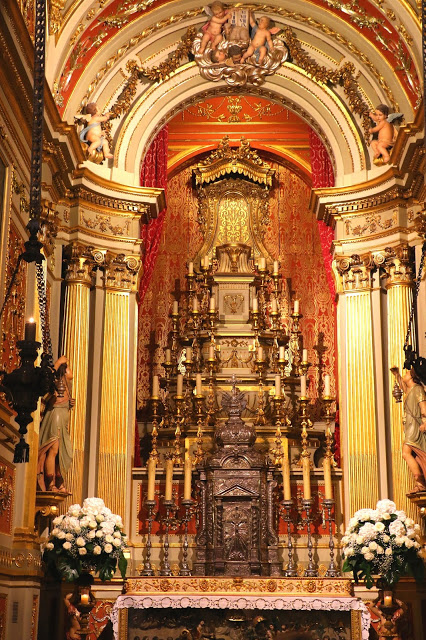
Se de Braga Cathedral interior – chapel
FAQ: Planning Your Trip for Braga Cathedral
Is Braga Cathedral worth visiting?
Absolutely. As the oldest cathedral in Portugal, it offers a rich blend of history, architecture, and spiritual ambiance. The €5 combined ticket gives access to the High Choir and chapels—well worth it.
How do I get to Braga from Porto?
Take the train from Porto São Bento or Campanhã stations. The journey takes about 1 hour, and trains run frequently. Once in Braga, the cathedral is a short walk from the city center.
What are the cathedral’s opening hours?
It’s open Monday to Saturday, from 9:30 AM to 12:30 PM and 2:00 PM to 5:30 PM. Closed Sundays for tourist visits. Note: It closes for lunch, so plan accordingly.
Can I buy Sé de Braga tickets online?
Tickets are usually purchased on-site, but check the official website or Braga tourism portals for updates. No need to book in advance unless you’re part of a large group.
What should I wear?
Dress modestly—this is an active place of worship. Comfortable shoes are a must, especially if you plan to climb the High Choir or visit Bom Jesus do Monte afterward.
Is photography allowed inside?
Yes, but no flash. Respect quiet zones and avoid photographing during services. The best shots are from the High Choir and chapels.
How long do I need to visit Braga Cathedral?
Plan for 1 to 1.5 hours if you’re exploring the main nave, High Choir, chapels, and Treasury Museum. If you’re short on time, a 45-minute walkthrough of the cathedral interior and High Choir still gives you the highlights. Add extra time if you’re into photography or want to linger in the chapels.
Is Braga Cathedral wheelchair accessible?
The main nave and entrance area are accessible, but the High Choir and some chapels require stairs, which may limit access. There’s no elevator to the upper levels. If mobility is a concern, focus on the ground-level areas and the exterior architecture—they’re still impressive and historically rich.
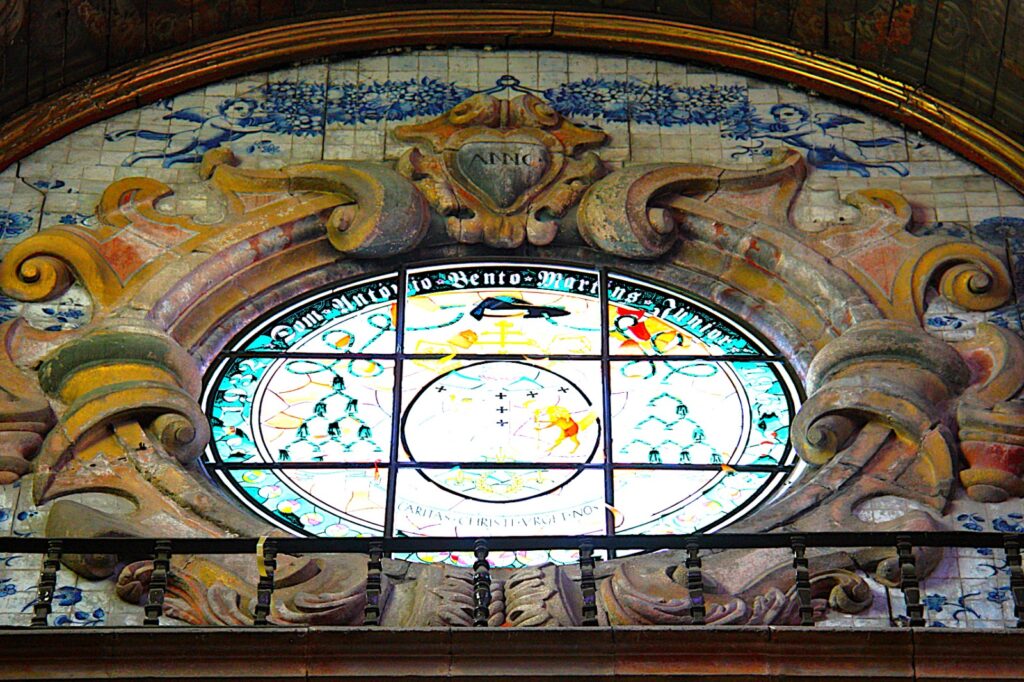
Azulejos around the rose window
Final Thoughts: Is Braga Cathedral Worth Visiting?
Absolutely. For €5, you’re not just buying a ticket—you’re accessing 900 years of Portuguese history, architectural evolution, and sacred artistry compressed into one extraordinary space. The Braga Cathedral interior, especially the High Choir and twin Baroque organs, left an impression on me that’s lasted nearly a decade since my 2015 visit.
Whether you’re making a day trip to Braga from Porto or exploring northern Portugal more extensively, Sé de Braga deserves at least 60-90 minutes of your time. It’s the kind of place that rewards slow observation—each chapel, each carved detail, each beam of filtered light tells a story. This isn’t just the oldest cathedral in Portugal; it’s a living testament to faith, power, and artistic ambition across centuries.
Have you visited Braga Cathedral? What surprised you most about the interior—or what questions do you have about planning your visit? Share your experience in the comments below.
Pin and Save this for later
About the author
 Indrani Ghose is a travel blogger and photographer who has explored 15+ European countries across multiple trips. Based in Bangalore, she shares authentic travel experiences to help fellow travelers navigate the world more safely and confidently. You can follow her on her social media handles Instagram, Twitter and Facebook to see the wonderful destinations, beautiful offbeat places and get instant updates about them.








What a gorgeous cathedral. I definitely would love to check this in person when in Braga. Thanks for posting about it.
Another wonderful cathedral. As usual, this one too diid not disappoint. Awesome sculpuyures all over! Also good to note some interesting work on colourful glass.
Looks very intricate! I’ve been planning on visiting the country forever…
The Cathedral looks amazing. We would love to explore Portugal. Will keep this in our list. Wonderful post
Really nice content of the history behind the cathedral and some helpful tips. It looks beautiful! I always enjoy seeing different cathedrals they are all similar yet so different.
Cathedrals always seem to be good places to visit as a tourist. I really like the pictures of Braga Cathedral and the gold inside. Portugal has such stunning architecture and a rich history.
Such a splendid architecture 🙂 I haven’t been there, but definitely I will go 🙂 Brillant pictures!
Beautiful cathedral. That organ is stunning! I can’t believe how big and ornate it is. I bet you were tempted to play it! Must get to Portugal one day…
So gorgeous, hopefully one day I will be able to make my way to these places. Every photo makes it look like a photographers dream!
Lovely blog. I explored the Portuguese houses in Fontainhas in Goa last month. It made me want to visit Portugal.
Lovely Cathedral. Looks so peaceful and also the architecture is amazing. I loved the glass painting.
I love how you mix useful info like the 5 euro entrance fee with historical facts. Great photos too. This cathedral looks absolutely beautiful!
I can not even believe the ceiling of that building! So much detail and so intricate. Amazing!
For me churches and cathedrals are usually a good place to get a great view over the area. I usually never consider the interior of the churches. But as seen in your photos, the interior can really be filled with art pieces. 🙂
The cathedral sounds to be very ancient. Amazing interior and details to observe!
Love you exploration spirit! The result is the discoveries of awesome places like this cathedral. Everything there looks very intricate and pretty.
Such rich intricate ornate designs. I loved the shots taken by looking up. 🙂
The artistry is evident in the cathedrals in Europe in much the same way as it is in the temples and forts of India.
Looks gorgeous with magnificent work.
Pictures are vibrant and colorful. And also learnt a few things!
Seems like a really beautiful place with all the spectacular architecture! Very well written too.
I can understand why you could not take off your eyes…gorgeous interiors.
Beautiful!
How rich and ornate, different culture different time.
The architectures of cathedrals always amaze me. I have had the opportunity to visit a few myself!
Very enjoyable post!
Lovely pictures Indrani ji ! Such a beautiful architecture of the cathedral !
Brilliant pictures of the grand interior!
The high choir definitely is beautiful. Another beautiful site that has been got my travel itch stronger .
Wow! All photos you’ve taken are mesmerising. No words for this beautiful architecture.
Such intricate designs. I loved the little angels at the sides and the top of the altar.
Great! I love the pics
enjoyed ur post !
Gorgeous! The details are amazing.
Lovely pictures! Such a gorgeous architecture!
Beautiful…!!!
Its always very interesting to read your posts, come to know something new every time have a nice trip..
So right at 8 pm it surely gets deserted 🙂 awesome pics and an elaborate post 🙂
Hello, it is a lovely cathedral. Beautiful stained glass. It is great to try the local food. Sounds like an awesome place to visit. Have a happy new week ahead!