Old Cathedral Coimbra: Guide to Portugal’s Romanesque Masterpiece
A Timeless Encounter with the Old Cathedral of Coimbra
The Old Cathedral of Coimbra (Sé Velha) is one of Portugal’s most enduring Romanesque monuments, standing sentinel over the city’s historic heart for nearly 900 years. When I first visited Old Cathedral of Coimbra in 2015, its fortress-like bulky façade and golden limestone shimmered under the spring sun—an unforgettable sight that still lingers in my travel archives.
Nestled halfway up the hill where Coimbra’s medieval core unfolds, the cathedral’s austere beauty and crenellated silhouette evoke both reverence and resilience. Its compact structure, triple nave, and Gothic cloister whisper stories of faith, conquest, and continuity.
— Indrani Ghose, travel blogger | Updated Nov 2025
If you’re visiting today, you might notice subtle restorations to the cloister and façade—updates since my 2015 visit that preserve its grandeur while enhancing accessibility.

Old Cathedral of Coimbra
History: Stone Chronicle of Portugal’s Birth
A Cathedral Born from Royal Ambition
The Old Cathedral of Coimbra (Sé Velha) stands as Portugal’s most tangible link to its founding moment. Built shortly after the Battle of Ourique in 1139—when Afonso Henriques declared himself Portugal’s first king—this cathedral became far more than a place of worship. It was a deliberate statement: Portugal had arrived.
What fascinates me most about Sé Velha is how it captures that pivotal moment when Portugal was carving its identity from the contested territories of the Iberian Reconquista. This wasn’t just about faith; it was about survival and sovereignty.
From Mosque to Christian Monument
Construction began under King Afonso Henriques and Bishop Miguel Salomão’s patronage, with Master Roberto—the same architect behind Lisbon Cathedral—leading the vision. The cathedral rose on the ruins of a former mosque, a symbolic transformation that defined Coimbra’s shift from Islamic to Christian rule.
The Romanesque design reflects both spiritual ambition and military pragmatism. Those fortress-like crenellated walls and narrow slit windows? They weren’t aesthetic choices—they were designed to withstand actual sieges during one of medieval Europe’s most volatile periods.
Royal Ceremonies and Sacred Power
Sé Velha played a pivotal role in legitimizing Portugal’s monarchy. In 1185, King Sancho I was crowned here, cementing the Old Cathedral of Coimbra’s status as the kingdom’s royal ecclesiastical seat. Inside, the tripartite chevet and projecting transept reveal a more contemplative side, where sacred geometry met medieval artistry.
The Gothic cloister, added in the early 13th century, marks an important stylistic evolution. Today, UNESCO recognizes Coimbra’s university and historic center, with Sé Velha forming a cornerstone of this architectural heritage—a living textbook of Portugal’s medieval transformation.

Stained Glass windows inside Se Velha
Architectural Features: Where Stone Tells a Sovereign Story
The front portal is impressive. No wonder why it is the venue of one of the main cultural events in the city, the serenade, in May. It is that time of the year when the academic year ends. During the event the male graduates sing fado as a farewell to student life.
Facade of Romanesque Fortress
The Old Cathedral of Coimbra is arguably Portugal’s finest example of Romanesque fortress-church architecture. When I first approached it in May 2015, I expected a typical medieval church. What I found stopped me in my tracks: a building that looked ready to repel invaders while simultaneously welcoming the faithful.
The façade looked very simple with arches over the door and over its window. The pillars at the entrance had some designs of Moorish architecture carved on them. It is believed to be an unbreakable façade. Some of the blocks have mason’s mark and Arabic writing on them.
The exterior’s crenellated walls, thick limestone blocks, and narrow defensive windows speak to the Reconquista’s constant threat. My photos from that visit—taken in the golden midday light—still capture how the honey-colored stone seems to absorb centuries of Portuguese sunshine.
Interior Mastery: Columns and Capitals form Sacred Geometry
Step inside, and the atmosphere shifts dramatically. Massive cylindrical columns support rounded Romanesque arches that divide the triple nave, creating a rhythmic interplay of light and shadow I’ve rarely seen matched elsewhere.
The tripartite chevet and projecting transept showcase Master Roberto’s engineering genius—these aren’t just decorative elements but sophisticated solutions balancing architectural weight with liturgical acoustics.
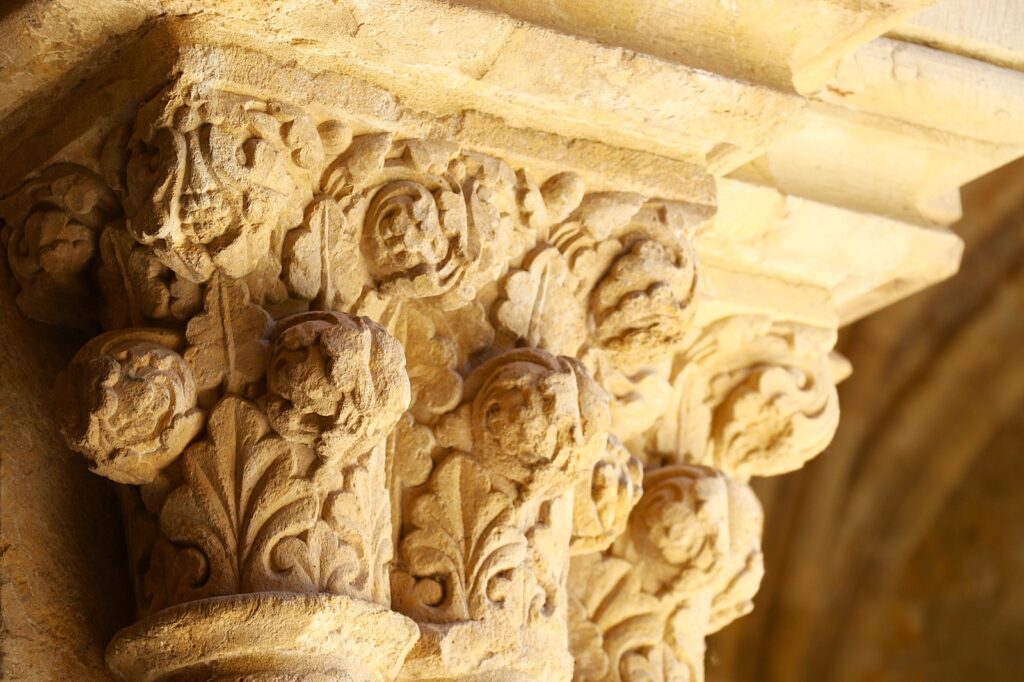
Delicate capitals with floral designs
The Gothic Cloister: Portugal’s Oldest
The Gothic cloister, completed in the early 13th century, remains my favorite feature of the Old Cathedral of Coimbra. As Portugal’s oldest Gothic cloister, it offers a peaceful counterpoint to the fortress exterior.
The pointed arches and ribbed vaults demonstrate the architectural transition happening across medieval Europe. When I returned virtually in 2025 (through recent visitor photos), I noticed conservation work has beautifully restored the stonework’s original clarity.
We strolled through this oldest Gothic cloister of Portugal. The lawns are maintained so well, and the patch of green looked soothing. The tomb here is of Coimbra’s first governor and dates back to 1064. Each of the Gothic pointed arches that face the courtyard encompass two twin round arches in Romanesque style.

Gothic cloister of Old Cathedral of Coimbra
The Hidden Gem: Especiosa Door of Coimbra Se Velha
Don’t leave without examining the Especiosa Door on the north façade. This 16th-century Renaissance masterpiece by João de Ruão features intricate bas-reliefs and delicate floral motifs that contrast stunningly with the austere Romanesque lines.
Most visitors miss this portal entirely—but if you’re serious about understanding Coimbra’s architectural evolution, allocate at least 10 minutes here. The sculptural detail rewards close inspection, especially for photography enthusiasts.
Altarpiece: Gold and Blue
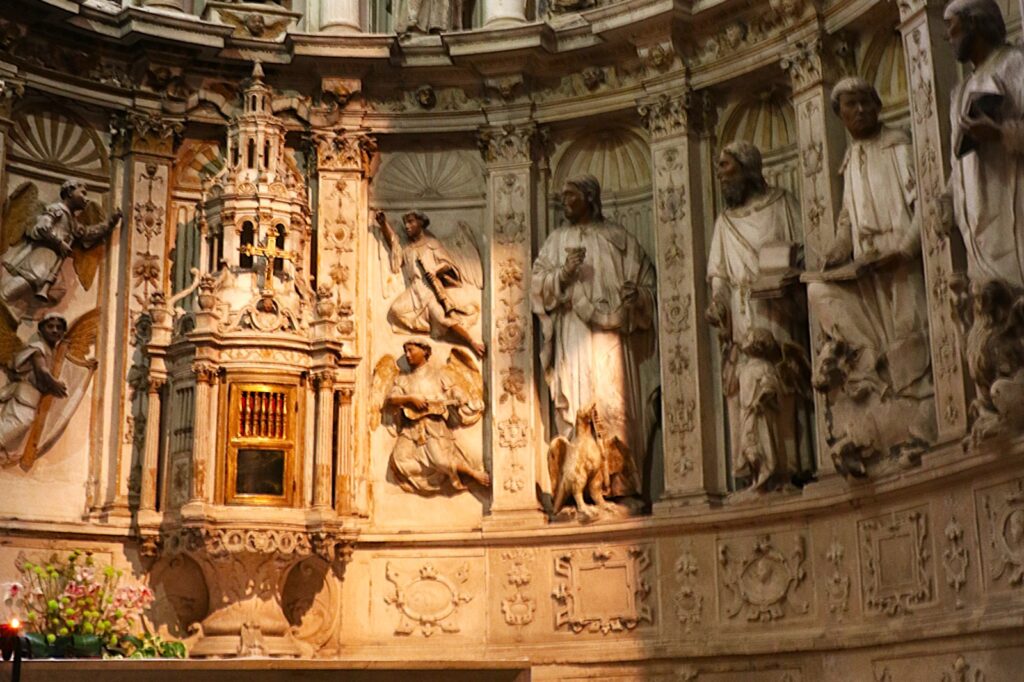
The main altarpiece of the Old Cathedral of Coimbra is a sight to behold! It is one of the most prestigious creations of its time. This imposing altarpiece (13m high) exhibits the color scheme of the 16th century. The altarpiece was created by Flemish sculptors in the early 1500s
There is abundant use of gold and blue, typical of flamboyant Gothic. It has been totally or partially coated four times over the five hundred years of its existence.

Altar in Old Cathedral of Coimbra
Lesser-Known Architectural Treasures: Hidden Gems Inside Sé Velha
Renaissance Splendor in the Capela Mor
Beyond the Old Cathedral of Coimbra’s fortress-like exterior lies an unexpected surprise: the Capela Mor (Main Chapel) houses a breathtaking 16th-century gilded retable that transforms the austere Romanesque interior. The gold leaf work catches the afternoon light magnificently—I nearly missed it during my first walkthrough in 2015.
The Overlooked Capela dos Cónegos
The adjacent Capela dos Cónegos (Canons’ Chapel) contains intricate medieval tombs and faded frescoes that most visitors rush past. Recent conservation work (completed 2022-2023) has significantly improved lighting here, finally revealing details I couldn’t properly see during my initial visit. Allocate an extra 10 minutes for these chapels—they’re worth it.
Tridacna Shell used as Baptismal Font
Another eye catching object here is a huge tridacna shell used holding holy water. It is a 19th century gift from Sri Lanka. Baptismal font are vessels in which water is contained to impart the sacrament of baptism.
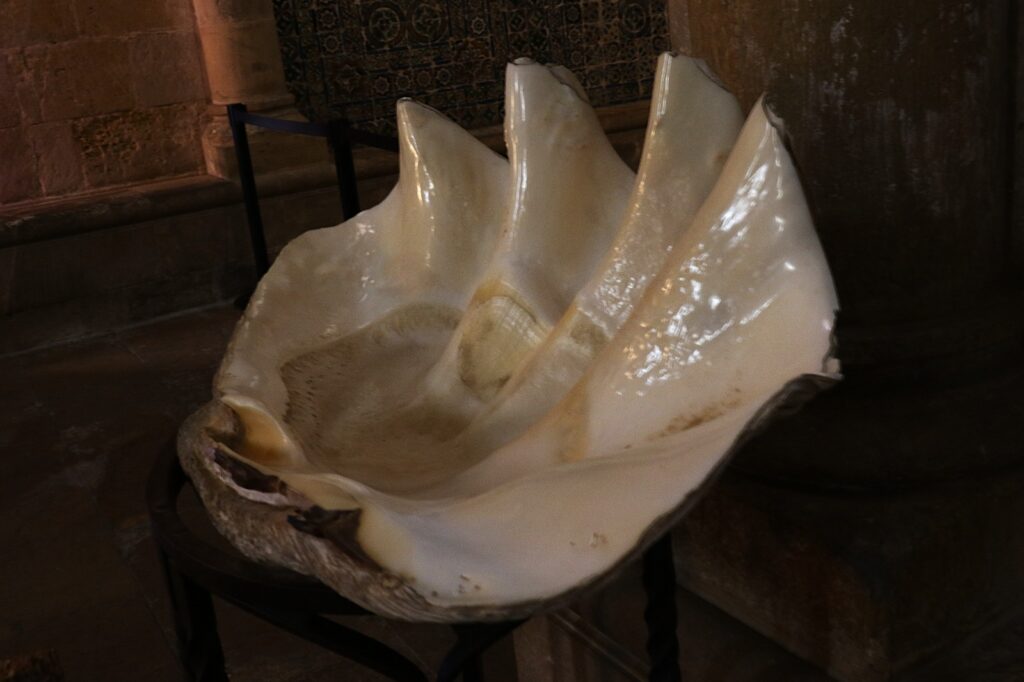
Tridacna Shell used as Baptismal Font with water for baptism
My Experience: Walking Through Time at the Old Cathedral of Coimbra
Stepping into the Old Cathedral of Coimbra in 2015 felt like entering a stone-bound silence that had witnessed centuries. The air was cool and slightly musty, carrying the scent of aged limestone and incense. I treaded softly on the uneven stone floor, each step a reminder of the pilgrims and kings who once walked here.
The lighting inside was dim but dramatic—shafts of sunlight pierced through narrow Romanesque windows, casting golden streaks across the nave. It was the kind of light that makes you pause, camera in hand, waiting for the perfect moment. I spent nearly 15 minutes photographing the cloister, where the interplay of shadow and arch creates a natural frame. Tip: The light is best for photos in the cloister between 10 AM and 11:30 AM.
Wear comfortable shoes—the stone floor is uneven and can be slippery in damp weather. And take your time. Sé Velha de Coimbra isn’t just a monument; it’s a mood. It invites you to slow down, listen to the echoes, and feel the weight of history in every carved detail.
Interplay of Light and Shadow
Visitor Information: Plan Your Visit to Sé Velha
Practical Details for Your Visit
The Old Cathedral of Coimbra welcomes visitors daily from 10 AM to 6 PM (hours may shorten slightly during winter months, typically to 5.30 PM). Entry costs €2.50—exceptional value for a monument of this historical significance.
How to Reach the Old Cathedral Coimbra
The Old Cathedral is located in a small square in the center of medieval city of Coimbra. You can reach the old cathedral by going up the steps from Arco de Almedina, the gateway to the old city. Se Velha is located west of Coimbra University’s campus. It will take you 10 mins walk east from the city’s principal railway station. There is parking space in front of the cathedral.
Insider Tips from My Experience
Based on my 2015 visit and recent traveler feedback (as of late 2025), weekday mornings between 10 AM to 11.30 AM offer the best experience. You’ll avoid tour groups, and the morning light filters beautifully through the nave’s narrow windows, creating that ethereal atmosphere you’ll want to photograph.
The audio guide (€2 additional, or via downloadable apps) provides invaluable context about Master Roberto’s architectural choices and the cathedral’s role in Portugal’s founding. Allocate 45-60 minutes to properly explore both the main cathedral and the Gothic cloister.
Local Cultural Connection
Pro tip: If you’re visiting in May, the cathedral steps become a gathering spot for traditional Coimbra fado performances during student celebrations. It’s an unexpected way to experience how Sé Velha remains woven into modern Portuguese cultural life, nearly 900 years after its foundation.
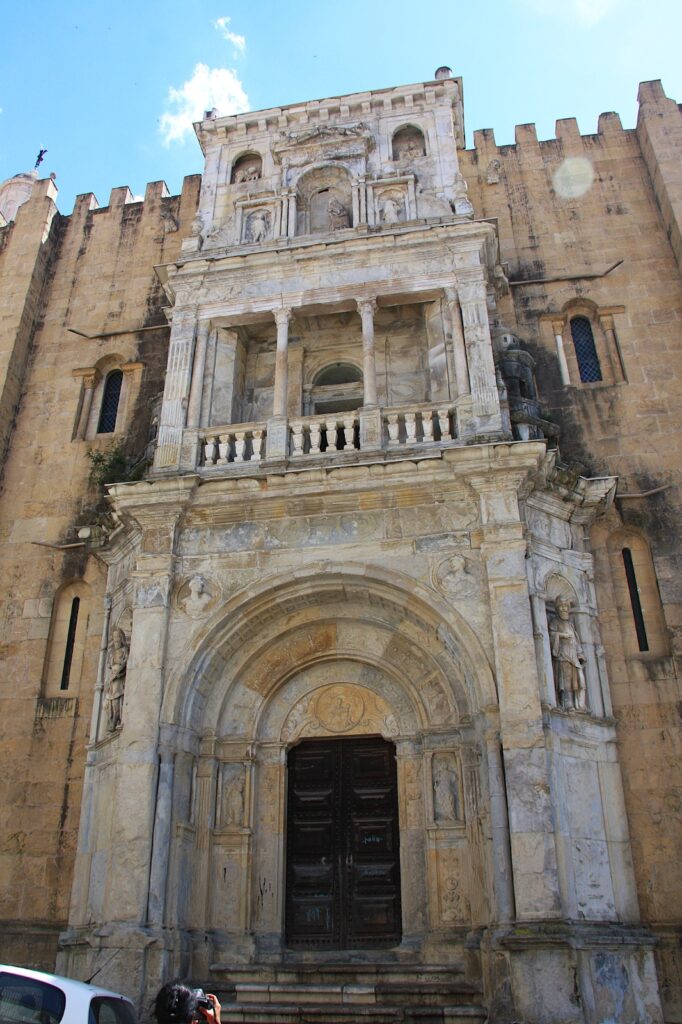
Especiosa Door on the North Façade
Exploring Coimbra: Perfect Itinerary Around the Old Cathedral
Create Your Medieval Walking Route
The Old Cathedral of Coimbra sits at the heart of a remarkable historical circuit. Uphill, the University of Coimbra—a UNESCO World Heritage Site since 2013—showcases the jaw-dropping Joanina Library, where Baroque opulence contrasts beautifully with Sé Velha’s medieval restraint.
Within a 10-minute walk, you’ll find the Sé Nova (New Cathedral), offering Mannerist and Baroque architecture, and the Santa Cruz Monastery, where Portugal’s founder, King Afonso Henriques, rests.
I recommend this sequence: Start at Sé Velha (9.30 AM) → University (11 AM) → lunch in the historic quarter → Santa Cruz Monastery (afternoon) → Sé Nova (late afternoon). This creates a chronological journey through Portuguese architectural evolution.
If you are spending a day in Coimbra add the visit to Old Cathedral of Coimbra to your list of must do things in Coimbra, Portugal. It is small and easily doable in less than an hour, including your photography.
Highlights of Old Cathedral of Coimbra
- Towering central portal
- The door’s traditional Arabic décor
- Tiles from Seville
- The side portal, known as the Beautiful Door, designed by João de Ruão
- Wonderful cloisters with impressive pediments and columns
- Arabic influences on the patterns painted and carved onto the walls
- Bird and flower motifs but no biblical figures

My photo from 2015 of the incredible colorful Seville Tiles in Altarpiece at the Old Cathedral Coimbra.
Is the Old Cathedral of Coimbra Worth Visiting?
My Honest Assessment: An Unequivocal Yes—Here’s Why
The Old Cathedral of Coimbra isn’t just worth visiting—it’s essential for understanding Portugal’s medieval identity. Having explored other cathedrals of Portugal, I can confidently say Coimbra Sé Velha offers something rare: architectural authenticity that hasn’t been over-restored or modernized beyond recognition.
From its Romanesque fortress-church foundations to the Gothic cloister and Renaissance embellishments, this cathedral compresses 900 years of Portuguese history into walkable stone.
For Every Type of Traveler
Whether you’re documenting medieval architecture, tracing Portugal’s founding story, or simply seeking an atmospheric escape from modern Coimbra, the Old Cathedral of Coimbra delivers. At €2.50 entry, it offers exceptional value compared to similar European heritage sites.
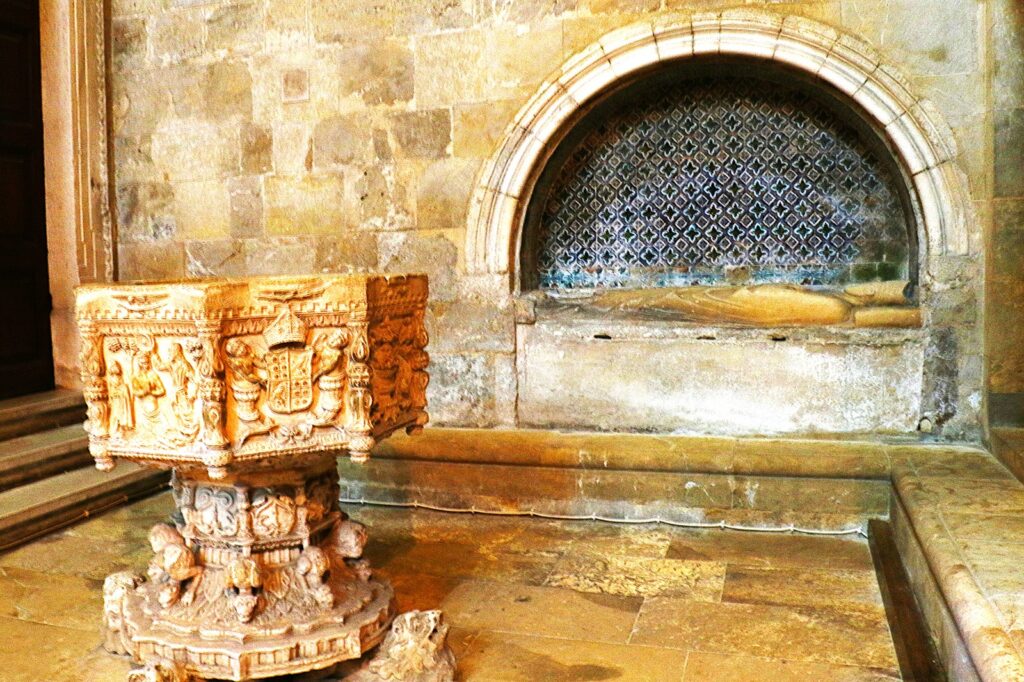
Tombs of several bishops and important figures buried in Cathedral
FAQ about the Old Cathedral of Coimbra
Q. What is the historical significance of the Old Cathedral of Coimbra in Portuguese history?
The Old Cathedral of Coimbra (Sé Velha) is one of the oldest Romanesque buildings in Portugal, dating back to the 12th century. It was the site of King Sancho I’s coronation in 1185 and played a key role during the Reconquista, symbolizing the Christian reclaiming of Coimbra from Islamic rule. Its architecture reflects both religious devotion and military strategy.
Q. What are the must-see architectural features of the Old Cathedral Coimbra?
Don’t miss the Especiosa Door, a Renaissance portal with intricate carvings, and the Gothic cloister, the oldest of its kind in Portugal. Inside, the tripartite nave, rounded arches, and Renaissance retable in the Capela Mor offer rich visual and historical layers. My personal favorite for photography was the cloister between 10 AM and 11.30 AM.
Q. How much is the entrance fee to the Old Cathedral of Coimbra and are audio guides available?
The entrance fee is approximately €2.50, making it an affordable cultural experience. Audio guides are available at the entrance or via mobile apps, offering detailed insights into the cathedral’s history and architecture. I found the guide especially helpful for understanding the symbolism behind the Especiosa Door.
Q. What are the best photography tips for visiting the Old Cathedral Coimbra?
- Visit between 10 AM and 11.30 AM for optimal lighting in the cloister.
- Wear comfortable shoes—the stone floor is uneven.
- For a full façade shot, head to the small square uphill from the cathedral.
- Use natural light to capture the golden hue of the limestone walls.
Q. What other historical sites are near the Old Cathedral of Coimbra?
Nearby landmarks include the University of Coimbra, New Cathedral (Sé Nova), and Santa Cruz Monastery. These sites form a rich cultural circuit and are within walking distance, perfect for a half-day itinerary.
Join the Conversation
Have you experienced Sé Velha’s unique atmosphere? Share your photos or impressions in the comments below—I particularly love seeing how different lighting conditions reveal new architectural details.
Planning your Coimbra visit? Drop a comment or reach out—I love helping fellow travelers uncover hidden layers of history.
Let Sé Velha’s ancient stones tell you Portugal’s founding story, just as they once witnessed kings, crusaders, and pilgrims who shaped a nation.
Pin and Save this for Later
About the author
 Indrani Ghose is a travel blogger and photographer who has explored 15+ European countries across multiple trips. Based in Bangalore, she shares authentic travel experiences to help fellow travelers navigate the world more safely and confidently. You can follow her on her social media handles Instagram, Twitter and Facebook to see the wonderful destinations, beautiful offbeat places and get instant updates about them.








Nice Photographs of Cathedral,, An interesting Post!
Stupendous Interiors and excellent photos.Need to plan here one day.
Cheers,
Sriram & Krithiga
The view of the interiors is so breathtaking… amazing work and craftsmanship.. want to visit this place…
Fabulous photos of this wonderful Cathedral. Amazing !
Best regards, Synnöve
Beautiful and colorful interior of an ancient structure . Thnx for sharing it with us Indrani ji .
What a beautiful place!!
You have been all over Portugal! I am enjoying all these great place thru your lens.
The doorway arch looks great. The insides seem to have a lot of details.
And there’s nothing quite like light filtering into a place to worship, through those stained glass windows.
What a beautiful cathedral !!
Lovely place to visit !!
Greteings
Hello, beautiful cathedral. The interior is gorgeous! Lovely series of images.
Happy Tuesday, enjoy your day!
Truly amazing and grand differences from inside out! The cathedral stands pretty strong that too on the slope… mighty one
I’m enjoying reading about your Portugal experiences, Indrani. It all looks so interesting.
Lovely intricate works and archways. Nice shots, Indrani.
Main altarpiece looks stunning. Brilliantly captured!
Amazing
Fantastic picture ??
Such an amazing building 🙂 Great interiors!
Magnificent interiors beautifully captured, Indrani 🙂
The altar is an intricate piece of art work. Beautiful cathedral and that Holy water font is amazing. Loved this post very much Indrani x
Oh my – so gorgeous!
Nice to hear about this cathedral! Good clicks
Amazing pics, Great informative post.
Portugal is high on my list! The church is beautiful!
Saree giveaway on my blog
The word Flamboyant is so apt…bright and vibrant colors. Amazing pics
Exteriors looked like a simple cathedral but the interiors are beautiful.
Nice piece of information Indrani..
awesome interiors… all these European cathedrals look so amazing!
You have lovely memories from Portugal 🙂
The details are incredible. It’s what makes these European cathedrals incredible.
Beautiful cathedral and really nice photos w/ details.
Well done, Indrani!!
Have a Beautiful Day!
Peace 🙂
What a great building, and so old!
A beautiful place and a magnificent cathedral!! And a great post for the day as always!! Thanks for sharing the beauty and the history, Indrani!! I hope you have a great new week!!
The inside is way more ornate than the exterior. What a surprise!