Visit Chapel of St Michael Coimbra Portugal: History and Highlights
Tucked within the ancient walls of Coimbra University, the Chapel of St Michael (Capela de São Miguel) is one of Portugal’s most stunning—yet underrated—sacred spaces. I’ve visited dozens of Portuguese chapels, but this 16th-century treasure genuinely stopped me in my tracks with its fusion of Manueline grandeur and Baroque brilliance.
Originally part of the Royal Palace, the chapel seamlessly blends royal heritage with academic tradition. From the moment you step through its intricately carved Manueline portal, you’re surrounded by gilded altarpieces, hand-painted azulejo tiles, and a historic pipe organ that still fills the space with ethereal music during ceremonies.
Chapel of St Michael Coimbra
In this guide, I’ll walk you through the chapel’s fascinating evolution—from medieval oratory to Renaissance masterpiece—plus share practical tips for your visit and highlight the architectural details you absolutely shouldn’t miss. Whether you’re crafting a Coimbra itinerary or diving deep into Portuguese art history, you’ll find everything you need here.
History and Construction of Chapel of St Michael
The Chapel of St Michael’s story begins humbly in the 12th century as a small oratory within Coimbra’s Royal Palace. But during the 16th century—as Coimbra University blossomed into one of Europe’s most prestigious centers of learning—this modest prayer space underwent a dramatic transformation into the monumental chapel we see today.
When the university acquired the palace complex in 1597, the chapel retained its royal privileges, creating a unique fusion of monarchical authority, Catholic faith, and academic pursuit that still defines Coimbra’s identity.
The current structure was designed by Marcos Pires, a master architect celebrated for his work in Portuguese Gothic and Manueline styles. After his death, Diogo de Castilho—a prominent Renaissance architect—completed the project, adding his own refinements to Pires’ vision. The dedication to St Michael the Archangel was deeply symbolic: this warrior angel had been the patron saint of Portugal’s founding monarch, King Afonso Henriques, making the chapel both a spiritual sanctuary and a statement of national pride.
Throughout the 17th and 18th centuries, successive renovations layered Baroque and Mannerist flourishes onto the Manueline foundation. During this period, the chapel also served as headquarters for the Brotherhood of Professors and Students, dedicated to Our Lady of Light. This brotherhood wasn’t merely ceremonial—it was central to the university’s religious and social fabric, organizing feast days, processions, and charitable works.
What strikes me most during my visit is how these architectural layers don’t clash but converse. You can literally read Portugal’s evolving artistic identity in the chapel’s walls: the austere medieval lines, the exuberant Manueline maritime motifs celebrating the Age of Discoveries, the theatrical Baroque gilding, and the refined Mannerist details. It’s a three-dimensional timeline of Portuguese sacred architecture compressed into one intimate space.
Architectural and Artistic Highlights
The Chapel of St Michael is essentially a masterclass in Portuguese sacred design—where Manueline, Baroque, and Mannerist elements create a surprisingly cohesive visual story.
The Entrance Portal: A Manueline Welcome
Before you even step inside, the entrance portal announces that this isn’t just another university chapel. This is textbook Manueline architecture—Portugal’s distinctive late Gothic style infused with nautical symbolism from the Age of Discoveries. The sculpted pillars are flanked by the Portuguese Royal Crest, the Cross of Christ (symbol of the Knights Templar’s successors), and the iconic Armillary Sphere that King Manuel I adopted as his personal emblem.
Tip: When you photograph this entrance, catch it in morning light—the stone carving details really pop.

The Entrance Portal to St Michael Chapel in Coimbra University
This door in Manueline style is one of the entrances to Chapel of St. Michael. You don’t get access to the chapel through this door as it is usually closed, may be opens up on certain occasions. We got access to the chapel through a different door on the left of this door.
Interior Splendor: Azulejos and Baroque Glory
Step inside, and the walls come alive with azulejo tiles—those signature Portuguese ceramic panels painted in cobalt blue and white. These 17th-century tiles don’t just decorate; they narrate. Look closely and you’ll spot biblical scenes, allegorical figures, and geometric patterns that guide the eye upward toward the divine. The preservation here is exceptional, making this one of Coimbra’s finest examples of azulejo artistry (I’d rank it alongside the Monastery of Santa Cruz).
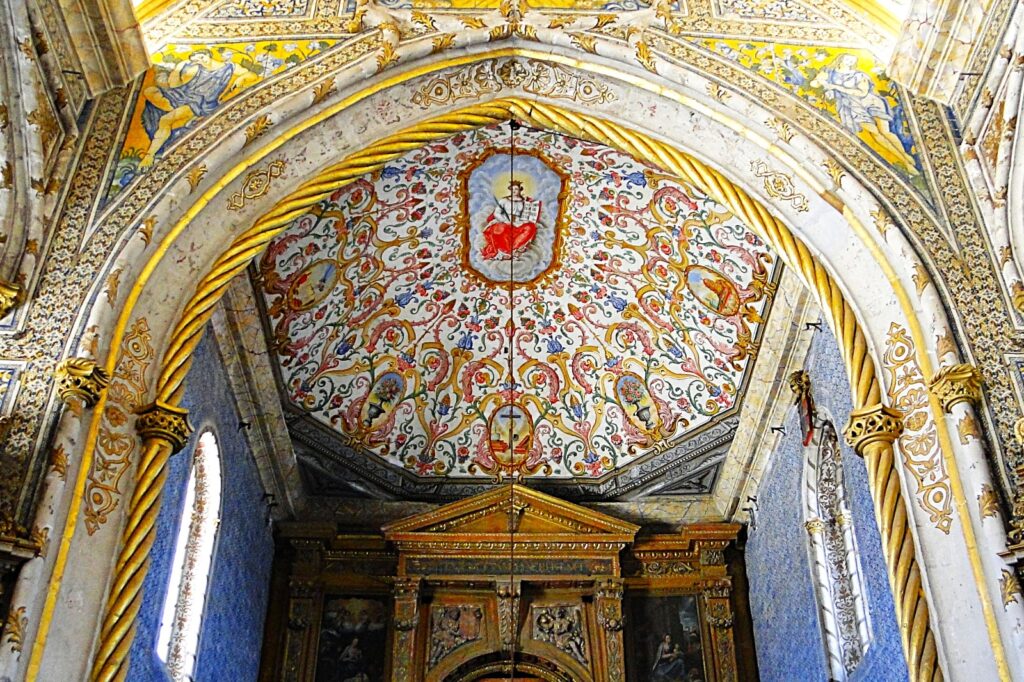
The Baroque altarpiece dominates the chancel—a gilded explosion of carved woodwork, angelic figures, and Catholic iconography. Above, the painted ceiling features celestial motifs and floral arabesques that create an illusion of infinite heavenly space. These 17th and 18th-century additions blend seamlessly with the older Manueline structure, proving that good design transcends stylistic boundaries.
The 1733 Pipe Organ: A Living Instrument
My favorite feature? The historic pipe organ, built in 1733. With over 2,000 pipes and an elaborately decorated case that’s practically a sculpture, this isn’t a museum piece—it’s still played during university ceremonies. If you time your visit right (check the university’s liturgical calendar), you might hear its 300-year-old acoustics fill the chapel during Mass or academic celebrations.
Don’t miss the Brotherhood’s carved wooden pews, each marked with academic insignia, and the side chapels housing devotional statues and relics. Every corner deserves close attention. This is architecture that demands you slow down and truly look.
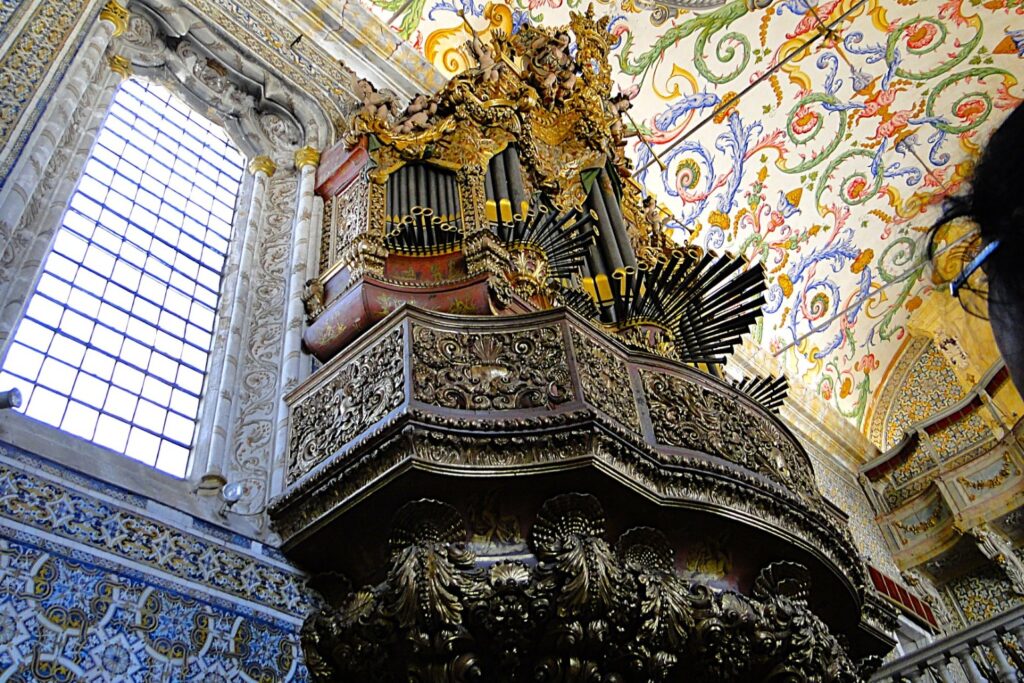
1733 Pipe Organ in Chapel of So Miguel Coimbra
Cultural and Tourist Significance
The Chapel of So Miguel Coimbra isn’t gathering dust as a museum exhibit—it’s a living, breathing space that continues to fulfill its original purpose. The chapel still hosts Catholic weddings (imagine exchanging vows under that gilded Baroque ceiling!), university graduation ceremonies, and religious services, maintaining its 500-year role at the heart of Coimbra’s academic and spiritual life.
When I first visited in 2015, what struck me most wasn’t just the visual splendor—it was the atmosphere. Despite a steady stream of tourists, the chapel maintained an almost meditative quality. Soft light filtered through the windows, illuminating dust motes that danced above the pews. The air carried that distinctive scent of aged wood and lingering incense—sensory markers of centuries of prayer and ritual that no photograph can capture.
For photographers, this chapel is pure gold. The Manueline portal is best shot in morning light (around 9-10 AM) when the sun hits those maritime carvings at an angle that brings out every detail. Inside, the azulejo panels create stunning blue-and-white backdrops, while the gilded altarpiece and towering Baroque organ offer dramatic focal points.
Pro tip: don’t forget to look up. The painted ceiling is often overlooked by rushed visitors, but its celestial symbolism and floral motifs are among the chapel’s most accomplished artistic elements.
Whether you’re documenting Portuguese architecture, researching Manueline design, or simply seeking Coimbra’s most Instagram-worthy corners, the Chapel of St Michael delivers on every level.
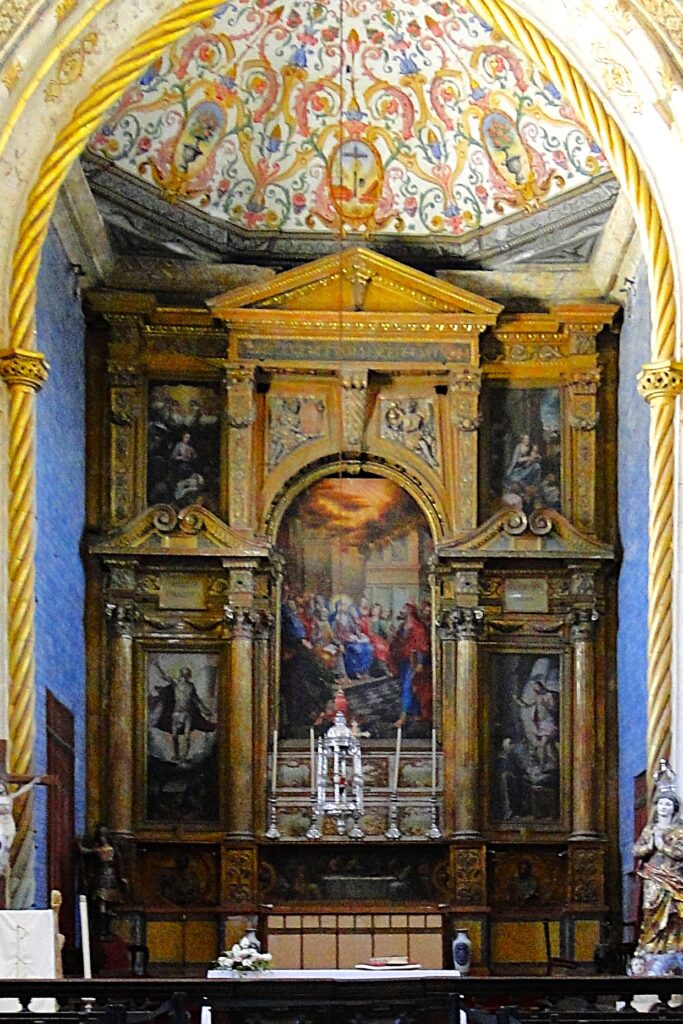
The altar inside Chapel St Michael
Practical Tips for Visitors
Best Time to Visit
Target weekday mornings before 10.30 AM for the most peaceful experience. I’ve found Tuesday through Thursday particularly quiet. Avoid weekends and Portuguese university holidays (especially May and June during exam periods) when tour groups overwhelm the space and ceremonies may restrict access.
Location and Tickets
The chapel sits within the Paço das Escolas complex, the historic core of Coimbra University’s UNESCO World Heritage site. Entry is included in the general university ticket (€13.50 adults as of 2025), which also grants access to the Joanina Library and Royal Palace. Book online at visit.uc.pt to skip queues—essential during peak season.
Accessibility
The chapel has several entrance steps, but staff typically assist visitors with mobility needs. Ramps are available in adjacent courtyard areas.
Nearby Attractions
Make this a half-day cultural circuit. The Joanina Library (a 5-minute walk) is mandatory—it’s one of the world’s most photographed Baroque libraries. Add the University Tower for panoramic Coimbra views across the Mondego River, and the Royal Palace of Alcáçova for deeper medieval context.
Travel Context
Coimbra sits perfectly between Lisbon (2 hours by train) and Porto (1 hour), making it an ideal stopover for travelers exploring central Portugal. The Chapel of St Michael encapsulates everything that makes this city special—compact, historically layered, and utterly captivating.

Ceiling of Chapel of St Michael Coimbra
Highlights of Chapel of St Michael Coimbra
- The golden rope like creation going all along the arch of the altar, you cannot miss that. It is most striking.
- On each side of this arch are Baroque altarpieces from the 18th century.
- Manueline windows letting in sunlight kept the interiors so bright.
- The organ, almost protruding out of wall, dates back to 1737 and has about 2,000 pipes.
- The horizontal trumpet pipes make an interesting subject to photograph. Its acquisition was sponsored by King John V and is still operational.
- The sea themed paintings on the ceiling are mesmerizing. It is the creation of Francisco F. de Araújo by the end of the 17th century.
FAQ: Chapel of St Michael, Coimbra University
Is the Chapel of St Michael open to the public?
Yes, the chapel is open to visitors as part of the University of Coimbra tour experience. Entry is included in the general university ticket (€13.50 for adults), which also grants access to the Joanina Library, Royal Palace, and University Tower. It’s one of the best-value cultural tickets in Portugal.
What are the chapel’s opening hours?
The chapel follows the university’s visitor schedule: typically 9 AM to 5 PM daily, with last entry at 4.30 PM. However, hours can shift during Portuguese national holidays, university exam periods (May-July), and special academic ceremonies. Always check visit.uc.pt before your trip.
Do I need to book tickets in advance?
Strongly recommended, especially March through October and during Easter week. The university caps daily visitors to preserve the historic buildings. Booking online at visit.uc.pt lets you choose your preferred time slot and skip the ticket office queues, which can stretch 30+ minutes during peak hours.
Is photography allowed inside the chapel?
Yes, non-flash photography is permitted and encouraged for personal use. The dim lighting inside means you’ll need a steady hand or high ISO settings—the gilded altarpiece photographs beautifully around midday when natural light floods through the windows. Tripods and professional equipment (including gimbals and lighting) require advance permission from the university’s cultural office.
Is the Chapel of St Michael wheelchair accessible?
Partial accessibility is available. The main entrance has stone steps, but university staff can direct wheelchair users to an alternative ramped entrance through the adjacent courtyard. Once inside, the chapel is single-level. Contact the visitor center in advance (+351 239 242 744) if you need specific assistance—the staff have always been helpful in my experience.
Can I attend a Mass or wedding at the chapel?
The chapel occasionally hosts Catholic Masses (typically during major university events), student weddings, and graduation blessings. These are private ceremonies not open to casual tourists. However, if you’re interested in experiencing a service, check the University Chaplaincy’s schedule—they sometimes welcome respectful visitors to regular academic Masses during the semester.
How long should I spend at the chapel?
Allow 20-30 minutes if you’re appreciating the architecture and reading the informational panels. Photography enthusiasts and architecture students often spend 45+ minutes capturing details. Combine it with the adjacent Joanina Library (30 minutes) and University Tower (15 minutes) for a complete 2-hour university circuit.
What should I wear to visit the chapel?
As an active place of worship, modest dress is appreciated—covered shoulders and knees are the general guideline. That said, the university doesn’t enforce strict dress codes like some European cathedrals. Comfortable walking shoes are essential; Coimbra’s historic center involves significant uphill walking on cobblestones.
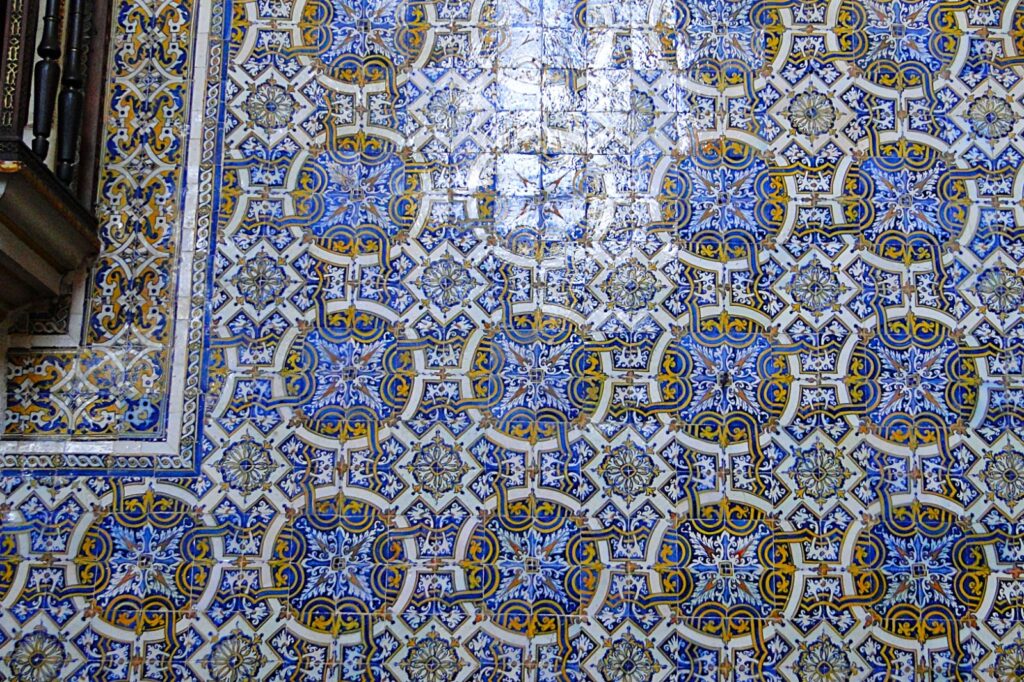
Azulejos with Geometrical Patterns
Conclusion: Why the Chapel of St Michael Matters
The Chapel of St Michael isn’t just another beautiful church—it’s where Portuguese royal history, academic tradition, and artistic evolution converge in one intimate space. From the Manueline maritime motifs on its entrance portal to the Baroque extravagance of its gilded altarpiece, from the 17th-century azulejo narratives to the still-functioning 1733 pipe organ, this chapel tells Portugal’s story through architecture.
What makes it truly special is its living quality. This isn’t a roped-off museum exhibit; it’s a consecrated space where students still celebrate graduations, couples exchange vows, and centuries-old liturgical music still echoes through hand-carved pews. To me, it was not just observing history—but it was like stepping into its continuation.
In an age of overcrowded tourist sites and superficial Instagram stops, the Chapel of St Michael offers something increasingly rare—a chance to genuinely connect with centuries of human devotion, artistry, and scholarship. Let it be more than a checkbox on your itinerary. Slow down, look up at that painted ceiling, breathe in the history, and give this chapel the attention its creators intended.
Safe travels, and may your Coimbra journey be as enriching as mine continues to be.
Planning Your Visit to Chapel of St Michael Coimbra
If you’re building a Portugal itinerary, Coimbra deserves at least a full day, and the Chapel of St Michael should anchor your university exploration. My recommended route: Start with the chapel at opening (9 AM for optimal light and minimal crowds), move to the Joanina Library next door (arrive early—it’s Portugal’s most popular library), then climb the University Tower for panoramic views across the Mondego River valley. Follow with lunch in Coimbra’s medieval Baixa district, then explore the Monastery of Santa Cruz or the Portugal dos Pequenitos if traveling with children.
For Architecture Enthusiasts
The chapel exemplifies why Manueline architecture matters—it’s Portugal’s unique contribution to European design vocabulary, blending Gothic structure with Age of Discoveries iconography. If you’re researching this style, also visit Belém Tower and Jerónimos Monastery in Lisbon, and Batalha Monastery between Coimbra and Lisbon.
Join the Conversation
I’ve visited the Chapel of St Michael in May 2015. I’d genuinely love to hear about your experience. Did the azulejo tiles captivate you as much as they did me? Did you time your visit to hear the organ played? Drop your thoughts, photos, or questions in the comments below.
If this guide helped you plan your Coimbra visit, share it with fellow travelers planning their Portuguese adventures. Bookmark it for your trip, and tag me in your chapel photos on Instagram—I feature reader submissions regularly.
Pin and Save this for later

 Indrani Ghose is an Indian Travel Writer and Blogger based in Bangalore, India. She has written for numerous publications across the globe – including Lonely Planet, The National UAE, Whetstone Asia, Deccan Herald. You can follow her on her social media handles Instagram, Twitter, Pinterest and Facebook to see the wonderful destinations, beautiful offbeat places and get instant updates about them.








Beautiful capture and pretty colorful interior! Interesting to note that things added to the chapel from different time period.
Lovely to see you are still on your travels, gorgeous rich photos, so much to look at in each of them, I’m sure the Portuguese tourist board are very happy to see this post 🙂
Have fun.
Wren x
Beautiful chapels. As you have written the golden rope like structure is very interesting . I have seen beautiful chapels in St. Aloysius church in Managlore too.
what a craftmanshift!
The domed ceiling looks stunning.
I’d lay on the floor like Alice and just look into that Wonderland ceiling.
The chapel is gorgeous. Loved the decorations. Beautifully captured 🙂
The vibrant colours and intricate decorations are amazing!….Great clicks, Indrani… 🙂
Beautiful art work.
Interesting description of the Chapel of St. Michael, Indrani.. Lovely Photo Clicks!
Grand..Yes that is how it can be described in a single word.
In love with the Art inside the Chapel. Such lovely pics. I’ll be sure to visit this one. Well written.
xoxo – Style.. A Pastiche!
Everything Portuguese I am now interested, most especially their use of tiles.
Beautiful walls and ceiling. Lovely pics 😀
Beautiful..
Such amazing tiles! So pretty!
Lovely account on Chapel of St. Michael with some amazing clicks, as always 🙂
Beautiful intricate workmanship!
Such a pretty church with aesthetically pleasing ceiling!
gorgeous ceiling 🙂
A colorful chapel.
Wonderful, Great pics.
The interior is so amazing.. As usual lovely capture dear 🙂
Would love to see those azulejos! Looks like the Portuguese are very proud of their sea men and explorers. Juan Rodriguez Cabrillo, the discovered of California, was Portuguese (that is disputed). Portugal gave California a huge statue of him to place it a National Monument bearing his name.
What a thrilling and special treasure!
Such a beautiful little church!! I do remember visiting there when I lived in Spain!! Thanks for the memories and for sharing!! Have a great new week!!
Hello, I love the gorgeous ceiling and the organ pipes. What a lovely chapel. Beautiful post and photos. Happy Monday, enjoy your new week ahead!