Jog Falls Travel Guide 2026: Hidden Viewpoints and Pro Tips
Jog Falls, often called the “Niagara of India,” is one of Karnataka’s most iconic natural wonders and ranks as the state’s highest waterfall. I first visited Jog Falls in May 2017, when the cascade was reduced to a trickle—proof that timing matters more than anything when planning your trip.
– By Indrani Ghose | Last Updated: January 2026
Jog Falls is best seen during the monsoon (July–September) when all four cascades—Raja, Rani, Roarer, and Rocket—thunder down in full force. Post-monsoon months (October–December) offer clearer skies and safer trekking conditions. Summer (March–May) is not recommended unless you’re combining it with a broader Karnataka waterfall itinerary.
In 2025, Karnataka Tourism introduced curated waterfall tour packages across districts including Shivamogga, making organized visits easier for tourists. This guide covers the 2026 Jog Falls itinerary, logistics like bus routes and step timings, hidden viewpoints, and practical pro tips including leech protection and booking options.

The trickle of Jog Falls during Summers
Facts About Jog Falls
The Hirebhaskar Dam (an engineering marvel of its time, particularly due to its siphon-based water management system) reappears during the summer months when water levels dip.
Jog Falls is also known by the name Gersoppa Falls, Joga Falls and Jogada Gundi. Another fact related to Jog falls is that it is highest untiered waterfalls in India as it drops directly and does not stream on to the rocks.
It is the second-highest plunge waterfall in India only behind the Nohkalikai waterfall of Meghalaya. Jog Waterfall is ranked 13th in the world by waterfall database for its average water flow rate of 5387 cubic ft/s.
The Best Time to Visit Jog Falls in 2026
The best month to visit Jog Falls in 2026 is August, when monsoon rains ensure maximum water flow and visibility, making the falls truly spectacular.
Monsoon (July–Sept)
If you’re wondering “Is Jog Falls worth visiting in July?”—the answer is yes, but with caveats. July marks the beginning of peak flow, with full thundering glory but high mist risk. Clouds and mist can reduce visibility at Jog Falls during monsoon, sometimes obscuring the cascades completely.
I suggest waiting until August, when the falls reach their most dramatic state with all four streams thundering down at full force. During my research for this guide, multiple travelers confirmed that carrying raincoat and leech protection gear is essential during this season. Leech socks or applying leech-repellent oil on exposed skin helps protect against these monsoon pests common around the base of the falls.
Post-Monsoon (Oct–Dec)
October to December is ideal if you prefer clear skies and safe access to the Jog Falls steps, which reopen seasonally after monsoon closures. The water volume remains impressive in October and early November, but visibility is significantly better than in peak monsoon.
I found that families particularly enjoy the Raja and Rani viewpoints without the heavy mist that often obscures them in July. This is also the best time for photography, as sunlight enhances the rainbow arcs over the cascades, creating stunning visual opportunities and the 1,400-step trek.
Summer (March–May)
Summer is the least recommended season. When I visited in May 2017 with my children during their school vacation, Jog Falls was reduced to a disappointing trickle, and most visitors left underwhelmed.
The Linganamakki Dam upstream restricts water flow during these months, drastically reducing the waterfall’s volume. In 2026, while Karnataka promotes waterfall hopping circuits, Jog Falls itself is not worth the trip unless combined with nearby attractions like Unchalli or Sathodi Falls that may retain better flow.
Pro Tip: For the most rewarding experience, plan your Jog Falls itinerary 2026 around August or October, balancing water volume with visibility.

Jog Falls as viewed from Hotel
Decoding the Four Cascades: Raja, Rani, Roarer, and Rocket
Jog Falls stands apart because it isn’t just one waterfall—it’s four distinct cascades, each with its own character and flow pattern. Understanding these four personalities adds depth to your Jog Falls itinerary 2026 and helps when comparing it to other major Indian waterfalls.
Raja (The King): Raja is the most commanding cascade, dropping in a single, uninterrupted column from the cliff edge. When I saw it during May 2017 in low flow, it still retained a regal presence, standing tall even when the volume was modest. During peak monsoon, Raja sets the tone for the entire spectacle, creating that iconic image visitors expect from the best waterfall in South India.
Rani (The Queen): Rani flows in graceful tiers, complementing Raja with elegance rather than force. I found that photographers often prefer Rani because its layered descent catches light beautifully in October and November, creating stunning spray patterns. Rani’s charm lies in its balance—never overwhelming, but always captivating.
Roarer (The Rebel): True to its name, Roarer crashes down with thunderous energy. During August, its spray can drench visitors standing at Watkins Platform below. Roarer is unpredictable, sometimes obscured by mist, but it’s the cascade that gives Jog Falls its raw, untamed character and earns it the nickname “Niagara of India.”
Rocket (The Speedster): Rocket shoots down in a narrow stream, fast and direct. It’s the least voluminous but adds contrast to the ensemble. I noticed Rocket’s appeal lies in its precision—it appears like a streak of silver against the dark rock face, especially visible during moderate flow periods.
Together, these four cascades create a symphony of water and sound that makes Jog Falls unique. For travelers comparing Jog Falls vs. Dudhsagar Falls in height comparison India waterfalls, this quartet of personalities is what distinguishes Karnataka’s crown jewel.

Four Cascades of Jog Falls
The 1,400 Step Descent: Is It Worth It?
The descent to the base of Jog Falls involves approximately 1,400 steps down through humid, often slippery terrain—it’s not for the faint-hearted. I saw travelers describe the climb back up as twice as hard as going down, with legs shaking from exertion. Still, the view from the bottom is worth the effort—you stand directly beneath Raja and Roarer, hearing the roar echo through the gorge.
According to recent visitor reports, the entry to the bottom is restricted during monsoon days due to high water levels, a crucial detail often missed by older travel guides. The Jog Falls steps opening timings 2026 vary seasonally—the base remains closed during heavy monsoon for safety, typically reopening in post-monsoon months when water levels drop. I suggest checking current access status before planning your descent, especially if visiting between July and September.
Is it worth it? Yes—if you’re reasonably fit and prepared with water, sturdy non-slip shoes, and patience for the steep climb back. The bottom perspective offers views no aerial shot can match. However, if you’re traveling with young children or elderly companions, the 45-minute to one-hour climb back up can be exhausting. Consider staying at the upper viewpoints instead, which still offer spectacular panoramas.
What I Missed—And What I Gained
When I visited Jog Falls in May 2017, I expected a roaring spectacle. Instead, I found barely a trickle. At first, it felt disappointing—the “Niagara of India” reduced to thin streams. But in hindsight, that low flow visit taught me something valuable about travel expectations.
Without the chaos of monsoon crowds or treacherous slippery paths, I had freedom to explore at my own pace. I visited heritage temples around Sagara and Talaguppa without battling rain or needing leech protection Jog Falls gear.
The calm weather meant photography was easier, and I could focus on architectural details rather than rushing between viewpoints. My children could walk safely without constant worry about wet surfaces.
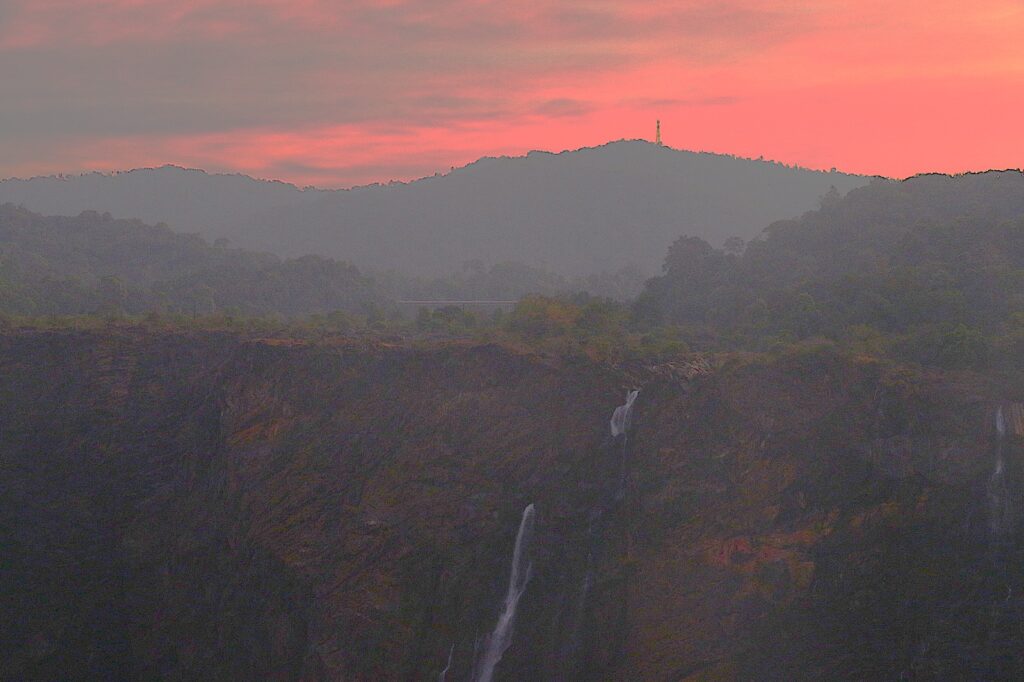
Sunrise in Jog Waterfalls
The experience taught me an important lesson: Jog Falls isn’t just about water volume—it’s about the Karnataka waterfall circuit of experiences around it. With Karnataka Tourism now promoting curated waterfall packages across Shivamogga district, travelers can plan smarter multi-stop itineraries.
If you arrive in summer, don’t expect grandeur at Jog Falls itself, but use the opportunity to explore nearby attractions like British Bungalow viewpoints, Karwar side Jog Falls view, or temple trails that are often overlooked during monsoon rush.
My advice: don’t write off a low-flow visit entirely. While August offers the most dramatic cascades with maximum visibility at Jog Falls during monsoon, May offers peace, accessibility, and cultural depth. Sometimes, missing the spectacle means gaining the serenity of unhurried discovery. That balance makes Jog Falls worth visiting across different seasons, each offering its own rewards.
See the first pic of my blogpost and when you scroll down till the end you will understand what I have missed!

Different cascades of Jog Falls.
2026 Updates: New Tourism Infrastructure and Adventure Options
Jog Falls has undergone significant tourism development, reopening in May 2025 after major infrastructure upgrades. The Jog Development Authority completed Phase 1 improvements including a new viewing tower, commercial shopping units, walking paths, and mini-shelters, transforming visitor amenities at this iconic site.
KSTDC has expanded its waterfall tour packages, with routes linking Jog Falls to destinations like Goa, Gokarna, and Sigandur, making multi-day Karnataka waterfall circuit itineraries more accessible. I noticed these packages now include organized transfers, reducing the logistics headache for independent travelers.
For adventure seekers, Sharavathi Adventure Camp, located just 6 km from the falls and operated by Jungle Lodges and Resorts, offers kayaking, coracle rides, boating on Talakalale Reservoir, nature walks, and organized visits to Jog Falls. This eco-resort has become the premier choice for travelers seeking both comfort and outdoor activities beyond just viewing the cascades.
Entry fees now stand at ₹20 for Indian nationals and ₹100 for foreign tourists, with a two-hour viewing limit introduced to manage crowds.
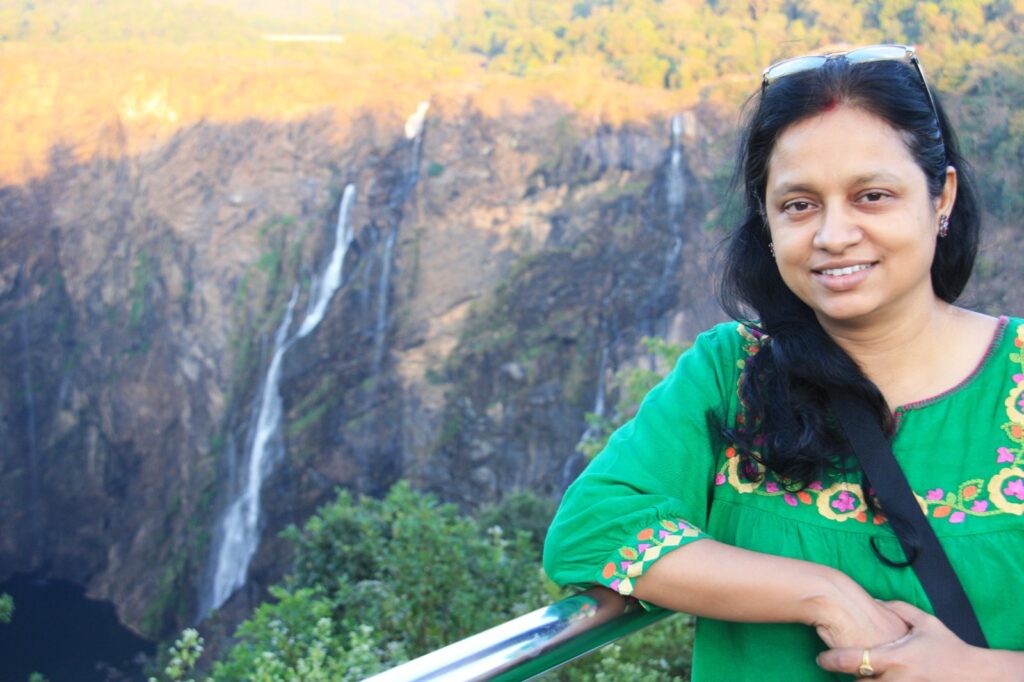
Posing for a picture with Jog Waterfalls
Where to Stay: Comparing Government vs. Private Stays
Accommodation around Jog Falls in 2026 offers distinct choices depending on your budget and travel style, each with clear trade-offs.
| Option | Pro | Con |
| Mayura Gerusoppa (KSTDC) | Closest to main viewpoint; official Mayura Gerusoppa booking system; budget-friendly at ₹1,500-2,500/night | Basic amenities; high demand during monsoon requires advance booking |
| Sharavathi Adventure Camp (JLR) | Premium eco-resort 6 km away; includes activities like kayaking, nature walks; reservoir views | Higher cost (₹4,000-7,000/night); package-only bookings; no walk-ins |
| Private Homestays (Sagara, Talaguppa) | Personalized hospitality; authentic Malnad cuisine; cultural immersion; ₹1,000-2,000/night | Farther from falls (20-30 km); may require private transport |
I stayed at a government lodge during my earlier trip, and the biggest advantage was proximity—I walked to sunrise viewpoints within minutes. In 2026, KSTDC’s improved online booking system has reduced the uncertainty that plagued earlier years, though you should still book 2-3 weeks ahead for monsoon season.
Sharavathi Adventure Camp caters to families and adventure enthusiasts wanting more than just waterfall viewing. The resort’s location on Talakalale Reservoir offers kayaking, birdwatching, and organized nature activities that government lodges don’t provide.
Homestays near Sagara work well for photographers and solo travelers who value authentic local experiences over convenience—hosts often share hidden viewpoint tips unavailable in standard guides.
Pro Tip: For a complete Karnataka waterfall circuit, mix accommodation types—book Mayura Gerusoppa for Jog Falls proximity, then shift to Sharavathi Adventure Camp for a two-day adventure extension with water sports.

Jog Falls in the morning
How to Reach Jog Falls: The Best Route in 2026
Jog Falls remains best accessed via Talaguppa, the primary transit point in 2026. The Talaguppa to Jog Falls bus service operates regularly, covering the 20-kilometer distance in approximately 30 minutes. Local buses and private taxis are both readily available from Talaguppa town.
For rail travelers, the Shimoga–Talaguppa line offers the most convenient connection, with direct trains from Bengaluru. I found this route reliable for travelers combining Jog Falls with heritage stops in Shimoga district. The journey takes approximately 8-10 hours overnight from Bengaluru.
Road travelers can take NH-206 (previously NH-69) from Bengaluru, a 380-400 kilometer drive taking 7-8 hours. Recent highway improvements completed in 2024-2025 have made this route smoother, though monsoon conditions can still cause delays.
Air travelers can fly into Hubli Airport (approximately 140 km away) or Mangalore International Airport (220 km away), both requiring 4-6 hours of onward road travel. KSTDC tour packages often include airport transfers from these hubs, simplifying logistics for international visitors.
Direct Answer: The best route in 2026 remains Bengaluru → Shimoga → Talaguppa → Jog Falls, combining overnight train travel with local bus connections for efficiency and cost savings. Budget ₹500-800 for train fare and ₹50-100 for the Talaguppa to Jog Falls bus.
5 Pro Tips for Photographers and Solo Travelers
- Lens Fogging: During monsoon, humidity causes severe camera fogging. I suggest keeping silica gel packs in your camera bag and storing equipment in sealed plastic bags when not shooting. Avoid sudden temperature transitions between air-conditioned vehicles and outdoor humidity.
- Leech Protection: Essential during July–September treks to the base. Carry dedicated leech socks or apply tobacco powder/salt to exposed skin before descending the 1,400 steps. I learned this lesson the hard way during my visit.
- Rainbow Photography: The best time for capturing rainbow arcs over the cascades is late morning (10-11 AM) in October-November, when post-monsoon sunlight hits the mist at optimal angles. August offers maximum drama but lower visibility.
- Solo Safety: Stick to marked paths, especially on the steep descent. The 2026 infrastructure improvements include better railings, but slippery rocks remain a constant hazard during and after rain.
- Hidden Viewpoints: Watkins Platform and the best viewpoint for Raja Rani falls offer unique angles away from main crowds. The Karwar side Jog Falls view provides alternative perspectives—solo travelers can explore these quieter spots for distinctive photography without battling tour groups.
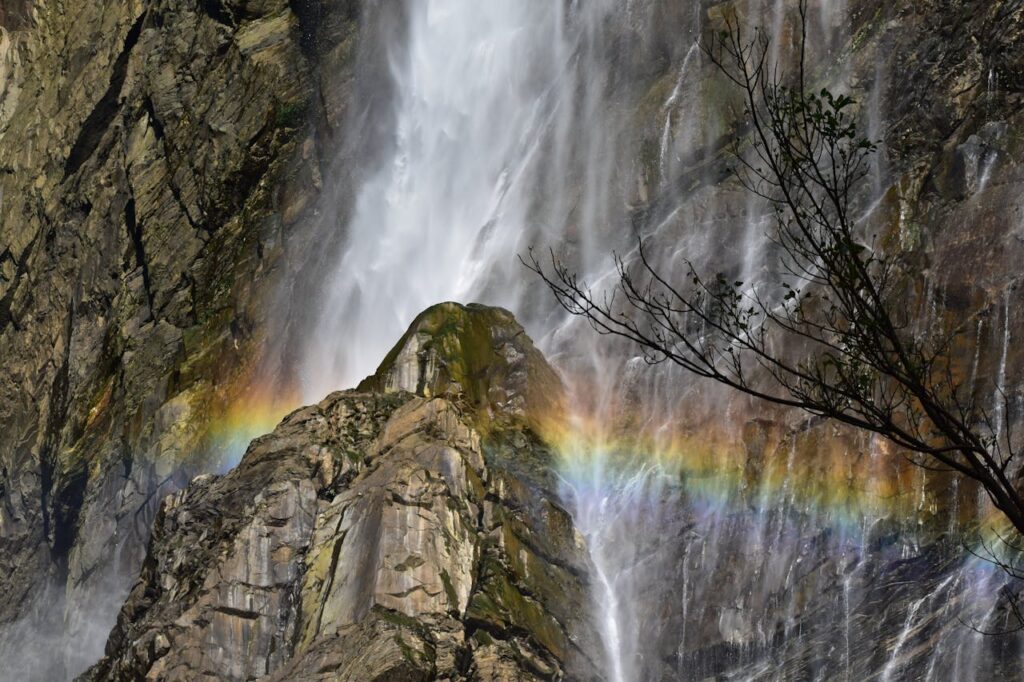
Rainbow near the Waterfall
Jog Falls FAQs: Everything You Need to Know
Is Jog Falls worth visiting in July?
Yes, if you’re okay with low visibility. July brings strong water flow, but heavy mist and clouds can obscure the falls. August offers better balance between flow and visibility.
How does Jog Falls compare to Dudhsagar Falls?
Jog Falls has four distinct cascades and better year-round access, while Dudhsagar features a single dramatic drop and requires trekking or jeep access. Jog is easier to visit; Dudhsagar feels more adventurous.
What are the Jog Falls steps opening timings in 2026?
The 1,400 steps are usually open from 6 AM to 5 PM (October–May). They are often closed during peak monsoon (July–August). Always confirm locally before descending.
How do I get from Talaguppa to Jog Falls?
Buses run every 30–60 minutes, covering 20 km in about 30 minutes (₹20–50). Taxis cost around ₹300–500. Talaguppa is the nearest railway station.
How do I book Mayura Gerusoppa?
Book online via the KSTDC website or their helpline. Reserve 2–3 weeks in advance during monsoon. Tariffs usually range from ₹1,500–2,500 per night.
What is the best viewpoint for Raja and Rani Falls?
The main observation deck offers the best frontal view of Raja and Rani together. For panoramas, the British Bungalow viewpoint is ideal.
Which’s better: Watkins Platform or British Bungalow?
Watkins Platform is closer and dramatic but slippery and steep. British Bungalow is safer and offers wide panoramic views. Visit both if time allows.
Do I need leech protection at Jog Falls?
Yes, during July–September. Leech socks or repellents are strongly recommended, especially on the steps. Post-monsoon months have minimal leech activity.
Can I visit Jog Falls as part of a Karnataka waterfall circuit?
Yes. Jog Falls is often combined with Unchalli, Sathodi, and Sharavathi camps in 3–4 day itineraries offered by KSTDC and private operators.
What’s the visibility like at Jog Falls in different seasons?
- Monsoon: Poor to unpredictable visibility
- Post-monsoon (Oct–Dec): Best balance of flow and clarity
- Summer: Clear views, but low water flow

This is how the Mighty Jog Waterfalls looks when it is filled to its brim
Conclusion
Jog Falls in 2026 is more than a seasonal spectacle—it’s the centerpiece of Karnataka’s new Waterfall Circuit. With upgraded infrastructure, eco-friendly transport, and adventure options like the Sharavathi Camp, Jog Falls now offers year-round appeal.
The grandeur and accessibility of Jog Falls never disappoint. A must visit for photographers chasing rainbow arcs, solo travelers seeking hidden viewpoints, or a family. My own experience of visiting during low flow taught me that every season has its value—monsoon for drama, post-monsoon for clarity, and summer for cultural exploration.
Plan wisely, and Jog Falls will reward you with unforgettable perspectives.
Other waterfalls of India I have seen are:
Soochipara Waterfalls, Wayanad in Kerala
Bhagsunag Watefalls in Dharamsala Himachal Pradesh
Phoolpad Waterfalls in Dantewada Chhattisgarh
Courtallam Waterfalls Tenkasi Tamil Nadu
Pin this for later

About the Author
 Indrani Ghose is an Indian Travel Writer and Blogger based in Bangalore, India. She has written for numerous publications across the globe – including Lonely Planet, The National UAE, Whetstone Asia, Deccan Herald. You can follow her on her social media handles Instagram, Twitter, Pinterest and Facebook to see the wonderful destinations, beautiful offbeat places and get instant updates about them.








Jog falls has it own beauty, dried up or full of water. But once visit it during monsoon Indrani .
Remember visiting Jog falls as kids, sadly there was no water even back then.. Nevertheless it was a great experience to visit the place. Nice captures Indrani.:)
Beautiful pictures Indrani 🙂
Beautiful shots Indrani, especially loved the last one 🙂
When I went there, it was the same. Your captures turn the disappointment into hope. lovely snaps.
What difference!!
Go again since you are in the state anyways!
The last photo is truly amazing.. The Post surely tempts one to visit the place.. Thanks for sharing Indrani!
The depth has been clearly seen through your photos in absent of water… beautiful capture and the last one reminds the Niagara fall! Wish to visit Jog falls at least once 🙂
I could totally understand how disappointed you must have been. But nevertheless the surrounding area is good and its an experience in itself.
I too had a similar experience the first time I visited. My second visit was during the monsoons and it was breathtakingly beautiful.
The last picture is amazing.
I know what you mean, I have been to a falls when there has been barely a trickle of water coming over it. Your photos are magnificent. It is certainly breathtaking scenery and that last shot, the roar of water must have been phenomenal. Great photos Indrani 🙂
Wow breathtaking views and scenes of Jog Falls ! I can imagine what a spectacular view it will be in the monsoons with the mighty Sharavati river gushing down those heights !!!
It’s very rare one gets to see the falls in full glory, even during the monsoons (as they close the dam gates till the reservoir gets full). And when they do, it’s a mad rush! 🙂 🙂
Fascinating how much the look of the area changes from season to season.
Wow! What a total difference in the water during the different seasons. I can see why you were disappointed. But the area is quite lovely nonetheless. It is great that you give tips as to the best time to travel and the best time to shoot photos. Have a great weekend and Happy SWF!
Wow… seeing the waterfalls during the right season must be such a treat! Thanks for sharing this honest post – should help a lot of travellers time their visit to see the falls at their best.
I am from Karnataka but I realise there is so much more that I have yet to see and experience. Great pics.
Very good lighting, Indrani. You managed to capture the falls beautifully even though they were quite dry. But what falls show in the last photo? I was reminded of Victoria Falls in Zimbabwe. Thanks for sharing. Jo
Oh my stars if that last shot is the falls during the Monsoon, that is amazing and impressive for sure. Still I think the photos you captured of it would still make me want to visit the falls.
wow, those spills and falls are beautiful! a very good viewing fence, too! 🙂
Glorious and amazing!! Your captures today surely took my breath away, Indrani!!! Thank you for sharing the beauty!! I hope you have a lovely weekend!!