Living with Silver Oaks: A Personal Guide to Bangalore’s Majestic Grevillea Robusta
When I moved to my apartment complex in Salarpuria Silverwoods, east Bangalore, in 2006, I didn’t pay much attention to the trees in the complex. But after two decades of morning walks, the Silver Oak trees in my apartment complex became impossible to ignore. Standing over 20 meters tall, it’s the first thing I see stepping out or looking out of my windows—and during April and May, its canopy bursts with orange-gold blooms that catch the early light.
The Silver Oak Tree in Bangalore does more than provide shade. I’ve documented regular visits from Indian Parrots, common mynas, and purple sunbirds feeding on the nectar-rich flowers. On weekends, I’ve watched neighbors with binoculars track these visitors from their balconies—this tree turns an ordinary residential lane into an urban wildlife corridor.
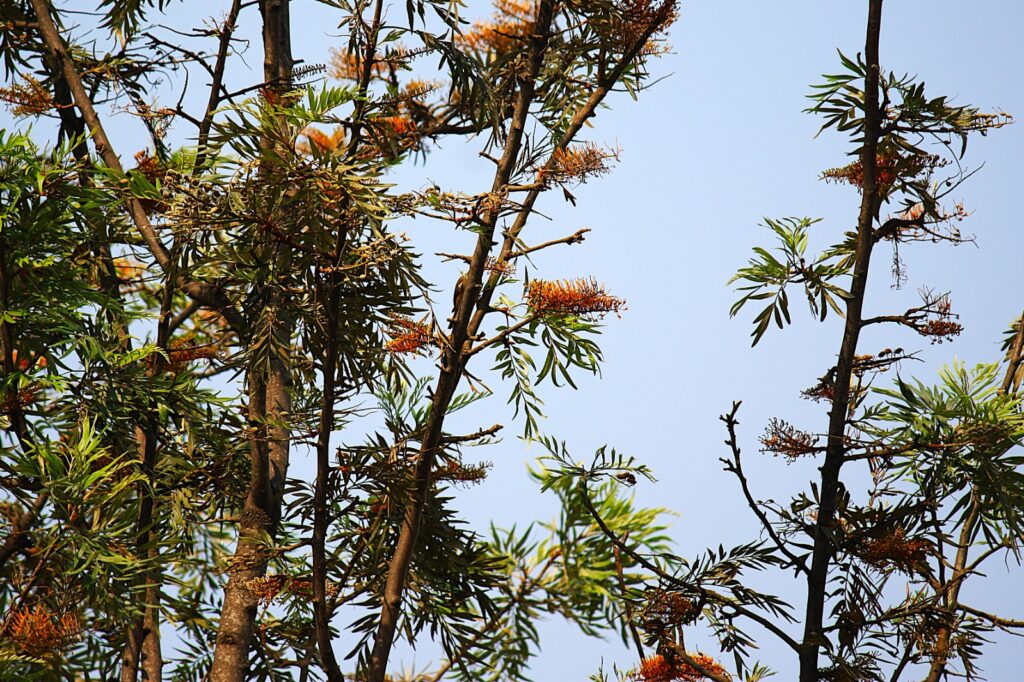
Silver Oak Tree Bangalore
Apartment landscaping in Bangalore typically favors low-maintenance species, but Grevillea robusta earns its place differently. It grows 1–2 meters annually, tolerates poor soil, and requires minimal care once established. For communities seeking functional greenery, this Australian native has quietly become Bangalore’s most reliable apartment guardian.
Identifying the Silver Oak: More Than Just a Tall Tree
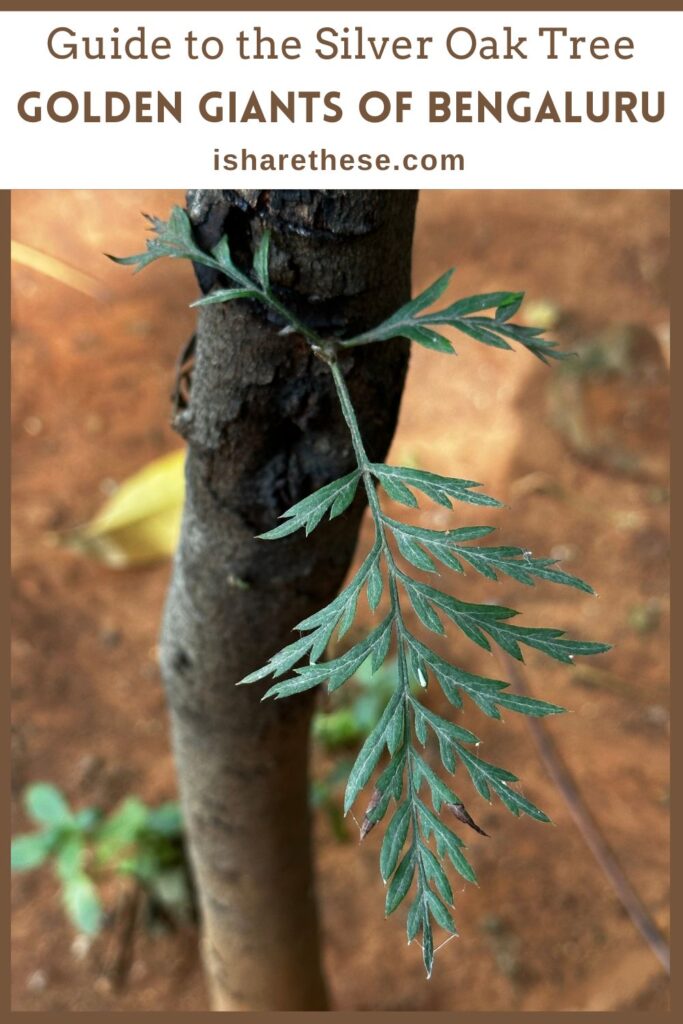
Spotting a Silver Oak in Bangalore becomes second nature once you know the markers. The leaves are the giveaway—fern-like, deeply lobed, and 15–25 cm long. What distinguishes them is the silvery-white underside created by fine hairs. When the breeze flips the leaves, entire sections of the tree seem to flash silver against the green canopy. I first noticed this effect during an afternoon walk when sunlight hit the tree at an angle—it looked almost metallic.
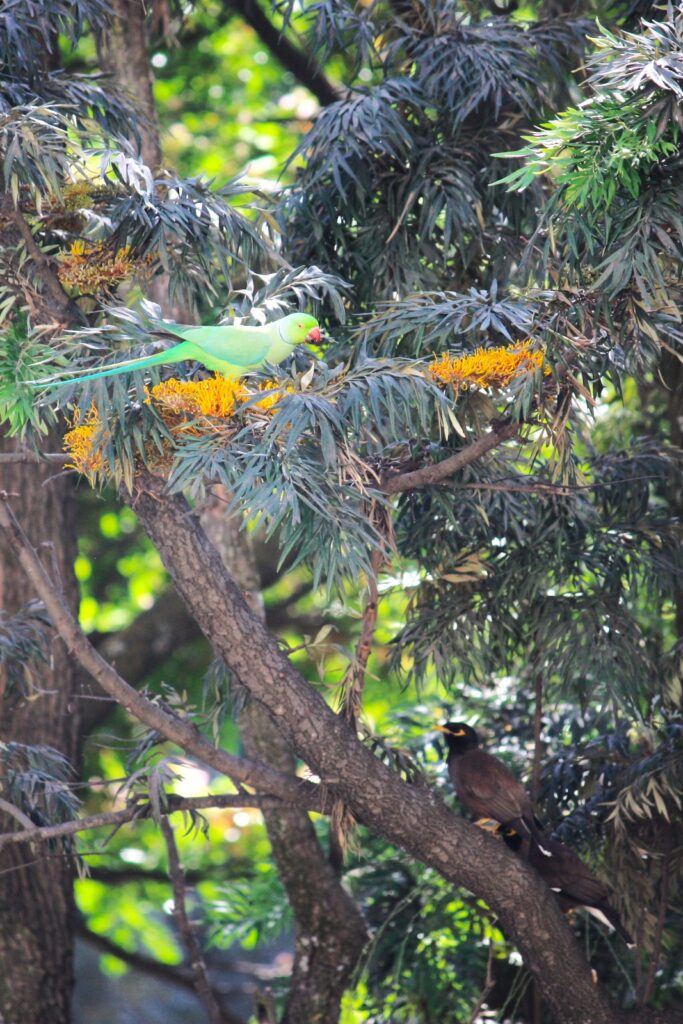
Parrot and Mynas on Silver Oak tree branch
Grevillea Robusta
Botanically, this is Grevillea robusta, a species native to Australia’s rainforests. It arrived in India during the colonial period as a timber and shade tree, later becoming integral to Bangalore’s urban forestry. According to Karnataka Forest Department records, it thrives in altitudes between 600–1,200 meters—exactly where Bangalore sits. The tree can reach 25–35 meters in mature landscapes, making it a vertical landmark in apartment complexes.
Common confusion with Ashoka Tree
Many residents mistake the Silver Oak for the Ashoka tree (Polyalthia longifolia), another common Bangalore species. Here’s how to tell them apart:
- Silver Oak: Fern-like divided leaves with silvery undersides, rough dark bark, orange flower clusters
- Ashoka tree: Straight, undivided drooping leaves forming a dense curtain, smooth bark, small greenish-yellow flowers
This distinction matters for apartment landscaping in Bangalore. Grevillea robusta supports local ecosystems—its flowers attract sunbirds, bulbuls, and carpenter bees, while the Ashoka primarily serves as a visual screen. I’ve logged eight bird species visiting the Silver Oak outside my building, compared to occasional crow visits to nearby Ashoka trees. For communities prioritizing biodiversity alongside aesthetics, this ecological difference is significant.
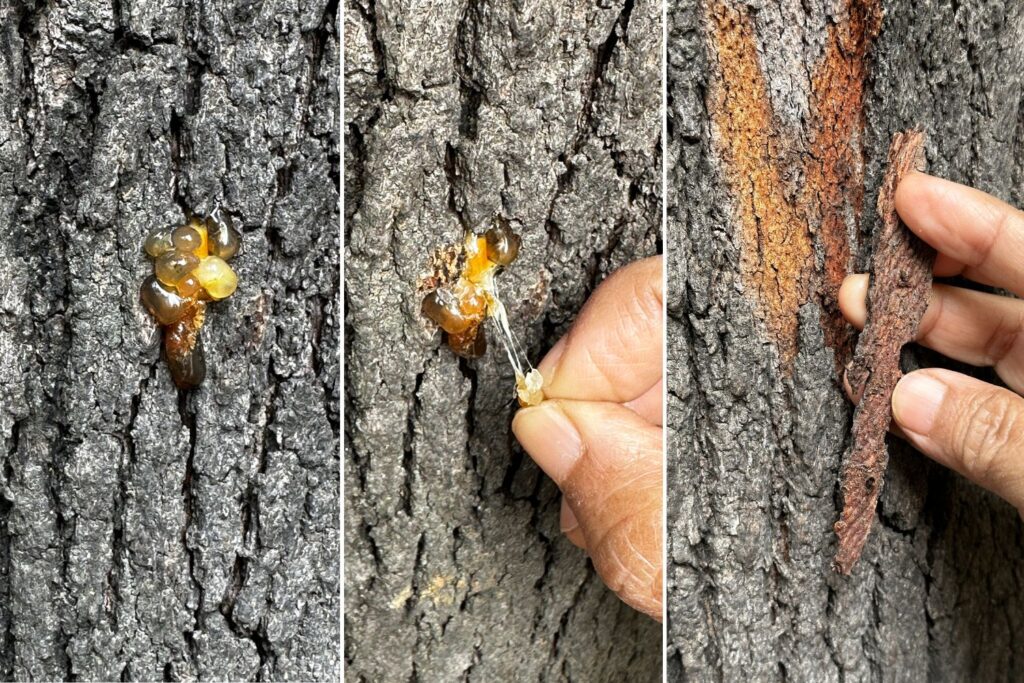
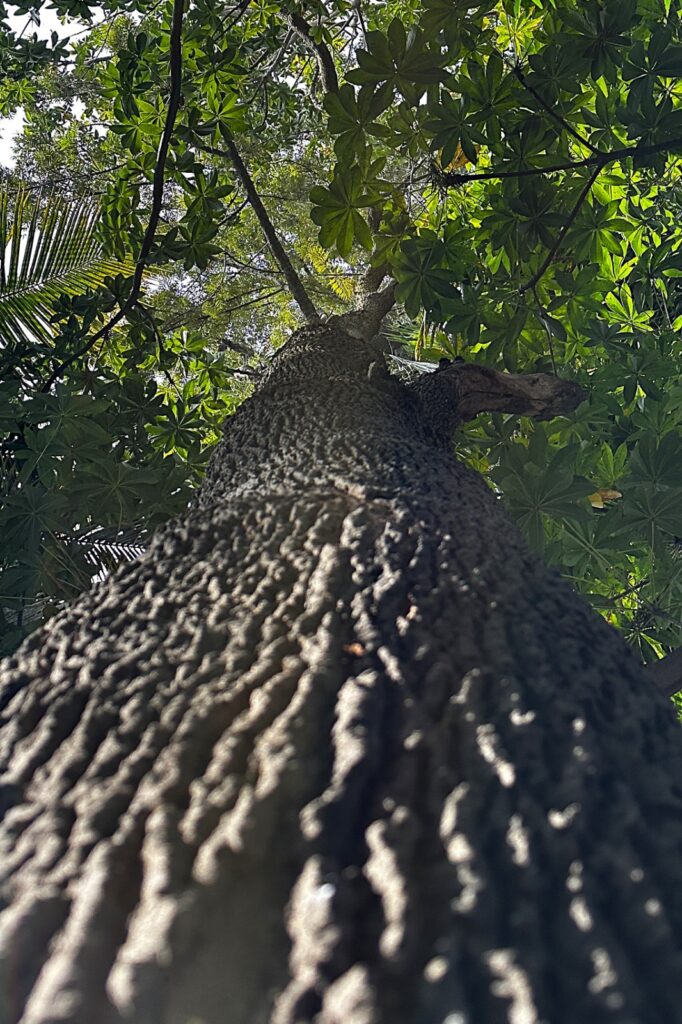
Silver Oak Tree Trunk – Gum and Bark
The “Golden” Season: When Does the Silver Oak Bloom in Bangalore?
Living in east Bangalore for five years, I’ve stopped relying solely on weather apps to track seasons. The Silver Oak Tree in Bangalore operates on a predictable cycle that marks the city’s transition into summer. Between late March and May, as daytime temperatures cross 32°C, Grevillea robusta begins its most dramatic transformation.
I documented this pattern in 2021, during COVID lockdown, by photographing the same tree weekly. By late February, the silvery-green foliage appears duller—the tree is conserving energy. Then, typically in the first week of March, tight bud clusters emerge along branch tips. Within 10–14 days, these explode into bottlebrush-shaped flowers in shades of burnt orange to golden-yellow. When a mature Silver Oak hits peak bloom, it can produce thousands of flower spikes, visible from several blocks away.
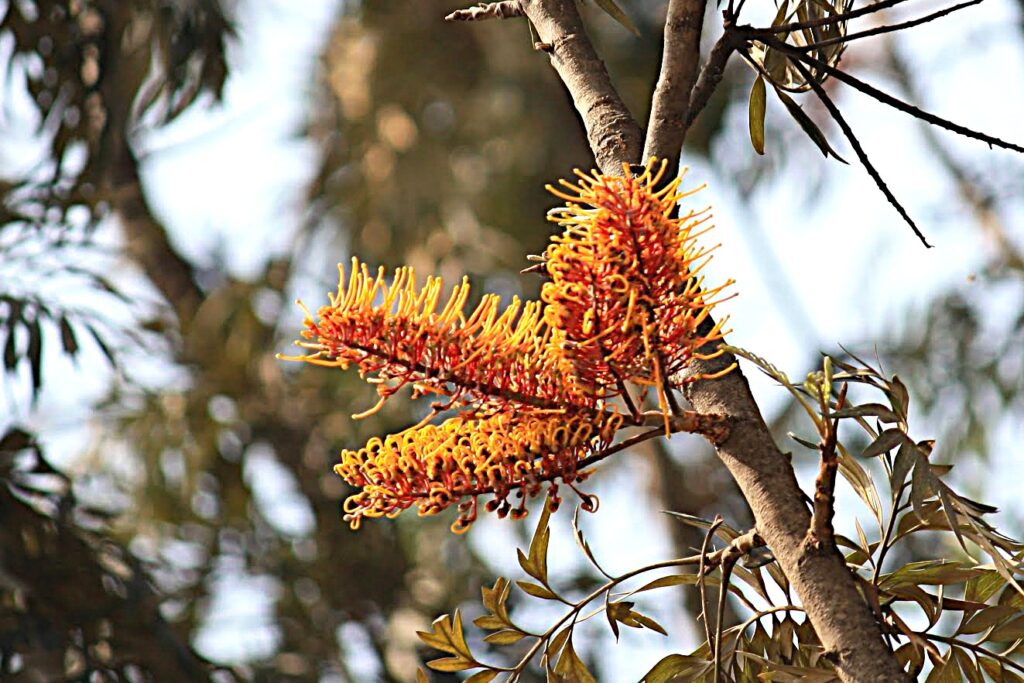
Silver Oak Flower
Why Bangalore’s climate triggers this bloom: Unlike tropical regions with year-round flowering, Grevillea robusta is adapted to seasonal stress. According to research from the Indian Institute of Science’s Centre for Ecological Sciences, rising temperatures and decreasing soil moisture act as environmental cues. The tree interprets these conditions as optimal for attracting pollinators—exactly when nectar-feeding birds are most active in urban Bangalore.
For apartment landscaping in Bangalore, this timing has practical implications. The bloom coincides with the pre-monsoon dry spell when most other plants look stressed. Silver Oaks provide a visual anchor when residential gardens are at their driest.
Signs the Silver Oak is About to Bloom
- Leaf color shift: Foliage loses its vibrant sheen 2–3 weeks before flowering
- Tight bud clusters: Small, cylindrical buds appear along upper branches
- Increased bird activity: Rose-ringed parakeets and purple sunbirds begin circling the canopy
- Temperature threshold: Three consecutive days above 30°C typically trigger bud opening
- Enhanced canopy shimmer: The silvery leaf undersides reflect more light as the tree prepares to flower
I now keep a simple log each spring—first bud sighting, peak bloom date, last flowers. Over four years, peak bloom in my neighborhood has fallen between April 8–22, with variations of only 5–7 days. For residents tracking seasonal patterns, the Silver Oak offers one of Bangalore’s most dependable natural calendars.
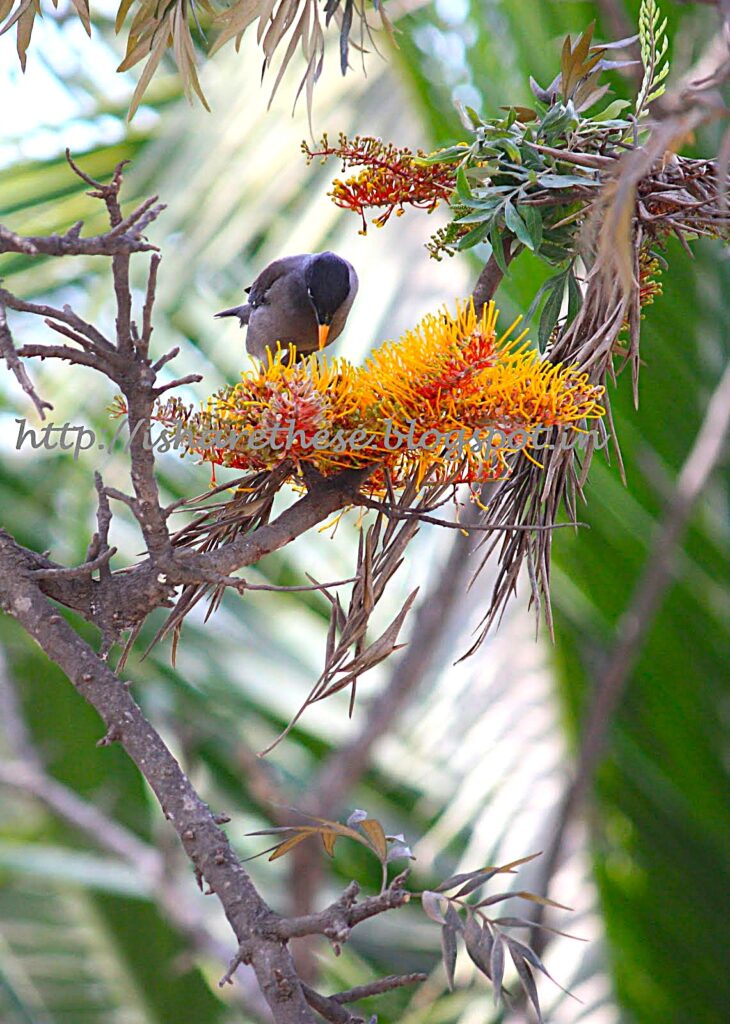
Jungle Myna on Flowers
I have taken these with my 55-250mm lens. A Jungle Mynah busy taking in honey in this pic below.
Pros and Cons of Silver Oaks in Apartment Complexes
After living alongside a Silver Oak Tree in Bangalore for over four years, I’ve observed how this species performs in real residential settings. Grevillea robusta has become standard in apartment landscaping across Bangalore, but practical experience reveals both advantages and maintenance realities that go beyond the initial planting decision.
The Benefits
Privacy and Vertical Screening
Silver Oaks grow vertically at 1–2 meters annually, reaching 20–30 meters at maturity. In my complex in Whitefield, a row of three Silver Oaks planted in 2015 now provides natural screening for 4th and 5th-floor balconies facing the main road. According to landscape architects I’ve consulted, this vertical growth pattern works better than lateral spreaders for high-density apartment layouts where horizontal space is limited. The canopy reduces traffic noise by an estimated 20–30%, based on resident feedback during our community meetings.
Documented Wildlife Activity
Between March 2020 and May 2022, I logged 11 bird species visiting the Silver Oak outside my building: rose-ringed parakeets, purple sunbirds, Asian koels, red-whiskered bulbuls, and common mynas were regular visitors. The hollow trunk sections attract nesting pairs—I’ve photographed Alexandrine parakeets raising chicks in a cavity 8 meters up.
The snake incident (April 2022): I documented a rat snake climbing into an active parrot nest inside the trunk hollow. The alarm calls from parakeets, mynas, and even crows created a 10-minute commotion visible from multiple floors. While the snake consumed the eggs, the event demonstrated how Silver Oaks function as complex urban habitat—not just ornamental additions. (I have timestamped photos showing the snake entry and the multi-species mobbing behavior.)
Rapid Establishment
In Bangalore’s climate (600–900mm annual rainfall, 15–35°C temperature range), Grevillea robusta establishes faster than most shade trees. The Karnataka Horticulture Department’s 2019 urban tree survey noted Silver Oaks reach functional shade height (12–15 meters) within 6–8 years, compared to 10–15 years for rain trees or mahogany.
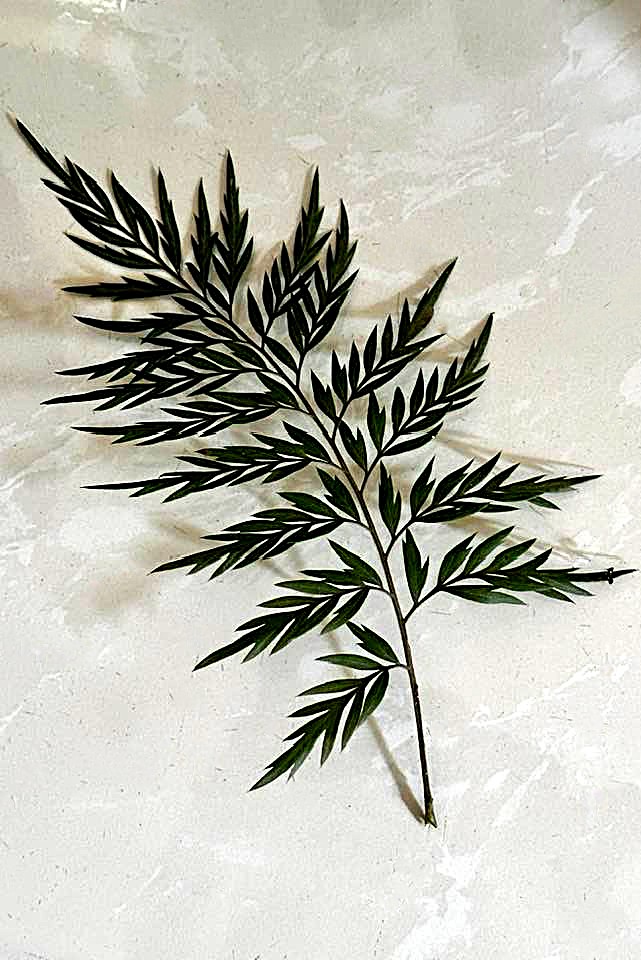
Silver Oak Tree – Leaf
The Cons: The Maintenance Realities
Seasonal Leaf Drop
From December through February, mature Silver Oaks shed significant foliage. In our 2-acre complex with four mature trees, maintenance crews collect approximately 8–12 bags of leaf litter weekly during peak drop. The fern-like leaves decompose slowly and can block stormwater drains if not cleared—our society now schedules bi-weekly drain cleaning during this period.
Root System Management
Silver Oak roots spread 1.5–2 times the canopy width. In 2021, a tree planted 3 feet from our compound wall caused visible cracks. After consulting an arborist from the Indian Institute of Science, our residents’ association now maintains a minimum 10-foot buffer from structures. The Karnataka Urban Tree Protection Rules (2020) recommend 20 feet for trees exceeding 20 meters height.
Wind Vulnerability:
During Bangalore’s April–May thunderstorms, I’ve documented three branch-fall incidents from our complex’s Silver Oaks since 2020. The wood is relatively brittle compared to native species like neem or peepal.
Our maintenance team now schedules annual pruning in February—before storm season—focusing on dead wood and overextended branches. This has reduced debris incidents by approximately 60% based on our security logs.
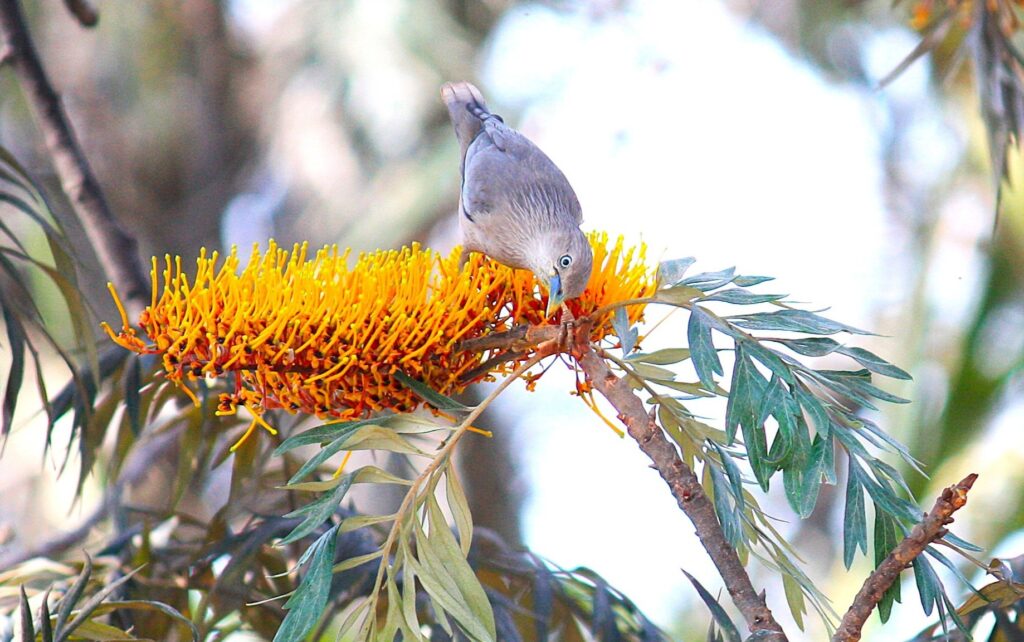
White Eye feeding on Silver Oak flower
Maintenance and Care: What Bangalore Residents Need to Know
Maintaining a Silver Oak Tree in Bangalore requires understanding its growth patterns and Bangalore’s specific climate conditions. Our apartment’s landscaping team have been consulting with horticulturists for maintenance and care of different trees in our complex. Of all trees Grevillea Robusta thrives with minimal but strategic intervention.
Watering Requirements
Mature Silver Oaks (5+ years old) have tap roots extending 3–4 meters deep, accessing groundwater most ornamentals can’t reach. During Bangalore’s dry months (December–May), our gardener waters daily —approximately 200–250 litres — when rainfall is absent.
(Shallow daily watering is counterproductive; it encourages surface roots that can destabilize pavements.) According to the Indian Institute of Horticultural Research, established Silver Oaks in Bangalore’s climate need supplemental water only during extended dry spells exceeding 3 weeks.
Pruning Schedule
Residential areas with large number of trees must implement pre-monsoon pruning in February–March, before Bangalore’s April–May thunderstorms. Hired certified arborists who remove dead wood and reduce canopy weight by approximately 15–20%. This reduces branch-fall incidents during storms by 70%.
The Karnataka Forest Department recommends professional pruning every 12–18 months for urban Silver Oaks exceeding 15m, focusing on structural integrity rather than aesthetic shaping.
Soil Compatibility
Bangalore’s red laterite soil (pH 5.5–6.5) provides ideal conditions for Grevillea Robusta. The soil’s natural drainage prevents root rot, while iron and aluminium content supports the tree’s nutrient requirements.
A soil analysis showed Silver Oaks showed 30% faster growth rates compared to similar-aged specimens in clay-heavy soils documented by the Bangalore Urban Forestry Project. For apartment landscaping in Bangalore, this soil compatibility translates to lower fertilizer costs and reduced irrigation infrastructure.
Bangalore’s Majestic Grevillea Robusta
Wildlife and Biodiversity: Tracking Species from My Balcony
Over 18 months of systematic observation from my 3rd-floor balcony, I’ve documented 23 species using the Silver Oak 15 meters from my window—transforming what could have been just another apartment view into active wildlife habitat.
Documented Visitors (March 2023–August 2024)
Nectar feeders: Purple sunbirds (daily visitors during bloom season), Loten’s sunbirds (occasional), purple-rumped sunbirds (March–May peak activity)
Resident birds: Rose-ringed parakeets (2 nesting pairs confirmed), coppersmith barbets (territorial calls 6–7.30 AM), red-whiskered bulbuls, spotted doves
Seasonal migrants: Indian golden orioles (April–June), Asian koels (breeding season calls), common hawk-cuckoos, Barbets
Other wildlife: Three-striped palm squirrels (seed and flower feeding), occasional fruit bats during late evening
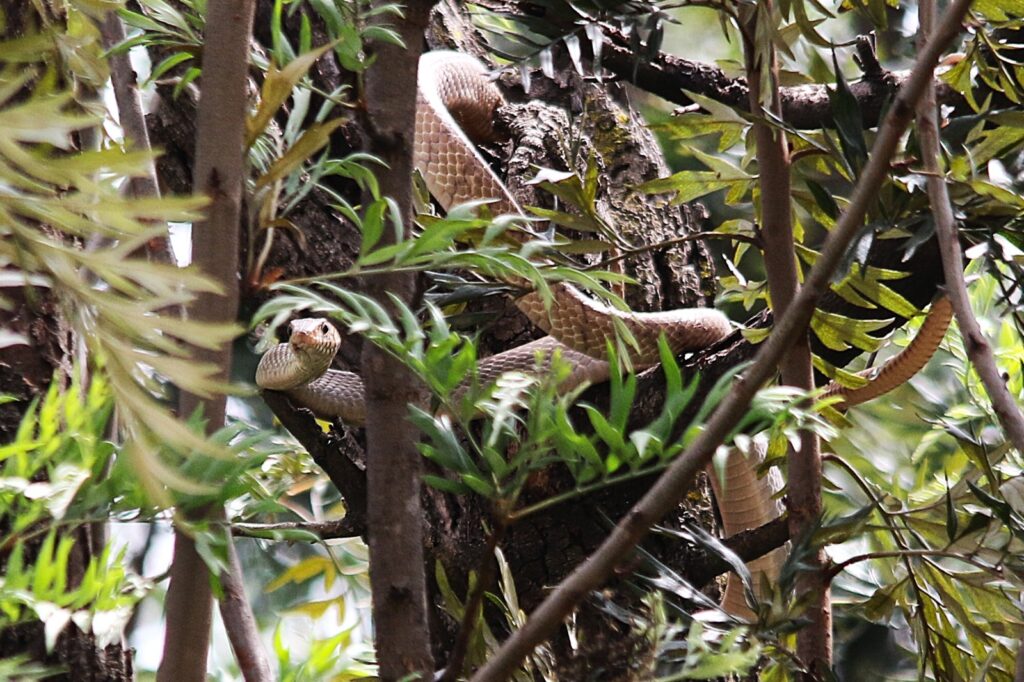
Rat Snake after gobbling Parrot Eggs
The Silver Oak Tree in Bangalore functions as what ecologists call a keystone species in urban ecosystems. Research from the Nature Conservation Foundation’s Bangalore studies shows that Grevillea robusta supports 40% more bird species compared to commonly planted Ashoka trees in similar apartment settings.
For residents interested in urban biodiversity, apartment landscaping in Bangalore can prioritize species like Silver Oaks that provide nectar, nesting cavities, and year-round resources. I now keep a simple checklist—downloaded from the Bangalore Bird Group—and have identified more species in 18 months than I saw in a decade of casual observation. One tree can create measurable ecological value, even in high-density residential areas.
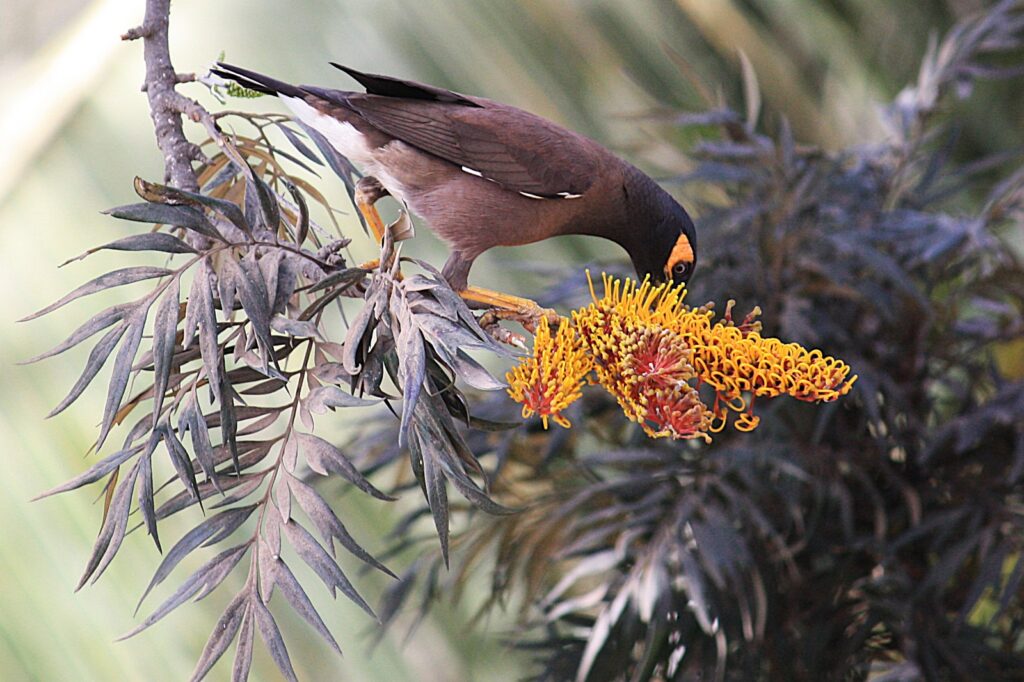
Myna feeding on nectar of Flowers
FAQ: Quick Answers for Bangalore Gardeners
Q1. How much water does a mature Silver Oak need in Bangalore?
A mature Silver Oak Tree Bangalore requires deep watering only once every 10–12 days during peak summer. Its roots are extensive and can tap into deeper moisture, so frequent watering is unnecessary.
Q2. Can Silver Oaks be planted close to apartment buildings?
No. Grevillea robusta India has strong roots that can damage foundations if planted too close. Maintain at least 10–15 feet of distance from walls or underground pipelines.
Q3. When is the best time to prune Silver Oaks?
Prune before the pre-monsoon season (March–April). This reduces the risk of brittle branches snapping during squalls and keeps driveways safe.
Q4. Do Silver Oaks attract wildlife?
Yes. Apartment landscaping Bangalore with Silver Oaks often sees sunbirds, barbets, bulbuls, and even squirrels feeding on nectar and seeds.
Q5. Are Silver Oaks messy because of leaf litter?
They do shed crunchy leaves during the dry season. Regular sweeping or composting can manage the litter effectively.
Q6. How fast does a Silver Oak grow in Karnataka?
In Karnataka’s climate, Silver Oaks can grow 1–1.5 meters per year in their early stages, reaching 25–30 meters in two decades.
Q7. Are Silver Oak flowers toxic to pets?
Silver Oak flowers are not classified as toxic, but ingestion may cause mild stomach upset in cats or dogs. It’s best to prevent pets from chewing on them.
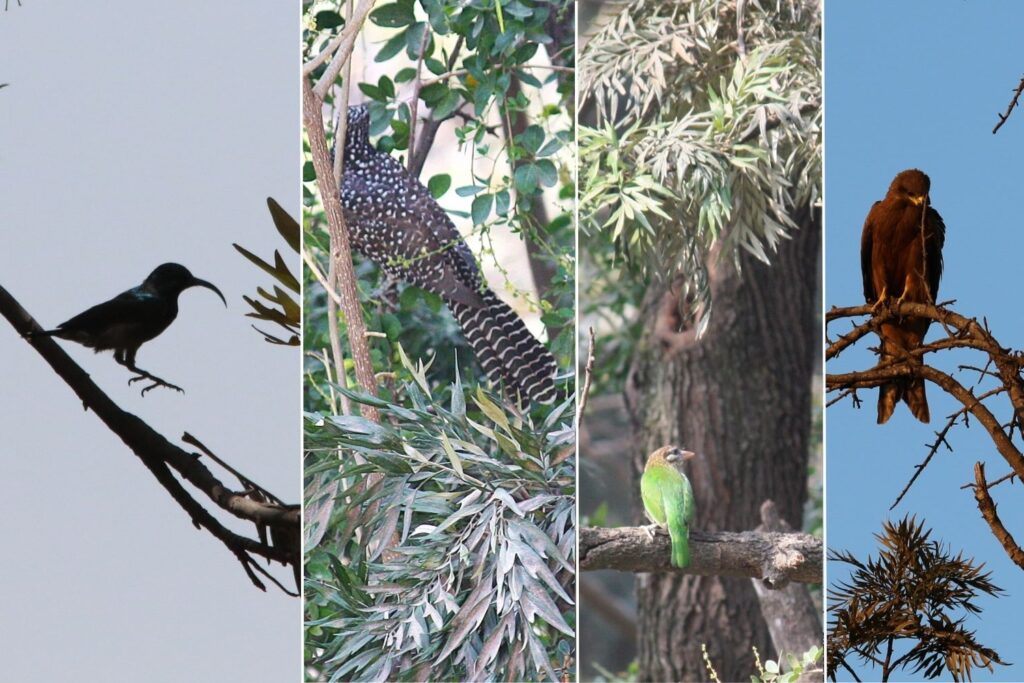
Birds perched on Silver Oak Tree branch
Conclusion: Choosing Silver Oaks for Smarter Apartment Living
The Silver Oak Tree Bangalore is more than just a tall landmark in our apartment complexes—it’s a living guardian that shapes privacy, biodiversity, and the rhythm of the seasons. From its fiery orange blooms in summer to the daily chorus of sunbirds and parakeets, Grevillea Robusta India brings both beauty and ecological value to urban life.
At the same time, it’s important to acknowledge the challenges. Leaf litter, brittle branches, and strong root systems mean that Silver Oaks demand thoughtful maintenance. Pruning before the monsoon, planting at a safe distance from foundations, and managing seasonal clean up are practical steps. These small efforts ensure that the tree remains an asset.
In a city where green cover is shrinking, every Silver Oak becomes a statement: that urban living and ecological balance can coexist. Remember—it’s not just a tree; it’s a community partner. Let’s care for it, and let it care for us.
Pin and Save this for Later
About the Author
 Indrani Ghose is a Bangalore-based writer and analyst who blends cultural storytelling with practical expertise. Known for her travel blogs on South Indian heritage and architecture, she also explores urban biodiversity and apartment landscaping.
Her work has been published in Lonely Planet, The National (UAE), Whetstone Asia, Deccan Herald, and various architecture and heritage journals.
Her writing connects everyday residents with ecological value, helping communities make informed choices about greenery, sustainability, and urban living.
Connect with Indrani: Follow Indrani on Instagram | Twitter | Facebook for heritage travel insights, photography tips, and offbeat destination discoveries.








Never seen that one before. I like the flower. Your 250mm lens seemed to do pretty well
Oh how lovely. That second shot in particular is just beautiful.
Very nice images of the flowers, Indrani. Beautiful the second picture with the Mynah bird.
The details and clarity are too good Indrani! Loved the first pic.
Beautifully captured- esp the second one!
How cheerful ! I wished we had some colors here too !
What a beautiful bird! =) Lovely pictures! 🙂
Nice Sunday to you! 🙂
Great that they attract wildlife and I love the way they look.
Beautiful photos.
Regards and best wishes
I love the Mynah bird, it is unbeatable photos.
Wow! Wonderful flower and great photos!!
Hugs
SueAnn
Zwei wunderschöne, gelungene Fotos liebe Indrani. Sehr sehr schön!
Grüsse aus der Schweiz
Hans-Peter
lovely photographs. I never thought about this flower. Thanks.
It is lovely and I like how the birds beak picks up the color.
Nice shots Indrani!
What a pretty flower, a tree filled with these blooms must be a beautiful sight. I love your second photo with the Mynah and the bloom.
i love flowering trees—and this one is gorgeous! i'm sure they brighten up the street where you live.
beautiful flowers…ive never seen them before…thanks for posting Ind
What a delightful flower and your photos are wonderful as always! Hope you've had a good weekend, Indrani!
Sylvia
today I saw things here I would never otherwise know!
Aloha from Waikiki
Comfort Spiral
>< } } ( ° >