Sampige Siddeshwara Temple in Chitradurga Fort
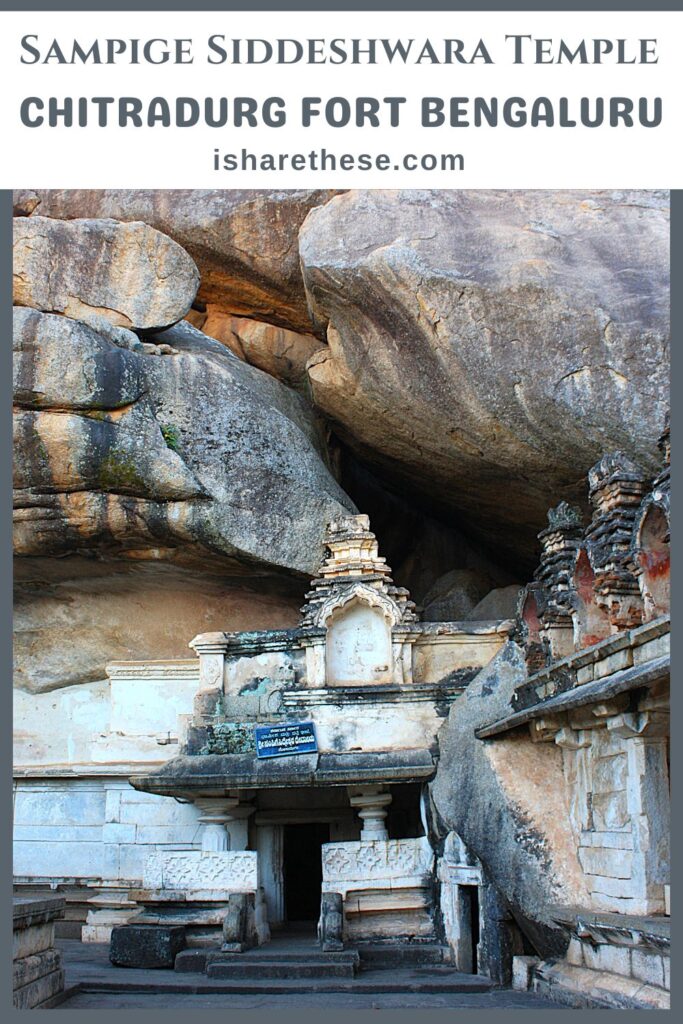
When I first stepped into the Chitradurga Fort complex in 2012, I wasn’t expecting to find a temple that felt like it had grown out of the rocks themselves. During my second visit in November 2022, I made it a point to revisit the Cave Temple again. The Sampige Siddeshwara Temple sits tucked beneath massive granite boulders, almost hidden until you’re right there.
This ancient Shiva shrine is part of the famous “Seven Rounds” fort system, and it’s been drawing devotees for nearly 700 years. What struck me most during my visit was how the temple doesn’t fight against the landscape—it becomes part of it. Stone pillars rise naturally between rock formations, and carved mantapas blend into the fort’s rugged terrain.
– By Indrani Ghose | Last Updated: December 2025
If you’re exploring the Chitradurga Fort temples, Sampige Siddeshwara deserves more than a quick stop. It’s where Karnataka’s military history meets deep spiritual tradition, all carved into living rock. The combination of natural architecture and human devotion creates something you won’t find in many other places.

Sampige Siddeshwara Temple Chitradurga Fort
The Legend of the “Sampige” Tree: History and Origin
Why is it called Sampige Siddeshwara?
The temple’s name comes directly from the Sampige tree—known as Champaka in Sanskrit—that once stood on this site. According to local accounts I heard from the temple priest during my 2022 visit, the Nayaka rulers’ ancestors planted this fragrant flowering tree here as an offering to Lord Shiva. The yellow-white blossoms were considered especially sacred and were used in daily worship rituals.
Over generations, the temple became inseparable from the tree in people’s minds. Eventually, Sampige Siddeshwara became the official name, creating a unique identity that connects botanical heritage with religious devotion.
The Magnolia Champaca, the magnolia flowers is called Sampige in Kannada language.
Ancient Foundations
The temple of Siddeshwara is a cave temple associated with a hillock named Mukthi Shivalaya Shikhara (liberation-abode of Shiva-pinnacle).
The Sampige Siddeshwara Temple dates back to 1328 AD, established during the early Nayaka dynasty’s rule over Chitradurga. Later, when the Vijayanagara Empire expanded its influence in the 15th and 16th centuries, they enhanced the temple with additional architectural elements.
You can see this layered history in the stonework. The basic structure shows Nayaka simplicity, while the detailed carvings on pillars and doorways carry Vijayanagara artistic signatures. The temple doesn’t sit on top of the rocks—it’s built into them, using natural caves and overhangs as part of the sacred space.
Inscriptions
The stone inscriptions at Sampige Siddeshwara are what make historians pay attention. Carved in Old Kannada script, they document specific construction projects, including the Gaalimantapa—a wind pavilion designed to catch breezes during Karnataka’s hot summers.
One inscription I photographed during my visit details the installation of a stone swing (oonjal) used during festival celebrations. These aren’t just construction records. They reveal how the temple functioned as a community center where religious ceremonies, social gatherings, and cultural events happened together. The inscriptions mention donations from local merchants and soldiers, showing that people from all walks of life contributed to maintaining this Chitradurga Fort temple.
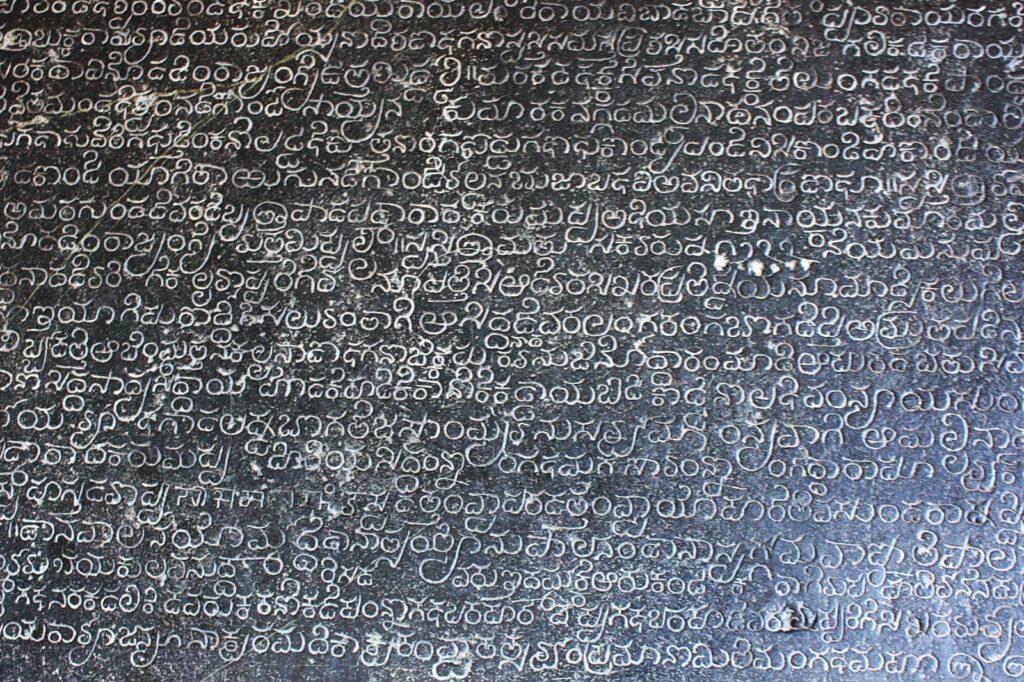
Inscriptions in temple walls Chitradurga
Architectural Marvels: A Temple Carved from Boulders
The Cave Sanctum
The Garbhagriha of the Sampige Siddeshwara Temple is unlike most shrines you’ll encounter in Karnataka. The sanctum housing the Shiva Linga isn’t a standalone structure—it’s partially carved into the natural rock face, creating what feels like a cave temple within the fort walls.
When I stepped inside during my 2022 visit, the temperature dropped noticeably. The cool air, trapped by the surrounding granite, creates a natural climate control system that ancient builders understood well.
The sanctum preserves its raw, unpolished character—you can still see tool marks on the rock where sculptors carved away stone centuries ago. This rough authenticity reminds you that the Chitradurga Fort temples were built by people who worked with the landscape, not against it.
The Gaalimantapa (Breezy Pavilion)
The Gaalimantapa, constructed in 1355 AD according to temple inscriptions, sits just outside the main sanctum. Its name translates to “wind pavilion,” and the design delivers exactly that. The open-sided structure with sturdy stone pillars creates cross-ventilation that brings relief after climbing the fort’s steep pathways.
I visited during April, one of Karnataka’s hottest months, and the breeze flowing through the Gaalimantapa made a real difference. The pillars show typical Vijayanagara and Nayaka craftsmanship—functional rather than ornate, built to last rather than impress. Historical records suggest this space hosted community gatherings and religious discussions, not just formal rituals.
Monolithic Wonders
The temple courtyard contains two impressive monolithic structures: the Uyyale Katte (stone swing frames) and the Deepa Stambha (lamp pillar). The swing frames are carved from single granite blocks—a technical achievement that required precise planning and execution.
During temple festivals, decorated swings were hung from these frames for deity processions. The Deepa Stambha stands tall near the entrance, its shaft showing the wear of centuries. On both occasions I photographed these structures, other visitors were doing the same—these monoliths remain the most visually striking elements of the Sampige Siddeshwara Temple complex.

Coronation in Sampige Siddeshwara Temple
Cultural and Spiritual Significance
The Sampige Siddeshwara Temple carries weight beyond its architectural features. Within the Chitradurga Fort temples network, it served a unique dual role—as both a religious center and a political landmark.
The large square platform in front of the shrine functioned as the coronation site for Chitradurga’s Palegars (local chiefs). Historical accounts document that new rulers received their authority here, combining spiritual blessing with political legitimacy. This practice made the temple a power center where religious and administrative functions overlapped—a common pattern in medieval Karnataka governance.
In its heyday this place must have seen a lot of ceremonial activities, now it is bare and mute. Amazes me how time can rip off the importance and grandeur. Nothing is permanent!
For Veerashaiva followers, this temple holds special significance. Local tradition maintains that Revannasiddha and Allama Prabhu, prominent 12th-century saints, visited and meditated here. While I couldn’t verify these claims through inscriptions during my visit, the temple priest shared oral histories passed down through generations of caretakers.
The temple complex houses more than just the main Shiva shrine. Statues of Ganesha and Veerabhadra occupy smaller niches carved into the rocks. Several Naga stones—serpent deity representations—line the courtyard walls, their surfaces worn smooth by centuries of oil offerings.
During my 2022 visit, I watched locals perform simple rituals at these subsidiary shrines. An elderly woman placed flowers before the Ganesha statue while younger visitors lit oil lamps at the Naga stones. These weren’t staged tourist moments—they were genuine acts of devotion that continue daily.
This living worship tradition is what separates Sampige Siddeshwara from many other Chitradurga Fort temples. It’s not a museum piece. It remains an active religious site where history and contemporary faith exist side by side.
Inside Siddeshwara Temple
Walk around to see the sanctum, vestibule and hall of the temple. Inside the sanctum there is Shiva Linga that is worshiped on a daily basis as Sidhanta, thus the name Siddheshwar for the temple. The worship of this deity is associated with Veerashaiva Saints like Revannasiddha (Sri Revana Siddeshwara Swamy is thought to be one in every of the best Saints of the Shaiva Sect within the Hindu faith).
The hall has sculptures of Allama Prabhu, Ganesha, Shula, Brahma, Nandi, Bhairava and several Naga stones. At one corner there is an impressive statue of Veerabhadra.
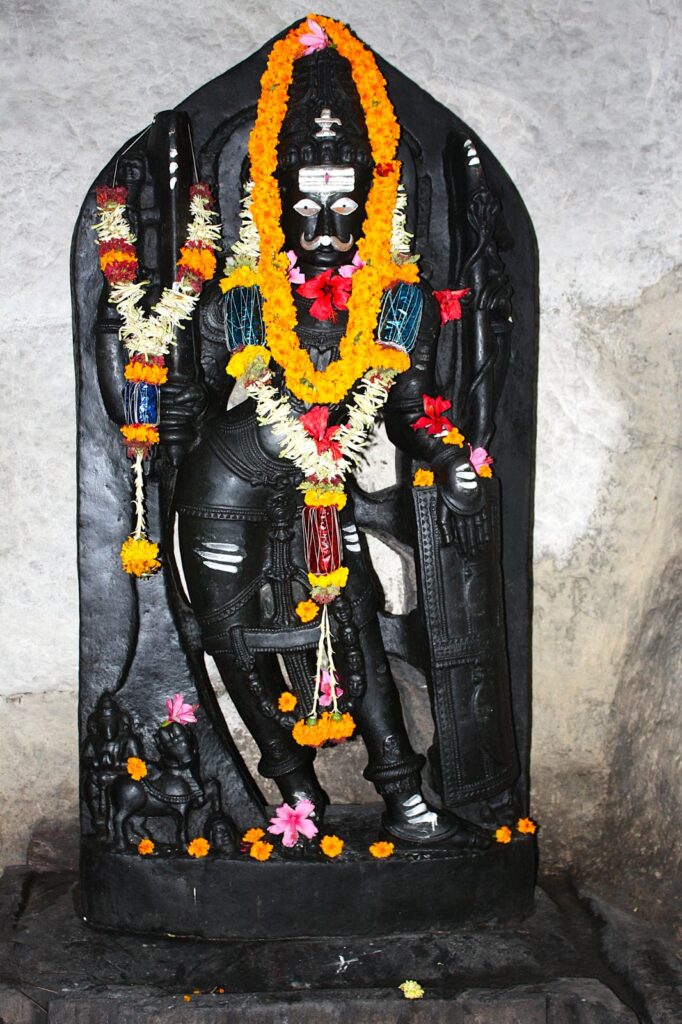
Statue of Veerabhadra
Read more – 20 Rock Cut Cave Temples of India
Essential Visitor’s Guide: Planning Your Visit
Best Time to Visit
The Sampige Siddeshwara Temple is best explored between October and February, when Chitradurga’s weather makes climbing the fort’s rocky terrain comfortable.
I visited during April 2022, and the heat was intense—granite boulders absorb and radiate warmth, making midday exploration challenging.
Winter mornings offer crisp air and better visibility for photography across the Chitradurga Fort temples.
Timings and Entry Fees
The fort complex opens at 6 AM and closes at 6 PM daily. Entry fees are approximately ₹25 for Indian citizens and ₹300 for foreign visitors, with student concessions available.
There’s no separate charge for the Sampige Siddeshwara Temple itself—your fort ticket covers all temples within the complex.
How to Reach
Chitradurga sits 200 km northwest of Bengaluru on NH48, roughly a 4-hour drive. The town has a railway station with regular trains from Bengaluru, Hubli, and Mysuru.
Local auto-rickshaws charge ₹50-100 to reach the fort entrance from the station.
Inside the fort, expect a moderate 15-20 minute walk across stone steps and uneven paths to reach the temple—wear comfortable footwear.
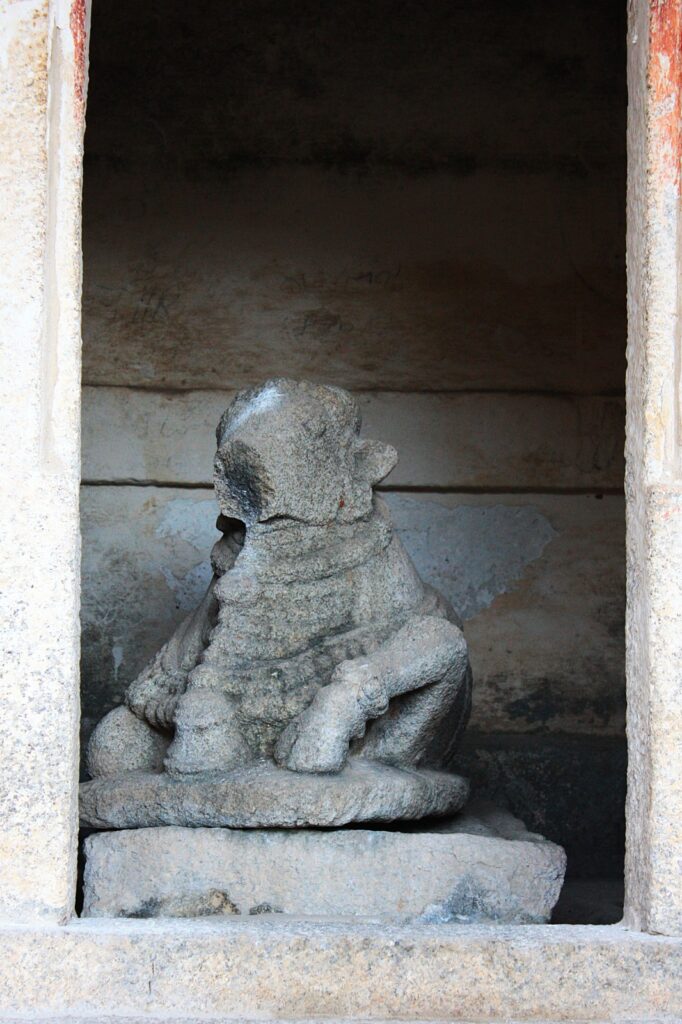
Nandi statue inside Siddeshwara Temple
What Else to See in Chitradurga Fort?
The Chitradurga Fort temples and historical sites extend well beyond Sampige Siddeshwara. During my visit, I covered these key attractions:
Hidimbeshwara Temple stands as the oldest shrine in the fort complex. Dedicated to Lord Shiva, it features Vijayanagara-era inscriptions and a more ornate architectural style compared to Sampige Siddeshwara. The temple sits at a higher elevation, offering panoramic views of the surrounding plains.
Onake Obavvana Kindi is the narrow rock crevice where Obavva, a guard’s wife, defended the fort single-handedly against Mysore invaders in the 18th century. She used only a pestle (onake) to strike down soldiers entering through this passage. The site has become a symbol of Kannada pride and courage.
Akka Thangi Honda (Sisters’ Pond) comprises twin reservoirs that demonstrate the fort’s sophisticated water management. Even during summer, these tanks held water, proving the engineering skills of medieval builders.
Tuppada Kola is a natural rock pool that never dries up, considered sacred by locals. I watched devotees collecting water here for temple rituals.
The Seven Rounds fortification system itself deserves exploration—walking through the concentric defensive walls shows how Chitradurga earned its reputation as one of Karnataka’s most impregnable forts.
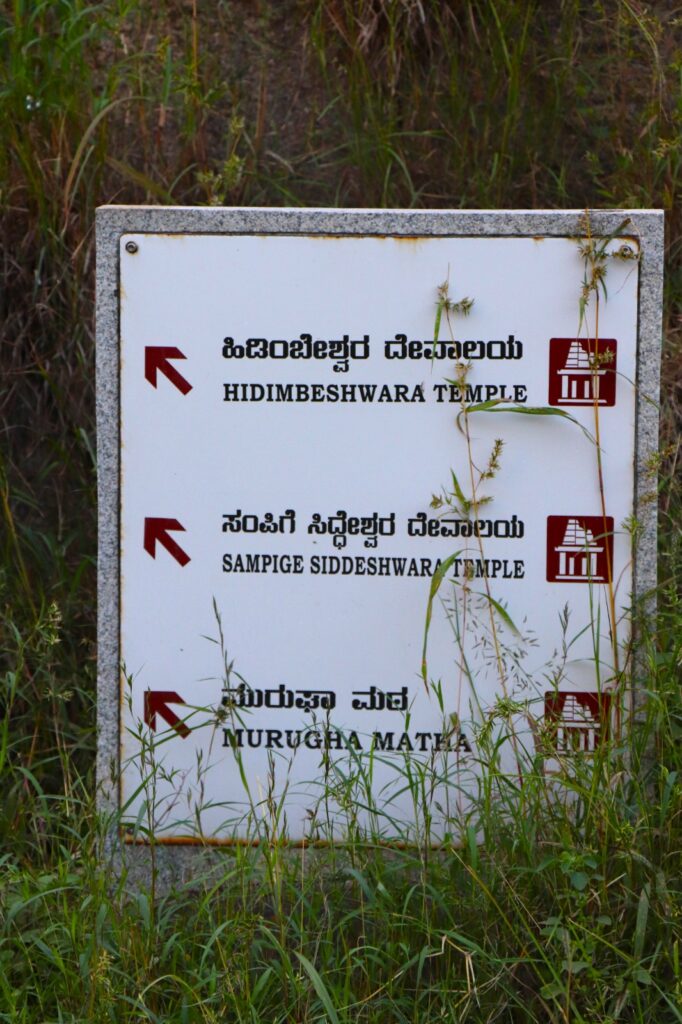
What Else to See in Chitradurga Fort
Final Thoughts
The Sampige Siddeshwara Temple demonstrates what happens when builders work with nature rather than against it—granite boulders become walls, rock overhangs turn into sanctums, and centuries-old traditions continue in carved stone spaces.
My 2022 visit reinforced why this ranks among Karnataka’s most authentic heritage sites. It hasn’t been over-restored or commercialized. You’re experiencing the temple much as devotees did 700 years ago.
If you’re planning a trip to the Chitradurga Fort temples, allocate at least 3-4 hours to explore properly. Have questions about visiting Karnataka’s historic sites? Drop them in the comments—I’m happy to share route suggestions, photography tips, or accommodation recommendations for your heritage journey.
Pin and Save this for Later
If you like visiting caves, and more specifically the little known cave temples of India do save and share this post to plan a trip for later.
About the Author
 Indrani Ghose is a cultural travel writer and heritage documentation specialist with over 15 years of experience exploring and writing about temples across India and Southeast Asia. Having visited over 150 sacred sites, she brings both scholarly depth and personal narrative to heritage travel writing.
Her work has been published in Lonely Planet, The National (UAE), Whetstone Asia, Deccan Herald, and various architecture and heritage journals.
Indrani believes that travel writing serves as a bridge — helping readers experience places more deeply by providing context, answering questions, and sharing both practical logistics and emotional resonance.
Connect with Indrani: Follow Indrani on Instagram | Twitter | Facebook for heritage travel insights, photography tips, and offbeat destination discoveries.








Chitradurga fort is very nice, I have been there plenty of times as used to stay nearby.
Good clicks.
Nice photo. The angle of the camera keeps the buruju(watch tower) to the left, made me wonder about where you clicked it from. If I am not wrong, it must be 14.2145405N 76.3956782E?
Hello Indrani. I saw your name announced at indiblogger. so was trying to find you! you arrived late i guess? Missed a chance to meet. Hopefully next time.
This is really interesting…
saadepunjab.com
What a tall entrance tower.
lovely place…this is on my travel wish list
The entrance is so dramatic against the blue sky. I'll cross my fingers for your internet issues.
Glad to stop over here! That is one incredible place.
Old Indian temples always make me think of The Jungle Book 🙂
I hope your Internet problems will be fixed soon!
I do hope your internet problems are solved soon, Indrani! I do know how frustrating it can be — been through it myself a couple of years ago!! Your photos are wonderful and I love that BLUE sky in the first shot! Hope you have a good, problem free weekend!!