Bhoganandishwara Temple: Karnataka’s Architectural Gem (Complete Guide)
Why Bhoganandishwara is Karnataka’s Hidden Gem
Tucked at the base of Nandi Hills near Bangalore, where morning mist kisses centuries-old stone, stands a temple that time seems to have blessed — Bhoganandishwara Temple. Until I discovered this ancient marvel, I would, like most visitors, rush past to catch the sunrise from the hilltop. But now I pause long enough to explore this architectural treasure resting quietly below.
During my visits in March 2023 and October 2025, I found it to be far more than just another ancient temple — it’s a living chapter of Karnataka’s Dravidian heritage, whispering stories from over a thousand years ago. Standing before those chiseled granite walls, I marveled at how seamlessly faith and art merged here — every stone carrying both devotion and design in perfect balance.
Located in Nandi village, just 60 km from Bangalore, the Bhoganandishwara Temple complex offers a serene counterpoint to the city’s chaos. The temple features twin shrines dedicated to Lord Shiva — Bhoganandishwara (representing youth) and Arunachaleshwara (representing maturity) — symbolizing different stages of life. Between them lies the Uma-Maheshwara shrine, representing divine union — a detail that makes this temple architecturally unique among South Indian temple ensembles.
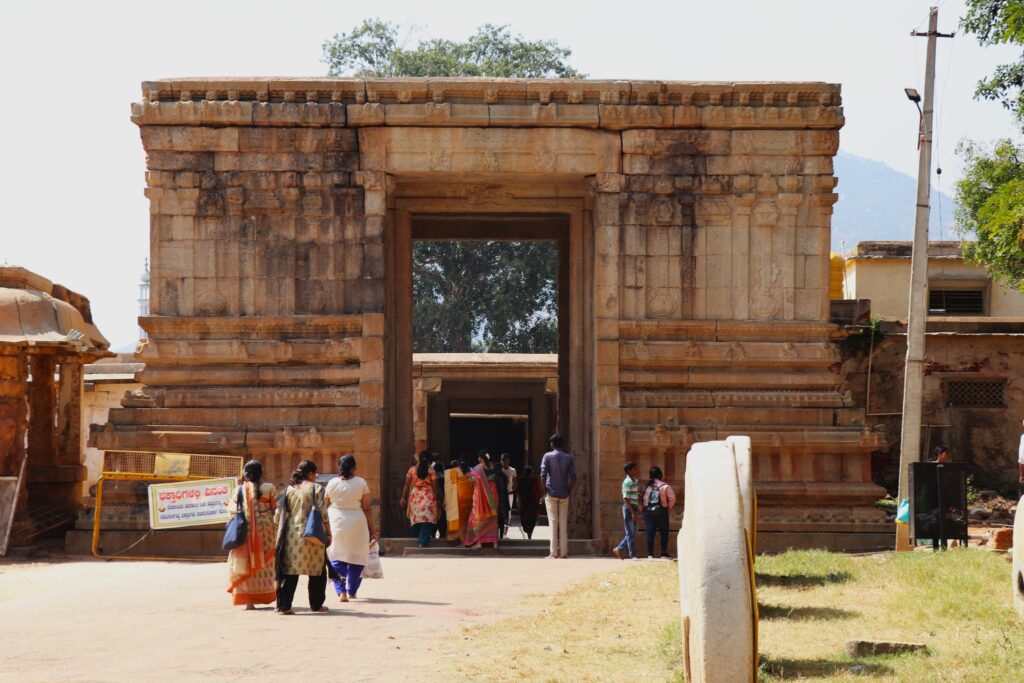
Unfinished gopuram to Bhoganandeeshwara Temple Nandi village near Bangalore
A Glimpse Into 1,000 Years of History
According to the Archaeological Survey of India, the Bhoganandishwara Temple history dates back to the 9th century CE. Originally built during the Nolamba dynasty (vassals of the Rashtrakutas), the temple received significant additions from the Cholas, Gangas, Hoysalas, and Vijayanagara rulers over seven centuries. Each dynasty left its architectural signature — intricate stone carvings, pillared halls, and delicate motifs that chronicle the evolution of Dravidian craftsmanship.
As you walk through its courtyards, the temple unfolds like a timeline in stone. The Dravidian architectural style dominates — pyramid-like vimanas (towers), ornate mandapas (halls), and finely sculpted pillars adorned with floral and mythological motifs.
The Kalyana Mantapa (marriage pavilion), built during the Hoysala period, remains one of the most beautiful features — its Yali (mythical creature) pillars gleaming under soft sunlight, their lathe-turned precision a testament to 12th-century craftsmanship.
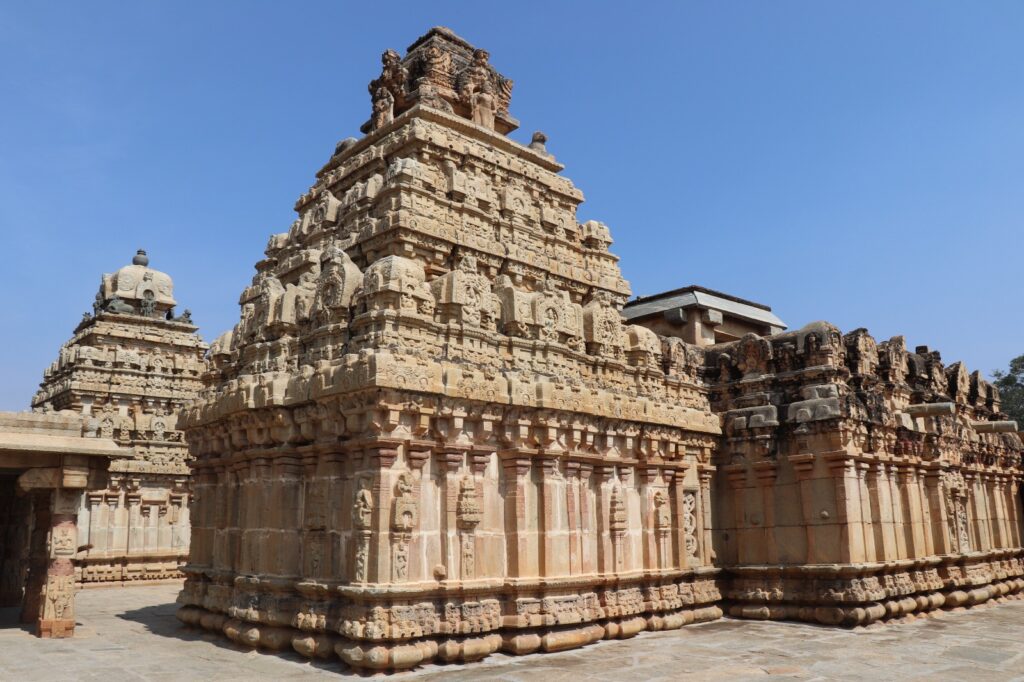
Bhoganandishwara Temple Nandi Village Karnataka
Quick Reference: Essential Temple Information
Location: Nandi Village, Chikkaballapur District, Karnataka
Distance from Bangalore: 60 km (approximately 1.5 hours by road)
Temple Timings: 6 AM to 8 PM (Open daily)
Entry Fee: Free (donations welcome, not mandatory)
Best Time to Visit: October to February (pleasant weather); early mornings (6.30 AM to 8.30 AM) ideal
Time Needed to tour: 1.5 to 2 hours for thorough exploration
Photography: Allowed in most areas (avoid flash in sanctums)
Dress Code: Modest attire recommended; footwear removed in inner sanctums
Managed By: Archaeological Survey of India (ASI)
Significance: The temple represents Lord Shiva’s life journey through three shrines — childhood (Arunachaleshwara), youth (Bhoganandishwara), and divine marriage (Uma-Maheshwara). This philosophical narrative expressed through spatial architecture is rare in South Indian temples.

Bhoganandishwara Nandi
How to Reach Bhoganandishwara Temple from Bangalore
By Car or Taxi (Most Convenient)
Route: Bangalore → NH 44 (Bangalore-Hyderabad Highway) → Devanahalli → Nandi Village
Distance: 60 km | Time: 1.5 to 2 hours (depending on traffic)
Cost: Petrol ~₹500 (self-drive) | Ola/Uber ~₹1,500 to ₹2,000 (round trip with waiting)
Navigation Tip: Use Google Maps and search “Bhoganandishwara Temple, Nandi Village.” The temple is located 2 km before the Nandi Hills entrance road on the same route.
From My Experience: Leaving Bangalore by 6.30 AM helps you avoid city traffic and arrive at the temple by 8 AM — perfect timing for soft morning light and fewer crowds. The drive itself is pleasant once you’re past Devanahalli, with views of the gradually rising Nandi Hills ahead.
By KSRTC Bus (Budget Option)
Route: Kempegowda Bus Station (Majestic) → Nandi Hills buses (Platform 17)
Frequency: Every 30 to 45 minutes from 6 AM onwards
Fare: ₹60 to ₹80 per person
Note: Inform the conductor to drop you at “Nandi Village Temple” or “Bhoganandishwara Temple” — it’s 2 km before the Nandi Hills gate.
Alternatively, take any Chikkaballapur-bound bus and get down at Nandi Village junction, then hire an auto (₹50 to ₹100) for the remaining 1 km.
By Train
Nearest Station: Chikkaballapur Railway Station (6 km from temple)
Trains from Bangalore: Available from Bangalore City Junction and Yelahanka
From Station: Hire an auto-rickshaw (₹100 to ₹150) or cab (₹200 to ₹300) to reach the temple
By Air
Nearest Airport: Kempegowda International Airport, Bangalore (35 km from temple)
Ideal for: International travelers or those with early/late flights
Travel Time: 45 minutes to 1 hour by taxi
Pro Tip: If you’re arriving at or departing from Bangalore airport, Bhoganandishwara Temple makes an excellent heritage stopover. Many travelers combine it with a brief Nandi Hills visit before catching evening flights.
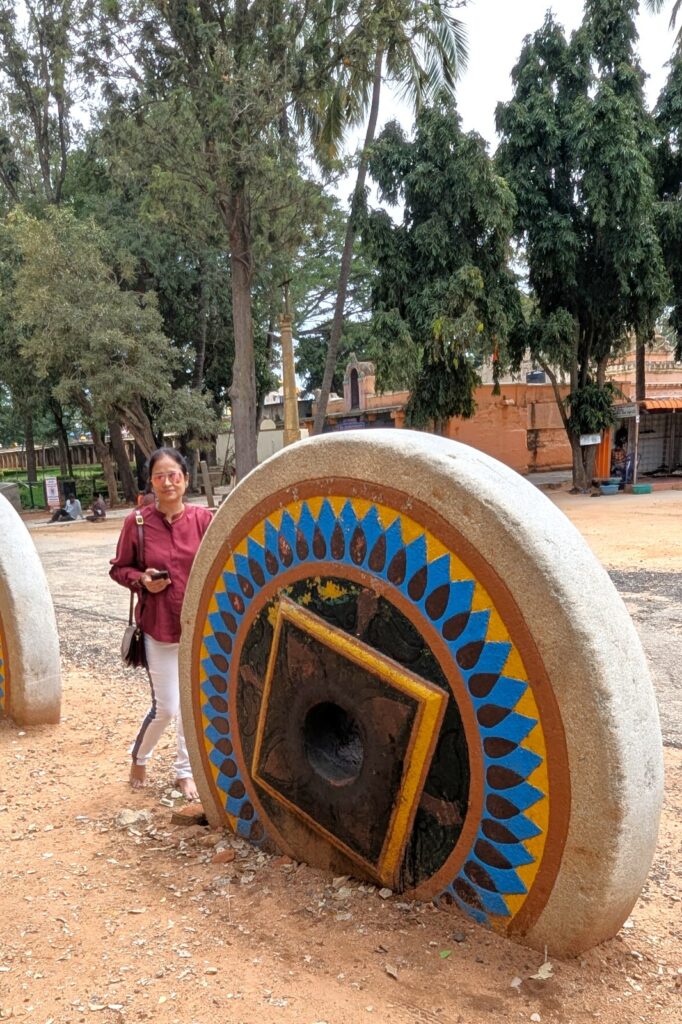
Chariot wheel made of granite at the entrance to Bhoganandishwara Temple
When to Visit: Best Seasons and Timing
Best Months: October to February
Why These Months?
- Pleasant weather (18 to 28°C) — comfortable for 2+ hour exploration
- Post-monsoon greenery (Oct to Nov) makes surroundings lush
- Clear skies ideal for photography
- Temple tank (Shringi Teertha) often full, creating beautiful reflections
What I Noticed: During my October 2025 visit, the weather was perfect — cool morning breeze, bright but not harsh sunlight, and the temple tank mirrored the vimanas beautifully. In contrast, my March 2023 visit required more frequent water breaks and shade-seeking.
Best Time of Day
Early Morning (6.30 AM to 8.30 AM) Highly Recommended
- Fewer crowds (mostly local devotees)
- Soft golden light perfect for photography
- Morning rituals (abhishekam around 7 AM) observable
- Cooler temperature (especially March to May)
- Peaceful atmosphere for contemplation
Evening (4.30 PM to 7 PM) Good Alternative
- Evening aarti around 6.30 PM (beautiful lamp lighting ceremony)
- Softer light than midday
- Slightly more crowded (local visitors after work hours)
Avoid: 11 AM to 2 PM (harsh overhead sunlight, hot weather, architectural details less visible in flat light)
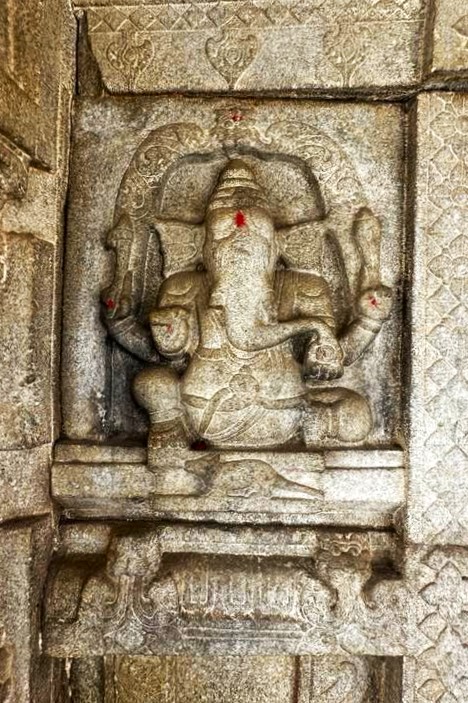
Ganesha Statue in Bhoganandishwara Temple
Festival Times (For Cultural Immersion)
Maha Shivaratri (February/March)
- Grand celebrations with overnight prayers
- Thousands of devotees from Bangalore and surrounding areas
- Special decorations and extended rituals
- Note: Expect large crowds; arrive very early or late evening
Karthika Deepotsava (November)
- Temple illuminated with traditional oil lamps
- Beautiful evening atmosphere
- Moderate crowds
Shravan Mondays (July-August monsoon season)
- Weekly special Shiva puja every Monday
- Smaller gatherings, intimate ritual experience
- Weather may be rainy; carry umbrella
Annual Kalyanotsava (Divine Wedding Ceremony)
- Held in the Kalyana Mantapa (check temple calendar for dates)
- Re-enacts the marriage of Shiva and Parvati
- Rare opportunity to see the pavilion used for its original ceremonial purpose
During one of my visits, I witnessed a small homam (fire ritual) being conducted for a family in the Kalyana Mantapa. The priests were welcoming to respectful observers, and experiencing ancient rituals in such an ancient space felt profoundly moving.
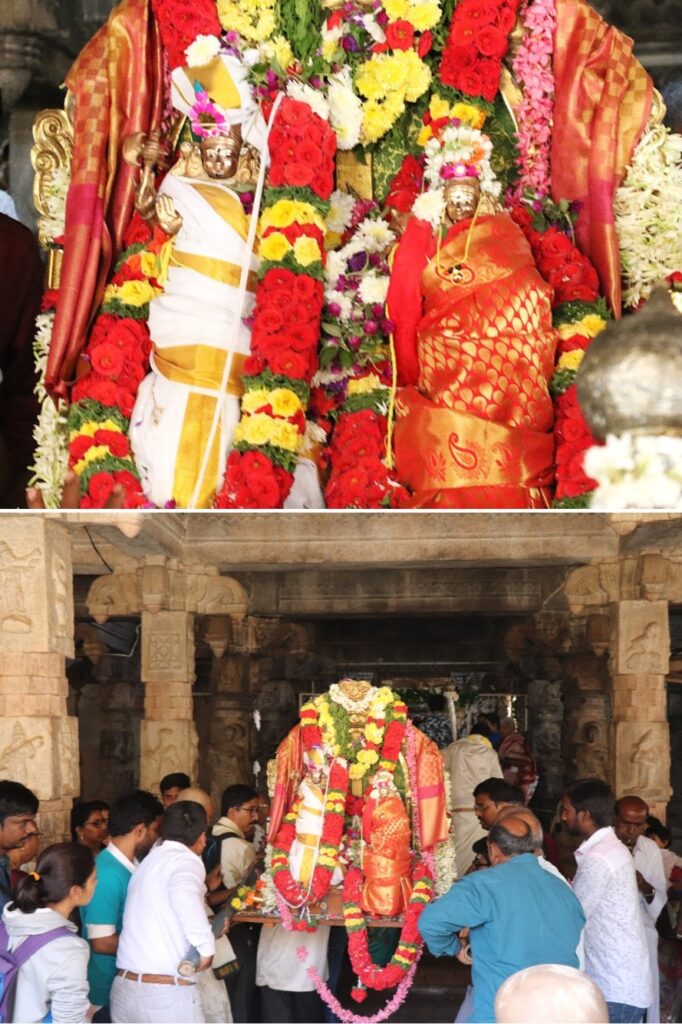
Puja Procession from Kalyana Mantapa
Essential Visitor Guidelines
Dress Code
While there’s no strictly enforced dress code, modest attire is recommended and appreciated:
Appropriate:
- Full-length pants or long skirts
- Shirts/tops covering shoulders
- Traditional Indian wear (salwar kameez, sarees, kurtas) — blends in well
Avoid:
- Shorts, short skirts, or sleeveless tops
- Beachwear or overly casual clothing
Footwear: Must be removed before entering inner sanctums and mandapas. Wear easily removable shoes (slip-ons or sandals) as you’ll be taking them on/off frequently. Socks are acceptable if preferred.
Photography Etiquette
Allowed:
- Outer courtyards, mandapas, and architectural features
- Kalyana Mantapa pillars and carvings
- Temple tank (Shringi Teertha)
- Gopurams, vimanas, and exterior structures
- Tripods in open courtyards (not inside narrow sanctums)
Be Respectful:
- Avoid flash photography inside sanctums
- Don’t photograph actively praying devotees without permission
- Wait for pauses in rituals before photographing
- If unsure, ask the priest: “Can I take photos here?”
Not Allowed:
- Drone photography (ASI protected monument)
Good News: Unlike many temples, there’s no camera fee at Bhoganandishwara.
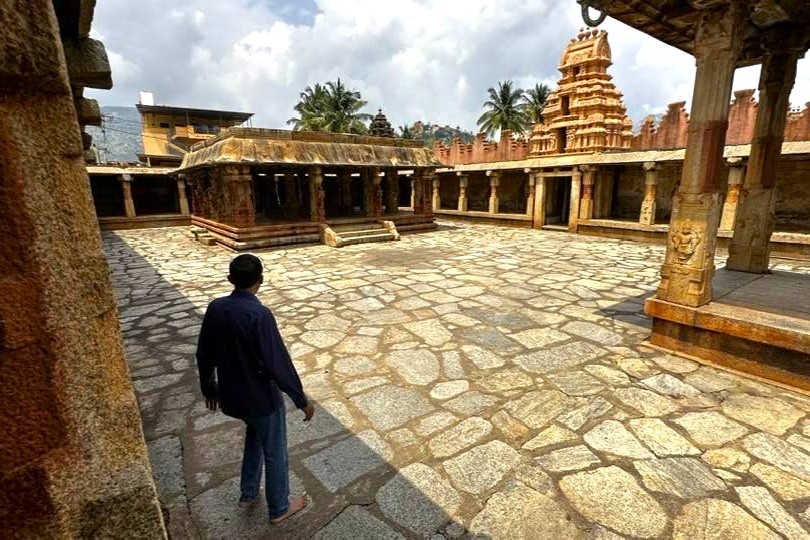
Dravidian vimana Bhoganandishwara, Tulabhara Mandapa and Navaranga Mantapa
Photography Tip: Morning light (7 AM to 9 AM) hits the Kalyana Mantapa pillars at an angle that beautifully highlights the lathe-turned details and yali carvings. The temple tank offers stunning reflections when full (post-monsoon months).
Temple Etiquette
- Speak softly inside the temple premises
- Don’t touch ancient sculptures or carvings (oils from skin can damage stone)
- Circumambulate (walk around shrines) clockwise (pradakshina)
- If witnessing rituals, observe from the periphery; don’t obstruct devotees
- Donations are voluntary; there’s no pressure, but contributions support maintenance
- Prasadam (blessed offerings) may be distributed after certain pujas; accept respectfully
Facilities Available
At Temple:
- Free parking near entrance
- Basic restroom facilities (functional but not luxury; carry tissues/sanitizer)
- Drinking water taps
- Small tea stall near entrance (₹10 to ₹20)
What to Carry:
- Water bottle (2+ hours of walking)
- Sunscreen and hat (minimal shade in courtyards)
- Hand sanitizer
- Small bag for removed footwear
- Cash (₹500 to ₹1,000 for donations, refreshments, local purchases)
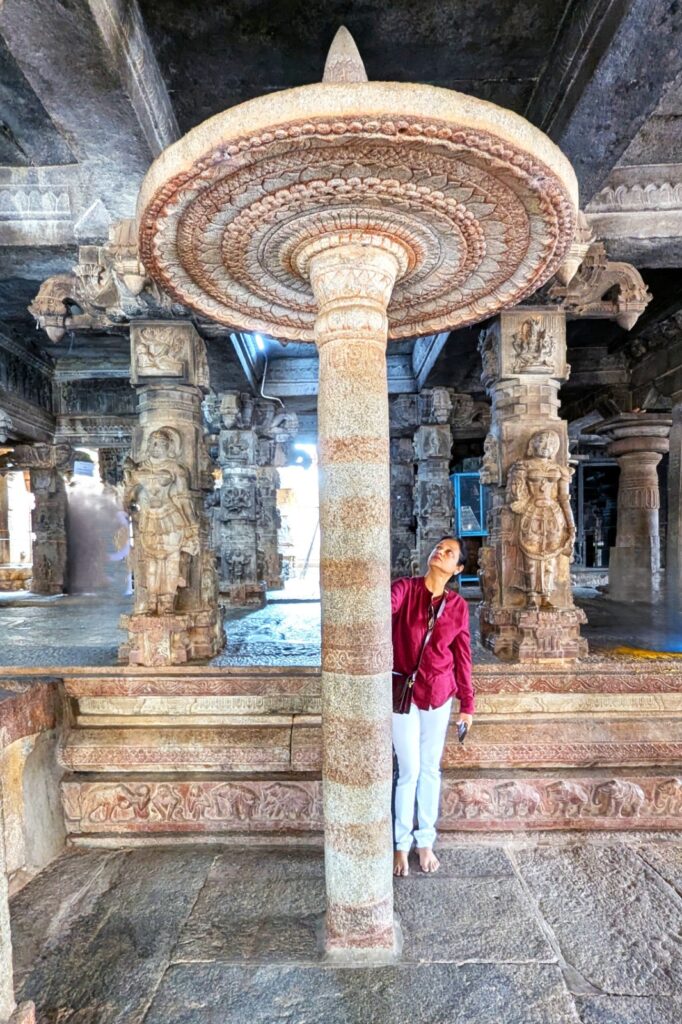
Bhoga Nandishvara Temple
Combining Your Visit: Temple + Nandi Hills Perfect Day Trip
Most visitors combine Bhoganandishwara Temple with Nandi Hills since they’re only 2 km apart. Here’s my recommended itinerary:
Option 1: Temple-First Approach (My Recommendation)
6.30 AM: Depart Bangalore
8 AM: Arrive at Bhoganandishwara Temple
8 AM to 10 AM: Explore temple thoroughly (2 hours) — peaceful, perfect light
10.30 AM: Drive up to Nandi Hills (2 km, 10 minutes)
11 AM to 1 PM: Nandi Hills viewpoint, Tipu’s Drop, yoga center, breakfast at hilltop cafes
2 PM: Return to Bangalore
Why This Sequence Works: You get the temple almost to yourself in early morning, avoid the Nandi Hills sunrise crowd (which peaks at 6 AM to 7 AM), and still enjoy the hills at a relaxed pace.
Option 2: Sunrise Enthusiast’s Route
5 AM: Depart Bangalore
6.30 AM: Nandi Hills sunrise viewpoint
8 AM: Breakfast at Nandi Hills
9 AM: Drive down to Bhoganandishwara Temple
9 AM to 11 AM: Explore temple
12 PM: Return to Bangalore
Caveat: Nandi Hills gets very crowded for sunrise (especially weekends). The temple, in contrast, is tranquil in early mornings.
Nearby Attractions Worth Exploring
Within 5 km to 10 km:
- Yoga Nandeeshwara Temple (3 km): Smaller temple dedicated to Nandi
- Brahmashram (5 km): Cave temple with rock formations
- Nandi Fort Ruins (4 km): Historical remnants from Tipu Sultan’s era
Within 30 km:
- Skandagiri Hills (15 km): Popular for night treks; fort ruins at summit
- Muddenahalli (25 km): Sir M. Visvesvaraya’s birthplace; museum dedicated to the engineer
- Avalabetta (28 km): Rock climbing destination; hilltop sunrise views
Day Trip Combinations:
- Heritage Focus: Bhoganandishwara Temple → Nandi Hills → Nandi Fort
- Adventure Mix: Bhoganandishwara Temple → Gudibande Fort trek (45.5 km)
- Extended Tour: Bhoganandishwara → Nandi Hills → Muddenahalli Museum → Return via Devanahalli town
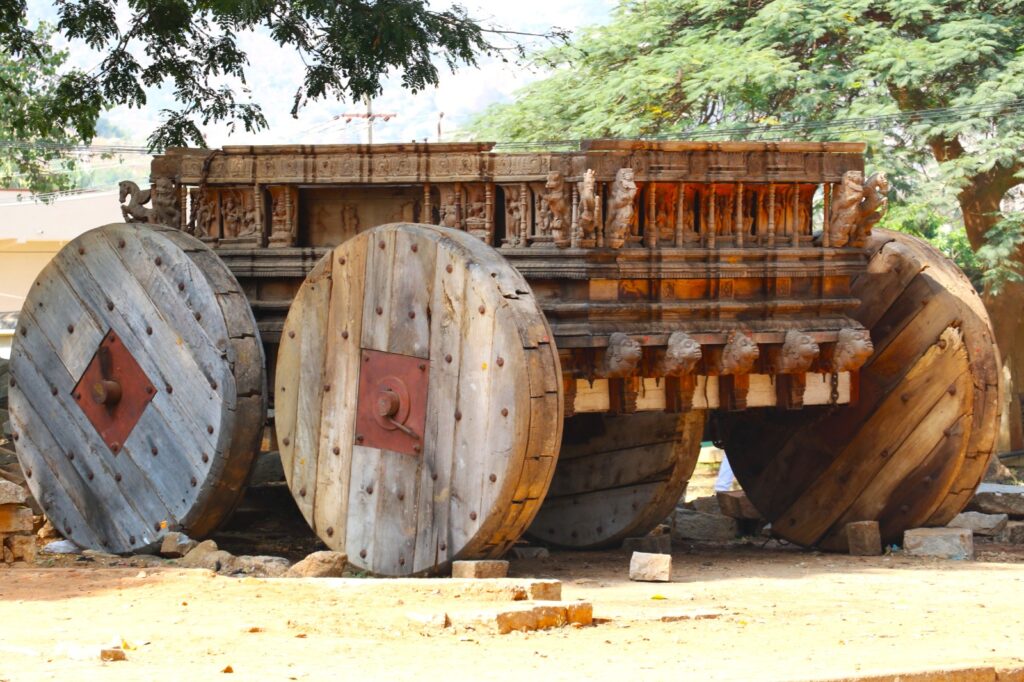
Heavily carved Wooden Chariot, in use once, now at rest
Mini FAQ: Quick Answers for Planners
Q1. Is there an entry fee for Bhoganandishwara Temple?
A. No, entry is completely free. There are no tickets required. Donations are welcome (donation boxes near shrines) but entirely voluntary.
Q2. How much time should I allocate?
A. If you’re an architecture or photography enthusiast, you could easily spend half a day here.
Minimum: 1 hour (rushed, main highlights only)
Recommended: 1.5 hours to 2 hours (thorough exploration with photo breaks)
Ideal: 2.5 hours to 3 hours (leisurely pace, observing rituals, sitting by temple tank)
Q3. Should I hire a guide?
A. Highly recommended, especially for first-time visitors. Local guides are often available near the entrance on weekends.
Cost: ₹300 to ₹500 for 45 to 60 minute tour
Languages: Kannada, English
Value: Guides point out details you’d otherwise miss — dynasty-specific architectural elements, hidden inscriptions, symbolic meanings
Q4. Can non-Hindus visit the temple?
A. Yes, absolutely. The temple welcomes visitors of all faiths and backgrounds. As an ASI-protected heritage monument and active place of worship, it’s open to anyone who follows basic temple etiquette.
Q5. Is the temple wheelchair accessible?
A. Partially accessible. The outer courtyards, main entrance, and temple tank viewing area are relatively flat and manageable. However, there are steps leading to inner sanctums and some uneven stone flooring. Elderly visitors with walking sticks can navigate most areas; wheelchair users can enjoy 60% to 70% of the site with assistance.
Q6. What are the daily puja (worship) timings?
A. These timings may vary slightly; best to check on arrival or call ahead if timing is critical.
- Morning Abhishekam: ~7 AM (Shiva idol bathed with milk, honey, water)
- Madhyahna Pooja: ~12 PM (noon worship)
- Evening Aarti: ~6.30 AM to 7 PM (lamp lighting ceremony — most atmospheric)
Q7. Are there food options near the temple?
A. Outside temple: Small tea/coffee stall (₹10 to ₹20) — surprisingly good filter coffee
Nandi Village: 2-3 local restaurants (₹50 to ₹100 per meal; basic, authentic Karnataka cuisine)
Better options: Nandi Hills base (2 km) has multiple restaurants and cafes (₹150 to ₹300 per person)
My Recommendation: Have breakfast before leaving Bangalore or carry snacks. Enjoy a proper meal at Nandi Hills after your temple visit. The temple-side tea stall is perfect for a quick coffee break mid-exploration.
Q8. Is it safe for solo female travelers?
A. Yes. The temple and surrounding Nandi village area are safe during daytime hours. It’s a family-friendly destination with regular visitors. As with any travel, general precautions apply:
- Visit during daylight hours (6 AM to 7 PM)
- Keep valuables secure
- Inform someone of your itinerary
- Dress modestly (helps you blend in)
Q9. What makes Bhoganandishwara different from other Karnataka temples?
A. Three key features stand out:
- Multi-dynasty architectural timeline: Seven centuries of evolution (9th to 16th century) visible in one complex — rare architectural continuity
- Triple shrine concept: Three shrines representing Shiva’s life stages (childhood, youth, marriage) — unique philosophical narrative
- Twin Nandi mandapas: Two separate Nandi sculptures for two shrines — unusual symmetry in South Indian temple planning
Plus, it’s remarkably uncrowded compared to famous temples like Belur or Hampi, offering a more intimate experience.
Q10. Can I visit during monsoon?
A. Yes, with advantages and considerations.
Pros: Lush green surroundings, temple tank full (stunning reflections), cooler weather, fewer tourists
Cons: Occasional rain interruptions (carry umbrella), some slippery areas, photography challenging in overcast conditions
During my October visit, the rain-washed stone carvings looked sharper, and the full temple tank created mirror-like reflections of the vimanas — a sight I’d missed in dry season.
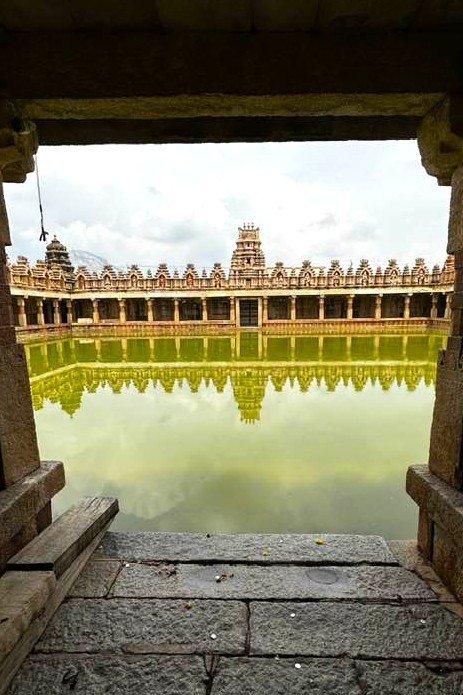
Temple tank Shringi Teertha Bhoganandeeshwara Temple, Nandi village, Karnataka
What to Expect: A First-Timer’s Perspective
When you arrive, you’ll first notice the peaceful village setting — a refreshing change from Bangalore’s urban intensity. The temple complex isn’t massive (unlike sprawling sites like Hampi), making it manageable and non-overwhelming for a 1.5 to 2 hour exploration.
The architecture reveals itself gradually. What initially looks like intricate stone carving becomes, upon closer inspection, a layered chronicle of dynasties — simpler Nolamba foundations, ornate Chola additions, and elaborate Hoysala embellishments. It’s like reading a book where each chapter was written by a different author, yet the story flows seamlessly.
The Kalyana Mantapa will likely be your favorite section (it certainly was mine) — the lathe-turned pillars and yali carvings are mesmerizing. Sit on the steps of the temple tank for 15 to 20 minutes if you have time; there’s something meditative about watching the water reflect centuries-old towers while fish nibble at the surface.
Don’t rush. This isn’t a “check the box and leave” destination. The temple rewards those who pause, observe, and absorb.
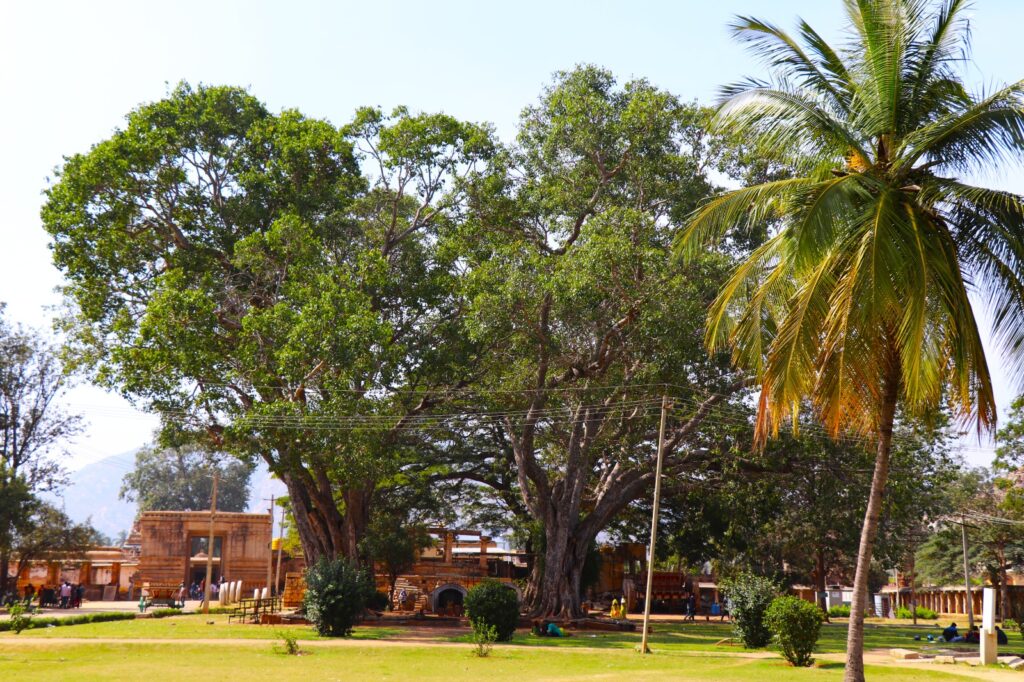
Entrance from north perimeter wall – unfinished gopuram of Bhoga Nandishvara Temple lawns
Continue Your Bhoganandishwara Journey
Explore the Complete Series:
Historical Context: Tracing 1,000 Years: The Multi-Dynastic History — Understand how Nolamba, Chola, Ganga, Hoysala, and Vijayanagara dynasties each contributed to this architectural complexity.
For Architecture Lovers: Dravidian Engineering Marvel: Architecture Deep-Dive — Technical analysis of passive cooling, acoustics, Kalyana Mantapa mastery, and structural genius.
Planning Your Visit? Complete FAQ: 16 Visitor Questions Answered — Comprehensive practical guide covering every aspect of your temple visit.
Why This Temple Deserves Your Time
In Karnataka’s rich tapestry of heritage sites, Bhoganandishwara often goes unnoticed. Most travelers rush up Nandi Hills for Instagram-worthy sunrise shots and miss this architectural gem entirely. But for those who seek substance over spectacle, history over hype, this temple offers something increasingly rare — authenticity without commercialization, beauty without crowds, and stories carved in stone rather than sold as souvenirs.
Whether you’re an architecture enthusiast, a history buff, a spiritual seeker, or simply someone who appreciates beautiful, peaceful places, Bhoganandishwara won’t disappoint.
Have you visited Bhoganandishwara Temple? Share your experience in the comments below, or ask questions about planning your visit!
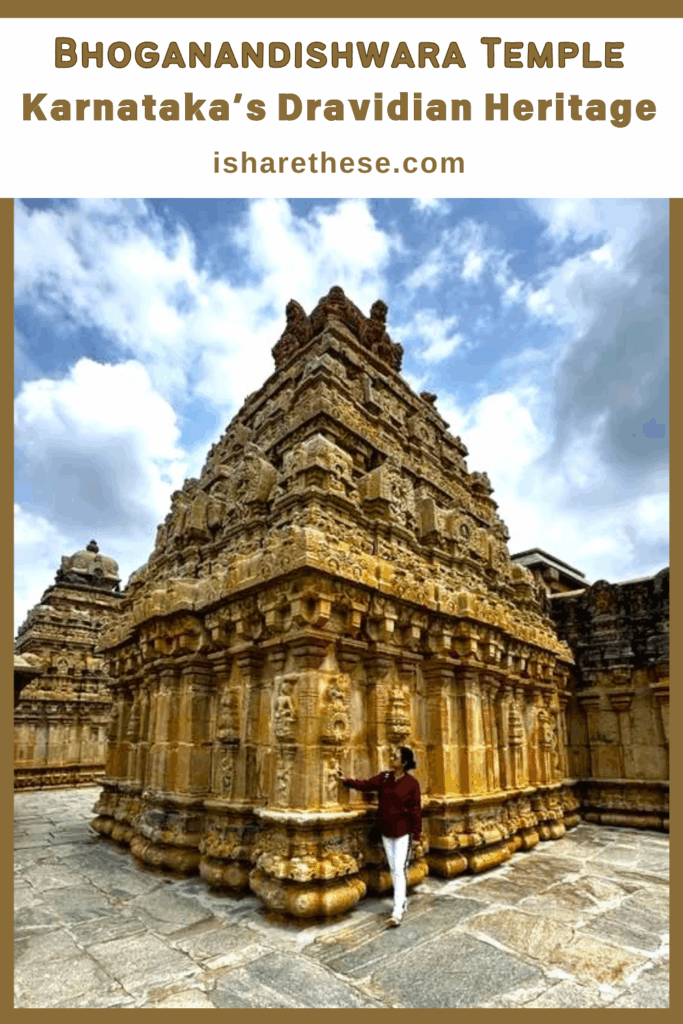
Pin and Save this for later
 About the Author: Indrani Ghose is a cultural travel writer specializing in heritage documentation and architectural storytelling. Having visited over 150 temples across India and Southeast Asia, she combines historical research with personal travel narratives to create comprehensive destination guides. Her work has appeared in Lonely Planet, The National (UAE), Whetstone Asia, and Deccan Herald.
Indrani’s expertise in Dravidian temple architecture stems from years of field research across Karnataka, Tamil Nadu, and Andhra Pradesh. She’s particularly passionate about highlighting lesser-known heritage sites that deserve wider recognition — like Bhoganandishwara Temple.
Connect: Follow Indrani on Instagram | Twitter | Facebook for heritage travel insights, photography tips, and offbeat destination discoveries.
Experience: Based in Bangalore, Indrani has explored Karnataka’s temple circuit extensively, from the grand ruins of Hampi to hidden village shrines. Her multi-visit approach to temple documentation ensures accuracy and depth — this guide draws from her visits to Bhoganandishwara in March 2023 and October 2025.
Keywords: Bhoganandishwara Temple, Nandi village temple, Dravidian architecture Karnataka, temples near Bangalore, Nandi Hills temple, heritage sites Karnataka, Bhoganandishwara Temple history, weekend trips from Bangalore, Karnataka temple tourism
Last verified: October 2025 | Temple timings and facilities subject to change; verify locally before visiting.