Neglected Terracotta Temples of Bishnupur, West Bengal
Some of the terracotta temples of Bishnupur neglected by West Bengal Tourism Board are in pathetic state. It looks as if the temples are trying to breathe and get some sunlight. Trees are strangulating and devouring the temples at a very fast rate. Very soon works of priceless art will be lost.
There is no question of prayers being offered in these, the present residents around the place don’t even know to which God these temples are dedicated to. The guide who took us around too was clueless. I strongly feel if some effort is put they can be made presentable. And it has to be done fast before time and nature does their permanent damage to the monuments.
What was once a glory now remains forgotten!
By Indrani Ghose | Last Updated: May 2026
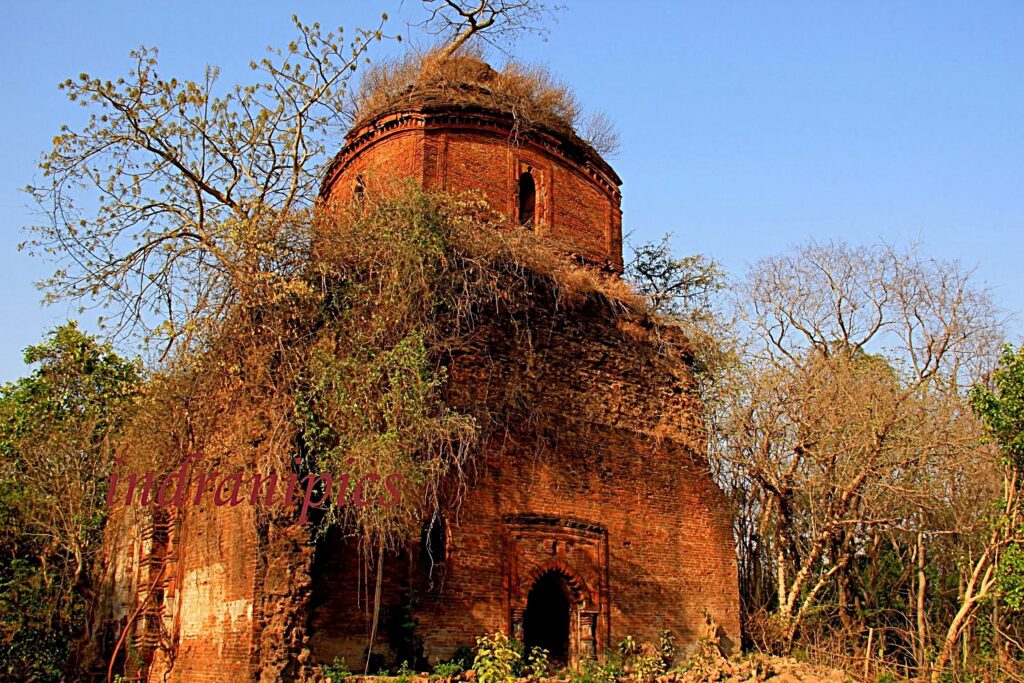
Neglected Terracotta Temples of Bishnupur, West Bengal
The Silent Decay of Bengal’s Clay Marvels
Bengal’s terracotta temples are unlike anything else in India. Built not from stone but from riverine clay and fired brick, they carry centuries of storytelling on their walls — scenes of gods, battles, festivals, and daily village life pressed into panels by hands long gone. Stone was scarce in the Bengal delta, so artisans worked with what the river gave them, and the result was an architectural tradition both deeply local and historically significant.
I’ve spent time at Bishnupur’s well-known ASI-protected complexes — the Rasmancha, the Jor Bangla, the Shyamrai temple. These are maintained, fenced, and visited. Restoration work is visible. Entry fees fund upkeep. Tourism keeps them alive.
But a few kilometres away, the picture changes entirely. In Joypur, Supur, and the outer villages of Bankura district, temples of comparable age and craftsmanship stand unprotected. Vegetation splits the brickwork. Moss covers the panels. Rooflines have partially collapsed. No signage marks their history, and no budget funds their repair.
These neglected terracotta temples of West Bengal are not minor footnotes. They are part of the same heritage tradition — just without the institutional backing. This blog documents what I found, and why it matters before more is lost.
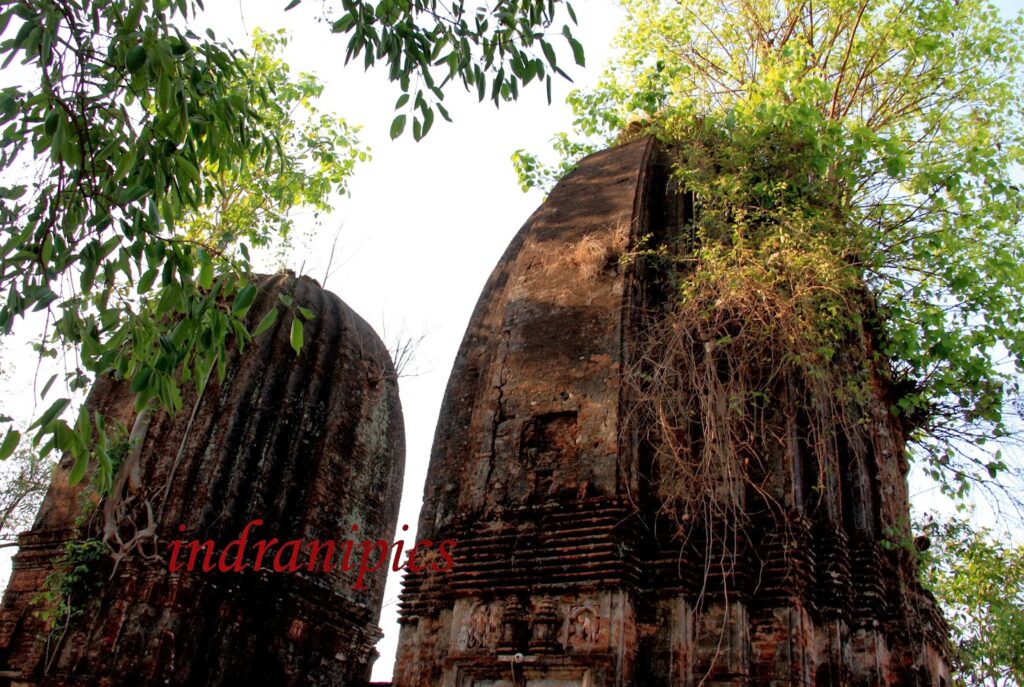
Completely dilapidated temple – people have forgotten which God was worshipped here
The Current State of Terracotta Conservation in West Bengal
Protected Marvels vs. Abandoned History
West Bengal’s approach to terracotta conservation is sharply uneven. At one end are the ASI-protected sites in Bishnupur that promoted in tourism literature, and listed among India’s significant heritage monuments. These sites receive conservation funding, have dedicated staff, and benefit from the steady revenue that tourist footfall brings.
At the other end are dozens of village temples scattered across Bankura, Birbhum, and Hooghly districts. Temples in Joypur, Supur, Sonamukhi, and Patpur fall into this category. Most are unregistered with any heritage body.
Local communities often have neither the funds nor the technical knowledge to carry out even basic structural repairs. The result is a growing and widening divide — celebrated temples thrive, while lesser-known terracotta temples in Bishnupur’s orbit and beyond are quietly disappearing.
The Threats — Vegetation, Weathering, and Structural Neglect
The decay affecting these unprotected temples is driven by multiple, overlapping causes.
- Monsoon rains erode exposed lime plaster year after year.
- Rising groundwater salinity accelerates brick spalling — a process where the surface layers flake and crumble.
- Vegetation takes root in every available crack: fig saplings split walls, and dense moss mats retain moisture that deepens the damage.
- Human factors add further pressure. In several villages, structures have been built directly against temple walls, blocking drainage and creating constant damp.
- Cattle shelters occupy temple courtyards.
- Graffiti marks on panels that survived 300 years of weather.
The pattern points to a structural problem in how heritage protection is allocated. Selective preservation — focused on tourist-friendly sites — cannot sustain Bengal’s full terracotta legacy.
Without fencing, signage, or conservation staff, there is no barrier between daily activity and irreversible damage. The crumbling heritage of Bengal’s rural temple landscape needs attention now, before the remaining architectural detail is lost entirely.
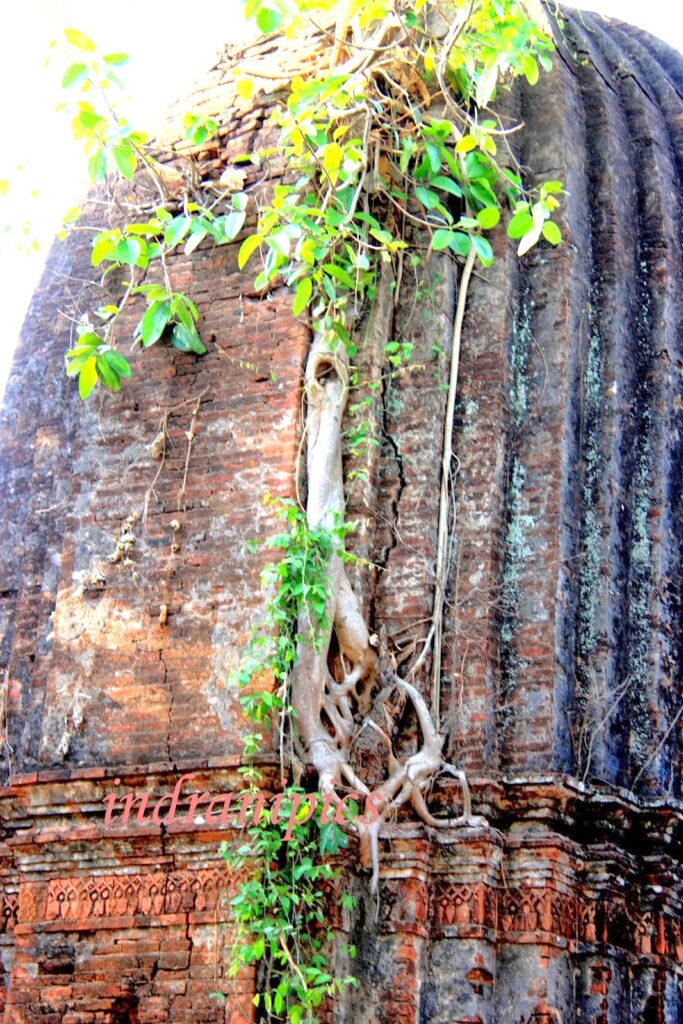
The Threats to the Temples — Vegetation
Hidden and Neglected Terracotta Shrines: A Field Guide
Bishnupur’s Forgotten Outskirts: The Joypur Cluster
Architectural Style and Terracotta Panels
The Joypur cluster sits within a few kilometres of Bishnupur’s celebrated ASI complexes includes multiple Navaratna, Ek-ratna, and At-chala temples. Terracotta panels across the cluster cover Krishnaleela, hunting scenes, Ramayana episodes, and colonial-era figurative panels.
Current Condition and Accessibility
I found the contrast with Bishnupur’s maintained complexes stark. Putting it plainly: these temples have no fencing, no signage, no conservation staff, and no tourism infrastructure. Vegetation, salinity, and structural neglect are the dominant forces acting on them.
They are reachable by local roads and by asking directions in Joypur village, but nothing on the ground indicates their existence or significance to an arriving visitor.
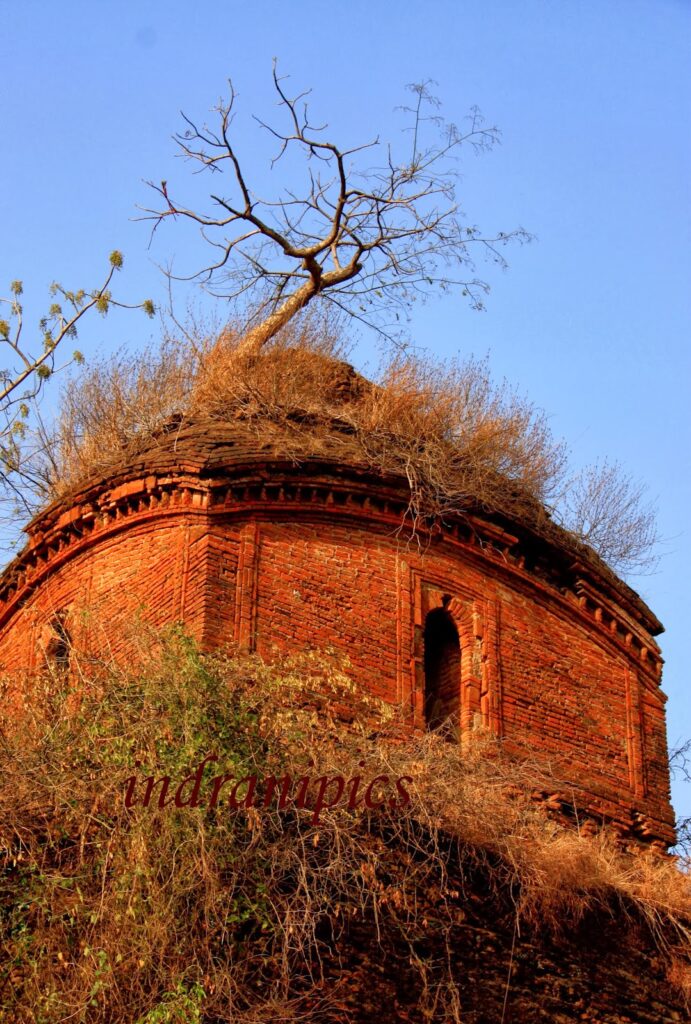
Hidden and Inaccessible Terracotta Shrine
Duttapara Navaratna Temple, Joypur
Architectural Style and Terracotta Panels
The Duttapara Navaratna Temple is a nine-towered structure built in the late 18th century, following the Navaratna plan. The panels that wrap the exterior depict scenes from the Ramayana and Krishnaleela: soldiers in formation, dancers mid-movement, and domestic scenes from rural Bengal pressed into the clay with visible skill.
I was impressed by the massive structure but as I focused on the terracotta panels the details were missing at several places.
Current Condition and Accessibility
The temple stands in open agricultural land on the edge of Joypur village, with no protective fencing, signage, or designated access path. Roots of trees has crept into the joints between bricks, and several terracotta panels. The erosion is evident, I couldn’t identify the subject matter at all.
Locals still use the shrine occasionally for worship, which has likely slowed casual vandalism, but active conservation is absent. I reached here guided by locals through local kachcha roads from Joypur.
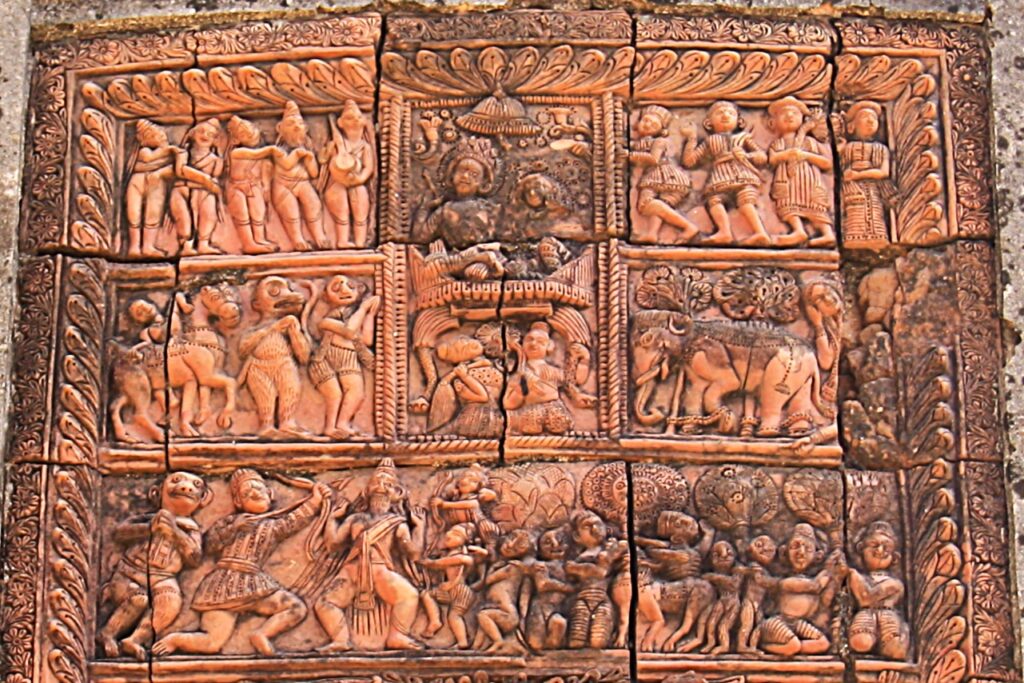
Terracotta Panel Cracked at several Places
Radhabinod Temple, Joypur
Architectural Style and Terracotta Panels
The Radhabinod Temple is a Navaratna structure, likely built in the late 17th century, is one among the earlier examples of this temple type in the Bankura region. Its terracotta panels theme on Krishnaleela — Krishna playing the flute, gopis in circular dance formations, and pastoral scenes from Vrindavan. Several of these are still visible, though erosion has softened their relief considerably.
Current Condition and Accessibility
The Radhabinod Temple is accessible via a narrow village road, though the route is unmarked. Vegetation has colonised the base of the structure. At least two of the nine towers have partially collapsed, leaving broken profiles against the skyline.
Rainwater seepage through the exposed crown has weakened the internal brick bonding. I saw the absence of lime plaster which clearly indicated there is no protective layer left between the masonry and the elements. I fear, without structural intervention in the near term, further tower collapse is likely.
Radha Madhab Temple, Supur
Architectural Style and Terracotta Panels
The Radha Madhab Temple is a Navaratna structure in Supur, with nine towers that once gave it a commanding presence in the village skyline. Its terracotta panels are particularly rich in social documentation: palanquin bearers in procession, musicians with period instruments, soldiers in formation, and female figures that likely represent both devotees and divine subjects.
Current Condition and Accessibility
I found the same story of deterioration here too. The nine towers have degraded to uneven stubs — the upper sections have eroded or collapsed, leaving irregular profiles with no lime plaster protection remaining. Surrounding houses press close on multiple sides limiting access for any future conservation work. The lower panel friezes are heavily weathered, with surface detail lost across large sections.
The temple is easy to reach from Supur, but nothing on site signals its heritage value. It is functionally invisible to anyone without prior knowledge of its location.
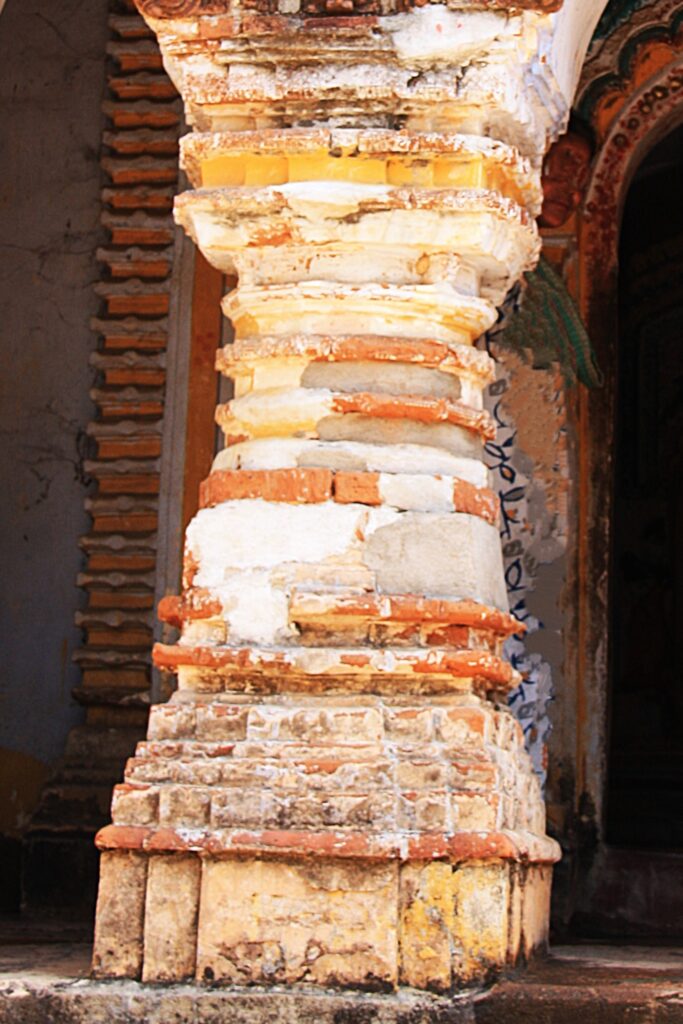
Eroded Lime plaster coverings
Practical Logistics for Heritage Travelers
How to Reach Off-the-Beaten-Path Temples
Most neglected terracotta temples in Bishnupur, Bankura and Birbhum districts sit inside villages — Joypur, Supur, Baghbari — with no signage, no marked trails, and no presence on standard tourist maps. The most practical base is Bishnupur, which has regular train connections from Kolkata (Howrah) and Durgapur, and a reasonable range of accommodation options.
From Bishnupur, the most reliable way to reach scattered rural shrines is to hire a local toto (electric rickshaw) driver, ideally one who knows the area. These drivers frequently know the exact lanes that lead to temples tucked behind agricultural fields or village houses. For a cluster like Joypur, a single toto circuit from Bishnupur is feasible in a half-day.
For wider coverage across outer Bankura or Birbhum, consider hiring a car from Bankura town. Be prepared for narrow, unpaved village roads — a compact vehicle is preferable to an SUV on lanes shared with foot traffic and cattle. Fuel up before leaving any town, as rural stretches have limited options.
Carry printed or downloaded offline maps of the area, note temple names in Bengali script where possible, and budget extra time. Rural heritage travel in this region runs on local knowledge, not infrastructure.
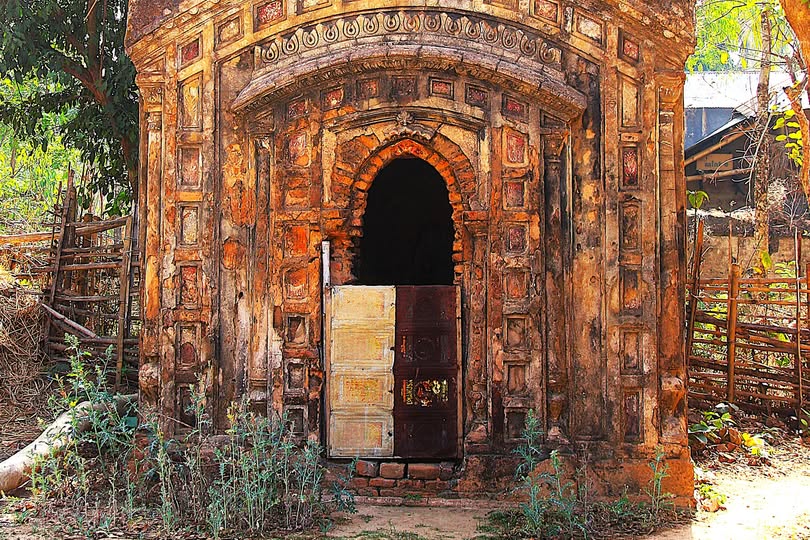
Just half a door for this terracotta temple
Insider Travel Tips and Photography Etiquette
Timing and Light
- Visit between 6.30 and 9 AM. Early morning light rakes across terracotta relief at a low angle, making panel details far more legible than under flat midday sun. Afternoon light from the west can work for west-facing façades, but monsoon haze reduces quality significantly between June and September.
- Avoid visiting during the midday hours of major festival days — access may be restricted and crowds can make careful documentation difficult.
Camera and Equipment
- A wide-angle lens (16–24mm equivalent) works well for full façade shots and establishing the temple in its village context.
- A short telephoto or zoom (70–200mm equivalent) lets you isolate individual panels and frieze sections without physically pressing close to fragile surfaces.
- A small portable LED panel is more practical than a tripod for filling shadow on detailed carving — and less intrusive in active shrine settings.
- Shoot in RAW if your camera allows. Post-processing shadow recovery on terracotta detail makes a significant difference.
Conduct and Respect
- Always approach the caretaker or a nearby resident before photographing. A brief greeting in Bengali — even a simple namaskar — shifts the dynamic from intrusion to acknowledged visit.
- Do not touch terracotta panels, even gently. Surface salts and existing micro-fractures mean pressure from hands accelerates flaking.
- If a puja or ritual is in progress, step back and wait. These temples are still places of active worship, not open-air museums.
- Dress modestly — covered shoulders and legs are appropriate at all sites.
- A small cash offering left at the shrine, or given directly to a caretaker, supports whatever informal upkeep exists. It is not expected, but it is noticed and appreciated.
Documentation Beyond Photography
- Note the GPS coordinates of each temple you visit and share them on Google Maps with photos. Many of these structures have no public location data — your pin may be the first.
- If panels or architectural details appear undocumented, consider submitting records to the Indian National Trust for Art and Cultural Heritage (INTACH) or to heritage mapping initiatives run by Banglar Mati, Banglar Gaan.
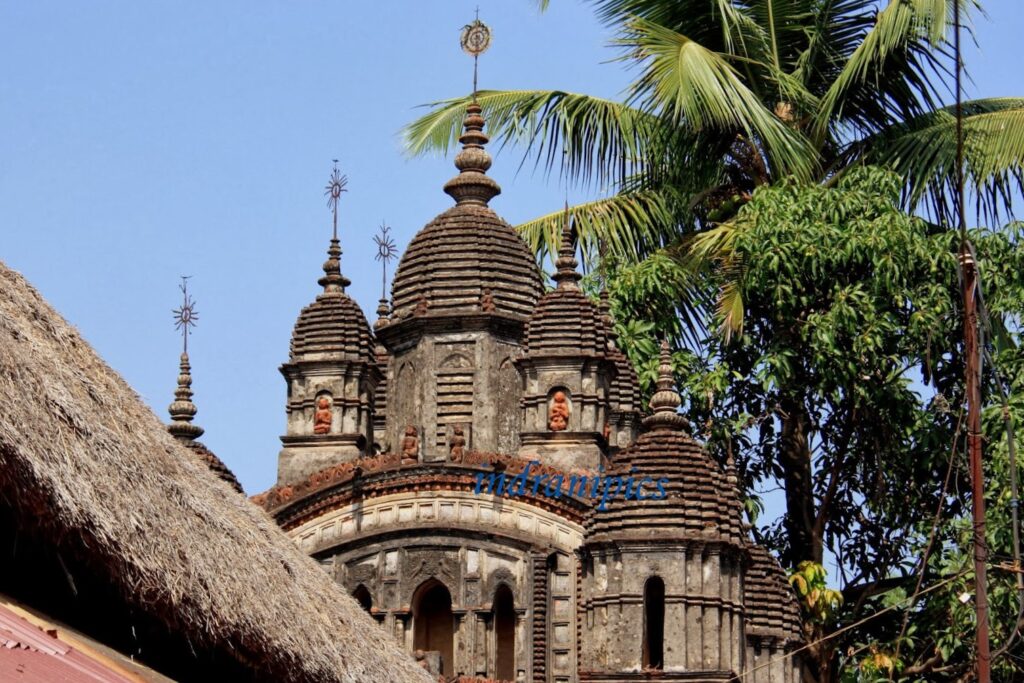
Nabaratna Temple in Joypur surrounded by residential houses all around
Frequently Asked Questions (FAQs)
Are Joypur terracotta temples open to visitors?
Yes, most Joypur temples are accessible, but they are not ticketed or formally maintained. Travelers should hire local guides or toto drivers from Bishnupur to locate them.
Which terracotta temples in Bankura are neglected?
Beyond the famous ASI-protected sites, temples in Joypur, Supur, and Baghbari are in poor condition. Many Navaratna and Ek-ratna shrines show severe erosion and vegetation damage.
What makes Bengal’s terracotta temples unique?
They were built from riverine clay and baked bricks due to the scarcity of stone. Panels depict mythological stories, village life, and even colonial influences.
Can photography be done at these sites?
Yes, but mornings offer the best light for relief carvings. Visitors should avoid touching panels and respect ongoing rituals.
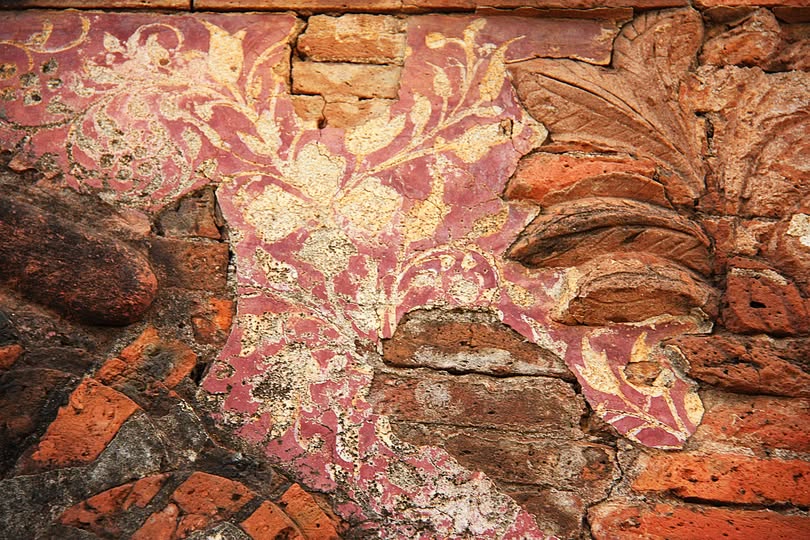
Exposed masonry beneath painted panels
How to Save Bengal’s Living History
Bengal’s neglected terracotta temples are not simply old buildings in disrepair. They are fired-clay archives — carrying mythological narratives, social records, and evidence of a sophisticated regional craft tradition that flourished for over three centuries.
The panels on a crumbling Navaratna wall in Joypur tell the same stories, in the same visual language, as the celebrated friezes of Bishnupur. The difference is not historical significance. The difference is visibility.
That visibility can be built, and we as travelers can have a direct role in building it.
- Visiting offbeat sites generates local economic activity.
- Hiring local guides and toto drivers puts heritage tourism income into the hands of the communities closest to these temples.
- Photographing and geotagging structures creates public records where none exist.
- Sharing documented visits online raises awareness among audiences that institutional conservation has not yet reached.
None of this replaces formal protection, conservation funding, or ASI intervention — all of which these temples need. But awareness is what precedes policy. The more these structures are seen, named, and documented, the harder they become to ignore.
Visit. Document. Share. The neglected terracotta temples of West Bengal have survived three hundred years of weather. What they may not survive is continued indifference.
Pin and Save this for Later

About the Author
 Indrani Ghose is a cultural travel writer and heritage documentation specialist with over 15 years of experience exploring and writing about temples across India and Southeast Asia. Having visited over 150 sacred sites, she brings both scholarly depth and personal narrative to heritage travel writing.
Her work has been published in Lonely Planet, The National (UAE), Whetstone Asia, Deccan Herald, and various architecture and heritage journals.
Connect with Indrani: Follow Indrani on Instagram | Twitter | Facebook for heritage travel insights, photography tips, and offbeat destination discoveries.








Sad to know about the temples in the neglected state.
But the temple has its own beauty.You have captured it well.
Cheers,
Sriram & Krithiga
One more beauty lost in the pages of history…
So sad to know the worst condition of a beautiful historical place 🙁 I wish if I could do something from my side!
Very romantic!
Old world charm! Beautiful 🙂
Their desolation has a romance of its own…but you're right when you say that nature can do irreversible damage there
Hi Indrani,
I know…Bishnupur has some of the most beautiful terracotta temples, and many of them are in shambles. ASI is working on restoring quite a few of those but I wish this has started earlier.
If you like old temples, you might want to visit Kalna in WB , there are a couple of beautiful old terracotta temples there as well.
Thanks,
Ranjana
Maybe the 'forgottenness' makes them more romantic! They have a peculiar charm.
Forgotten Temples in India!
The idea of preservation and conservation of our glorious heritage is still not part of public or political consciousness in this country. I think it is really sad.
so sad to hear that ! well captured image .. most importantly .. an awareness .
What about the local people ? Why dnt they make some effort to restore these monuments ?
I feel local bodies like Panchayats should do something for the preservation of the heritage. Being managed from Center, it doesn't become so effective
Those r gr8 pics. Ya even in Odisha der r lovely monuments n locals dnt even know about them which is sad.
Not only WB, Indrani….all over India we find neglected temples.
Hurts me a great deal to find amazing architecture in ruins…
Wish we can take care of our heritage.
You are doing a great job by blogging about these and bringing them to focus.
Beautiful temples. I wonder how they made them and I wonder why no one tries this in contemporary architecture.
it is beautiful but a little sad when it is overgrown like that.
If we are not ready to take care then mother nature is ready to take over.
I've been following your posts on these temples. I've noticed that there are many temples which are in such a pathetic state because the high officials do not see much for it. The olden culture, architecture and the heritage value is all forgotten. Sigh.
HI Indrani, logging in after a long while. And see that your photos have gone more and more incredible. Happy photographing and happy posting !
Heart bleeds to see such pictures. If the initiative of the Karnataka Government is successful, then one can hope it can be replicated.
Its beautiful – architecture mixed with nature..!
They look so intricate and beautiful under all that foliage! Nature has a way of reclaiming if we don't take care.
Mother nature does take over when things are neglected.
I hope they get help but I must admit that I find ruins very beautiful. That said, it's a shame to lose all the intricate artwork and architecture to neglect.
Welcome Indrani!
I am delighted with your excellent photos.
They are very beautiful.
Greetings from far away Polish.
Lucia
It is so sad that such important relics have been allowed to fall in to such disrepair.
Looks to me like nature has taken over here and that this temple will soon be lost. How sad.
amazing to see
They have been taken over by nature, which in itself is Godly.
How very lovely shots – so sad to see them in disrepair though.
We all are just dust to dust. Provoking shots.
Sad state, really.
But I must say they make great pictures. 🙂
Beautiful post, Indrani!
Amazing how nature takes over…
Warm greetings, Anna
Very sad to see the buildings being taken over by nature like this. Hope someone or an organization will step forward and help free the structure from this overgrowth.
It's always sad to see magnificent buildings like this allowed to crumble and decay. I hope something can be done to preserve this temple.
It is sad to see such incredible, old temples being so neglected!! So much history and beauty to be lost!!
wow. the tree rooting from the top. amazingly overgrown.
They must have been gorgeous in the beginning. I think they need some help now. Thanks for sharing, have a happy day!