Visiting Pattadakal Group of Monuments: History and Temple Guide
The Coronation Stone of the Chalukyas
Pattadakal Group of Monuments, a UNESCO World Heritage Site in Karnataka, rises like a forgotten epic along the banks of the Malaprabha River. When I first stepped into this surreal landscape in 2018, the red sandstone temples glowed against lush green fields, and the air felt thick with centuries of untold stories.
— Indrani Ghose, travel blogger | Updated Nov 2025
What Makes Pattadakal Historically Significant
This isn’t merely a cluster of ancient shrines—it’s the ceremonial coronation capital of the Chalukya Dynasty (6th-8th century CE). My guide explained that the name derives from the Kannada phrase Pattada-Kisu-Volal, meaning “Valley of Red Soil for Coronation.” Essentially, Pattadakal translates to “Stone of Coronation,” marking the sacred ground where Chalukyan kings received their royal consecration.
Location and Sacred Geography
Located in Bagalkot district of northern Karnataka, approximately 22 km from Badami, this temple complex sits strategically along the Malaprabha River. The river’s proximity nourished both the red soil and the spiritual significance of this site, transforming it into a political and religious axis for the Chalukya empire. Today, Pattadakal stands as tangible evidence of India’s architectural pluralism and dynastic grandeur.

Stepping into the complex I was greeted with a neatly manicured lawns with temples studded here and there.
Why Pattadakal? The “University” of Indian Temple Architecture
The Architectural Evolution: Aihole to Pattadakal
If Aihole was the experimental laboratory and Badami the advanced workshop, then Pattadakal was undoubtedly the graduate university of Chalukyan temple architecture. This progression, documented by archaeologists and architectural historians, captures the 200-year evolution across the Aihole-Badami-Pattadakal circuit. Here, architectural experimentation crystallized into refined mastery.
The Vesara Style: Where North Meets South
Pattadakal earned recognition as the Cradle of Temple Architecture because the Chalukyas perfected the Vesara style here—a sophisticated fusion of Dravidian (South Indian pyramidal vimanas) and Nagara (North Indian curvilinear shikharas) architectural traditions.
Walking through the complex in 2018, I witnessed something remarkable: these two distinct styles standing side-by-side within a single sacred precinct, a juxtaposition found nowhere else in India with such clarity.
Each of the nine temples in this complex felt like an architectural thesis. The Virupaksha Temple showcases intricate narrative sculptures, while the Mallikarjuna Temple demonstrates symmetrical Dravidian precision. This wasn’t simply aesthetic experimentation—it was a melting pot where artisans, royal patrons, and spiritual philosophies converged to create a curriculum in stone that influenced temple construction across medieval India.

Sri Galaganatha Temple Pattadakal
The Major Monuments: A Temple-by-Temple Guide
Walking through the Pattadakal temple complex in 2018, I was mesmerized by how each monument tells a distinct architectural story—all constructed within a 150-year golden period (7th-8th century CE). This concentration of nine temples in the complex truly functions as an open-air museum of Indian temple architecture. Each structure a signature of royal power, artistic ambition, and theological vision.
Virupaksha Temple Pattadakal – Queen Lokamahadevi’s Architectural Triumph
Built: 740 CE | Style: Dravidian | Patron: Queen Lokamahadevi
The Virupaksha Temple represents Pattadakal’s architectural zenith. As the largest and most elaborate monument in the complex, this wasn’t commissioned by a king but by Queen Lokamahadevi to commemorate her husband Vikramaditya II’s decisive victory over the Pallava dynasty. The temple was deliberately designed to rival—and surpass—the famed Kailasanatha Temple at Kanchipuram.
Standing before its soaring vimana (temple tower), I was immediately drawn to the intricate Ramayana narrative panels wrapping around the sanctum walls. These sculptural masterpieces depict Sita’s abduction, Hanuman’s leap across the ocean, Ravana’s defeat, and dozens of other epic moments—carved with extraordinary precision and dramatic flair. The temple’s 108-pillar mandapa (hall) features breathtaking ceiling panels and bracket figures that showcase the peak of Chalukyan sculptural artistry.

Virupaksha Temple Pattadakal
Mallikarjuna Temple in Pattadakal – The Complementary Royal Commission
Built: Mid-8th century CE | Style: Dravidian | Patron: Queen Trilokyamahadevi
Adjacent to Virupaksha stands the Mallikarjuna Temple, commissioned by Queen Trilokyamahadevi, Vikramaditya II’s second consort. Consider it Virupaksha’s more intimate sibling—sharing similar architectural DNA but executed at a more modest scale.
This Dravidian-style temple mirrors its grander twin in layout and proportions but creates a more contemplative atmosphere. The sculptural program is equally sophisticated but emphasizes subtlety over spectacle. The temple’s Nandi mandapa and intricate wall niches demonstrate that royal patronage encompassed both monumental ambition and refined devotional spaces. Together, these twin temples illustrate how Chalukyan queens wielded significant cultural and religious authority.

Mallikarjuna Temple Pattadakal
Papanatha Temple – The Vesara Style Laboratory
Built: Late 8th century CE | Style: Vesara (transitional) | Patron: Uncertain attribution
The Papanatha Temple represents architectural experimentation at its boldest. Here, Chalukyan artisans attempted to synthesize Dravidian and Nagara traditions into the distinctive Vesara hybrid style—and the creative tension is palpable.
The floor plan follows Dravidian conventions with its elongated, axial progression through mandapas toward the garbhagriha (sanctum). However, the superstructure features a curvilinear Nagara-style shikhara that seems almost incongruous with the base. My guide drew my attention to the Ramayana and Krishna-leela relief panels, how they seemed to be executed with experimental vigor rather than the polished perfection of Virupaksha.
This “imperfection” makes Papanatha architecturally significant—it’s where innovation wrestled with tradition, where regional styles collided and merged. The temple captures a pivotal moment in Indian architectural evolution.
Sangameshwara and Galaganatha – The Foundational Temples
Sangameshwara Temple (late 7th century CE) holds the distinction of being Pattadakal’s oldest temple. Initiated by King Vijayaditya Satyashraya but never completed, it offers invaluable insights into Chalukyan construction techniques and design processes. The unfinished state reveals structural elements typically concealed in completed temples—making it an archaeological treasure for understanding ancient building methods.
Galaganatha Temple, positioned closer to the Malaprabha River, presents a serene contrast. Though smaller in scale, this Nagara-style temple features a distinctly northern aesthetic with its latticed windows and curved shikhara. Its riverside location creates a contemplative setting that many visitors overlook. During my visit, I found this quiet positioning perfect for understanding the stylistic diversity within the complex.

Sangameshwara Temple Pattadakal Group of Monuments
Kashi Vishwanatha Temple – The Northern Voice
Built: 8th century CE | Style: Nagara | Also known as: Kasi Vishveshwara Temple
The Kashi Vishwanatha Temple introduces pronounced North Indian architectural statement to this predominantly Dravidian landscape. Its sharply articulated tower, geometric precision in ornamentation, and compact proportions mark it as stylistically distinct from its neighbors.
This temple demonstrates how Pattadakal functioned as an architectural crossroads where northern and southern building traditions coexisted, competed, and influenced each other—creating the fertile ground where the Vesara synthesis could emerge.

Kashi Vishwanatha Temple Pattadakal
Chandrashekhara Temple – Minimalist Sacred Architecture
Built: 8th century CE | Style: Nagara | Scale: Smallest in complex
Chandrashekhara is easily overlooked—it’s the most compact temple at Pattadakal. Yet this diminutive shrine offers a masterclass in minimalist sacred design. What it lacks in scale, it compensates through refined proportions and geometric clarity.
Every element, its clean-lined shikhara and uncluttered sanctum, serves a purpose, nothing is superfluous. The modest size actually enhances its meditative quality, demonstrating that Chalukyan architects could work brilliantly across all scales. For students of temple architecture, Chandrashekhara reveals how fundamental design principles transcend monumental ambitions.

Delicate sculptures Carved in Pattadakal Temples – woman feeding her pet bird
Jambulinga Temple – Elegant Northern Aesthetics
Built: 8th century CE | Style: Nagara | Character: Refined simplicity
The Jambulinga Temple embodies understated sophistication. Its slender tower rises with graceful restraint, while delicate carvings adorn the walls without overwhelming the eye. Unlike the narrative exuberance of Virupaksha, Jambulinga opts for contemplative minimalism.
This Nagara-style temple doesn’t compete for attention—instead, it invites quiet observation. The proportional harmony between its base, walls, and shikhara is worth studying. During my visit, I found this temple particularly photogenic in morning light, when its carved details emerge with subtle clarity.

Jambulinga Temple – Pattadakal Group of Monuments
Kadasiddheshwara Temple – Compact Architectural Confidence
Built: 8th century CE | Style: Nagara | Distinction: Precise execution
Kadasiddheshwara Temple proves that architectural excellence isn’t measured in meters. This compact Nagara-style shrine exhibits meticulous attention to symmetry, proportion, and decorative restraint. Every carved panel, every molding, every structural element reflects purposeful design decisions.
The temple’s architecture suggests it was created by master craftsmen who had fully internalized architectural principles.

Kadasiddeshwara Temple Pattadakal
Quick Facts table to plan visit to Pattadakal Group of Monuments:
Location: Pattadakal, Bagalkot District, Karnataka; on the banks of the Malaprabha River
Entry Fee: ₹40 for Indian citizens, ₹600 for foreign nationals (as per ASI guidelines)
Timings: 6 AM to 6 PM daily
Best Time to Visit: October to March (pleasant weather, ideal for photography and exploration)
Nearest Railway Station: Badami Railway Station (approx. 22 km away)
Nearest Airport: Hubli Airport (approx. 130 km away)
Photography: Allowed; drone usage requires prior permission from ASI
Facilities: ASI-maintained sculpture gallery, restrooms, local guides available
Nearby Attractions: Aihole, Badami, Mahakuta temples – ideal for a heritage circuit
You may like to read these related posts:
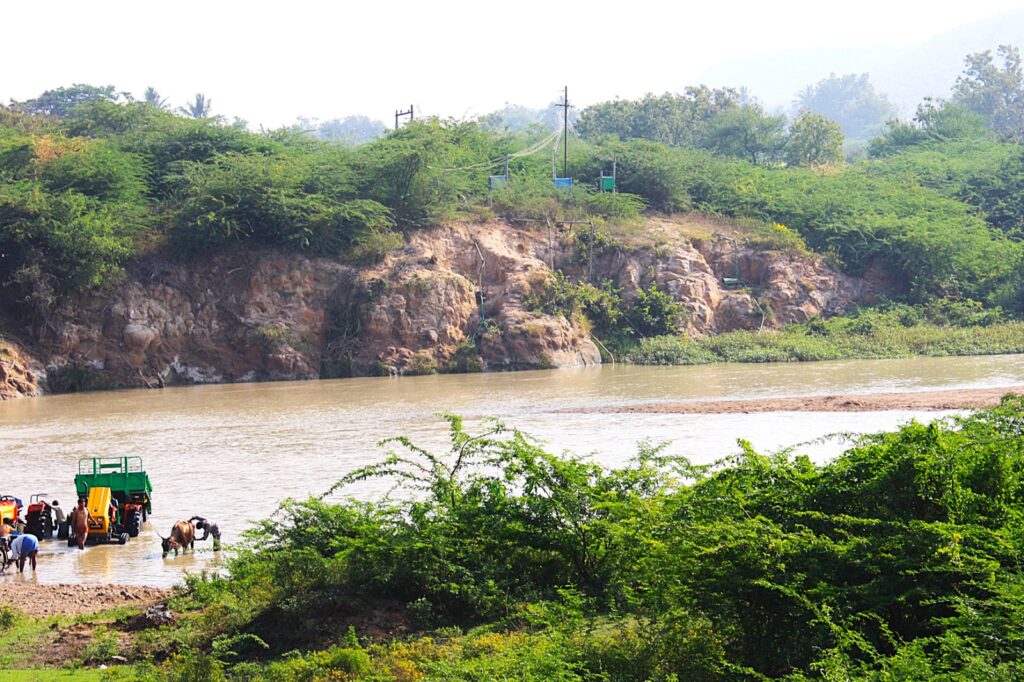
Malaprabha River Pattadakal
The Golden Triangle Circuit: Badami, Aihole, and Pattadakal
Planning Your Chalukyan Heritage Trail
Pattadakal functions best as the centerpiece of the Golden Triangle of Chalukyan architecture. This trail traces the dynasty’s artistic evolution across three UNESCO-recognized sites within a 35km radius. This compact geographic concentration makes it ideal for a comprehensive one-day Badami Aihole Pattadakal itinerary.
Recommended Circuit Route and Timing
Morning (8 AM to 12 PM): Aihole
Begin at Aihole, located 22 km from Pattadakal. Often called the “laboratory of temple architecture,” this sprawling site contains over 125 temples spanning 5th-8th centuries. The Durga Temple complex and Lad Khan Temple showcase early Chalukyan experimentation. Allow 3-4 hours to explore the major clusters.
Midday (12.30 PM to 4 PM): Pattadakal
Arrive at Pattadakal for lunch at local dhabas near the monument entrance. The compact temple complex requires 2-3 hours for thorough exploration. This caters enough time to appreciate the Virupaksha masterpiece and for comparative architectural styles without feeling rushed.
Evening (4.30 PM to 7 PM): Badami
Conclude at Badami, 22 km from Pattadakal. The four cave temples carved into rust-red sandstone cliffs demand exploration before sunset. Climb to Cave Temple 3 for panoramic views over Agastya Lake—the golden hour light transforms the landscape into something transcendent.
Road Trip Connectivity and Base Options
The Bangalore to Pattadakal road trip covers approximately 500 km via NH48 and NH50, manageable as a weekend getaway. However, I recommend basing yourself in Hampi (130 km from Pattadakal) for multi-day exploration. The Hampi-to-circuit route offers excellent road conditions and allows you to experience Vijayanagara grandeur alongside Chalukyan heritage. This triangle of Karnataka delivers concentrated historical immersion.
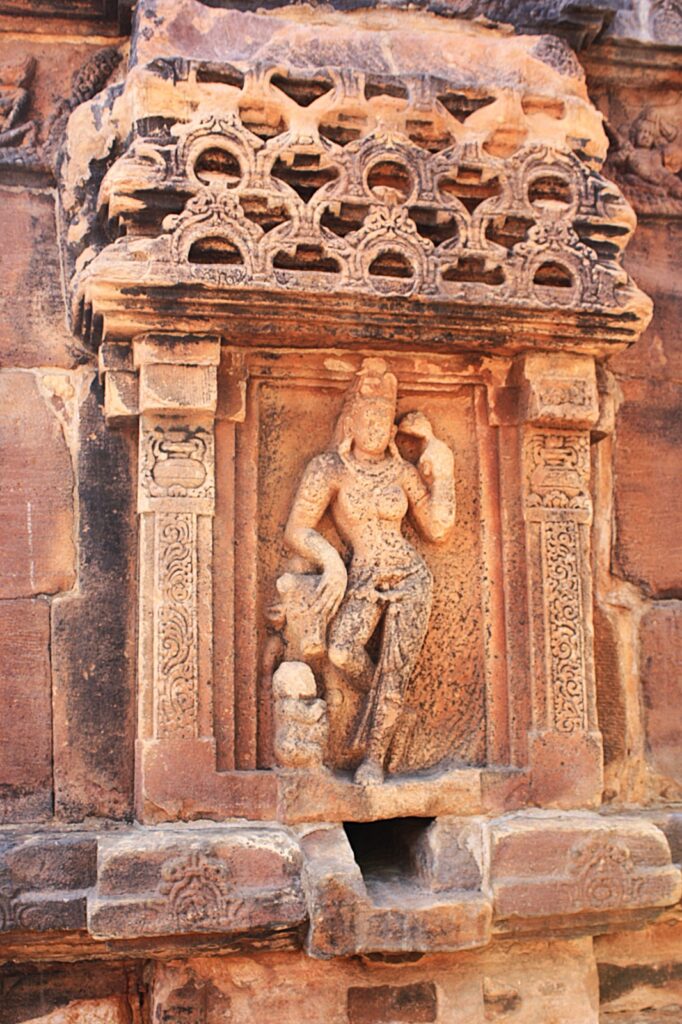
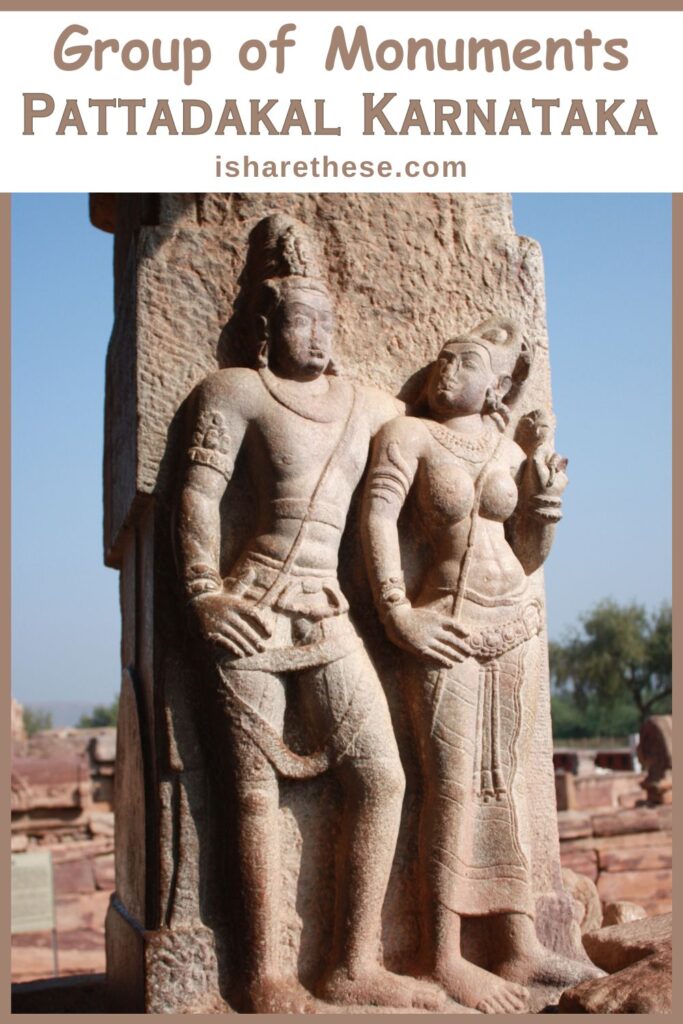
Ardhanarishwara Statue in Pattadakal Temples
Cultural Immersion: The Pattadakal Dance Festival
Experiencing the Annual Chalukya Utsava
The Pattadakal Dance Festival, officially known as Pattadakal Utsav, transforms this archaeological zone into a living cultural venue every January-February. Organized by Karnataka’s Department of Archaeology and Museums, this annual celebration features India’s premier classical dance forms performed against the illuminated Virupaksha Temple backdrop.
My friends who witnessed the festival shared that this event creates extraordinary synergy: ancient stone carvings of celestial dancers (apsaras) watching contemporary artists recreate those same classical poses. The open-air stage on the temple lawns accommodates hundreds of spectators, while the sandstone monuments provide natural acoustic enhancement.
Pattadakal Utsav dates typically fall in late January or early February, coinciding with Karnataka’s tourism season. Check the Karnataka Tourism official website or local Bagalkot district tourism offices for exact schedules, as dates shift based on the lunar calendar.
The two-day festival attracts renowned performers from major dance institutions across India, making it one of Karnataka’s most prestigious cultural festivals—a living tribute to the Chalukyan artistic legacy that these temples represent.
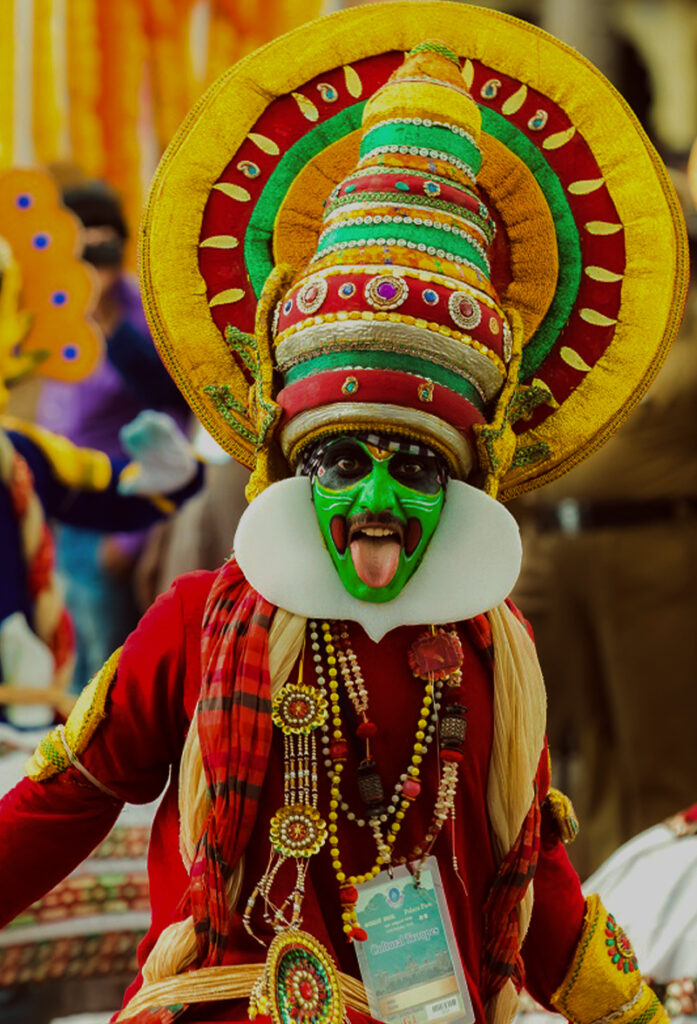
Chalukya Utsav 2025. Pic credit: Utsav India
FAQ About Pattadakal Group of Monuments
Is Pattadakal worth visiting?
Absolutely. Pattadakal offers a unique opportunity to witness both North and South Indian temple architecture coexisting in a single compact site. If you appreciate UNESCO World Heritage Sites, Chalukyan history, or architectural evolution, this is essential.
How much time do you need at Pattadakal?
Plan for 2-3 hours to explore the main temple complex thoroughly. Add another hour if you want to photograph details or attend guided tours.
What is the Pattadakal entry fee?
Indian citizens pay ₹40, while foreign nationals pay ₹600. Children under 15 enter free. The ticket covers access to all temples within the complex. Operating hours are typically 6 AM to 6 PM daily.
When is the best time to visit Pattadakal?
October to March offers pleasant weather. For a cultural treat, visit during the Pattadakal Dance Festival in January or February.
Are guides available at Pattadakal?
Yes, local guides are available at the entrance. Hiring one enhances your understanding of the temple carvings and historical context.
Is photography allowed inside the Pattadakal Group of Monuments complex?
Absolutely! Photography is allowed, but drone usage requires prior permission from the Archaeological Survey of India (ASI).
Can you combine Pattadakal with Badami and Aihole?
Yes—this is the recommended approach. The three sites form the Golden Triangle circuit within a 35-kilometer radius, perfectly suited for a single-day itinerary starting early morning.
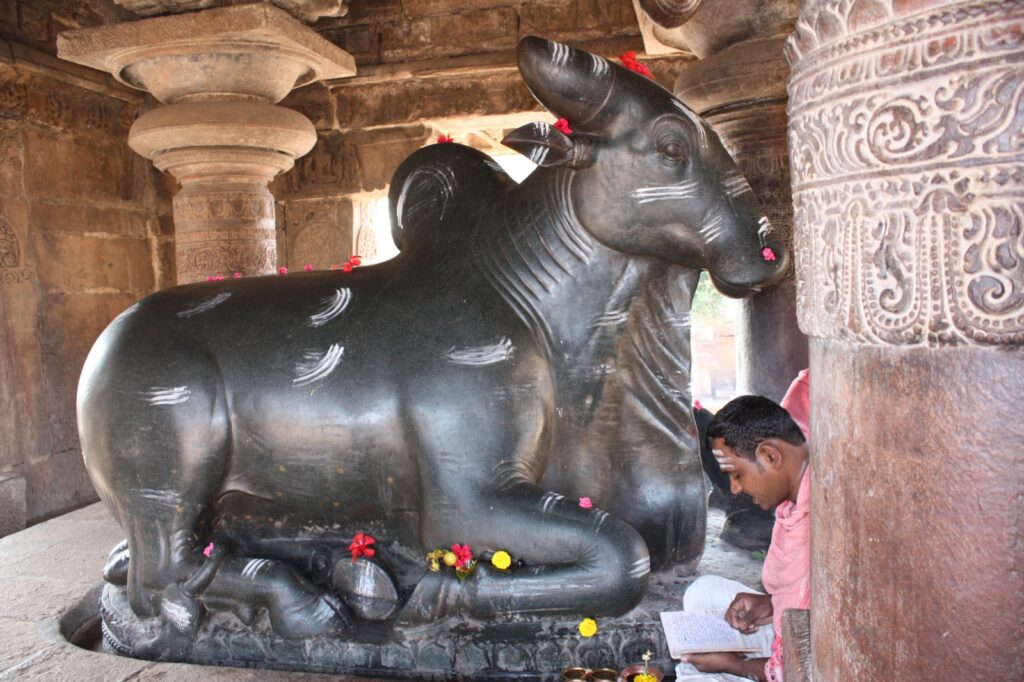
Nandi in Shrine Virupaksha temple Pattadakal
Final Thoughts
Pattadakal left a deep imprint on me—not just as a photographer or history lover, but as a traveler seeking meaning in stone. The way the Chalukyas fused styles, honored queens, and carved epics into temple walls is nothing short of poetic.
Pattadakal Group of Monuments is not just a destination; it’s a dialogue between past and present. If you’re planning a heritage trail through Karnataka, don’t skip this sacred valley of coronation. It’s where architecture breathes and stories endure.
Have you visited? Tell me in the comments. I’d love to hear your impressions or tips!
Pin and Save this for later…
About the Author
 Indrani Ghose is a cultural travel writer and heritage documentation specialist with over 15 years of experience exploring and writing about temples across India and Southeast Asia. Having visited over 150 sacred sites, she brings both scholarly depth and personal narrative to heritage travel writing.
Her work has been published in Lonely Planet, The National (UAE), Whetstone Asia, Deccan Herald, and various architecture and heritage journals.
Connect with Indrani: Follow Indrani on Instagram | Twitter | Facebook for heritage travel insights, photography tips, and offbeat destination discoveries.






Thank you for posting all of these great photographs from this world heritage site for those of us who live on the other side of the world! You have a wonderful blog.
Wow ! How i envy you ! Pattadakal has been my dream destination for long. Dunno when i'll make it. Nice article about yr. visit. wonderful pictures. Best wishes.
I did not know that it is a world heritage site 🙂
Lovely pictures. You have been doing such wonderful work in bringing out the cultural importance of neglected places.
It is always such a treat to visit your blog and not only see your beautiful photography, but witness the beauty that exists in your country.
I, along with so many others, appreciate the time that it takes to put together this type of post.
I went back and read the story of the bookshop that closed. When my daughter was in kindergarten in the 1970s, we lived in Hollywood. I would walk her to school each morning and then visit my favorite bookshop, which was much like this one. The proprietor was the same way, he could locate any book in a minute and he never minded that I would sit there for hours, reading while I waited for school to let out. Thanks for bringing that memory back to me today.
I am going to Kanchipuram very often these days, but I don't have the patience like you to take photos and visit the various temples there! So, Pallavas had their capital in Kanchi… I was always wondering about that, thanks for the info. Interesting to see so many heritage monuments in Karnataka. Was never aware of them earlier.
Destination Infinity
Really priceless architecture, worth being a world heritage site. I wonder whrer the Indian craftmanship has gone now..can you do a series on modern examples in India which show some good craftsmanship?
You have taken beautiful pictures and presented very nicely. The architecture and the carvings looks amazing as well as very interesting to see. I have been to this place about 5 years before and was mesmerized to see the magnificent beauty. Lovely post.
your country really has rich history. i hope to go there someday and explore the amazing beauty of the place. 🙂
This is very interesting. I definitely want to visit this place whenver possible. Great pictures & Great Info.
Indrani, your world is amazing. These temples are magnificent and situated in such a beautiful landscape! I really enjoy all these interesting images.
The statues have such life to them – espcially the woman in the last photo!
so much history and feeling! I really must visit India one day!
it's always been said that a visit to India is so enriching, just visiting temples. How true! Just need a guide to help us along.
I wish our Tourism Department would wake up to the fact that we have so much to see, and provide facilities to make tourism more enjoyable in our country.
thanks indrani,for introducing Pattadakal. it is so wonderful to know that we have such marvels in south india itself. cheers,,
beautiful temples. The stone is of a uniform color, I wonder what the composition is.
I like the uniformity of its color. It's amazing that people from long time ago can actually craft and build these amazing structures with just their barehands and no help from any modern machinery and equipment.
Beautiful images!
"No machine of today’s world can re-sculpt the stones here with same beauty and grace." so true! great knowing about this place, the structures are well maintained.
Beautiful photographs again… And I've been here before. (Bagalkot was where I was born)
And we saw Aihole, Pattadakal and Badami in my childhood (I remember the monkeys at Badami distinctly :D). Thanks for sharing all that. They were a damned creative bunch of people.
Indrani,
The thing that i love about your blog and some others is that you have the knack of writing about obscure gems that most of us have never heard of.
Lovely pictures and beautiful descriptions.
When it comes to hand carvings human performance still reigns supreme. I just love it when history is depicted so creatively in art. Thanks again Indrani for a beautiful visual treat today. I got awards for you –
http://delineatingdes.blogspot.com/2009/08/its-raining-awards.html
Take your time, and have a nice day.
Your photos are so clear. When enlarged they show every detail very clearly. The Indian culture was far further developed than the European culture. Our buildings at that time were not so decorated as yours. Even the Greek and the Romans had soberer temples than these Indian ones.
Some of these statues have big bosoms hanging out, yet Indian women today still wear shapeless saris that cover their figures to the ground.
Incredible workmanship and beautiful photos.
Another great shots. Love the architecture and carvings!
these are fabulous photos and information
Beautiful images and history.
I know so much more about Indian temples now, mostly thanks to you!
Very impressive indeed!
I always enjoy reading about these far away place …so much history and culture, architecture and civilization…thanks for sharing
What a cool place and the carvings amazing. It nust be wonderful to see such a place. I loved your photos.
All the carvings on the temple are so beautiful and very well crafted. These crafters are so talented. Thanks for sharing.
this was great, indrani…..
must really make time for this trip soon,,,
Indrani,
Thanks so much for taking to these temples. The carving is magnificent. It tells so many stories.
Another architectural beauty. We take these for granted in India since they are so common. But the history is so fascinating!
Your post as ever is enlightenin in culture and history and depicts both so well in your images.
Your post as ever is enlightenin in culture and history and depicts both so well in your images.
Know what… I'm gonna print out your posts on Aihole, Pattadakkal and Badami when I venture to those places… Travel Guide, u see…!!!
Great post again, dear… 🙂
My Travelogue.
Simply spectacular…. The temples look amazing…
Can I can travelling with you?
No machine of today’s world can re-sculpt the stones here with same beauty and grace.
I do so agree of the above statement. The minds and hearts of those people carving these sculpts were given in whole not in parts. They surely must have turned Nights into Days to pour out their talents to these mammoth work.
Always impressive blog Indrani.
Thanks for the birthday wishes.
It amazes me how much beauty and history exists in the world.. much less in one area. Just beautiful.. incredible.
I never get tired of looking at wonderful places like this. The entire India should be placed under protection of the World Heritage Foundation.
Have a great week.
The scuptured facades on these buildings are beautiful.
Its amazing Indrani,
the architecture is endlessly wonderful 🙂
I wish I could see it once with my on eyes 😉
Your trips are always wonderful!!
Thanks for the magnificent shots 🙂
Indrani, your posts of your world are always so amazing and delightful! The temples and the architecture are really stunning and your photos are marvelous. Like Carver, I thank you for sharing the amazing treasures of your beautiful country!
Have a great week!
Sylvia
Thanks for sharing the glories of Pattadakal with us. It looks a beautiful and awe-inspiring place and the artistry of the sculpture, as you say, is incredible.
Janice.
Spectacular shots of the heritage site. These temples are very beautiful and your narration do right justice to them.
Those temples are amazing. I am also awe struck thinking about the artistry and craftmanship that goes into the hand carvings. It is truly amazing. Thank you for showing the treasures of your beautiful country to us each week.