20 Things to Do in Tomar Portugal: Complete Guide
Did you know that the quiet Portuguese town of Tomar was once the beating heart of the Knights Templar — the legendary order of warrior monks who helped shape medieval Europe? Founded in the 12th century, Tomar became their stronghold, and today it still echoes with their legacy. At its heart stands the Convent of Christ, a UNESCO World Heritage Site, where stone, faith, and geometry merge into one of Portugal’s most extraordinary architectural achievements.
We soon discovered that Tomar isn’t just about the past — it’s a place where history and daily life coexist beautifully. From walking through its cobbled lanes to gazing at the Manueline carvings that celebrate Portugal’s Age of Discovery, the town rewards both curious travelers and casual wanderers. Till date, and even as I write this blog, I cherish the moments I spent in Tomar.
In this blog, I’ll take you through the best things to do in Tomar, Portugal — from exploring its ancient convent and tranquil gardens to finding hidden chapels and riverside photo spots. Whether you’re a history lover, a photographer, or a traveler like me road tripping through Portugal, Tomar promises a journey that’s both soulful and unforgettable.

The Nabão River and the old bridge in Tomar
About Tomar: Portugal’s Hidden Templar Treasure
Location
Nestled in the Centro Region of Portugal, about 140 km north of Lisbon, the charming town of Tomar lies along the serene Nabão River. Surrounded by rolling hills and cypress groves, it’s one of those places where history feels alive — not just preserved.
How to reach
You can easily reach Tomar by car or train from Lisbon (roughly a 1.5 to 2-hour journey), making it an ideal day trip or a relaxed overnight stop on a Central Portugal itinerary.
A Town Forged by the Knights Templar
Tomar was once the headquarters of the Knights Templar in Portugal, founded in the 12th century by Gualdim Pais, the Order’s Grand Master. The magnificent Convent of Christ, perched atop the hill, became both a fortress and a spiritual center — later evolving into a symbol of Portuguese identity during the Age of Discoveries. Every street here whispers stories of faith, exploration, and power — which is why Tomar is often called the Templar City.
Best Time to Visit
The best time to visit Tomar is from April to June and September to October, when the weather is pleasant and the crowds are fewer. If you plan well, try to coincide your trip with the Festa dos Tabuleiros (Festival of Trays) — held every four years in July — one of Portugal’s most colorful and traditional celebrations.
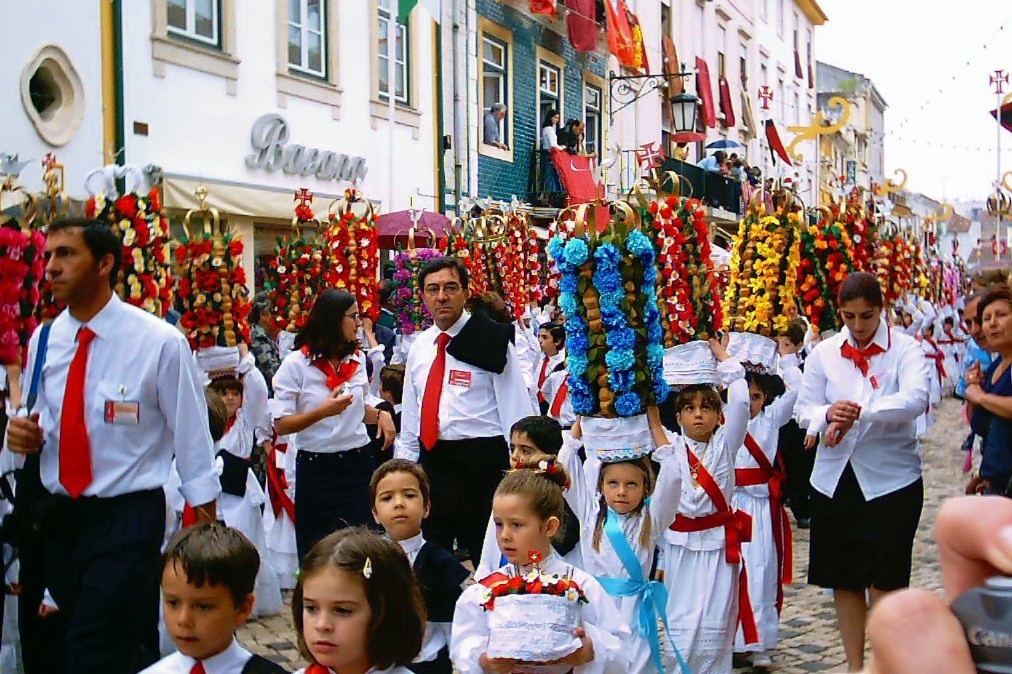
Festa dos Tabuleiros – Image credit – By Diogomedina – Own work, CC0, https://commons.wikimedia.org/w/index.php?curid=12389882
How Many Days to Spend
While many travelers visit Tomar as a day trip from Lisbon or Coimbra, I’d recommend staying at least one full day (or even two if you love history and photography). One day allows you to explore the Convent of Christ, the Old Town, and the Nabão Riverfront, but an overnight stay gives you time to wander Tomar’s hidden corners — when the tour buses are gone and the town glows under the lamplight.
Best Things to Do in Tomar Portugal
For History and Architecture Lovers
1. Convent of Christ (Convento de Cristo)
If there’s one place that defines Tomar, it’s this hilltop UNESCO World Heritage Site. The Convent of Christ feels like walking through seven centuries of Portuguese history — from Templar origins to Manueline splendor. I still remember standing beneath the Charola, the Templar Round Church, its frescoes glowing under soft light. Don’t miss the Manueline Window, a stone masterpiece often called the “jewel of Portugal’s architecture.”
Tip: Arrive early or late afternoon for perfect light and fewer crowds.
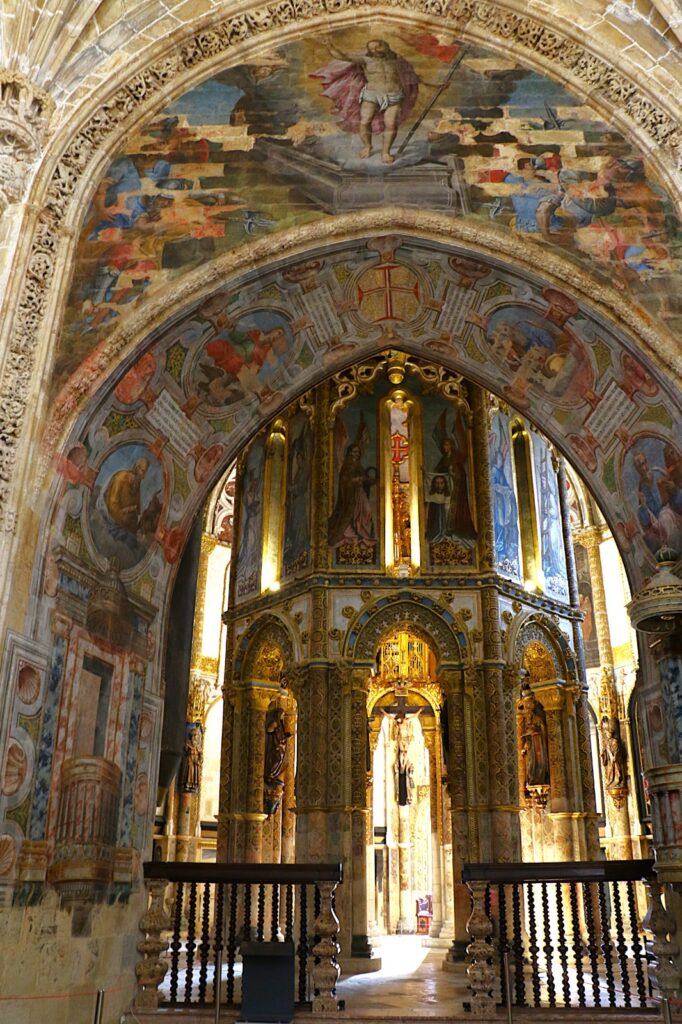
Interior of Charola, the Templar Round Church
2. Tomar Castle (Castelo de Tomar)
Just before the Convent, you’ll pass through the Templar Castle — one of Portugal’s best-preserved medieval fortresses. Built in 1160 by Gualdim Pais, it once defended the Order’s power. Climb the ramparts for panoramic views of Tomar and the Nabão River valley; the perspective makes it easy to understand why the Templars chose this strategic location.
Read my elaborate post: Complete Guide to the Convent of Christ and Tomar Castle
3. Stroll the Historic Old Town Center
Tomar’s historic center feels like a living museum. Start at Praça da República, the main square dominated by the Igreja de São João Baptista, whose Manueline portal and clock tower make great photo subjects.
From here, wander along Rua Serpa Pinto (Corredoura) — the town’s main artery lined with traditional shops, tiled buildings, and quaint corners perfect for impromptu photography.
When hunger strikes, grab a seat at Café Paraíso or Casa Matreno for coffee and pastries, or enjoy hearty Portuguese fare at Taverna Antiqua, which pairs medieval décor with modern flavors.
The charm of Tomar lies in these slow strolls — every turn reveals another story carved in stone or painted in azulejos.
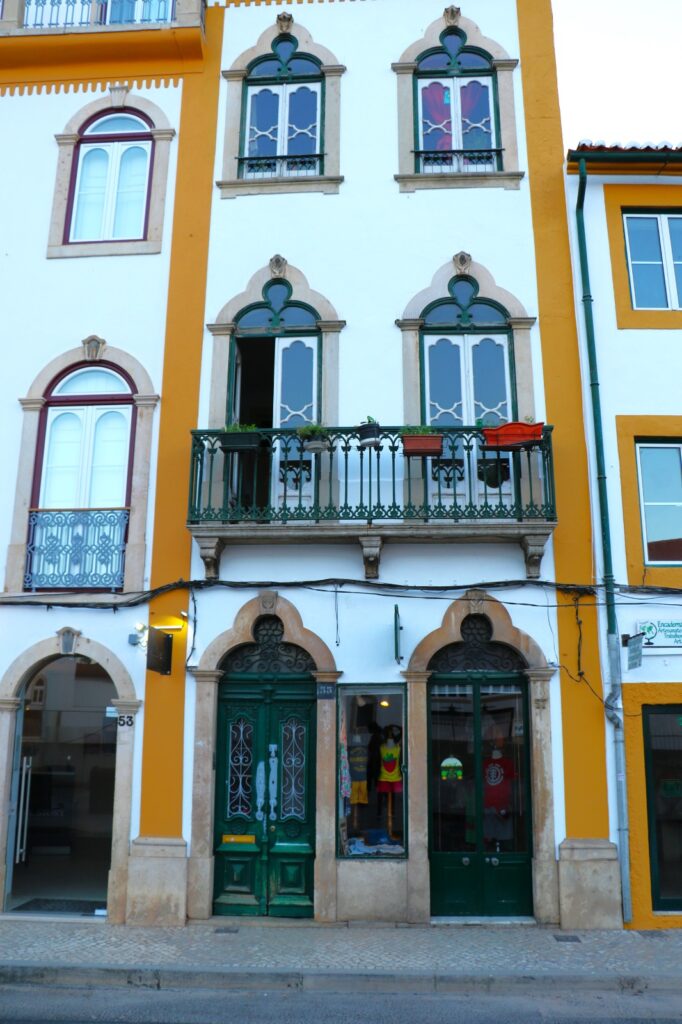
The building in the image showcases typical Portuguese architectural elements, such as the ornate windows and doors, which are common in historical buildings in Tomar.
For Nature and Outdoor Enthusiasts
4. Nabão River Promenade
Tomar’s charm flows along the Nabão River. Take a stroll beside the calm waters, where trees and old mills reflect like a watercolor painting. The gentle sound of flowing water makes this walk a soothing pause between sightseeing stops.
5. Mouchão Park (Parque do Mouchão)
Right by the river, this leafy park is a favorite with locals. A centuries-old waterwheel still turns here, and children play under the shade of tall trees. It’s a great picnic stop or just a place to breathe after exploring the historic core.
6. Pegões Aqueduct (Aqueduto dos Pegões)
Stretching over 6 km, this 16th century engineering marvel once supplied water to the Convent of Christ. You can walk along its top arches for stunning countryside views — a favorite photo stop for me. Just be mindful near the edges if you’re afraid of heights! (Scroll below for photography tips.)
7. Discover the Mata dos Sete Montes (Seven Hills Forest)
If you need a break from Tomar’s stone fortresses, the Mata dos Sete Montes, or Seven Hills Forest, offers a refreshing escape. This 39-hectare park once served as the private gardens of the Convent of Christ — today, it’s open for all to explore.
Winding walking trails lead through pine, cypress, and olive trees, while hidden chapels and fountains emerge like secrets from the past. Don’t miss the Charolinha, a small circular temple at the park’s heart — a romantic spot for reflection or quiet photography.
It’s the kind of place where you can hear birdsong instead of footsteps and see how nature weaves seamlessly into Tomar’s spiritual landscape.
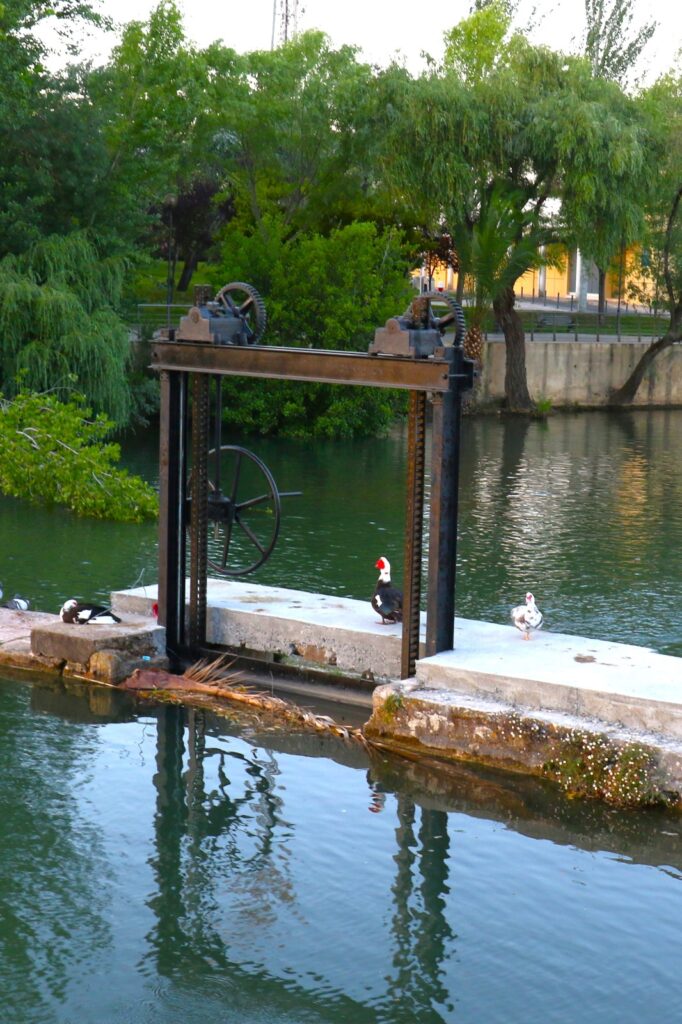
Flood gate on River
Tomar for Art, Culture and Museum Lovers
8. Museu dos Fósforos (Matchbox Museum)
Imagine boxes of various shapes and designs, from all over the world! This might be Tomar’s quirkiest attraction — a collection of over 40,000 matchboxes from around the world. The collection was donated by Aquiles da Mota to the Municipality of Tomar in 1980. It is the largest collection of its kind in Europe and free to see. A reminder that ‘travel joys’ often lies in unexpected corners.
9. Explore the Synagogue and Jewish Quarter
In the heart of Tomar’s old town lies one of Portugal’s best-preserved reminders of its Jewish heritage — the 15th-century Synagogue of Tomar. Built between 1430 and 1460, it’s a simple yet elegant structure with four slender columns symbolizing the matriarchs of Israel and supporting twelve arches representing the tribes. Inside, the small Jewish Museum of Tomar displays artifacts, stone inscriptions, and ritual objects that tell the story of the once-thriving Jewish community before their expulsion in 1496.
Walking through the Jewish Quarter, with its narrow cobblestone lanes and whitewashed façades, is like tracing the footsteps of a forgotten people. It’s a quiet but powerful reminder of the town’s multicultural layers — and a must for history lovers.
Hidden Gems and Off-the-Beaten-Path Experiences
Tomar isn’t just about Templars and convents — wander a little further, and you’ll find corners that whisper history without the crowds.
10. Chapel of Nossa Senhora da Conceição
Perched on a quiet hill opposite the Convent of Christ, the Chapel of Nossa Senhora da Conceição is a masterpiece of Portuguese Renaissance architecture. Built in the mid-16th century by João de Castilho, it was originally intended as the royal pantheon for King João III. The symmetry, classical columns, and perfect proportions reflect the Renaissance ideals of balance and harmony — a stark contrast to the ornate Manueline style nearby.
Because it sits slightly off the main tourist route, this chapel offers a peaceful alternative to the busier convent grounds. Step inside to admire its serene geometry and the way afternoon light filters through the narrow windows, giving it an almost divine calm.
11. Visit the Igreja de Santa Maria do Olival
Known as the “Mother Church of the Order of the Templars in Portugal,” the Igreja de Santa Maria do Olival is one of Tomar’s most sacred landmarks. Built in the 12th century under Gualdim Pais, the first Grand Master of the Templars in Portugal, this Gothic church was the burial site for Templar knights. Its simplicity contrasts beautifully with the ornate Manueline details found elsewhere in Tomar — look for the rose window on the façade and the arched stone tombs within.
What makes it special is its symbolism — it served as a model for other churches built by the Knights Templar across Portugal.
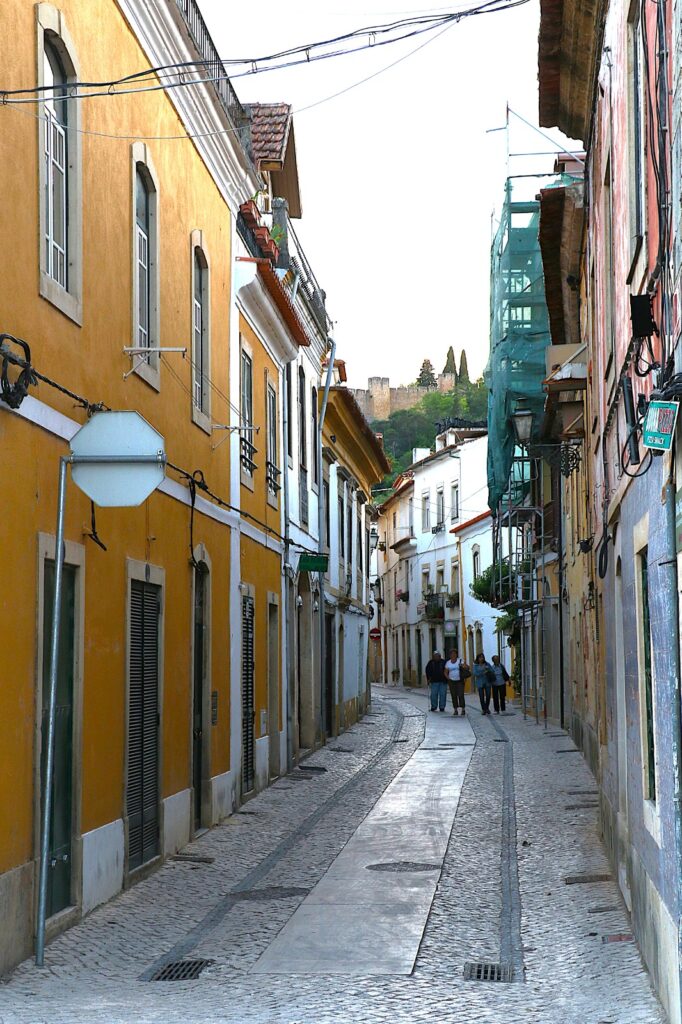
Narrow cobblestone lanes in Tomar
Tomar for Food and Wine Lovers
12. Try Local Specialties
Tomar’s culinary scene is deeply regional. Don’t leave without trying Fatias de Tomar — golden, egg-yolk-rich slices that melt in your mouth. We thoroughly enjoyed our dinner menu that had traditional dishes, hearty and full of flavor, like Ensopado de Borrego (lamb stew) and Bacalhau com Natas (cod in cream sauce). Just writing makes me crave for them again.
13. Where to Eat in Tomar
- Taverna Antiqua – step back in time in a medieval-style restaurant with candlelit tables.
- Infante – upscale Portuguese cuisine with a garden view.
- Café Paraíso – a perfect stop for dessert and people-watching in the main square.
Tip: Pair your meal with a Ribatejo or Tomar D.O.C. wine for an authentic touch.
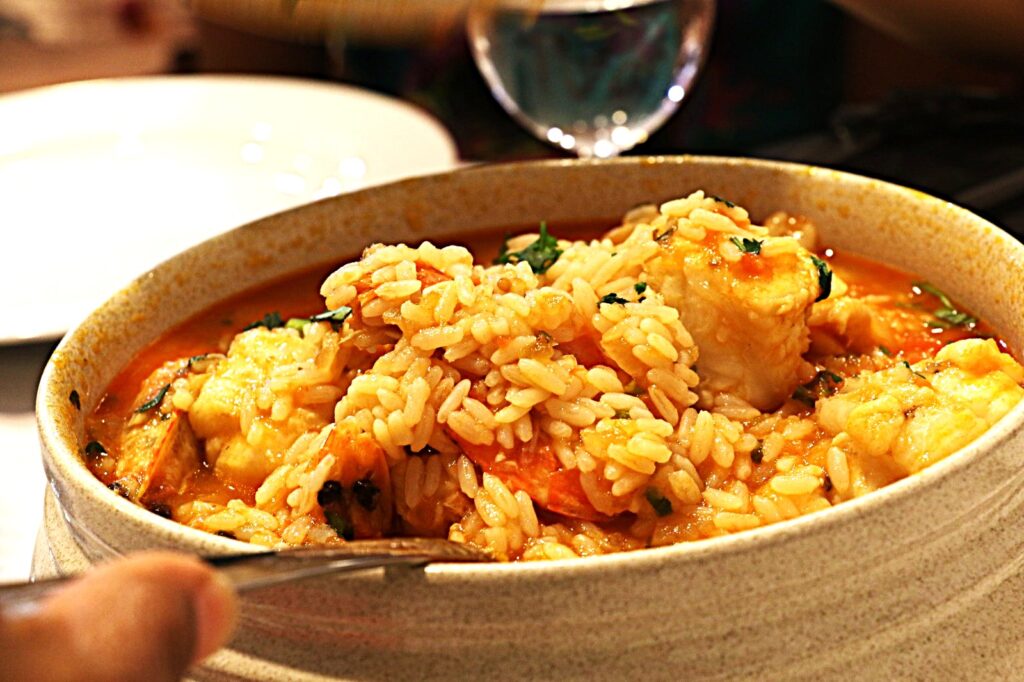
Seafood Rice dish, Tomar
14. Local Markets and Shopping: For Souvenir Seekers
If you love browsing for authentic finds, Tomar’s local markets are a delight. The Municipal Market (Mercado Municipal de Tomar) is the best place to sample regional produce — think olives, cheeses, honey, and handmade cork goods straight from the artisans. For textiles, pottery, and local delicacies, check the stalls spilling out onto side streets during Friday Market Day, when the whole town comes alive in color and chatter.
Look for keepsakes designed and sold by independent artists.
- Templar-inspired jewelry and ceramics — symbolic crosses, shields, and swords.
- Locally produced honey and olive oil — ideal edible souvenirs.
- Leather crafts and lace — found in boutiques near Praça da República.
Tomar for Experience Seekers and Families
15. Festa dos Tabuleiros (Festival of the Trays)
If your visit coincides with this festival (held every four years; next in 2027), you’re in for a spectacle of color and tradition. Women parade with towering trays of bread and flowers balanced on their heads — a moving celebration of faith and community.
16. Canoeing or Kayaking on the Nabão River
A family-friendly activity offering new perspectives of the city’s landscape. Rental services for kayaks and canoes are available near the park.
17. Guided Night Tours in Tomar
Join a candlelit or storytelling tour through Tomar’s historic streets — a magical way to end your day. The stories of knights, ghosts, and royal intrigue stay with you long after the walk ends.
Tomar Walking Tour : Templar, Castle, Food, Ceramics, Fun! Award-winning actor turned storyteller brings Tomar’s rich history to life! Fun, educational, and packed with tales you’ll love, a must-do tour for curious travellers.
Tomar for Photographers
Tomar is endlessly photogenic — a living canvas of stone, water, and light. Every corner, whether it was the convent of Christ or the river banks of Nabão, I found endless subjects to focus on. Tomar city offers a frame where history and geometry align perfectly for your lens.
18. Manueline Window of the Convent of Christ – “Portugal’s Stone Masterpiece”
No photograph of Tomar is complete without the legendary Manueline Window on the convent’s western façade. Designed by Diogo de Arruda around 1510, it’s a sculptural symphony of nautical symbols celebrating Portugal’s Age of Discoveries.
Zooming in with my camera I could capture details of the twisted ropes, coral motifs, and knots that seem to emerge from the stone itself. Each detail paying tribute to the seafaring spirit of the nation.
Best time to photograph: Golden hour (4.30 PM to 6.30 PM in summer), when long shadows define every twist and texture.
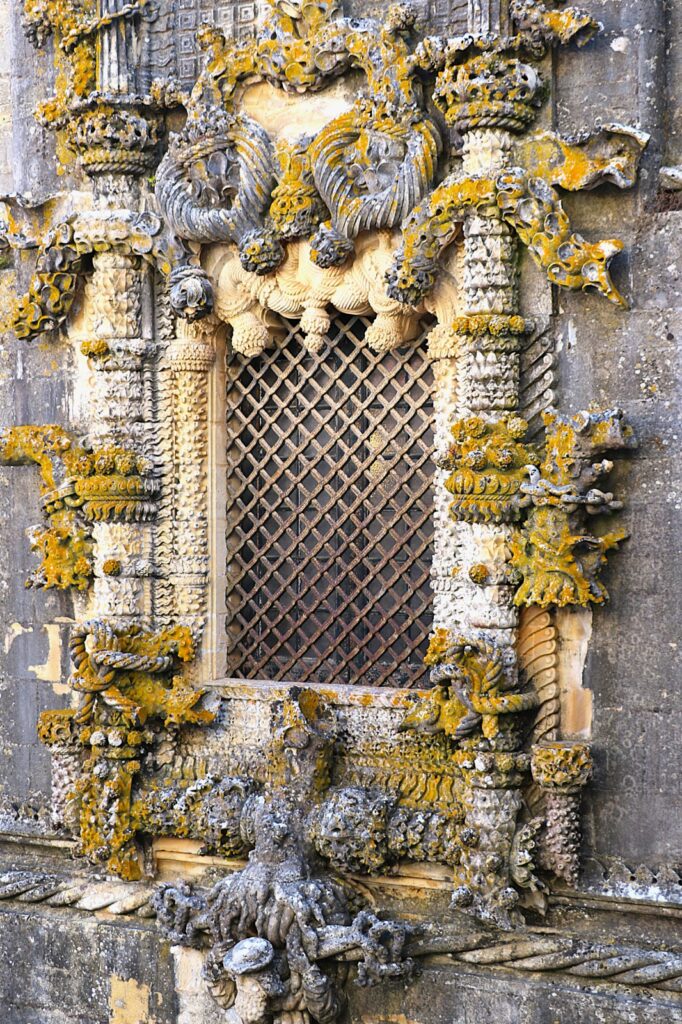
Manueline Window of the Convent of Christ
19. Pegões Aqueduct – Lines, Arches, and Perspectives
Sharing with you yet another destination that charmed me beyond words. A few kilometers outside the town, the Aqueduto dos Pegões offers one of the most striking compositions in Tomar. Built in the early 17th century to supply water to the convent, this aqueduct stretches over 6 km with 180 arches, some reaching nearly 30m high.
From a photographer’s standpoint, this is a playground of perspective — repeating arches that lead your eye deep into the frame, with the rugged Ribatejo landscape adding contrast.
Look for:
- Symmetry shots under the central arches — use a wide-angle lens for depth.
- Leading lines along the top walkway, especially near the central span.
- Low-angle compositions during the golden hour when light slips through the arches, creating rhythm and repetition in shadow.
Tip: Bring sturdy shoes — the terrain is uneven but the view (and the shot) is worth it.
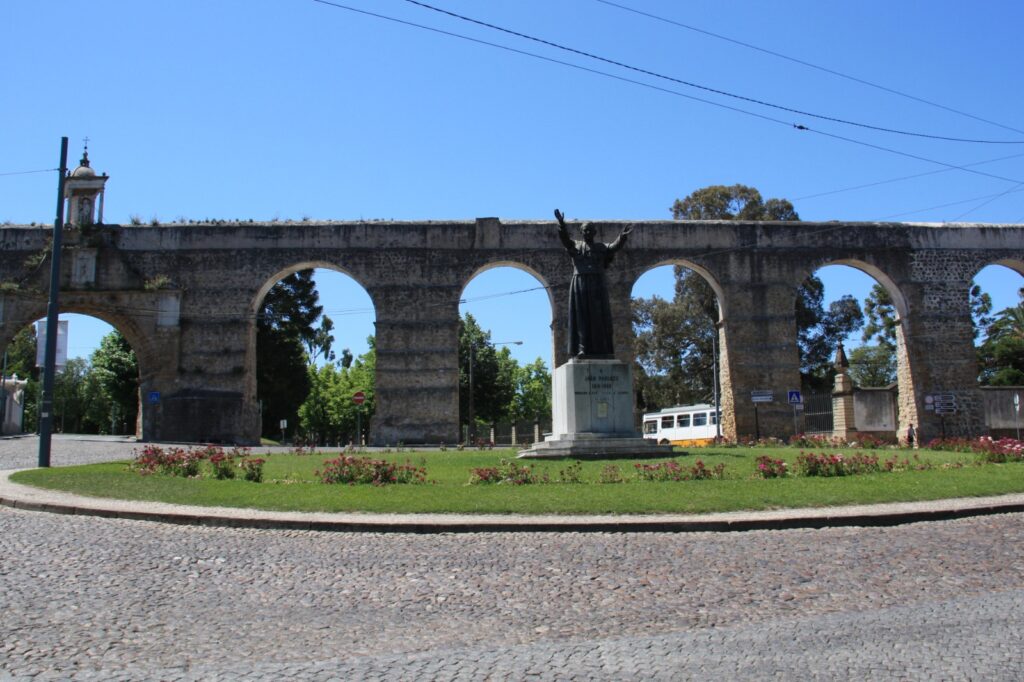
Pegões Aqueduct Tomar Portugal
20. Praça da República – Capturing Tomar’s Heartbeat
In the very heart of Tomar, Praça da República blends history with human warmth. The square is anchored by the Church of São João Baptista, a 15th century Manueline gem with a striking portal and Gothic bell tower. Around it, pastel façades, cobblestones, and café umbrellas create a scene that changes with the light and rhythm of the day.
I still regret that I didn’t have time enough to pause and watch the life here.
Photograph:
- The azulejo-tiled fountain in the square’s center, reflecting the church in morning light.
- Locals chatting under trees or sipping espresso at Café Paraíso — perfect for candid street photography.
- The symmetry of tiled façades and traditional Portuguese balconies that frame the square.
Best time: Early morning (for empty streets) or late afternoon when life fills the plaza.
Tomar Itineraries
One Day in Tomar Itinerary
If you only have one day in Tomar, focus on its essential experiences — it’s compact enough to explore on foot yet rich enough to leave you enchanted.
Morning – Convento de Cristo
Begin your day at the Convent of Christ, Tomar’s crown jewel and a UNESCO World Heritage Site. Arrive early (around 9 a.m.) to explore the Charola (Templar rotunda), the Manueline nave, and the famous western window before crowds build up. Don’t miss the Cloisters of John III, each a masterpiece of symmetry and light.
Afternoon – Old Town Exploration
Descend into the old town for lunch at a local tasca. Then wander through Praça da República, visit the Synagogue Museum, and admire the Igreja de São João Baptista. The cobblestone lanes are ideal for slow exploration and photography.
Evening – Riverside Walk
End your day with a tranquil stroll along the Nabão River, crossing the small bridges and watching reflections of the castle at sunset. It’s the perfect way to absorb Tomar’s calm, timeless atmosphere.
Two Days in Tomar Itinerary
If you’re lucky enough to spend two days in Tomar, the pace slows — and the details reveal themselves.
Day 1 – The Templar Legacy
Follow the same route as the one-day itinerary: start with the Convent of Christ, explore the castle, and enjoy a relaxed lunch in the old town. In the afternoon, visit the Synagogue, the Old Town, and finish by the Nabão River.
Day 2 – Nature and Local Life
Start your morning in Mata Nacional dos Sete Montes (Seven Hills Forest), the green lungs of Tomar. Enjoy a picnic or short hike to hidden chapels. Then head to Igreja de Santa Maria do Olival, the ancient burial site of the Templars. Spend your late afternoon at the Pegões Aqueduct, where panoramic views of the countryside make for stunning photos. End your trip at a riverside café, soaking in the town’s serene rhythm.
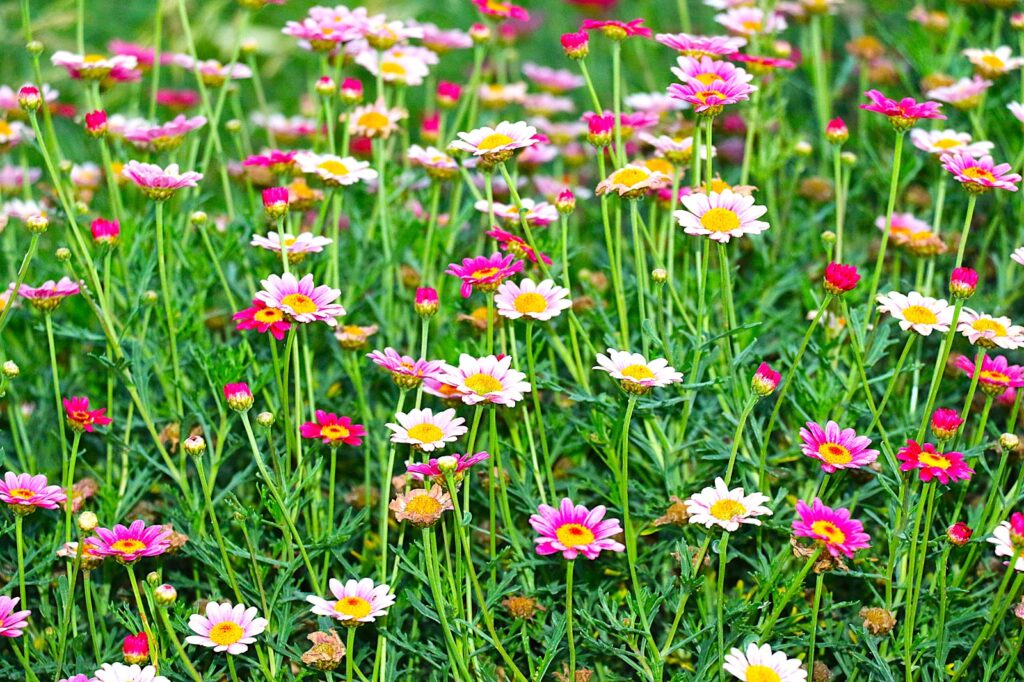
Flowers from Praça da República Tomar
Practical Information for Visiting Tomar
- Location: Central Portugal, about 135 km north of Lisbon and 190 km south of Porto.
- Getting There: Accessible by car, or via Rede Expressos buses and CP trains from Lisbon’s Sete Rios station.
- Opening Hours: Most attractions, including the Convent of Christ, open from 9 AM to 5.30/6 PM (check seasonal timings).
- Tickets: A joint heritage ticket often covers entry to Tomar, Batalha, and Alcobaça monasteries — great for history lovers planning a central Portugal route.
- Recommended Duration: One full day for main highlights, two days for deeper exploration.
Essential Travel Tips for Tomar
Language Basics: Portuguese is the official language, but English is widely understood in tourist areas. A friendly “Obrigado/Obrigada” (thank you) always goes a long way.
Currency and Payment: Euro (€) is used throughout Portugal. Most places accept cards, but keep small cash for cafés, taxis, and local markets.
Safety Considerations: Tomar is extremely safe for solo travelers and families. Streets are well-lit and walkable, but wear comfortable shoes for uneven cobblestones.
What to Pack: Light, breathable clothes in summer; a warm layer for evenings; and a hat or sunscreen if exploring the Convent’s terraces.
Photography Tips: The golden hour offers magical light over the Convent and Nabão River. Tripods are allowed in most outdoor areas, but respect signage inside monuments.
Respectful Tourism Practices: Many churches remain active worship sites. Dress modestly, speak softly, and avoid flash photography in sacred spaces.
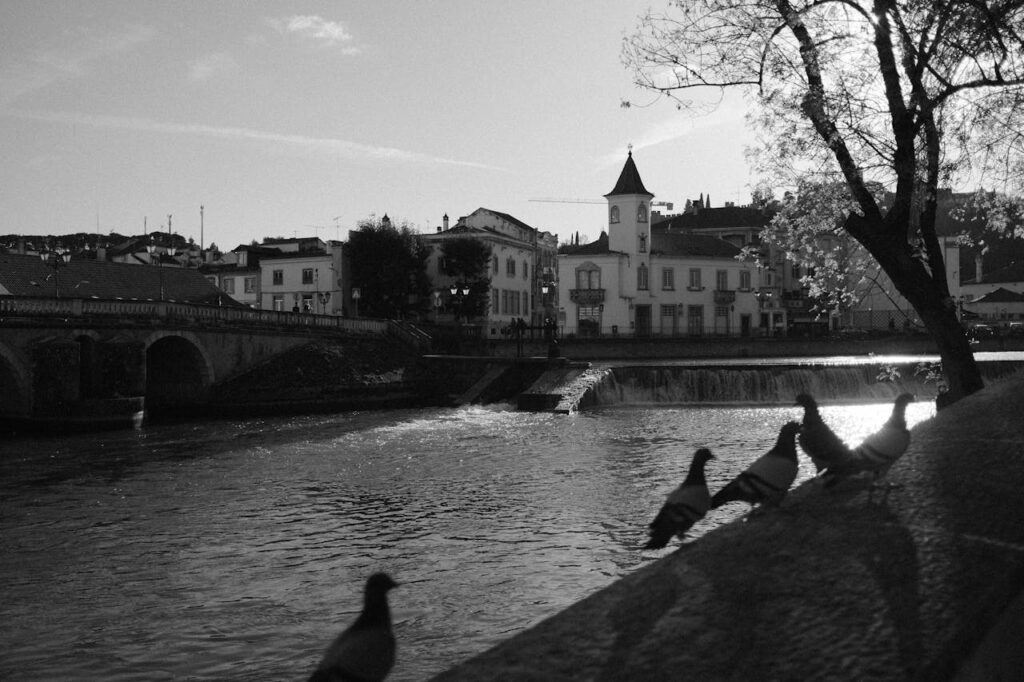
River Scene in Tomar, Portugal
Frequently Asked Questions About Visiting Tomar, Portugal
Q. Is Tomar worth visiting?
A. Absolutely — Tomar is one of Portugal’s most historically rich and visually stunning towns. Once the headquarters of the Knights Templar, it’s home to the Convent of Christ, a UNESCO World Heritage Site, and countless other treasures that blend Gothic, Manueline, and Renaissance architecture. I found Tomar to be a perfect mix of history, tranquility, and photogenic charm — ideal for slow travelers, architecture lovers, and anyone seeking Portugal beyond the big cities.
Q. How many days do you need in Tomar?
A. You can see the highlights of Tomar in one full day, but two days lets you experience it deeply. A one-day itinerary covers the Convent of Christ, the Old Town, and a riverside walk, while an extra day allows time for the Pegões Aqueduct, Mata dos Sete Montes, and nearby chapels. (I have shared both itineraries above.)
Q. Can you visit Tomar as a day trip from Lisbon?
A. Yes, Tomar makes an excellent day trip from Lisbon. It’s about 135 km north (a 90-minute drive or a 2-hour train ride from Sete Rios Station). Trains and buses run regularly, and most travelers find it easy to explore Tomar on foot once they arrive.
Q. Is Tomar walkable?
A. Yes — Tomar is very walkable. Most attractions, restaurants, and hotels cluster around the Old Town and the Nabão River. The walk from the town center up to the Convent of Christ is a bit steep but manageable; just wear comfortable shoes. I found it easier (and more scenic) to take slow stops along the way — especially at the Porta do Sol viewpoint, which offers beautiful panoramic views of the town below.
Q. What is Tomar famous for?
A. Tomar is world-famous as the Templar City, once the heart of the Knights Templar in Portugal. Its standout attraction, the Convent of Christ, symbolizes Portugal’s Age of Discovery and features the remarkable Manueline Window — a masterpiece of maritime-inspired sculpture. The town is also known for the Festa dos Tabuleiros (Festival of the Trays), one of Portugal’s oldest and most colorful traditions, held every four years.
Q. Where should I stay in Tomar?
A. If you’re spending a night or two, stay near the Old Town or by the Nabão River for convenience and charm. Options range from boutique guesthouses like Hotel República (overlooking the main square) to budget stays and countryside retreats just a few minutes away. I stayed within walking distance of Praça da República, and it made exploring the cafés, churches, and riverfront incredibly easy.
Q. When is the best time to visit Tomar?
A. Spring (March to May) and autumn (September to October) are the best times to visit — with mild weather, fewer tourists, and blooming gardens in Mata dos Sete Montes. Summer brings festivals like Festa dos Tabuleiros, but also higher temperatures. Morning hours are best for exploring the Convent of Christ, while evenings are perfect for riverside photography.
Q. What are the must-see attractions in Tomar?
A. Don’t miss:
• Convent of Christ and Castle of Tomar – the crown jewel of the town.
• Igreja de Santa Maria do Olival – resting place of Templar knights.
• Pegões Aqueduct – a marvel of Renaissance engineering.
• Synagogue and Jewish Museum – one of the oldest in Portugal.
• Nabão Riverfront – for a peaceful evening walk.
Conclusion: Tomar’s Timeless Allure
I am glad I stretched my Portugal itinerary to fit in Tomar along with Alcobaca and Batalha. Tomar is a story carved in stone, where faith, art, and history converge. From the soaring Convent of Christ to the serene Nabão River, every corner whispers tales of the Knights Templar and Portugal’s golden past.
Whether you come for a day or linger for two, Tomar rewards curiosity with quiet beauty and unforgettable moments.
Have you walked through Tomar’s Templar corridors or watched sunset from its riverside bridges? Share your experiences and favorite spots in the comments below — and if you haven’t yet, maybe it’s time to plan your Tomar adventure today!
Pin and Save this for Later
About the author:
 Indrani Ghose is a travel blogger and photographer who has explored 15+ European countries across multiple trips. Based in Bangalore, she shares authentic travel experiences to help fellow travelers navigate the world more safely and confidently. You can follow her on her social media handles Instagram, Twitter and Facebook to see the wonderful destinations, beautiful offbeat places and get instant updates about them.











Beautiful places they are! Thanks for sharing!
Beautiful! I hope I can visit someday.
~
Nicely described..
Looks lovely.
too informative
A beautiful old city. – Margy
Hello Indrani, love your critter images. I wanted to stop back and say thank you for linking up and sharing your post. Have a happy weekend!
Though i won’t be able to remember the names, when i am in Portugal someday, i hope they strike a chord 🙂
Awesome captures!
Five centuries to construct !!! OMG!!
Looks like a lovely place…Hope you had a wonderful time sightseeing.
Merry Christmas!
Nice peaceful town feel to this place. All this is well captured in your photos.
Aaah Portugal – Very beautiful photos Indrani. Merry Christmas to you and your family.
Lovely captures as always!!