What to see Inside Meenakshi Temple? Complete Guide
Stepping Into a Living Legend Madurai Meenakshi Temple
The moment I stepped inside the Meenakshi Temple, the world outside faded away — replaced by a sense of something timeless and divine. The air thickened with the sweet scent of jasmine garlands and burning camphor, mingling with centuries-old incense that seems to rise from the very stones.
The air rendered a symphony—the rhythmic chanting of priests, the clang of temple bells, murmur of prayers, the shuffle of thousands of bare feet on worn granite. Above, the towering gopurams cast kaleidoscopic shadows through their intricate carvings of gods, demons, and celestial beings painted in impossible hues of turquoise, crimson, and gold.
I have been to the Madurai Meenakshi Temple twice, each time the experience was no different. There was a palpable energy here — not chaotic, but purposeful, ancient, reverential. I felt small, yet not insignificant. This was sacred ground where time seemed to bend differently.
If you’re planning to explore inside Meenakshi Temple (Meenakshi Amman Temple, Madurai), here is everything you need to know for a memorable and respectful visit.
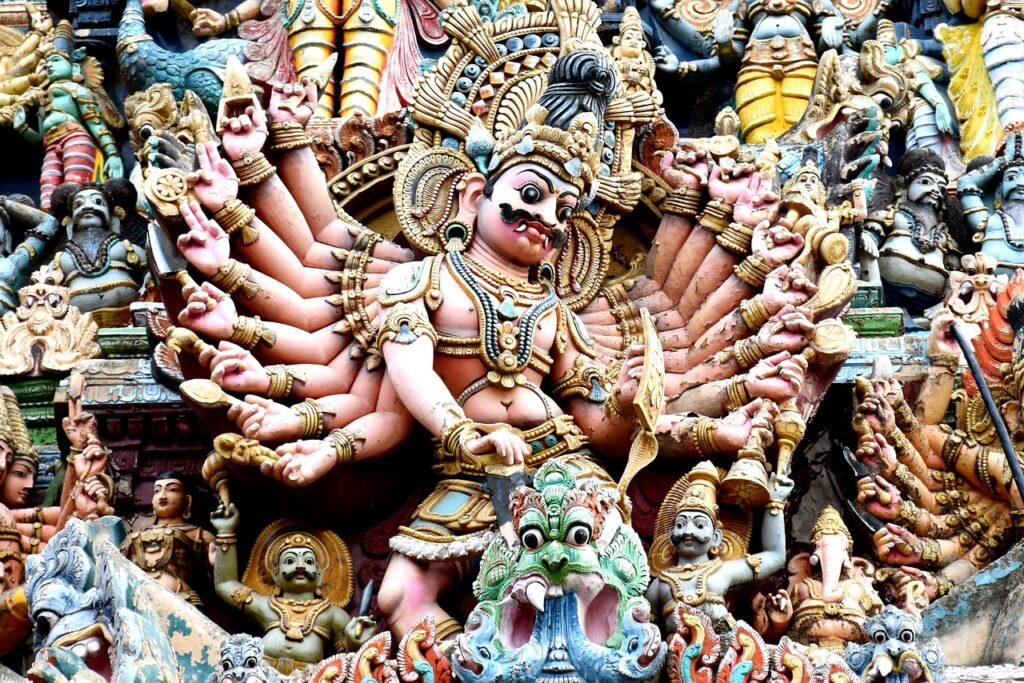
Madurai Temple
Practical Guide and Entry Logistics
The Gates and Timings: When and Where to Enter
Puja timings of Meenakshi Temple accommodate both early morning worshippers and evening attendees:
- Morning Session: 5 AM to 12.30 PM
- Evening Session: 4 PM to 9.30 PM
For first-time visitors and tourists, the East Gate (Chitra Gopuram) serves as the primary entrance, offering direct access to the main attractions. During major festivals or peak hours, the authorities open South entrance to manage crowds.
Important: Arrive at least 30 minutes before closing if you want sufficient time to explore the complex properly.
The Rules: Dress Code and Prohibitions
Be aware that the Meenakshi Temple dress code is strictly enforced, particularly for access to the inner sanctums:
For Men:
- Full-length pants or traditional dhoti (preferred)
- No shirts allowed inside the main sanctums (Garbhagriha areas)
- Upper body must be bare or covered only with a sacred thread/angavastram
For Women:
- Saree, salwar kameez, or churidar with dupatta
- Shoulders and knees must be covered
- Western attire like shorts, skirts, or sleeveless tops are not permitted
Strictly Prohibited Items:
- Mobile phones and cameras (zero tolerance policy inside)
- Large bags, backpacks, or luggage
- Footwear of any kind
- Food items and water bottles
- Leather goods (wallets, belts)
Important: Respect the rules as these rules aren’t arbitrary—they preserve the sanctity and security of one of India’s most revered spiritual sites.
Where to Keep Belongings: Locker Facilities Explained
The temple complex provides organized facilities for storing prohibited items:
Mobile and Camera Submission: Mandatory counters operate at all major gates where you’ll deposit your phone and receive a token. The service typically costs ₹10-₹20 per device. Keep your token safe—you’ll need it for retrieval.
Footwear Stands: Paid shoe-keeping facilities surround the temple perimeter (₹5-₹10 per pair). Choose stands with proper receipt systems. I have seen many locals simply carry their footwear in cloth bags. This can be cumbersome during your tour.
Locker Facilities: Limited paid locker services are available near the East Gate for larger belongings (₹20-₹50 depending on size). These fill quickly during peak hours and festivals, so arrive early if you’re carrying valuables.
Pro Tip: Travel light. Bring only essentials—cash for offerings, your ID, and perhaps a handkerchief. Leave everything else at your hotel.

Photography not allowed
Darshan Options and Costs: Free vs. Special Entry
Free Darshan (General Entry): No ticket required. You’ll join the main queue through the standard barricaded pathways, experiencing the temple at the pace of the crowd. During festivals or weekends, expect wait times of 1 to 3 hours for darshan at the main shrines. This option offers the most authentic, immersive experience.
Special Darshan Tickets:
- Cost: ₹50 to ₹100 per person (prices subject to change)
- Benefits: Dedicated queue with significantly shorter wait times (15 to 30 minutes), priority access to both main shrines
- Purchase: Available at designated counters near the entrance gates
- Best For: Visitors with time constraints or those visiting during peak hours
Both options grant access to the same sacred spaces—the difference lies purely in convenience and time savings. The spiritual experience remains equally profound regardless of which path you choose.
A Step-by-Step Tour Inside: Your Sacred Journey
1. Ashta Shakti Mandapam – Hall of Eight Goddesses
Your journey begins in this magnificent pillared corridor immediately after entering through the East Gate. The Ashta Shakti Mandapam celebrates the eight manifestations of divine feminine power—Shailaputri, Brahmacharini, Chandraghanta, Kushmanda, Skandamata, Katyayani, Kalaratri, and Mahagauri.
Observe the carved pillars rise around you, each tells stories through stone. I observed that some devotees pause to touch the pillars in reverence, others sat in quiet meditation. The acoustic design of this hall creates a natural amphitheater effect, so even whispered prayers seem to echo with intention. This place marks gradual transition from the external world into sacred space.
2. Potramarai Kulam (Golden Lotus Tank) – Mirror of Divine Judgment
As we emerged from the hall, the Potramarai Kulam opened up before us—a sacred temple tank that has witnessed over a millennium of ritual and legend. According to tradition, this 165-foot-square pool served as the ultimate quality control system for ancient Tamil literature. Manuscripts submitted for evaluation were placed in the water; only those that floated (divinely approved) were accepted, while inferior works sank into obscurity.
The tank’s name translates to “Golden Lotus Tank,” referencing the belief that golden lotuses once bloomed here.
Pro tip: Stand on the western edge, to see one of the temple’s most photographed views—all four towering gopurams framing the water’s edge in perfect symmetry.
Some devotees perform the ritualistic circumambulation of the tank, a practice believed to cleanse the soul before approaching the deities.
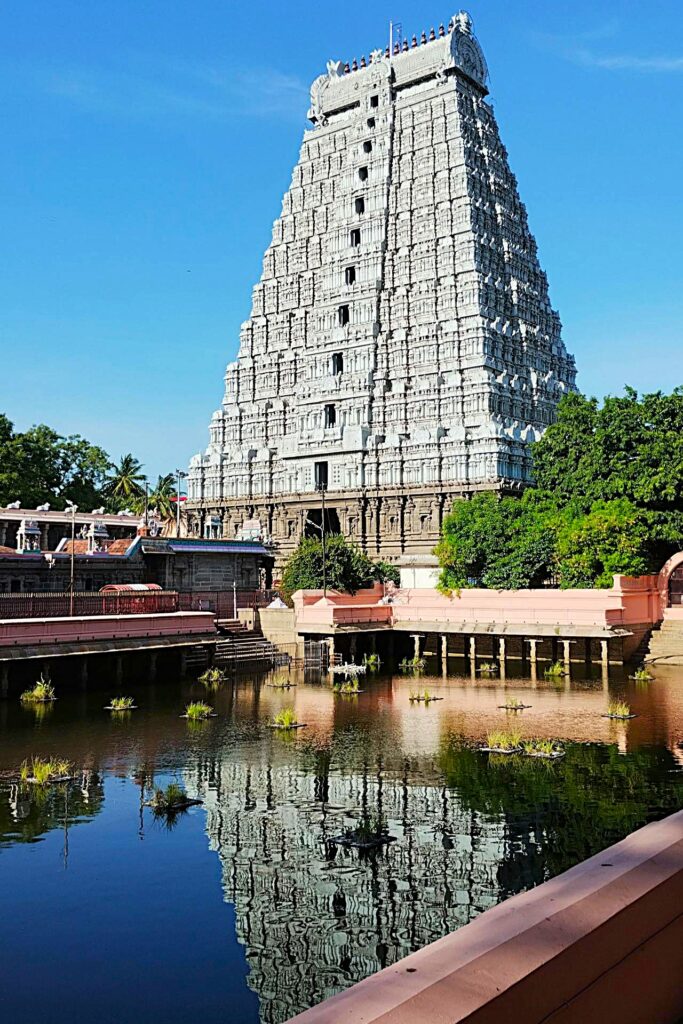
Golden Lotus Tank Meenakshi Amman Temple Madurai
3. Meenakshi Amman Shrine – The Heart of Devotion
Now you approach the spiritual core—the Garbhagriha (sanctum sanctorum) of Goddess Meenakshi herself. The queue moves slowly here; deliberately, creating natural moments for contemplation. The energy shift was so evident.
The deity appears in a form unique to this temple: Meenakshi with her fish-shaped eyes (her name literally means “fish-eyed goddess”), emerald-green complexion, and holding a parrot—symbol of love and prophecy. She’s adorned in silk garments that change daily, draped in flowers, gold, and precious stones that catch the flickering oil lamp light.
The atmosphere here is intense—compressed devotion, whispered prayers in Tamil, the heady scent of burning ghee, and the priest’s rapid-fire Sanskrit mantras. Photography is absolutely prohibited in this space.
Caution: Even attempting it is considered deeply disrespectful and will result in immediate removal.
Devotees approach, receive prasad (sacred offering, usually ash or flowers), offer their prayers in the brief seconds allowed before the queue advances. Some touch their foreheads to the base of the shrine; their eyes closed in complete surrender. Don’t rush this moment, even as the crowd presses. One or two mindful breaths here can anchor memories for a lifetime.
4. Sundareswarar Shrine – Lord Shiva’s Abode
From the Goddess’s shrine, pathways guide you to the Sundareswarar temple—the consort, Lord Shiva. The architecture here shifts subtly. Where Meenakshi’s shrine pulses with devotional fervor, Sundareswarar’s space feels more meditative, grounded, ancient.
The linga (symbolic representation of Shiva) resides in the inner sanctum, tended by hereditary priests whose families have served here for generations. The Nandi (sacred bull) statue faces the shrine in eternal watchful attendance. Here, male devotees who entered bare-chested earlier feel the full significance of that tradition—a mark of humility before the divine masculine principle.
The mood is different but complementary. If Meenakshi’s shrine is the temple’s heart, Sundareswarar’s is its foundation—steady, powerful, silent. Observe how devotees interact differently here, often spending longer in individual prayer, less rushed despite the queues.
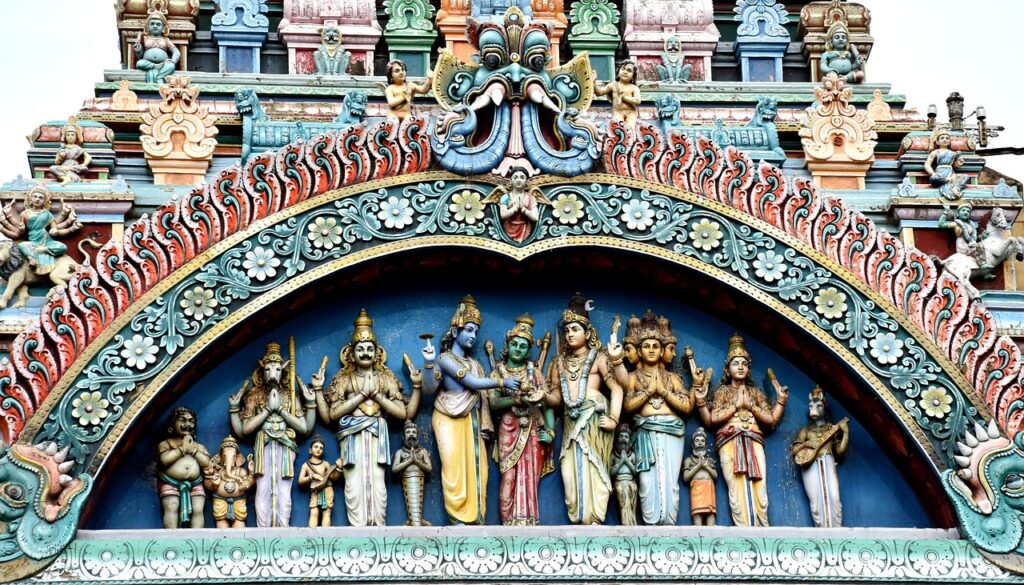
Meenakshi, Sundareswarar, Marriage
5. Aayiram Kaal Mandapam (Hall of a Thousand Pillars) – Architectural Marvel
Prepare for sensory overload. The Hall of a Thousand Pillars (actually 985 pillars, but who’s counting when faced with such magnificence?) represents the pinnacle of Dravidian architectural genius. Each pillar is unique, carved from single blocks of granite into elaborate figures—deities, warriors, dancers, musicians, mythical creatures.
The Musical Pillars: The most famous section features the Sangita Sthambam (musical pillars). When tapped, these produce different musical notes—sa, ri, ga, ma, pa, dha, ni—the seven notes of Indian classical music. Historically, temple musicians would perform entire ragas using these stone instruments. Today, direct touching is restricted to preserve them, but if you’re lucky enough to visit when a guide demonstrates (with official permission), you’ll hear stone singing—an unforgettable experience.
Temple Art Museum: A section of this hall houses a museum displaying:
-
- Ancient temple jewelry and deity costumes
- Bronze sculptures from different dynasties
- Architectural drawings and historical photographs
- Detailed explanations of temple construction techniques
Museum Entry: Separate ticket (₹5 to ₹10), usually open 9 AM to 5 PM. Budget 20 to 30 minutes if you’re architecturally curious.
Walk slowly through this hall. The play of light through the gaps between pillars creates a mesmerizing effect, especially during late afternoon when diagonal sun rays slice through the structure, illuminating dust motes like divine particles.
6. Lesser Shrines – Hidden Gems of Devotion
While the main shrines draw primary attention, the temple complex houses dozens of smaller sanctums, each with its own significance:
Mukkuruni Vinayagar: A beloved Ganesha shrine near the main entrance where the deity is believed to be particularly responsive to prayers for removing obstacles in education and career. Students visit here before exams, entrepreneurs before new ventures.
Nataraja Shrine: Houses a bronze sculpture of Shiva in his cosmic dance pose (Tandava), surrounded by a ring of fire. The craftsmanship dates back to the Nayak period and represents one of the finest examples of Chola bronze tradition.
Temple Elephant: Meet Madhuravadivu or whichever elephant currently serves the temple. These gentle giants are more than tourist attractions—they’re consecrated participants in daily rituals. The elephant offers blessings by gently touching devotees’ heads with its trunk.
Proper etiquette: Offer a ₹10 or ₹20 note or a banana directly to the mahout (handler), fold your hands, and bow slightly. The elephant will respond with the blessing touch.
Timing: The elephant typically appears during morning hours (around 7 to 10 AM) and early evening (5 to 7 PM), though schedules vary.
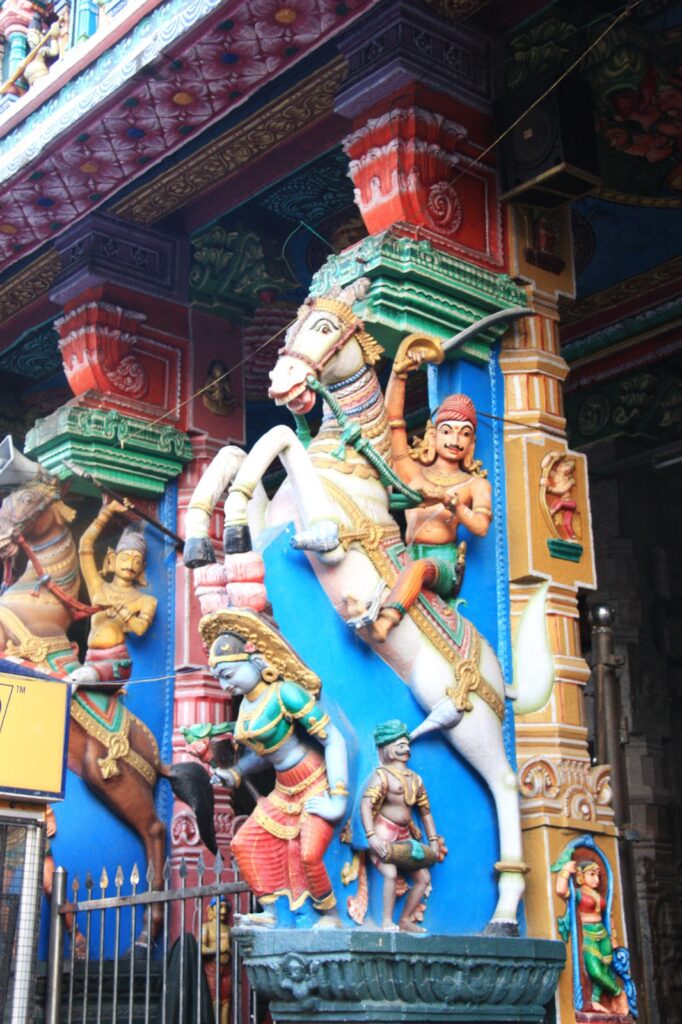
Madurai Meenakshi Temple sculptures
Rituals and Unique Experiences: Living Traditions
Puja and Aarti Timings: The Temple’s Daily Rhythm
Meenakshi Temple follows a rigorous schedule of six daily pujas (worship rituals), each marking a different phase of the divine couple’s day:
- Vizha Puja (5 AM) – Morning awakening ceremony
- Kalasanthi Puja (8 AM) – Morning offering
- Uchikalam Puja (10.30 AM) – Mid-morning ritual
- Sayarakshai Puja (5 PM) – Evening awakening
- Irandaam Kalam Puja (7 PM) – Evening offering
- Palliarai Puja (9.30 PM) – Bedtime ceremony
Don’t Miss: The Palliarai Puja (Bedtime Ceremony)
This is the temple’s most enchanting ritual. Every night, a silver image of Lord Sundareswarar is carried in a ceremonial procession from his shrine to Goddess Meenakshi’s chamber, symbolizing the divine couple retiring together. Priests chant sacred verses, lamps illuminate the pathway, and devotees line up to witness the procession with folded hands.
The symbolism is profound—the cosmic masculine principle merging with the feminine, completion, harmony, rest after the day’s work of sustaining the universe. Arriving around 9 PM positions you well to witness this moving ceremony before the temple closes. The atmosphere during Palliarai Puja is uniquely tranquil, introspective, and deeply devotional.
The Temple Elephant’s Blessing: A Sacred Encounter
Beyond the novelty of interacting with these magnificent creatures, receiving a blessing from the temple elephant is rooted in ancient Hindu tradition. Elephants are considered embodiments of Lord Ganesha, the remover of obstacles, and their presence in temples is believed to bring divine grace.
Proper Etiquette:
-
- Approach calmly—never startle or rush toward the elephant
- Offer your contribution (₹10-₹20 or fruit) to the mahout first
- Stand at a respectful distance, hands folded in prayer
- Bow slightly as the elephant extends its trunk to touch your head
- Some elephants also accept the offering directly from your palm (follow the mahout’s guidance)
The gentle weight of the trunk on your head, the warmth, the moment of connection with a creature that’s been part of temple rituals for decades—it’s unexpectedly moving. Believe me, this will become one of your most treasured memories of the visit.
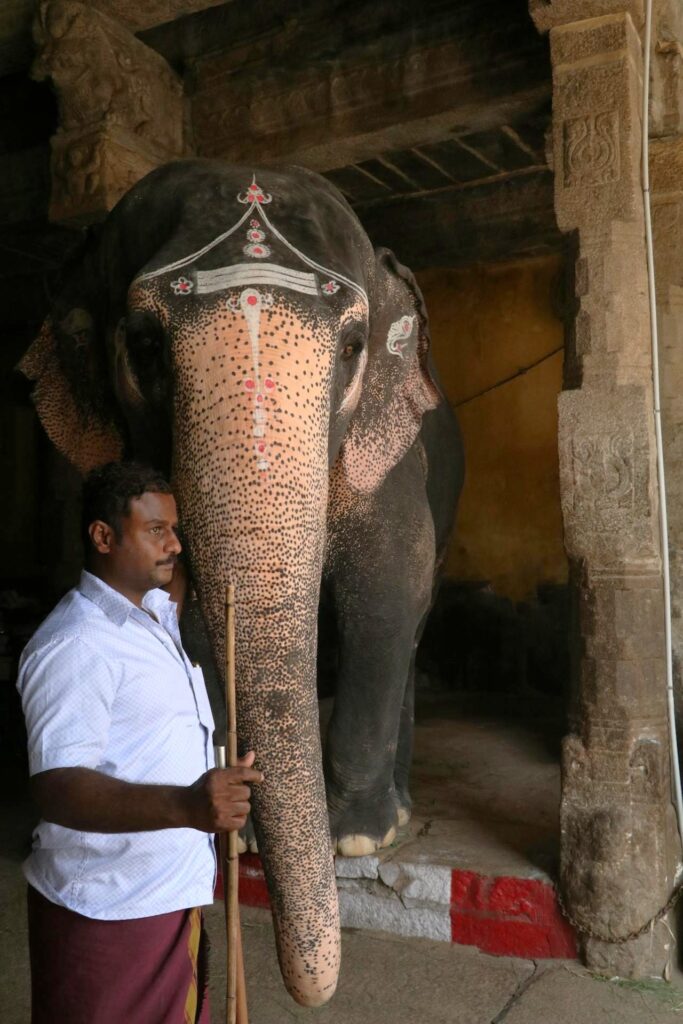
Elephant inside Meenakshi Temple
Festivals Inside Meenakshi Temple: When Madurai Transforms
1. Chithirai Festival (April-May)
The grandest celebration spanning 10-12 days, culminating in the Thirukalyanam—the celestial wedding of Meenakshi and Sundareswarar. During this period:
-
- Temple opens earlier and closes later
- Crowds multiply tenfold—expect 4-6 hour wait times for main darshan
- Special processions, cultural programs, and dramatic reenactments occur throughout the day
- The entire city participates with street decorations, music, and feasts
2. Aavani Moolam (August-September)
Celebrates Goddess Meenakshi’s coronation. Slightly less crowded than Chithirai but equally vibrant with special abhishekams (ceremonial baths) performed on the deity.
3. Navaratri (September-October)
Nine nights of celebrating divine feminine power. Different aspects of the Goddess are worshipped each night with elaborate decorations and special pujas.
Pro tip: Festival Visit Strategy
If you’re visiting during major festivals, either commit to the full experience (arrive very early, plan for long waits, immerse completely) or visit on days just before or after the festival. Crowds are manageable and you will get to see the special decorations too.
Pro-pro tip – Mid-afternoon during festivals is typically the most unsuitable time—unbearable crowds with limited darshan access inside Meenakshi Temple.
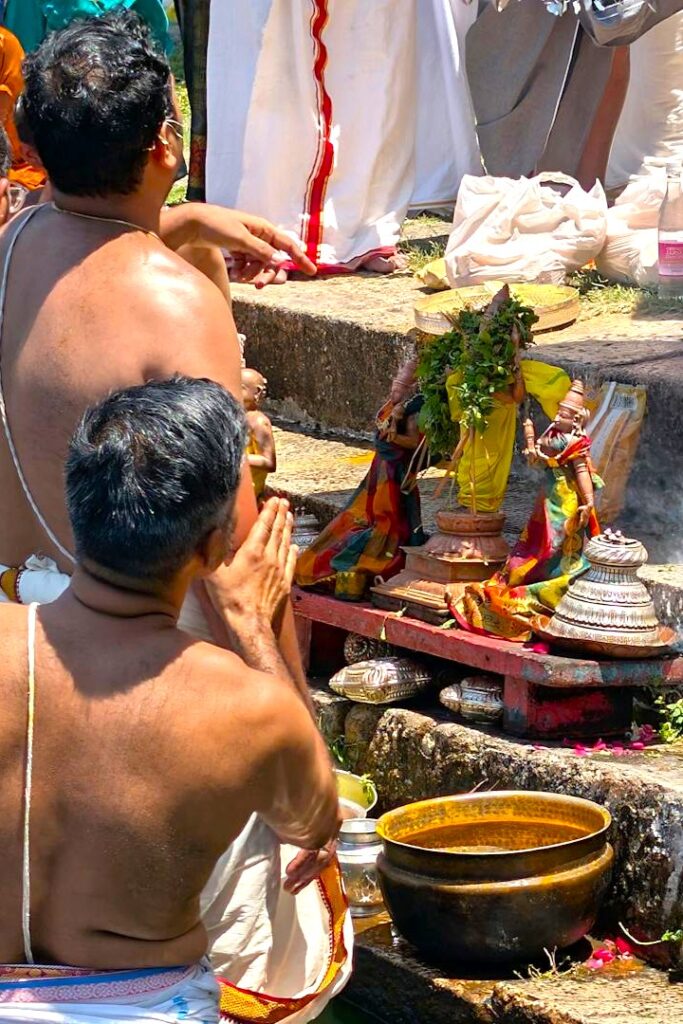
Festival in Temple
Frequently Asked Questions About Meenakshi Temple Interiors
Q1. What can I see inside Meenakshi Temple?
Inside Meenakshi Temple, you’ll encounter sacred shrines, mythic sculptures, the Golden Lotus Tank, the Hall of a Thousand Pillars, and vibrant rituals that unfold daily. Each space reflects centuries of devotion and Dravidian artistry.
Q2. What rituals happen inside the Meenakshi Amman shrine?
Daily pujas include abhishekam (ritual bathing), alankaram (decorating the deity), and deepa aradhana (lamp offerings). Devotees receive prasad and often touch their foreheads to the shrine base in reverence.
Q3. How much time does it take to visit Meenakshi Temple?
A thorough visit typically takes 2 to 3 hours, including time for darshan at both main shrines, exploring the Hall of a Thousand Pillars, and viewing the Golden Lotus Tank. If you opt for free darshan during peak hours or weekends, add 1 to 2 hours for queue waiting time. Special darshan ticket holders can complete their visit in 1.5 to 2 hours. During major festivals, plan for 4 to 6 hours minimum.
Q4. What is the Meenakshi Temple ticket price for foreigners?
There is no separate entry fee or ticket for foreigners to enter Meenakshi Temple—the temple is free for all visitors regardless of nationality.
Q5. Is there a dress code for entering Meenakshi Temple?
Yes. Modest attire is required—cover shoulders and knees. Men may be asked to enter bare-chested in certain shrines. Footwear must be removed before entering the temple complex.
Q6. Which gate is best for tourists in Meenakshi Temple?
The East Gate (Chitra Gopuram) is the primary and most convenient entrance for tourists and first-time visitors. It provides direct access to the main attractions, has clear signage, and offers facilities like mobile submission counters and footwear stands nearby.
Q7. Is photography allowed inside Meenakshi Temple?
No, photography and videography are completely prohibited inside Meenakshi Temple premises. Limited paid locker facilities are available near the East Gate and other major entrances for storing bags and valuables (₹20 to ₹50 depending on locker size). However, these fill up quickly during peak hours. Mandatory mobile/camera submission counters operate at all gates (₹10 to ₹20 per device with token system).
Q8. What is special darshan inside Meenakshi Temple?
Special Darshan is a paid service (₹50 to ₹100 per person) that provides priority queue access to both main shrines—Meenakshi Amman and Sundareswarar. You skip the longer general queues, reducing wait time from 1 to 3 hours to approximately 15 to 30 minutes. The darshan experience itself remains identical; you’re simply paying for time efficiency. Tickets are available at designated counters near entrance gates.
Q9. Can we go inside Meenakshi Temple during periods?
Traditionally, women menstruating are advised not to enter Hindu temples, and this custom is still observed by many devotees at Meenakshi Temple out of personal religious belief. There is no official checking or enforcement at the entrance gates.
Q10. Is Meenakshi Temple open on Monday?
Yes, Meenakshi Temple is open all seven days of the week, including Mondays. The temple operates in two sessions: 5 AM to 12.30 PM (morning) and 4 PM to 9.30 PM (evening). It’s advisable to check locally if you’re visiting during major Tamil festivals.
Q11. How to reach Meenakshi Temple from Madurai railway station?
Meenakshi Temple is located approximately 2 km from Madurai Junction Railway Station. You can reach it via:
- Auto-rickshaw: ₹50 to ₹80 (10 to 15 minutes) – most convenient option
- City Bus: Multiple routes including 1, 2, 7, 10, 17 stop near the temple (₹10 to ₹15)
- Walking: 25 to 30 minutes if you prefer exploring the old city streets
- App-based cabs: Ola/Uber available (₹60 to ₹100)
The temple is centrally located in Madurai’s old town, making it easily accessible from anywhere in the city.
Q12. What is the best time to visit Meenakshi Temple to avoid crowds?
The best time to visit with minimal crowds is weekday mornings between 6 to 8 AM, right after the temple opens. Alternatively, visit on weekday late evenings around 8 to 9 PM before closing. Avoid weekends, Tamil festival days, and especially the Chithirai Festival (April-May) if you prefer a peaceful experience. The afternoon closure period (12.30 to 4 PM) naturally resets crowds, so arriving right at 4 PM when it reopens can also work well.
Q13. Can non-Hindus visit Meenakshi Temple?
Yes, Meenakshi Temple welcomes visitors of all religions and backgrounds. However, access to the innermost sanctum (Garbhagriha) where the main deities reside may be restricted to Hindus only during certain pujas—this is enforced at the discretion of temple authorities.
Q14. What are the timings to see the temple elephant?
The temple elephant typically appears between 7 to 10 AM and 5 to 7 PM. Offer a banana or ₹10–₹20 to the mahout for a gentle blessing.
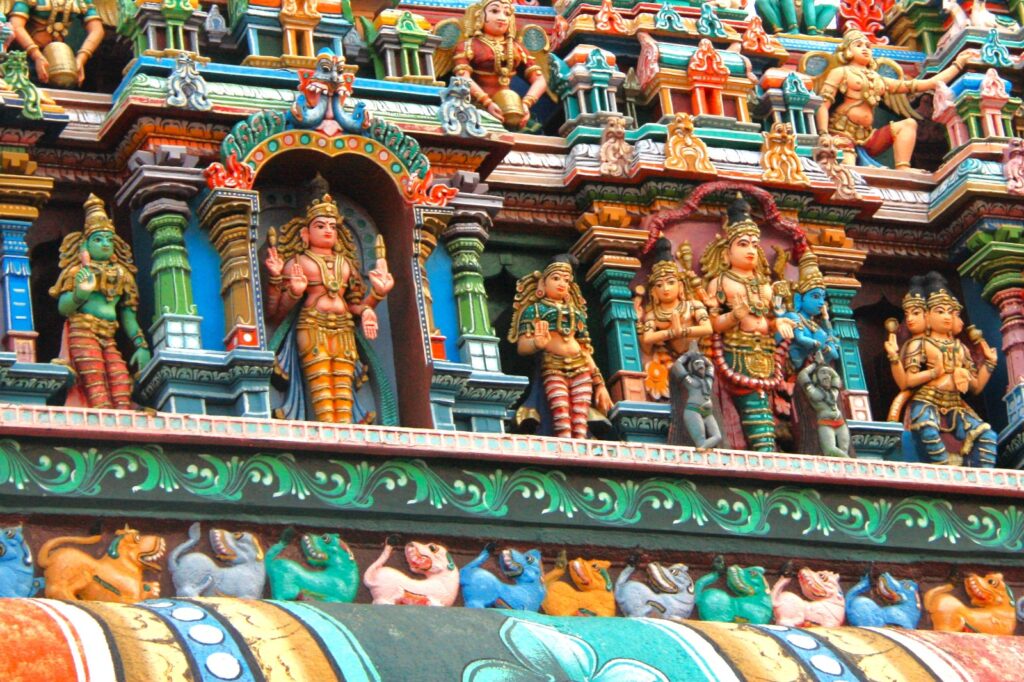
Meenakshi Temple Gopuram
Final Thoughts: Beyond the Visit
I have visited the Madurai Meenakshi Temple twice. I am of the strong opinion that exploring inside Meenakshi Temple is not simply a tourist activity or a checkbox on an itinerary. It’s an encounter with living history, active faith, and architectural genius that has survived centuries of political upheaval, natural disasters, and cultural transformation.
Approach with respect, patience, and openness. Dress appropriately, follow the rules not because you fear consequences but because you value the space and its people. Move slowly through the halls. Observe not just the structures but the devotees—their faith is as much a part of this temple’s wonder as the thousand-pillared halls.
You’ll explore barefoot, phone-less, perhaps sweaty from the crowds and the South Indian heat. But you’ll leave enriched—carrying the scent of incense in your clothes, the echo of temple bells in your memory, and images your phone couldn’t have captured anyway. Those stay sharper, somehow. More real.
Further Readings:
Forgotten Temple Tales from Lakkundi
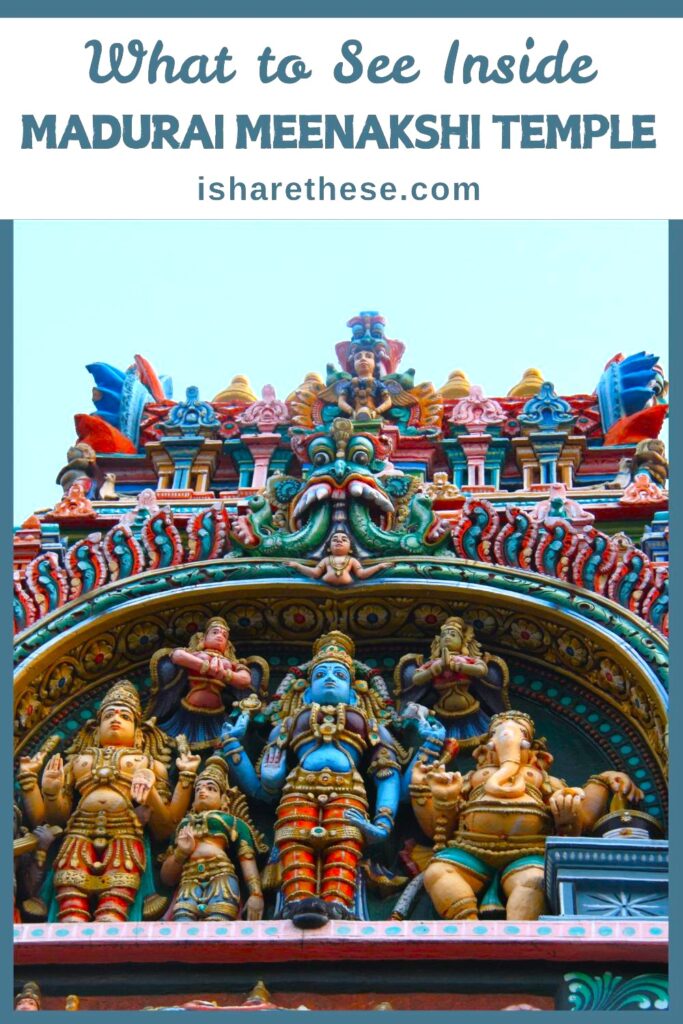
Pin and Save this for later
 Indrani Ghose is a cultural travel writer with expertise in documenting global heritage sites. She visited over 150, big and small, temples documenting architectural heritage, festival traditions, and practical travel insights. She has written for numerous publications across the globe – including Lonely Planet, The National UAE, Whetstone Asia, Deccan Herald. You can follow her on her social media handles Instagram, Twitter and Facebook to see the wonderful destinations, beautiful offbeat places and get instant updates about them.









Pls don’t give a choice for menstruating women to visit temple.You should start to strictly condemn people visiting temple during periods .There is no choice,they should refrain from entering temple s for first 4 days.It our sanatana dharma we should protect it
Thank you Sridevi for reading my blog and leaving your valuable comment.